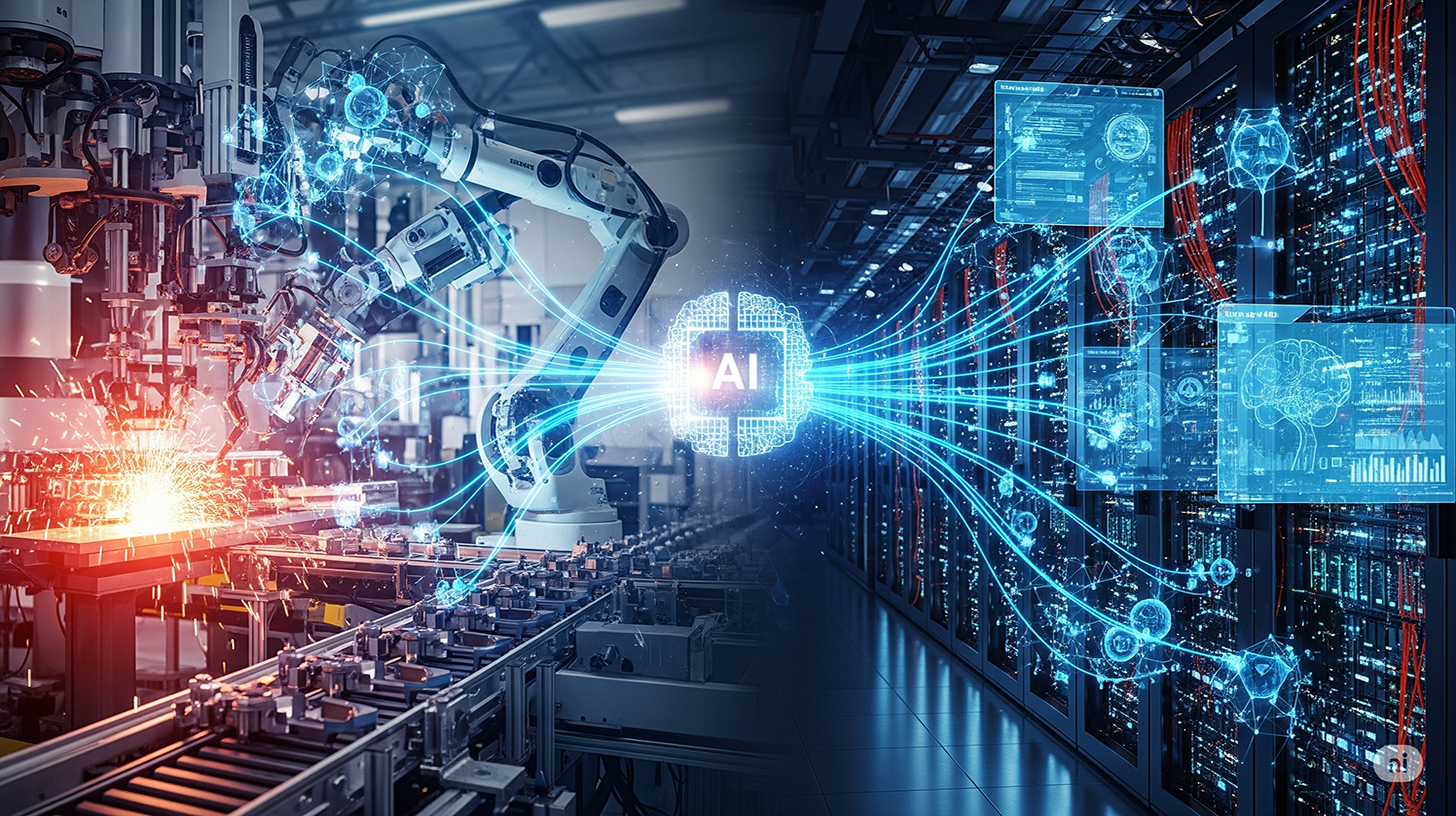
The interrelationship between physical production and digital infrastructure (AI & data center)
Between factory floor and data center: New markets are emerging
Production and IT: The interplay that strengthens Germany
What is the relationship between manufacturing and digital infrastructure? This question arises in light of increasing digitalization and the growth of data centers, cloud computing, and artificial intelligence. The following examines the complex interactions between physical production and digital infrastructure, with a particular focus on the situation in Germany in international comparison.
Related to this:

The fundamental dependency: Why can a factory exist without the cloud, but not vice versa?
What makes physical production the basis of digital value creation?
Physical production forms the foundation for digital value creation for several reasons. First, the manufacturing sector generates real products and services that have a direct benefit for end consumers. A factory can theoretically operate without cloud infrastructure and data centers, as was the case for decades. Conversely, however, a data center makes no economic sense without a manufacturing sector.
IT, digitalization, and artificial intelligence ultimately necessitate physical manufacturing and production facilities to monetize their value. Cloud computing and data centers enable and amplify value creation, but they do not themselves create physical goods.
What role do data centers play in the modern economy?
Data centers serve as the backbone of digitalization. Hardly any company or private household can function without the services of data centers; even public administration is no longer able to operate without them. They enable the storage, processing, and provision of data that is essential for modern business processes.
Nevertheless, their function remains subservient: they support and optimize processes in the real economy, but do not themselves create any tangible goods. Value creation only arises through the application of digital technologies in physical production, trade, or services.
Related to this:
The speed advantage of digital infrastructure
How do the setup times differ between data centers and production facilities?
A data center can demonstrably be built faster than a production facility. While the construction of a traditional data center typically takes around 400 days, this can be reduced to just 2-3 months with modular concepts.
In contrast, building a modern production facility takes several years. Mercedes-Benz's Factory 56 in Sindelfingen, for example, took 2.5 years to build. The construction of the Tesla Gigafactory in Berlin-Brandenburg was also a multi-year project.
Why is the faster construction of data centers not necessarily an advantage?
The speed of data center construction is not advantageous because the expansion of cloud and data center infrastructure must be proportionate to the growth of manufacturing facilities to ensure profitability and prevent future cannibalization. An oversupply of digital infrastructure without corresponding demand from the manufacturing sector leads to overcapacity and uneconomical investments.
Location requirements in comparison
What different requirements do data centers and manufacturing companies place on their locations?
Data centers can be set up almost anywhere in the long run, without the major constraints of manufacturing. The most important location factors for data centers are:
- Site size (often starting at 1 hectare for hyperscale data centers)
- Distance to the DE-CIX internet exchange point in Frankfurt
- Electricity availability and proximity to substations
- Distance to potential hazards
Manufacturing companies, on the other hand, must be in harmony with energy infrastructure, science, and schools. They need:
- Qualified workforce and proximity to training institutions
- Transport links for freight transport
- Suppliers and customers within easy reach
- Specific infrastructure depending on the industry
Related to this:

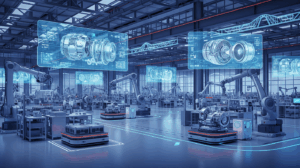
How does the different levels of location flexibility affect regional development?
If the infrastructure for manufacturing is insufficient, the success of manufacturing is limited – and thus also dependent on a data center, IT, AI, and digitalization. Compared to production facilities, data centers create relatively few local jobs. Even large data centers require only a small number of employees to operate the facilities.
Germany in international comparison
How does Germany compare to other countries in terms of industrial production?
Germany has one of the highest shares of the manufacturing sector in its GDP worldwide, at almost 20%. In 2024, the manufacturing sector contributed 19.7% to gross value added in Germany. By comparison, the share was 10.6% in France and 17.5% in the USA.
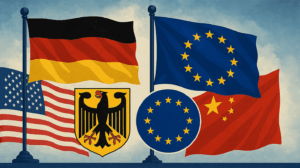
If you break down the EU, USA, and China into individual countries and regions, Germany comes out on top, ahead of California and its Silicon Valley. Manufacturing accounts for 11% of California's GDP, while Germany's figure is almost double that, at nearly 20%.
How does the IT sector compare between Germany and California?
The share of the IT sector in the gross domestic product differs significantly between Germany and California:
- In Germany, the share of ICT/IT in GDP was approximately 4.5% in 2024
- In California, the technology sector accounts for approximately 17-19% of total GDP
In fact, Silicon Valley accounts for over 30% of California's GDP. The IT sector's share of GDP in California is about four times higher than in Germany.
Related to this:
🎯📊 Integration of an independent and cross-data-source AI platform 🤖🌐 for all business needs


Integration of an independent and cross-data-source AI platform for all business needs - Image: Xpert.Digital
AI Game Changer: The most flexible AI platform - Tailor-made solutions that reduce costs, improve your decisions and increase efficiency
Independent AI platform: Integrates all relevant company data sources
- This AI platform interacts with all specific data sources
- From SAP, Microsoft, Jira, Confluence, Salesforce, Zoom, Dropbox and many other data management systems
- Rapid AI integration: Tailor-made AI solutions for businesses in hours or days, instead of months
- Flexible infrastructure: Cloud-based or hosting in your own data center (Germany, Europe, free choice of location)
- Maximum data security: its use in law firms is irrefutable proof
- Deployment across a wide variety of enterprise data sources
- Choice of own or different AI models (DE, EU, USA, CN)
Challenges that our AI platform solves
- Lack of fit of conventional AI solutions
- Data protection and secure management of sensitive data
- High costs and complexity of individual AI development
- Shortage of qualified AI specialists
- Integration of AI into existing IT systems
More information here:

Digital opportunities for Germany: Why IT growth is faster than industrial progress
The chances for Germany
Why does Germany have a better chance of catching up in the IT sector than California does in industry?
The chances of Germany catching up faster in IT, AI, and data centers than California does in industry are significantly greater. This is due to several factors:
- Industrial base as foundation: Germany already has a strong industrial base, which serves as an application area for digital technologies
- Faster scalability of digital infrastructure: While building industrial capacity takes years and requires specific location factors, digital infrastructures can be built more quickly
- Growth potential: The German IT market is already growing strongly. Growth of 4.6% to €232.8 billion is projected for 2025
What levers must Germany pull to catch up in IT?
If Germany – and especially the EU – pulls the right levers, the IT gap with the US can be closed quickly. The following measures are necessary:
- Expansion of digital infrastructure: Accelerated expansion of broadband networks and 5G communication
- Support for data centers: electricity price compensation and simplified approval procedures
- Investments in key technologies: Increased support for AI, cloud computing and quantum technologies
- Digitalization of industry: Consistent implementation of Industry 4.0 concepts
Related to this:
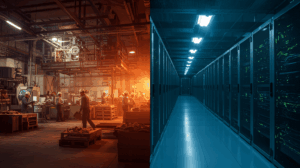
The role of the EU in the digital single market
What significance does the EU single market have for digitalization?
The EU must all pull together and further promote the single market within the EU. The European Commission has recognized that the single market needs to be reformed to drive the digital transformation.
The new internal market strategy aims to:
- Removing the ten biggest obstacles in the single market
- To advance the digitalization of the internal market
- To facilitate cross-border digital services
- To develop common standards and norms
What specific challenges does the EU Commission face?
There are plenty of areas for the EU Commission to focus on; it needs to finally do more and concentrate on the main agenda:
- Digitization of public administration: Implementation of the "Once-Only" principle and the Single Digital Gateway
- Reducing regulatory hurdles: Simplifying cross-border services and reducing bureaucratic burdens
- Promoting digital innovation centers: Establishing and strengthening the European Digital Innovation Centers (EDIHs)
- Investments in digital infrastructure: The "Digital Europe" program provides 8.2 billion euros for digital transformation
Economic importance and added value
How does digitalization contribute to value creation?
Digitalization can significantly contribute to increasing added value. Cloud computing alone could generate up to €250 billion in additional added value and 2.5 million new jobs in the EU by 2020.
In Germany, €152.6 billion was generated in information technology revenue in 2024. The software industry is experiencing particularly strong growth, with an increase of 9.5% projected for 2025.
What role does Industry 4.0 play in sustainability?
Industry 4.0 makes a significant contribution to sustainable production. 81% of companies say that Industry 4.0 contributes to sustainable production. With accelerated implementation, digital technologies could save up to 64 million tons of CO2 in Germany alone by 2030 – that's 17% of the total planned CO2 savings within the framework of the 2030 climate target.
Energy demand and infrastructure
How is the energy demand of data centers developing?
The energy demand of data centers is constantly increasing. With further capacity expansion, the electricity demand of data centers and IT installations is expected to double from 20 terawatt hours (TWh) in 2023. By 2030, data centers will account for approximately 3.2% of total electricity demand in the EU.
What demands does this place on the energy infrastructure?
- The availability of electricity is a limiting factor for the development of data centers. New requirements include:
- 100% electricity from renewable energy sources from 2027
- Use of at least 10% waste heat from 2026 (20% from 2028)
- Integration into municipal heating networks
- Building intelligent energy infrastructures
Labor market and employment
How does employment intensity differ between IT and industry?
The employment structures differ considerably:
- Eight million people work in the manufacturing sector in Germany
- The IT sector employs 1.183 million people
- Data centers themselves create few direct jobs on site
What developments can be expected in the labor market?
The IT sector is continuously creating new jobs. An increase of 20,000 new jobs in the ICT industry is expected by 2025. At the same time, the demand for qualified professionals is rising in both sectors, with industry benefiting from its established dual vocational training system.
How can Germany strengthen its position as an industrial location with digital expertise?
Germany can use its unique position by:
- The strong industrial base as an application area for digital innovations is being used
- Targeted investment in the digitalization of production
- Combining the advantages of both worlds – German engineering with digital innovation
What role does European cooperation play?
European cooperation is crucial for success. The EU single market, with its 450 million consumers, offers a large domestic market for digital solutions. Common standards, coordinated investments, and the reduction of trade barriers are essential for competitiveness against the US and China.
This analysis reveals a symbiotic relationship between physical production and digital infrastructure, with the manufacturing sector forming the foundation. Germany, with its strong industrial sector, possesses an excellent starting point for catching up in the digital sphere. The faster scalability of digital infrastructures, compared to the lengthy process of building industrial capacity, offers Germany the opportunity to close the gap with digital leaders like Silicon Valley. Crucially, this will depend on setting the right political and economic course, leveraging the strengths of European cooperation.
We are here for you - Consulting - Planning - Implementation - Project Management
☑️ SME support in strategy, consulting, planning and implementation
☑️ Creation or realignment of the AI strategy
☑️ Pioneer Business Development

Konrad Wolfenstein
I would be happy to serve as your personal advisor.
You can contact me by filling out the contact form below or simply call me on +49 7348 4088 965 .
I'm looking forward to our joint project.
Write to me


Xpert.Digital - Konrad Wolfenstein
Xpert.Digital is a hub for industry focusing on digitalization, mechanical engineering, logistics/intralogistics and photovoltaics.
With our 360° Business Development solution, we support renowned companies from new business to after-sales.
Market intelligence, smarketing, marketing automation, content development, PR, mail campaigns, personalized social media and lead nurturing are part of our digital tools.
You can find more information at: www.xpert.digital - www.xpert.solar - www.xpert.plus
Keep in touch