

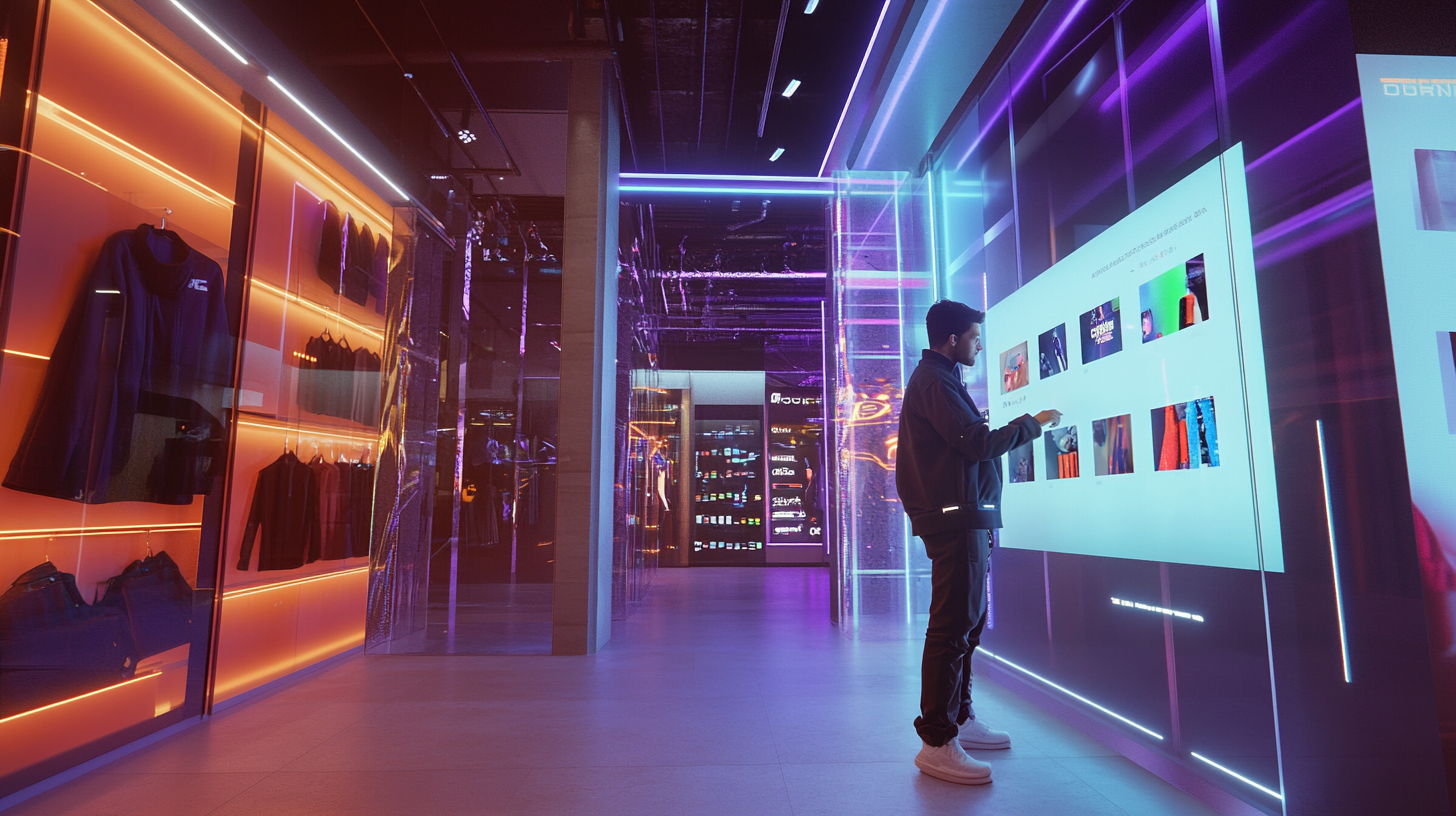
Phygital is trending: Better customer experiences through AR and interactive displays – Why interactive technologies are changing the world of retail – Image: Xpert.Digital
The future of shopping: Interactive displays and augmented reality in use
Customer Experience 2.0: Focus on phygital concepts with AR and interactive displays
Interactive displays and augmented reality (AR) play a significant role in phygital commerce, service and services by connecting the physical and digital worlds and thus improving the customer experience.
In the age of digitalization, the physical and digital worlds are increasingly merging, leading to innovative concepts such as phygital commerce. Interactive displays and augmented reality (AR) play a crucial role in this context, transforming the customer experience and creating new opportunities for service and offerings.
Related to this:
Interactive Displays
Interactive displays, such as touchscreens and digital signage, offer a wide range of possibilities for improving the shopping experience:
Personalization and interaction
Customers can discover products in new ways and receive personalized offers. Interactive displays make it possible to provide information about products and process orders directly on-site.
Virtual sales consultants
In stores, interactive touchscreens act as virtual salespeople, guiding customers through the product range and assisting them in making purchasing decisions.
Increasing customer loyalty
By providing relevant content and interactive experiences, retailers can strengthen customer loyalty. These displays combine the advantages of e-commerce with the tactile experience of physical shopping.
Related to this:
Augmented Reality (AR)
AR technology is revolutionizing retail through immersive and interactive experiences:
Virtual product presentation
Customers can visualize products in their own environment before purchasing them. This allows for a better understanding of size, design, and fit, which is particularly advantageous for furniture or clothing.
Extended product information
AR can display additional product information directly at the point of sale, which facilitates the decision-making process.
Increase in sales figures
Studies show that AR technology can significantly increase sales by increasing customer confidence in products and helping them make informed purchasing decisions.
Related to this:
Phygital trade
The term phygital describes the merging of physical and digital shopping experiences:
Seamless Customer Journey
Phygital experiences allow customers to switch between online and offline channels without interruptions or inconsistencies in service. This results in a consistent and engaging experience.
Innovative retail concepts
By integrating digital elements such as AR or interactive displays into physical stores, retailers can create a unique shopping experience that is both informative and entertaining.
Interactive displays and AR are helping to transform phygital commerce by offering personalized, immersive, and efficient customer experiences. These technologies enable businesses to differentiate themselves from the competition and increase customer satisfaction and sales.
Interactive displays in phygital trading
Interactive displays are digital screens that allow users to interact with the displayed content through touch or gestures. In phygital commerce, they serve as a bridge between the physical and digital worlds by offering customers personalized and dynamic content directly at the point of sale.
A prominent example is the use of interactive shop windows, which attract passersby and allow them to explore products virtually without entering the store. Such displays can offer product information, availability, and even virtual try-ons, significantly enhancing the shopping experience.
Furthermore, interactive displays in stores can serve as information kiosks, assisting customers in their product search, displaying current offers, or providing personalized recommendations based on previous purchases. This not only fosters customer loyalty but also increases sales figures, as customers are guided to products that match their interests.
Augmented reality in phygital trading
Augmented reality (AR) enhances the real world with digital information, offering an immersive experience that blurs the lines between physical and digital space. In phygital commerce, AR allows customers to virtually try out products or receive additional information in real time.
A well-known example is the IKEA Place app, which allows customers to virtually place furniture in their homes to assess size and design before purchasing. Similarly, cosmetics companies use AR technology to allow customers to virtually try on makeup products, facilitating the purchase decision and personalizing the customer experience.
AR can also help make packaging more interactive. By scanning a product with an AR-enabled device, customers can access additional content such as usage tips, videos, or background information about the product, increasing its value and strengthening brand loyalty.
Synergy of interactive displays and augmented reality
The combination of interactive displays and augmented reality creates a seamless phygital experience. For example, interactive displays can be equipped with AR capabilities, allowing customers to integrate digital content into their real-world environment through touch or gestures. This makes it possible to showcase products in various versions or usage scenarios without the need for physical samples.
A practical example of this is the use of interactive mirrors in fashion stores, which allow customers to virtually try on different garments and view them in various colors or styles. This not only reduces the need to keep numerous items physically available but also offers an innovative and time-saving shopping experience.
Benefits for service and services
Interactive displays and AR offer diverse applications in the service sector. In the restaurant industry, interactive menus with AR support can provide guests with detailed information about dishes, ingredients, and allergens. By scanning the menu with a smartphone, guests could, for example, see what a dish looks like or how it is prepared, thus facilitating decision-making and enriching the restaurant experience.
In tourism, interactive information points with AR functions can offer tourists additional historical or cultural information about landmarks. For example, viewing a monument through an AR-enabled device could display virtual reconstructions of past eras or supplementary multimedia content that deepens the understanding and appreciation of the landmark.
Integration into existing systems
Despite the numerous advantages, companies face challenges when implementing interactive displays and AR technologies. These include integration into existing systems, data privacy concerns, and the need to regularly update content to remain relevant.
Nevertheless, current trends indicate that the use of these technologies in the phygital commerce and service sectors will continue to increase. With advancing technological development and growing consumer acceptance, interactive displays and augmented reality will become key elements for creating unique and personalized customer experiences.
Interactive displays and augmented reality play a transformative role in phygital commerce, service, and offerings. They enable companies to create innovative and immersive experiences that strengthen customer loyalty, increase sales, and ultimately provide a competitive advantage in an increasingly digitalized market.
Related to this: