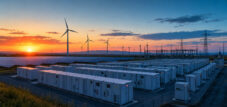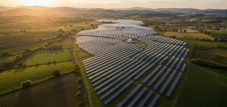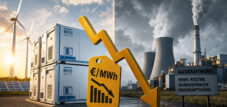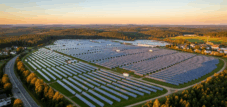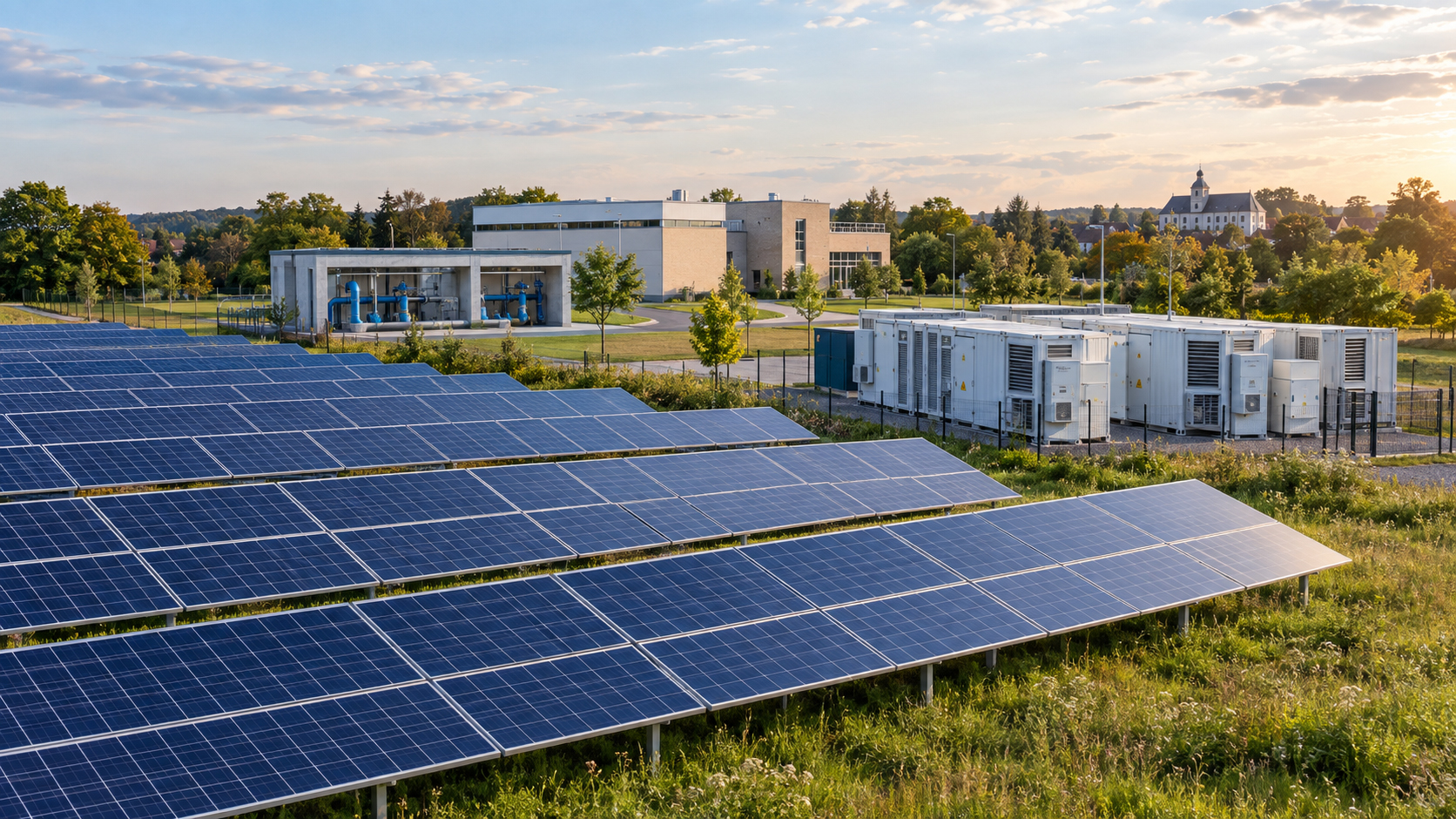
Solar park instead of electricity bill: Paderborn's solar plan on Diebesweg – The truth about emergency power and solar energy – Creative image on the topic, with AI: Xpert.Digital
Critical infrastructure: How Paderborn plans to protect its drinking water against blackouts
Battery or water basin? Why the solar project on Diebesweg is becoming a blueprint for Germany
When the waterworks becomes an energy hub: How Paderborn is revolutionizing its public services
The Paderborn waterworks are planning a pioneering energy project at their Diebesweg site: a dedicated ground-mounted photovoltaic system with battery storage is intended to cover a significant portion of the enormous electricity demand for their drinking water supply. However, what at first glance appears to be a typical local climate protection project turns out, upon closer inspection, to be a strategic test run for the future of municipal public services.
This is about far more than just a few solar panels in a field. At its core is the clever integration of solar energy, batteries, and the existing, enormous water reservoirs, which can serve as massive energy buffers. At the same time, the project raises pressing questions: How can critical infrastructure be operated economically in times of fluctuating energy prices? At what point does the complex effort required for a true emergency power supply become worthwhile? And why does a large battery not necessarily guarantee complete independence from the power grid? This analysis examines the economic and technical aspects of the Paderborn project – and demonstrates why the Diebesweg project could become a blueprint for municipalities throughout Germany.
From waterworks to energy hub: Paderborn's solar plan on Diebesweg
The Paderborn waterworks are planning a ground-mounted photovoltaic system with battery storage on Diebesweg in the Schloß Neuhaus district. The solar power is primarily intended to benefit the waterworks located opposite the site. What initially appears to be a local energy project actually touches upon several key issues of municipal public services: How can persistently high electricity costs be limited? How can critical infrastructure be made more resilient? What role can storage and flexible consumers play? And how much additional complexity is economically justifiable when the drinking water supply must function reliably at all times?
This project is therefore more than just another solar park. It's a potential test case for a new municipal energy economy, in which generation, consumption, storage, and operation are planned together. A waterworks is particularly well-suited for this. Pumps, pressure boosting systems, reservoirs, and other technical equipment require a continuous supply of electricity, while some processes can be shifted in time. This combination of high base load and limited flexibility opens up economic possibilities that a conventional solar project lacks.
A final assessment is not possible at this time. So far, neither the size of the area nor the planned output of the photovoltaic system, the capacity and performance of the battery storage, the investment amount, nor the specific connection concept are publicly known. Likewise, information on the load profile of the Diebesweg waterworks, the planned self-consumption rate, the emergency power capability, and the planned operating model is lacking. However, precisely this data will determine whether the project merely generates inexpensive solar power or actually structurally reduces supply costs, grid consumption, and operational risks.
Why a waterworks can be an ideal solar power customer
Waterworks are among the municipal facilities with a relatively constant energy demand. Drinking water must be extracted, stored, and transported through the pipeline network at the required pressure. For the Paderborn waterworks, electricity for pumping is the most significant energy expense. The company's total electricity consumption, including its subsidiaries and supply areas of Boker Heide and Egge, is estimated at around 4,200 megawatt hours per year. Gas consumption is comparatively low. Energy efficiency is therefore not merely a secondary issue, but a direct cost factor in the core business.
According to published figures, the waterworks supplied approximately 12.1 million cubic meters of water in 2023. If this figure is compared to the reported electricity consumption of 4.2 million kilowatt-hours, this equates to roughly 0.35 kilowatt-hours of electricity per cubic meter of water. This figure is only a rough guide, as electricity consumption and water volume may not reflect the exact same company and supply boundaries. Nevertheless, it illustrates how closely water supply and electricity costs are linked. Even small improvements in pump efficiency, pressure management, operating time, and self-sufficiency can have a noticeable impact when dealing with millions of cubic meters annually.
The Diebesweg waterworks plays a particularly important role within the system. With its ten deep wells, it is considered the mainstay of Paderborn's drinking water supply. The wells reach depths of approximately 450 meters. The extracted deep water naturally meets high quality standards and requires no complex treatment under normal operating conditions; disinfection is only carried out when necessary. In terms of energy consumption, this means that a significant portion is likely to be directly related to extraction and transport. This is advantageous for integration with photovoltaics, as pumps are technically easy to control, provided that security of supply, water rights, pressure maintenance, and hygiene regulations are consistently met.
A waterworks differs from an office building, whose electricity demand drops significantly on weekends and at night. Water is needed every day, and the infrastructure operates around the clock. This creates a robust demand base for self-generated electricity. At the same time, the match between solar power generation and consumption is not automatically perfect. Photovoltaics produce a lot at midday, none at night, and significantly less in winter than in summer. The economic core of the project therefore lies not in maximizing the module area, but in the most intelligent possible coordination of solar power, pump operation, water storage, battery storage, and grid connection.
The real return is generated behind the counter
For economic viability, what happens to each kilowatt-hour generated is crucial. If solar power is used directly at the waterworks, it replaces purchased electricity, including the price components associated with grid consumption. If, however, it is fed into the public grid, its value depends on feed-in tariffs, market premiums, direct marketing, or other marketing models. In many situations, the amount of electricity directly avoided is more valuable than the kilowatt-hour fed into the grid. Therefore, high self-consumption can be more important than maximizing annual yield.
Large-scale ground-mounted photovoltaic systems are now among the most cost-effective forms of new electricity generation. For Germany, the levelized cost of electricity (LCOE) for large-scale ground-mounted photovoltaic systems is projected to be between 4.1 and 7 cents per kilowatt-hour for 2024. When combined with battery storage, the range is higher, varying between approximately 6 and 10.8 cents per kilowatt-hour, depending on the system design, location, and cost assumptions. These figures are not a concrete calculation for the specific project. However, they demonstrate that a well-planned municipal project can, in principle, have a sufficient margin of safety compared to typical long-term grid electricity costs to cover financing, operation, maintenance, and risk buffers.
The economic logic can be illustrated with a simple scenario calculation. The Paderborn Climate Action Plan worked with local open-field solar power plants assuming an annual yield of approximately 900 kilowatt-hours per installed kilowatt of capacity. Under this assumption, a plant with a peak output of one megawatt could generate about 900 megawatt-hours per year. Based on the waterworks' total electricity consumption of 4,200 megawatt-hours, this would correspond to roughly one-fifth. Three megawatts would deliver approximately 2,700 megawatt-hours, and five megawatts roughly 4,500 megawatt-hours. However, these figures only describe annual energy quantities. They do not yet indicate what proportion can be used simultaneously by the waterworks.
Assuming a purely hypothetical avoided purchase price of 15 to 25 cents per kilowatt-hour, a directly consumed annual quantity of 900 megawatt-hours would have a gross value of €135,000 to €225,000. Simply deducting ongoing operating costs is insufficient. A reliable calculation must consider investment, financing, technical losses, insurance, maintenance, land costs, metering concept, decommissioning, potential replacement investments, and the opportunity cost of capital. For storage systems, aging, cycle count, usable depth of discharge, and potential cell or system replacement must also be factored in. Nevertheless, this example calculation clearly demonstrates why self-consumption can be attractive in energy-intensive municipal infrastructure.
The electrical connection architecture is particularly important. The plant is planned for the opposite side of the waterworks. Whether the solar park can be operated technically and legally behind the same grid connection point, whether a private direct line must cross the road, or whether generation and consumption are balanced via the public grid significantly impacts its economic viability. Grid connection costs, rights of way, civil engineering, protection technology, meters, fees, and energy law classification can transform a seemingly minor detail into a key investment factor. This assessment should be carried out before finalizing the dimensions, and not only after the number of modules has been determined.
The battery storage is not an end in itself
A battery storage system doesn't automatically increase profitability. Initially, it incurs additional investment costs and energy losses. It only becomes economically viable when its benefits outweigh its total costs. These benefits can arise from several sources: increased self-consumption, reduced peak loads, shifting electricity consumption to different times, avoiding unfavorable feed-in times, participation in flexibility markets, or providing operational reserves. The actual revenue and savings potential that can be realized depends on the waterworks' load profile, the electricity contract, the grid fee structure, and regulatory requirements.
Proper sizing therefore doesn't begin with the question of how many megawatt-hours of storage fit on the available space. The starting point should be a high-resolution temporal analysis, ideally on a quarter-hourly basis and spanning several years. This analysis must show when pumps and other equipment are running, what the base load is, when peak loads occur, and how much consumption and photovoltaic generation diverge seasonally. Only then can it be estimated whether a storage system with a one, two, or more-hour discharge period is appropriate.
A storage system that is too small can only absorb a small portion of the midday peak demand. A storage system that is too large remains unused on many days, tying up capital. For optimizing self-consumption, a moderate storage duration is often more economical than trying to cover the entire nighttime demand with solar power. Seasonal shifting is even more challenging. A battery storage system cannot economically transfer summer surpluses to winter. Therefore, anyone using the term "autarky" should clearly distinguish between a higher degree of self-sufficiency, short-term bridging, and complete independence from the grid.
Additionally, a storage system can perform several tasks simultaneously. It could absorb excess solar power during the day, buffer peak pump loads, and maintain a defined reserve level in case of disruptions. This multiple use generally improves the return on investment but also leads to conflicting objectives. A battery that is intended to remain fully charged for emergencies is not fully available for daily price optimization. A battery that is used intensively in the market ages faster and could have an unfavorable state of charge at a critical moment. Therefore, a waterworks needs clear priorities in its operating strategy: security of supply first, process stability second, and revenue optimization only third.
Water reservoirs can partially replace batteries
The most interesting economic option may not lie solely in battery storage, but rather in the existing water infrastructure. The Paderborn waterworks have a total storage capacity of approximately 50,200 cubic meters. With an average daily output of about 33,034 cubic meters, this corresponds, theoretically, to roughly one and a half times the average daily demand. This ratio does not mean that the entire storage capacity is freely available for energy optimization. Minimum fill levels, fire-fighting water reserves, pressure zones, hygiene requirements, peak demand, and technical limitations restrict the usable area. However, it demonstrates that water reservoirs can represent a valuable buffer for flexibility.
When pumps operate more intensively during sunny hours and selectively fill reservoirs, electrical energy is indirectly stored as potential energy and a supply reserve. Later, the drinking water supply can be partially drawn from the filled reservoirs while the pumps operate at reduced capacity. This form of load shifting is often more cost-effective than using a battery because the water reservoirs are already in place and do not cause additional electrochemical storage losses. The prerequisites are sufficiently large, unused storage corridors, suitable pumps, variable speed control, efficient control technology, and a hydraulic network model.
This does not imply a decision against battery storage. Rather, the project should optimize both forms of flexibility together. The water tanks are suitable for shifting scheduled pumping operations. The battery reacts faster, can smooth out electrical load peaks, and also powers control systems, communication, or selected equipment. A hybrid concept could therefore manage with a smaller battery than a purely electric solution. This reduces capital requirements and the risk of aging without completely sacrificing the benefits of safety and flexibility.
A digital twin of the energy and water system would be particularly valuable for planning. It could integrate weather forecasts, expected water consumption, fill levels, electricity prices, grid boundaries, and technical availability. Control would then be proactive, rather than rigidly based on time. On a sunny day, tanks could be filled selectively; before an expected peak load, the battery would provide reserves; and if solar energy is forecast to be weak, more stored energy would be available for operation. In this way, individual components become an integrated system.
New: Patent from the USA – install solar parks up to 30% cheaper and 40% faster and easier – with explanatory videos!

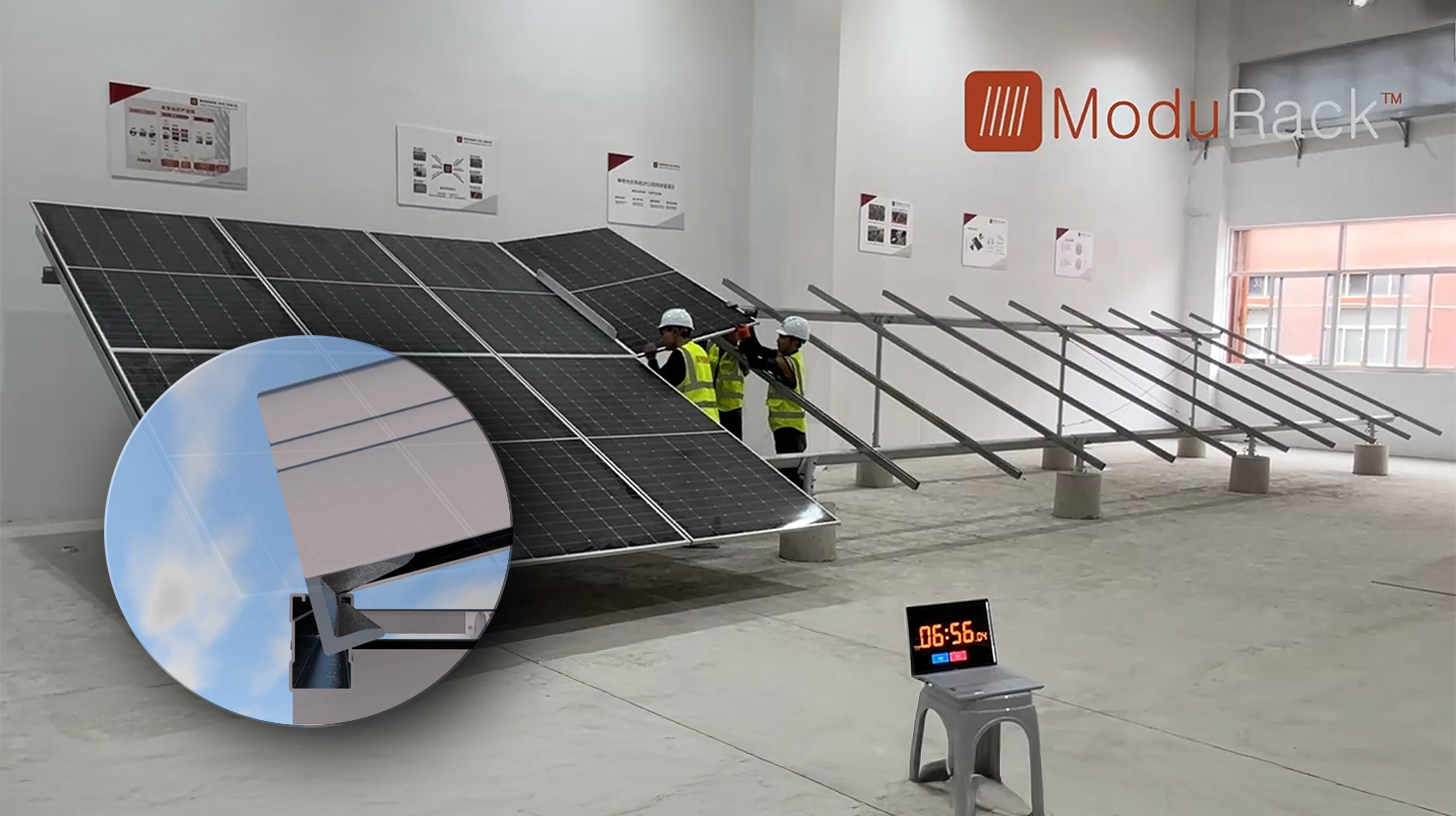
New: Patent from the USA – Install solar parks up to 30% cheaper and 40% faster and easier – with explanatory videos! - Image: Xpert.Digital
The core of this technological advancement is the deliberate departure from conventional clamp mounting, which has been the standard for decades. The new, more time- and cost-effective mounting system addresses this with a fundamentally different, more intelligent concept. Instead of clamping the modules at specific points, they are inserted into a continuous, specially shaped support rail and held securely in place. This design ensures that all forces – whether static loads from snow or dynamic loads from wind – are distributed evenly across the entire length of the module frame.
More information here:
Between energy transition and operational reliability: Strategic planning for municipal infrastructure
Security of supply requires more than stored kilowatt hours
The term "battery storage" quickly raises the expectation that the waterworks can simply continue operating during a power outage. Technically, this is by no means a given. Many grid-connected photovoltaic systems and storage units shut down for safety reasons during a power outage. For true off-grid operation, the waterworks requires, among other things, grid-forming inverters, suitable switching devices, coordinated protection concepts, a functioning black start procedure, and a control system that maintains stable generation and load within the isolated grid. The battery's capacity must also be sufficient to handle the inrush currents and dynamic load changes of critical pumps.
Furthermore, it's not just storage capacity that matters, but also available power. A battery might contain enough energy for several hours and still be too weak to start multiple pumps simultaneously. Conversely, a high-performance system can handle heavy loads, but only for short periods. Critical components should therefore be prioritized. Control systems, measurement and communication equipment, emergency lighting, pressure maintenance, and selected pumps might be treated differently in an emergency than during normal operation.
The duration of a potential outage must also be realistically considered. A storage system with two hours of capacity protects against short interruptions, but not against a regional power outage lasting several days in winter. For longer events, additional solutions are still required, such as conventional emergency generators, mobile grid connection points, redundant grid connections, or coordinated restart plans. Photovoltaics can extend the operating time of an off-grid system during daylight hours, but it is weather-dependent. Security of supply therefore arises from redundancy, not from relying on a single technology.
The project should define its resilience performance in a measurable way. Possible objectives would be an uninterrupted power supply for the control system, maintaining a defined minimum pumping capacity, a specific number of hours of island operation, or limiting the maximum grid draw. Without such targets, the concept of security of supply remains vague. With clear requirements, however, it becomes possible to assess whether an additional euro would be better invested in battery capacity, power electronics, a second grid connection, more efficient pumps, or larger water reserves.
Climate protection becomes a side effect of business operations
The solar park fits into Paderborn's climate strategy. The city's energy company is to become climate-neutral by 2035, and the entire city area by 2040. The climate action plan projected a net expansion rate of 27 megawatts per year for ground-mounted photovoltaics and a land requirement of approximately 16 hectares annually. The plan identified a technical ground-mounted potential of nearly 500 megawatts and an annual yield of around 450 gigawatt-hours for the city. At the time of planning, less than one percent of this potential had been developed. These older figures do not represent a current assessment, but they illustrate the scale of the local potential.
For the climate balance, the direct displacement of grid electricity is relevant. The average direct carbon dioxide emission from German electricity consumption in 2025 was around 344 grams per kilowatt-hour. Photovoltaics produce virtually no direct emissions during operation; however, emissions do occur during manufacturing, transport, installation, and decommissioning. Over a 30-year life cycle, monocrystalline systems have been found to emit between 43 and 63 grams of carbon dioxide equivalents per kilowatt-hour. Solar power is therefore not emission-free, but significantly less emission-intensive than today's grid electricity.
The amount of emissions avoided per kilowatt-hour will decrease in the future because the German electricity mix itself is slated to become cleaner. This does not diminish the project's purpose, but it does change the rationale. In the long term, a solar park should not be justified solely on the basis of current carbon dioxide factors. Its stronger economic arguments are permanently low marginal costs, reduced price dependency, local generation, flexibility, and a potential contribution to resilience. Climate protection and economic viability are not mutually exclusive here; however, they are based on different evaluation criteria.
For a municipal operator, the transparency of the energy balance is also crucial. A purely accounting-based allocation of green electricity does not replace the same amount of fossil fuel generation at every hour. A physically connected solar park, on the other hand, makes local generation visible and measurable. Nevertheless, communication should not claim that the waterworks is entirely solar-powered as long as significant grid electricity remains needed at night and in winter. A more precise statement would be that a growing share of the electricity demand is being met locally and with renewable energy.
Site selection determines acceptance and subsequent costs
Ground-mounted photovoltaic systems require additional land. Modern systems have become significantly more efficient: while around four hectares per megawatt were needed in 2006, the average requirement by 2025 was less than one hectare. Nevertheless, site selection and design remain prone to conflict. Agriculture, nature conservation, landscape preservation, recreation, water management, and energy production sometimes share the same land. Especially near waterworks, special requirements for groundwater and soil protection may apply.
Economically, it's not just the lease or purchase price that matters. An unfavorable location can incur additional costs for soil improvement, drainage, utility relocation, access, grid connection, or compensatory measures. In water protection zones, the selection of building materials, the handling of transformers, fire retardants, firewater retention, and the prevention of harmful substance inputs also become important. Battery storage systems require their own safety concept, including distances, monitoring, access for emergency services, and clear procedures for rare but potentially consequential malfunctions.
A solar park can ecologically enhance an area if previously intensively farmed land is converted into extensively managed grassland. However, this doesn't happen automatically. Dense rows of modules, heavy shading, frequent mowing, soil compaction, and completely enclosed fences can negatively impact habitats. Site-appropriate seed mixtures, reduced mowing, removal of the clippings, sufficiently wide, sunny areas, wildlife crossings, and ecologically valuable structural elements are all beneficial. Sensitive or already species-rich areas should generally be avoided.
For Paderborn, a transparent justification for the location is particularly important. If the site is located directly opposite the largest waterworks, the proximity offers a clear functional advantage: short pipeline routes and direct access to a public consumer. This advantage should be weighed against potential disadvantages of the site and publicly documented. Acceptance is more likely to arise if citizens understand that the location was not chosen solely for its easy availability, but because it minimizes operating costs, pipeline infrastructure, and environmental risks overall.
The biggest mistake would be isolated planning
Photovoltaics, battery storage, and waterworks should not be treated as three separate procurement projects. If the maximum possible solar output is determined first, then a storage system is selected from a standard catalog, and only lastly the operational management is adjusted, overcapacities and unnecessary costs easily arise. The correct approach is the reverse: First, supply obligations, load profile, pumping flexibility, reservoir reserves, and grid constraints must be known. From this, the economically viable solar output, the required storage capacity, and the appropriate storage capacity can be determined.
Energy efficiency should also be examined before or in parallel with on-site generation. Every kilowatt-hour permanently saved does not need to be generated or stored. Highly efficient pumps, frequency converters, optimized pressure zones, leak detection, and demand-based operation can reduce the required system size. The waterworks have already implemented energy management according to ISO 50001 and reduced their consumption. The solar park should build on this system instead of separating efficiency and generation organizationally.
This also applies to procurement. A municipality can finance and operate the plant itself, choose a contracting model, or obtain electricity through a long-term supply agreement. Own investment offers the greatest control over operating strategy and long-term returns, but ties up capital and technical responsibility. Contracting reduces the initial financing requirement but transfers part of the value creation to a third party. A long-term electricity supply contract provides price certainty but can become inflexible if the quantity or price structure is unsuitable. For critical infrastructure, the decision should not be based solely on the lowest bid price, but also on life cycle costs, control, and adaptability.
Different lifespans must be considered when financing. Solar panels can generate electricity for 25 to 30 years or more. Inverters may need to be replaced sooner. Battery systems age depending on temperature, state of charge, and cycles. A single project duration should not obscure these differences. Therefore, the economic analysis requires separate replacement paths, realistic residual values, and sensitivities to interest rates, electricity prices, degradation, and repairs.
Which key performance indicators determine success?
After commissioning, project success should not be measured solely by annual solar yield. High yields can be accompanied by low self-consumption and frequent peak feed-in. More meaningful metrics include the self-consumption rate, the solar coverage of waterworks consumption, the avoided grid feed-in, the reduced peak load, and the cost per kilowatt-hour actually used at the waterworks. For storage systems, efficiency, full cycles, availability, aging, and the economic contribution of individual operating modes also play a role.
For water operations, further key performance indicators are needed. These include the amount of energy shifted through flexible pump control, adherence to minimum fill levels, the number of avoided pump starts, pressure quality, and fault tolerance. From a climate perspective, avoided emissions should be calculated using a transparent and regularly updated method. Regarding resilience, successful switchover tests, the duration of secure operation, and the availability of critical systems are crucial.
A publicly available annual report would make the project transparent. It should compare planned and actual figures and explain any deviations. A separate presentation of direct solar consumption, stored and later used energy, grid feed-in, grid consumption, and storage losses would be particularly valuable. This would allow for an assessment of the system's technical performance and whether it is actually achieving the expected economic benefits.
Publishing such operational data would be beneficial beyond Paderborn. Many municipal water and wastewater utilities face similar decisions but lack reliable empirical data on the optimal combination of photovoltaics, battery storage, and process flexibility. Paderborn could transform a local construction project into a transferable reference model. This requires communicating not only positive key performance indicators but also incorrect assumptions, corrective actions, and unexpected operational experiences.
Risks that must be included in every template
The greatest economic risk currently lies in the uncertainty surrounding the project parameters. Without information on capacity, area, connection type, storage capacity, investment amount, and load profile, neither the amortization period nor the contribution to security of supply can be reliably assessed. Political approval of a basic concept should therefore not be confused with final investment approval. A robust feasibility and economic analysis is essential between these two decisions.
Further risks include construction costs, delivery times, interest rate fluctuations, grid connection, and permitting. Even low module prices do not guarantee a cost-effective overall project if excavation, utility crossings, transformer stations, or fire protection become expensive. Regulatory revenue conditions for battery storage systems can change. Anyone basing profitability on multiple, simultaneously achievable revenue streams must verify whether these are technically and legally compatible.
Technically, degradation, inverter failures, communication problems, and cybersecurity are relevant. Predictive control combines weather data, energy market information, water demand, and control technology. This increases the digital attack surface. Critical water processes must be clearly separated from external optimization services. Emergency operation and manual fallback options must not depend on a cloud connection. Software maintenance, data sovereignty, and access rights must also be included in the lifecycle costs.
Finally, there is a communication risk. If the solar park is presented as a complete self-sufficiency solution, disappointment is inevitable. Conversely, if it is marketed merely as a climate symbol, its economic benefits will be underestimated. The appropriate perspective lies somewhere in between: The project can reduce electricity costs and price risks, cover a portion of consumption locally, create flexibility, and make short-term outages more manageable. Complete seasonal independence or a multi-day emergency power supply does not automatically follow from this.
The Thieves Trail can become a municipal blueprint
The project has excellent prospects because the energy producer and the large, continuous consumer are located in close proximity. The waterworks have a significant electricity demand, an established energy management system, and operational storage facilities in the form of water reservoirs. Photovoltaics can produce electricity cost-effectively, while battery storage systems are becoming increasingly efficient and widespread. At the same time, Paderborn is pursuing concrete climate goals and can demonstrate with its own infrastructure project how municipal value creation can be practically organized.
The most convincing solution, however, would not necessarily be the largest solar park or the largest battery storage system. The economically superior system architecture is the one that delivers the highest long-term benefit per euro invested. This includes, first and foremost, efficiency, then flexible pumps and water tanks, followed by appropriately sized photovoltaics, and finally a storage system with clearly defined functions. Grid connection, off-grid capability, and a safety concept must be part of the same planning from the outset.
Under these conditions, the approach taken by Diebe could indeed serve as a blueprint for other municipalities. Waterworks, wastewater treatment plants, public transport companies, and municipal data centers each have their own load profiles, but share the same challenge: they must operate reliably while simultaneously managing energy prices, climate targets, and resilience. The crucial lesson would not be to install solar panels and batteries everywhere. It would be to understand municipal infrastructure as an integrated energy and operating system.
This makes the project interesting from an economic policy perspective as well. Municipal public services have long been primarily consumers of centrally generated energy. Decentralized generation and digital control are increasingly transforming them into active participants in the energy system. They can shift loads, utilize local generation, relieve grid congestion, and stabilize long-term costs. The solar park on Diebesweg thus potentially marks a small but strategically important shift in role: from passive electricity consumer to intelligently controlled energy actor.
Whether this potential is fully realized depends not on the number of installed modules, but on the quality of the planning. Only when load data, hydraulics, storage strategy, connection concept, emergency operation, environmental protection, and financing are all aligned does a solar park become a robust infrastructure project. This is precisely the provocative truth behind the local energy transition: sunshine is free, but an economically viable and crisis-proof integrated system is not.
📈🚀 From visibility to trust 👀🤝 Your scalable path with Xpert.Digital


From visibility to trust: Your scalable path with Xpert.Digital - Image: Xpert.Digital
In industrial B2B, sustainable business relationships rarely emerge overnight. They develop step by step – through visibility, professional relevance, recurring touchpoints, and growing trust. Xpert.Digital's 4-stage model addresses precisely this: It offers a structured path that begins with a manageable entry point and can evolve into deeper collaboration in business development if needed.
Instead of relying on loud marketing promises, this model puts the relationship at the forefront. Companies start with clearly defined, easily calculable measures and then decide, based on their own experience, how far they want to expand the collaboration. A key factor for this undisturbed trust-building process: The platform completely avoids annoying advertising ads, so the editorial focus remains solely on the companies' expertise.
More information here:
Your partner for business development in the fields of photovoltaics and construction
From industrial rooftop PV to solar parks and larger solar parking lots
☑️ Our business language is English or German
☑️ NEW: Correspondence in your native language!

Konrad Wolfenstein
I and my team are happy to be available to you as your personal advisor.
You can contact me by filling out the contact form here wolfenstein@xpert.digital:or simply call me at +49 7348 4088 965. My email address is
I'm looking forward to our joint project.