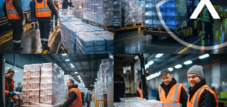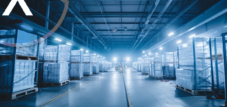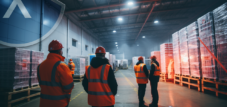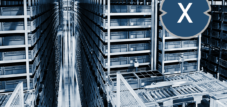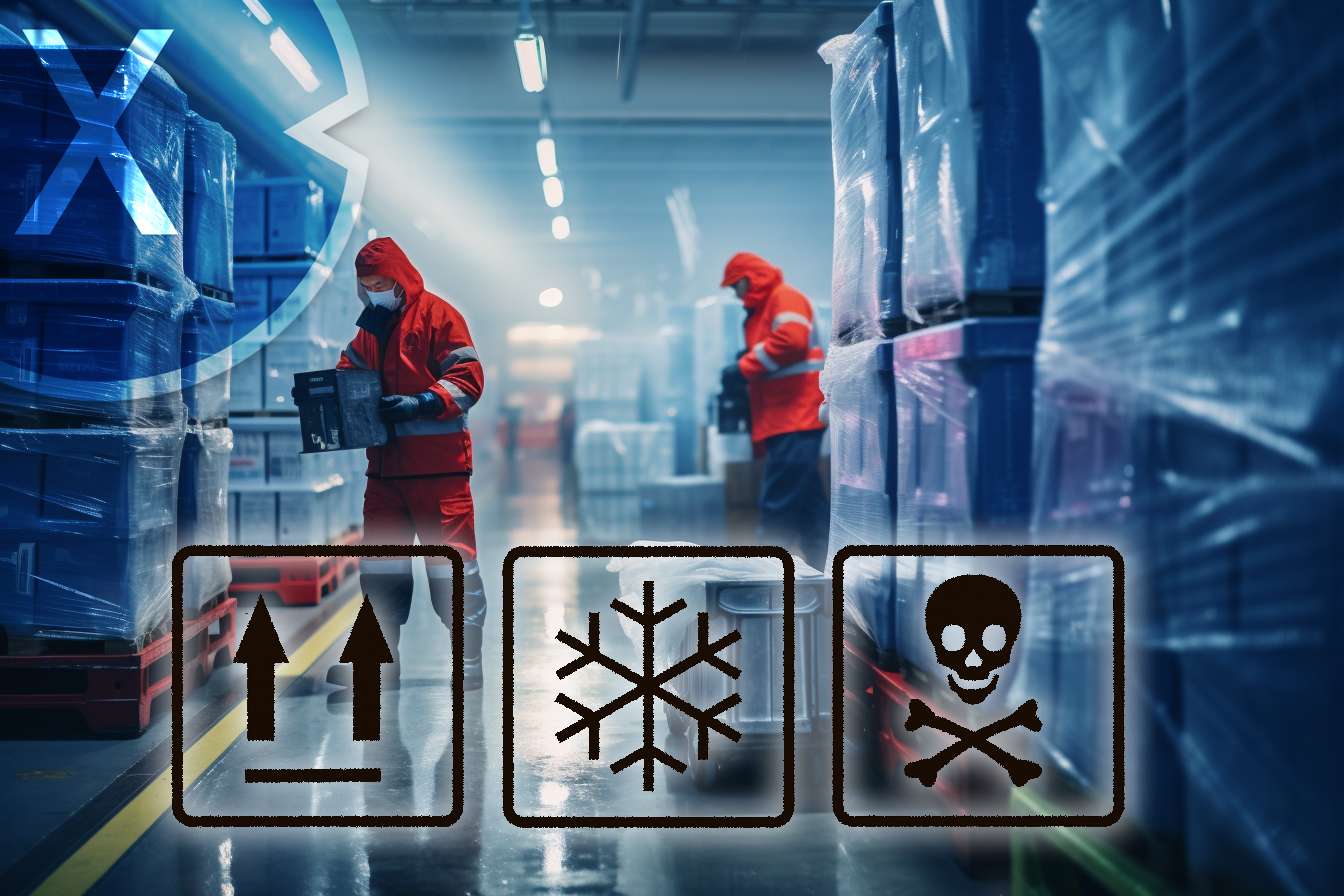
Refrigerated logistics/fresh produce logistics: A refrigerated storage warehouse with automated material flow optimizes distribution processes – Image: Xpert.Digital
🥕🥬🥦 Automation in fresh food logistics is becoming increasingly important
😷👷♀️ Besides the unpopular but necessary working conditions in cold chain logistics and the resulting shortage of skilled workers, two developments in particular are driving the market forward: Firstly, progressive urbanization and the increasing number of people living in cities. According to current forecasts, over 68% of the world's population will live in cities by 2050. This leads to a rising demand for food and product deliveries to urban centers.
🥦🥕 On the other hand, interest in fresh vegan products is steadily increasing. Studies show that consumers are paying more attention to their health and nutrition. Plant-based foods without animal ingredients are therefore gaining in popularity. This requires innovative and efficient logistics solutions to ensure a smooth supply, even to large metropolitan areas.
💡 One answer to these two challenges is offered by so-called "Smart Cities." This term refers to cities that are made more resource-efficient and livable through the widespread use of digital technologies. Through networking, automation, and data-driven optimization of various processes, Smart Cities aim to increase the quality of life and reduce environmental impact.
🗼 Asian countries, especially Japan, are considered pioneers in this area. Tokyo, with over 38 million inhabitants, one of the world's largest cities, impressively demonstrates how high population density and quality of life can be reconciled through innovative urban and infrastructure planning. The development of efficient transport and supply systems has been a focus there for decades.
🚚🥶 Fresh food logistics is a key aspect. The safe and rapid transport of perishable goods such as food or medical products requires innovative concepts. Tokyo boasts highly developed refrigerated logistics networks that ensure a reliable supply of fresh produce to the urban population, even during high temperatures or natural disasters.
🤖 A Japanese company setting new standards in this field is Daiichi Storehouse & Refrigeration. The company operates a state-of-the-art frozen food distribution center (Frozen DC) in Saitama Prefecture, near Tokyo. In the four-story, earthquake-resistant building, approximately 1,500 frozen food items, including ice cream and pre-cooked frozen meals, are stored daily. Of these 1,500 products, around 600 are high-volume items, requiring deliveries with a high product variety and small batch sizes, as well as strict batch control based on expiration dates.
Originally, processes such as incoming goods inspection, order picking, and packaging were carried out manually. However, the arctic temperatures of -25°C in the cold storage rooms posed a physical strain on the staff. In light of increasing product variety and staff shortages, the company therefore sought process automation.
📣 Similar topics
- 🌆🚚 Automation meets urbanization: Logistics in the city of the future
- 🌿📦 Green logistics: Fresh vegan products delivered smoothly
- 🤖🏙️ Smart Cities: Intelligent networks for sustainable urban living
- 🇯🇵🌐 Tokyo's Way: Leader in Smart City Innovations
- 🌡️📈 Heatwave vs. refrigerated deliveries: Tokyo's logistics network in the face of climate change
- ❄️🏭 Daiichi Storehouse: Next-generation cold chain management
- 🔄📊 Process automation: Increasing efficiency in cold storage
- 🚀🌱 Vegan Boom: Logistical Challenges and Opportunities
- 🏗️🔋 Innovative infrastructure: The building blocks of a smart city
- 🛣️🔗 Connected Supply: The Future of Urban Logistics**
#️⃣ Hashtags: #AutomationLogistics #VeganProducts #SmartCities #Urbanization #InnovativeLogistics
Expert partner in warehouse planning and construction

🧊🏭 Daiichi Storehouse & Refrigeration: Increasing efficiency through automation in the cold storage facility 🧊
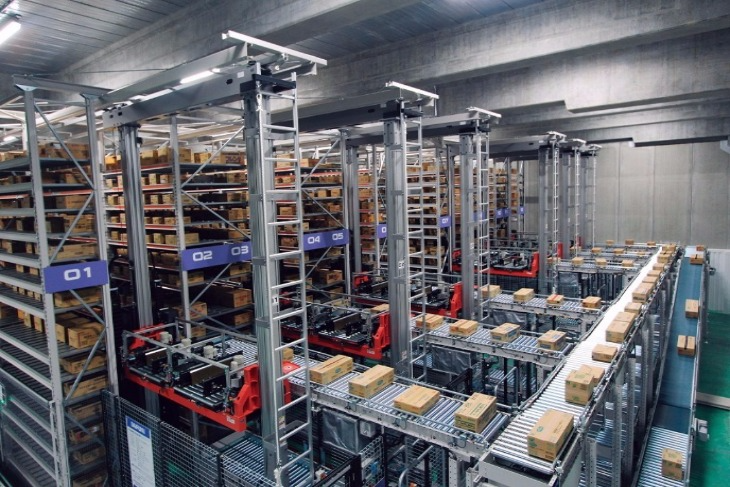
The installed miniload (AS/RS) has nine storage/rack machines (S/R) and can store up to 15,000 containers – Image: Daifuku
Daiichi Storehouse & Refrigeration has made significant strides in frozen food logistics. Its distribution center in Saitama City serves as a hub for delivering frozen products to numerous branches across several prefectures in Japan. Offering a range of approximately 1,500 different frozen products, including premium items such as ice cream and pre-cooked frozen meals, the company represents a vital part of the food supply chain. Of particular note are its 600 top-selling products, which, due to their popularity and resulting high demand, require complex logistics and an advanced warehousing system.
👷♂️ Challenges of the work environment
The challenge of working in an environment of minus 25 degrees Celsius should not be underestimated. These conditions place high demands on both personnel and technical equipment. Before the introduction of the new system, most processes were carried out manually, which was not only time-consuming but also carried a higher risk of errors. The implementation of the automated storage and retrieval system (Mini-Load-AS/RS) and the use of handheld terminals with character recognition have resulted in a significant improvement in efficiency and accuracy.
🔄 Optimization through technology
The modern material flow system is a key element of the optimization efforts. It incorporates innovative technologies such as wireless handheld terminals that enable the rapid capture and processing of product information. The use of automatic labelers for shipping labels and the conveyor system capable of moving a large number of containers demonstrates how technology can be used to complement and relieve human labor.
📦 Upon arrival of the products at the warehouse
Each item is scanned, generating receiving labels that are affixed to the containers. These preparatory steps are crucial for ensuring the swift and accurate distribution and storage of the products. The products are then distributed to different storage areas according to category, enabling systematic organization and efficient use of space.
When products arrive at the warehouse, employees use a handheld terminal to scan the JAN or ITF codes, as well as the best-before date and the production date, on the containers. After scanning, a portable label printer automatically prints a receiving label, which is affixed to each container. The containers are then transported to one of four areas: Category A products are sent to the mobile racks, Category B and C products to the mini-load AS/RS, and Category D products to the fixed racks.
🚚 The delivery process is particularly interesting
Employees select products based on orders and assemble them into shipments. The automated labeling system plays a central role in this process, printing and affixing shipping labels according to the products' destination. Subsequent sorting and loading onto the shipping lines are also automated. This minimizes human error and ensures fast processing of shipments.
🔄 Consolidation and outsourcing happen automatically
Consolidation and sorting are automated. This step reduces the need for manual intervention and allows staff to focus on more complex, value-added tasks. After sorting, these products, like the other categories, are processed further on conveyor belts.
During delivery, employees use a handheld terminal to select category A and D products from the mobile racks and fixed shelves. The selected products are grouped into orders and fed into an automatic labeling system, which automatically applies shipping labels based on the destination. As the products proceed to shipping, they are automatically sorted onto shipping lines based on the labels. Before the goods are loaded onto shipping carts, employees confirm that all containers are on the correct line. Category B and C products stored in the mini-load AS/RS are automatically consolidated and retrieved, requiring minimal on-site personnel and freeing up staff for other tasks. After being removed from the AS/RS, category B and C products are transported by conveyor belt and then handled in the same way as the other products.
🌟 The consistent further development and adaptation of the logistics processes at the Daiichi Frozen Distribution Center (Frozen DC)
It serves as an exemplary model for the entire industry. It demonstrates how, through the use of modern technology and the pursuit of continuous improvement, companies are able not only to increase their efficiency but also to improve working conditions for their staff. These innovations are crucial for meeting the rising demands of the market while simultaneously ensuring employee satisfaction and safety.
📣 Similar topics
- 🚀 Innovations in frozen food logistics
- 📦 Efficient storage of frozen products
- 🔥 Challenges at minus 25 degrees Celsius
- 🤖 Automation at the Daiichi Frozen Distribution Center
- ❄️ Cold and precision: The new warehousing system
- 📋 Technology in the service of food supply
- 🏭 Modernization of logistics processes
- 📡 Wireless handheld terminals in frozen food logistics
- 📝 From manual process to accuracy
- 🌟 A success story for the entire industry
#️⃣ #InnovationsInLogistics #EfficientWarehousing #AutomationTechnology #RefrigeratedLogistics #ProcessModernization

Xpert.Plus Warehouse Optimization - High-bay warehouses and pallet warehouses: Consulting and planning
We are here for you - Consulting - Planning - Implementation - Project Management
☑️ Smart City & Factory: Industry expert for energy-efficient 5G buildings and halls, as well as consulting and installation of solar systems
☑️ Xpert.Plus - Logistics consulting and logistics optimization
☑️ Industry expert, here with his own Xpert.Digital industry hub with over 2,500 specialist articles

Konrad Wolfenstein
I would be happy to serve as your personal advisor.
You can contact me by filling out the contact form below or simply call me on +49 7348 4088 965 .
I'm looking forward to our joint project.
Write to me


Xpert.Digital - Konrad Wolfenstein
Xpert.Digital is a hub for industry focusing on digitalization, mechanical engineering, logistics/intralogistics and photovoltaics.
With our 360° Business Development solution, we support renowned companies from new business to after-sales.
Market intelligence, smarketing, marketing automation, content development, PR, mail campaigns, personalized social media and lead nurturing are part of our digital tools.
You can find more information at: www.xpert.digital - www.xpert.solar - www.xpert.plus
Keep in touch


Industrial & B2B Business Metaverse: Reduce costs with XR technology for photorealistic product images (XR 3D rendering machine)

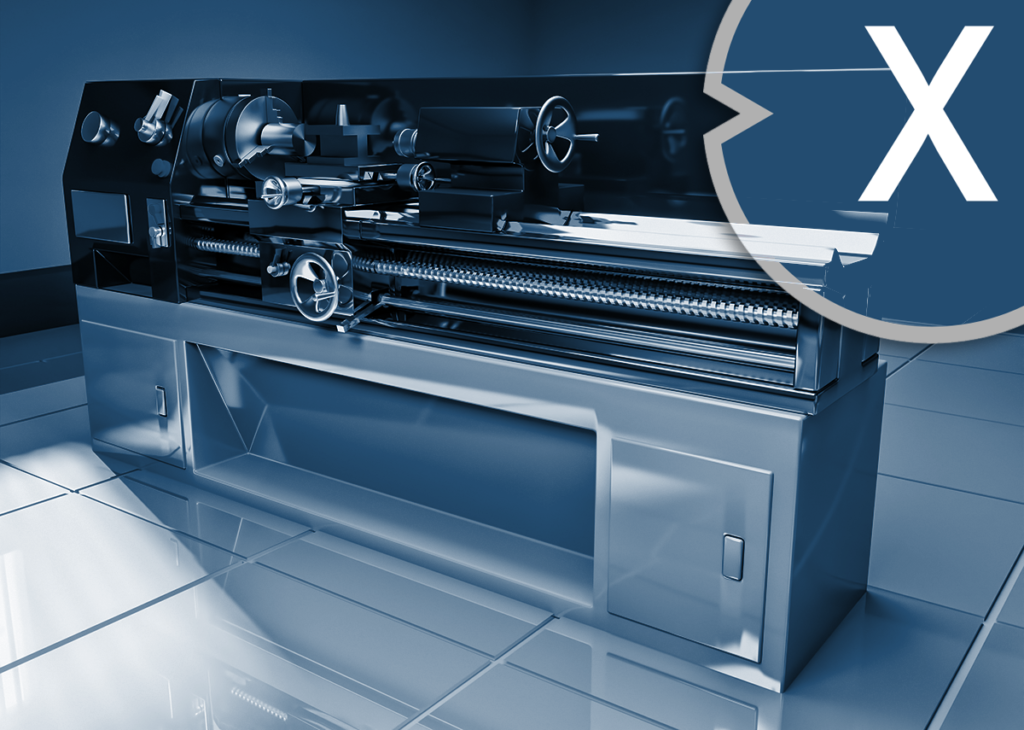
Lathe in photorealistic rendering (3D product presentation) - Image: Xpert.Digital
XR technology offers a superior solution for creating photorealistic images, allowing companies to avoid the expensive fees charged by external media agencies. It's well known that media agencies charge high prices for creating such images, as this requires expertise, specialized software, and collaboration with various specialists.
More information here: