

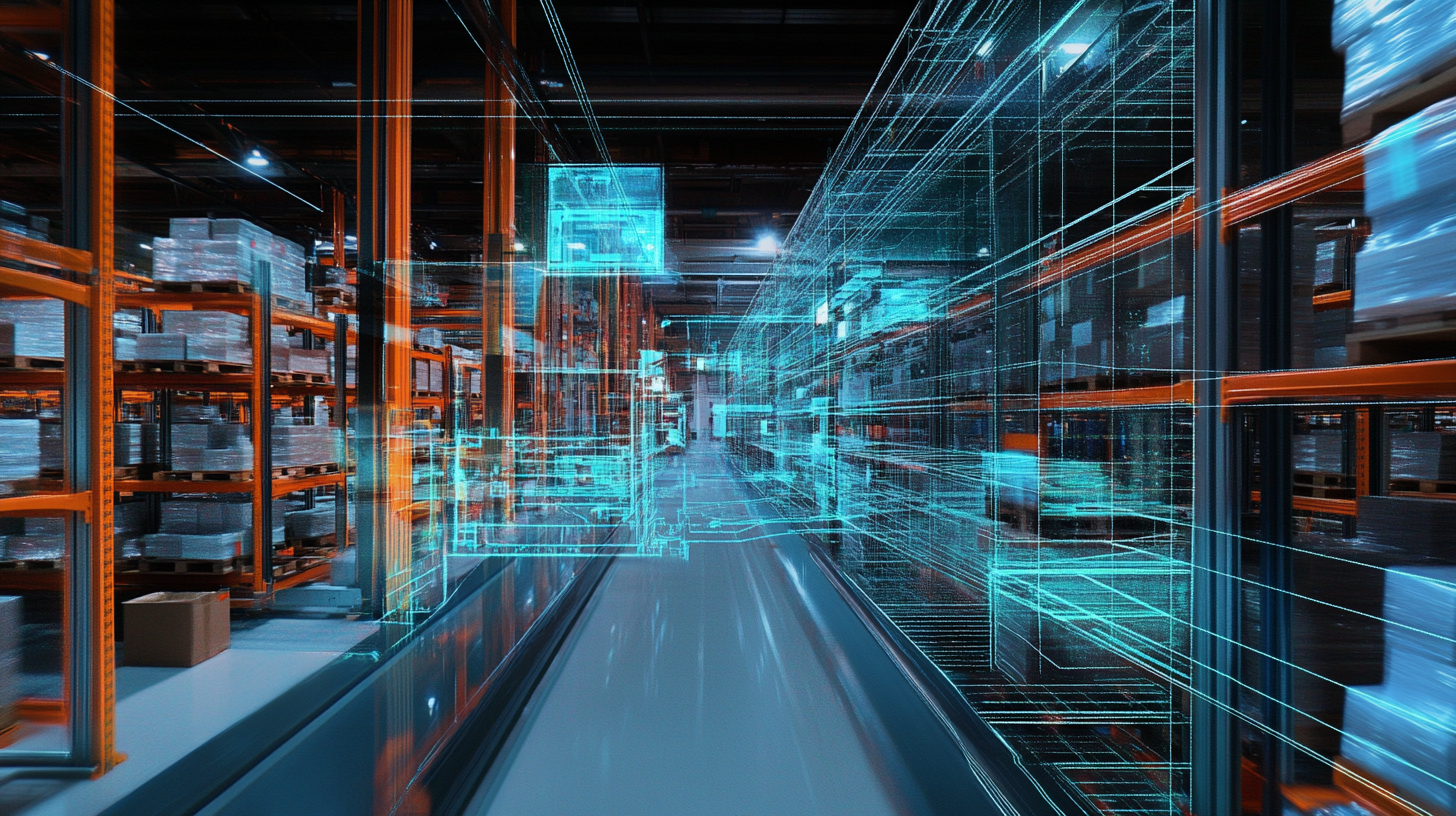
Omnichannel transformation to automated warehouses – e-commerce is expected to reach 6.5 trillion US dollars worldwide by 2025 – Image: Xpert.Digital
Technological trends in retail: Automated warehousing in focus
Transformation in e-commerce: The next steps in warehousing and logistics
The e-commerce sector is undergoing a profound transformation. The increasing digitalization and automation of warehousing and logistics processes are key trends that will shape retail in the coming years. Companies face the challenge of making their supply chains more efficient while simultaneously meeting rising customer expectations and logistical demands.
Global e-commerce revenue is projected to reach approximately $6.5 trillion in 2025. This growth is driven not only by increasing consumer spending but also by technological advancements in warehousing and logistics. Automated warehouse solutions play a crucial role in meeting this rising demand and addressing the industry's challenges.
Automation in the e-commerce warehouse
The implementation of automated systems in warehouses has developed rapidly in recent years. Companies are relying on state-of-the-art technologies to increase efficiency, reduce costs, and meet growing market demands.
Technological innovations in warehousing
- Robotics and AI-supported systems
- Autonomous mobile robots (AMRs) take over the transport of goods within the warehouse and reduce manual labor.
- AutoStore systems enable compact, energy-efficient and highly productive warehousing through robot-assisted order picking.
- Artificial intelligence (AI) optimizes warehouse management systems by improving order forecasts and eliminating inefficient processes.
- Multishuttle systems and automatic conveyor technology
- These systems significantly increase storage capacity and reduce access times to goods by enabling automated storage and retrieval.
- These technologies are indispensable, especially for companies with a high SKU (Stock Keeping Unit) density.
- Drones and autonomous vehicles
- Warehouses are increasingly experimenting with drones for rapid inventory and monitoring of stock levels.
- Autonomous trucks and cargo robots are promising solutions for the last mile of the supply chain.
- Predictive Analytics and IoT (Internet of Things)
- By networking machines and warehouse management systems, companies can monitor and optimize their inventory in real time.
- Predictive analyses help to identify bottlenecks early and to dynamically adjust storage capacities.
Investments in automation
Large companies are increasingly focusing on expanding automated logistics centers. Puma, Knuspr, and Amazon are among the pioneers of this development. The Rohlik Group, which owns Knuspr, plans to expand more than ten additional highly automated logistics centers in Europe by 2025. Such investments enable companies to respond more efficiently to seasonal fluctuations and rising customer expectations.
Growth of e-commerce and logistical challenges
The rising demand in online retail brings not only opportunities but also significant challenges. Besides optimizing supply chains, companies face logistical bottlenecks and increasing space scarcity.
Industry challenges
- Increasing storage space requirements
- The German Freight Forwarding and Logistics Association predicts an additional need for around four million square meters of warehouse space in Germany by 2025.
- Logistics parks in metropolitan areas are increasingly reaching their capacity limits, forcing companies to rely on innovative solutions such as multi-story warehouses and urban warehousing.
- Faster delivery times and omnichannel strategies
- Customers increasingly expect same-day delivery or express deliveries within a few hours.
- Retailers are increasingly relying on omnichannel models, which link online orders with brick-and-mortar stores and micro-fulfillment centers.
- Challenges for cities and municipalities
- The massive expansion of logistics properties is creating challenges in urban areas.
- Municipalities face a dilemma: on the one hand, they want to promote jobs and investments, while on the other hand, they want to avoid environmental pollution and traffic problems.
- Sustainability and ecological responsibility
- The logistics industry is under pressure to develop more sustainable solutions, including electrified delivery fleets, sustainable packaging solutions, and energy-efficient warehouses.
- Companies are increasingly relying on CO₂-neutral delivery concepts and green logistics strategies.
Related to this:
Best practices for overcoming the challenges
- Decentralized logistics centers: Relocating warehouses closer to metropolitan areas to shorten delivery times.
- Automated micro-fulfillment centers: Smaller, highly automated warehouses located directly in cities for ultra-fast deliveries.
- Crowdsourced Delivery: Collaborations with delivery services and local partners to optimize the last mile.
- Re-commerce and returns management: Intelligent systems to minimize returns through more precise product descriptions and AI-supported purchase recommendations.
Related to this:
Where are we going?
The automation and digitalization of warehousing and logistics processes will continue to advance in the coming years. Companies that embrace these developments early on can secure decisive competitive advantages.
Forecasts for 2025 and beyond
- The share of automated warehouse solutions will double as more and more companies rely on AI, robotics and IoT.
- Same-day and one-hour delivery are becoming the standard, especially in urban areas with dense logistics networks.
- Global e-commerce sales will exceed the $6.5 trillion mark, driven by mobile shopping, social commerce, and improved supply chains.
- Sustainability is becoming a crucial competitive factor, meaning that environmentally friendly logistics solutions will significantly determine the success of companies.
Omnichannel transformation and warehouse automation are crucial factors for the future success of e-commerce. Companies that invest early in cutting-edge technologies will not only increase their efficiency but also meet rising consumer expectations. At the same time, however, they must find innovative solutions to address the growing demand for warehouse space, the challenges of urban logistics, and the increasing need for sustainable supply chains.
The coming years will show which companies manage to successfully balance innovation, customer satisfaction and environmental responsibility.
Related to this:
We are here for you - Consulting - Planning - Implementation - Project Management
☑️ Our business language is English or German
☑️ NEW: Correspondence in your native language!

Konrad Wolfenstein
I and my team are happy to be available to you as your personal advisor.
You can contact me by filling out the contact form here wolfenstein@xpert.digital:or simply call me at +49 7348 4088 965. My email address is
I'm looking forward to our joint project.