
Nvidia's strategic distress call: The trillion-dollar phone call: Nvidia's bet on the future of OpenAI – Creative image: Xpert.Digital
Power struggles in Silicon Valley: When a phone call laid the foundation for a trillion-dollar bet
When panic becomes strategy and failure the greatest danger to the tech industry
Modern economic history knows few moments when a single phone call has paved the way for investments in the hundreds of billions. Late summer 2025 provided such a moment when Jensen Huang, the long-time CEO of chip giant Nvidia, picked up the phone and called Sam Altman, the head of the artificial intelligence company OpenAI. What followed was not simply a business agreement, but rather a lesson in the fragile nature of strategic partnerships in an industry increasingly characterized by mutual dependencies and where the lines between customer, supplier, and investor are becoming ever more blurred.
The conversation between Huang and Altman took place at a critical juncture. While Nvidia and OpenAI had collaborated for years, negotiations for a new infrastructure project had stalled. OpenAI was actively seeking alternatives to reduce its heavy reliance on Nvidia. Ironically, the company found what it was looking for at Google, a direct competitor in the field of artificial intelligence. Reports indicated that OpenAI had signed a cloud contract with Google in the spring and begun using its proprietary Tensor Processing Units. Simultaneously, the AI company was working with semiconductor manufacturer Broadcom to develop its own custom-designed chips.
When reports surfaced about the use of Google's TPU chips, Nvidia interpreted this as an unmistakable warning sign. The message was clear: either a swift agreement would be reached, or OpenAI would increasingly turn to the competition. The panic at Nvidia must have been considerable, as it prompted the CEO to take personal action. Huang's call to Altman was initially intended to clarify the rumors, but during the conversation, the Nvidia boss signaled his willingness to revive the stalled negotiations. A source familiar with the situation described this call as the genesis of the idea of a direct investment in OpenAI.
Related to this:

One hundred billion dollars and a network of obligations
The result of this intervention was an agreement of breathtaking proportions. In September, Nvidia and OpenAI announced a strategic partnership in which the chipmaker is prepared to invest up to one hundred billion US dollars. The agreement envisions the construction of AI data centers with a planned capacity of at least ten gigawatts, which translates to millions of graphics processing units (GPUs) for OpenAI's next-generation infrastructure. For comparison, a typical nuclear reactor generates about one gigawatt of power. The first phase of the project is scheduled to go live in the second half of 2026 with Nvidia's upcoming Vera Rubin platform.
The structure of the agreement is quite remarkable. Nvidia is not only committing to supply up to five million chips, but is also considering providing guarantees for loans that OpenAI intends to take out to build its own data centers. This financial entanglement goes far beyond a traditional customer-supplier relationship. Nvidia is effectively becoming its own customer's financier, a situation reminiscent of dot-com-era practices when equipment suppliers supported their customers through loans and equity investments.
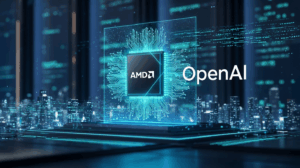
But the Nvidia deal is just one element in a much larger web of deals that OpenAI has forged in recent months. The company has maneuvered itself into a position that can justifiably be described as too big to fail. The list of agreements reads like a who's who of the technology and semiconductor industries. Oracle secured a $300 billion, five-year contract to build data center capacity as part of the so-called Stargate project. Broadcom announced a partnership to develop custom chips targeting ten gigawatts of computing capacity. AMD signed an agreement for six gigawatts of computing capacity, which also gives OpenAI the option to acquire up to ten percent of the company.
Revenue versus liabilities: A calculation that doesn't add up
The sheer scale of these commitments raises fundamental questions about economic viability. OpenAI is expected to generate approximately thirteen billion dollars in revenue this year. At the same time, the company has committed to 650 billion dollars in computing costs alone through agreements with Nvidia and Oracle. If one includes the agreements with AMD, Broadcom, and other cloud providers like Microsoft, the total commitments approach the trillion-dollar mark.
These figures are glaringly disproportionate to the company's current business results. In the first half of 2025, OpenAI generated revenue of approximately $4.3 billion, a 16 percent increase year over year. At the same time, the company burned through $2.5 billion in cash, primarily on research and development and the operation of ChatGPT. R&D spending in the first half of the year totaled $6.7 billion. At the end of the first half of the year, OpenAI had approximately $17.5 billion in cash and securities.
The discrepancy between revenue and commitments is staggering. Calculations suggest that building just one gigawatt of data center capacity costs roughly fifty billion dollars, including hardware, energy infrastructure, and construction costs. OpenAI has committed to a total of thirty-three gigawatts, which would theoretically require investments exceeding 1.6 trillion dollars. The company would therefore need to increase its revenue a hundredfold to even come close to financing this infrastructure.
How will this gap be filled? OpenAI is pursuing an aggressive diversification strategy. The company's five-year plan includes government contracts, e-commerce tools, video services, consumer hardware, and even its role as a computing provider through the Stargate data center project. The company's valuation has risen rapidly: from $157 billion in October 2024 to $300 billion in March 2025, and currently to $500 billion following a secondary stock sale in which employees sold $6.6 billion worth of shares.
The money carousel: How the AI industry finances itself
The structure of these agreements has raised concerns in the financial world, as it is reminiscent of a phenomenon prevalent during the dot-com bubble of the late 1990s: circular financing. The pattern is disturbingly familiar. A company in the supply chain invests in a downstream company, which then uses the capital received to buy products from the investor. Nvidia buys shares of OpenAI; OpenAI buys GPUs from Nvidia. Oracle invests in Stargate; OpenAI leases computing power from Oracle. AMD grants OpenAI warrants on up to ten percent of the company; OpenAI commits to buying tens of billions of dollars' worth of AMD chips.
These cycles create the illusion of booming businesses, while in reality, largely the same money is simply flowing back and forth between the same players. The problem is not new. In the late 1990s, internet infrastructure equipment suppliers practiced a similar vendor financing model. Companies like Lucent, Nortel, and Cisco extended generous loans to telecommunications providers and internet service providers, who then used the money to purchase equipment from these very suppliers. This artificially inflated revenues and masked the true demand. When the bubble burst, not only did the heavily indebted buyers collapse, but so did the suppliers, whose revenues turned out to be a mirage.
The parallels to today's situation are undeniable, even though important differences exist. Unlike many dot-com companies that never turned a profit, the major players in today's AI boom are profitable companies with established business models. Nvidia, for example, boasts profit margins of around 53 percent and dominates the AI chip market with a market share of approximately 80 percent. Microsoft, Google, and Amazon are among the most profitable companies in the world. Nevertheless, there are legitimate concerns.
A survey of global fund managers in October 2025 revealed that 54 percent believed AI-related stocks were in bubble territory. Sixty percent considered stocks overall to be overvalued. This skepticism is not unfounded. The commitments to build massive quantities of chips and data centers before OpenAI can afford them fuel fears that the enthusiasm for AI is developing into a bubble similar to the infamous dot-com bubble.
The curse of success: Why Nvidia's customers are becoming competitors
At the heart of this network is Nvidia, a company that has transformed itself in the past two years from a significant but specialized chip manufacturer into the world's most valuable publicly traded company. With a market capitalization exceeding four trillion dollars, Nvidia now surpasses even the heavyweights of the technology industry. Its rise is closely linked to the AI boom that began in late 2022 with the launch of ChatGPT. Since then, Nvidia's revenue has nearly tripled, while profits have skyrocketed.
Jensen Huang, who has led the company since its founding in 1993, has guided Nvidia through a remarkable transformation. Initially focused on graphics cards for video games, Huang recognized early on the potential of its processors for scientific computing and artificial intelligence. The development of CUDA, a parallel computing platform, enabled Nvidia's GPUs to be used for deep learning and AI models that require massive parallel processing. This strategic foresight positioned Nvidia as an indispensable partner for virtually every major AI project worldwide.
Huang's leadership style is unconventional. He eschews long-term planning, emphasizing a focus on the present. His definition of long-term planning is: What do we do today? This philosophy has given Nvidia remarkable agility. The company pursues an aggressive innovation strategy, aiming to launch a new generation of advanced AI chips every year. Hopper and Blackwell are followed by Vera Rubin and Rubin Ultra, each generation offering significantly improved performance and efficiency.
But this very strategy carries risks. For customers who invest tens of billions of dollars in Nvidia's hardware, the rapid obsolescence of their investments poses a serious problem. If a new chip generation significantly outperforms the previous one within twelve to eighteen months, the investments made lose value rapidly. No company can afford to spend ten or twenty billion dollars on the latest hardware every two years. This dynamic explains why major customers like Meta, Google, Microsoft, and Amazon are simultaneously pursuing their own chip development programs. OpenAI's collaboration with Broadcom in developing its own chips follows the same logic.
Nvidia is thus facing a paradox: the companies that are its biggest customers today could become its fiercest competitors tomorrow. Roughly 40 percent of Nvidia's revenue comes from just four companies: Microsoft, Meta, Amazon, and Alphabet. All of them possess the resources and technical expertise to develop their own AI chips. While Nvidia's technological lead and the extensive CUDA software ecosystem create significant barriers to entry, history in the technology industry shows that dominance is rarely permanent.
Our US expertise in business development, sales and marketing

Our US expertise in business development, sales and marketing - Image: Xpert.Digital
Industry focus areas: B2B, digitalization (from AI to XR), mechanical engineering, logistics, renewable energies and industry
More information here:
A thematic hub offering insights and expertise:
- Knowledge platform covering global and regional economies, innovation and industry-specific trends
- A collection of analyses, insights, and background information from our key areas of focus
- A place for expertise and information on current developments in business and technology
- A hub for companies seeking information on markets, digitalization, and industry innovations
Many users, few payers: ChatGPT's economic problem
Between hype and reality: The economic logic of the AI boom
Despite all the legitimate concerns, there are arguments in favor of the economic viability of massive AI investments. The demand for AI applications is real and growing exponentially. ChatGPT was the fastest application in history to reach 100 million users within two months. OpenAI now boasts approximately 800 million weekly users, though only about 5 percent of them are paying subscribers. This conversion rate of 99 percent free users to 1 percent paying users represents both a massive opportunity and a precarious foundation.
The integration of AI into business processes is progressing rapidly. According to studies, over seventy percent of companies worldwide now use some form of artificial intelligence. Unlike the dot-com era, when many business models were purely speculative and internet penetration was still low, there is now a real and growing demand for AI. Large companies are deploying advanced models for specific tasks, creating a feedback loop of revenue and productivity gains.
Analysts argue that the falling cost per unit of intelligence justifies the investment. As computing power becomes more affordable, more applications can be developed economically, which in turn increases demand. Nvidia emphasizes that its systems should be evaluated not only by the chip price but also by the total cost of ownership. The energy efficiency of the latest generations has improved significantly. The GB300-NVL72 platform offers a fifty-fold increase in energy efficiency per token compared to the previous Hopper generation. A three-million-dollar investment in GB200 infrastructure could theoretically generate thirty million dollars in token revenue, representing a tenfold return.
Nevertheless, fundamental doubts remain. The assumption of a linear scaling of computing power to AI capabilities is increasingly being questioned. Research suggests that diminishing returns may be setting in. The Stanford AI Index 2024 shows that computing utilization has grown exponentially, while performance improvements in key benchmarks are leveling off. More servers do not automatically lead to better AI, yet OpenAI's strategy treats computing power as a guaranteed path to dominance.
A house of cards made of chips? The domino risk in the AI ecosystem
The close interrelationship between chip manufacturers, cloud providers, and AI developers creates systemic risks. If OpenAI fails or misses its growth targets, the repercussions would ripple through the entire supply chain. Nvidia would be stuck with investments in an overvalued company. Oracle would have built data center capacity that no one is using. AMD would have created production capacity for chips that are no longer in demand. The fates of these companies are intertwined in a way reminiscent of the interdependencies that contributed to the 2008 financial crisis.
Critics like the well-known short seller Jim Chanos draw explicit parallels to the dot-com bubble. Chanos points out that the capital requirements for AI infrastructure far exceed the roughly one hundred billion dollars in vendor funding during the internet boom. He expresses concern that leading technology companies like Nvidia and Microsoft would do anything to keep the actual equipment off their balance sheets through creative financing structures. The concern is that these companies fear the depreciation schedules and accounting implications, as well as the enormous capital requirements, which they don't want to directly reflect on their balance sheets.
However, there are also voices warning against premature bubble diagnoses. Some analysts argue that current agreements don't reach the necessary scale to be overwhelming. For example, the OpenAI-Nvidia agreement would represent roughly thirteen percent of Nvidia's projected revenue for 2026. If a one-gigawatt deployment occurs in the second half of 2026, it would trigger a total capital investment of roughly fifty to sixty billion dollars, of which Nvidia would receive about thirty-five billion dollars. Of that, ten billion dollars would be reinvested in OpenAI, with further investments depending on actual progress in AI monetization. This performance-based approach differs from the fixed, often speculative commitments of the telecom bubble.
The real bottleneck: Why the AI boom could run out of power
An often overlooked but potentially crucial bottleneck is power supply. Operating AI data centers requires enormous amounts of electricity. Ten gigawatts is equivalent to powering over eight million American homes or five times the capacity of the Hoover Dam. The thirty-three gigawatts that OpenAI has committed to would roughly match the entire electricity demand of New York State.
The power grids in the United States are already under considerable strain. In 2024, data centers accounted for approximately four percent of total American electricity consumption, equivalent to about 183 terawatt-hours. By 2030, this figure is expected to more than double to 426 terawatt-hours. In some states, such as Virginia, data centers already consumed twenty-six percent of total electricity in 2023. In North Dakota, the figure was fifteen percent, in Nebraska twelve percent, in Iowa eleven percent, and in Oregon also eleven percent.
Building new data centers with sufficient power takes years. Estimates suggest that developing a data center in the US typically takes about seven years from initial planning to full operation, with 4.8 years for pre-development and 2.4 years for construction. This creates a fundamental bottleneck for OpenAI's ambitious expansion plans. The company can sign as many contracts as it likes, but if the physical infrastructure isn't in place on time, those commitments will remain empty promises.
The energy issue also raises sustainability concerns. A single ChatGPT query consumes roughly ten times more energy than a typical Google search. With millions of queries daily for OpenAI alone, not to mention competitors like Anthropic, Google, and Microsoft, this places an enormous burden on power grids and the environment. Cooling these data centers also requires vast amounts of water. Hyperscale data centers consumed approximately fourteen billion gallons of water directly in 2023, with expectations that this figure will double or triple by 2028.
The global playing field: AI between national interests and export controls
AI infrastructure has become a matter of national security. Both the Trump and Biden administrations emphasized industrial policy, framing AI not only as an economic opportunity but also as a security imperative. The implicit message to businesses is that speed is more important than caution. The Stargate project was announced at the White House with President Trump, who portrayed the technology as a driver of economic leadership and technological independence.
China is pursuing a state-led model that channels capital into AI to build domestic champions and reduce its reliance on American technology. Europe initially focused on risk management, but fears of lost competitiveness prompted Brussels to launch the AI Continent Action Plan and a €1 billion initiative to accelerate adoption.
For Nvidia, this geopolitical dimension represents both an opportunity and a risk. The company has attempted to pursue a strategy that would allow it to continue exporting chips to China, arguing that exclusion from the Chinese market would only strengthen Chinese competitors. However, export controls have reduced Nvidia's market share in China from 95 percent to virtually zero. Huang has publicly stated that he cannot imagine any policymaker considering this a good idea. The Chinese market represents an opportunity worth approximately 50 billion dollars that Nvidia is missing out on due to regulatory restrictions.
Bubble or revolution? An open-ended conclusion
The question of whether we are in the midst of an AI bubble cannot be definitively answered while we are still in the eye of the storm. Bubbles are often only clearly recognizable in retrospect. Alan Greenspan's famous warning against irrational exuberance came in December 1996, yet the Nasdaq didn't reach its peak until more than three years later. In the midst of a bubble's inflated state, inflation can last longer than would logically seem.
However, some facts are undeniable. AI company valuations are based on assumptions of future growth that would be historically unprecedented. No company has ever grown from ten billion to one hundred billion dollars in revenue as quickly as OpenAI is projecting. The commitments to build trillions of dollars in infrastructure, with current revenue at thirteen billion dollars, require a revenue explosion for which there is no historical precedent.
At the same time, AI is not pure speculation. The technology is already transforming industries and ways of working. Companies are achieving measurable productivity gains through AI integration. The question is not whether AI will be transformative, but how quickly this transformation will occur and whether current valuations and investments are keeping pace.
What happens if OpenAI misses its projections? At best, the company would have to scale back its infrastructure plans. At worst, the second-round effects could be substantial, as investors and other companies are increasingly placing large bets on OpenAI's value creation. These bets depend not only on that value being realized, but on it being realized quickly enough to cover the debt used to fund those bets. Failure to deliver value as quickly as investors expect has been enough to turn several historical tech booms into bankruptcies.
The central lesson of the dot-com bubble was that transformative technologies often succeed for decades, but the first wave of companies and their investors rarely capture the full promise implied in their stock prices. The internet did indeed change the world, but most of the highly valued internet companies of 2000 no longer exist. The winners were often companies that entered the market later or survived the darkest days of the crisis.
Whether this will also apply to AI remains to be seen. What is clear, however, is that the phone call between Jensen Huang and Sam Altman in late summer 2025 could prove to be one of those turning points where panic became strategy, dependence transformed into mutual commitment, and an industry set the course for one of the biggest economic gambles in modern history. The answer to whether this gamble pays off or becomes the biggest misinvestment since the dot-com era will be revealed in the coming decade.
Your global marketing and business development partner
☑️ Our business language is English or German
☑️ NEW: Correspondence in your native language!

Konrad Wolfenstein
I and my team are happy to be available to you as your personal advisor.
You can contact me by filling out the contact form here wolfenstein@xpert.digital:or simply call me at +49 7348 4088 965. My email address is
I'm looking forward to our joint project.
☑️ SME support in strategy, consulting, planning and implementation
☑️ Creation or realignment of the digital strategy and digitization
☑️ Expansion and optimization of international sales processes
☑️ Global & Digital B2B trading platforms
☑️ Pioneer Business Development / Marketing / PR / Trade Fairs
🎯🎯🎯 Benefit from Xpert.Digital's extensive, five-fold expertise in one comprehensive service package | BD, R&D, XR, PR & Digital Visibility Optimization

Benefit from Xpert.Digital's extensive, five-fold expertise in a comprehensive service package | R&D, XR, PR & Digital Visibility Optimization - Image: Xpert.Digital
Xpert.Digital possesses in-depth knowledge across various industries. This allows us to develop tailored strategies precisely aligned with the requirements and challenges of your specific market segment. By continuously analyzing market trends and monitoring industry developments, we can act proactively and offer innovative solutions. The combination of experience and expertise generates added value and provides our clients with a decisive competitive advantage.
More information here: