
No AI water to extinguish fires in New York: When responsibility evaporates – The $32 billion AI boom and its blind spot – Creative image on the topic, with AI: Xpert.Digital
Fire in the Lake Mariner project: Why New York is now pulling the emergency brake on the expansion of AI infrastructure
Burnt files, dry fire hydrants: How tech companies are shirking their responsibility during the data center boom
The opaque network behind our AIs: A fire reveals who is really paying in the data center race
The global hunger for computing power for artificial intelligence is driving unprecedented billions in investment – but a dangerous incident in the US has now revealed the dark side of this rapid growth. When a fire broke out in the summer of 2026 at the gigantic, $32 billion Lake Mariner data center complex in New York State, emergency responders faced a nightmare: dry hydrants, burned safety data sheets, and a lack of fire suppression systems. Fortunately, no one was injured, but the fire exposed a deep-seated structural problem within the tech industry. Behind these state-of-the-art server farms often lies a complex network of owners, operators, and tech giants like Google and Anthropic, where ultimately no one wants to assume full legal or operational responsibility. Adding to the problem is a critical economic detail: the jobs once grandly promised to local communities are almost entirely evaporating due to the highly automated nature of the AI centers, while electricity and resource consumption are skyrocketing. The Lake Mariner incident is more than just a construction site accident – it is a wake-up call for politicians and a symbol of the runaway excesses of the global AI subsidy race.
How a fire in Somerset reveals the downside of the data center race
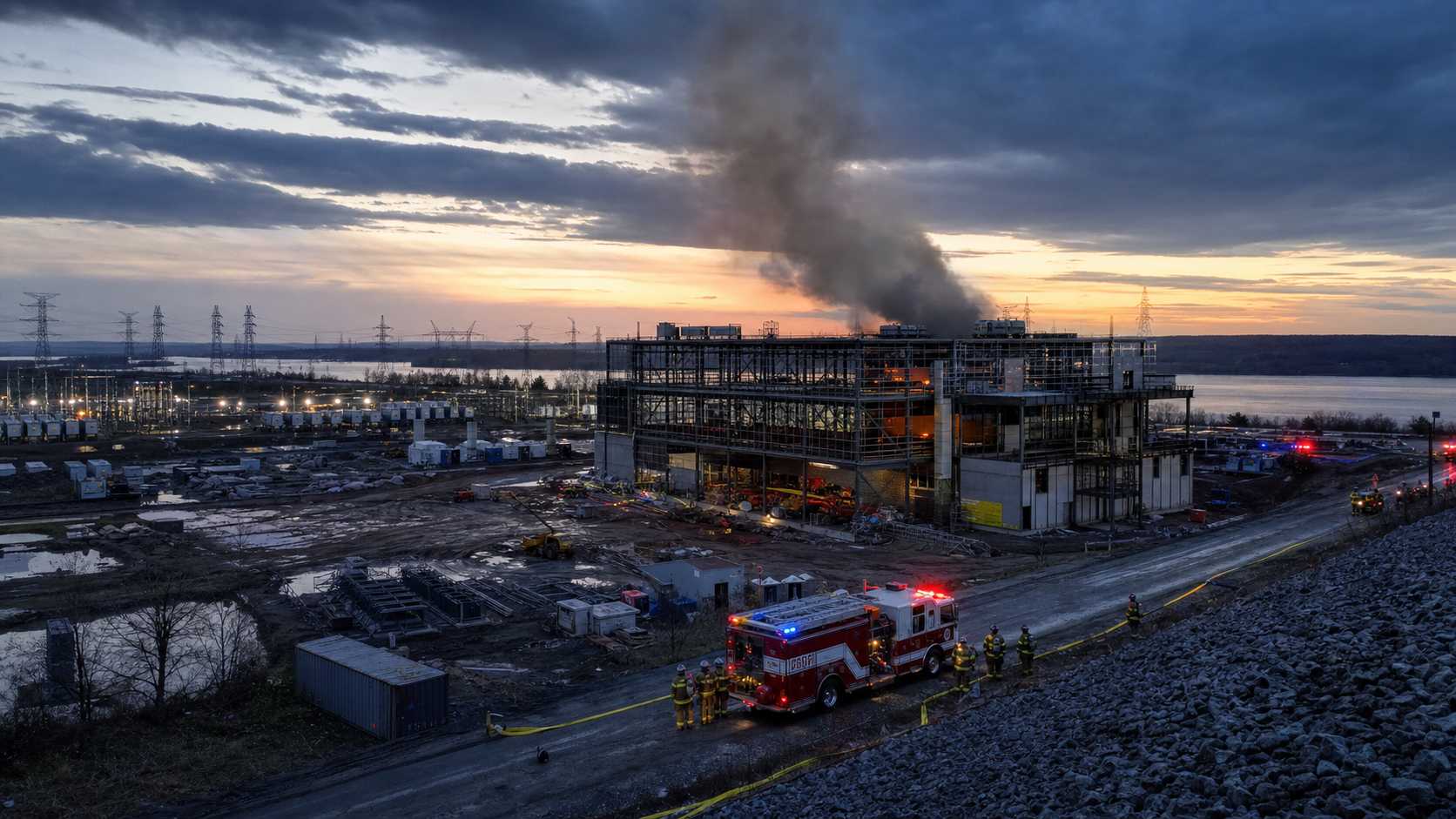
In early June 2026, a fire broke out in an unfinished building at the Lake Mariner data center complex in Somerset, New York. What initially appeared to be a typical construction accident quickly became a symbol of the structural weaknesses of the global AI infrastructure boom. When the Barker Fire Department arrived at the scene, they encountered a situation that emergency responders should never have faced: there was neither a functioning fire alarm nor a fire suppression system, three hydrants were dry, and the safety data sheets, which should have provided information about the burning chemicals, had been destroyed in the fire, according to the operator. Fire Chief Steve Matisz later described how his crew had essentially gone blind into thick black smoke, without knowing what substances they were dealing with.
The affected site is located on the grounds of a former coal-fired power plant on the shores of Lake Ontario and is part of one of the largest AI data center projects in New York State, with a total investment volume of $32 billion. What is remarkable is not so much the incident itself, in which fortunately no one was injured and which did not significantly delay construction, but rather what it reveals about the structure of the entire industry. For behind the polished facade of technological progress lies a network of owners, operators, financiers, and customers in which, ultimately, no one seems truly accountable for safety, environmental impact, or social responsibility.
A corporate network without a clear point of contact for responsibility
Who is actually responsible for the Lake Mariner project cannot be answered in a single sentence, and that is precisely the crux of the problem. The owner and formal operator of the facility is the company TeraWulf, which was originally active as a Bitcoin mining company on the same site and has since consistently shifted its focus towards AI and high-performance computing. The intriguing aspect is that TeraWulf leases the land from a company owned by its own CEO, Paul Prager, thus merging the roles of owner and operator within the same group of people. The British company Fluidstack, which operates as an independent entity but is closely intertwined with major technology companies, is slated for the operational management of the facility. Google holds options on a future 14 percent stake in the project and has also committed to guaranteeing Fluidstack's lease payments, thus acting simultaneously as a potential co-owner and financial guarantor. One of the customers for the computing power ultimately generated is Anthropic, the AI company whose need for computing capacity represents a significant economic driver of the entire project.
This constellation of at least four key actors, supplemented by local authorities, the fire department, and the municipal council, leads to a peculiar blurring of responsibilities. Legal liability in the event of a fire, operational responsibility for safety systems, financial responsibility for ongoing operations, and reputational responsibility to the population, whose electricity grid and water supply are burdened by such facilities, are all distributed among different parties. While TeraWulf subsequently stated that it was responsible for operational safety and emergency preparedness at the site, including the necessary safety systems and coordination with local emergency services, this assurance seems unconvincing given the conditions encountered during the fire, especially since Mayor Jeffrey Duerr and the Somerset council have reportedly repeatedly and unsuccessfully requested meetings with the company since the incident.
When a data center becomes larger than the waterworks it is supposed to extinguish
The scale of the Lake Mariner project far exceeds what a rural community like Somerset is accustomed to. It is planned to have a total power capacity of up to 500 megawatts, distributed across several buildings, which is roughly equivalent to the consumption of a medium-sized town. By comparison, a single, conventional data center typically operates with a fraction of this power. Such hyperscale facilities, known in technical jargon as "hyperscale data centers," have grown so large that they require their own substations, water supply systems, and security infrastructure, the development of which apparently doesn't always keep pace with the rapid construction progress. This was precisely the case with the Lake Mariner fire: a building that should have already had functioning fire protection systems was still under construction, while other parts of the complex were already being put into operation.
Although improvements were announced after the incident, including additional hydrants, so-called Knox boxes for rapid fire department access, and portable emergency bags with safety data sheets, when a journalist spoke with fire chief Matisz again in August, he reported that, to his knowledge, the hydrants in question were still not functioning and he had not observed any repair work. This discrepancy between publicly announced improvements and the actual situation on the ground underscores a recurring pattern in the AI infrastructure boom: communications departments of large companies quickly announce corrective measures, while practical implementation lags significantly behind and is virtually impossible to verify externally.
A new dimension of digital transformation with 'Managed AI' (Artificial Intelligence) - Platform & B2B solution | Xpert Consulting


A new dimension of digital transformation with 'Managed AI' (Artificial Intelligence) – Platform & B2B solution | Xpert Consulting - Image: Xpert.Digital
Here you will learn how your company can implement customized AI solutions quickly, securely and without high entry barriers.
A managed AI platform is your all-inclusive, worry-free solution for artificial intelligence. Instead of dealing with complex technology, expensive infrastructure, and lengthy development processes, you receive a ready-made solution tailored to your needs from a specialized partner – often within just a few days.
The key advantages at a glance:
⚡ Rapid implementation: From idea to ready-to-use application in days, not months. We deliver practical solutions that create immediate added value.
🔒 Maximum data security: Your sensitive data stays with you. We guarantee secure and compliant processing without sharing data with third parties.
💸 No financial risk: You only pay for results. High upfront investments in hardware, software, or personnel are completely eliminated.
🎯 Focus on your core business: Concentrate on what you do best. We take care of the entire technical implementation, operation, and maintenance of your AI solution.
📈 Future-proof & scalable: Your AI grows with you. We ensure continuous optimization and scalability, and flexibly adapt the models to new requirements.
More information here:
The Great AI Fraud: How Data Centers Promise Jobs and Disappoint Communities
From 165 jobs to 40: The promise that vanished into thin air
Beyond the safety concerns, the Lake Mariner case reveals a second, economically at least as significant dimension: the massive discrepancy between the originally promised and the actual economic impact on the region. In 2019, a real estate company called Somerset Operating Company, also owned by current TeraWulf CEO Paul Prager, pledged 165 permanent jobs and an $85 million capital investment for the same property as part of an application for discounted electricity rates. These commitments formed the basis for granting the site particularly favorable electricity tariffs—a common tool for local economic development in the US, where energy providers offer special rates in exchange for promised jobs and investments.
Seven years later, the reality looks quite different. According to a planning report from 2024, a TeraWulf project manager stated that the fully developed plant, with its capacity of up to 500 megawatts, would ultimately create only between 35 and 40 jobs. This represents less than a quarter of the originally promised number of positions, while the investment volume has increased many times over to 32 billion US dollars. In other words, while the capital invested has increased by a factor of approximately 375 compared to the original commitment, the promised employment impact has plummeted by more than three-quarters. Paul Prager did not respond to inquiries regarding this discrepancy.
These figures illustrate a key economic characteristic of modern AI data centers: they represent extremely capital-intensive investments that create comparatively few jobs. Unlike traditional industrial developments, where large investments have historically been accompanied by a proportionally growing number of jobs, highly automated server farms operate according to a fundamentally different logic. The vast majority of capital flows into construction, specialized technology, cooling systems, and the computing chips themselves, while day-to-day operations require a minimum of personnel. For local communities, this means that while the short-term effects during the construction phase, such as construction jobs and local contracts, can be significant, the long-term economic impact on the region often remains surprisingly small.
Why nobody seems to be held accountable in the end
The New York Power Authority (NYPA) conducts annual reviews to verify whether companies benefiting from subsidized electricity rates are actually fulfilling their initial commitments. In cases of non-compliance, the NYPA can theoretically adjust or revoke the subsidies granted. Whether and to what extent this has actually occurred in the case of Somerset Operating Company and TeraWulf has remained opaque to the public. Furthermore, no publicly disclosed official investigations or regulatory consequences appear to have followed the fire itself, which seems remarkable given the severity of the identified safety deficiencies.
This observation fits a larger pattern emerging across industries in the US regarding the expansion of AI infrastructure. In response to growing public criticism, Governor Kathy Hochul imposed the first temporary suspension of permits for new hyperscale data centers with a capacity of at least 50 megawatts statewide in July 2026. This measure, valid for up to one year, is intended to give the state time to develop comprehensive regulations addressing environmental impacts, water consumption, grid stability, and noise pollution. Hochul explicitly cited concerns that rising electricity prices would ultimately force residents to subsidize grid expansion for data centers, while the actual economic benefits for local communities often fall short of the promised returns. Simultaneously, the New York State Legislature passed its own, even stricter legislative initiative, which would apply to projects with a capacity threshold of 20 megawatts and would additionally mandate compliance with labor standards for construction projects, as well as compulsory investment in local communities.
A systematic pattern: Why responsibility is diffusing in the AI boom
The Lake Mariner case is significant because it is not an isolated incident, but rather illustrates a pattern that is repeating itself in a similar form during the current AI infrastructure boom. Large technology companies like Google, which possess enormous capital reserves but do not want to act directly as developers or operators, instead secure economic influence through warrants, lease guarantees, and long-term power purchase agreements, without assuming full legal and operational responsibility for the physical infrastructure. AI development companies like Anthropic, in turn, urgently need computing capacity to keep pace with the competition and therefore conclude ever more new, multi-billion-dollar power purchase agreements—such as the approximately $19 billion, twenty-year lease agreement that TeraWulf signed with Anthropic in July 2026 for another site in Kentucky. Specialized operating companies like Fluidstack take over the operational management on site, but often act themselves only as one of several levels in a complex network of investments, as demonstrated by the joint venture in Texas founded together with TeraWulf and now sold to an investor group led by Fluidstack.
At the end of this chain is the local community, which lacks both the financial resources of the tech giants and the legal means to identify and hold accountable the party actually responsible in the event of a dispute. When responsibility for a particular problem is questioned, virtually every actor can retreat to a formally limited role: TeraWulf points to its contractual responsibility for operational safety, without the actual landowner, who benefited from the initial concessions, having to provide the same accountability. Google can claim to be merely a financing partner and potential future co-owner, but not operationally responsible. Anthropic can position itself as a mere consumer of computing power, uninvolved in the construction and operation of the physical facility. This structural fragmentation makes it considerably more difficult for the public to identify a clear party responsible in the aftermath of a security incident or when financial commitments are not honored.
The economic logic behind the subsidy race
From an economic perspective, the behavior of all involved actors can be rationally explained, even if the outcome remains unsatisfactory for the affected communities. States and local energy providers in the US are engaged in fierce competition for billions of dollars in AI investments, which promise tax revenue, construction contracts, and a degree of regional visibility. Discounted electricity prices and tax breaks are key incentives that locations use to gain an edge over neighboring states and regions. Companies like Somerset Operating Company have learned from this situation that optimistic employment forecasts submitted with applications significantly increase the likelihood of receiving more favorable terms, while the actual verification and enforcement of penalties for failing to meet these forecasts are often lax in practice.
At the same time, the capital structure of the projects also follows a clear business logic. For Google, a 14 percent option stake, combined with a lease guarantee, is a comparatively capital-efficient way to secure strategic access to additional computing capacity without burdening its balance sheet with the full investment volume of $32 billion or bearing the operational risk of a physical construction project. For TeraWulf, originally active in the low-margin and volatile Bitcoin mining business, the shift to long-term AI leases with partners like Anthropic offers a significantly more stable and higher-margin revenue stream, which explains the massive recovery of TeraWulf's share price during 2026. Finally, for Anthropic, securing physical computing capacity across various providers—including Fluidstack, Amazon, CoreWeave, and TeraWulf itself—is a strategic necessity given the enormous and ever-increasing computing demands for training and operating increasingly larger AI models.
What this case means for future data center projects
The events surrounding Lake Mariner are likely to have repercussions for the entire industry, extending beyond this specific case. First, a noticeable tightening of regulatory requirements is expected, as already indicated by Hochul's moratorium and the parallel legislative initiative in the New York State Legislature. Operators will have to prepare for permitting processes that will require stricter documentation regarding fire safety, water supply, and grid compatibility, which is likely to lengthen planning times and increase project costs. Second, growing skepticism is anticipated in affected communities, which are increasingly questioning the concrete benefits that multi-billion-dollar data center projects actually bring to their region if, in the end, only a few dozen permanent jobs are created. This development aligns with similar resistance that is now being voiced in other US states and internationally against the unchecked expansion of data center capacity.
Third, pressure is likely to increase on regulatory authorities like the NYPA to conduct more rigorous annual compliance audits and to actually reduce or reclaim benefits when employment or investment commitments are not met, instead of letting such discrepancies as in the Somerset case go unaddressed for years. Finally, this case demonstrates that transparency requirements along the entire value chain—from the land company to the operator, the financing partner, and the end user of the computing power—are likely to play a significantly more important role in the future. Without a clearer allocation of responsibilities within such corporate structures, the risk remains that security deficiencies like the one in Somerset will only come to light by chance or after an actual incident, while structural incentives for preventative investments in security and local value creation remain weak.
The true price of the data center boom
The incident in Somerset makes it clear that the current AI infrastructure boom cannot be measured solely by technological innovation or investment volume, but also by how responsibly these investments are integrated into existing communities, power grids, and security structures. The combination of a highly complex corporate network spread across multiple continents and legal entities, inadequate operational security measures, and a massive discrepancy between promised and actual local value creation is not a fringe phenomenon, but a structural characteristic of the industry in its current growth phase. As long as regulators, municipalities, and the corporations involved fail to close this accountability gap, we can expect similar incidents to occur – with potentially more serious consequences than a fire in which, fortunately, no one was injured.
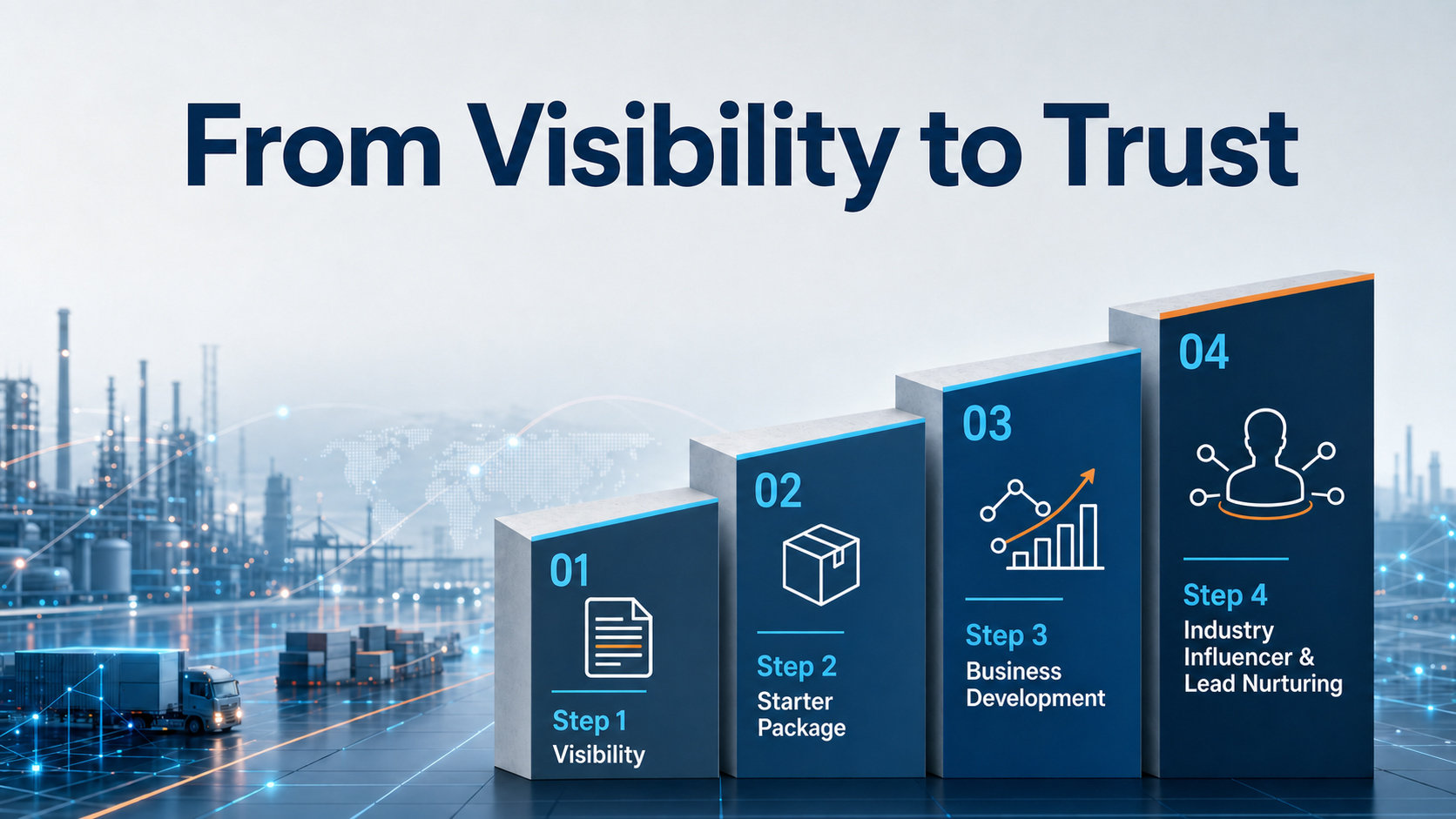
📈🚀 From visibility to trust 👀🤝 Your scalable path with Xpert.Digital

From visibility to trust: Your scalable path with Xpert.Digital - Image: Xpert.Digital
In industrial B2B, sustainable business relationships rarely emerge overnight. They develop step by step – through visibility, professional relevance, recurring touchpoints, and growing trust. Xpert.Digital's 4-stage model addresses precisely this: It offers a structured path that begins with a manageable entry point and can evolve into deeper collaboration in business development if needed.
Instead of relying on loud marketing promises, this model puts the relationship at the forefront. Companies start with clearly defined, easily calculable measures and then decide, based on their own experience, how far they want to expand the collaboration. A key factor for this undisturbed trust-building process: The platform completely avoids annoying advertising ads, so the editorial focus remains solely on the companies' expertise.
More information here:
Your global marketing and business development partner
☑️ Our business language is English or German
☑️ NEW: Correspondence in your native language!

Konrad Wolfenstein
I and my team are happy to be available to you as your personal advisor.
You can contact me by filling out the contact form here wolfenstein@xpert.digital:or simply call me at +49 7348 4088 965. My email address is
I'm looking forward to our joint project.