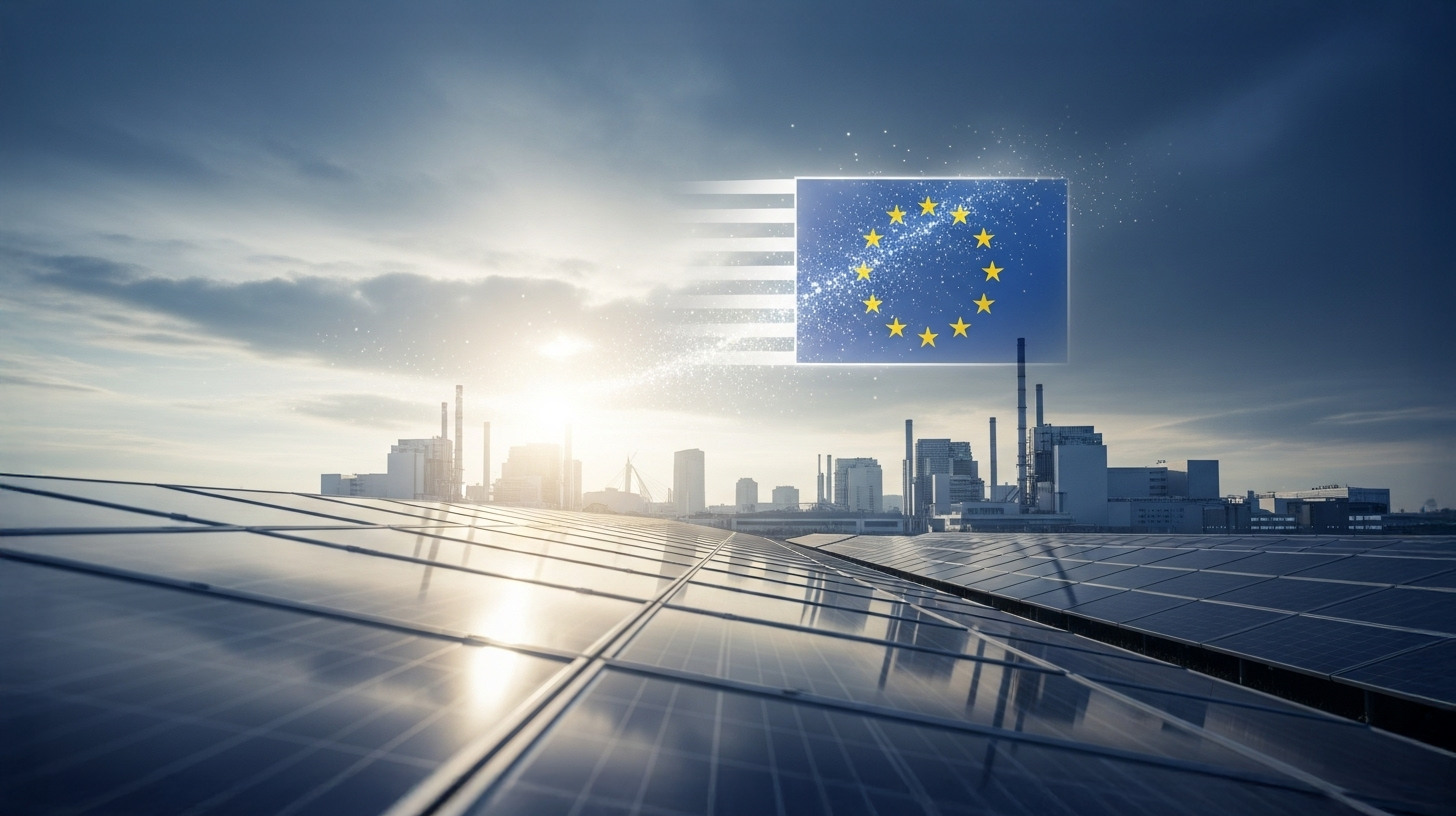
Net-Zero Industry Act (NZIA) – Europe's last lifeline for solar energy? – Image: Xpert.Digital
Solar boom, but wave of bankruptcies: The bizarre paradox that is destroying Europe's industry
More than just a law: Europe's last attempt to end its dependence on China
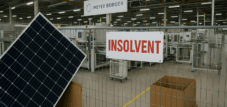
The European solar industry is mired in a deep, paradoxical crisis: While the expansion of solar power plants in the EU is breaking records and solar energy is becoming the most important source of electricity for the first time, domestic manufacturers are fighting for their very survival. Prominent examples such as the insolvency of the last major German module manufacturer, Meyer Burger, or Solarwatt's relocation of production to Asia illustrate the dramatic situation. The cause is a relentless battle for market share, driven by massively subsidized and extremely cheap solar modules from China, which dominate the European market with a 95 percent market share. Europe risks completely losing its industrial sovereignty in one of the most important technologies of the future and falling into a new, dangerous dependency.
In response to this existential threat, the EU launched the Net-Zero Industry Act (NZIA). In force since June 2024, this law aims to turn things around and massively strengthen manufacturing capacities for clean technologies in Europe. The core objective: By 2030, 40 percent of the demand for strategic technologies such as solar modules should be met by European production. But can this political lifeline save the already declining industry from collapse? Experts and industry associations express considerable doubts: While measures such as accelerated permitting and new sustainability criteria in public tenders offer hope, the NZIA lacks crucial elements – above all, fresh funding modeled on the US Inflation Reduction Act and immediately effective emergency measures. The following text analyzes whether the Net-Zero Industry Act is the last chance for a resilient European solar industry or whether it will go down in history as a well-intentioned but ultimately ineffective attempt.
Related to this:

What is the Net-Zero Industry Act and what are its objectives?
The Net-Zero Industry Act (NZIA) is a European regulation that entered into force in all 27 EU member states on June 29, 2024. The law is a key element of the Green Deal Industrial Plan and aims to massively expand manufacturing capacity for clean technologies in the EU.
The ambitious main goal of the NZIA is to meet at least 40 percent of the EU's annual demand for strategic net-zero technologies with European production by 2030. These key technologies include solar modules, wind turbines, batteries, heat pumps, electrolyzers, and other climate-friendly technologies. For the solar industry, this translates into a target of at least 30 gigawatts of operational photovoltaic manufacturing capacity across the entire value chain.
The NZIA pursues a two-pronged strategy: On the one hand, it aims to strengthen Europe's technological sovereignty and reduce its dependence on imports, particularly from China. On the other hand, the law aims to position European industry in global competition with the US and other rivals, thereby creating high-quality jobs.
What specific measures does the NZIA propose?
The Net-Zero Industry Act relies on a comprehensive package of measures to promote the European production of net-zero technologies. At its core are accelerated approval processes, which are to be simplified through so-called one-stop shops. These central points of contact coordinate all necessary official processes and reduce the bureaucratic burden for companies.
A particularly important change concerns public tenders and auctions for renewable energy. From December 30, 2025, the new rules must be applied to at least 30 percent of the auction volume, which corresponds to approximately six gigawatts per year per EU country. In doing so, not only prices but also qualitative criteria such as sustainability, resilience, cybersecurity, and responsible business practices may be taken into account.
The NZIA also enables the designation of Net-Zero Acceleration Valleys, special industrial zones that particularly encourage the establishment of net-zero technologies. These clusters are intended to create synergies and support the development of regional centers of excellence. In addition, strategic projects are identified that enjoy national priority and benefit from shorter approval processes.
Why is the European solar industry in such a dramatic crisis?
The European solar industry is currently experiencing one of the most severe crises in its history. The market is dominated by Chinese manufacturers, who produce approximately 95 percent of the solar modules used in the EU. This overwhelming market power is based on government subsidies, enormous production capacities, and aggressive pricing strategies.
The figures illustrate the extent of Chinese dominance: China has a manufacturing capacity of 552 gigawatts for solar modules, while the entire EU only reaches ten gigawatts. This difference in scale allows Chinese companies to produce significantly more cost-effectively than their European competitors due to economies of scale.
The price developments of recent years have been particularly dramatic. Between May 2023 and 2024, prices for standard modules roughly halved. In 2024, module prices fell to record lows of under 15 euro cents per watt for low-cost products. This aggressive competition forces many manufacturers to sell their modules below production costs.
What specific effects is the crisis having on European solar companies?
The impact of the crisis on the European solar industry is devastating, manifesting itself in a wave of plant closures and bankruptcies. The most prominent example is Meyer Burger, the last remaining major European manufacturer of solar modules. The Swiss company filed for insolvency for its German subsidiaries in May 2024 and ceased operations at its sites in Saxony and Saxony-Anhalt in September 2024. Around 600 employees lost their jobs after the search for investors proved unsuccessful.
Solarwatt, another major German solar manufacturer, also succumbed to price pressure. The company ceased its 300-megawatt module production in Dresden in August 2024 and relocated manufacturing entirely to Asia. This decision affected approximately 500 of its 850 employees, with the workforce expected to shrink to just 350 by 2025.
The crisis is not limited to German companies. According to Solarpower Europe, even Chinese manufacturers are affected by the ongoing price war. Jinkosolar reported a 23 percent drop in revenue and a 37.1 percent decline in profit. Other large Chinese companies such as Longi Green Technology, Tongwei, Trina Solar, and JA Solar also recorded losses.
How is the European solar market developing despite the industrial crisis?
Paradoxically, solar energy expansion is booming in Europe, while the domestic industry is collapsing. In 2024, around 65.1 gigawatts of new photovoltaic capacity were installed in the EU, but this already represented a slowdown in growth compared to previous years. Germany led this expansion with 17.4 gigawatts of newly installed capacity.
Particularly noteworthy was the record month of June 2025, in which solar power became the most important source of electricity in the European energy mix for the first time. With a share of 22.1 percent, photovoltaics surpassed nuclear power, wind power, and fossil fuels. This milestone demonstrates the enormous potential of solar technology for the European energy transition.
However, these positive expansion figures mask a problematic dependency. The majority of installed solar power systems are of Chinese manufacture. This development leads to a paradox: Europe is massively expanding its solar capacity, but at the same time is losing the industrial base for this technology.
Can the Net-Zero Industry Act still save the European solar industry?
Opinions on the effectiveness of the NZIA as a lifeline for the European solar industry are mixed. Supporters see the law as providing important impetus for strengthening domestic production. The European Solar Manufacturing Council welcomes the NZIA as a "key instrument on the path to a competitive, sustainable, and resilient EU net-zero industry.".
The possibility of considering resilience and sustainability criteria alongside price in public tenders is seen as an important step. This could help European manufacturers gain market share despite higher prices by focusing on quality, sustainability, and security of supply.
Critics, however, point to significant weaknesses in the NZIA. A key problem is the lack of new funding. While the US is allocating several hundred billion dollars through the Inflation Reduction Act, the NZIA has to manage without any fresh capital. The proposed financing instruments merely consolidate existing programs without providing any additional resources.
What structural problems remain despite the NZIA?
Despite the good intentions of the NZIA, fundamental structural problems remain, hindering a rapid recovery of the European solar industry. A major obstacle is the still lengthy approval processes. Although the NZIA envisions improvements, the German Chamber of Industry and Commerce criticizes the proposed deadlines as "not ambitious enough.".
The NZIA's technology selection is also being criticized. The German Renewable Energy Federation (BEE) criticizes the "excessive definition of net-zero technologies," which also includes controversial technologies such as nuclear power and carbon capture and storage. This broad range could dilute the focus on truly future-oriented technologies like photovoltaics.
Another problem lies in the lack of qualified specialists. There is a particular shortage of well-trained engineers and technicians needed for the development and operation of the technologies. Although the NZIA envisions the establishment of Net-Zero Industry Academies, training 100,000 workers within three years is considered highly ambitious.
How do experts assess the chances of success for the 40 percent target?
Many experts consider achieving the ambitious 40 percent target for 2030 unrealistic. Current market developments argue against a rapid recovery of European solar production. Instead, the decline of the domestic industry is accelerating: further plant closures and production shifts to Asia are to be expected.
A fundamental problem lies in the time gap between the NZIA targets and current market dynamics. While the law sets long-term goals for 2030, companies are fighting for their short-term survival. Many manufacturers have "only weeks" left before bankruptcy, as industry representatives warn.
The European photovoltaic associations ESMC and Solar Power Europe are therefore calling on the EU to implement an immediate action plan for the solar industry. In a joint letter to top EU politicians, they emphasize that "without immediate, coordinated measures, Europe risks losing its remaining production base for solar technology.".
What role does global trade policy play in the success of the NZIA?
Global trade flows have a decisive influence on the effectiveness of the NZIA. A key factor in the current oversupply of Chinese solar modules in Europe is the US trade restrictions. Since the US limited Chinese imports, an even larger supply is flooding the European market.
The EU, for its part, has launched investigations into Chinese solar companies for possible unfair subsidies. These investigations could lead to punitive tariffs, which would reduce price pressure on European manufacturers. However, such trade policy instruments are controversial, as they could increase the cost of solar installations and thus slow the expansion of renewable energies.
The complexity of global supply chains also makes protectionist approaches more difficult. Even if Europe promotes the final assembly of solar modules, critical intermediate products such as silicon, wafers, and solar cells often remain of Chinese origin. A truly independent European solar industry would require building the entire value chain.
New: Patent from the USA – install solar parks up to 30% cheaper and 40% faster and easier – with explanatory videos!

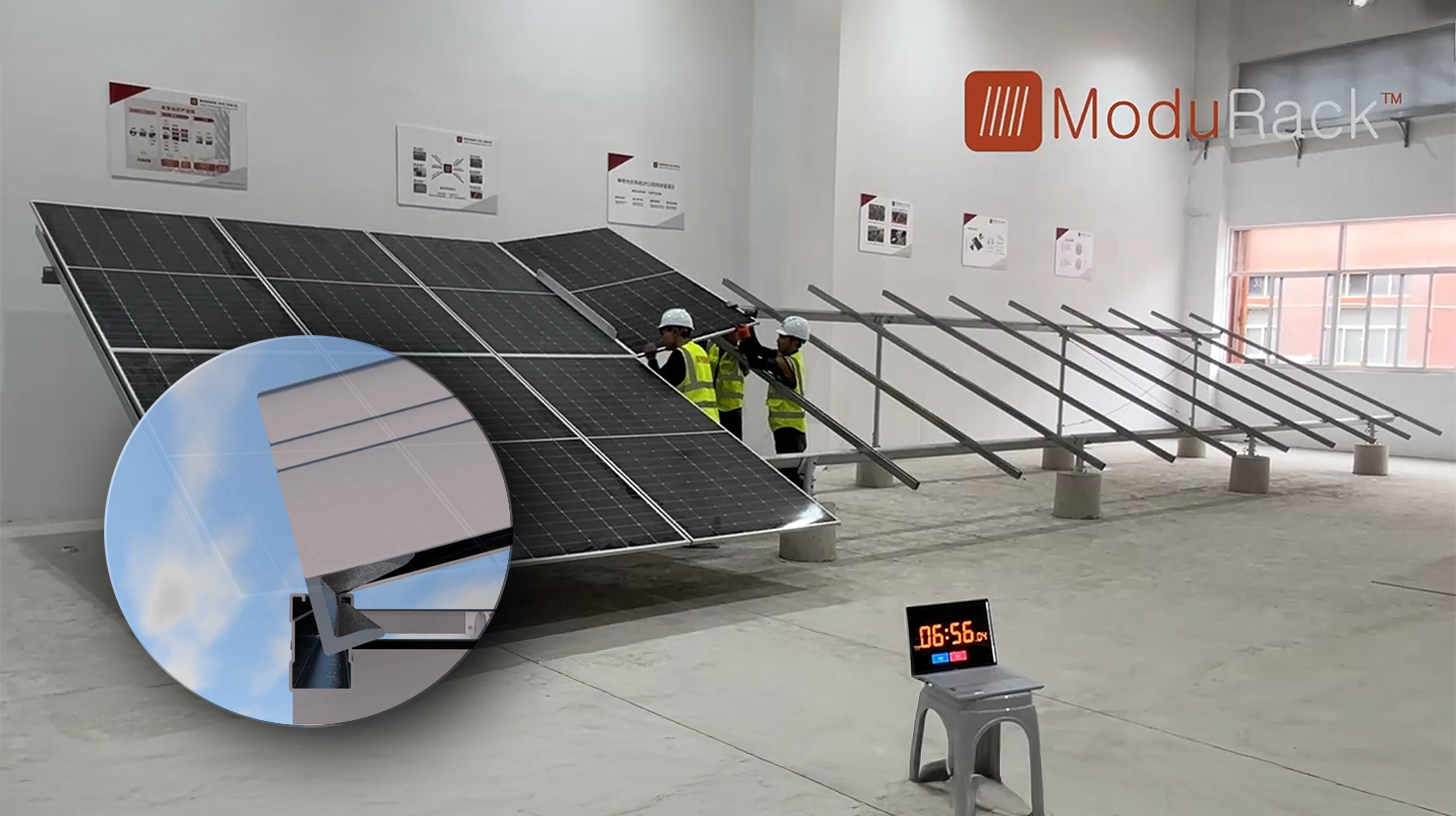
New: Patent from the USA – Install solar parks up to 30% cheaper and 40% faster and easier – with explanatory videos! - Image: Xpert.Digital
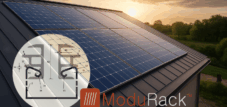
The core of this technological advancement is the deliberate departure from conventional clamp mounting, which has been the standard for decades. The new, more time- and cost-effective mounting system addresses this with a fundamentally different, more intelligent concept. Instead of clamping the modules at specific points, they are inserted into a continuous, specially shaped support rail and held securely in place. This design ensures that all forces – whether static loads from snow or dynamic loads from wind – are distributed evenly across the entire length of the module frame.
More information here:
Net-Zero Industry Act: A beacon of hope or too weak in the race with China?
Are there successful examples of NZIA implementation in individual member states?
Initial attempts to implement the NZIA principles have yielded mixed results. Germany and Austria have already tried to integrate resilience criteria into their tenders, but so far with "little success." Practical implementation is proving more complicated than initially anticipated.
France has launched national support programs with the "Pacte solaire" declaration, Spain with PERTE financing, and Italy with the "Piano Transizione 5.0" tax credit scheme. Austria introduced a "Made in EU" bonus. These programs demonstrate that individual member states are indeed willing to promote domestic solar production.
However, these national initiatives often remain fragmented and too small to counteract global market trends. The lack of coordination between member states and the differing funding approaches can even lead to distortions in the European single market.
Related to this:

What alternatives exist to the NZIA as an industrial policy instrument?
Critics of the NZIA propose various alternative approaches. The German Chemical Industry Association calls for a more holistic approach that includes not only end technologies but the entire industrial value chain. The current focus on individual "net-zero-end technologies" ignores the importance of upstream industries.
A frequently mentioned alternative proposal is the creation of a dedicated EU solar fund or a "Clean Tech Manufacturing Bank". Such financing instruments could specifically promote investments in European solar production without requiring the complex regulatory mechanisms of the NZIA.
Other experts advocate for a reduction in bureaucracy and the harmonization of tax frameworks within the EU single market. Instead of new, specific funding instruments, the general framework conditions for all industries should be improved.
How is the competition developing between different net-zero technologies?
The NZIA treats photovoltaics as one of many strategic net-zero technologies. This equal treatment could prove problematic, as different technologies are at different stages of development and have different support needs. As a result, the solar industry competes with wind power, batteries, electrolyzers, and other technologies for limited support resources.
The inclusion of nuclear energy in the catalog of strategic technologies is particularly controversial. While traditional proponents of nuclear power welcome this, environmental groups and parts of the renewable energy sector criticize the decision. They fear that nuclear power projects will absorb resources that would be better invested in truly future-oriented technologies.
The varying levels of market maturity of the different technologies also complicate a unified funding strategy. While photovoltaics is already a mature, commercially available technology, other NZIA technologies, such as certain hydrogen technologies, are still in early stages of development.
What impact does the NZIA have on small and medium-sized enterprises?
The impact of the NZIA on small and medium-sized enterprises (SMEs) is ambivalent. On the one hand, the simplified approval procedures and one-stop shops could also benefit smaller companies. On the other hand, the German Chamber of Industry and Commerce fears that the new sustainability and diversification criteria in public tenders could make it more difficult for SMEs to participate.
The complex requirements for certification based on resilience and sustainability criteria can represent a significant bureaucratic burden for smaller companies. Large international corporations have the resources to undergo elaborate certification processes, while SMEs may be deterred by them.
At the same time, specialized SMEs in niche areas of solar technology could certainly benefit. German companies focusing on high-quality inverters, mounting systems, or specific applications may have better opportunities than manufacturers of standard modules.
How does the NZIA influence European energy supply and security?
The NZIA explicitly aims to strengthen European energy security by reducing dependence on imports of critical technologies. The current situation with solar modules is often compared to the earlier dependence on Russian gas. In fact, Europe's dependence on Chinese solar modules is even more extreme than its earlier gas dependence on Russia.
This dependence carries not only economic but also geopolitical risks. Trade conflicts or political tensions with China could jeopardize the supply of solar modules and thus hinder European climate protection efforts. The NZIA is attempting to counter this risk by developing domestic production capacities.
However, the goal of security of supply is partly in conflict with the goal of a rapid expansion of renewable energies. Higher prices for European solar modules could slow down this expansion and thus jeopardize climate targets. These conflicting objectives require a careful balancing of short-term and long-term priorities.
What technological innovations could strengthen the competitiveness of European solar manufacturers?
European companies are increasingly relying on technological innovations to differentiate themselves from Chinese mass production. New materials like perovskite promise efficiencies of up to 29 percent with low degradation. Bifacial modules, which can absorb light on both sides, are establishing themselves as the new standard.
Building-integrated photovoltaics (BIPV) offers further differentiation opportunities. Flexible or transparent modules open up new fields of application and could unlock niche markets for European manufacturers. Floating photovoltaic systems (Floating-PV) and agri-PV systems for agriculture also show potential.
However, these innovations require significant research and development investments, which are difficult to finance given current market pressures. Many European companies must first secure their survival before they can invest in new technologies.
How do environmental and climate protection organizations rate the NZIA?
Environmental and climate protection organizations have issued mixed reviews of the NZIA. While the goal of strengthening European production of clean technologies is generally welcomed, the German Renewable Energy Federation (BEE) sees the law as an "important signal" but also criticizes its significant weaknesses.
The inclusion of nuclear energy and carbon capture and storage technologies in the catalog of strategic net-zero technologies is particularly controversial. Environmental groups fear that these technologies, which they consider "questionable from a climate and security perspective," could divert resources from truly sustainable solutions.
Another point of criticism concerns the NZIA's lack of funding. Without "fresh money," the law is unable to provide a strong response to the American Inflation Reduction Act. Therefore, after the European elections, the EU should "tackle the issue with renewed vigor.".
What role do consumers and public acceptance play in the success of the NZIA?
Public acceptance plays a crucial role in the success of the NZIA. On the one hand, surveys show a high willingness to invest in photovoltaics and battery storage among companies and private property owners. On the other hand, the consideration of sustainability criteria could lead to higher prices for solar systems, which could dampen demand.
Raising awareness about the advantages of European solar modules is therefore becoming increasingly important. Arguments such as higher quality, better working conditions during production, and reduced CO2 emissions due to shorter transport routes must be communicated to consumers. At the same time, price differences must remain within an acceptable range.
The development of labeling and certification systems for European photovoltaic products could increase transparency and make it easier for consumers to choose sustainable products. However, such systems must be credible and easy to understand in order to be effective.
Are there already measurable successes or failures of the NZIA?
Since the NZIA only came into force in June 2024 and many provisions will not take effect until late 2025 or later, measurable successes are still scarce. The application rules for auctions were only adopted in May 2025, and the first auctions under the new regulations are expected in 2026.
The developments so far are rather sobering. Instead of a recovery of the European solar industry, the decline has even accelerated: Meyer Burger, Solarwatt, and other major manufacturers have ceased their European production or filed for bankruptcy. This shows that the NZIA measures are coming too late or are insufficient to overcome the acute crisis.
On a positive note, several member states have launched national support programs based on the NZIA principles. However, it remains to be seen whether these programs will be sufficient to reverse the trend. The first reliable measures of success will not be possible until 2026 or 2027 at the earliest.
Related to this:
Lifeline or too little, too late?
The Net-Zero Industry Act undoubtedly represents the EU's most ambitious attempt to strengthen its industrial base for clean technologies and reduce its dependence on Chinese imports. With its goal of meeting at least 40 percent of the EU's demand for net-zero technologies from domestic production by 2030, the law sends an important political signal.
However, analysis of current market developments and industry reactions shows that the NZIA may be too small to serve as a "last resort" for the European solar industry. The ongoing wave of plant closures and bankruptcies, exemplified by the failure of Meyer Burger and Solarwatt's relocation of production to Asia, demonstrates the urgency of the situation.
Three key weaknesses limit the effectiveness of the NZIA: First, it lacks substantial new funding, while competitors like the US are investing hundreds of billions of dollars. Second, many measures will not take effect until 2025 or later, while companies are currently fighting for their survival. Third, its broad application across various technologies may be too unfocused to address the specific crisis facing the solar industry.
Nevertheless, it would be premature to consider the NZIA a failure. The first auctions with sustainability criteria will only begin in 2026, and the long-term structural improvements could well have an impact. The crucial factor will be whether the EU is prepared to back the NZIA with substantial financial resources and make adjustments as needed.
For the European solar industry, the NZIA remains more of a beacon of hope than a lifeline. Without additional massive support measures and an acceleration of implementation, Europe risks squandering its last chance for an independent solar industry. The next two to three years will show whether the political will is sufficient to preserve this strategically important sector.
Look, this little detail saves up to 40% installation time and reduces costs by up to 30%. It comes from the USA and is patented.

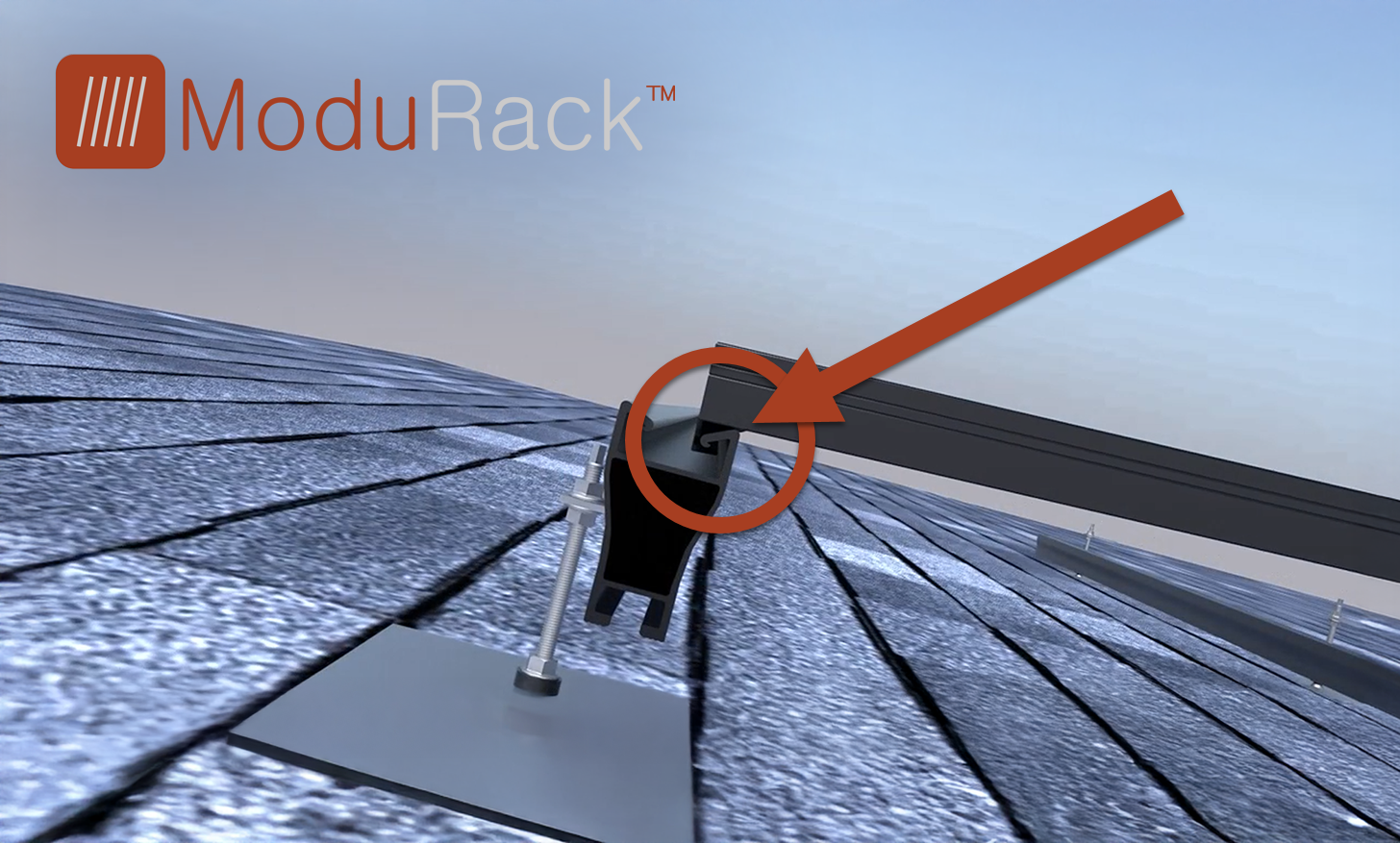
NEW: Ready-to-install solar systems! This patented innovation significantly accelerates your solar construction project
The core of ModuRack 's innovation lies in the departure from conventional clamp fastening. Instead of clamps, the modules are inserted and held in place by a continuous support rail.
More information here:
Your partner for business development in the fields of photovoltaics and construction
From industrial rooftop PV to solar parks and larger solar parking lots
☑️ Our business language is English or German
☑️ NEW: Correspondence in your native language!

Konrad Wolfenstein
I and my team are happy to be available to you as your personal advisor.
You can contact me by filling out the contact form here wolfenstein@xpert.digital:or simply call me at +49 7348 4088 965. My email address is
I'm looking forward to our joint project.