


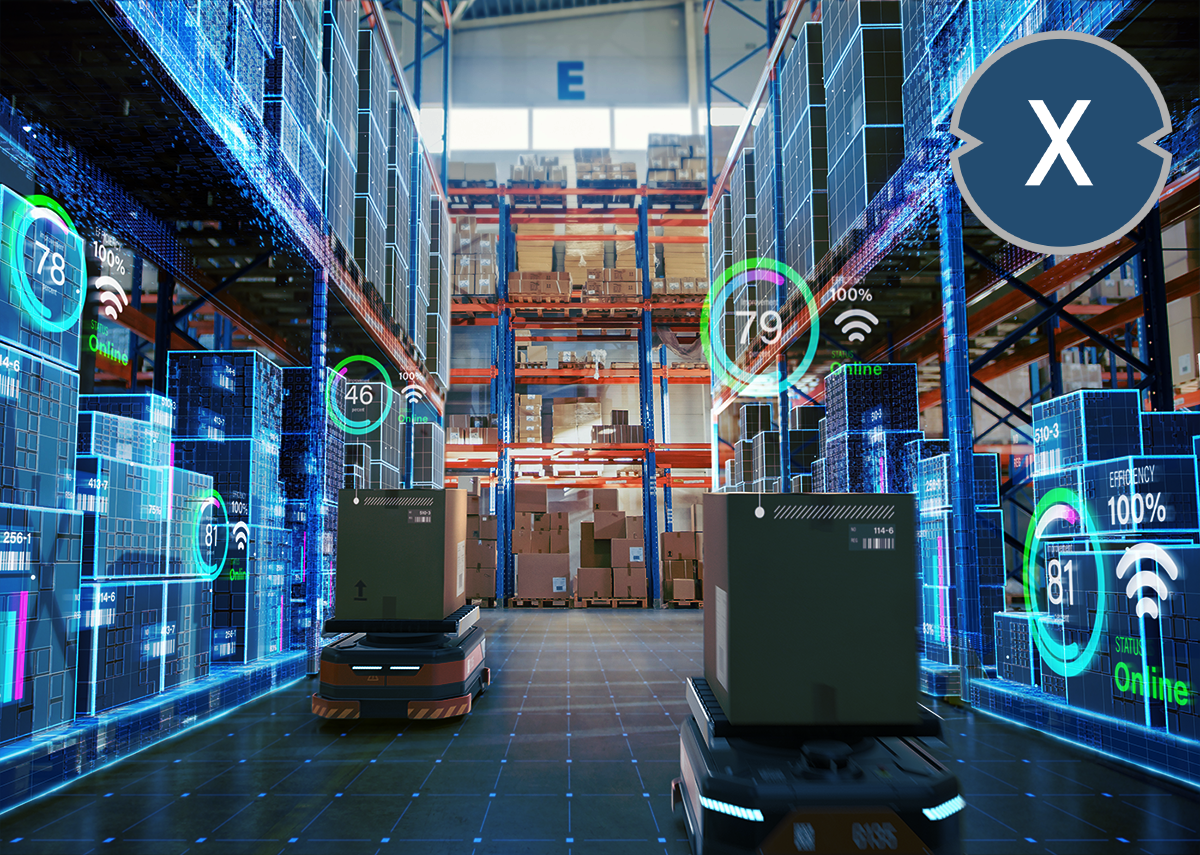
Nearshoring and buffer stocks: Strategies for minimizing risks in global supply chains – Image: Xpert.Digital
From global to local: Nearshoring as an answer to crises
In an increasingly globalized world, companies depend on making their supply chains efficient and low-risk. Recent global events, such as the COVID-19 pandemic and geopolitical tensions, have exposed the vulnerability of traditional supply chain models. Two strategies that have proven particularly effective in minimizing risk are nearshoring and building buffer stocks.
This goes well with:
Nearshoring: A return to proximity
Nearshoring refers to the relocation of production or service processes to geographically closer countries. This strategy offers several advantages:
Shorter delivery times
Proximity to sales markets allows companies to react more quickly to changes in demand. This reduces not only delivery times but also transport costs.
Improved communication
The reduced geographical distance facilitates exchange between the parties involved. Cultural and linguistic barriers are often lower, which improves cooperation.
Risk reduction
Political instability or natural disasters in distant countries can significantly disrupt supply chains. Nearshoring minimizes these risks by reducing dependence on distant regions.
One example of successful nearshoring is the automotive industry in Europe, which is increasingly relying on production facilities in Eastern Europe. These countries not only offer more cost-effective labor but also a strategically advantageous location within Europe.
Buffer storage: Safety through stockpiling
Buffer stocks are inventories that companies maintain to cushion fluctuations in demand or disruptions in the supply chain. This strategy has proven particularly useful in managing unforeseen events
Continuity of care
By creating buffer stocks, companies can ensure that they can continue to serve their customers even in the event of supply shortages.
flexibility
Buffer stocks enable companies to react flexibly to market changes. They can respond quickly to peak demand without having to wait for new deliveries.
Cost control
Although creating buffer stocks involves costs, these can be more than offset by avoiding production downtime and revenue losses.
An example of the successful use of buffer stocks can be found in the retail sector. Large retail chains use buffer stocks to compensate for seasonal fluctuations and ensure that popular products are always available.
Integration of both strategies
The combination of nearshoring and buffer storage can be an extremely effective strategy for minimizing risk. While nearshoring reduces dependence on distant countries and increases flexibility, buffer storage provides an additional layer of security against unforeseen disruptions.
Challenges and solutions
Despite their advantages, both strategies are not without challenges:
Cost
Both nearshoring and the creation of buffer stocks require investment. Companies must carefully consider whether the potential savings from reduced risks justify these costs.
Logistical complexity
Implementing these strategies can be complex and requires careful planning and coordination.
To overcome these challenges, companies should utilize modern technologies. Digital tools such as supply chain management systems and real-time data analytics can help optimize processes and make more informed decisions.
Future developments
In the future, further trends could develop that influence nearshoring and buffer stocks:
sustainability
The pressure on companies to operate more sustainably is increasing. Nearshoring can help reduce the carbon footprint through shorter transport routes.
Technological innovations
Advances in automation and robotics could make nearshoring even more attractive, as labor costs become less of a factor.
Geopolitical changes
The political landscape is constantly changing. Companies must remain flexible and regularly adapt their strategies.
Opportunities for risk minimization in global supply chains
Nearshoring and buffer stocks offer effective ways to minimize risk in global supply chains. They enable companies to react more flexibly to changes and increase their security of supply. Despite the challenges, they offer significant long-term advantages in terms of cost control and risk management. In a world full of uncertainties, these strategies are valuable tools for any company that wants to maintain its competitiveness.





Expert partner in warehouse planning and construction

Nearshoring and buffer storage: Strategies for minimizing risks in global supply chains
Global supply chains have come under increasing pressure in recent years. Disruptions caused by political tensions, natural disasters, and, not least, the COVID-19 pandemic have forced companies worldwide to rethink their supply chain strategies. Traditionally, supply chain management was based on the global distribution of production and resources, with a focus on cost reduction and efficiency improvements. However, in an increasingly uncertain and volatile world, flexibility, risk mitigation, and supply chain resilience are becoming increasingly important. Two key strategies that help companies minimize risks and make their supply chains more resilient are nearshoring and buffer stocks. These approaches offer not only better control over the supply chain but also faster responsiveness to market changes and unforeseen disruptions.
1. The importance of nearshoring
Nearshoring is a concept where companies relocate their production or parts of their supply chain from distant countries back to geographically closer regions. Unlike offshoring, where production is often moved to countries with lower labor costs (e.g., in Asia), nearshoring means relocating to countries closer to the home market, often within the same geographic or economic region.
Advantages of nearshoring
1. Shorter delivery routes and faster response times
A key advantage of nearshoring is the reduction of the physical distance between production and the market. This significantly shortens delivery times, which is particularly beneficial in industries that rely on rapid time-to-market and flexibility, such as fashion or electronics. Companies can react more quickly to changes in demand and avoid long transport times, which often lead to delays in global supply chains.
2. Better control and quality assurance
Geographical proximity allows companies to monitor their production processes more closely and ensure higher quality assurance. In many cases, nearshoring also enables closer collaboration with suppliers and improved communication. This can be particularly advantageous in technologically demanding industries where quality and precision are crucial.
3. Reduction of political and logistical risks
Nearshoring offers companies the opportunity to circumvent political instability, trade conflicts, or sudden tariff increases in distant countries. Proximity to more stable markets and access to well-developed logistics and infrastructure systems in neighboring countries significantly reduce the risk of supply chain disruptions.
Challenges of nearshoring
Despite its many advantages, nearshoring is not without its challenges. Labor costs in nearshoring countries are often higher than in traditional offshoring destinations. Companies must therefore weigh whether the benefits of shorter supply chains outweigh the higher production costs. Furthermore, they may lack specialized labor or specific technologies that are more readily available in traditional manufacturing countries.
2. Buffer storage as a risk management strategy
Buffer stocks, also known as safety stocks or safety reserves, represent another strategy for minimizing risks in the supply chain. They refer to the creation of additional inventory levels that exceed actual demand and serve to absorb fluctuations in demand or disruptions in the supply chain.
Advantages of buffer storage
1. Protection against supply shortages
One of the main goals of buffer stocks is to prevent supply shortages. By maintaining additional inventory, companies can bridge temporary disruptions in the supply chain, such as those caused by natural disasters or production outages. This is particularly important in industries with complex supply chains and interdependent production steps, such as the automotive or electronics manufacturing sectors.
2. Flexibility in the face of changing demand
In a dynamic market environment, demand fluctuates from one moment to the next. Buffer inventories offer companies the flexibility to react quickly to unexpected demand spikes without having to interrupt production. This is particularly valuable in seasonal industries or when launching new products.
3. Stability of production
Buffer stocks help maintain production stability, even in the event of unexpected delays in the delivery of raw materials or intermediate products. This reduces the risk of costly production stoppages and ensures that companies can meet their production targets even during times of crisis.
Challenges of buffer storage
Although buffer stocks offer many advantages, they also come with significant costs. Building and maintaining additional inventory can be expensive, especially for perishable goods or products with a short shelf life. Furthermore, buffer stocks tie up capital that could be invested elsewhere in the business. Another challenge lies in properly sizing buffer stocks: excessively large inventories lead to unnecessary costs, while insufficient inventories do not adequately mitigate the risk of shortages.
3. The combination of nearshoring and buffer storage: A strategic approach
While nearshoring and buffer stocks offer significant advantages as individual strategies, combining both approaches demonstrates an even higher degree of resilience and flexibility in the supply chain. Companies that relocate their production geographically closer to their home markets and simultaneously build up buffer stocks can leverage the benefits of both strategies to protect themselves against a wide range of risks.
Case study: The automotive industry
An example of the successful combination of nearshoring and buffer stocks can be found in the automotive industry. Automotive manufacturing relies on a highly complex supply chain encompassing thousands of components, often sourced from multiple countries. In recent years, many automakers have begun shifting parts of their production from Asia to nearby countries to reduce their dependence on distant suppliers and shorten delivery times. Simultaneously, they have established buffer stocks to prevent supply bottlenecks for critical components, such as semiconductors. This combination allows automakers to respond more flexibly to market changes and minimize the risk of production disruptions.
Advantages of the combination
The combination of nearshoring and buffer storage offers several strategic advantages:
1. Maximum flexibility
Companies can react quickly to market changes by leveraging both the geographical proximity of production and the availability of inventory. This enables rapid adaptation to fluctuations in demand or unexpected supply shortages.
2. Optimized risk distribution
Nearshoring reduces dependence on distant and potentially volatile markets, while buffer stocks offer additional protection against unforeseen events. Together, these strategies enable a balanced risk distribution and minimize the risk of default.
3. Cost efficiency through synergies
Although both nearshoring and buffer stocks involve costs, combining the two approaches can lead to synergies that reduce overall costs. For example, shorter supply chains can reduce warehousing costs, as less safety stock is needed to absorb delays.
4. Future prospects: Resilient supply chains in the 21st century
In a world increasingly characterized by uncertainty and disruption, supply chain resilience is becoming a crucial competitive factor. Companies that can react quickly and flexibly to changes will have a clear advantage over their competitors. Nearshoring and buffer stocks are key components of this new supply chain strategy. However, in the future, other factors such as supply chain digitalization, the introduction of artificial intelligence, and the development of new logistics technologies will also play an important role.
Companies that recognize these trends early and incorporate them into their strategic considerations will be able to make their supply chains not only more resilient, but also more efficient and sustainable. Nearshoring and buffer stocks are just the beginning of a comprehensive transformation in supply chain management that will become even more important in the coming years.
Related to this: