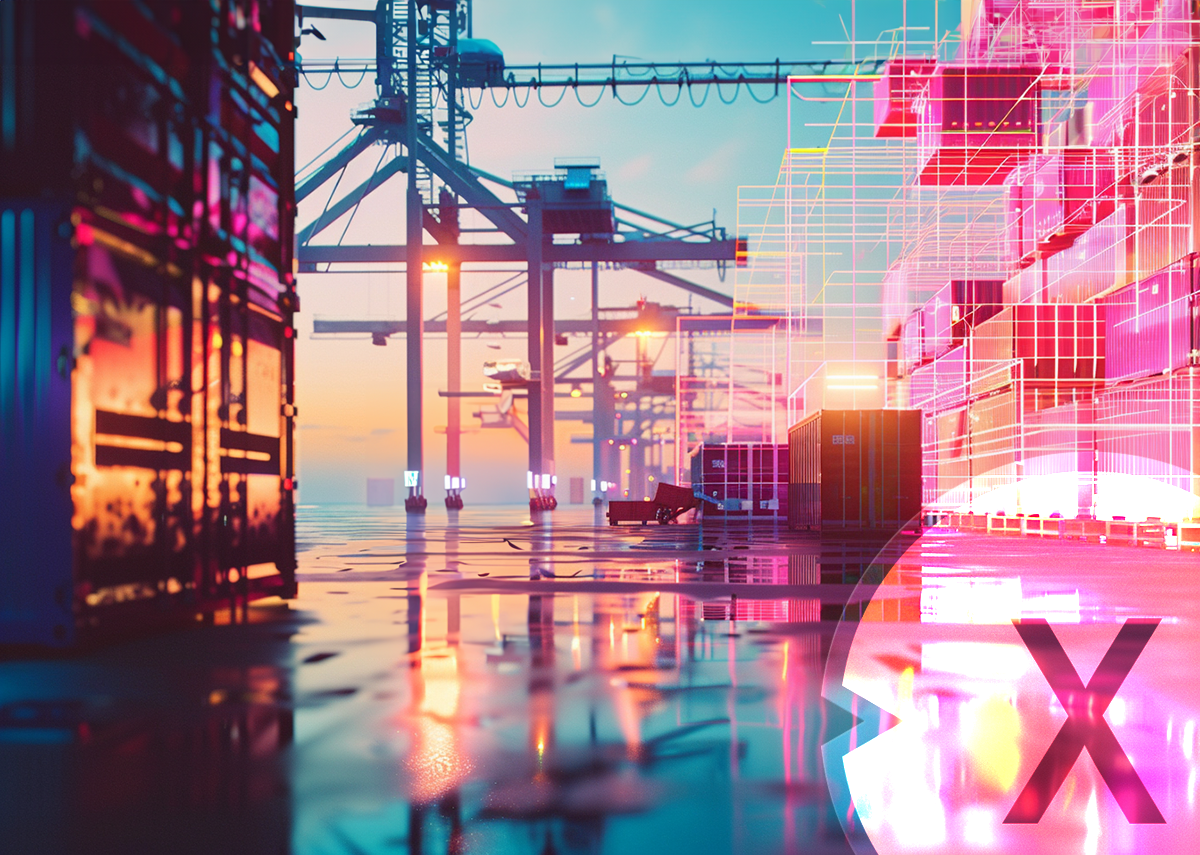
Nearshoring & Collaborative Platforms: Global supply chains have evolved considerably in recent years – Image: Xpert.Digital
🚛🌐🤝📈 Global supply chains have evolved significantly in recent years, and several key trends are emerging
🔧 Technological innovations
Artificial intelligence (AI) and machine learning
These technologies are crucial for automating processes, generating forecasts, and identifying trends. They improve supply chain performance through more accurate demand planning and resource allocation.
Blockchain technology
This technology offers transparency and security in transactions, which promotes trust between partners in the supply chain.
Related to this:
Real-time tracking
The ability to track shipments in real time is crucial for supply chain resilience and enables rapid responses to disruptions.
🌿 Sustainability and resilience
Sustainable supply chains
Companies are increasingly integrating sustainability aspects into their strategies to reduce environmental impacts while simultaneously achieving economic benefits.
Resilience
In light of global uncertainties, supply chain resilience is more important than ever. Companies must be able to react flexibly to unforeseen events.
🔄 Structural changes
Nearshoring
To minimize risks, companies are shifting parts of their supply chains closer to their main markets. This reduces dependence on individual countries and improves responsiveness.
Collaborative platforms
Companies are working more closely together to exchange data and increase the efficiency of the supply chain.
⚠️ Challenges
Skilled worker shortage
The shortage of skilled workers is forcing companies to invest in further training and automation.
Cybersecurity
With increasing digitalization, protection against cyberattacks is becoming ever more important.
⚙️🌱💪 Future-proof: Optimizing supply chains for a competitive advantage
These trends show that companies need to adapt their supply chains to remain competitive. Investments in technology, sustainability, and resilience are crucial for successfully meeting future challenges.
📣 Similar topics
- 📈 Technological innovations in global supply chains
- 🤖 AI and machine learning: The future of automation
- 📦 Blockchain for greater transparency in supply chains
- ⏱️ Real-time tracking is revolutionizing supply chain resilience
- 🌿 Integrating sustainability into supply chain strategies
- 🛡️ Resilience: Key to overcoming global uncertainties
- 🌍 Nearshoring: Supply chains closer to the market
- 🤝 Collaborative platforms for better efficiency
- 🚀 Skills shortage as a driving force for further training and automation
- 🔒 Cybersecurity: Essential protection for digitized supply chains
#️⃣ Hashtags: #TechnologicalInnovation #Sustainability #Resilience #Nearshoring #Cybersecurity

Expert partner in warehouse planning and construction

📦🌍 Global Supply Chains: Trends and Challenges of the Modern Economy
📡🤖 Technological innovations
The technological revolution has had a profound impact on global supply chains. Artificial intelligence (AI) and machine learning have become indispensable tools for automating processes, generating forecasts, and identifying trends. By leveraging these technologies, companies can significantly improve the performance of their supply chains. More precise demand planning and efficient resource allocation enable them to reduce costs and increase customer satisfaction. For example, AI can detect patterns in large datasets that would otherwise escape human analysis. This leads to better-informed decisions and optimized operations.
Blockchain technology also offers new opportunities for transparency and security in transactions. It fosters trust between partners within the supply chain by providing immutable and verifiable records of all transactions. This is particularly important in times when data integrity and traceability are gaining in significance. A practical example is the tracking of products from origin to end consumer, which is crucial, especially in the food and pharmaceutical industries.
Real-time tracking systems enable companies to monitor their shipments in real time. This capability is crucial for supply chain resilience, as it allows for rapid responses to disruptions. Companies can thus act proactively and minimize delivery delays or other problems. Modern sensors and the Internet of Things (IoT) play a key role in this process by continuously providing data on the condition and location of goods.
🌱♻️ Sustainability and resilience
In an era where environmental awareness and social responsibility are increasingly coming into focus, companies are integrating sustainability aspects into their strategies. Sustainable supply chains not only help reduce environmental impact but also offer economic advantages. They strengthen brand image, foster customer loyalty, and can lead to long-term cost savings. Companies are relying on renewable energies, reducing packaging materials, and optimizing transport routes to minimize their ecological footprint.
Supply chain resilience is more important than ever in light of global uncertainties. Companies must be able to respond flexibly to unforeseen events such as natural disasters, political unrest, or pandemics. A resilient supply chain can better manage such challenges and ensure business continuity. Strategies such as supplier diversification, stockpiling of critical components, and developing contingency plans are essential measures for increasing resilience.
🔄🚚 Structural changes
To minimize risks and improve responsiveness, many companies are shifting parts of their supply chains closer to their main markets, a process known as nearshoring. This strategy reduces dependence on individual countries and allows companies to react more quickly to market changes. It can also lower transportation costs and shorten delivery times. In Europe, for example, companies are relocating their production from Asia back to Eastern European countries to be closer to customers and utilize local labor.
Collaborative platforms are also gaining importance. Through closer cooperation and data exchange, companies can increase the efficiency of their supply chains. Such platforms enable better coordination between suppliers, manufacturers, and retailers, leading to optimized processes and reduced costs. They also foster innovation, as partners can work together on solutions.
🤔📉 Challenges
The skills shortage poses a significant challenge. The lack of qualified personnel forces companies to invest in further training and automation. By fostering talent and utilizing technology, companies can partially close this gap and maintain their competitiveness. Employee development programs and collaborations with educational institutions are ways to meet the demand for qualified staff.
With increasing digitalization, protection against cyberattacks is becoming ever more important. Cybercriminals are increasingly targeting supply chains to exploit vulnerabilities. Companies must therefore invest in cybersecurity measures to protect their data and systems and maintain the trust of their partners and customers. This includes implementing security protocols, conducting regular audits, and providing IT security training for employees.
🏆🚀 Staying competitive
These trends clearly demonstrate that companies must adapt their supply chains to remain competitive. Investments in technology, sustainability, and resilience are crucial for successfully meeting future challenges. It is essential that companies act proactively and develop innovative strategies to thrive in a constantly evolving global landscape.
In addition to the trends already mentioned, other factors influence supply chain design. Globalization continues to play a significant role, although it is impacted by protectionism and trade conflicts. Companies must therefore strike a balance between global opportunities and local challenges. Adapting to different regulatory environments and cultural differences requires flexibility and understanding.
The digitalization of supply chains opens up new opportunities, but also requires significant investment and a cultural shift within organizations. Employees need to be trained to use new technologies, and processes must be adapted to fully leverage the benefits of digitalization. Change management strategies are crucial here to overcome resistance and ensure a successful transformation.
Another important aspect is customer focus. Customer expectations are changing rapidly, and companies must be able to offer personalized and flexible solutions. This requires agile supply chains that can respond quickly to customer demands. Today, customers expect transparency regarding the status of their orders, fast deliveries, and sustainable products. Companies that meet these expectations can gain a competitive advantage.
Finally, compliance with regulations is a critical factor. Global supply chains are complex, and companies must ensure they adhere to all relevant laws and regulations to minimize legal risks. This includes not only trade laws but also environmental standards, labor rights, and data protection regulations. Non-compliance can result in significant penalties and reputational damage.
The world of supply chains faces an exciting and challenging future. Companies that are prepared to adapt and invest in the right areas will be able to overcome these challenges and strengthen their position in the global market. The integration of technology, a focus on sustainability and resilience, and the development of flexible and customer-centric strategies are key to success.
It's clear that transforming supply chains is no easy task. It requires commitment at all levels of the company, strategic planning, and a willingness to invest in new approaches. But the rewards are substantial: improved efficiency, increased customer satisfaction, and a stronger competitive position.
Companies must act now to seize the opportunities and meet the challenges of the modern supply chain landscape. Those that are proactive and innovative will not only survive but thrive in the new era of global trade.
📣 Similar topics
- 🌍 Global Supply Chains: Trends and Challenges
- 🤖 Technological innovation as a driver of supply chains
- 🌱 Promoting sustainability in the modern supply chain
- 🔗 Blockchain for transparency and security
- 🏗️ Structural changes: Nearshoring as a strategy
- 👥 Collaborative platforms for increasing efficiency
- 🚀 Resilience to global uncertainties
- 🛡️ Defending against cyberattacks: Cybersecurity in supply chains
- 📈 Change Management: Successfully Mastering Change
- 🌐 Globalization vs. Local Challenges
#️⃣ Hashtags: #TechnologicalInnovation #Sustainability #Resilience #SupplyChains #Globalization

Xpert.Plus Warehouse Optimization - High-bay warehouses and pallet warehouses: Consulting and planning
We are here for you - Consulting - Planning - Implementation - Project Management
☑️ Smart City & Factory: Industry expert for energy-efficient 5G buildings and halls, as well as consulting and installation of solar systems
☑️ Xpert.Plus - Logistics consulting and logistics optimization
☑️ Industry expert, here with his own Xpert.Digital industry hub with over 2,500 specialist articles

Konrad Wolfenstein
I would be happy to serve as your personal advisor.
You can contact me by filling out the contact form below or simply call me on +49 7348 4088 965 .
I'm looking forward to our joint project.
Write to me


Xpert.Digital - Konrad Wolfenstein
Xpert.Digital is a hub for industry focusing on digitalization, mechanical engineering, logistics/intralogistics and photovoltaics.
With our 360° Business Development solution, we support renowned companies from new business to after-sales.
Market intelligence, smarketing, marketing automation, content development, PR, mail campaigns, personalized social media and lead nurturing are part of our digital tools.
You can find more information at: www.xpert.digital - www.xpert.solar - www.xpert.plus
Keep in touch