Scanning the future: QR codes or 2D matrix codes as drivers of future logistics – Image: Xpert.Digital – AI & XR-3D-Rendering Machine (Art photo/AI)
🔳 QR codes: The gateway to digital expansion 🚀
📦🔄 Logistics and 2D matrix code
QR codes, those small square patterns of black and white pixels, are ubiquitous in today's digital world. Originally developed for the automotive industry in Japan, they have found their way into almost every corner of our lives. But the real breakthrough is yet to come: With the introduction of the 2D matrix code in 2027, the way we store and retrieve information will fundamentally change.
QR codes are already an integral part of logistics: they facilitate global freight transport through simplified tracking systems and automated processes. However, the 2D matrix code, which will be introduced in the future, is capable of storing significantly more information and can therefore perform a variety of functions. For example, a single code can be used to track packages worldwide, eliminating the need for different barcodes or additional labels. Through global standardization and its ability to store large amounts of data, the 2D matrix code will become the backbone of a more efficient, transparent, and faster logistics system.
More information here:
🛍️ Retail and QR code 📈🔗
In the retail sector, QR codes are emerging as a key tool for bridging the gap between physical products and digital information. Customers can instantly access a wealth of information by simply scanning a QR code with their smartphone: from a product's origin and manufacturing process to user manuals and interactive shopping experiences. This not only increases transparency and consumer trust but also opens up new marketing opportunities. Retailers can provide personalized content or direct customers to their online store via relevant links.
👗 Fashion industry and the QR code revolution 🌐👚
The fashion industry also benefits from the adaptive nature of QR codes. Designers and brands use them to give customers a deeper understanding of their products. Through WebAR, a technology that allows users to view augmented reality content via their smartphones, garments can be virtually tried on or viewed in 3D before purchase. Given the growing awareness of sustainability in the fashion industry, QR codes can also help increase transparency by providing information about materials, production conditions, or recycling options.
🌐 2D Matrix Code and Digital Extensions ✨📱
The 2D matrix code, intended to replace the existing barcode, serves not only to identify and document products. It can also act as a link to digital augmentations of reality, the so-called metaverse or extended reality (XR). Imagine being able to immerse yourself directly in an augmented reality wherever a product is located, where you can interact with the product, whether it's a virtual fitting, an immersive product tour, or an interactive user manual.
📑 Added value product information and 2D matrix code 📘💡
Furthermore, the new 2D matrix code enables extended functions such as storing product information in various formats. Instead of simply saving a URL to a product, companies can now offer more comprehensive content: for example, PDFs with user manuals, product presentation videos, or even entire multimedia brochures.
🤝 Societal aspects and the progress of QR technology 👥🌍
All these innovations have the potential to transform shopping into a multi-sensory and informative experience. However, the introduction of the 2D matrix code also raises questions, such as those concerning data privacy and the speed at which both consumers and businesses must adapt to the new system. The issue of the digital divide should also not be overlooked: while some can easily access the latest technologies, others may be excluded.
It is therefore not just about technological innovations, but also about considering the societal impact and developing solutions that ensure inclusive progress. The QR code, or its successor – the 2D matrix code – represents a technological promise for the future that must be designed thoughtfully and responsibly in order to realize its full potential for the benefit of all.
💡 Innovative applications and the future of 2D matrix codes 🚀🌟
The advanced applications of 2D matrix codes demonstrate how they can revolutionize the industry. For logistics, this means further optimization of supply chains through improved tracking and real-time information. In retail, consumers can enjoy a refined shopping experience that prioritizes information exchange and user interaction. In the fashion industry, it offers the opportunity to redefine sustainability and customer engagement.
🔍 Technology, society and the challenges of integration 🌐👥
Given these multifaceted applications, it is crucial that we not only develop and integrate the technology, but also consider the societal contexts in which these technologies are used. We are at the beginning of an era in which the interplay between the physical and digital worlds will become even more complex, detailed, and far-reaching. The 2D matrix code is both the symbol and the tool of this new chapter – an innovation that, if used effectively, can simplify everyday life, transform business models, and create new experiential worlds.
📣 Similar topics
- 🛒 The QR code: From logistics to retail
- 🔍 The future of information exchange: The 2D matrix code
- 🌐 The 2D Matrix Code and the Metaverse: A New Reality
- 👗 QR codes in the fashion industry: Transparency and sustainability
- 📱 The QR code as a bridge between physical and digital worlds
- 🚚 The revolution in logistics: The 2D matrix code
- 🎯 New possibilities with the 2D matrix code: From virtual fittings to immersive product tours
- 📦 More efficient and transparent: The 2D matrix code in logistics
- 🌍 The 2D matrix code: A worldwide standard for fast information
- 💡 The potential of the 2D matrix code: Multi-sensory shopping and innovative experiences
#️⃣ Hashtags: #QRCode #2DMatrixcode #Logistics #Retail #FashionIndustry
🎯🎯🎯 Benefit from Xpert.Digital's extensive, five-fold expertise in one comprehensive service package | BD, R&D, XR, PR & Digital Visibility Optimization

Benefit from Xpert.Digital's extensive, five-fold expertise in a comprehensive service package | R&D, XR, PR & Digital Visibility Optimization - Image: Xpert.Digital
Xpert.Digital possesses in-depth knowledge across various industries. This allows us to develop tailored strategies precisely aligned with the requirements and challenges of your specific market segment. By continuously analyzing market trends and monitoring industry developments, we can act proactively and offer innovative solutions. The combination of experience and expertise generates added value and provides our clients with a decisive competitive advantage.
More information here:
🛍️📲 Multidimensional Shopping: The multi-layered influence of 2D matrix codes on retail and augmented realities 🚀👓
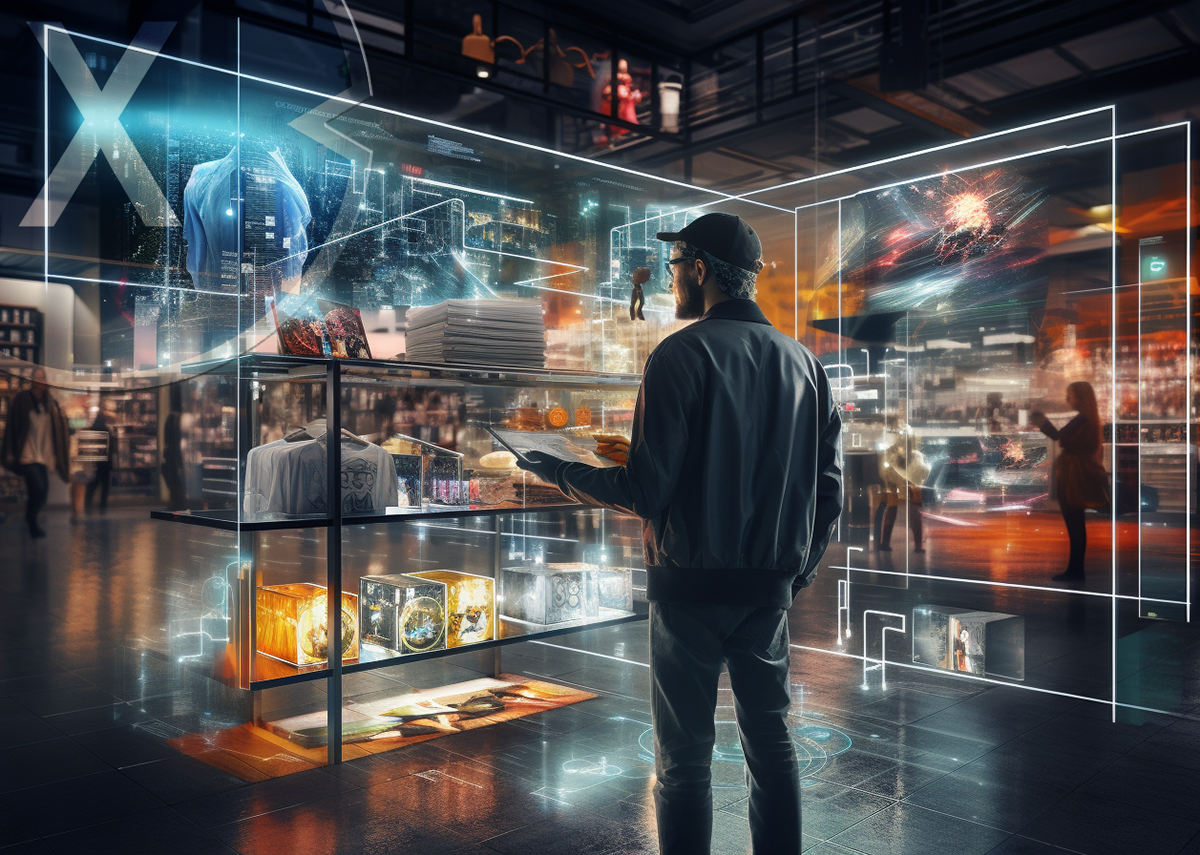
Multidimensional shopping: The multi-layered influence of 2D matrix codes on retail and augmented realities – Image: Xpert.Digital – AI & XR-3D-Rendering Machine (Art photo/AI)
In the age of digital transformation, two-dimensional matrix codes, such as QR codes, have revolutionized retail. These small, black-and-white squares are far more than a trend – they are a key element in linking physical and digital shopping worlds. In this context, we examine how 2D matrix codes are influencing the retail sector and how they serve as a key technology for accessing extended reality (XR).
🏷️🔍 The influence in brick-and-mortar retail
Let's begin with the impact of 2D matrix codes on traditional retail. In a brick-and-mortar store, QR codes serve not only to quickly convey information such as prices or product descriptions to the customer, but also to create an interactive customer experience. When a customer scans a QR code, they can access a variety of content – from detailed product information and customer reviews to augmented reality applications that allow them to virtually view a product in different variations or place it in three-dimensional space.
🖇️🛒 Omnichannel experiences
Another advantage of 2D matrix codes in retail is the ability to enable a seamless omnichannel experience. The codes act as a bridge between online and offline shopping, allowing customers to scan products in-store and then purchase them via an online platform or access additional information. This creates an integrated shopping experience that blurs the lines between e-commerce and physical retail.
🎮🌐 Augmented Realities in Use
The potential of QR codes and other 2D matrix codes is further enhanced by their application in the world of extended reality. XR (Extended Reality), an umbrella term encompassing Augmented Reality (AR), Virtual Reality (VR), and Mixed Reality (MR), has transformed shopping into a multidimensional experience that far surpasses the capabilities of traditional retail.
🏠🛋️ AR in everyday life
Regarding AR, customers can furnish a room with virtual objects using an app on their smartphone or AR glasses. For example, IKEA's "IKEA Place" app allows customers to virtually place furniture in their own homes to check the fit and appearance before buying. QR codes play a critical role in this, making it easy to open such apps and locate the corresponding product within the app.
💥🌀 VR and MR in Retail
When using VR in retail, a 2D matrix code can serve as the entry point to a fully virtual storefront. Customers can put on VR glasses and move through a digital retail space where they can not only view products but also "touch" and interactively experience them, enabling in-depth product interaction that complements or even surpasses the physical in-store experience.
🔗👚 Mixed reality and fit
The use of MR, in turn, allows real and virtual objects to interact with each other in real time. This creates unique opportunities for retailers, for example, by allowing customers to try on clothing on avatars that correspond to their actual body shapes. This technology, often activated by scanning a QR code, contributes to improved customer satisfaction and can simultaneously reduce return rates.
📊💡 Data and customer understanding
Beyond providing access to virtual experiences, 2D matrix codes also offer retailers the opportunity to collect valuable customer data. When a customer scans a code, the retailer can track their interaction with the product or advertisement, gaining insights into preferences and purchasing behavior. This data can be used to improve customer service, personalize the shopping experience, and optimize inventory management.
❤️🎁 Customer loyalty through 2D codes
Similarly, 2D matrix codes open up new avenues for customer loyalty. They facilitate access to loyalty programs or exclusive offers that go beyond traditional punch cards. By enabling personalized experiences and rewards, these codes foster a stronger connection between brand and consumer.
🔒🛡️ Data protection and security
Customer security is also of paramount importance, especially when it comes to data collected during the scanning of 2D matrix codes. To maintain customer trust and respect data privacy regulations, retailers must ensure that data collected via QR codes is protected and handled in accordance with legal requirements.
💳📱 Mobile payment and 2D matrix codes
In addition, mobile payments are becoming increasingly important, another area significantly impacted by 2D matrix codes. QR codes are frequently used to make payments quickly and securely. With mobile payments, customers scan a QR code at the checkout, and the payment is automatically processed via their linked bank account or digital wallet. This type of transaction not only enhances convenience but also reduces the physical handling of cash or card readers, which is particularly relevant in times of health concerns such as the COVID-19 pandemic.
♻️🌱 Sustainability and 2D matrix codes
Another aspect that should not be overlooked is the sustainable impact of 2D matrix codes. In a world where consumers increasingly value sustainability, QR codes offer a paperless option for invoices, receipts, and product information, thereby reducing paper consumption and environmental impact.
🔄📦 Supply chain optimization
At the logistics level, 2D matrix codes optimize the supply chain by enabling improved product traceability. Unlike traditional barcodes, QR codes carry more detailed information, and their scannability leads to more efficient processes in warehouses and product tracking.
🔄💡 Integration and future prospects
The comprehensive integration of 2D matrix codes thus has a multidimensional impact on retail and the customer experience. These codes enable retailers to create highly customized and enriched experiences that seamlessly blend the physical and digital realms. They not only function as a direct interface to augmented reality but also play a key role in collecting data that forms the basis for future innovations and the personalization of customer interactions.
🚀👥 Future-oriented developments
In the future, 2D matrix codes could go even further. Their development is ongoing, and they are expected to become increasingly interactive and user-friendly. New applications could evolve towards context-aware services, where scanned codes provide information based on current location, purchasing behavior, or even the time of scanning.
🧠💡 AI and personalized content
Furthermore, 2D matrix codes could be used in conjunction with artificial intelligence (AI) to create dynamic content that changes in real time, depending on the user scanning the code. This would allow for a hyper-personalized customer experience that is currently unattainable.
🤖🛍️ The 2D matrix code is a fascinating element of modern marketing and retail management
Ultimately, 2D matrix codes are a fascinating element of modern marketing and retail management. Their ability to act as a catalyst for the transition between physical and digital space makes them a key technology for the retail of the future. They not only expand the dimensions of the shopping experience by simplifying access to AR, VR, and MR, but also make behind-the-scenes operations more efficient and customer-centric.
📣 Similar topics
- 🔍 From QR codes to augmented reality: The future of retail
- 🌐 The potential of 2D matrix codes: A multidimensional shopping experience
- 🛒 QR codes in retail: Linking the physical and digital worlds
- 👥 The Evolution of Interaction: How 2D Matrix Codes Are Transforming Retail
- 🚀 2D matrix codes and XR: The dawn of a new era in shopping
- 🌍 The global omnichannel revolution: QR codes as a link between online and offline
- 🤖 AR, VR, MR: 2D matrix codes as a gateway to augmented realities in retail
- 💡 Customer-centric shopping: The new possibilities through 2D matrix codes
- 🏆 Data-driven retail: How QR codes improve the customer experience
- 🌱 Sustainable shopping with QR codes: The green side of retail
#️⃣ Hashtags: #Retail #2DMatrixcodes #XR #QRCode #Omnichannel
🗒️ Xpert.Digital: A pioneer in the field of Extended and Augmented Reality

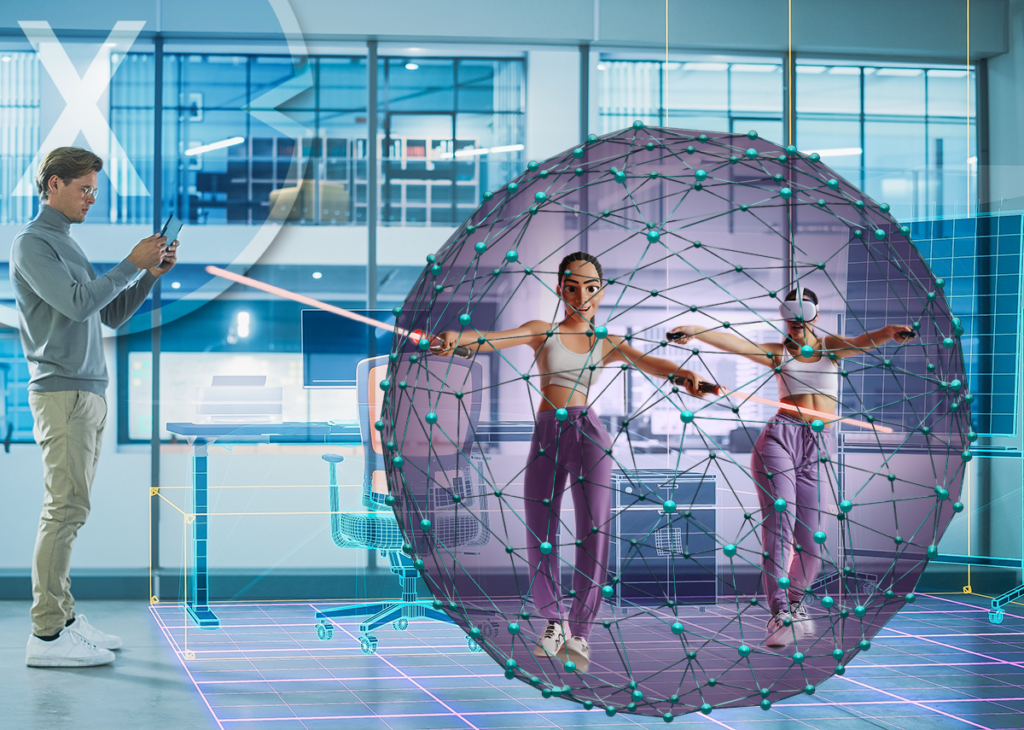
Finding the right Metaverse agency, planning office, or consulting firm - Image: Xpert.Digital
🗒️ Finding the right Metaverse agency, planning office, or consulting firm – Search and search: Top Ten Tips for Consulting & Planning
More information here:

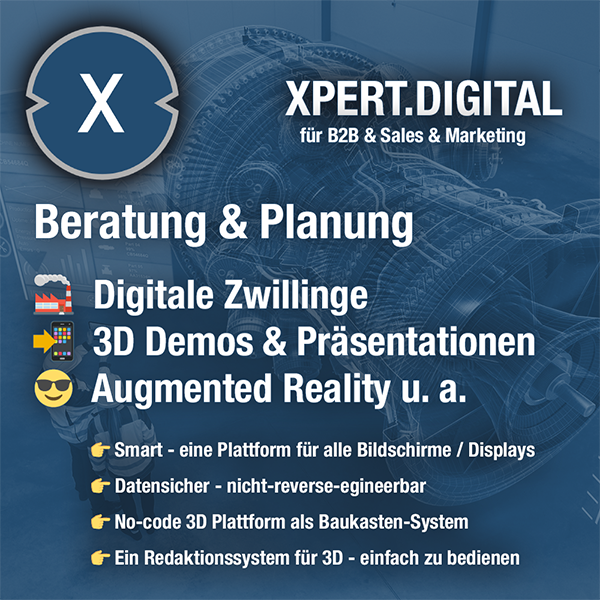
We are here for you - Consulting - Planning - Implementation - Project Management
Xpert.Digital - Pioneer Business Development
Smart Glasses & AI - XR/AR/VR/MR industry expert
Consumer Metaverse or Metaverse in general
If you have any questions, require further information or advice, please feel free to contact me at any time.

Konrad Wolfenstein
I would be happy to serve as your personal advisor.
You can contact me by filling out the contact form below or simply call me on +49 7348 4088 965 .
I'm looking forward to our joint project.
Write to me


Xpert.Digital - Konrad Wolfenstein
Xpert.Digital is a hub for industry focusing on digitalization, mechanical engineering, logistics/intralogistics and photovoltaics.
With our 360° Business Development solution, we support renowned companies from new business to after-sales.
Market intelligence, smarketing, marketing automation, content development, PR, mail campaigns, personalized social media and lead nurturing are part of our digital tools.
You can find more information at: www.xpert.digital - www.xpert.solar - www.xpert.plus
Keep in touch