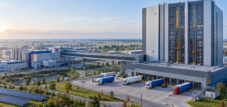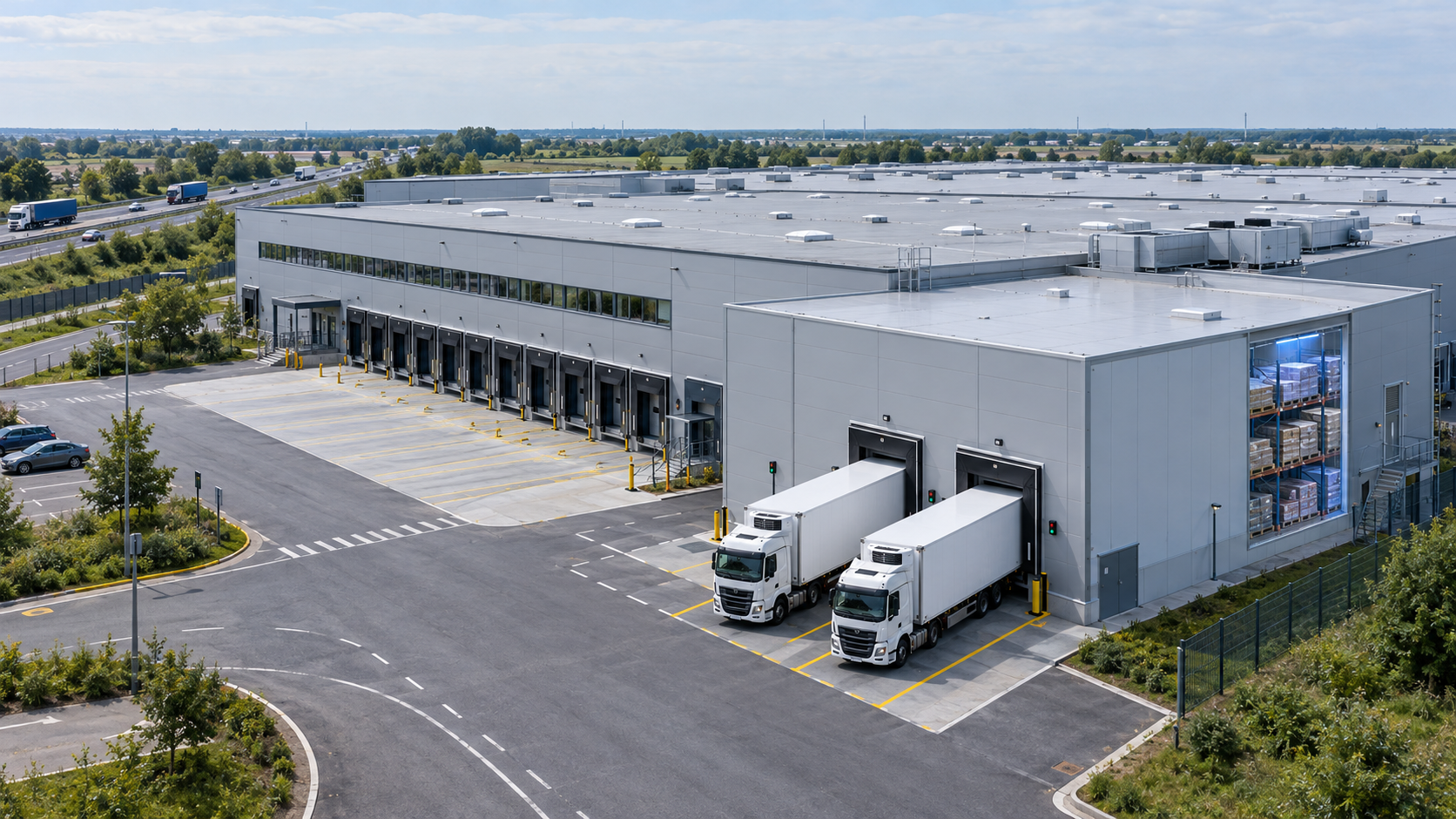
More frozen food capacity for Aldi: More storage space, more traffic? Aldi's expansion in Lehrte at a glance – Creative image on the topic, created with AI: Xpert.Digital
Aldi's logistics center is growing: Why frozen food production in Lehrte is important
Aldi in Lehrte focuses on increased refrigeration: Opportunities and open questions regarding expansion
Aldi Nord plans to expand its logistics center in Lehrte-Aligse by approximately 1,800 square meters. The plans include an extension to the refrigerated warehouse and a new deep-freeze extension with two loading docks and a dehumidification chamber. The expansion aims to better integrate the various temperature-controlled goods flows at the existing site. However, additional space alone does not guarantee lower costs or a more reliable supply: Crucial factors are capacity utilization, energy consumption, transport organization, and integration into ongoing operations.
The site is relatively new: it began supplying Aldi stores in September 2024. The planned expansion of individual refrigerated areas can be understood as an adjustment of logistics to operational requirements and changing product flows. At the same time, the frozen food market in Germany is also growing in terms of volume – an understandable reason for the planned expansion, but not proof of a specific growth rate for Aldi.
The project also raises questions for the surrounding area. Traffic forecasts predict additional journeys, while residents have raised concerns about potential noise pollution from technical equipment. Therefore, the actual economic and everyday impact of the expansion depends on more than just the planned square footage. An analysis and evaluation will reveal the potential benefits of the expansion – and highlight key details regarding costs, energy consumption, and operational performance that remain unclear.
Aldi's cold-weather offensive in Lehrte: The price war begins at sub-zero temperatures – A new building with strategic importance
Aldi is planning to expand its logistics center in Lehrte-Aligse by approximately 1,800 square meters: Around 800 square meters will be added to the existing refrigerated warehouse, while another 1,000 square meters will comprise a new deep-freeze extension with two loading docks and a dehumidification airlock. This project is therefore more than just an increase in floor space: it will change the possibilities for consolidating different temperature-controlled goods flows at a regional distribution center. There are many economic advantages to such functional consolidation; however, whether it actually reduces costs depends on capacity utilization, energy consumption, transport organization, and the impact on the surrounding area.
Especially in the discount sector, the strategic value of a logistics property lies not solely in its size. Crucially, it depends on how reliably it delivers saleable goods to markets at competitive overall costs. An additional deep-freeze warehouse can be an important component in this regard, provided it eliminates bottlenecks, simplifies transfers, and effectively complements existing infrastructure. However, it can also create new fixed costs and increase dependence on an already highly concentrated location.
For Lehrte-Aligse, the planned dimensions and traffic assumptions are relatively easy to grasp, while the investment sum, additional pallet spaces, annual energy consumption, and a reliable commissioning date remain open. Therefore, it would be premature to promise a concrete return on investment or a specific number of new jobs. Nevertheless, the economic significance can be assessed with sound reasoning: The location serves as a prime example of how the food retail sector can combine growth, cost control, and security of supply.
A young location continues to grow
The logistics center in Lehrte-Aligse began supplying stores in September 2024; initially, 77 branches were planned, with another 57 to be added from January 2025, bringing the total to 134. The published warehouse space is approximately 42,800 square meters, including about 3,170 square meters for fruits and vegetables and around 820 square meters for fresh meat. The expansion therefore does not affect an established site that has remained unchanged for decades, but rather a relatively new regional supply hub.
This temporal relationship is economically revealing. A new building always reflects the requirements and assumptions of its planning phase. As soon as branch assignments, product range structure, or operational processes change, individual functional areas may reach their limits sooner than the overall floor space. Therefore, the fact that a refrigerated area is to be expanded proves neither a fundamental planning error nor exceptional sales growth. It initially indicates a need for adaptation, the precise operational reasons for which are not fully disclosed to the public.
The former site in Lehrte-Sievershausen had approximately 27,000 square meters of warehouse space; its capacity and energy efficiency standards were a key factor in the relocation. The current expansion should therefore be understood as a further development step within an already modified logistics structure. It remains important to distinguish between the original relocation and the now-planned expansion: only the latter directly utilizes the existing building and its infrastructure.
Concentration is changing the logistics economics
The expansion in Lehrte is part of a larger reorganization at Aldi Nord: The original 35 regional companies were to be consolidated into a network of 20 regional companies by 2025. The modernization process, underway since 2016, includes 15 expansion and modernization projects at existing facilities, as well as three new construction projects involving relocations. This development strategy thus combines strengthening existing locations with a reduction in the number of organizational units.
Economically, such a concentration follows a logical pattern. Larger quantities of goods can be distributed across shared technical facilities, administrative capacities, and planning processes. A single, efficient location can perform certain tasks more cost-effectively than several smaller facilities, provided the additional transport distances and increased complexity do not negate these advantages. Therefore, the decisive factor is not the isolated operating cost calculation of a single warehouse, but rather the total costs across the entire service area.
This is precisely where the limits of simple scaling arguments lie. Fewer locations do not automatically mean fewer kilometers driven. Larger catchment areas can lengthen routes, while better consolidation simultaneously increases vehicle utilization. Which effect predominates can only be assessed with actual route data, delivery volumes, and time windows. Therefore, a positive economic impact for Lehrte-Aligse is plausible, but cannot be proven solely based on the number of additional square meters.
Frozen food is also growing in terms of volume
The German frozen food market offers a clear demand for additional capacity: In 2025, approximately 4.238 million tons of frozen food were sold (excluding ice cream), compared to around 4.137 million tons in the previous year. This represents a volume increase of 2.5 percent; at the same time, total sales rose by 4.5 percent to approximately €23.612 billion. For logistics, the actual increase in volume is particularly relevant, as these additional tons must be transported, handled, and stored at the appropriate temperature.
The food retail sales channel, including home delivery services, reached approximately 2.070 million tons in 2025, representing growth of 2.7 percent. Its revenue increased by 4.7 percent to around €12.314 billion. However, these figures do not describe Aldi's revenue or market share, but rather a broader sales channel encompassing various retail formats. Therefore, the overall industry trend suggests a favorable market environment, but not a company-specific growth rate.
The segment has also gained importance in the long term: Sales increased from approximately 3.542 million tons in 2015 to around 4.238 million tons in 2025. Per capita consumption recently reached 51.6 kilograms, compared to a subsequently revised figure of 50.8 kilograms for 2024. However, revenue increases should not be confused with a corresponding increase in real demand. If revenues grow faster than volumes, changes in the product mix, in addition to price fluctuations, can also play a role.
New eating habits are changing the flow of goods
Behind the overall growth lie significant differences between product groups: In the food retail sector, including home delivery services, frozen fruit sales increased by 12.0 percent in 2025, ready meals grew by 4.7 percent, and fish by 5.0 percent. Frozen vegetables, on the other hand, saw a decline of 0.8 percent. For inventory planning, this inconsistency is more important than the general observation that frozen products are becoming more popular overall.
Different products require different storage space, order picking, and transport resources. An assortment with many smaller packages can require more handling, even with the same weight, than a high-volume assortment with larger packaging units. Promotional sales, seasonal demand, and varying order cycles also affect warehouse capacity. Therefore, a capacity bottleneck can arise in workflows or order fulfillment, even if there is still theoretically available storage space.
Market data also show stronger growth in the retail sector compared to the out-of-home market, which grew by 2.3 percent to around 2.168 million tons in 2025. This does not necessarily indicate a complete shift of food consumption to home consumption. However, it is clear that price-conscious and easily planned meals remain economically relevant for retailers. Additional frozen food capacity can help meet this demand, without automatically leading to a wider Aldi product range at a given location.
The margin arises within the system
A cold storage facility doesn't create a cost advantage simply by existing. Its economic benefit arises when it reduces the overall costs between procurement and retail shelf placement, or when it enables greater delivery reliability at a justifiable additional cost. Potential levers include better consolidated deliveries, fewer organizational handovers, and closer coordination between inventory and store demand. However, whether services previously provided externally will be relocated to Lehrte is undocumented and should not be considered the stated purpose of the expansion.
The combination of multiple temperature zones at a single location is particularly interesting. It can facilitate coordinated route planning and improve the coordination of goods receipt, preparation, and dispatch. However, this does not mean that all product ranges will be delivered together in a single vehicle in the future. Such solutions require suitable multi-compartment vehicles, coordinated temperature control, and appropriate unloading sequences. Without details of the specific transport concept, they remain an operational possibility, not a confirmed implementation.
In the discount sector, the decisive factor is ultimately the cost per unit actually sold. A low purchase price is of little use if stockouts, damage, or unnecessary handling result in additional costs. Conversely, an initially costly technical upgrade can be economically worthwhile if it creates more reliable and simpler processes in the long run. Therefore, the evaluation must consider the cost of goods sold, logistics, quality losses, and capital tied up in production together.
Inventory expansion is not a given
The planned extension will complement the existing building in the northern and northeastern areas, thus utilizing an already established logistics location. The cold storage warehouse will be extended by approximately 12.45 meters; the deep-freeze extension is planned to be approximately 15 meters wide, 68.5 meters deep, and 10.10 meters high. These dimensions clearly indicate that this is a targeted functional addition and not a second, complete distribution center.
Utilizing existing access roads, administration, and technical infrastructure can offer economic advantages compared to a separate location. At the same time, this creates specific requirements for integrating the new construction into ongoing operations. Construction work must not unduly disrupt sensitive goods flows, new routes must fit into existing processes, and technical interfaces must function reliably. Even a geometrically optimized extension can be operationally disadvantageous if it creates additional intersections between personnel, forklifts, and trucks.
The environmental impact assessment must also be nuanced. Expanding an existing site can avoid the need for a new site and the associated development costs. However, this does not automatically mean that additional land sealing will be avoided, nor does it automatically result in a better climate footprint. The specific area required, building materials, operational emissions, and the impact on transportation must all be considered. Furthermore, a single project does not necessarily demonstrate an industry-wide shift solely towards densification of existing sites.
Economic efficiency requires reliable operational data
Several crucial pieces of information are missing for a sound investment analysis in the Lehrte-Aligse project: Neither a reliable investment amount, nor the additional storage capacity, nor a specifically quantified throughput are publicly verifiable. Therefore, an estimate of profitability based on supposedly typical construction costs per square meter would be particularly prone to error. A deep-freeze warehouse is not simply a normal hall with enhanced cooling. The building envelope, floor construction, technical equipment, and operational integration must be evaluated as a cohesive system.
On the cost side, in addition to construction, significant expenses include electricity, maintenance, personnel, insurance, and financing of the tied-up capital. On the benefit side, potential benefits include avoided bottlenecks, reduced process costs, and increased deliverable volumes. Not every benefit translates directly into additional revenue. Even the prevention of a failure or a recurring shortage can be economically valuable, but this must be assessed based on realistic probabilities of occurrence and actual consequential costs.
Furthermore, the utilization rate throughout the year is crucial. A facility that is only needed during short peak periods incurs its fixed costs differently than one with consistent usage. Conversely, a small reserve can be beneficial if it prevents costly disruptions. A sound decision therefore requires several demand and cost assumptions, as well as a comparison with alternatives. The real question is not whether additional space is generally beneficial, but whether this particular solution offers the best overall benefit.
Energy is becoming a key cost center
As a general rule, frozen foods must be kept at or below -18°C at all points after freezing until they are sold to the consumer; limited deviations are permissible in certain situations. This requirement applies to the product itself and should not be confused with a universally identical target temperature for all storage areas. The actual design must take into account how frequently doors are opened, the heat loads present, and how reliably the product temperature is maintained.
The dehumidification lock planned for Lehrte is therefore an economically interesting detail. Moisture ingress can promote icing in deep-freeze operations, thereby creating additional operational and safety requirements. However, without specific design data and measurements, it is impossible to quantify how much a lock reduces energy consumption or the effort required for defrosting. Its mere mention does not justify a general savings figure.
For ongoing evaluation, energy consumption and goods performance should be recorded together. Low electricity consumption per cubic meter alone does not prove efficient logistics if little goods are being moved. Conversely, higher overall consumption can be accompanied by better efficiency per delivered unit. Therefore, a combination of building-related and volume-related key performance indicators is advisable, supplemented by peak loads, downtime, and temperature deviations. Only this combination reveals whether the technical system operates economically under real-world operating conditions.
Your intralogistics experts

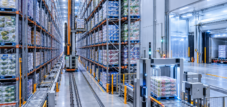
Consulting, planning and implementation of complete solutions for high-bay warehouses and automated storage systems - Image: Xpert.Digital
More information here:
Innovative logistics solutions for Aldi in Lehrte
Refrigerants will shape future viability
The choice of refrigerant not only affects the climate impact but also maintenance, safety concepts, and long-term operating costs. The European F-Gas Regulation, in effect since March 2024, tightens restrictions on fluorinated greenhouse gases and gradually reduces the available quantities of HFCs. For long-lasting refrigeration systems, it is therefore crucial to consider which substances can still be used and procured under economically viable conditions in the future.
Ammonia and carbon dioxide are among the established natural refrigerants used in industrial refrigeration. However, their use is not a simple matter of choosing between good and bad technology. Ammonia has favorable thermodynamic properties and no direct global warming potential, but it is toxic and requires appropriate safety measures. A professional assessment must therefore consider energy efficiency, system design, installation conditions, and the protection of employees and the environment.
The available project information does not specify which refrigerant is planned for the new deep-freeze area in Lehrte. Therefore, neither a particular technology can be confirmed nor a concrete emission reduction calculated. Nevertheless, the economic principle remains clear: a lower initial investment can prove costly if later modifications, limited resources, or increased maintenance requirements are not taken into account. The decisive factor is the cost over the entire life cycle, not just the initial construction costs.
Solar power does not replace the overall bill
The combination of logistics space, on-site power generation, and refrigeration technology offers interesting optimization opportunities. However, this should not be confused with the unsubstantiated promise that a cold storage facility can cover its energy needs entirely from its own roof. Refrigeration is also required at night, while the output of a photovoltaic system fluctuates over time. Whether and to what extent additional on-site power generation is planned for the specific extension cannot be determined from the published expansion data.
For economic viability, the timing of generation and consumption is crucial. High outside temperatures increasing cooling demand and a high availability of solar power can be advantageous. However, this does not guarantee complete coverage of consumption or a secure supply during power outages. Grid connection, operational load profiles, and technical design remain decisive.
The use of waste heat requires a similarly nuanced assessment. It can be beneficial if suitable heat consumers, appropriate temperature levels, and sufficient temporal alignment are present. Without these prerequisites, technically feasible recovery can be economically disappointing. Therefore, for Lehrte, a comprehensive analysis of cooling demand, heating demand, electricity consumption, and potential flexibilities would be more informative than evaluating individual components in isolation. Concrete savings figures can only be derived from reliable planning or operational data.
Traffic is growing faster than land area
The traffic impact deserves special attention: A count conducted on June 4, 2026, recorded approximately 940 vehicle movements within 24 hours at the Am Schwarzen Kamp access road, including about 500 heavy goods vehicle movements. The expansion is expected to generate an additional 300 vehicle trips per day, of which 162 will be truck trips. The future traffic volume is therefore projected to be approximately 1,240 vehicle trips and 662 truck trips per day.
This means that the expected total traffic is approximately one-third higher than the measured baseline level, as is the number of truck movements. In contrast, the structural expansion corresponds to only about four percent of the site's published warehouse space. This comparison is not proof of productivity, as different definitions of area and functional changes must be considered. However, it illustrates why a seemingly small expansion does not necessarily have a minimal impact on the surrounding area.
Equally important is the correct interpretation of the units. The data counts and forecasts trips into and out of the facility, not necessarily the same number of different trucks. A vehicle that arrives and later departs again generates two movements. Furthermore, the traffic forecast does not demonstrate a uniform increase in freight traffic across the entire regional logistics network. To confirm this, it would be necessary to investigate whether trips are being eliminated at other locations or on other routes.
Forecasts are not operational measurements
The traffic assumptions are below the previous calculation framework of 1,500 vehicle trips per day, including 720 truck trips. This is relevant for classification purposes, but should not be interpreted as proof that nothing has changed compared to the current situation. A figure can simultaneously be below a previous planning assumption and significantly above the actual measured initial traffic volume. These two levels of comparison must be clearly distinguished in the public debate.
Furthermore, there are methodological limitations. The initial survey covers a full day; the additional traffic volume and its temporal distribution are based on operational estimates. Such a basis can be useful for forecasting, but it does not automatically reflect all seasonal peaks or exceptional delivery situations. Likewise, a consistently identical distribution between day and night hours cannot be derived from it.
For a reliable assessment after commissioning, a renewed comparison with actual traffic data would therefore be advisable; the traffic forecast also mentions a subsequent verification count as a possibility. This should consider not only daily volumes but also time windows, waiting times, and the routes actually used. The continued restriction of additional Aldi truck journeys via the B 443 through Aligse and Röddensen to a maximum of 40 per day applies to a specific route and should not be equated with all traffic to the site.
Noise remains an independent factor
In addition to road traffic, the stationary installations and processes on the company premises are relevant. The expansion will involve housing additional technical components on the roof of the technical wing between the refrigerated and dry storage areas. Residents have specifically raised concerns about potential noise pollution from cooling units, compressors, and roof fans. Such concerns initially indicate a risk that needs to be assessed, not a confirmed exceedance of permissible noise levels.
The traffic study concludes that the previously used traffic values will remain below the levels even after the expansion, and that the calculated noise emissions based on these values can be met. This statement should not be interpreted as a blanket judgment about every future noise source. Traffic noise, continuous technical noise, loading operations, and temporal clusters require different technical assessments. A lower number of daily trips than in the previous calculation framework does not automatically answer every question regarding the noise characteristics of individual facilities.
Economically, this is a classic conflict of objectives between operational advantages and potential burdens on third parties. A company can operate more efficiently, while some in the surrounding area perceive additional noise. Therefore, site development is more sustainable in the long term if technical precautions and transparent monitoring accompany the expansion. Verifiable operating conditions, rather than a blanket rejection of criticism, create a more robust foundation for acceptance.
Employment is changing its requirements profile
At the time of its opening, the regional company was reported to have approximately 200 employees in logistics and administration; by January 2025, after taking on additional responsibilities, this number was projected to reach around 300. These figures should not be interpreted as promised new jobs resulting from the now-planned expansion of the deep-freeze facility. They refer to the site and organizational development at that time. The published project data does not indicate any additional number of employees for the expansion.
In principle, increased goods output can trigger additional staffing needs. It's also possible that improved processes or technical support will handle some of the increased volume with existing capacities. Employment effects therefore depend on which new tasks arise, which processes are changed, and whether activities are shifted within the network. A blanket promise that more space means proportionally more jobs would not be economically sound.
Regardless of the number of employees, the required skill set can shift. Temperature monitoring, technical maintenance, quality management, and data-driven planning become increasingly important in a more demanding cold chain. For employees, work organization, appropriate protective clothing, and reliable handling of cold work environments are also crucial. Therefore, successful expansion should not only be measured by additional jobs, but also by qualifications, safety, and the long-term stability of existing jobs.
Digitalization requires reliable processes
Aldi Nord has been using an AI-powered inventory management solution from Relex since 2023; according to the company, this solution replaced the previous ordering system in all German regional companies in November 2024. This is relevant for understanding the expansion because physical capacity and inventory management are interconnected. An additional warehouse can only reach its full potential if orders, stock levels, and delivery dates are coordinated.
For frozen products, high forecast accuracy is particularly important because unnecessary inventory constantly consumes storage space and energy. Conversely, insufficient inventory leads to shortages or the need for short-notice additional shipments. Therefore, good planning must not only account for expected sales but also consider delivery times, promotional offers, and uncertainties. A mathematically lean inventory is not automatically economically optimal if it disproportionately increases the risk of disruption.
The use of AI-supported scheduling does not, however, mean that the frozen food production facility in Lehrte will be fully automated. The published expansion plans lack reliable details regarding a specific robotics, conveyor technology, or high-bay warehouse concept. The more realistic perspective is therefore less spectacular, but economically more important: only when data quality, technical availability, and operational processes are aligned will the additional square meters translate into genuinely usable capacity.
Security of supply requires operational reserves
A high-performing regional warehouse can help to organize the supply of branches more reliably. Additional frozen storage capacity may create flexibility to compensate for fluctuations between deliveries and sales. This is particularly valuable when goods do not arrive in consistent quantities every day or when promotions temporarily generate higher demand. However, the specific safety stock levels planned for Lehrte have not been published.
At the same time, a high degree of network concentration amplifies the consequences of a site failure. If many branches depend on a single hub, power outages, technical defects, or blocked access routes can affect a larger portion of the network. Therefore, greater capacity and higher resilience are not synonymous. A comprehensive assessment would require considering alternative solutions, technical redundancies, and emergency procedures.
Even a cold storage facility is not a guaranteed emergency reserve simply because of its insulation. How long goods remain within permissible temperature limits in the event of a disruption depends on factors such as the load, initial temperature, building condition, and door openings. Without relevant data, a specific bridging time would be speculative. Therefore, a security concept that not only provides additional storage space but also ensures delivery capability under genuinely critical conditions is economically sound.
Sustainability begins before the warehouse
The environmental assessment should not be limited to electricity consumption or the longer shelf life of products. Deep freezing requires energy, but it can also extend the shelf life of food and enable more needs-based consumption. Whether this results in an overall environmental benefit depends on the entire chain: production, packaging, storage, transport, and use must be considered together. It is particularly important to determine which losses are actually avoided and what additional costs are incurred.
The scale of the problem is illustrated by German food waste data for 2022: a total of almost 10.8 million tons were generated, of which around 58 percent came from private households and about seven percent from retail. This statistic also includes inedible components and therefore should not be interpreted as representing entirely avoidable waste. However, it does show why focusing solely on storage operations is insufficient.
For concrete expansion, a quantity and emissions balance would be more meaningful than a blanket sustainability promise. Relevant factors would include electricity consumption per ton delivered, transport performance, temperature deviations, and documented losses. Emissions from the additional building structure would also need to be considered. As long as such data is lacking, a more favorable overall climate impact can neither be confirmed nor ruled out. Using an existing site is a potential advantage, but not yet conclusive proof.
The region bears both benefits and burdens
For Lehrte, the expansion can strengthen the long-term commitment of the town as an important trade and logistics hub. The original choice of location was also based on the regional ties of the employees. This results in an understandable interest in a competitive local infrastructure. However, the regional benefits do not consist solely of new jobs, but can also include securing existing jobs and providing additional services to local businesses.
These potential benefits must be weighed against the burdens. Increased traffic puts strain on roads and can affect the perceived quality of life. Technical installations can trigger conflicts, even if operational processes become more efficient overall. A balanced location policy should therefore neither portray every expansion as an inevitable gain in prosperity nor treat logistics solely as a burden. Food supply requires real infrastructure, the benefits and costs of which are distributed differently across the region.
Caution is also advised regarding municipal revenues. A building expansion does not automatically translate into a specific additional amount of trade tax. Company structure, tax classification, and actual profitability all play a role. Similarly, a local increase in employment does not automatically translate into an equally large overall economic increase simply because tasks are relocated from other sites. The most convincing regional perspective, therefore, combines operational efficiency with comprehensible safeguards and control mechanisms for the surrounding area.
The decisive factor is the actual operating performance
The economically compelling interpretation of the expansion is this: Aldi is strategically adding temperature-controlled functions to an already efficient location, rather than simply focusing on increasing the overall floor space. This is supported by the specific design of the new building and a frozen food market that has recently grown in terms of volume. This perspective is plausible, but should not be mistaken for a proven track record of success.
A favorable scenario would be achieved if additional capacity is consistently utilized, the cost per unit sold decreases, and delivery reliability increases without unduly burdening the surrounding environment. An unfavorable scenario is conceivable if higher energy and fixed costs coincide with weaker demand, or if new bottlenecks arise in access, loading, or personnel. Between these extremes lies a broad spectrum of normal operational development, which can only be assessed through ongoing data analysis.
Therefore, the only thing that should be measured is whether approximately 1,800 square meters were built. Crucial factors are the actual volume of goods moved, the total supply costs, the quality of the cold chain, and the real impact on traffic and noise. The clear economic perspective is thus neither universally positive nor fundamentally negative: a functional expansion of existing facilities can be more sensible than further spatial fragmentation. However, it will only be convincing if the company's performance gains and the viability of the location can be demonstrated together.
Your global marketing and business development partner
☑️ Our business language is English or German
☑️ NEW: Correspondence in your native language!

Konrad Wolfenstein
I and my team are happy to be available to you as your personal advisor.
You can contact me by filling out the contact form here wolfenstein@xpert.digital:or simply call me at +49 7348 4088 965. My email address is
I'm looking forward to our joint project.