


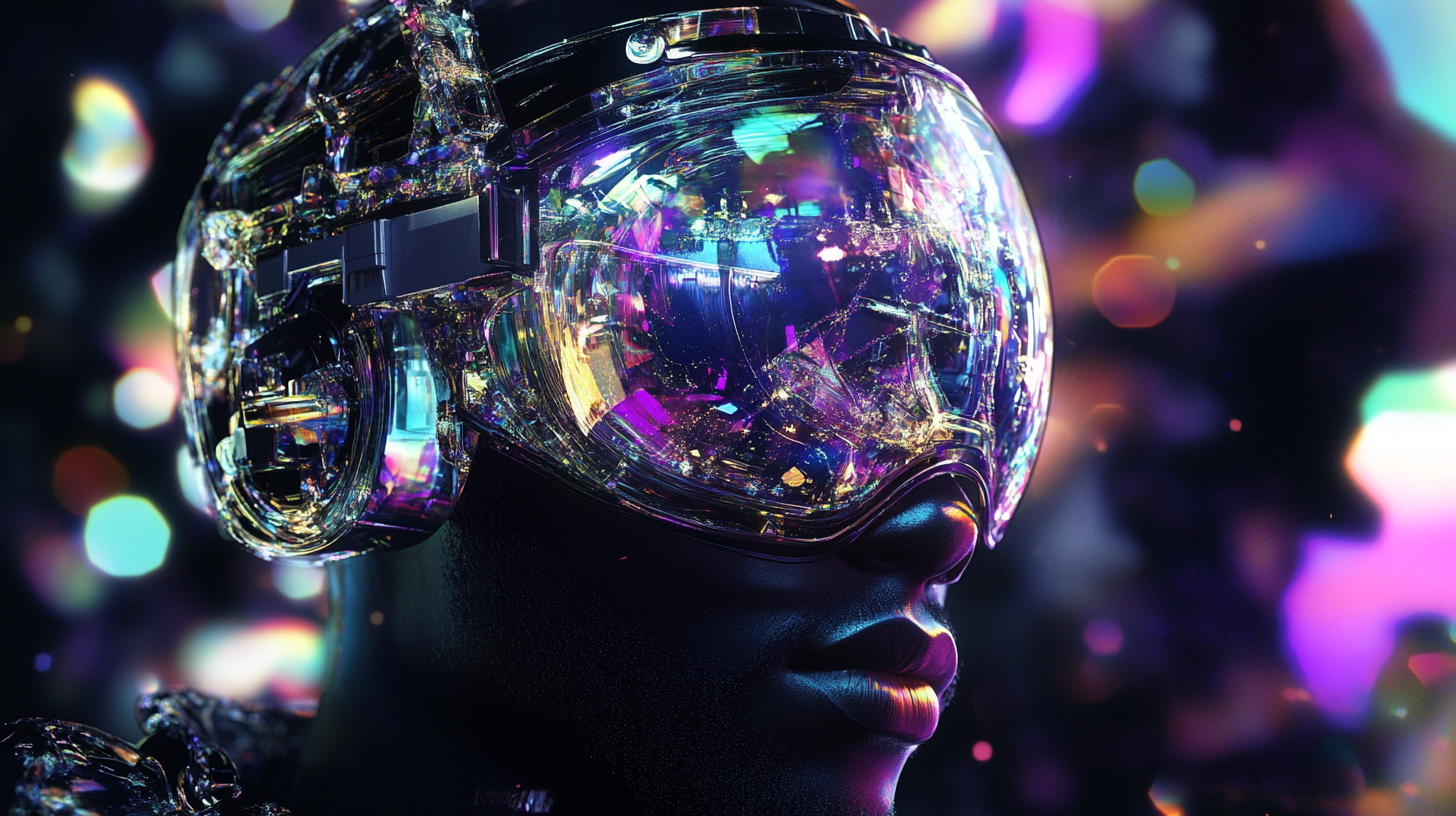
The Reawakening of XR Power: The Race for Mixed Reality is Back – MR Science Fiction Creative Image: Xpert.Digital
Mixed Reality Reloaded: Why Google and others are back in the game
AR and VR industry: A renaissance?
It seems the AR and VR industry is on the upswing again. Many observers are eagerly watching how the market will develop now that Meta, Google, Apple, and manufacturers like Pico are more seriously vying for users' attention. One enthusiastic AR/VR fan recently summed it up perfectly: "It's good that Google is back in the game and isn't just surrendering the field to Meta and Apple without a fight." This statement illustrates the dynamic nature of the current situation. While Meta has had a significant impact on the market in recent years with its Quest line, Google has been rather hesitant regarding AR and VR after initial, sometimes unsuccessful, attempts – think of Google Glass or Daydream. Now, however, the cards seem to be reshuffling.
Related to this:
The future up close: What XR, VR, AR and MR are really about
- XR (Extended Reality): A collective term for all technologies that augment or completely replace physical reality. XR includes Virtual Reality (VR), Augmented Reality (AR), and Mixed Reality (MR).
- VR (Virtual Reality): A technology that places the user in a completely virtual, computer-generated environment. The real world is completely hidden, and the user can interact within this artificial environment.
- AR (Augmented Reality): This technology enhances the real world with digital information or objects. Virtual elements are overlaid on the actual environment, allowing the user to see both the real world and the additional information simultaneously.
- MR (Mixed Reality): A combination of VR and AR where virtual and real objects can interact with each other in real time. In Mixed Reality, the physical and digital worlds merge into a new environment where both coexist and communicate.
Google's return to the XR world: Hope or skepticism?
The central question is: Will Google, with a new platform called Android XR or other innovative approaches, truly be able to gain a foothold in this segment? Skepticism is certainly warranted. One experienced observer commented: "I don't expect it to work particularly well. Even after ten years, Google's VR and AR stuff is still a disaster." This harsh criticism reflects a widespread opinion that Google has so far failed to build a convincing XR ecosystem that goes beyond mere technical gimmicks and could set standards in terms of software, usability, and user experience.
However, it's important to remember that Google has primarily focused on potential collaborations with hardware manufacturers and operating system integrations behind the scenes. A new approach to XR could now take a different turn – especially if Google succeeds in bringing developers and hardware partners together to create a more mature, stable, and engaging user experience. It's quite possible that Android XR will serve as a solid foundation for new headsets in the future, particularly when it comes to integrating familiar Android apps into virtual and extended environments. Seamless compatibility with the familiar Android ecosystem would be a strong selling point for many users.
Related to this:
Meta's strategy: The Quest 3 and Quest 3S as catalysts
Another major topic is Meta's offensive. With the Quest 2, the company launched an affordable and relatively accessible headset early on, which, thanks to its own ecosystem, attracted numerous users. Now, the Quest 3 and Quest 3S are in the spotlight. These models are intended to score points not only in terms of hardware performance, resolution, and comfort, but also with competitive prices. One industry insider remarked: "If they're any good, they could breathe new life into the market, because they're really attractive price-wise." This price-performance ratio could be crucial in drawing even more people into the virtual world and further disseminating the technology.
The Meta Quest 3 is positioned as a high-end solution for demanding VR and AR experiences. It boasts a noticeably higher resolution than its predecessor and features a significantly slimmer design. A powerful XR chipset is said to ensure smooth visuals and fast response times. In addition, it offers advanced mixed reality capabilities that allow virtual content to blend almost seamlessly with the real world. The intriguing counterpart is the Meta Quest 3S, which reportedly retains the same processor as the Quest 3 but offers slightly reduced specifications. This allows it to be offered at a significantly lower price, appealing to users who want to immerse themselves in the XR world without breaking the bank. This creates a kind of ecosystem with different price and quality levels that could be attractive to various target groups.
Apple enters the game: The Vision Pro as a game changer?
Alongside Meta and Google, Apple has stepped into the spotlight with its Vision Pro. This AR/VR headset boasts a high-resolution display, intuitive gesture control, and seamless integration into the existing Apple ecosystem. While the device occupies a very high price segment and is therefore likely to remain a niche product for early adopters and professional users for the time being, Apple's entry into this market could be seen as a turning point. When Apple gets involved seriously, new standards typically emerge that other manufacturers follow. This puts pressure on the competition but also fosters innovation. Users already deeply embedded in the Apple ecosystem could be drawn to the Vision Pro sooner or later, especially if developers bring compelling applications to market that demonstrate the added value of AR and VR in everyday life.
Meta's role as a platform provider and the relevance of Horizon OS
Another area of tension is Meta's role as a potential platform provider. Rumors persist that Meta plans to license its own operating system – often referred to as "Horizon OS" – to other manufacturers. Currently, Meta relies on its own Android-based ecosystem for its headsets, but opening up this platform could revitalize the market. Manufacturers like Pico are particularly relevant here. Their own operating system is currently considered underdeveloped and doesn't offer users a seamless, intuitive experience. Switching to Horizon OS or a future Android XR solution would potentially allow manufacturers like Pico to offer higher-quality products without having to shoulder the burden of complex system development themselves.
Software as a vulnerability and the importance of a unified ecosystem
Especially in Pico's case, the software has always been a weak point. One industry expert commented, "Their OS and software are a disaster." This statement may sound drastic, but it reflects a widespread problem: many AR/VR headsets suffer less from the hardware itself and more from a lack of software optimization, immature user interfaces, and insufficient content. If Meta were to open up its operating system, creating a platform that multiple manufacturers could build upon, it would result in a broader range of hardware based on the same technical foundation. This would make it easier for developers to create applications for an ecosystem that reaches a large number of users. In turn, this would attract more customers as the selection of apps, games, educational applications, and professional tools grows. The result could be a self-reinforcing cycle of supply and demand that propels the market forward overall.
Google's potential role with Android XR
The same applies to Google's upcoming Android XR. If a similar strategy is successfully pursued, Android XR could serve as a universal foundation upon which different manufacturers develop their hardware. This modular approach aligns with the Android philosophy, which has been successful in the smartphone sector for years: Manufacturers use Android as the basis for their devices, slightly adapt the system, and differentiate themselves through hardware, design, and additional features. Applied to the XR sector, this could mean that in the future, a wide variety of headsets—from inexpensive entry-level devices to expensive professional solutions—will be built on the same foundation. This would offer users a more consistent user experience and reduce market fragmentation, ultimately increasing the acceptance of VR and AR.
Related to this:
The current situation and possible market developments
The current situation suggests that we are at a crucial juncture. VR and AR technologies are no longer just a thing of the future, but are slowly but surely entering the mass market. Meta has already demonstrated with its Quest line that comparatively affordable yet powerful devices can appeal to a wider audience. Apple is focusing on a high-end product with the Vision Pro, which could set new standards in terms of quality and integration. Google is in a phase of renewal, aiming to potentially establish a standard with Android XR that will ensure long-term stability and diversity.
One observer summed up the essence of the current situation: "We'll definitely get the glasses and try them out." This statement expresses not only curiosity but also a certain composure. The market is evolving, and everyone wants to stay ahead of the curve. But with curiosity comes the desire for real improvements: more content, better software, a wider selection—in short, an ecosystem that works. Providers like Pico, who have struggled with unfinished software so far, could benefit from an open Horizon OS or a mature Android XR environment. "Next, though, I'm eager to see the MetaQuest 3 and 3S," the same observer added, "if they're any good, they could breathe new life into the market." This illustrates that the immediate next step, namely the products of the next generation, will serve as the benchmark.
The competition and the vision of a mature XR technology
The competition between Meta, Google, Apple, and others like Pico is primarily driven by one fundamental idea: AR/VR technology should finally come of age. It should find its place in everyday life, education, entertainment, work, and art. This requires not only impressive hardware but, above all, a mature software ecosystem that is easily accessible, stable, and inspiring for users. The new headsets and platforms that will enter the market in the coming years will show whether the industry can make this leap. The chances are good that AR and VR will gradually find their way into the mainstream – be it through Meta's OS offensive, Apple's premium strategy, Google's Android XR, or through other manufacturers jumping on the bandwagon. One thing is certain: the field is in flux, and the next few years will be crucial in determining whether the vision of an immersive, connected, and user-friendly XR world truly becomes a reality.
Related to this: