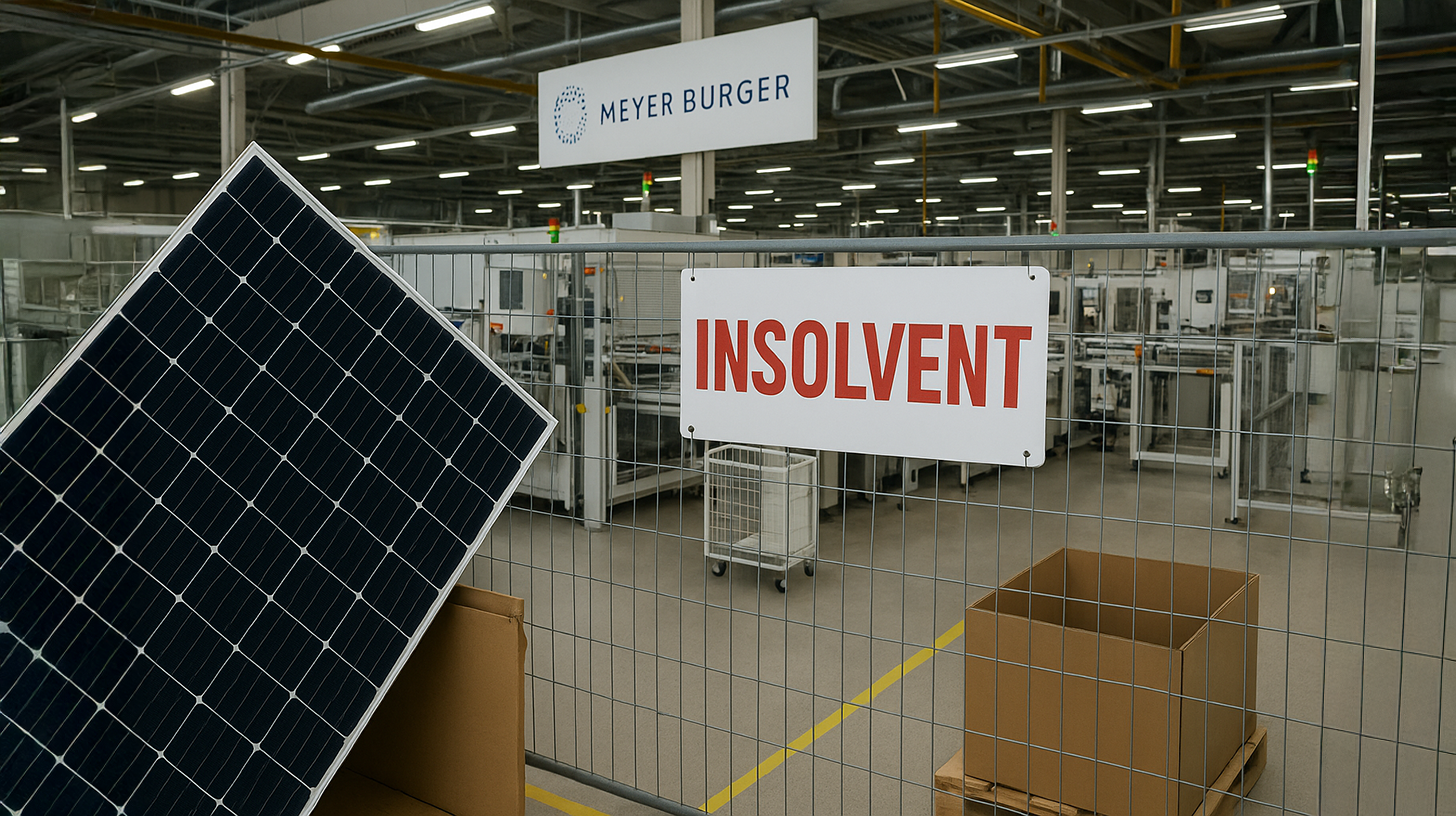
Meyer Burger insolvency and the end of the European solar industry – 645 jobs lost – Creative image: Xpert.Digital
Technically three years ahead – and yet bankrupt: The tragic story of solar manufacturer Meyer Burger
### From solar pioneer to bankruptcy: The bitter end of Meyer Burger ### Technically three years ahead – and yet bankrupt: The tragic story of solar manufacturer Meyer Burger ###
Made in Europe: No chance? How China destroyed the German solar energy hopeful Meyer Burger
The insolvency of solar module manufacturer Meyer Burger in September 2024 is more than just a corporate bankruptcy; it is a harbinger of the decline of an entire future-oriented European industry. With the demise of the Swiss technology leader, not only are 645 jobs lost in Germany and Switzerland, but the hope for an independent, Europe-based solar industry also suffers a severe blow.
The main reason for the failure was an unequal battle: Meyer Burger, whose state-of-the-art solar modules had a proven technological lead of several years, could not withstand the massive price pressure from state-subsidized cheap imports from China. Chinese modules flooded the European market at dumping prices that were even below the production costs in China – an aggressive strategy to conquer the market.
The collapse of Meyer Burger is symptomatic of a crisis that has gripped the entire continent. While China controls over 95% of global solar production, Europe's share has shrunk to a vanishingly small 3%. This raises existential questions about Europe's strategic dependence, security of supply, and the effectiveness of European industrial policy. While the US, with the Inflation Reduction Act, shielded its domestic production, Europe acted hesitantly and inconsistently. The Meyer Burger case is thus a chronicle of failure on many levels – technologically brilliant, but economically and politically abandoned. It serves as a stark warning of the consequences that misguided industrial policy can have for Europe's future.
Related to this:

Why did Meyer Burger fail?
The insolvency of the Swiss solar module manufacturer Meyer Burger in September 2024 marks the end of a remarkable corporate history. Founded in 1953 by Hans Meyer and Erich Burger as a manufacturer of precision machines for the watchmaking industry, the company developed over the decades into a technology leader in the photovoltaic sector.
The main reason for the failure was the massive price pressure from cheap Chinese imports. As the company stated, the dumping prices from China led to an unsustainable economic situation. Chinese solar modules were sold in Europe for as little as €0.06 per watt, while they were offered on the Chinese domestic market for €0.10 per watt – a clear indication of dumping.
The crisis worsened dramatically in November 2024 when Meyer Burger's largest customer, the American company DE Shaw Renewable Investments (DESRI), terminated a long-term supply contract for up to 5 gigawatts of solar modules. This contract was the cornerstone of Meyer Burger's expansion into the USA and was scheduled to be fulfilled between 2024 and 2029.
What was Meyer Burger's technological distinguishing feature?
Meyer Burger had established itself as a technology leader in the solar industry, particularly through the development of heterojunction SmartWire technology. This proprietary technology enabled solar modules with significantly higher efficiency than conventional PERC technology.
SmartWire Connection Technology (SWCT) replaced conventional silver-based busbars with thin copper wires, resulting in up to 2,000 contact points per solar cell and a 5 percent increase in power output. The Fraunhofer Institute for Solar Energy Systems confirmed in 2020 that Meyer Burger had a three-year technological lead over other manufacturers.
Heterojunction technology was characterized by particularly low temperature coefficients, which led to higher yields in strong sunlight. Furthermore, the modules were more stable in diffuse light and achieved reliable performance even under cloudy skies.
How did the company develop until its insolvency?
After decades of operating as a plant manufacturer for the solar industry, Meyer Burger decided in 2020 to enter the production of solar cells and modules itself. The company took over the former Sovello factories in Bitterfeld-Wolfen and SolarWorld in Freiberg.
Production began in Germany in 2021 with the aim of creating a European alternative to Chinese products. At the same time, the company expanded into the USA, where it built a factory in Goodyear, Arizona, which began operations in 2024.
Despite its technological superiority, Meyer Burger came under considerable financial pressure as early as 2023. In 2024, the company recorded an operating loss of 210.4 million Swiss francs on sales of only 70 million Swiss francs. At the end of May 2024, Meyer Burger filed for insolvency for its German subsidiaries, followed by a similar application in the USA at the end of June.
What impact will the closure have on the employees?
The closure of Meyer Burger had dramatic consequences for the workforce. In Germany, around 600 employees lost their jobs – approximately 300 in Bitterfeld-Wolfen (Saxony-Anhalt) and 200 in Hohenstein-Ernstthal (Saxony). In Switzerland, the remaining 45 employees were laid off.
As early as spring 2024, all 282 employees at the Goodyear plant in Arizona, USA, had been laid off. The search for investors proved unsuccessful, leaving insolvency administrators Lucas Flöther and Reinhard Klose with no alternative but to close the plant.
The affected regions in eastern Germany lost not only jobs, but also important technological know-how. Meyer Burger had invested heavily in its German locations and trained skilled workers there.
What does this mean for the European solar industry?
The collapse of Meyer Burger is symptomatic of the crisis in the entire European solar industry. Europe now produces only about 3 percent of the world's solar modules, while China controls over 95 percent of global production capacity.
Other German manufacturers are also fighting for survival. Solarwatt ceased production in Dresden in 2024 and relocated manufacturing to Asia. The company justified this by citing the economic impossibility of producing in Germany under the current conditions.
The European Solar Manufacturing Council (ESMC) warns of an existential threat to the European solar industry. Without immediate action, Europe could lose its remaining solar manufacturing base entirely and become even more dependent on Chinese imports.
How are the USA reacting to this development?
The US has pursued a different strategy with the Inflation Reduction Act (IRA) of 2022. The law offers extensive tax incentives for domestic solar production, including a 30 percent investment tax credit and additional bonuses for American-made components.
The 45X Advanced Manufacturing Production Tax Credit directly supports manufacturers based on production volume – 4 cents per watt for photovoltaic cells and $12 per square meter for wafers. These incentives have led to a dramatic boom in American solar manufacturing: Production capacity has quadrupled since 2022 to over 50 gigawatts.
Meyer Burger had originally hoped to benefit from these American incentives, but the termination of the DESRI contract thwarted these plans. Ironically, Meyer Burger ultimately sold its Arizona production facilities to the Indian manufacturer Waaree Solar Americas.
New: Patent from the USA – install solar parks up to 30% cheaper and 40% faster and easier – with explanatory videos!
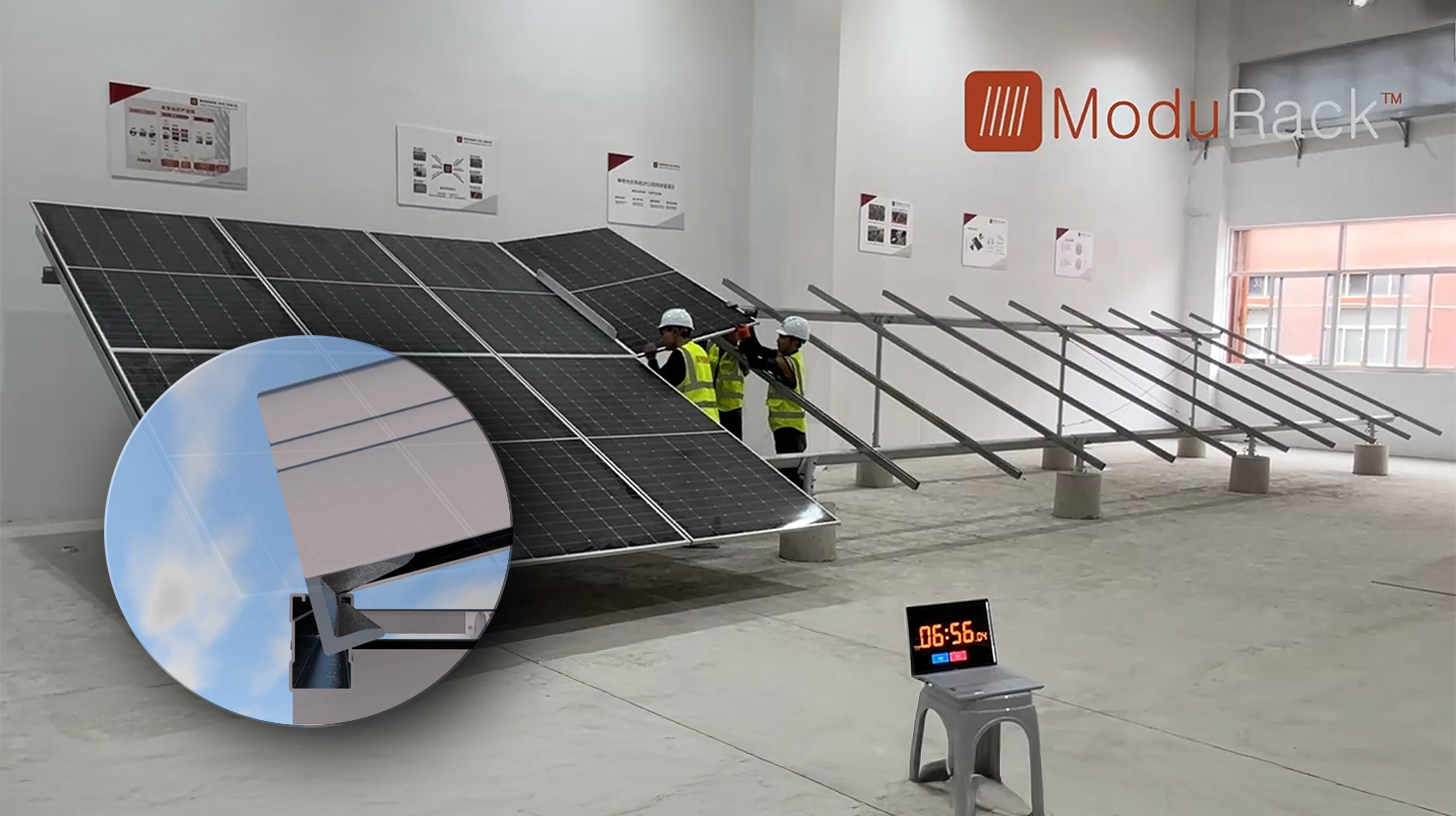
New: Patent from the USA – Install solar parks up to 30% cheaper and 40% faster and easier – with explanatory videos! - Image: Xpert.Digital
The core of this technological advancement is the deliberate departure from conventional clamp mounting, which has been the standard for decades. The new, more time- and cost-effective mounting system addresses this with a fundamentally different, more intelligent concept. Instead of clamping the modules at specific points, they are inserted into a continuous, specially shaped support rail and held securely in place. This design ensures that all forces – whether static loads from snow or dynamic loads from wind – are distributed evenly across the entire length of the module frame.
More information here:
Net-Zero Industry Act – Europe's last lifeline for solar energy?
What is Europe doing to protect its solar industry?
Europe is attempting to counteract this trend with the Net Zero Industry Act (NZIA), which came into force in June 2024. The law sets the goal of covering at least 40 percent of Europe's demand for net-zero technologies through domestic production by 2030.
The NZIA allows member states to consider non-price criteria such as sustainability and resilience in public tenders, tolerating price differences of up to 20 percent in public procurement. At least 30 percent of tenders should apply these criteria.
Several Member States have already introduced national support programs: France with the Pacte solaire, Spain with PERTE funding, Italy with the Piano Transizione 5.0 and Austria with a Made-in-EU bonus.
Related to this:

How strongly does China dominate the world market?
China's dominance in the solar sector is overwhelming. The country controls over 80 percent of global photovoltaic manufacturing and has built this position through decades of strategic investments. As early as 2022, 87 percent of the photovoltaic systems imported into Germany came from China.
In 2024, China exported a total of 236 gigawatts of solar modules, an increase of 13 percent compared to the previous year. In 2023 alone, China installed 253 gigawatts of solar capacity, representing 60 percent of the global total.
The Chinese strategy relies on massive state subsidies, enabling them to offer solar modules at prices that even Chinese manufacturers cannot profit from. These loss-making operations are offset by state aid and serve the purpose of long-term market conquest.
What role did political decisions play?
The political responses in Europe were inadequate and often contradictory. While over 400 European companies, including solar panel manufacturers, opposed trade defense measures in 2023, others urgently called for punitive tariffs against Chinese dumping practices.
Germany played a particularly problematic role by weakening EU tariffs on Chinese solar panels as early as 2013. This policy of cheap imports significantly accelerated the decline of the European solar industry.
The US, however, largely blocked Chinese manufacturers from accessing the American market, which led to Chinese overcapacity being diverted to Europe. This further intensified price pressure on European manufacturers.
What are the long-term consequences for Europe?
The loss of European solar manufacturing has far-reaching strategic consequences. Europe will become even more dependent on Chinese supply chains at a time when geopolitical tensions are increasing. This dependence not only jeopardizes security of supply but also the achievement of European climate goals.
The European Union aims for a massive expansion of solar capacity by 2030, but without domestic production, this expansion will be entirely dependent on Chinese imports. This creates strategic vulnerabilities and makes Europe susceptible to blackmail.
The loss of technological know-how is potentially even more serious. Companies like Meyer Burger had built up expertise over decades, which is now being lost. These skills are difficult to rebuild and will require significant investment.
Can the remaining European manufacturers survive?
The few remaining active European solar manufacturers face enormous challenges. Companies like REC Group, which still produce heterojunction modules, are subject to the same price pressure as Meyer Burger.
Some manufacturers are trying to save themselves through specialization. The Dutch company Solarge produces lighter solar modules for roofs that cannot support higher weight loads. But even this niche strategy offers only limited protection against Chinese competition.
The European Solar Manufacturing Council estimates that without immediate action, the European solar industry could completely collapse within a few months. This would mean the end of a once leading European technology sector.
What role do quality and technology play?
Despite the price differences, the quality of Chinese solar modules is quite comparable to European products. This makes it even more difficult for European manufacturers to justify their higher prices.
Meyer Burger had tried to differentiate itself through premium quality and innovative technology. The heterojunction SmartWire technology did indeed offer performance advantages, but these were not enough to compensate for the cost disadvantages.
The irony is that many of the technologies used by Chinese manufacturers today were originally developed by European companies like Meyer Burger. Europe has lost its technological innovations to China and is now competing with its own inventions.
What could have been done differently?
In retrospect, it is clear that Europe made strategic errors. The premature lifting of anti-dumping duties in 2013 was a crucial mistake. Instead, Europe should have protected its solar industry more consistently and simultaneously strengthened its competitiveness.
Earlier and more decisive implementation of the Net-Zero Industry Act might have saved companies like Meyer Burger. The EU measures came too late and were too timid to counter Chinese state subsidies.
The US, with its Inflation Reduction Act, demonstrates that a decisive industrial policy can be quite effective. Europe should have created similar incentives earlier to strengthen its solar industry.
What happens next?
The future of the European solar industry depends on swift and decisive political action. The EU must consistently implement the Net Zero Industry Act and go beyond current plans. A European cleantech fund could mobilize the necessary investments.
At the same time, European companies need to develop new business models. Some firms are already cooperating with Chinese partners to jointly build factories in Europe. This strategy is controversial, but could keep jobs and expertise in Europe.
The danger is that Europe will further increase its dependence on China instead of creating genuine alternatives. The Meyer Burger debacle should serve as a wake-up call before it's too late.
What lessons can other industries learn?
The decline of Meyer Burger and the European solar industry is a cautionary tale about the dangers of unfair international competition. Other sectors, such as the electric vehicle industry and battery production, face similar challenges.
The importance of a coherent industrial policy is clearly illustrated by the solar energy example. While the US and China act strategically, Europe often reacts too late and in a disorganized manner. This leads to the loss of entire industries and strategic autonomy.
The Meyer Burger insolvency also demonstrates that technological superiority alone is not enough if the framework conditions are right. Innovation must be supported by appropriate policy and market instruments in order to compete against subsidized competition.
The Meyer Burger case marks the end of an era in the European solar industry. What began as a success story of Swiss precision engineering ended as a victim of global trade policies and Chinese state subsidies. The lessons learned from this failure could be crucial in determining whether Europe can maintain its industrial base in other future technologies.
Look, this little detail saves up to 40% installation time and reduces costs by up to 30%. It comes from the USA and is patented.

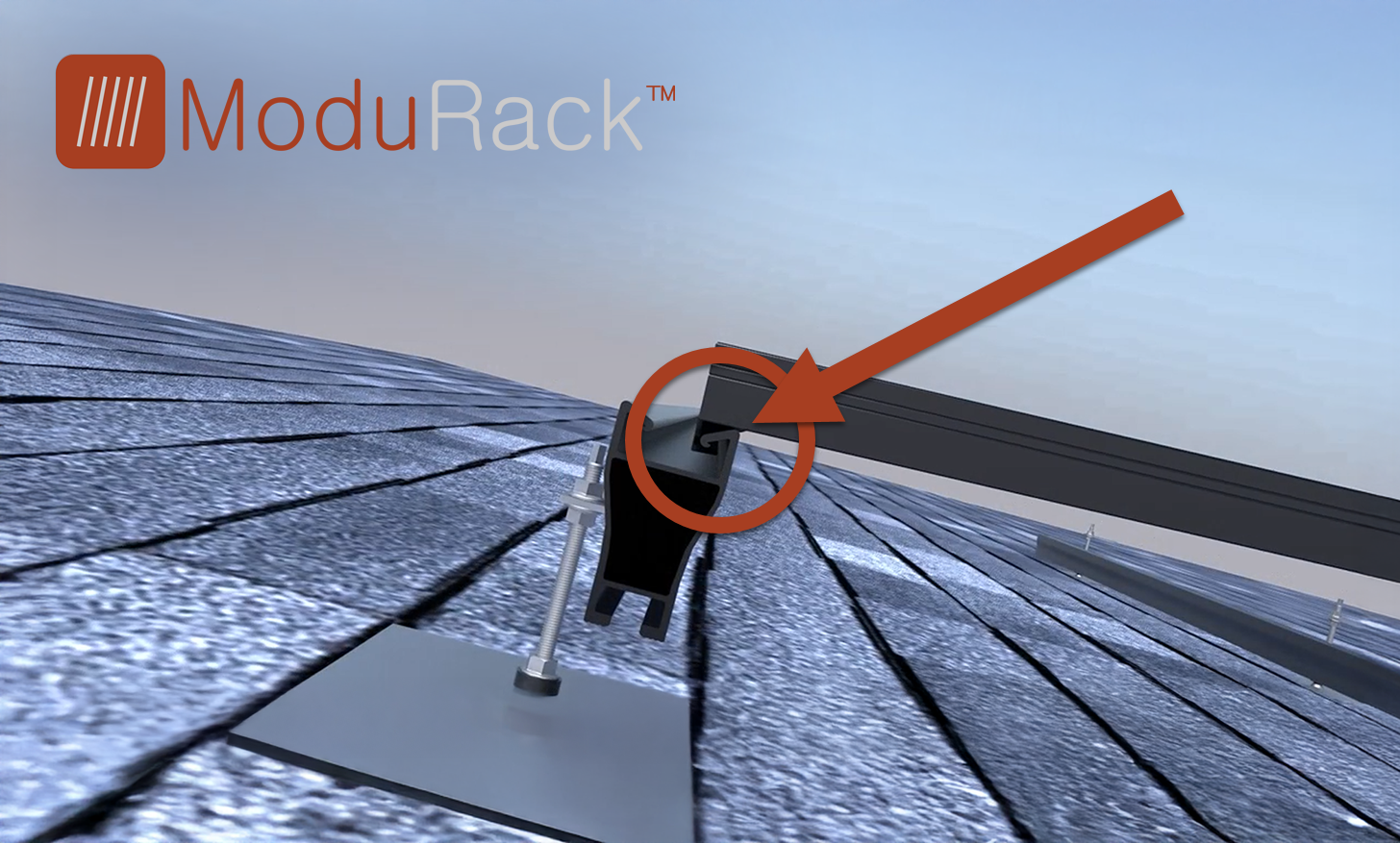
NEW: Ready-to-install solar systems! This patented innovation significantly accelerates your solar construction project
The core of ModuRack 's innovation lies in the departure from conventional clamp fastening. Instead of clamps, the modules are inserted and held in place by a continuous support rail.
More information here:
Your partner for business development in the fields of photovoltaics and construction
From industrial rooftop PV to solar parks and larger solar parking lots
☑️ Our business language is English or German
☑️ NEW: Correspondence in your native language!

Konrad Wolfenstein
I and my team are happy to be available to you as your personal advisor.
You can contact me by filling out the contact form here wolfenstein@xpert.digital:or simply call me at +49 7348 4088 965. My email address is
I'm looking forward to our joint project.