Hybrid trade fairs with the Metaverse for innovation-driven companies – Image: Xpert.Digital
🌐 Extended Reality: Hybrid trade fairs for innovation-driven companies with a cross-device metaverse - Virtual & Mixed
In recent years, the way we perceive and interact with the world has changed dramatically. This is primarily due to rapid technological advancements, particularly in Extended Reality (XR), Virtual Reality (VR), and Mixed Reality (MR). For companies constantly striving to be at the forefront of innovation, these technologies offer a world of new opportunities.
🌟 Hybrid trade fairs: A revolution in the business world
Traditional trade shows were always physical events where companies, professionals, and customers met to showcase products, network, and close deals. But the introduction of extended reality has completely transformed this dynamic landscape. Today, companies can host hybrid trade shows where attendees can interact both physically and virtually.
By using VR and MR, visitors can enter a trade fair booth without being physically present. They can interact with products, watch demonstration videos, and even use virtual meeting rooms to exchange ideas with exhibitors. This not only expands the reach of the trade fair but also enables a deeper and more interactive experience for participants.
🌌 The cross-device metaverse
The concept of the metaverse is not new, but advances in XR technology are bringing it increasingly into focus. The metaverse can be understood as a collective, shared virtual space created by the convergence of physical virtual reality and interactive digital environments.
For businesses, this means seamless integration of various devices to deliver a unified and immersive experience. Whether a visitor accesses the trade fair via VR glasses, a computer, or a smartphone, the experience remains consistent and engaging. This cross-device metaverse also allows companies to expand their reach and engage a wider audience, regardless of geographical limitations.
🚀 Advantages for innovation-driven companies
1. Extended range
Hybrid trade fairs allow companies to reach a global audience without requiring participants to travel.
2. Cost savings
The costs of organizing a physical trade fair can be enormous. By combining physical and virtual elements, companies can save costs while reaching a wider audience.
3. Data analysis
Digital interactions allow companies to collect valuable data about the behavior and preferences of their visitors. This can be used to adapt marketing strategies and improve future trade fairs.
4. Personalized experiences
XR technology allows companies to create personalized experiences for their visitors, tailored to their preferences and interests.
🔗 Hybrid Trade Fairs & Virtual Fairs
The introduction of extended reality in the business world has paved the way for revolutionary change. Hybrid trade shows, supported by a cross-device metaverse, offer companies the opportunity to expand their reach, reduce costs, and build deeper relationships with their customers. In this ever-evolving landscape, it is crucial for innovation-driven companies to be at the forefront and fully leverage the opportunities these technologies offer. 🌐🌟🌌🚀🔗
📣 Similar topics
- 🌐 The future of the business world: Hybrid trade fairs and the metaverse
- 🚀 Innovation-driven companies and XR technology
- 💼 Virtual Worlds: Hybrid Trade Fairs in Transition
- 🌍 The global reach of hybrid trade fairs
- 💰 Cost savings and data acquisition in the business world
- 🤖 Virtual Reality: A new era for corporate trade fairs
- 🤝 Customer loyalty in the metaverse: The role of XR
- 📊 Data analysis and personalized experiences at XR trade shows
- 📱 The cross-device metaverse: An overview
- 🌟 The future of the business experience: XR and hybrid trade shows
#️⃣ Hashtags: #XR #HybridTradeFairs #Metaverse #Innovation #DataAnalysis
🌐 Strengthening innovation in the metaverse: A future model for companies 🚀
Professor Dr. Fabian Lang from Hanover University of Applied Sciences and Arts emphasizes the importance of the metaverse for innovation-driven companies . This digital space offers a unique platform to manifest and intensify the company's commitment to innovation among stakeholders such as shareholders and investors. But what might this look like in practice?
💡 A prime example is Telefónica's participation at Mobile World Congress (MWC) 2023. The telecommunications giant expanded its exhibition stand with a virtual presence. Visitors can experience the stand not only physically, but also virtually. They can participate in live presentations, interact with staff, and even experience products in real time – all without being physically present.
🌍This type of application highlights Telefónica as an innovation driver in the industry and sends a clear signal to investors and shareholders: We are future-oriented and leading the way in digital transformation. This model offers a strategic advantage, not only in terms of branding, but also through the ability to scale globally without the associated costs of a physical presence.
🌟 The Potential of the Metaverse 🌍
The idea of the metaverse isn't just relevant for technology companies, but for all industries. From retail to healthcare, the potential applications are virtually limitless. Imagine a luxury brand that allows its customers to try on clothes in a virtual environment before making a purchase. Or a pharmaceutical company that offers medical training in a virtual laboratory.
The impact of social interactions in the metaverse should also not be underestimated. Companies can expand their customer base through special events or exclusive product launches in a virtual world. For example, a car manufacturer could present a new model in an exclusive virtual showroom accessible only to certain members.
💰 The financial advantages 💼
Beyond the obvious advantages in terms of image as an innovator, there are also financial benefits. Companies can tap into additional revenue streams by selling virtual goods and services. This opens up new markets and enables efficient monetization of intellectual property, as even the smallest digital assets can be sold. Furthermore, data collection and analysis within the metaverse can provide crucial insights into customer behavior, which can then be translated into optimized business strategies.
🔍 Legal and ethical considerations 📜
However, there are also challenges, particularly regarding data protection and ethics. Companies must ensure that the collected data is managed securely and in accordance with data protection regulations. Furthermore, the technology should be designed to be inclusive and accessible to allow access for everyone.
📝 Metaverse not only strengthens the image, but also secures a competitive edge 🚀
A presence on the Metaverse offers not only a unique opportunity to position oneself as an innovation leader, but also opens up new business areas and provides valuable data for the company's further development. However, careful planning and consideration of ethical and legal aspects are crucial for success. Whether as a supplementary presence at trade fairs or as an integral part of the business strategy, the innovative use of the Metaverse is a decisive factor for the future viability of any company. Prof. Dr. Fabian Lang's view is confirmed by practice: those who are active on the Metaverse not only strengthen their image, but also secure a competitive edge in an increasingly competitive and digitized market.
📣 Similar topics
- 🌐 Metaverse: The Future of Innovation
- 💼 Metaverse as a strategic step for companies
- 🚀 Virtual presence: Telefónica's MWC 2023 success
- 👗 Virtual try-on: Luxury fashion in the Metaverse
- 💰 Monetization in the Metaverse: Opportunities and Potential
- 🌍 Metaverse for all industries: Application diversity
- 🤝 Social Interactions in the Metaverse: Customer Loyalty
- 🔒 Data protection and ethics in the metaverse
- 💡 Metaverse: Innovation Drivers and Business Opportunities
- 📈 Metaverse as a competitive advantage: The way forward
#️⃣ Hashtags: #Metaverse #Innovation #VirtualPresence #Monetization #SocialInteractions #DataProtection #Ethics #BusinessOpportunities #CompetitiveAdvantage #FutureViability
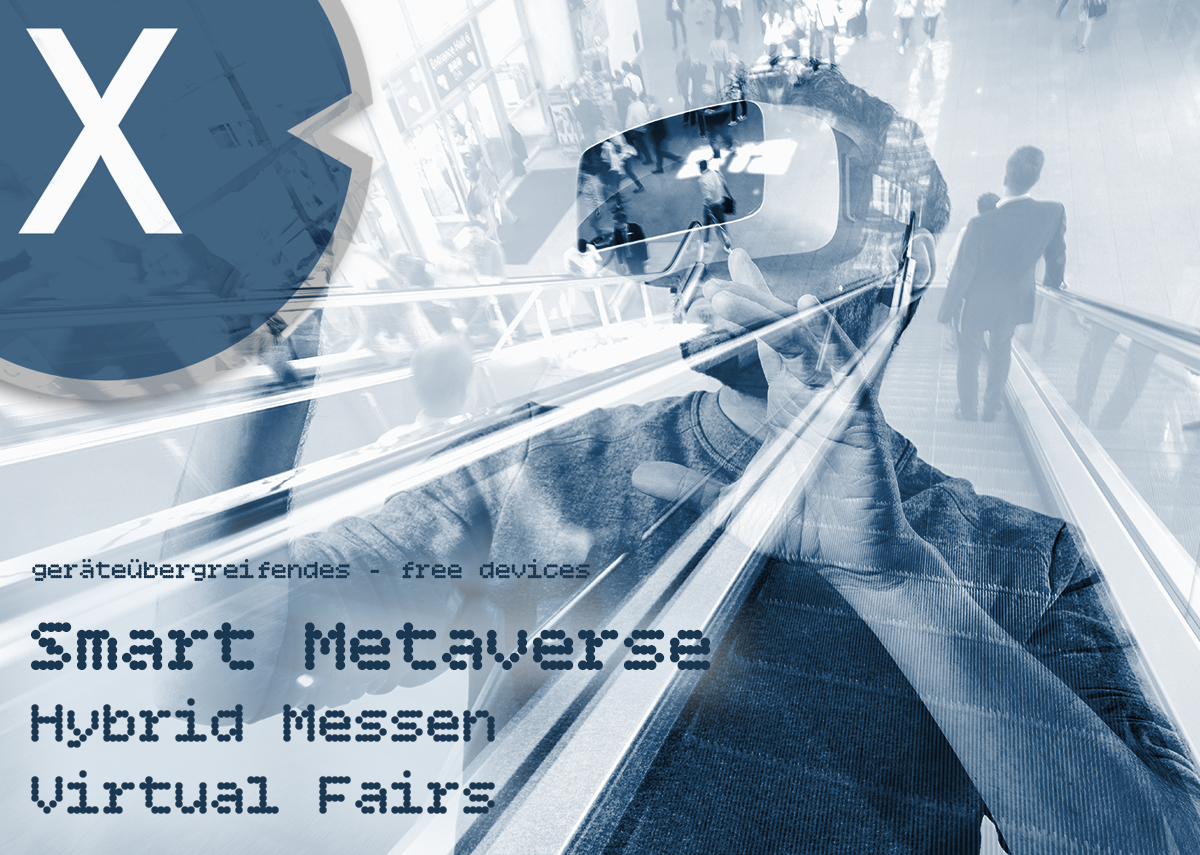
🌐 Hybrid trade fair with metaverse and physical trade fair, in-house exhibition or event – suitable for global, cross-border events

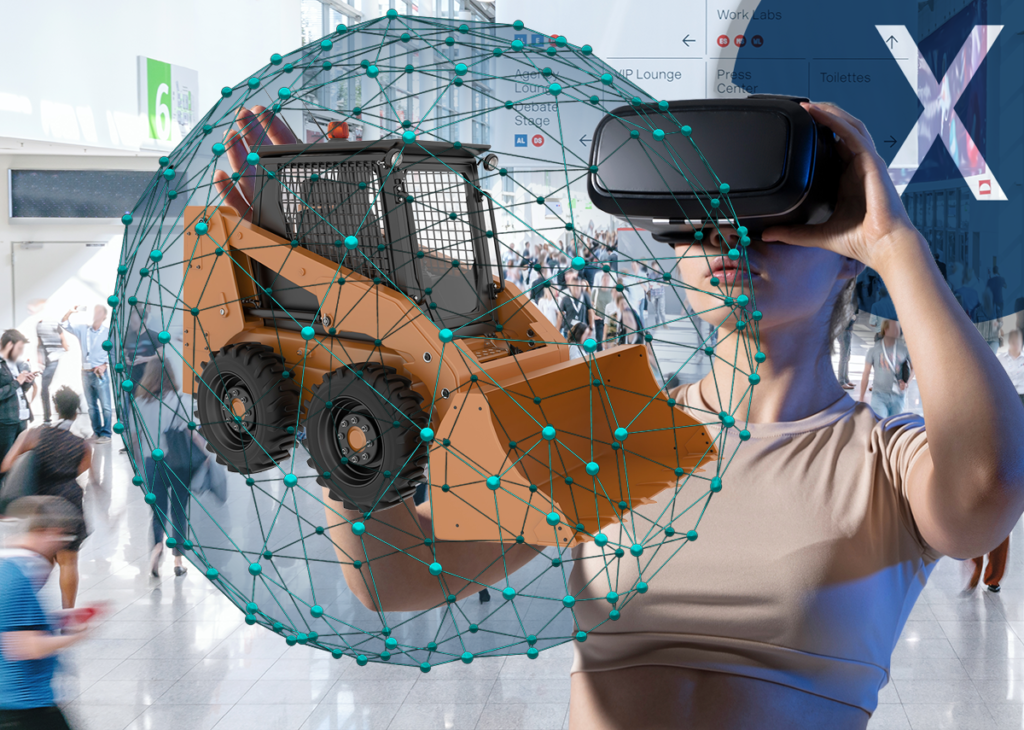
Hybrid trade fair with metaverse and physical trade fair, in-house exhibition or event – Image: Xpert.Digital
The advantages of 3D product presentations in the metaverse, combined with physical trade fairs and events, also used as hybrid trade fairs, are manifold and can help companies strengthen their market presence and create an impressive customer experience.
More information here:
Although trade shows and other in-person promotional events have faced strong competition from digital marketing channels in recent years, they remain among the most profitable business-to-business (B2B) media strategies worldwide. In 2019, the global B2B trade show market was valued at US$34.4 billion, and this figure is expected to exceed US$40 billion by 2023.
More information here:
🌐 Cross-device 'Free Devices' for a Smart Metaverse with XR technology at and for hybrid trade fairs and events
In recent years, technologies surrounding the metaverse and extended reality (XR) have developed rapidly and are increasingly becoming a strategic component of trade fairs and events. A particularly fascinating innovation is the concept of cross-device "free devices." This refers to the ability to freely choose different device types to access the metaverse and the XR environment. Whether smartphone, VR headset, tablet, computer, or a touchscreen on the wall or table – the choice of device is up to the user. This flexible approach enables a unique hybrid trade fair presentation where digital and real-world experiences seamlessly merge.
🌍 The importance of the metaverse and extended reality at trade fairs and events
Before we delve deeper into cross-device free devices, it's important to understand the metaverse and extended reality in the context of trade shows and events. The metaverse is a virtual world where users can interact using digital avatars. It offers a comprehensive digital environment ranging from social media and games to business applications. Extended Reality (XR), on the other hand, is an umbrella term encompassing augmented reality (AR), virtual reality (VR), and mixed reality (MR). XR augments the physical world with digital elements, enabling immersive experiences.
Trade fairs and events are traditionally places for personal exchange and business development. However, with the integration of the Metaverse and XR technologies, they are gaining a completely new dimension. Trade fairs can now be held digitally and in combination, overcoming physical distances. This allows companies to participate in trade fairs worldwide without being physically present. At the same time, physical trade fairs can also be enhanced with XR areas that offer additional information and experiences.
🚀 The advantages of cross-device Free Devices
The idea of cross-device Free Devices brings numerous advantages that significantly improve the experience at trade fairs and events in the metaverse and the XR environment:
1. Flexibility for the participants
Each participant can choose the device that best suits their needs and preferences. Some may prefer the immersion of VR glasses, while others would rather navigate using their tablet or smartphone. This freedom increases participation and well-being.
2. Cost efficiency
Since participants can use their own devices, the costs of providing expensive hardware are eliminated. This significantly reduces the entry and participation costs for trade fairs and events, making it possible for smaller companies and individuals to attend.
3. Accessibility
The cross-device approach takes into account the diversity of users. People with different abilities and needs can use the devices best suited to them, which increases accessibility and creates a more inclusive environment.
4. Seamless integration
Integrating diverse devices into the metaverse and XR environment requires advanced technologies that enable seamless interactions. This fosters collaboration among participants and allows for a smooth experience.
5. Realistic experiences
The combination of digital and physical elements enables realistic experiences. For example, participants can use VR glasses to inspect virtual products or take part in interactive presentations while simultaneously being physically present.
🌟 Application scenarios for cross-device Free Devices at trade fairs and events
To fully exploit the advantages of cross-device Free Devices at trade fairs and events, various application scenarios can be considered:
1. Hybrid trade fairs
Hybrid trade fairs allow participants to be present on-site or to participate digitally from anywhere in the world. This gives companies the opportunity to reach a wider audience while still enabling physical interaction.
2. 3D product presentations
Companies can showcase their products in virtual environments, thereby capturing the attention of participants and offering them realistic insights into the products. This is particularly relevant in industries such as real estate, automotive, and fashion.
3. Networking and social interaction
The cross-device Free Devices allow participants to network and socialize in virtual lounges. This creates an informal atmosphere that closely resembles the personal exchange at physical trade fairs.
4. Virtual conferences and lectures
Keynote speakers and experts can deliver their presentations in a VR environment to create an interactive and immersive experience. Participants can ask questions and respond in real time, as if they were physically present.
5. Measuring Engagement
XR technology enables event organizers to accurately measure participant engagement. They can track which presentations received the most attention, which products were clicked on most often, and which interactions occurred most frequently.
🛠️ Challenges and future developments
Although the idea of cross-device Free Devices is promising, there are also some challenges to overcome:
1. Technological compatibility
Integrating different types of devices requires advanced technological solutions to ensure interoperability. This necessitates close collaboration between hardware manufacturers and software developers.
2. Data protection and security
The use of personal devices in XR environments can raise privacy and security concerns. It is crucial to implement robust security protocols to protect user privacy.
3. User experience
The user experience must be consistent and engaging across different devices. This requires careful design of XR environments and optimization for different screen sizes and input methods.
The future of cross-device free devices at trade shows and events looks promising. As technology advances, these challenges will be overcome, and XR will become an integral part of the events industry. Companies should leverage these opportunities to expand their audience, merge real and virtual worlds, and create an innovative experience for their attendees.
📝 Free choice and accessibility with the Free Devices concept
Cross-device free devices in the context of the metaverse and extended reality (XR) at trade shows and events offer numerous advantages, including flexibility, cost-efficiency, and accessibility. They allow participants to freely choose different device types to seamlessly blend digital and real-world experiences. This technology opens up application scenarios such as hybrid trade shows, product presentations, virtual conferences, and networking in virtual lounges. While challenges exist, the cross-device use of XR technologies is expected to shape the future of the events industry and significantly expand opportunities for businesses.
📣 Similar topics
- 🔮 The future of the trade fair world: Cross-device XR technology
- 🌐 Virtual and real fusion: The metaverse at trade fairs
- 🚀 The revolution of the event industry: XR and Free Devices
- 💼 XR in the business world: Opportunities and challenges
- 📈 Hybrid trade fairs of the future: Flexibility through free devices
- 🌟 The magic of XR: New dimensions for events
- 💰 Cost efficiency and diversity: Cross-device Free Devices
- 🤝 Virtual Networking: XR Lounges at Trade Fairs
- 🎉 Immersive product presentations: XR in focus
- 📊 Measuring success in XR: Analyzing participant engagement
#️⃣ Hashtags: #Metaverse #XR #MessenUndEvents #FreeDevices #Innovation
🗒️ Xpert.Digital: A pioneer in the field of Extended and Augmented Reality
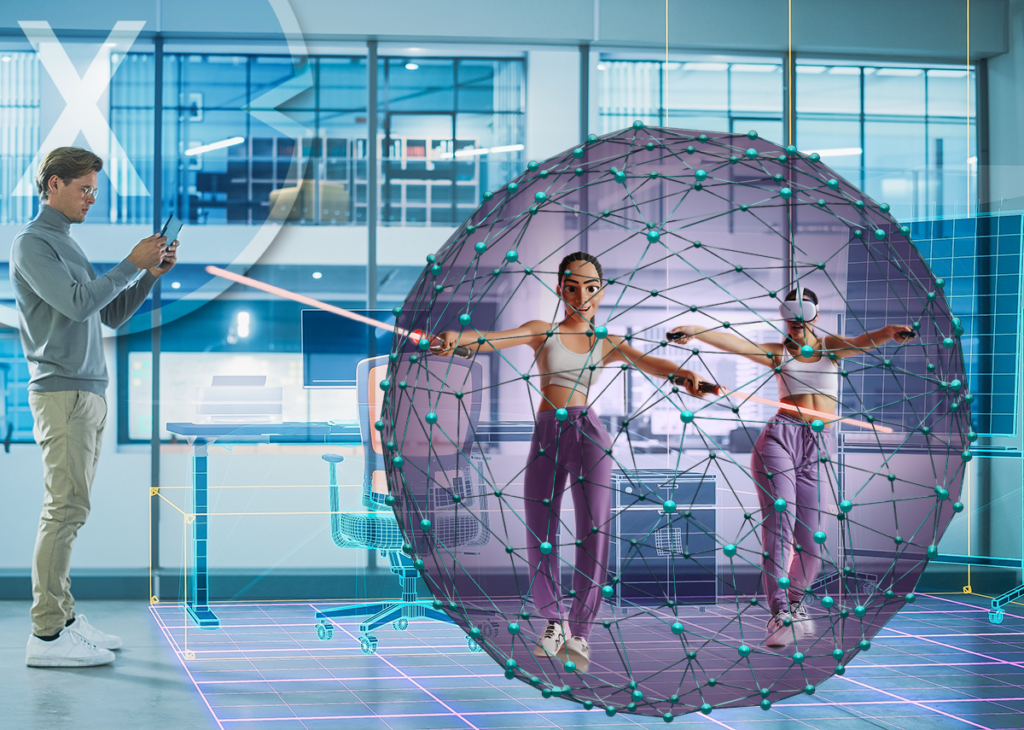
Finding the right Metaverse agency, planning office, or consulting firm - Image: Xpert.Digital
🗒️ Finding the right Metaverse agency, planning office, or consulting firm – Search and search: Top Ten Tips for Consulting & Planning
More information here:

We are here for you - Consulting - Planning - Implementation - Project Management
Xpert.Digital - Pioneer Business Development
Smart Glasses & AI - XR/AR/VR/MR industry expert
Consumer Metaverse or Metaverse in general
If you have any questions, require further information or advice, please feel free to contact me at any time.

Konrad Wolfenstein
I would be happy to serve as your personal advisor.
You can contact me by filling out the contact form below or simply call me on +49 7348 4088 965 .
I'm looking forward to our joint project.
Write to me


Xpert.Digital - Konrad Wolfenstein
Xpert.Digital is a hub for industry focusing on digitalization, mechanical engineering, logistics/intralogistics and photovoltaics.
With our 360° Business Development solution, we support renowned companies from new business to after-sales.
Market intelligence, smarketing, marketing automation, content development, PR, mail campaigns, personalized social media and lead nurturing are part of our digital tools.
You can find more information at: www.xpert.digital - www.xpert.solar - www.xpert.plus
Keep in touch