

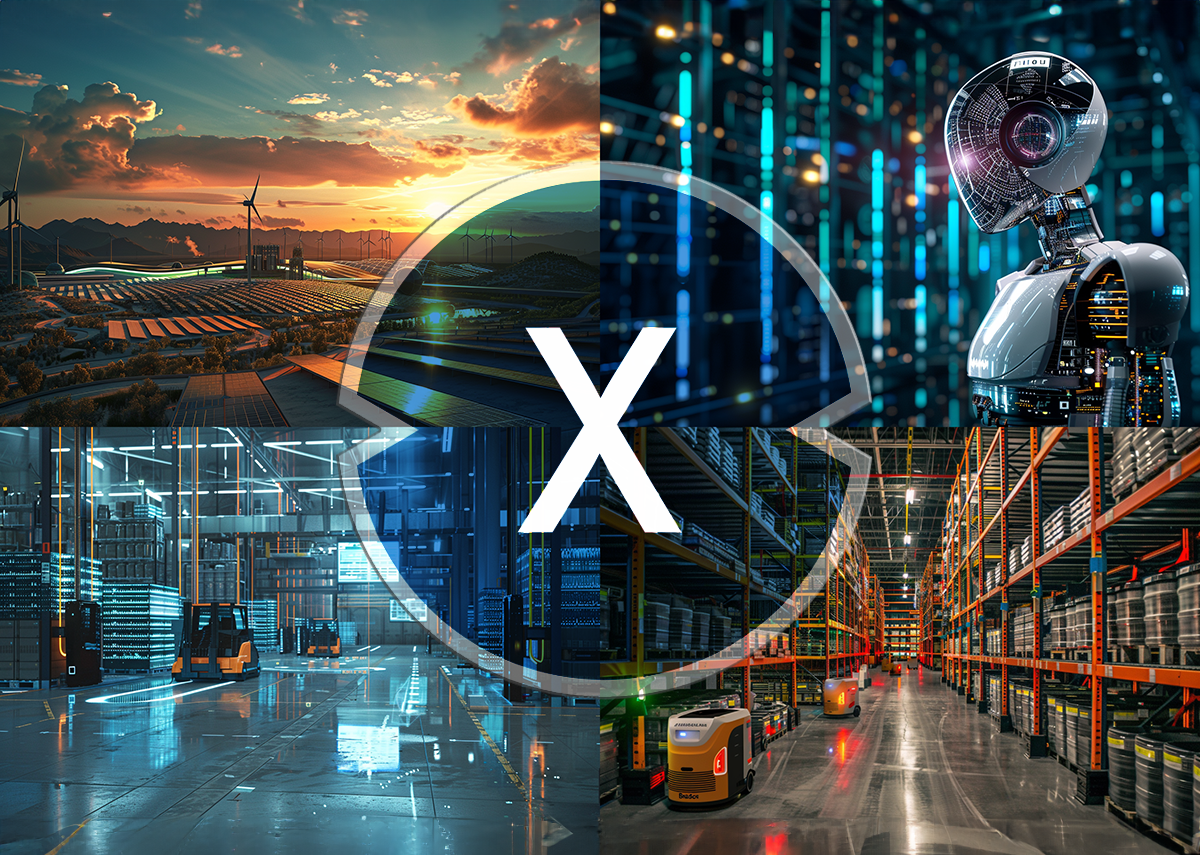
The Metaverse: From initial hype to active use in business – Image: Xpert.Digital
The Metaverse: From Hype to Business Reality
From euphoria to practice: The metaverse in the business world
The metaverse, a virtual space where physical and digital realities merge, has become a major topic in recent years. It serves as a prime example of the so-called "Gartner Hype Cycle." This curve describes how technologies, after an initial hype, go through a phase of disillusionment before finally entering a phase of productive use. After the initial euphoria subsides and the "trough of disillusionment" is reached, the metaverse is now on a "path of enlightenment"—meaning it is being used strategically and sustainably in more and more areas of business.
New partnerships and use cases: T-Systems and Nvidia as pioneers in the Industrial Metaverse
T-Systems has taken a significant step towards the industrial application of the Metaverse with its partnership with chip manufacturer Nvidia. This collaboration aims to drive digital transformation in industry using "Industrial Metaverse" technology. At the heart of this partnership is Nvidia's Omniverse platform. Omniverse provides companies with a scalable, future-proof development environment, particularly well-suited for developing artificial intelligence (AI) models. The platform offers not only photorealistic and physically accurate simulations but also a high degree of interoperability, clearly distinguishing it from other Metaverse platforms. This allows for the seamless integration and management of data sources and existing systems.
A key advantage of the Omniverse platform lies in its ability to generate synthetic data. For applications where real-world data is difficult to obtain or where data privacy is a concern, simulation provides an ideal foundation. For example, a machine can be tested for various malfunctions in a virtual environment without risking damage to the physical device. This ability to simulate virtual scenarios and malfunctions enables companies to develop and test innovations more quickly and cost-effectively. The Industrial Metaverse thus creates an environment where new machines and processes can be comprehensively tested and optimized before actual implementation.
Other examples of the use of the Metaverse: Bosch, Siemens and the automotive industry
Bosch is another company intensively engaged with metaverse technologies. Here, the focus is particularly on optimizing Product Lifecycle Management (PLM), i.e., managing the entire product lifecycle, from design and manufacturing to maintenance and disposal. By using Extended Reality (XR) and Virtual Reality (VR), Bosch has created the ability to efficiently connect tools, infrastructures, suppliers, and software. XR and VR not only allow designs and models to be experienced virtually, but also enable users to simulate various scenarios and changes without physical prototypes.
The result of this digitalization is more efficient and cost-effective product development. Collaboration with suppliers is optimized through XR and VR, as feedback and suggested changes can be implemented more quickly. Deutsche Bahn, the energy company RWE, and the automotive manufacturers BMW and Mercedes also use Metaverse solutions to optimize processes, whether in manufacturing, maintenance, or customer service. Virtual simulations and immersive technologies allow scenarios to be explored that would entail high costs or risks in reality. For Deutsche Bahn, this means, for example, that maintenance work on railway infrastructure can be tested virtually before being implemented in the real world.
Siemens, in turn, has recognized the potential of the Industrial Metaverse, particularly at its Erlangen plant. Here, immersive layout planning is used to improve collaboration between different departments. Siemens also utilizes synthetic data for AI- and XR-supported training. The results are impressive: optimized planning and the use of virtual training environments have led to increased production and reduced energy consumption. At Siemens' electronics plant in Amberg, a production quality of nearly 100 percent has even been achieved – clear evidence that the Metaverse is not just a gimmick, but offers real benefits for industry.
Related to this:
- Industrial Metaverse Digital Twins: Siemens Xcelerator and NVIDIA are building the digital twin in the Omniverse – Enterprise Solutions
- Industrial Metaverse and Digital Twin in production: Mercedes-Benz builds virtual factories with the NVIDIA Omniverse
The role of AI and synthetic data in the metaverse
Artificial intelligence plays a crucial role in the context of the metaverse. AI enables the real-time analysis and response to virtual worlds, which is particularly important in the field of autonomous systems. Synthetic data allows machines to learn without relying on large amounts of real-world data. This is advantageous in many areas, such as the development of autonomous vehicles or complex industrial plants. It allows for the simulation of various scenarios and environments, preparing the system for potential hazards or challenges before it is deployed in real-world operation.
One example of this is the use of AI training models, which are trained to control a machine in a controlled virtual environment. If a problem occurs in this environment, the AI model learns to react to it. This process is much more efficient and safer than if the same training were performed on real machines. The combination of AI, synthetic data, and the metaverse thus enables a kind of "training camp" where machines and systems can be prepared for real-world scenarios—a revolutionary way to save time and money in industry while simultaneously increasing safety.
Challenges and future prospects for the metaverse in industry
Despite its promising potential, the metaverse also faces challenges. One of the biggest is integration into existing IT structures and ensuring data compatibility. Many companies have older systems that are not designed for use in the metaverse. Therefore, the introduction of metaverse technologies often requires extensive adjustments and investments in the existing IT infrastructure. Another issue is data privacy, especially when it comes to using or simulating personal data in virtual environments.
Another aspect is the question of standardization. Currently, various companies are working on their own metaverse solutions, which are often incompatible with each other. In the long term, however, it will be necessary to create unified standards to enable comprehensive and seamless interoperability between the different platforms and systems. The development of such standards will be crucial to unlocking the full potential of the metaverse and creating a "virtual world" in which diverse systems and technologies can work together harmoniously.
Despite these challenges, the potential of the metaverse in industry is immense. Experts predict that the metaverse will become an integral part of the business landscape in the long term. Application areas range from virtual training and education to the simulation of production processes and the development of prototypes and digital twins, which enable an accurate virtual representation of real machines and systems. These technologies can not only increase efficiency and reduce costs, but also lower energy consumption and improve workplace safety.
The Metaverse as a pathfinder for the future of industry
The metaverse has the potential to fundamentally change the way companies work and innovate. The examples of T-Systems, Nvidia, Bosch, Siemens, and other companies demonstrate that the metaverse is already being used successfully in various sectors. It enables virtual training environments, the optimization of production processes, and more effective collaboration across locations and national borders. The metaverse is not just a passing trend; it has the potential to lay the foundation for the industry of the future.
With the ongoing development of AI, XR, and synthetic data, the metaverse will leave an even deeper mark on the economy in the coming years. The technological and economic prerequisites are in place – now it's up to companies to recognize and utilize the metaverse's full potential.
Related to this:

The concept of the metaverse: From initial enthusiasm to real-world applications
Once hailed as a revolutionary digital frontier, the concept of the metaverse has experienced fluctuating levels of enthusiasm. While the initial hype has subsided somewhat, the metaverse is far from being a forgotten trend. Rather, it is evolving in ways that demonstrate tangible value, particularly in industrial applications and specific sectors such as retail, education, and entertainment.
Metaverse: From hype to real-world applications
The metaverse can be understood as a 3D version of the internet—a network of interconnected virtual spaces where users interact in real time using avatars. While often associated with gaming and social experiences, its potential extends far beyond these areas. The metaverse is now being integrated into industries such as manufacturing, urban planning, healthcare, and retail through technologies like augmented reality (AR), virtual reality (VR), artificial intelligence (AI), and digital twins.
Current industrial applications
1. Industrial Metaverse
The industrial sector is leading the adoption of the metaverse. Companies like Siemens and BMW are using digital twins—virtual replicas of physical assets—to simulate production processes, predict maintenance needs, and optimize operations. For example, Siemens Energy has developed virtual models of power plants to reduce downtime and improve efficiency. The industrial metaverse is expected to grow rapidly, with forecasts estimating the market at $228.6 billion by 2029.
2. Smart Manufacturing
The integration of digital twins and AR/VR technologies in manufacturing enables real-time monitoring, predictive maintenance, and improved collaboration across global teams. This reduces costs associated with physical prototypes and accelerates product development cycles. Automotive companies use these tools to simulate vehicle performance before production, improving both efficiency and sustainability.
3. Urban planning and smart cities
Urban planners use the metaverse for large-scale simulations of urban environments. Digital twins of cities help visualize energy consumption patterns and optimize infrastructure for long-term sustainability goals. This helps stakeholders make informed decisions about future developments.
Retail and customer loyalty
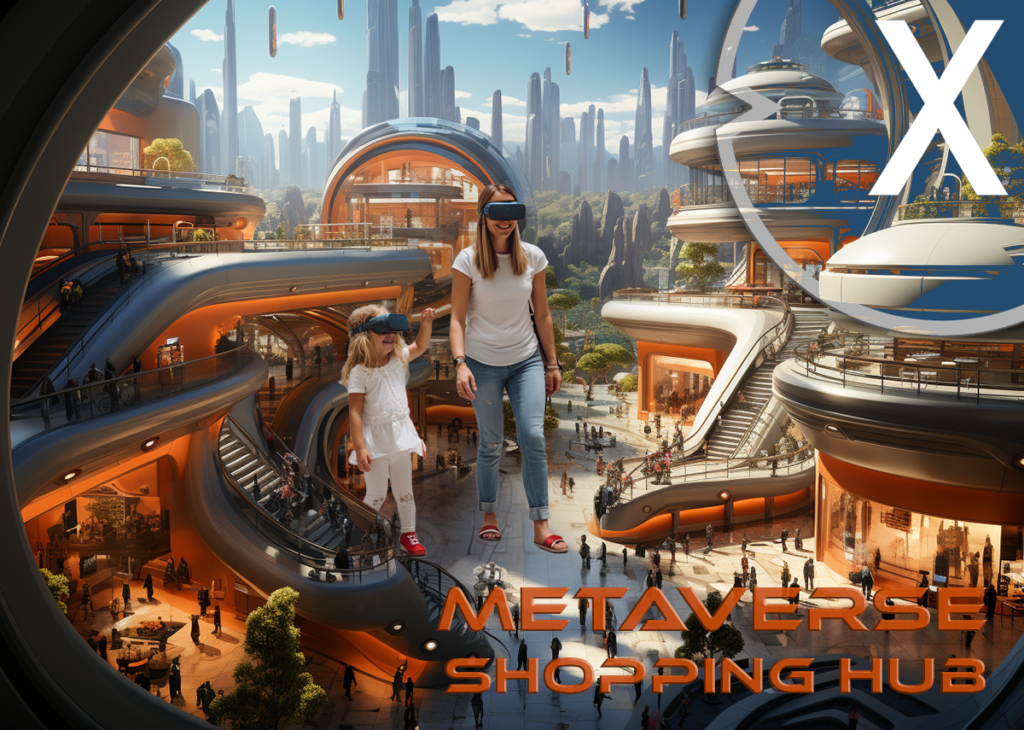
The retail sector is also exploring applications of the metaverse by creating immersive shopping experiences through VR and AR. Virtual storefronts allow customers to try on clothes or interact with products in a highly personalized environment. As companies invest heavily in these immersive experiences, the retail segment within the metaverse ecosystem is expected to grow significantly.
Education and training
The metaverse opens up new possibilities for education and corporate training by creating virtual campuses or immersive training environments. These platforms allow employees to engage in hands-on learning without physical risks, particularly in industries like energy or manufacturing, where complex machinery is used.
Challenges and future potential
Despite the growing number of applications, some challenges remain:
High costs
The infrastructure required for fully immersive metaverse experiences—such as AR/VR hardware—can be expensive to install and maintain.
Interoperability
Creating a seamless experience across different virtual platforms remains a technical hurdle. However, efforts are underway to improve interoperability between different digital ecosystems.
Security concerns
As more economic activities are shifted to the metaverum (e.g., virtual currencies, NFTs), concerns about data security and privacy are increasing.
Nevertheless, the growth potential remains enormous. The global metaverse market is expected to exceed $2 trillion by 2033, driven by advances in AI, blockchain technology, and increasing consumer demand for immersive digital experiences.
A transforming landscape
While the initial hype surrounding the metaverse may have cooled, it's far from being a forgotten trend. Industries such as manufacturing, urban planning, retail, and education are already benefiting from early metaverse solutions. As supporting technologies like AI, digital twins, and AR/VR tools mature, the metaverse is likely to become more deeply integrated into industrial processes and everyday life.
Instead of being dismissed as a fleeting trend, the metaverse is gradually proving its value across multiple sectors. While its full potential may still be years away, its current development suggests it will play a significant role in shaping future digital interactions across various industries.
Related to this: