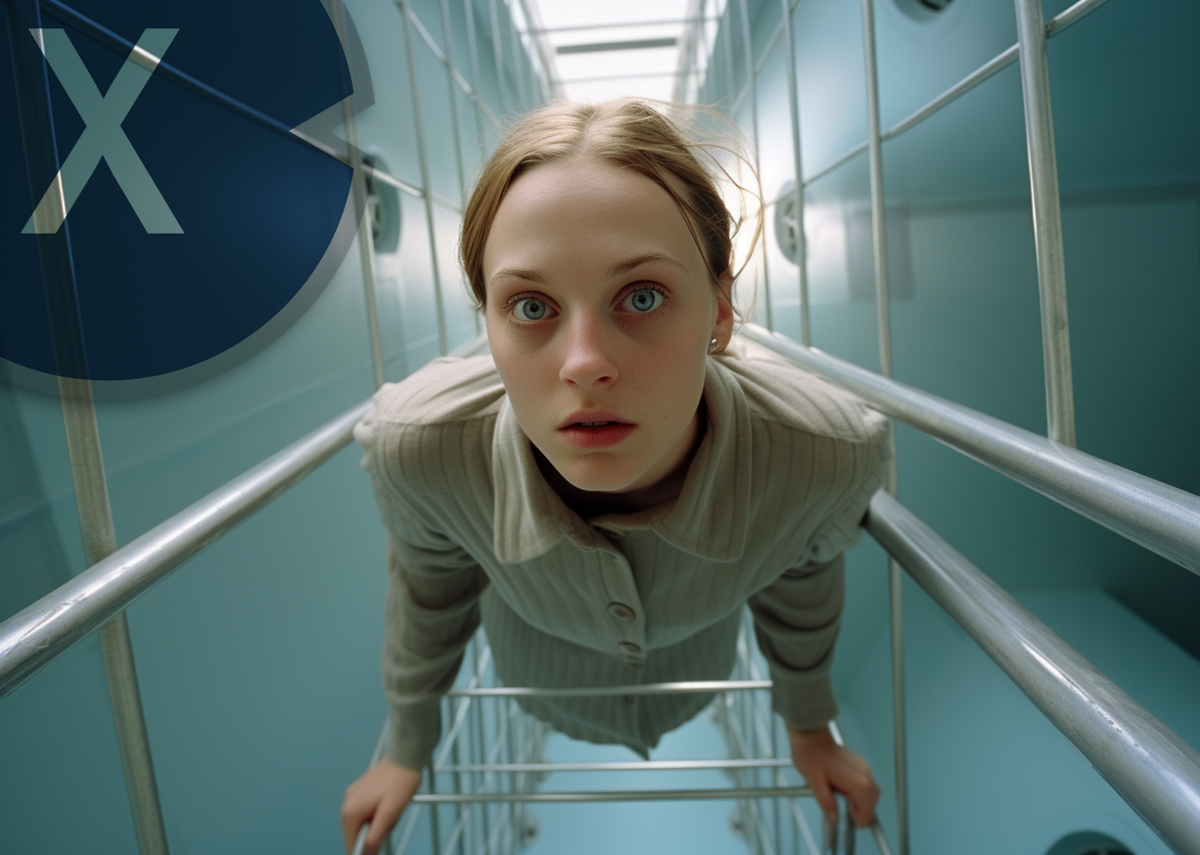
AI & XR 3D Rendering Machine: Reality or Illusion? The philosophical connection between our universe and the metaverse – Image: Xpert.Digital
Preview of changes (opens in new tab)
🎬 The 'Reality Show' Illusion: Are we living in a simulation? 📚🌌🕹️
🤔 Philosophical roots of the simulation hypothesis
The idea that the universe – and therefore our world – is a kind of large-scale "Truman Show" immediately evokes associations with the film "The Truman Show," in which the protagonist unknowingly lives in an artificially created world. However, this idea is not merely fiction, but also intertwines with philosophical thought experiments such as the "brain in a vat" and the concept of simulation theories.
🎥 The Matrix as a metaphor for modern technology
The idea of a "Truman Show" world also resonates strongly in the concept of the Matrix, as depicted in the film of the same name. In "The Matrix," people live within a completely simulated reality created by artificial intelligence. Unaware of this, they believe their lives are real. The film plays with the premise that our sensory perceptions and our minds could deceive us, preventing us from recognizing true reality.
🌐 The Metaverse: Steps Towards a “Truman Show” Reality
These ideas raise fundamental metaphysical questions that remain increasingly relevant today, in an era where technologies like virtual reality (VR) and, in particular, the evolving metaverse are gaining traction. The metaverse refers to a cohesive virtual world made accessible to humans through the internet. This encompasses immersive experiences enabled by VR, augmented reality (AR), and other technologies. Given how integrated and dependent we have become on digital technologies and simulated environments, one could argue that we are already on the path to our own "Truman Show.".
💭 Solipsism and Reality in the Digital Age
These futuristic scenarios also touch upon the philosophical concept of solipsism, which explores whether something can exist outside of one's own mind. In our modern, digitized world, where VR technology allows us to immerse ourselves in virtually created realities, the question of differentiating between reality and fiction becomes increasingly complex. By moving within digital worlds, we can essentially create our own reality, one that is subject to our will.
🤖 Technological progress and the question of true existence
If we accept "The Truman Show" as a metaphor for ignorance of the true nature of our existence, then the metaverse may be forcing us to grapple with the possibility of a reality we construct. In a way, this aligns with the philosophical considerations of René Descartes, who formulated his famous thesis "Cogito, ergo sum" ("I think, therefore I am"), thereby postulating the only undeniable fact of thought and thus of one's own existence.
👤 Digital identities and the search for self
Furthermore, the concept of the metaverse expands our understanding of identity and self. Avatars—our digital selves—offer us the opportunity to explore and express aspects of our personality that might be hidden or suppressed in physical reality. But they also raise questions about authenticity and the meaning of experience. Is an experience less real when it takes place digitally? This question becomes increasingly pressing as the boundaries between physical and virtual reality blur.
🔮 Future social and ethical challenges
In an increasingly digitized and interconnected world, the question of what reality truly means becomes ever more complex. While Elon Musk and others have suggested that we may be living in an advanced simulation, we lack definitive evidence to confirm or refute this, much like Truman Burbank had no definitive way of determining whether his world was real until he began to look beyond the surface.
🔐 Data protection and property rights in the virtual space
Examining the metaverse and its impact on our understanding of reality inevitably leads to social and ethical considerations. Issues such as data privacy, manipulation, and the psychological effects of such integrated virtual environments are becoming increasingly relevant. Who owns virtual reality? How does it affect our mental health? What social norms and rules apply within these new realities?
🌟 Reality in the Age of Simulation
The concept of a "Truman Show" world within the context of the Matrix and the metaverse thus opens up numerous discussions about the nature of reality, the nature of human consciousness, and the role of technology in our society. With the advancement of VR and AR technologies and the expanding metaverse, we may be approaching a point where the distinction between artificial and natural reality becomes not only philosophical but also practically irrelevant. It remains a fascinating and unsettling idea to what extent our reality is shaped, influenced, or even controlled—whether by other people, artificial intelligences, or even our own decisions within digital worlds.
📣 Similar topics
- 🧠 The "Truman Show" world and the concept of reality
- 🌐 The Metaverse: The merging of digital and physical reality
- 🎮 The Matrix and the Illusion of Simulated Reality
- 🌌 Simulation theories and the question of our existence
- 💡 The limits of perception and consciousness: Brain in a vat vs. The Truman Show
- 🌐 The Metaverse: A virtual reality for everyone
- 🤖 Identity and self in the metaverse: Avatars as digital manifestations
- 🤔 The definition of reality in a digitized world
- 🔒 Data protection and the ethical challenges of the metaverse
- 🧠 Consciousness in digital worlds: Authenticity and experiences in the metaverse
#️⃣ Hashtags: #Reality #Metaverse #BrainInVan #SimulationTheories #Identity
🧠💭 Metaverse Philosophy: The New Dimension of Reality - The Brain-in-a-Vap Thought Experiment
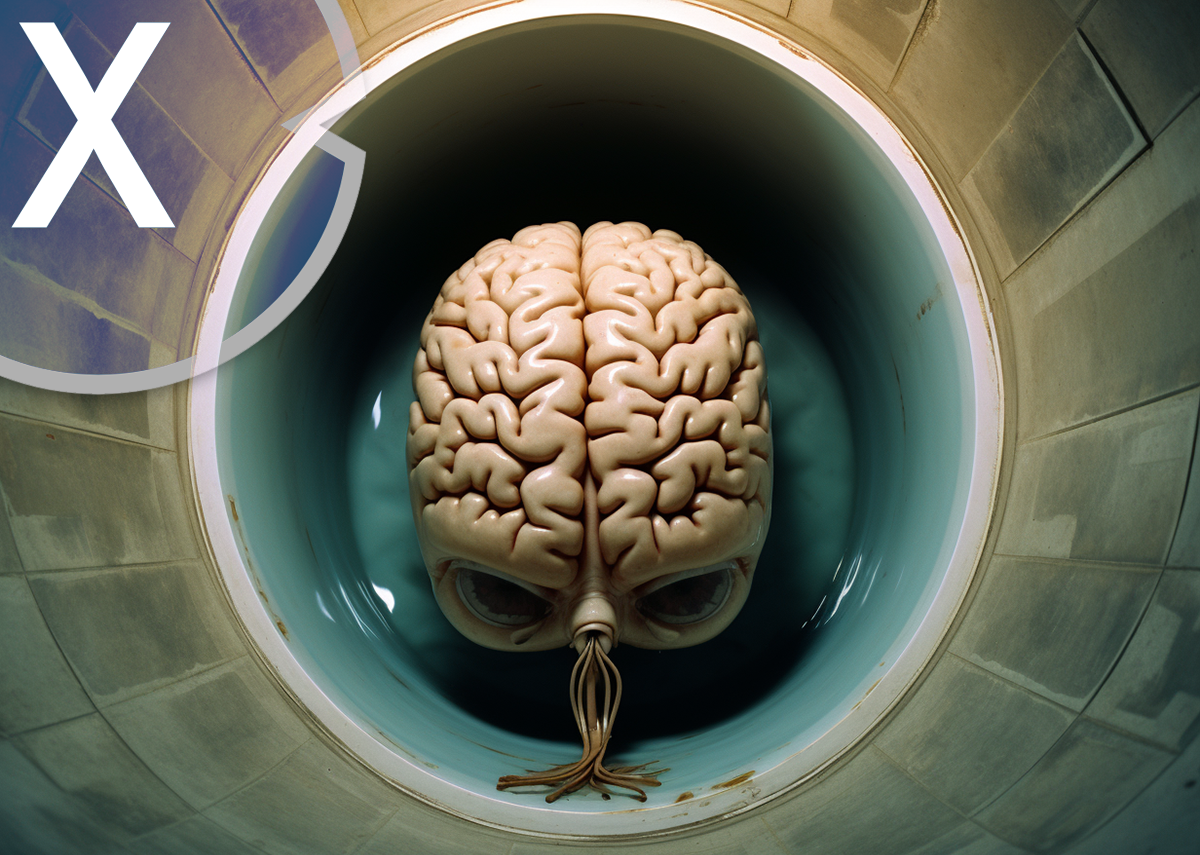
AI & XR 3D Rendering Machine: Metaverse Philosophy – The Brain-in-a-Vap Thought Experiment – Image: Xpert.Digital
🤔💡 Philosophical reflections
Let's imagine the metaverse – a complex, computer-simulated world that expands or even transcends the boundaries of reality. In this virtual existence, everything is possible, from realistic everyday experiences to the most fantastical adventures. But with all the advances in the digital world, a philosophical question arises that has fascinated humanity for centuries: How can we be sure that our perceived reality is also our actual reality? This question leads us to the classic thought experiment of the brain in a vat.
🧠🔮 The brain-in-a-vat thought experiment
The brain-in-a-vat thought experiment, proposed by philosophers like Hilary Putnam, allows us to examine our perception of reality more deeply. The premise is simple, yet unsettling: What if our brain were floating outside our bodies in a nutrient solution, while all our sensory perceptions were simulated by a sophisticated computer? Could we ever say with certainty that this is not our current reality?
🕶️🌌 Virtual Reality and the Metaverse
This idea takes on a completely new dimension in the age of the metaverse and advanced virtual reality (VR). If VR technology continues to advance rapidly and simulated worlds become virtually indistinguishable from reality, how far away is it to a fully-fledged metaverse existence, in which our consciousness might entirely merge into a digital reality?
🤖🛸 Existence in the Digital Age
If we consider the metaverse not merely as an extension of our reality, but as a platform for entirely new forms of existence, fascinating ethical, philosophical, and existential questions arise. It is no longer simply a question of whether what we experience is real or virtual, but also about the impact of these experiences on our self-understanding and the relationship between our mind and physical body.
🎭🚀 Identity and Experience
In the metaverse, we could theoretically lead an infinite number of lives, assume a wide variety of identities, and gather experiences that would be impossible in the physical world. The philosophy of pure materialism, which states that only the physical world is real, is challenged by these new digital dimensions. What does this mean for our understanding of "reality"?
🔄🤝 Social impact
The influence of the metaverse could also extend deep into the social structure of our society. Crucially, how we deal with questions of equality, freedom, and the construction of reality will be decisive. New spheres for social exchange, education, work, and leisure are emerging. How will these experiences change our perception of closeness, community, and interpersonal relationships?
⚖️👾 Philosophical challenges of practice
The metaverse also presents very practical philosophical challenges. Consider the question of responsibility: If everything that happens takes place in a computer-generated world, who is responsible for the actions within that world? And what will law look like in a world that cannot be physically grasped, but nevertheless has real economic, social, and emotional consequences?
💭🌐 Meaning of the thought experiment
The brain-in-a-vat thought experiment is therefore more than just a philosophical curiosity; it is a useful starting point for exploring the potential implications of the metaverse for our conceptions of reality, identity, and humanity.
📣 Similar topics
- 🌐 The Metaverse: An Augmented Reality?
- 💭 The brain in a vat: How safe is our reality?
- 🕹️ Metaverse and Virtual Reality: Where is the boundary?
- 🖥️ Metaverse Existence: When Reality Becomes Digital…
- 🤔 Where does reality end and the metaverse begin?
- 🌌 Metaverse: A new dimension of existence?
- 🌍 The Metaverse: Implications for Ethics and Philosophy
- 🧠 Identity in the Metaverse: How many lives are possible?
- ⚖️ Responsibility in the Metaverse: Who is liable for actions?
- 🗣️ The Metaverse: New impulses for social relationships?
#️⃣ Hashtags: #Metaverse #VirtualReality #BrainInVan #Existence #Identity
🌐🔄 Metaverse and Reality: A Merging of Worlds
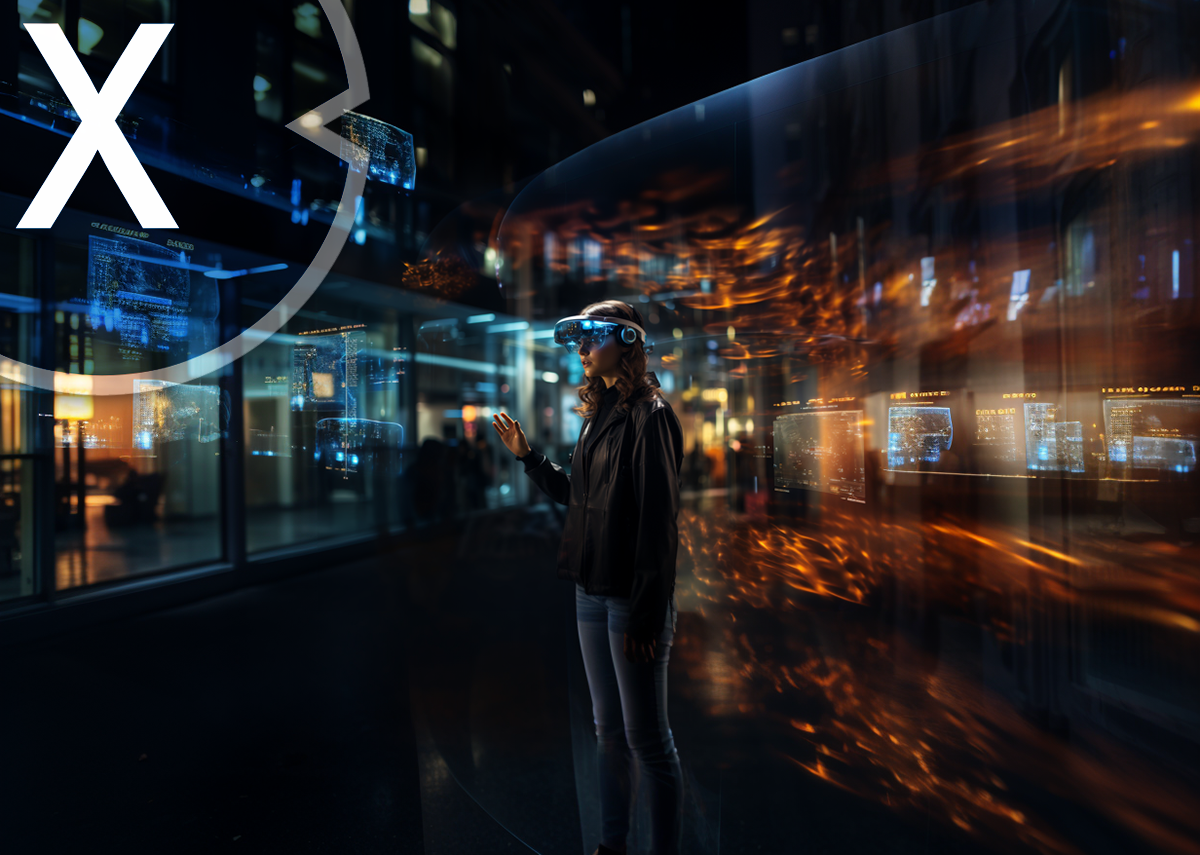
AI & XR 3D Rendering Machine: The Choice of Reality – To Stay or To Go? – Image: Xpert.Digital
🤖🌀 AI and Autonomy in the Metaverse
This unique metaverse interpenetration of virtual and physical realities also changes the way we, as individuals and as a society, communicate, interact, and even perceive ourselves. The metaverse could be able to overcome physical limitations by allowing people to interact through avatars that are not bound by the laws of the physical world. This has the potential to enable an entirely new level of expression, but could also lead to an alienation from our natural selves.
🎭🥽 The new “Truman Show” of the digital age
The debate surrounding a "Truman Show" persists within these new realities. In a world where user activities, preferences, and interactions can be continuously analyzed and manipulated by algorithms, we must ask ourselves to what extent we are the directors of our own life experiences. Is life in the metaverse less predetermined than Truman Burbank's life experience, or are we simply at the mercy of the more subtle influence of algorithms?
🧠👾 The influence of AI on self-understanding in the metaverse
The growing influence of artificial intelligence (AI) contributes to these questions. AI systems have the potential to revolutionize the way we learn, work, and play, but also how we understand ourselves. By outsourcing the design of our digital environments to AI, we could unwittingly relinquish control over our own "show.".
👀📡 Ethics, surveillance and data protection in the metaverse
The ethical implications of such a shift are significant. Surveillance and data privacy are becoming critical issues in a world where almost every aspect of our lives could be digitally tracked and potentially used or abused by corporations or governments. The paranoia Truman Burbank experienced in his artificially created universe could become a real concern for the citizens of the metaverse.
🌐🎮 Escape into virtual realities: Sustainability and social cohesion
The increasing escape from reality into virtual worlds also raises questions about the sustainability of this lifestyle and its impact on social fabric and interpersonal relationships. Is a life in a virtually perfected world, which may hinder real-life relationships, the development of empathy, and the experience of immediate, tangible encounters, truly desirable?
📚💡 Education in Transition: The Metaverse as a Teacher
The education system, too, could be profoundly transformed by the metaverse. It offers potentially revolutionary opportunities for personalized learning, augmented reality experiences, and access to limitless information. However, at the same time, there is a risk of a growing gap between those who have access to these advanced technologies and those who are excluded – a digital divide on a completely new level.
🚪🌌 The choice of reality: Stay or go?
Finally, we must also consider the long-term consequences of shifting large parts of our lives into virtual spaces. Like Truman at the end of "The Truman Show," we could one day find ourselves faced with the choice of remaining in a carefully curated and potentially restrictive reality or venturing into the unknown of a reality outside the simulation—assuming we are even capable of differentiating between the two.
🎥👁 Films as a mirror and warning of a new reality
In such a scenario, films like "The Truman Show" and "The Matrix" could be understood less as mere entertainment or thought experiments, but rather as precursors or even warnings of a future in which the boundaries of reality are not only blurred, but perhaps even irrelevant. As we move toward this fascinating and potentially frightening future, the question arises: how can we preserve our humanity and ensure that we do not unwittingly become protagonists in our own unreal "show"?.
📣 Similar topics
- 🌐🔄 Metaverse and Reality: A Merging of Worlds
- 🤖🌀 AI and Autonomy in the Metaverse
- 🎭🥽 The New “Truman Show” of the Digital Age
- 🧠👾 The influence of AI on self-understanding in the metaverse
- 👀📡 Ethics, surveillance and data protection in the metaverse
- 🌐🎮 Escape into virtual realities: Sustainability and social cohesion
- 📚💡 Education in Transition: The Metaverse as a Teacher
- 🚪🌌 The choice of reality: Stay or go?
- 🎥👁 Films as a mirror and warning of a new reality
#️⃣ Hashtags: #Metaverse #AI #Self-Understanding #Ethics #Surveillance #DataProtection #Sustainability #SocialCohesion #Education #ChoiceOfReality
🌐🤖 Challenges of humanity in the metaverse

AI & XR 3D Rendering Machine: Humanity in the Metaverse – Image: Xpert.Digital
🚀 Ethical limits of AI
In a broader sense, advancing into the metaverse could even challenge our conception of humanity. With the increasing use of artificial intelligence and algorithms to control experiences, ethical boundaries could also become blurred. In this context, the idea of artificial intelligence, which plays a central role in "The Matrix," is of particular significance. AI will not only be able to shape our experiences but also potentially predict and influence our behavior. Thus, digital worlds, much like the reality experienced by Truman Burban, could be controlled and manipulated from the outside, while we believe we still retain control.
💞 Authenticity of relationships
This progression also raises questions about the authenticity of relationships and human bonds. If we increasingly spend time in artificial environments where every participant may be wearing a digital facade, how can we build genuine intimacy and trust? Truman Burbank discovered that his interpersonal relationships were superficial and staged. As we enter the age of the metaverse, these questions of authenticity and trust could become the front line in the battle for our human connection and our understanding of community.
🔐 Privacy in the digital age
Furthermore, the metaverse could renegotiate the value of privacy. In "The Truman Show," privacy was essentially nonexistent for the protagonist, as every action he took was for the audience's benefit. In a world where our digital footprints can be permanently stored and analyzed, protecting privacy could prove to be one of the most important moral battles of the 21st century. The ability to retreat and be free from surveillance could become a luxury in a digitally permeated universe, one that perhaps not everyone can enjoy.
⛓️ Concept of free will
The concept of free will is also put to the test when considering the possibility of living in a world dominated by technology or even technocracy. If our decisions and preferences can be influenced by machine learning, how much of what we choose is truly our own? In "The Truman Show," Truman's supposed freedom was an illusion, orchestrated by his creator, Christof. In the real world, it could be the designers of algorithms and AI systems who are directing our "shows" without our realizing it.
🧠 Psychological effects
Finally, there is the psychological component to consider. The human psyche is not necessarily designed to switch between multiple levels of reality, and the constant shifting between digital and physical worlds could have unpredictable mental and emotional repercussions. Truman Burbank experienced a profound identity and reality shock when he learned that his entire life had been a lie. What kinds of psychological effects might we experience if our boundaries of reality are constantly challenged and renegotiated?
🌐🕶️ The “Truman Show” of our reality in the metaverse
The idea of our universe or everyday world as a "Truman Show," particularly in the context of the Matrix and the emerging metaverse, brings a wealth of themes to light. It questions the nature of reality, the influence of technology on our human experience, and the value we place on freedom, authenticity, and privacy. While the metaverse promises exciting new possibilities, it also demands deep reflection on the consequences of its influence on our lives and what it means to live in a world where the lines between show and reality may soon become blurred.
📣 Similar topics
- 🌍 The challenges of the metaverse: Technology vs. humanity
- 🤖 Artificial Intelligence and Ethical Boundaries in the Metaverse
- 💑 Authenticity and trust: Relationships in the virtual space
- 🔒 Privacy in the Metaverse: Between Surveillance and Freedom
- 🗽 The struggle for free will in the technologically dominated metaverse
- 😵 The psychological effects of the constant reality shifts in the metaverse
- 🌌 The Nature of Reality: The Metaverse as the Truman Show
- 🚀 The Metaverse, the Matrix, and the Evolution of Human Experiences
- 🎭 Between show and reality: The value of freedom and authenticity in the metaverse
- 👥 The Metaverse: Impact on Community and Human Connection
#️⃣ Hashtags: #Metaverse #Technology #Authenticity #Privacy #FreeWill
🌐🎭 In the discussion about a metaverse as an expanded 'Truman Show'
🏗️👩💻 Potential for creativity and the economy
The metaverse opens the doors to virtual businesses, marketplaces, and artistic stages where people can showcase their talents and skills in ways that might not be possible in the physical world. In this way, this new reality could expand individual freedoms and lead to a democratization of creativity by providing a platform for all people, regardless of physical location or social status.
⚠️💻 Risks in the digital world
At the same time, such unregulated digital spaces pose risks regarding information control, fake news, and digital manipulation, especially when these virtual experiences become indistinguishable from physical reality. The ability to distort facts and construct narratives could be even easier and more seductive in virtual worlds. Just as Truman Burbank's reality was manipulated, narrative constructs in the metaverse could influence our view of the world and subtly advance political, social, or economic agendas.
👨⚖️ Responsibility and Regulation
The responsibility for addressing these challenges lies with the developers of these technologies, legislators, and society as a whole. Technological innovations, especially those that alter our concepts of reality, require regulatory frameworks, ethical standards, and educational programs. Discussions will need to focus on what measures can be taken to ensure that the metaverse remains a space for positive human development, rather than a dystopian trap in which people are deprived of their autonomy.
🤔🌐 Debate about consciousness and existence
Ultimately, the possibility that our world resembles a "Truman Show" requires a new understanding of consciousness and existence as a whole. While Truman Burbank ultimately escaped his fabricated world, we, confronted with the complexity of the metaverse, might find that there is no clear "door to the real world" through which we can step. Instead, we may need to learn to navigate within multiple layers of reality, preserving our own version of authenticity and truth.
🌟🧭 Navigating the new reality
In times like these, a self-reflective and conscious approach is required, not only to meet the challenges of the metaverse but also to seize its numerous opportunities. Perhaps the greatest lesson we can learn from "The Truman Show" and "The Matrix" is that, regardless of the reality we find ourselves in, we must always seek our own path and ask ourselves: What does it mean to truly live and to choose what kind of world we want to exist in?
🤖💭 The Metaverse as a vision of the future
The metaverse is still in its infancy, but it already invites us to expand the boundaries of our understanding of reality, identity, and community. By grappling with these questions, exploring the possibilities, and also being wary of potential pitfalls, it will become clear whether the metaverse will be an extension of our world that contributes to genuine human progress, or whether it will be a modern-day "Truman Show" in which we risk losing ourselves.
📣 Similar topics
- 👥 The Metaverse: A space for individual freedoms and creative expression
- 🌐 The Metaverse as a platform for virtual businesses and economic opportunities
- 🎭 The Metaverse: A new stage for artistic talent and skills
- 🔎 The risks of unregulated digital spaces in the metaverse
- 📰 Fake news and digital manipulation in the metaverse: Challenges and solutions
- ⚖️ Regulatory framework in the metaverse: The responsibility of the developers
- 🧠 The Metaverse as a challenge to our understanding of consciousness and existence
- 🌍 The Metaverse as a democratized space of creativity
- 🤔 Authenticity and truth in the metaverse: Navigating multiple layers of reality
- 🌱 The Metaverse as an opportunity for human progress and self-reflection
#️⃣ Hashtags: #Metaverse #ConceptsofReality #Authenticity #DigitalRisks #CreativityPlatform
🌐🎮 The evolution of the Metaverse and its impact on work and leisure
🔍 A new era of work and leisure
The further development and spread of the Metaverse could also lead to a profound transformation of our work and leisure time. While Truman Burbank's life in the show followed a strict script, in the Metaverse the boundaries between work and play could blur. Many futuristic visions foresee a world where physical presence for work becomes less and less important, and remote work in virtual offices becomes the norm. This development, already accelerated by the Covid-19 pandemic and the rise of working from home and virtual meetings, could be even more advanced in the Metaverse. This would fundamentally reshape how we understand "work" and "life" and raise new questions about work-life balance.
🔄 Metaverse: Escape or Trap?
In a world where separating work and leisure is becoming increasingly difficult, the metaverse could offer an escape from reality or lead to a further blurring of private and professional life. The danger is that the metaverse will not only be a place for recreation and enjoyment, but also an extended workbench where we are always "on," without any real breaks or opportunities to switch off. At the same time, this new type of interaction in the metaverse offers significant opportunities for remote teamwork, global collaboration, and access to a wider range of work options, regardless of geographical limitations.
🧠 Psychological effects of the digital world
However, the psychological effects of constant connection and immersion in digital worlds must be carefully considered. There are already concerns about the impact of social media and constant connectivity on our mental health. In the metaverse, where experiences could be even more immersive and engaging, these effects could be amplified. The ability to shift between different levels of reality while maintaining one's mental well-being and a sense of connection to the physical world will become a key skill in an increasingly digital future.
⚖️ Digital ethics and societal governance
All these considerations presuppose that we can control and guide technological development, rather than being driven by it. The call for "digital ethics" is therefore growing ever louder, and the creation of guidelines and control mechanisms that prevent abuse of power and safeguard the rights and well-being of users will be essential. The digital divide, data privacy concerns, and the need to promote digital literacy are just some of the many challenges we must address.
🔮 The Truman Show as a metaphor for the metaverse
In conclusion, the concept of a "Truman Show" as a prism through which we view the metaverse offers a wealth of possibilities as well as risks. Whether we move toward a future in which we are the authors of our own digital narratives or in which we are trapped in an illusion created by others is a matter of individual and collective choice. It will depend on how we, as a society, steer technological progress, how engaged and vigilant we are as individuals regarding our digital lives, and how we address the moral and ethical questions that accompany this new reality.
💡 Our responsibility in the virtual age
Ultimately, it is up to us to clarify our role in the metaverse and take active steps to ensure that our virtual future reflects the human values and principles we cherish and wish to preserve. In a time when the boundaries of reality appear more fluid than ever before, consciously navigating these new dimensions is crucial to safeguarding both individual freedom and collective well-being.
📣 Similar topics
- 🌍 The impact of the metaverse on work and leisure
- 🔮 The merging of work and play in the metaverse
- 💼 Metaverse: The Future of Remote Work
- 🌐 On the way to the metaverse: Challenges of work-life balance
- 😰 The psychological effects of the metaverse: opportunities and risks
- 🧠 The impact of the metaverse on mental health
- 🌈 Between virtual world and reality: The challenge of connectedness
- 🤝 Remote-controlled teamwork: Opportunities and possibilities in the metaverse
- 🚦 The need for a “digital ethics” in the metaverse
- 🛠️ Control mechanisms and guidelines in the metaverse: User rights and abuse of power
#️⃣ Hashtags: #Metaverse #WorkandLeisure #WorkLifeBalance #MentalHealth #DigitalEthics
🗒️ Xpert.Digital: A pioneer in the field of Extended and Augmented Reality

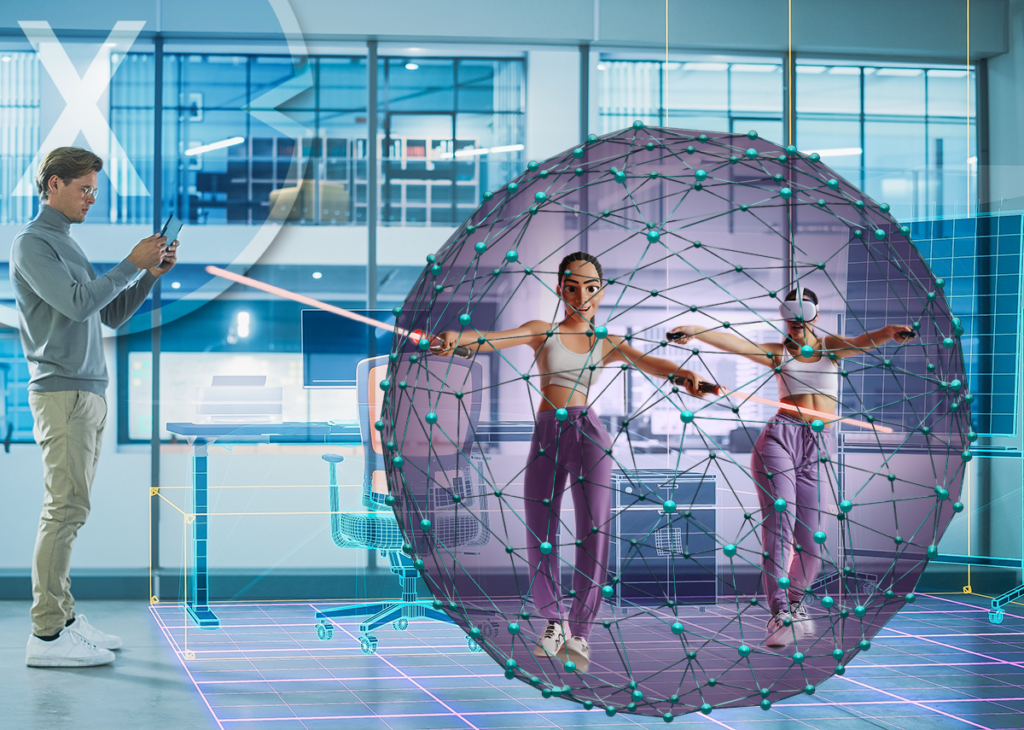
Finding the right Metaverse agency, planning office, or consulting firm - Image: Xpert.Digital
🗒️ Finding the right Metaverse agency, planning office, or consulting firm – Search and search: Top Ten Tips for Consulting & Planning
More information here:


Industrial & B2B Business Metaverse: Reduce costs with XR technology for photorealistic product images (XR 3D rendering machine)

Lathe in photorealistic rendering (3D product presentation) - Image: Xpert.Digital
XR technology offers a superior solution for creating photorealistic images, allowing companies to avoid the expensive fees charged by external media agencies. It's well known that media agencies charge high prices for creating such images, as this requires expertise, specialized software, and collaboration with various specialists.
More information here:
We are here for you - Consulting - Planning - Implementation - Project Management
Xpert.Digital - Pioneer Business Development
Smart Glasses & AI - XR/AR/VR/MR industry expert
Consumer Metaverse or Metaverse in general
If you have any questions, require further information or advice, please feel free to contact me at any time.

Konrad Wolfenstein
I would be happy to serve as your personal advisor.
You can contact me by filling out the contact form below or simply call me on +49 7348 4088 965 .
I'm looking forward to our joint project.
Write to me


Xpert.Digital - Konrad Wolfenstein
Xpert.Digital is a hub for industry focusing on digitalization, mechanical engineering, logistics/intralogistics and photovoltaics.
With our 360° Business Development solution, we support renowned companies from new business to after-sales.
Market intelligence, smarketing, marketing automation, content development, PR, mail campaigns, personalized social media and lead nurturing are part of our digital tools.
You can find more information at: www.xpert.digital - www.xpert.solar - www.xpert.plus
Keep in touch