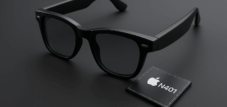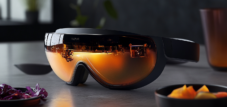
Meta invests $3.5 billion in EssilorLuxottica: The battle for the future of smart glasses – Image: Xpert.Digital
Zuckerberg's next move: Why Meta is investing billions in the world's largest eyewear manufacturer
The end of the smartphone is nigh: Meta and EssilorLuxottica are planning the computing revolution for the face.
Meta Platforms has made a strategic move that could significantly shape the future of wearable technology: The tech giant invested $3.5 billion (approximately €3 billion) for a nearly 3 percent stake in EssilorLuxottica, the world's largest eyewear manufacturer. This investment underscores Mark Zuckerberg's vision of not simply replacing the smartphone, but bringing computing directly to the face – in the form of stylish, AI-powered glasses.
According to insiders, the stake could be increased to up to 5 percent in the coming years. This step marks a significant deepening of the partnership between the two companies, which has existed since 2019.
Related to this:


Stock market reaction shows confidence in the smart glasses strategy
Financial markets reacted promptly to the news: EssilorLuxottica shares jumped over 6 percent, making them the biggest gainer in the pan-European STOXX 600. Analysts at Bank of America raised their price target for Meta from $690 to $765. The investment is seen as a clear vote of confidence in the future of the smart glasses market.
Ray-Ban Meta: An unexpected success story
The collaboration between Meta and EssilorLuxottica has already yielded impressive results. Since its launch in October 2023, Ray-Ban Meta Smart Glasses have sold over 2 million units. This is a dramatic success compared to its predecessor, Ray-Ban Stories, which sold fewer than 300,000 units in the same period.
Francesco Milleri, CEO of EssilorLuxottica, described the smart glasses as a "great success" and announced plans to increase production capacity to 10 million units annually by the end of 2026. In 60 percent of Ray-Ban stores in Europe, the Middle East, and Africa, the Meta glasses are already the best-selling product – even though many AI features are not yet available in Europe.
Technology meets fashion: The success factors
The Ray-Ban Meta Smart Glasses combine several key elements that differentiate them from previous attempts like Google Glass:
Design and everyday usability
- They look like normal Ray-Ban glasses and don't stand out as a tech gadget.
- Weighing only 48 grams, they are lightweight and comfortable to wear.
- Various models and colors to suit different tastes
Practical functions
- 12-megapixel cameras for high-quality photos and videos
- Open-ear speakers for music and calls without isolation from the environment
- Meta AI integration for voice commands and context-related information
- Real-time translation between different languages
New product lines expand the portfolio
Meta and EssilorLuxottica have already expanded their portfolio with the Oakley Meta HSTN, a sports-oriented smart glasses device with improved 3K video resolution and an 8-hour battery life. It is specifically aimed at athletes and outdoor enthusiasts and costs between 439 and 549 euros.
The next generation: Smart glasses with a display
Meta is planning its next big step for fall 2025: a high-end pair of glasses with a head-up display (HUD) for around $1,000. These glasses, dubbed "Hypernova," will have a small display in the lower right corner of the lens that can show basic apps, notifications, and captured photos. Meta is working intensively on this product and has instructed employees to work weekends if necessary to meet the deadline.
The market is exploding: "Battle of hundreds of smart glasses"
The global smart glasses market is currently experiencing a renaissance. The sales figures speak for themselves:
- 2023: 156% growth compared to the previous year
- 2024: 210% growth, over 2 million units sold for the first time
- 2025: Expected growth of 60% with a CAGR of over 60% until 2029
Analysts predict that the market will grow from its current $1.93 billion to $8.26 billion by 2030. This dynamic is attracting numerous new competitors.
The main players
- Google is working with Warby Parker and Gentle Monster on Android XR Smart Glasses
- Samsung is developing the "Haean" glasses with Google for 2025
- Apple is planning its own smart glasses for possibly 2026.
- Xiaomi already has AI Glasses on the Chinese market
Chinese challengers
Since the end of 2024, over nine new AI smart glasses models have been released, mainly from Chinese companies such as Baidu (Xiaodu AI Glasses) and RayNeo (V3 AI Camera Glasses).
Related to this:

Strategic importance for both partners
The investment is of crucial strategic importance for both companies:
For Meta
- Hardware control: For the first time, Meta can develop its own hardware instead of just apps for third-party devices.
- Independence from smartphone platforms: Reducing dependence on Apple and Google
- AI integration: Direct connection between user and Meta's AI assistant
- Data collection: New possibilities for context-related data through cameras and sensors
For EssilorLuxottica
- Access to the tech world: Transformation from traditional eyewear manufacturer to tech player
- New growth markets: Developing the smart glasses segment
- Prestige gain: Partnership with one of the world's most valuable tech companies
Challenges and limitations
Despite the optimism, significant hurdles remain:
Technical limitations
- Battery life: Current models only last 4-8 hours.
- Display technology: Fully functional AR glasses are still years away.
- Cost: High-end models could cost over $1,000.
Social acceptance
- Data privacy concerns: Cameras in glasses raise privacy fears
- Social norms: Wearing camera glasses is not accepted everywhere.
- Regulation: In Europe, many AI functions are not available for legal reasons.
Market dynamics
Andrew Bosworth, CTO of Meta, tempered expectations: "Smartphones won't be replaced before 2030." Established software ecosystems and user habits present a significant hurdle. Zuckerberg himself envisions a slow evolution, with smart glasses initially used for specific tasks, while smartphones remain in pockets.
Glasses as a gateway to the AI future
Meta's $3.5 billion investment in EssilorLuxottica is more than a financial stake – it's a bet on the future of computing. Mark Zuckerberg has called 2025 the "defining year" to see if smart glasses become the next big computing platform.
The vision is clear: smart glasses are not intended to replace smartphones, but rather to initially complement them and eventually become an independent platform. With AI assistants that understand their surroundings, provide real-time translations, and offer context-sensitive information, smart glasses could revolutionize the way we interact with technology.
Success will depend on whether Meta and EssilorLuxottica manage to strike the right balance between technology, design, price, and social acceptance. With over 2 million Ray-Ban Meta glasses sold, they have already proven that the market is ready. The coming years will show whether smart glasses truly become the next major technological revolution – or whether, like so many technologies before them, they remain a promising niche.
Related to this:
Your global marketing and business development partner
☑️ Our business language is English or German
☑️ NEW: Correspondence in your native language!

Konrad Wolfenstein
I and my team are happy to be available to you as your personal advisor.
You can contact me by filling out the contact form here wolfenstein@xpert.digital:or simply call me at +49 7348 4088 965. My email address is
I'm looking forward to our joint project.