


Meta Aria Gen 2 Smart Glasses – AI & Robotics of the Future? Heart Rate Sensor, Voice Isolation & More! – Image: Meta / Creative Image: Xpert.Digital
Meta Aria Gen 2: A deep look into the next generation of smart glasses for research and development
From consumer gadget to elite tool: What makes the Aria Gen 2 unique
Forget consumer gadgets! Meta's Aria Gen 2 smart glasses aren't a mass-market gimmick, but an exciting tool designed specifically for the scientific elite and visionary developers. These cutting-edge research glasses are more than just wearable technology; they're a catalyst for groundbreaking innovations in fields like AI, robotics, and augmented reality.
In a world increasingly shaped by artificial intelligence and immersive digital experiences, the Aria Gen 2 marks a turning point. Meta, once known for social networking, positions itself at the forefront of technological research and development with these glasses. The Aria Gen 2 is not a product you'll find at your local electronics store. It's a highly specialized platform designed to push the boundaries of knowledge and redefine the future of computing.
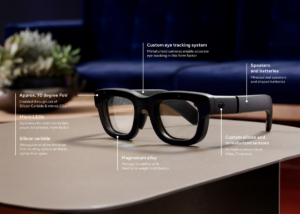
Imagine glasses that don't just see, but understand. The Aria Gen 2 is packed with an impressive array of sensors—RGB cameras, 6DOF SLAM, eye-tracking, and more—that work together to capture the world from the wearer's perspective in unprecedented detail. It measures your heart rate, isolates your voice in noisy environments, and processes data in real time directly on the device, thanks to Meta's own high-performance chips.
But the Aria Gen 2 is more than the sum of its technical specifications. It is a promise – the promise that the next generation of intelligent technology will not only be smarter, but also more human, intuitive, and accessible. It is a tool placed in the hands of researchers worldwide to develop applications we can only dream of today: navigation systems for the blind, robots that interact with us like partners, and augmented reality experiences that blur the lines between the digital and physical worlds.
Related to this:


A sensory tour de force: The heart of the Aria Gen 2
The most outstanding feature of the Aria Gen 2 is undoubtedly its advanced sensor suite. Meta has spared no effort to enable comprehensive data collection from the wearer's first-person perspective. This arsenal of sensors includes:
RGB camera
The glasses' "eye" is a high-resolution RGB camera that captures detailed color images and videos of the surroundings. This camera is crucial for understanding the visual scene, object recognition, scene reconstruction, and many other machine vision applications. It captures the world as humans see it and provides the fundamental visual data for all subsequent processing steps.
6DOF SLAM cameras
"6DOF" stands for "Six Degrees of Freedom" and refers to the ability to precisely track the position and orientation of an object in three-dimensional space. The Aria Gen 2 is equipped with multiple SLAM (Simultaneous Localization and Mapping) cameras that work together to create a detailed 3D map of the environment in real time. This technology allows the glasses to accurately determine their own position in space while simultaneously capturing the structure of the surroundings. SLAM is the foundation for many AR applications, robot navigation, and spatial reasoning.
Eye-tracking cameras
A crucial feature for interaction and understanding human attention is the integrated eye-tracking cameras. These cameras precisely track the wearer's eye movements and capture where their gaze is directed. Eye-tracking is not only important for the intuitive control of user interfaces in AR applications, but also for research in cognitive science, user behavior, and the improvement of assistive technologies for people with disabilities. It allows the glasses to understand what the wearer is focusing on and offer context-related information or actions.
Spatial microphones
The Aria Gen 2 features an array of spatial microphones that not only capture audio but also determine the direction and distance of sound sources. These microphones enable improved speech recognition, noise cancellation, and the creation of 3D audio recordings of the environment. They are essential for voice control of the glasses, communication in noisy environments, and the development of spatial audio-based applications.
IMUs (Inertial Measurement Units)
IMUs are sensors that measure acceleration and rotation rates. In the Aria Gen 2, they help to precisely capture movements of the glasses and head. This data is essential for stabilizing images and videos, motion tracking in AR applications, and analyzing user activity.
barometer
A barometer measures atmospheric pressure. In the Aria Gen 2, this sensor can be used to detect differences in altitude and more accurately determine the wearer's position relative to the vertical axis. This can be relevant for navigation applications, especially indoors with multiple floors, or for outdoor activities.
Magnetometer
A magnetometer measures the Earth's magnetic field and allows the glasses to be aligned with north. This is important for navigation applications, orientation in the environment, and the precise alignment of virtual objects in AR applications.
GNSS (Global Navigation Satellite System)
GNSS support, like GPS, enables precise location tracking outdoors. The Aria Gen 2 can globally determine its position using satellite signals. This is crucial for outdoor navigation, location-based services, and linking data with geographic information.
Related to this:
New features that make a difference
Beyond its comprehensive sensor package, the Aria Gen 2 offers a range of new features that significantly expand its capabilities and research value:
Heart rate measurement via PPG sensor
One of the most remarkable innovations is the PPG (photoplethysmography) sensor integrated into the nose pad. This sensor enables continuous and discreet measurement of the wearer's heart rate. PPG sensors work by shining light onto the skin and measuring changes in light absorption caused by blood flow. Heart rate is an important indicator of physiological state and can be used in various research areas, from monitoring well-being and stress levels to investigating emotional responses to different stimuli. Integration into the nose pad ensures close skin contact and therefore more precise measurements compared to sensors on the wrist.
Contact microphone for voice isolation
Another intelligent feature is the contact microphone, also located in the nose pad. Unlike conventional microphones that pick up sound waves in the air, a contact microphone picks up vibrations directly from a solid surface – in this case, the wearer's skin. This enables exceptionally clear voice capture, even in noisy environments. The contact microphone minimizes the pickup of ambient noise, ensuring that the user's voice is clearly and distinctly isolated. This is crucial for improved speech recognition, clear communication, and the development of voice-based applications, even in complex acoustic environments.
High-performance on-device processing: Autonomy and efficiency
A key advancement of the Aria Gen 2 is the integration of Meta's own high-performance chips. These chips enable extensive on-device processing, meaning that many computational tasks are performed directly on the glasses themselves, without relying on cloud computing. This offers several crucial advantages:
Real-time processing
On-device processing enables extremely fast responses to sensor data. SLAM, eye and hand tracking, and speech recognition can be performed in real time, which is essential for interactive AR applications and responsive robotic systems.
Reduced latency
Since the data doesn't need to be sent to and processed in the cloud first, latency is significantly reduced. This is crucial for applications that require fast feedback, such as human-robot interaction or assistance systems.
Data protection and security
Processing sensitive data directly on the device increases data protection and security. Personal information and sensor data do not leave the device and are therefore less vulnerable to potential security risks.
Efficiency and reliability
On-device processing reduces the reliance on a stable internet connection and saves energy, as less data needs to be transmitted. This makes the glasses more robust and reliable, especially in environments with limited connectivity.
The on-device processing of the Aria Gen 2 is a crucial step towards self-sufficient and powerful smart glasses that can perform complex tasks directly and efficiently.
Improved usability: Comfort and practicality for research use
Meta placed great emphasis on usability and wearing comfort with the Aria Gen 2 to make it practical for demanding research applications:
Lightweight
Weighing only about 75 grams, the Aria Gen 2 is significantly lighter than many other smart glasses on the market. This low weight is crucial for comfort during extended research sessions and minimizes strain on the user.
Longer battery life
The Aria Gen 2 offers a battery life of 6-8 hours with continuous use. This represents a 40% increase over the previous generation and allows for longer research sessions without frequent recharging. Longer battery life is particularly important for field studies and applications where a reliable power supply is not always guaranteed.
Foldable hangers
A practical design feature of the Aria Gen 2 is its foldable temples. This feature significantly improves the glasses' portability. When not in use, they can be folded compactly for easier transport and storage. This is an important consideration for researchers who frequently need to carry their equipment.
These improvements in terms of weight, battery life and portability make the Aria Gen 2 a more user-friendly and practical tool for research.
Audio interaction: Clear communication and immersive feedback
Audio interaction plays an important role in smart glasses, and the Aria Gen 2 is equipped with advanced audio technologies:
Open-ear speakers with noise cancellation
The Aria Gen 2 uses open-ear speakers that direct sound to the ear without completely covering it. This allows the wearer to remain aware of ambient sounds while receiving audio feedback from the glasses. Integrated noise cancellation in the speakers ensures clear and intelligible sound, even in noisy environments. This technology is ideal for audio instructions, notifications, and communication with AI assistants without compromising the wearer's awareness of their surroundings.
Research focus: A tool for science, not for the consumer
It is important to emphasize that the Aria Gen 2 smart glasses are not intended for direct sale to end users. Meta is clearly positioning them as a research tool for academic and commercial partners. The focus is on advancing research in key fields such as AI, robotics, and accessibility. With the Aria Gen 2, Meta aims to create a platform that enables researchers to develop innovative applications, gain new insights, and push the boundaries of what is possible in these areas.
Availability for research partners: Access to cutting-edge technology
Meta plans to make the Aria Gen 2 available to selected academic and commercial research partners in the coming months. This step underscores Meta's commitment to open research and collaboration with the scientific community. By providing this advanced technology to research partners, Meta aims to accelerate the innovation process and foster a broader understanding of the potential and challenges of smart glasses and related technologies.
Aria Gen 2 compared to Aria Gen 1: Evolution and progress
The Aria Gen 2 is not simply an incremental improvement over the first generation; it represents a significant advancement in many ways. Here are the key improvements compared to the Aria Gen 1:
New sensors
The integration of the PPG sensor for heart rate measurement and the contact microphone for voice isolation are significant innovations that expand the functionality and application possibilities of the glasses.
Improved performance
The longer battery life and on-device processing with Meta's own chips mean a significant performance increase. The Aria Gen 2 is more efficient, responsive, and autonomous than its predecessor.
Ergonomics and design
The lighter weight and foldable arms improve ergonomics and portability, making the Aria Gen 2 more user-friendly and practical for research use.
Audio interaction
The improved open-ear force-cancelling speakers offer a clearer and more immersive audio experience.
Extended sensor equipment
The updated sensor package, with an even more comprehensive range of sensors, enables more detailed and versatile data acquisition.
These improvements aim to make the Aria Gen 2 an even more powerful and versatile research tool, expanding the possibilities in areas such as machine perception, contextual AI and robotics.
Related to this:


Innovative applications in research and development: The potential of the Aria Gen 2
The Aria Gen 2 Smart Glasses open up a wide range of innovative applications in various research areas:
AI and machine perception
Egocentric data collection
The Aria Gen 2 is ideal for collecting large amounts of egocentric data – data captured from the wearer's first-person perspective. This data is invaluable for training AI systems for environmental perception, understanding human activities, and developing machine vision algorithms. The glasses capture the world as a person experiences it, thus providing realistic and relevant training data for AI models.
Context-aware AI
With its comprehensive sensors and on-device processing capabilities, the Aria Gen 2 enables the development of systems that can understand the user's context in real time. Contextual AI systems can combine situational information from various sensor data to offer situation-appropriate support, personalized recommendations, or automated actions. For example, the glasses could recognize that the user is in a supermarket and help them find specific products or warn them about special offers.
robotics
Training basis for robots
The egocentric data captured by the Aria Gen 2 can serve as a valuable training basis for robotic systems, especially humanoid robots. Robots can learn to perceive the world from a human perspective, navigate, and interact with objects by learning from the smart glasses' data. This is an important step toward developing robots capable of operating in complex and dynamic environments.
Human-robot interaction
The Aria Gen 2 can also be used to explore more natural and intuitive interactions between humans and robots. By analyzing the user's gaze, gestures, and speech, robots can learn to understand human intentions and respond accordingly. This is crucial for the development of robots that can be used as assistants, partners, or companions in various fields.
Accessibility and assistive technologies
Navigation aid for the visually impaired
Companies like Envision are already using smart glasses to develop navigation aids for blind and visually impaired people. The Aria Gen 2, with its advanced sensors and on-device processing capabilities, offers even greater potential for developing such assistive systems. The glasses can process environmental data in real time, detect obstacles, provide directions, and help users move safely and independently both indoors and outdoors.
Object detection and identification
For people with visual impairments, the Aria Gen 2 can also be a valuable aid in object recognition and identification. The glasses can detect and describe objects in the environment and provide the user with information about them. This can be very helpful in everyday life, for example, when shopping, orienting oneself in unfamiliar surroundings, or interacting with the world.
Augmented Reality (AR)
Basic research for AR technologies
Although the Aria Gen 2 is not designed as a consumer AR headset, it serves as an important platform for fundamental research in the field of augmented reality. The headset enables researchers to develop and test new AR technologies, interaction methods, and applications. The insights gained from research with the Aria Gen 2 can inform the development of future AR headsets and applications for the mass market.
Automotive sector
Integration of AR/VR into vehicles
Automakers like BMW are already exploring the possibilities of integrating AR and VR technologies into intelligent vehicles. The Aria Gen 2 could play a role in this area, for example, in the development of AR-based driver assistance systems, next-generation head-up displays, or immersive infotainment systems for passengers. AR applications in cars could increase safety, improve driving comfort, and enable new driving experiences.
Health and well-being
Monitoring of vital signs
The integrated PPG sensor of the Aria Gen 2 enables continuous measurement of heart rate and potentially other vital parameters. This opens up possibilities for the development of applications in the fields of health monitoring, wellness, and personalized medicine. For example, the glasses could be used for stress detection, fitness level monitoring, or rehabilitation support.
Machine vision in focus: The Aria Gen 2 as a tool for research
The Aria Gen 2 smart glasses are not only a versatile research tool for various applications, but also play a central role in machine vision research. Their advanced sensors and on-device processing capabilities offer scientists and developers unique opportunities to push the boundaries of machine vision
First-person data collection for training AI systems
The Aria Gen 2's ability to collect extensive visual data from the wearer's first-person perspective is invaluable for training AI systems for environmental perception. This egocentric data collection provides realistic and relevant training data, enabling AI models to perceive and understand the world as a human does.
Advanced sensor technology for detailed environmental data
The Aria Gen 2's equipment, including RGB cameras, spatial microphones, IMUs, GNSS tracking, and eye-tracking cameras, enables the capture of detailed and multimodal environmental data. This comprehensive data allows researchers to develop sophisticated machine vision algorithms that incorporate not only visual information but also audio, motion, and gaze behavior data.
On-device processing for real-time applications
The on-device processing of the Aria Gen 2, using Meta's own chips, enables the development of real-time machine vision applications. SLAM, eye and hand tracking, and speech recognition can be performed directly on the glasses, allowing for fast response times and interactive applications.
Support for various research areas
The Aria Gen 2 supports research in a wide range of machine vision-based fields, including robotics, contextual AI, and accessibility. The glasses serve as a versatile platform for developing and testing new algorithms and applications in these areas. The example of Envision, which uses the glasses to develop navigation aids for the visually impaired, demonstrates the concrete application potential in the field of accessibility.
Promoting open research and collaboration
Meta's plan to make the Aria Gen 2 available to academic and commercial research partners underscores its goal of promoting public research and understanding of technologies that will shape the future of computing and AI. By providing this advanced technology to the research community, Meta aims to accelerate the innovation process and foster broader knowledge about the opportunities and challenges of smart glasses and machine vision.
Aria Gen 2 as a pioneer for the future of intelligent technology
The Meta Aria Gen 2 smart glasses are far more than just an improved version of their predecessors. They are a powerful research tool that pushes the boundaries of machine vision and opens up new possibilities for AR, AI, and robotics applications. With its advanced sensor suite, powerful on-device processing, and focus on usability and research potential, the Aria Gen 2 represents a significant step in the development of intelligent, environment-aware technologies. It is a tool that will help researchers and developers worldwide shape the future of computing and human-machine interaction. While the Aria Gen 2 is not intended for the consumer market, the insights and innovations that will emerge from its research are of immense importance for the future development of smart glasses and related technologies that could one day transform our everyday lives. It represents Meta's long-term vision of a world where intelligent technology is seamlessly integrated into our lives, supporting and enriching us in myriad ways. The Aria Gen 2 is therefore not just a pair of glasses, but a window into the future of intelligent technology.
Related to this:
Your global marketing and business development partner
☑️ Our business language is English or German
☑️ NEW: Correspondence in your native language!

Konrad Wolfenstein
I and my team are happy to be available to you as your personal advisor.
You can contact me by filling out the contact form here wolfenstein@xpert.digital:or simply call me at +49 7348 4088 965. My email address is
I'm looking forward to our joint project.