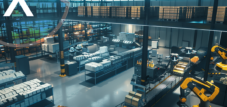
Maximum availability: Maximize the availability of your own warehouse and storage system – minimize downtime and increase productivity with digital remote support – Image: Xpert.Digital
📦 Optimize warehouse processes: Minimize downtime with innovation
✔️💼 Warehouse success factor: How to score points with remote support
In today's highly competitive business environment, the efficiency of warehouse processes is crucial to a company's success. Unplanned downtime can not only lead to significant financial losses but also negatively impact customer satisfaction. Supply chains have become more complex, and customer expectations for fast and reliable deliveries are constantly rising. Therefore, maximizing the availability of your warehouse and storage system is paramount to minimizing downtime and increasing productivity. Remote support offers an effective solution, enabling rapid diagnosis and resolution of problems without waiting for an on-site technician. Furthermore, it provides the ability to monitor and optimize processes in real time.
🔍💰 Achieve maximum availability and minimize downtime costs
Every minute a warehouse system is down means lost productivity and potentially missed business opportunities. Studies show that unplanned downtime can cost companies thousands of euros per hour, depending on the size of the operation and the type of products stored. The impact ranges from delayed deliveries and production losses to damage to the company's reputation with customers and partners.
By using remote support, companies can maximize the availability of their systems. Experts can access systems remotely, identify problems, and often resolve them immediately. This significantly reduces downtime and minimizes associated costs. Furthermore, preventive maintenance enabled by remote monitoring allows potential issues to be identified and addressed before they lead to outages. This increases overall system reliability and contributes to smooth operations.
🛠️📡 Benefit from remote diagnostics and remote repair services
Remote diagnostics uses modern communication technologies to connect technicians to on-site systems. Secure internet connections allow them to access machine controls, sensors, and other devices in real time. This enables rapid problem identification without the need for a technician to be physically present.
The advantages are obvious: shorter response times, reduced travel time and costs, and a faster return to normal operations. In cases where physical intervention is required, remote diagnostics can help identify the necessary spare parts and tools in advance, making the on-site visit more efficient. Furthermore, companies benefit from continuous support that can be available outside of regular business hours, which is particularly advantageous for companies with shift work or 24/7 operations.
🛡️🔐 Implementing a state-of-the-art security software system
With the increasing digitalization and networking of warehouse systems, the risk of cyberattacks and data breaches also rises. A security incident can not only disrupt operations but also endanger sensitive company data. Therefore, the implementation of a state-of-the-art security software system is essential.
Such systems offer multi-layered protection against unauthorized access and ensure data integrity and availability. Features include firewall protection, intrusion detection systems, regular security updates and patches, and encryption of sensitive data. Furthermore, it is essential to establish strict access rights and authentication mechanisms to ensure that only authorized personnel can access critical systems.
Partnering with trusted remote support solution providers that adhere to high security standards is crucial. This ensures that the benefits of remote support can be leveraged without compromising system security.
📊🔍 Achieve greater transparency in your warehouse processes
Transparency is a crucial factor in optimizing warehouse processes. By using remote monitoring tools, companies can access key performance indicators in real time. These include information on inventory levels, machine performance, order status, and more.
This increased transparency makes it possible to quickly identify bottlenecks and inefficient processes and to take proactive measures. For example, delays in order processing or irregularities in material flow can be detected and resolved immediately. Furthermore, the transparency promotes better communication between different departments and locations, as all stakeholders have access to the same up-to-date data.
The ability to monitor processes remotely not only increases efficiency but also improves decision-making. Managers can make informed decisions based on current data and trends, ultimately leading to better overall warehouse performance.
🖥️📈 Monitor productivity with machine data analytics
Analyzing machine data plays a crucial role in increasing productivity. By collecting and analyzing data from various machines and systems, companies can gain insights into the performance of their equipment. This data can include information about operating times, energy consumption, utilization, temperature, vibrations, and more.
Machine data analysis makes it possible to predict maintenance needs, identify inefficient processes, and uncover optimization potential. For example, an increase in vibration levels can indicate an impending mechanical problem, allowing preventative maintenance measures to be taken before a breakdown occurs.
With the help of remote support, this data can be collected and analyzed in real time. Experts can analyze trends, generate reports, and provide recommendations for process improvements. This leads to faster response times and continuous improvement of operational processes.
Furthermore, companies can use machine learning and artificial intelligence to learn from this data and implement automated optimizations. This can lead to significant efficiency gains and cost savings.
👩🏫👨🏫 The role of employees and training
While technologies like remote support and data analytics are important tools, people remain a crucial factor for success. It is essential that employees are properly trained to use these technologies effectively. Training should not only cover technical aspects but also convey the importance of security policies and best practices.
Employees should be encouraged to act proactively, report problems, and make suggestions for improvement. A culture of continuous improvement and collaboration promotes the successful implementation of new technologies and processes.
🏭🔧 Maximizing system availability and minimizing downtime
Remote support offers numerous advantages for companies looking to optimize their warehouse processes. By maximizing system availability and minimizing downtime, companies can increase productivity and gain a competitive edge. The implementation of modern security software systems ensures the security of both systems and data.
Increased transparency and the ability to analyze machine data enable continuous process improvement and increased efficiency. Companies can react more quickly to changes, make decisions based on current data, and optimize their resource allocation.
In an era where speed and efficiency are crucial for business success, leveraging remote support solutions is a vital step towards modernizing and future-proofing warehouse processes. Companies implementing these technologies better position themselves to meet rising market demands and achieve long-term success.
Investing in remote support and modern technologies is not just a matter of current efficiency, but also an investment in the company's future viability. By adapting to the changing technological landscape and leveraging the advantages of digitalization, companies can strengthen their market position and unlock new opportunities.
📣 Similar topics
- 🔧 Achieve maximum availability of your warehouse system
- 🛠️ Minimize downtime through remote support
- 🚀 Increase productivity with remote support
- 🕒 Efficiently reduce unplanned downtime
- 🌐 Take advantage of remote diagnostics and remote repairs
- 🔒 Implement security software systems for warehouse processes
- 📊 Increase transparency in your warehouse processes
- ⚙️ Monitor productivity through machine data analytics
- 💼 The role of staff and training in remote support
- 📈 Future-proof warehousing processes through modern technologies
#️⃣ Hashtags: #WarehouseProcesses #RemoteSupport #Security #Productivity #Transparency
Expert partner in warehouse planning and construction

✳️ Make optimal use of your own warehouse and storage system - reduce downtime and increase efficiency
📦 In today's fast-paced business world, optimizing warehouse processes and systems is crucial to a company's success. Efficient warehouse management can not only reduce operating costs but also increase customer satisfaction and ultimately boost profits. In this comprehensive guide, we'll delve into how to maximize the availability of your warehouse and storage system, minimize downtime, and increase productivity.
👁️🗨️ The importance of stock availability
Warehouse availability refers to the ability to maintain operations and efficiently store, process, and ship goods. High availability is crucial for fulfilling customer demands, meeting delivery deadlines, and securing a competitive edge. Downtime, on the other hand, can lead to significant financial losses, customer dissatisfaction, and reputational damage.
Factors that influence stock availability
- Technical infrastructure
- Human Resources
- Process optimization
- Maintenance and servicing
- Security measures
🔧 Remote Support as a key to optimization
A crucial factor in increasing warehouse availability is the use of remote support. This technology allows experts to access systems remotely, diagnose problems, and often even resolve them without needing to be physically present.
Advantages of remote support
Quick problem solution
Immediate access to systems often allows problems to be solved in minutes instead of hours or days.
Cost efficiency
Reducing on-site visits saves time and travel costs.
24/7 availability
Remote support can be offered around the clock, which is particularly advantageous for warehouses with shift work.
Preventive maintenance
Regular remote monitoring allows potential problems to be identified and resolved early, before they lead to failures.
🛡️ Implementation of an advanced security software system
The security of the warehouse and the goods stored within it is of paramount importance. A modern security software system should cover the following aspects:
1. Access control
Biometric systems or RFID cards for employees
2. Video surveillance
High-resolution cameras with motion detection
3. Alarm systems
Immediate notification in case of unauthorized access
4. Data security
Encryption of sensitive information and regular backups
5. Fire protection
Intelligent smoke detectors and automatic extinguishing systems
Integrating these security measures into a central management system enables efficient monitoring and rapid response to potential threats.
🔍 Increased transparency in warehouse processes
Transparency in warehouse processes is crucial for efficient operations. It enables managers to make informed decisions and quickly identify bottlenecks.
Methods for improving transparency
Real-time tracking
Implementation of RFID or barcode systems for accurate tracking of goods.
Digital dashboards
Real-time visualization of key KPIs for all stakeholders.
Process automation
Use of automated conveyor systems and robots to reduce human error.
Integrated software solutions
Use of ERP and WMS systems for seamless data integration.
📊 Productivity monitoring through machine data analysis
The use of big data and machine learning can revolutionize productivity monitoring. By analyzing large amounts of data, patterns can be identified and predictions made, leading to continuous improvement of warehouse processes.
Application areas of data analysis in the warehouse
Inventory optimization
Predicting demand fluctuations and automatically adjusting inventory levels.
Route optimization
Calculating the most efficient routes for forklifts and other transport equipment in the warehouse.
Personnel planning
Analysis of workloads for optimal staff allocation.
Quality control
Early detection of quality deviations through pattern analysis.
Energy management
Optimizing energy consumption based on usage patterns.
⚙️ Strategies for minimizing downtime
Reducing downtime is a key factor in maximizing warehouse availability. Here are some proven strategies:
1. Preventive maintenance
Regular inspections and maintenance of equipment and systems to identify problems early.
2. Redundant Systems
Installation of backup systems for critical components to enable rapid switching in case of failures.
3. Employee training
Regular training on the correct operation of equipment and the identification of potential problems.
4. Emergency plans
Development and regular practice of emergency plans for different scenarios.
5. Fast spare parts supply
Storing critical spare parts on-site or agreements with suppliers for fast deliveries.
🤖 Innovative technologies for increasing efficiency
Integrating modern technologies can significantly increase the efficiency and productivity of a warehouse. Here are some forward-looking solutions:
Autonomous Mobile Robots (AMR)
These robots can move independently within the warehouse and transport goods, increasing efficiency and reducing human error.
Drones for inventory
Drones can be used for quick and accurate inventory surveys in large warehouses.
Augmented Reality (AR) for order picking
AR glasses can assist employees in order picking by displaying directions and product information in real time.
Internet of Things (IoT)
Networked sensors can monitor and automatically adjust environmental conditions such as temperature and humidity.
Artificial intelligence (AI) for demand forecasting
AI algorithms can analyze historical data and make accurate predictions about future demand.
🌱 Sustainability in warehouse management
Sustainability is not only important from an ecological perspective, but can also lead to significant cost savings. Here are some approaches to sustainable warehouse management:
Energy-efficient lighting
Conversion to LED lighting and intelligent lighting control systems.
Solar energy
Installation of solar panels on warehouse roofs for on-site power generation.
Water management
Implementation of rainwater harvesting systems and water-saving technologies.
Waste reduction
Introduction of recycling programs and use of reusable packaging materials.
Green Logistics
Optimization of transport routes and use of electric vehicles for internal transport.
📈 Continuous improvement through key performance indicators (KPIs)
Regular monitoring and analysis of key performance indicators (KPIs) is crucial for the continuous improvement of warehouse processes. Important KPIs for warehouse management include:
- Inventory turnover rate
- Picking accuracy
- Order processing time
- Warehouse utilization
- Labor productivity
- Return rate
- Overall Equipment Effectiveness (OEE)
Regularly reviewing these KPIs allows for the identification of areas for improvement and the implementation of targeted measures.
💡 Maximizing the availability of your own warehouse and storage system
Maximizing the availability of your warehouse and storage system is a complex but worthwhile process. By using remote support, advanced security systems, increased process transparency, and data-driven productivity monitoring, companies can optimize their warehouse processes, minimize downtime, and increase efficiency.
The integration of innovative technologies, a focus on sustainability, and the continuous monitoring of key performance indicators are further key factors for success. In an increasingly competitive business world, a well-optimized warehouse system can make all the difference.
Companies that invest in these areas and cultivate a culture of continuous improvement will not only reduce their operating costs but also be better positioned to respond to constantly changing market demands. Ultimately, efficient and reliable warehouse management leads to higher customer satisfaction, greater competitiveness, and sustainable business success.
📣 Similar topics
- 📦 Optimized warehouse management: A guide
- 📈 The importance of stock availability
- 🌐 Remote Support as a Key to Optimization
- 🔒 Implementation of an advanced security software system
- 🔍 Increased transparency in warehouse processes
- 🤖 Productivity monitoring through machine data analysis
- 🔧 Strategies for minimizing downtime
- 🚀 Innovative technologies for increasing efficiency
- 🌱 Sustainability in warehouse management
- 📊 Continuous improvement through key performance indicators (KPIs)
#️⃣ Hashtags: #WarehouseManagement #EfficiencyImprovement #Sustainability #Technology #CustomerSatisfaction

Xpert.Plus Warehouse Optimization - High-bay warehouses and pallet warehouses: Consulting and planning
We are here for you - Consulting - Planning - Implementation - Project Management
☑️ Smart City & Factory: Industry expert for energy-efficient 5G buildings and halls, as well as consulting and installation of solar systems
☑️ Xpert.Plus - Logistics consulting and logistics optimization
☑️ Industry expert, here with his own Xpert.Digital industry hub with over 2,500 specialist articles

Konrad Wolfenstein
I would be happy to serve as your personal advisor.
You can contact me by filling out the contact form below or simply call me on +49 7348 4088 965 .
I'm looking forward to our joint project.
Write to me


Xpert.Digital - Konrad Wolfenstein
Xpert.Digital is a hub for industry focusing on digitalization, mechanical engineering, logistics/intralogistics and photovoltaics.
With our 360° Business Development solution, we support renowned companies from new business to after-sales.
Market intelligence, smarketing, marketing automation, content development, PR, mail campaigns, personalized social media and lead nurturing are part of our digital tools.
You can find more information at: www.xpert.digital - www.xpert.solar - www.xpert.plus
Keep in touch