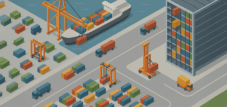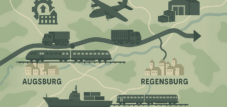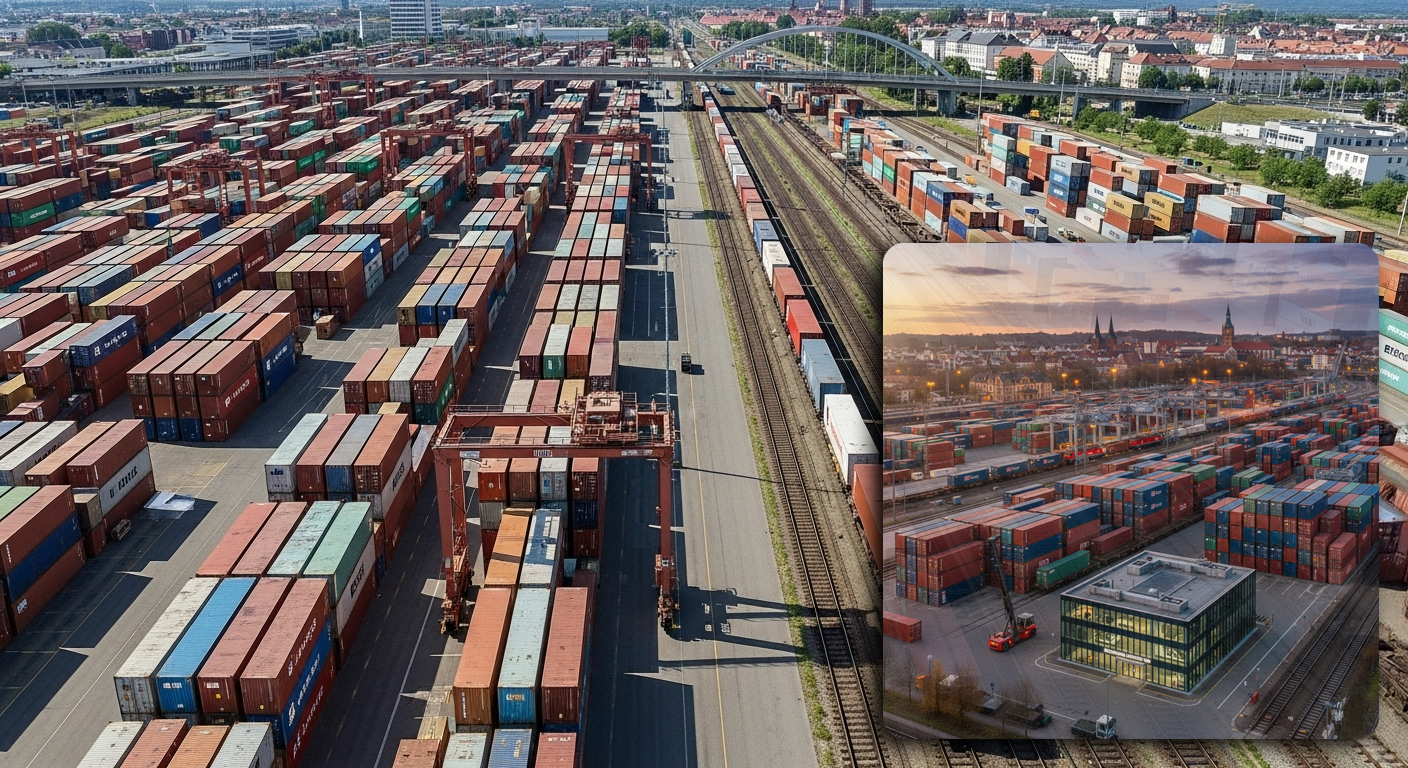
Logistics hub | Container depot at the East Station: DB Cargo and Regensburg create a future-oriented logistics solution – Creative image: Xpert.Digital
Regensburg is upgrading: Why this logistics hub is becoming important for all of Germany
Rail as an economic engine: How this new container depot strengthens hundreds of companies in the region
Regensburg and DB Cargo AG are sending a strong signal for the future of freight transport: A groundbreaking agreement will see the construction of a state-of-the-art container depot at Regensburg East Station, sustainably strengthening the city's position as a central logistics hub in southern Germany. This strategic decision marks a significant realignment, as the depot will now be built on the existing Transa Spedition site – a more efficient, cost-effective, and faster-to-implement solution than the originally planned location in the East Industrial Park.
The new depot will serve as a central service hub for the storage, maintenance, and repair of containers and is directly connected to the transshipment terminal of DB subsidiary DUSS. This consolidation of expertise in one location not only optimizes logistics processes but also makes a significant contribution to climate protection. By strengthening rail freight, thousands of truck journeys will be shifted from road to the more environmentally friendly rail network, thus relieving congestion on the roads and reducing CO2 emissions. For the booming regional economy, particularly the automotive and mechanical engineering industries, the new depot represents a substantial strengthening of supply chains and competitiveness.
Location decision and strategic realignment
DB Cargo AG and the city of Regensburg have reached a groundbreaking agreement for the construction of a modern container depot, which will sustainably strengthen Regensburg as a freight transport hub. The new depot will be built on the premises of Transa Spedition GmbH at Regensburg East Station, thus ensuring a direct connection to the transshipment terminal operated by DB subsidiary DUSS.
This location decision represents a significant change from the original plans. Instead of building the container depot in the East industrial park, DB Cargo has opted for the existing infrastructure at the East Station. This relocation offers both economic and logistical advantages and meets the current demands of the growing rail freight traffic in the region.
Functions and operating concept of the container depot
The new container depot will serve as a central hub for various logistics services. Its main functions include the storage, maintenance, repair, and management of all types of containers. This comprehensive range of services meets the modern requirements of international container logistics and ensures that all components of the supply chain are optimally coordinated.
Container depots have established themselves as an indispensable infrastructure in global trade. They serve not only as storage facilities for empty and full containers, but also perform essential maintenance and repair functions. Inspection of containers according to international standards, such as CSC regulations, ensures the safety and functionality of these transport containers in global traffic.
Maintenance and repair work encompasses a wide range of services. These include structural repairs to container walls and floors, the repair of locking mechanisms, and the maintenance of specialized equipment such as refrigeration units in refrigerated containers. Modern container depots have specialized workshops and qualified personnel to carry out this work efficiently.
Transa Spedition: Transformation and Repositioning
Transa Spedition GmbH, a wholly owned subsidiary of DB Cargo, will cease operations at Regensburg East Station on September 30, 2025. This strategic decision is part of a broader realignment of DB Cargo's activities in the region. Despite the closure, Transa will maintain a local sales representative to ensure continuity of customer relationships.
Multimodal transport and warehousing operations for the region will be handled in the future via the modern Nuremberg Railport. Railports are specialized logistics centers operated by DB Cargo that enable cross-modal logistics and are regularly served by shuttle services. This infrastructure guarantees rapid wagon rotations and systematic reloading options, which significantly contributes to the efficiency and reliability of transport logistics.
Strategic importance for rail freight transport
Container depots play a crucial role in international rail freight transport, as Dr. Sigrid Nikutta, Member of the Management Board for Freight Transport at Deutsche Bahn AG and CEO of DB Cargo AG, emphasizes. The strategic location of the new depot at the Ostbahnhof transport hub offers ideal conditions for the rapid and cost-effective implementation of the project.
Rail freight transport in Germany is experiencing continuous growth rates, with combined rail-road transport seeing particularly strong growth. According to forecasts by the Federal Ministry of Transport, rail transport performance will increase disproportionately by almost 43 percent by 2030. This development requires additional transshipment capacity and modern infrastructure, such as that provided by the new container depot in Regensburg.
The container depot integrates seamlessly into DB Cargo's existing network, which already operates 24 terminals in Germany. These are operated by Deutsche Umschlaggesellschaft Schiene-Straße (DUSS), which handles over two million containers, swap bodies, and semi-trailers annually. The new depot in Regensburg will expand these capacities and further improve the region's connection to the European rail network.
Advantages of the new location solution
The decision to locate on the Transa site offers several operational and strategic advantages. Its immediate proximity to the existing terminal and public railway infrastructure allows for rapid commissioning once the necessary permitting processes are completed. Parts of the site are already used for storing empty containers, which will facilitate the transition.
A key advantage of the new solution lies in consolidating several previously dispersed outdoor areas into a central depot. This consolidation leads to operational efficiency gains and simultaneously reduces traffic congestion in the surrounding urban areas. Centralization also enables better resource utilization and optimized workflows within the depot.
The new location solution is also more cost-effective and faster to implement than the originally planned option in the East industrial park. These economic advantages benefit both DB Cargo and the city of Regensburg, allowing available funds to be used more efficiently for infrastructure improvements.
Your container high-bay warehouse and container terminal experts

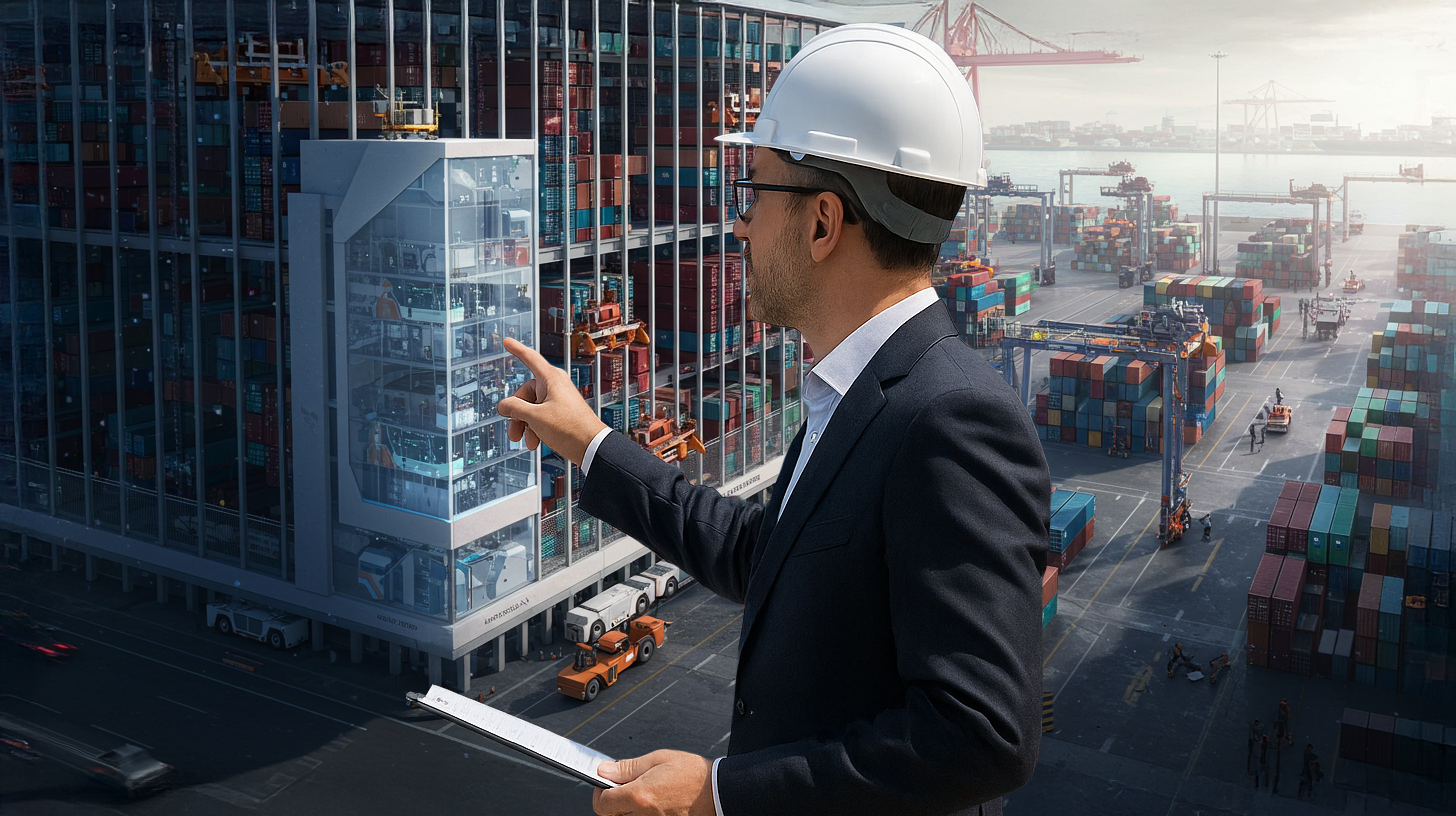
Container high-bay warehouses and container terminals: The logistical interplay – expert advice and solutions - Creative image: Xpert.Digital
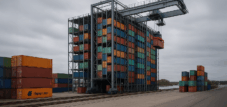
This innovative technology promises to fundamentally change container logistics. Instead of stacking containers horizontally as before, they will be stored vertically in multi-story steel racking structures. This not only allows for a drastic increase in storage capacity within the same area, but also revolutionizes all processes at the container terminal.
More information here:
From the Danube port to the European network: Regensburg's logistics offensive
Regensburg freight center as a logistics hub
The new container depot integrates seamlessly into the existing trimodal freight village (GVZ) Regensburg, one of the most modern and advanced freight villages in Germany. The GVZ encompasses municipal and private land in the area of the marshalling yard, as well as the land of the Port of Regensburg, and, with a total area of 360 hectares, forms one of the largest decentralized freight villages in southern Germany.
The GVZ's trimodal facilities enable transshipment between road, rail, and water transport. This versatility makes Regensburg a key logistics hub for trade between Germany and Eastern Europe. Over 100 transport companies are located in the GVZ, ensuring scalable capacities and a comprehensive range of services to meet demand.
The freight village boasts excellent transport connections. Superb road access is guaranteed via the A3 and A93 motorways and the B15 and B8 federal highways. Rail connections are provided by the intermodal terminal operated by DUSS, offering direct links to major German and European economic centers.
Technical infrastructure and operational processes
Modern container depots are equipped with advanced technology to ensure efficient operations. The new depot in Regensburg is expected to feature various handling systems, from gantry cranes to mobile handling equipment such as reach stackers. This flexibility allows for the efficient handling of different container types and sizes.
Modern container depots are managed by integrated IT systems that monitor the location, condition, and movements of containers in real time. These systems enable precise inventory management and optimized logistics planning. Customers can use these systems to check the status of their containers and track transport orders at any time.
An important aspect of the depot infrastructure is the equipment for different container types. In addition to standard dry containers, refrigerated containers, tank containers, and special containers must also be able to be handled. Refrigerated containers, for example, require electrical connections for the maintenance of the refrigeration units and specialized repair facilities.
Environmental and climate protection aspects
Promoting rail freight through the new container depot makes a significant contribution to climate protection. Rail transport is considerably more environmentally friendly than road transport and can significantly reduce CO2 emissions. For example, transporting a container by rail over 400 kilometers can reduce CO2 emissions by 1.5 tons compared to transport by truck.
Shifting freight from road to rail significantly relieves congestion on the road network. Modern freight terminals can save millions of truck kilometers annually, thereby protecting the environment and reducing traffic congestion in cities. The new container depot in Regensburg will contribute to this positive development.
The German Federal Government supports the expansion of rail freight infrastructure as part of the transport transition. The share of rail freight in the modal split is to be significantly increased by 2030. Container depots like the one planned in Regensburg are important building blocks for achieving these goals.
Urban planning and legal aspects
The planning law framework for the container depot was established in the past. Mayor Gertrud Maltz-Schwarzfischer emphasizes that the city initiated the planning independently of the specific project and, through development plan no. 215-I at the Ostbahnhof (East Train Station), designated a high-quality industrial area with excellent infrastructure on an area of approximately 120,000 square meters.
The development plan and the associated building rights remain valid, as recently confirmed by the Administrative Court of Munich in a dismissed legal challenge. This legal clarification provides planning certainty for DB Cargo and enables the swift implementation of the project without further legal obstacles.
The industrial area was already designated in the city of Regensburg's land-use plan. The development plan thus evolves from this overarching plan and aligns with the city's long-term urban development goals. Its location between the Regensburg-Munich railway line and Max-Planck-Straße offers ideal conditions for industrial and logistics uses.
Economic importance for the region
The new container depot strengthens Regensburg's position as an important economic hub in Bavaria. The region boasts a strong and internationally networked economic structure that relies on reliable and efficient transport routes. Key employers in the region include the automotive and mechanical engineering industries, with a catchment area extending from Ingolstadt through Nuremberg and Landshut to the German-Czech border.
The container depot will expand the region's logistics capacity and create new opportunities for businesses. Direct access to the European rail network will enable regional companies to transport their goods cost-effectively and in an environmentally friendly manner. This will strengthen the competitiveness of local industries and make the region more attractive to new investors.
The automotive industry, which has a strong presence in the Regensburg region, particularly benefits from the improved logistics infrastructure. With annual growth of around 10 percent in handling volume, the demand for efficient transport solutions is constantly increasing. The new container depot can help meet this growing demand.
Technological innovations in container handling
Modern container handling benefits from innovative technologies that make operations more efficient and safer. Automated storage cranes can precisely position containers and enable parallel workflows. These technologies reduce handling times and increase terminal capacity.
An interesting example of innovative container technology is the Container Transfer System (CTS) introduced in Denmark, which enables seamless and rapid transshipment of ISO containers between rail and truck directly from the driver's cab. Such systems make rail access possible even in unusual locations and promote the use of environmentally friendly transport solutions.
Digitalization is playing an increasingly important role in container depots. Artificial intelligence can be used to optimize storage space, predict maintenance needs, and plan transport routes. These technologies improve operational efficiency and reduce operating costs.
Possible solutions
The construction and operation of a container depot presents various challenges. A key task is ensuring sufficient container repair capacity. Containers are subject to continuous wear and tear due to intensive use and transport, necessitating regular maintenance and repairs.
Quality assurance during repair work is crucial. Containers must be repaired according to international standards such as the CSC Convention to retain their certification for international transport. This requires specialized equipment and qualified personnel.
Another important aspect is efficient space utilization in the depot. Containers must be stored in a way that allows for quick access while simultaneously making optimal use of the available space. Modern stacking systems and intelligent warehouse management can help maximize efficiency.
Development potential
The new container depot in Regensburg is expected to be just the first step in the further development of the logistics infrastructure at the site. The region has considerable growth potential, which can be better utilized thanks to improved rail connections.
Expanding combined transport between different modes of transport offers further development opportunities. The connection to the Danube port of Regensburg enables trimodal transport solutions that link rail, road, and inland waterway transport. This versatility makes the location particularly attractive for international logistics service providers.
The planned expansion of the intermodal terminal in Regensburg-Burgweinting demonstrates the city's long-term commitment to developing rail freight infrastructure. The new container depot perfectly complements this strategy and creates additional capacity for the growing volume of transport.
European transport policy promotes the shift of freight transport to environmentally friendly modes of transport. Container depots like the one planned in Regensburg are important building blocks for the European transport network of the future. They enable even smaller companies without their own rail siding to benefit from the advantages of rail freight.
Consulting - Planning - Implementation

Markus Becker
I would be happy to serve as your personal advisor.
Head of Business Development
Consulting - Planning - Implementation
Konrad Wolfenstein
I would be happy to serve as your personal advisor.
You can contact me at wolfenstein∂xpert.digital or
Just call me on +49 7348 4088 965 .