


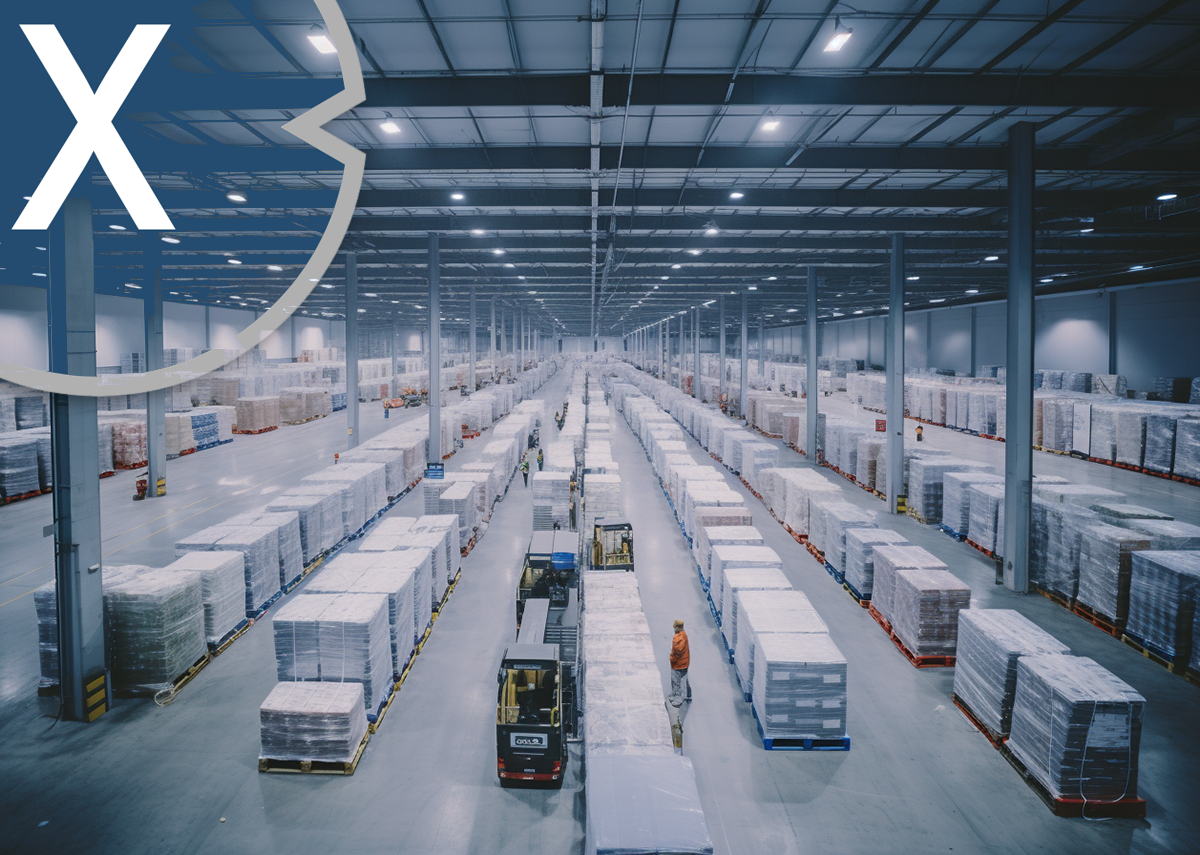
Frequent bottlenecks in logistics – methods and measures for their elimination – Image: Xpert.Digital
Avoid delays: Efficiently resolve logistics bottlenecks
Overcoming logistics bottlenecks: Strategies for identification and solution
Bottlenecks in intralogistics and logistics in general arise when certain processes, resources, or systems do not operate with the required efficiency, thus slowing down the overall flow of materials or goods. These bottlenecks lead to delays, increased costs, and reduced productivity. The following describes the most common bottlenecks in logistics and intralogistics, as well as methods for identifying and resolving them.
1. Capacity problems
Overloading storage facilities, transport vehicles, or personnel can lead to delays. Inadequate capacity planning or fluctuations in demand exacerbate these problems.
2. Material provision
Delivery difficulties or incorrect provision of materials (e.g., incorrect quantity or quality) lead to delays in production and increase search times for employees.
3. Inefficient warehouse management
Incorrectly planned material requirements or inefficient inventory management can lead to stock shortages or overstocks, which hinders the flow of materials.
4. Transport delays
Bottlenecks often arise from an insufficient number of transport vehicles or overloaded transport routes, which slows down the flow of goods.
5. Outdated systems and technologies
Manual or outdated management systems can severely hinder operations and cause bottlenecks. Modern technologies such as automated warehouse management systems can remedy this.
6. Lack of transparency and communication
Unclear processes and poor internal communication mean that problems are not identified in time, leading to delays and inefficiencies.
7. Staff shortage or poorly trained staff
Bottlenecks can arise from a lack of staff or insufficiently trained employees, especially if they are unable to perform tasks efficiently.
Methods for identifying bottlenecks
1. Bottleneck Walk
A simple method for identifying bottlenecks is to observe the production process along the value chain. This involves analyzing machines, processes, and inventory to locate bottlenecks.
2. Data analysis and monitoring of KPIs
Analyzing relevant key performance indicators (KPIs) such as production times, downtimes and throughput rates helps to identify bottlenecks early on.
3. Employee survey
Employees are often able to identify bottlenecks more quickly than external observers. Regular surveys can provide valuable insights into inefficient processes.
4. Simulation models
Virtual simulations of processes make it possible to simulate potential bottlenecks and test solutions in advance.
Measures to eliminate bottlenecks
1. Process optimization
Regular process reviews and optimizations help to eliminate inefficiencies and improve material flow.
2. Use automation technologies
The use of modern technologies such as automated storage systems or pick-by-voice systems can increase efficiency and prevent bottlenecks in material transport.
3. Increase capacity
Bottlenecks can be avoided by using additional resources such as more storage space, means of transport or personnel.
4. Staff training
Regular staff training ensures that employees work more efficiently and make fewer mistakes, which improves overall performance.
5. Improved planning and coordination
Detailed planning of logistics processes from procurement to delivery can help to identify and avoid potential bottlenecks early on.
Through a systematic analysis of the processes and the targeted use of modern technologies, many of these bottlenecks can be identified and resolved, which significantly increases the efficiency of intralogistics.
Related to this:

The 'Bottleneck Walk' method
The "Bottleneck Walk" is a proven method for identifying and eliminating bottlenecks in logistics and intralogistics. Bottlenecks are processes or capacity limits that slow down the flow of materials and can thus negatively impact the entire operational process. To ensure a smooth and efficient flow of goods and materials, it is crucial to identify such bottlenecks early and address them effectively. The Bottleneck Walk method offers a systematic approach to uncovering and optimizing weaknesses within warehouse processes. In modern logistics, where the demands for flexibility and speed are constantly increasing, this technique is gaining in importance.
What is the Bottleneck Walk?
The Bottleneck Walk is a structured analysis of a logistics system in which weaknesses are identified in real time by physically walking along the process chain. Employees are directly involved in the analysis, as they can contribute valuable insights and experience from their daily interaction with the respective processes. This direct involvement of personnel offers advantages because bottlenecks are often not discovered solely through technical data or key performance indicators, but rather through observing the actual process flow. The Bottleneck Walk thus provides a practical perspective and opens up new approaches that are frequently overlooked by conventional analyses.
The goal is to obtain a detailed "snapshot" of ongoing operations through systematic observations, discussions, and data analysis. This reveals bottlenecks in processes such as material supply, storage, order picking, and shipping. This method is particularly helpful in intralogistics, where numerous small, interconnected processes often interact and influence one another.
Why do bottlenecks occur in logistics?
Bottlenecks can be caused by a variety of factors, including personnel, technical, and structural issues. They often result from insufficient storage capacity, outdated technology, or inadequately optimized processes. Other contributing factors can include inadequate automation, a lack of interfaces between individual processes, or insufficient staff training. In the age of digitalization and automation, bottlenecks can also arise from a high reliance on IT systems, which, in the event of failures or malfunctions, can paralyze the entire operation.
A detailed analysis, such as that provided by the Bottleneck Walk, can uncover these root causes. Bottlenecks often arise from increasing demands for speed and flexibility in logistics. Many companies are under pressure to guarantee deliveries within the shortest possible time while still operating cost-effectively. If these requirements are not fully met, processes can stall, leading to delays that affect the entire logistics chain.
The Bottleneck Walk methodology
The Bottleneck Walk begins with defining the scope of analysis and the objectives. Typically, a specific process area is identified where bottlenecks are suspected. A multidisciplinary team of logistics specialists, warehouse managers, and technicians then walks through the entire process step by step to identify potential bottlenecks. They pay close attention to specific characteristics such as:
- Waiting times: Where and why do waiting times occur? Are there processes that repeatedly stall?
- Transport routes: Are the routes between the individual storage stations or machines optimized, or do long transport routes lead to delays?
- Workstations: Are the workstations ergonomically designed and set up for a smooth process, or do additional walking distances arise due to unfavorable placement?
- Capacity limits: Where do overloads occur? Are machines or systems limited in their performance?
The observations are discussed and documented directly on site. At the same time, employees in the respective areas are interviewed to gain insights into their daily challenges. By involving staff, not only are theoretical analyses conducted, but the practical perspective is also taken into account, which can lead to more realistic and directly implementable optimization measures.
The role of digitalization in the bottleneck walk
Digitalization is becoming increasingly important in modern logistics processes. Digital systems such as warehouse management systems, real-time tracking, and big data analytics can significantly support bottleneck management. For example, the use of sensors and data analytics can help to locate process weaknesses more precisely and objectively. Warehouse management software makes it possible to monitor key performance indicators such as throughput times, capacity utilization, and inventory levels in real time and to detect deviations early on.
Digital support complements the Bottleneck Walk by substantiating subjective impressions and observations with hard data. This creates a more comprehensive picture of the processes, allowing potential bottlenecks not only to be identified but also quantitatively assessed. Furthermore, digitalization lays the foundation for further automation and optimization of processes. The use of robotics and automated systems can further increase efficiency in intralogistics and reduce reliance on manual labor in critical areas.
Measures to eliminate bottlenecks
Once bottlenecks have been identified, it is important to take measures to eliminate them. This can take the form of structural adjustments, optimization of work processes, or investments in new technologies. Possible approaches to eliminating bottlenecks include:
1. Process optimization
Significant improvements can often be achieved through simple changes and adjustments to workflows. For example, material flows can be optimized or workplaces can be made more ergonomic.
2. Capacity expansion
Recurring bottlenecks may necessitate expanding machinery or storage capacity. However, this should be carefully examined with regard to cost-effectiveness and actual demand.
3. Automation
Automating certain work processes can relieve the burden on staff and increase efficiency. Examples include automated conveyor systems, driverless transport systems, and robotics in order picking.
4. Staff training
A well-trained workforce can make processes significantly more efficient. Through regular training and professional development, staff can be empowered to independently identify bottlenecks and suggest improvements.
5. Use of technology
Modern warehouse management systems and IoT technologies offer extensive opportunities for process monitoring and optimization. By using such technologies, bottlenecks can be identified and avoided more quickly.
The advantages of the bottleneck walk
The Bottleneck Walk offers numerous advantages for intralogistics. The method is relatively cost-effective, as it requires no complex technical equipment but relies instead on employee observations and expertise. Furthermore, involving staff fosters a high degree of acceptance for subsequent changes, since employees are directly involved in the solution process and their perspectives and needs are taken into account. The Bottleneck Walk also enables rapid and practical solutions, as identified bottlenecks can be discussed directly during ongoing operations, allowing for immediate adjustments if necessary.
Another advantage is the continuous improvement of work processes. The bottleneck walk can be used as a recurring procedure to ensure high efficiency in logistics in the long term. Conducted at regular intervals, process optimizations can be adapted promptly to changing requirements and conditions.
The Bottleneck Walk as a valuable tool in modern logistics
The Bottleneck Walk is an effective method for identifying and eliminating bottlenecks in logistics. Its practical approach and the involvement of employees allow for the efficient identification of weaknesses and the development of suitable solutions. Especially in times of increasing demands for speed and flexibility in logistics, the Bottleneck Walk is a valuable tool for securing a company's long-term efficiency and competitiveness. Combining it with modern digital tools such as warehouse management systems and automation technologies can further enhance the effectiveness of the Bottleneck Walk, creating significant added value for intralogistics. A systematic approach and open communication with staff are essential for achieving the best results and optimally adapting logistics processes to market demands.
In this sense, the Bottleneck Walk not only offers short-term solutions, but is also an approach that enables sustainable process optimizations in intralogistics and thus makes an important contribution to increasing the overall performance of the company.
Related to this: