
AI instead of jobs? China is investing in AI – but who is protecting employees from the change?
Xpert Pre-Release

Available in 27 languages 📢
Prefer Xpert.Digital on GoogleⓘPublished on: October 26, 2026 / Updated on: October 26, 2026 – Author: Konrad Wolfenstein
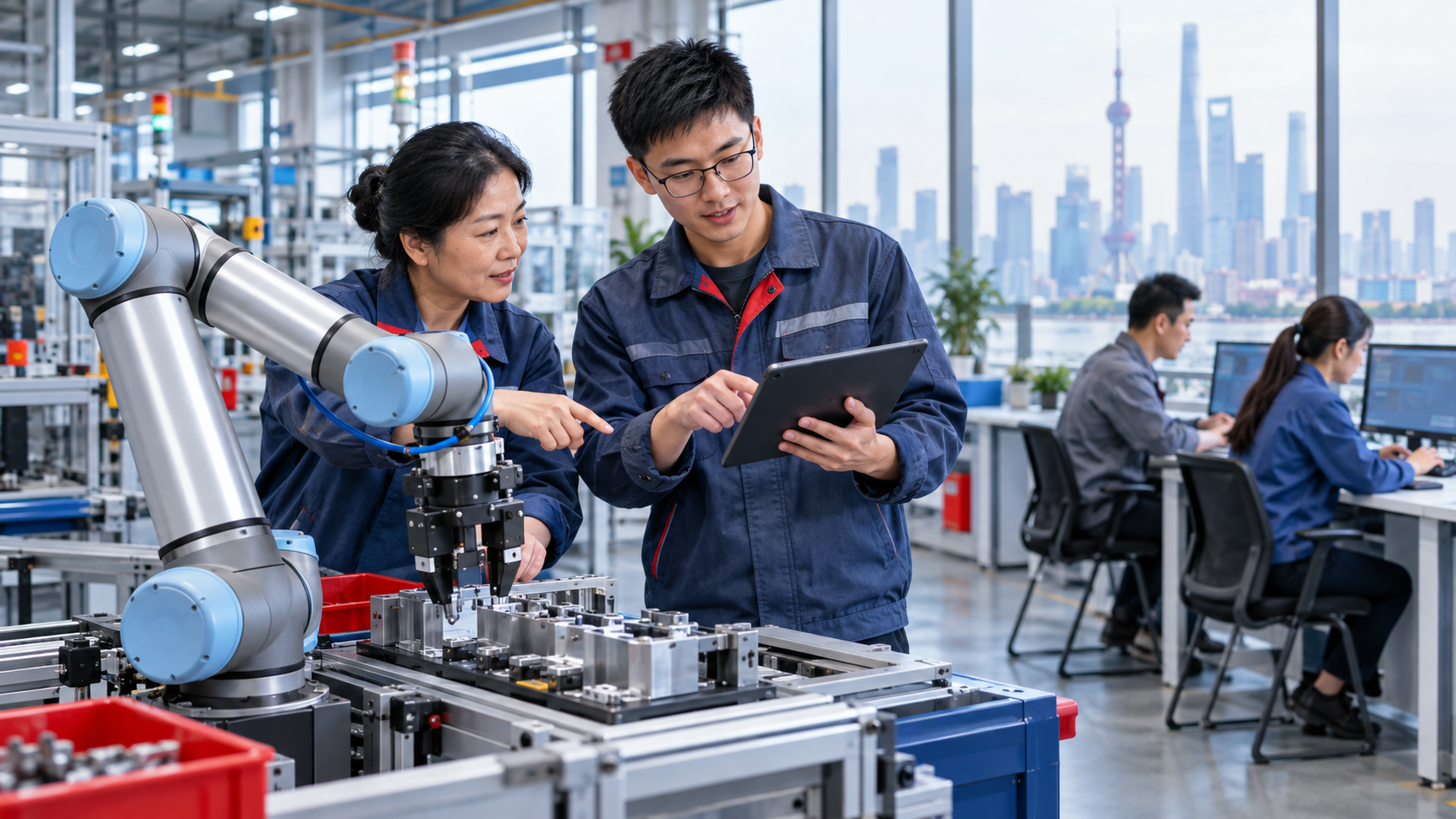
AI instead of jobs? China is investing in AI – but who is protecting employees from the changes? – Creative image on the topic, featuring AI: Xpert.Digital
China's new strategy aims to cushion the upheaval: China's AI offensive – Why productivity alone does not create prosperity
More AI, fewer jobs? Beijing wants to prepare the labor market for change
China's AI plan: further education, social security and new rules for companies
China aims to accelerate the deployment of artificial intelligence without leaving the consequences for workers to chance. New guidelines link the promotion of AI and new jobs with further training, support for career changes, social security, and closer monitoring of employment risks. Underlying this is a key economic question: How can companies become more productive without technological change weakening purchasing power, career prospects, and social acceptance?
Because even when AI takes over tasks, it doesn't automatically mean that employees will lose their jobs. Systems can support people, change workflows, or make jobs redundant. Which effect prevails depends on how companies use the technology, whether new demand arises, and how productivity gains are distributed. China's strategy aims to shape this transition more effectively – from skills training and the protection of employee rights to the early detection of risks. The crucial factor will be whether this leads to sustainable career transitions and whether the benefits of AI are truly felt more broadly by companies and employees.
China's AI offensive: Progress without social crash landing?: Those who replace humans must deliver more than cheap efficiency
China does not intend to hinder artificial intelligence, but rather to link its economic benefits with a more sustainable employment system. The guidelines published by the State Council's Office on October 23, 2026, therefore combine the promotion of new AI jobs with training, transitional support, social security, and a more systematic monitoring of employment risks. This reflects an economic conflict of objectives: companies should become more productive without the accelerated reduction in workforce undermining purchasing power, career advancement opportunities, and the social acceptance of technological change.
The crucial question is not whether AI can take over individual tasks. It is under what conditions increased operational efficiency translates into overall economic prosperity. A machine that saves labor hours initially improves a company's cost accounting. Whether this leads to higher wages, increased demand, better services, or a permanent reduction in employment depends on competition, investment, skills, and distribution. China's new labor market strategy focuses precisely on this intersection.
Beijing is reorganizing progress
The guidelines encompass 18 tasks across six policy areas: additional employment through AI, employment-friendly implementation pathways, digital skills, more efficient job placement services, employee rights and social security, and the monitoring and management of employment risks. This is broader than a mere training initiative. The government does not want to wait until jobs have disappeared before reacting, but rather to better coordinate technological implementation, personnel development, and social security.
Particularly revealing is the proposed distinction between areas of application. AI should be used preferentially where there is a labor shortage, where tasks are dangerous, or where working conditions can be improved; in labor-intensive industries, on the other hand, its scope, intensity, and speed should be carefully controlled. Economically, this amounts to a prioritization of modernization. Applications that are particularly beneficial to society should be implemented earlier than those whose primary immediate benefit lies in displacing numerous available workers.
However, the political direction should not be confused with a fully formulated job guarantee. Companies are encouraged, among other things, to test transition phases, inform affected employees early on, and support them in switching to other roles. This does not imply a general ban on dismissals due to AI, nor does it automatically create an individual right to unchanged employment. Actual protection depends significantly on how authorities and companies implement these guidelines.
A huge job market under pressure to adapt
By the end of 2025, China had approximately 725 million people in employment, including about 475 million in cities; during the year, an additional 12.67 million urban jobs were officially recorded. This scale alone explains why even limited shifts can have significant economic and social consequences. A technological transformation that appears manageable from the perspective of a single company can escalate across industries and regions into a substantial adjustment problem.
The city's survey-based unemployment rate was 5.2 percent in September 2026; the average for the first three quarters was also 5.2 percent. These figures, taken individually, do not prove either an AI-induced employment crisis or the absence thereof. The rate describes a specific labor market indicator, not all forms of underemployment, unused skills, or income loss. Most importantly, a single overall figure does not reveal whether individual occupational groups are already under greater pressure.
For economic evaluation, the composition of employment is therefore more important than an isolated headline. A stable overall workforce can coincide with fewer entry-level positions, reduced working hours for certain groups, or a shift to lower-paying jobs. Conversely, a decline in one occupational group can be offset by improved employment elsewhere. A robust AI-driven labor market policy must capture such transitions instead of treating employment solely as the number of available jobs.
Aging does not eliminate skills gaps
China's population fell by 3.39 million to approximately 1.405 billion in 2025; at the same time, 323 million people were already 60 years old or older, representing 23 percent of the population. Thus, technological change coincides with a long-term demographic shift. From this perspective, automation can help maintain production capacity and services despite a shrinking labor supply. Therefore, clinging to labor-intensive processes would not be a convincing strategy for the future.
However, fewer available workers and more AI do not automatically solve the same problems. A missing maintenance technician cannot simply be replaced by a laid-off administrative employee. Likewise, older production workers cannot be quickly transitioned to developing complex AI systems. Differences exist between open positions and available personnel in terms of expertise, location, health, learning opportunities, and salary expectations.
This creates the possibility of a simultaneous increase in labor shortages and unemployment. For policymakers, this means that the number of jobs alone is not a sufficient steering objective. Crucially, achievable transitions between jobs are essential. An employment-friendly AI strategy should therefore not preserve as many outdated work processes as possible, but rather organize the transformation in such a way that existing professional experience remains productive with new tools. Especially with aging workforces, complementary technology can be more economically valuable than a costly, complete replacement.
Automation has long since reached industrial scale
The introduction of intelligent systems in China is not starting from scratch. In 2025, around 354,000 new industrial robots were installed, about 20 percent more than the previous year; this meant that China accounted for 59 percent of new installations worldwide. These figures demonstrate the speed of industrial automation. However, they should not be interpreted as a measure of AI-related job losses: An industrial robot is not automatically a generative AI system, and a single installation says nothing about the net effect on employment.
Added to this is the sheer economic scale of the AI sector itself. Its core business was officially valued at more than 1.2 trillion yuan by 2025, with over 6,200 AI companies nationwide. According to published government figures, by the end of 2025 more than 30 percent of the manufacturing companies surveyed, with annual core business revenues of 20 million yuan or more, were using AI technologies. This threshold is important because it should not be equated with widespread adoption by all Chinese companies.
The labor market challenge arises from the combination of different forms of automation. Software can transform planning, documentation, and customer communication, while robotics takes over physical processes. When both levels are modernized simultaneously, entire process chains shift. This can create greater productivity potential, but also higher demands on training, maintenance, data quality, and operational organization. The relevant focus, therefore, is not the individual AI tool, but the redesigned work system.
The affected tasks are not lost jobs
A key prerequisite for any serious analysis is the distinction between technological impact and actual job loss. International labor market research estimated in 2025 that around a quarter of global employment would be in occupations whose tasks could potentially be altered by generative AI; in high-income countries, this figure was 34 percent. Such figures describe potential changes in job duties and do not predict correspondingly high levels of layoffs. Furthermore, they cannot be applied to China without country-specific calculations.
A job typically consists of several tasks. AI can, for example, pre-sort information, prepare texts, or detect deviations, while humans continue to take responsibility, clarify special cases, and manage relationships. Whether a position becomes obsolete therefore depends on how comprehensively the set of tasks can be automated and whether the company uses the saved time for additional services. Integration, error checking, and organizational changes also require effort.
Conversely, downplaying the impact would be equally problematic. If a sufficient number of subtasks are completed more quickly and demand doesn't grow accordingly, companies can achieve the same output with fewer employees. Employment effects might then first become apparent through unfilled positions and lower new hires, rather than conspicuous waves of layoffs. For an early warning system, therefore, hiring plans and job profiles are at least as important as reported resignations. Those who focus solely on staff reductions will recognize part of the change too late.
Productivity alone does not determine prosperity
A study published in 2025, involving 5,172 customer service employees, illustrates how effectively AI can complement human work: The number of successfully resolved customer requests per hour increased by an average of 15 percent thanks to AI support. Less experienced and lower-skilled employees benefited particularly strongly; however, the study of a single company does not allow for conclusions about the overall economic effects on employment and wages. This limitation is crucial for the public debate.
Increased productivity opens up various operational possibilities. A company can serve more customers, improve service quality, reduce workload, or cut staff. Which option prevails depends, among other things, on demand and the company's competitive position. In a growing market, increased productivity can make additional employment economically viable. In a stagnant market, on the other hand, the incentive to reduce costs and distribute existing work among fewer people increases.
At the macroeconomic level, another dimension comes into play: productivity gains must translate into incomes, lower prices, or additional investment. If the benefits are concentrated in the hands of a few companies and capital owners, while broad segments of the workforce experience greater job insecurity, demand may lag behind production potential. The political benchmark should therefore not be solely technical capability. Equally important is whether the economic returns have a broad enough impact to create new sales opportunities and sustainable employment.
Without purchasing power, efficiency becomes a problem
The Chinese economy grew by 5 percent in real terms in 2025, while average consumer prices remained unchanged; real estate development investment fell by 17.2 percent. In the first three quarters of 2026, real GDP rose by 4.6 percent, but nominal retail sales of consumer goods increased by only 1.1 percent. These differently defined indicators are not directly equivalent, but they illustrate the need to consider production growth and private demand separately.
For AI policy, this results in a logical causal relationship. If employees anticipate layoffs or significant income losses, they may postpone major expenditures and build up additional financial reserves. The resulting reluctance makes it more difficult for companies to actually sell additional production capacity. A technological boost in supply is then insufficient to broaden growth accordingly.
Transitional assistance and social security therefore have a macroeconomic function. They can prevent adjustment risks from being shifted entirely onto households and prevent uncertainty from further burdening demand. This does not mean permanently funding every job. It means limiting income losses and avoidably long periods of unemployment. Effective social security can thus simultaneously increase the willingness to accept new technologies and embrace career changes. Under these conditions, job protection and modernization need not be mutually exclusive.
The transition to a career becomes a weak point
In September 2026, the city's unemployment rate for 16- to 24-year-olds not attending school or university was 18 percent; for 25- to 29-year-olds, also excluding students, it was 7.4 percent. These figures do not measure AI-related unemployment. However, they do show that entering the workforce is already under considerable pressure. Additional changes in low-skilled office, analytical, and communication jobs are thus impacting a labor market whose capacity to absorb young people is not unlimited.
The particular risk lies in the function of entry-level tasks. Research, documentation, simple analyses, and standardized communication serve not only production but also learning. If such activities are largely automated, the path from university degree to independent specialist work can become narrower. A company might need fewer junior staff in the short term but still struggle to develop experienced specialists in the long term.
A sensible solution is not to artificially burden young talent with outdated routines. Instead, training pathways must be designed so that AI skills and professional judgment develop together. Young employees should be able to review results, explain errors, and gradually assume responsibility. For companies, this makes organizing learning a strategic investment. Those who only optimize current processing time risk weakening their own future skills development.
Further education requires a subsequent job
The Chinese guidelines call for adapting higher education and vocational training programs, expanding interdisciplinary AI skills, and increasing company involvement in curricula, practical training, and qualification programs. In addition, targeted training programs are intended to reach young people, migrant workers, and the unemployed, among others; public learning opportunities and company-sponsored training programs are also addressed. This approach thus acknowledges that technological change cannot be managed solely through the training of new top researchers.
The economic quality of such programs, however, does not depend on the number of certificates issued. What matters is whether people can subsequently pursue an attainable, productive, and adequately paid job. A general introduction to AI can provide orientation, but it does not replace industry-specific skills. For a production worker, for example, process understanding, quality control, and the safe use of assistance systems are often more important than in-depth knowledge of model development.
Therefore, training that builds on existing professional experience appears promising. An experienced warehouse worker might be suitable for monitoring automated material flows; an administrative assistant could take on additional responsibility for data verification and handling exceptions. However, such transitions must actually be available. Further training without company demand merely postpones the problem. Its effectiveness should therefore be evaluated based on job stability, income development, and the time until re-employment, not solely on participation rates.
Our China expertise in business development, sales and marketing

Our China expertise in business development, sales and marketing - Image: Xpert.Digital
Industry focus areas: B2B, digitalization (from AI to XR), mechanical engineering, logistics, renewable energies and industry
More information here:
A thematic hub offering insights and expertise:
- Knowledge platform covering global and regional economies, innovation and industry-specific trends
- A collection of analyses, insights, and background information from our key areas of focus
- A place for expertise and information on current developments in business and technology
- A hub for companies seeking information on markets, digitalization, and industry innovations
China's strategy for employment-friendly AI
The middle class determines the broad impact
The strategy supports small and medium-sized enterprises (SMEs) with cost-effective, easily implemented digital solutions, public advisory services, and equal access to relevant digital production factors. Open software ecosystems and the promotion of new businesses are also part of the proposed set of tools. The underlying employment policy rationale is sound: technological modernization should not be confined to large organizations with their own development departments, extensive data repositories, and substantial investment budgets.
For smaller businesses, the problem often lies less in a fundamental interest in AI than in its implementation. An application must integrate seamlessly with existing processes, deliver reliable results, and be manageable even with limited staff. Added to this are ongoing expenses, training requirements, and potential vendor lock-ins. Therefore, a low initial price is not necessarily proof of low overall costs.
From an economic perspective, a broad distribution of productive tools would be advantageous because it can improve the competitiveness of smaller companies. At the same time, subsidies do not automatically translate into increased employment. Even a small business can primarily use AI to reduce staffing needs. Therefore, verifiable goals are more effective than blanket subsidies: increased added value, better products, additional market opportunities, and sustainable skills development. The guiding question should be whether the support strengthens economic adaptability or merely subsidizes the acquisition of new software.
Cooperation must be economically convincing
According to the guidelines, industry and agriculture should increasingly utilize models of collaboration between humans and intelligent systems; new applications should also create additional employment opportunities in the service sector. This is more than just a friendly description of technological change. It raises the fundamental question of which tasks humans should permanently assume and where systems should meaningfully complement their capabilities.
In manufacturing, for example, AI-based image analysis can indicate irregularities, while experienced specialists assess the causes and decide on appropriate measures. In logistics, software can predictively plan material flows, while people handle disruptions, customer requirements, and safety issues. In agriculture, data-driven recommendations can improve resource utilization without completely replacing practical, on-site assessment. These examples describe possible organizational structures and do not guarantee positive employment effects.
Human-machine collaboration is only sustainable if the human role offers genuine added value. Simply using employees to formally confirm automatically generated decisions would be neither convincing from a qualification standpoint nor from an organizational perspective. Good design preserves room for decision-making, allows for dissent, and ensures clear accountability. It can also prevent companies from losing their experiential knowledge. What is economically relevant is not maximizing human participation at any cost, but rather the combination that improves quality, safety, learning capacity, and costs across the entire process.
New AI jobs will not solve every displacement problem
China aims to develop new job profiles and qualification standards, including roles in AI engineering, systems training, and digital management. The strategy also focuses on new companies, open development environments, and additional employment in emerging fields. This represents an important complement to simply mitigating job losses: an economy cannot sustainably adapt through transfers alone; it requires new productive activities.
Nevertheless, it would be misleading to simply offset the elimination of routine work against newly created AI jobs, as if people were directly interchangeable. Differences in education, professional experience, and location can be significant. Furthermore, a rapidly growing sector starting from a small base may initially create fewer jobs than a stagnant large industry loses. Therefore, high percentage growth rates alone do not answer the employment question.
New digital jobs must also be sustainable in the long run. A job currently needed for data processing or verification may itself become more automated later on. Therefore, a more robust strategy does not consist of creating the longest possible list of new job titles. It consists of developing transferable skills, viable business models, and continuous learning opportunities. New jobs should not only exist, but be sufficiently productive, secure, and adaptable to offer career prospects beyond the next generation of technology.
China's regions will not start at the same time
The guidelines envision a regional division of labor: Eastern regions are to focus on developing core AI industries, while central and western regions, depending on local conditions, are to take on tasks such as data labeling or the production of smart devices. This differentiation is intended to open up additional growth areas outside the leading technology centers. However, it also carries the risk of perpetuating existing disparities along new value chains.
If research, capital, and control over central platforms remain geographically concentrated, other regions can primarily provide standardized support. While jobs may be created there, they don't necessarily generate the same incomes, development opportunities, or negotiating leverage. Regional policy must therefore do more than simply attract digital activity. It should focus on whether local companies can develop their own expertise and achieve higher levels of value creation.
Meaningful development can build on existing strengths: industrial clusters, agricultural specialization, universities, or logistics hubs. AI is then not treated as an isolated future industry, but as a tool for improving regional economic structures. Prerequisites include suitable skilled workers, reliable infrastructure, and accessible markets. The transitions between traditional businesses and new digital service providers, in particular, could create additional employment. Without such connections, however, there is a risk of a funding landscape whose visible projects have little economic impact on the region.
Social protection remains unequal
In 2025, China recorded approximately 301 million migrant workers; at the same time, around 249 million people were covered by unemployment insurance at the end of the year. These two figures refer to different statistical groups and do not allow for a direct calculation of an insurance gap among migrant workers. However, they illustrate why a differentiated view of employment patterns and benefit entitlements is necessary. Total employment and access to a specific insurance benefit are not identical.
The new guidelines call for support for eligible individuals, including career counseling, training, job recommendations, and start-up assistance; for eligible insured unemployed individuals, the stipulated benefits should be paid out promptly and in full. At the same time, social security systems should become more accessible for flexible forms of employment, and coverage for workplace accidents in new employment models should be expanded. This is important because career changes can increasingly involve switching between different contractual and employment arrangements.
The economic test lies in the transferability of entitlements and the actual accessibility of support. People who change their job, their place of residence, or their employment status need reliable procedures. A formally existing service is of little use if responsibilities are unclear or income losses go unaddressed for extended periods. Therefore, an employment-friendly modernization must also improve administrative processes. Otherwise, those with the fewest financial reserves will bear the highest transition costs.
When the algorithm becomes the boss
The guidelines address not only job losses but also the use of AI in human resources management: discrimination, fraudulent job offers, and violations of privacy and rest periods through abusive algorithms are to be combated legally. Furthermore, the rights to pay, rest, and safe working conditions are explicitly addressed. This brings a second dimension of automation into focus: even where jobs are preserved, the quality of work can change significantly.
Algorithmic systems can pre-screen applications, assign tasks, and evaluate performance. While they can enable more consistent processes, they can also apply unsuitable criteria on a large scale. Treating historical personnel decisions as supposedly neutral data risks perpetuating past disadvantages through technological means. This becomes particularly problematic when those affected cannot understand the reasons behind a decision or effectively rectify errors.
Economically, such risks are by no means insignificant. Faulty pre-selection can exclude suitable specialists; excessive performance targets can negatively impact health, motivation, and employee retention. Comprehensive monitoring is not automatically productive either. The crucial factor is whether a system recognizes the actual quality of work or merely optimizes easily measurable metrics. Responsible implementation therefore requires verifiable criteria, clear responsibilities, and realistic opportunities for human review. Responsibility must not disappear by pointing to supposedly objective software.
Early warning systems need more than just layoff figures
Authorities should increase the exchange of employment and industry data, develop regional and sectoral analysis models, and continuously monitor changes in AI adoption, new jobs, displaced activities, and required skills. Further measures include in-depth research and the integration of AI-related employment risks into existing mechanisms to prevent major unemployment shocks. This aims to transform isolated observations into an earlier and more actionable picture of the situation.
A good system, however, would need to recognize more than just completed staff reductions. Relevant factors would also include the decline in entry-level positions, changing qualification requirements, expiring contracts, reduced working hours, and the duration of career transitions. Equally important is the quality of new employment: a move to a lower-paying or significantly less secure job should not automatically be considered a completely successful compensation. Only the combination of such information allows for a meaningful economic assessment.
The most difficult task remains identifying the root causes. Employment can decline due to weak demand, changing trade conditions, operational problems, or technological shifts. AI may be one factor among several. Attributing every decline to automation encourages misguided countermeasures; categorically ruling out AI as a cause overlooks real adaptation problems. Therefore, comparable companies and industries should be studied over extended periods. An early warning system is only as good as its data, its analytical methods, and its willingness to acknowledge inconvenient findings.
Between protection and competitiveness
For applications that could have a significant impact on employment, the guidelines stipulate a more rigorous risk assessment; in certain areas of market access, employment evaluation should be incorporated into the project review. This demonstrates policymakers' recognition that corporate investment decisions can have consequences for employees and public budgets. From an economic perspective, it is understandable that such costs should not be considered only after the fact.
However, this approach has a clear limit. If procedures become too vague or cumbersome, they can delay necessary modernization and protect existing market positions. A company that loses international competitiveness due to excessive regulations may later have to cut more jobs than it saved in the short term. Therefore, being employee-friendly should not be confused with a general priority of maintaining the current workforce.
More convincing would be transparent, proportionate procedures that examine the scope and speed of change as well as realistic alternatives. Crucially, the assessment should focus on whether training, internal transfers, and transitional support are adequately prepared. Potential additional orders, improved safety, and long-term competitiveness must also be considered. In this way, the review would not become a blanket obstacle to innovation, but rather a tool for better implementation. The political challenge lies in avoiding unnecessary social harm without labeling the productive transformation itself as an undesirable risk.
Who should bear the transition costs?
The Chinese approach explicitly links technological investments with investments in people and also addresses the further development of compensation and distribution mechanisms. This highlights a distributional issue that is often overlooked in the enthusiasm for AI performance: companies, employees, and the state do not necessarily benefit in the same proportion or at the same time. The costs of the transition are also distributed unequally.
For companies, it can be attractive in the short term to reduce personnel costs while others bear the burden of further training, income replacement, and the resulting social costs. An economically sound system should limit such incentives. This could include appropriate company contributions to training, early workforce planning, and greater employee participation in demonstrable productivity gains. At the same time, it is essential to prevent additional obligations from overburdening particularly small businesses or hindering economically viable investments.
The guidelines themselves, however, do not replace a fully funded implementation architecture: The published text contains neither a comprehensive, separate funding framework nor uniform quantitative success targets for the entire package of measures. This is precisely why the practical allocation of resources will be crucial. If wealthier regions can offer high-quality support while structurally weaker areas are left behind, existing disparities could be exacerbated. What is needed is coordination between the level at which technological gains are realized and the level at which the social transition costs are incurred.
European companies should take a closer look
China's link between AI promotion and employment policy is also relevant for international competitors. The scale of industrial automation demonstrates that the Chinese economy continues to drive technological modernization on a broad scale. Therefore, the new labor market policy should not be interpreted as a simple retreat from competition. Rather, it aims to improve the economic and social conditions for a more sustainable modernization path.
For German industrial, logistics, and service companies, this raises a strategic question: Will AI be introduced merely as a cost-cutting tool or as part of a broader business model improvement? A one-sided focus on staff reduction can obscure the fact that quality, delivery reliability, responsiveness, and additional services also create competitive advantages. Companies with extensive specialist and process expertise, in particular, could benefit from combining this knowledge with intelligent tools instead of prematurely reducing their workforce.
Chinese policy should neither be idealized nor dismissed outright. Centrally formulated goals are no proof of their effective implementation, and political control can create perverse incentives. Likewise, it would be unconvincing to treat technological development as a process whose social outcomes are fundamentally uncontrollable. For business practice, the relevant lesson lies in an integrated approach: technology, personnel, safety, training, and economic benefits must be planned together.
Success is evident in the transition
Whether China's policy shift will be economically successful will not be determined by the number of programs published or newly created job titles. More meaningful indicators will be how quickly affected individuals find stable employment again, how their real incomes develop, and whether companies simultaneously become more productive and competitive. Equally important are smaller businesses' access to high-performance tools and whether new jobs emerge outside of a few technology hubs.
The rationale, therefore, is this: An employment-friendly AI strategy makes sense if it protects people without permanently entrenching outdated processes. It should enable technological gains while simultaneously creating the conditions for employees to share in them. Adapting too slowly jeopardizes productivity and competitiveness; displacing technology too quickly without sustainable transitions can weaken income, demand, and skills development. The economically relevant factor is the quality of the change.
This shifts the benchmark for progress. Not every hour of work saved is a societal gain, and not every preserved step in the process is automatically worth protecting. The crucial factor is whether technological advancements lead to sustainably better economic opportunities. China is attempting to politically regulate this connection. However, the most challenging part begins where the guidelines intersect with individual businesses: with the concrete decision of which jobs will disappear, which new ones will be created, and who will have the opportunity to perform them in the future.
🎯🎯🎯 Data-driven B2B industry hub as a quasi-in-house solution

The quasi-in-house solution: How Xpert.Digital closes operational gaps in B2B marketing and sales – Smart Content-Driven Business - Image: Xpert.Digital
Xpert.Digital is a data-driven B2B industry hub led by Konrad Wolfenstein . The company acts as an external, quasi-in-house solution for industrial partners, closing operational gaps in marketing, content, and sales – without requiring additional resources on the client side.
More information here:
Your global marketing and business development partner
☑️ Our business language is English or German
☑️ NEW: Correspondence in your native language!

Konrad Wolfenstein
I and my team are happy to be available to you as your personal advisor.
You can contact me by filling out the contact form here [email protected]:or simply call me at +49 7348 4088 965. My email address is
I'm looking forward to our joint project.