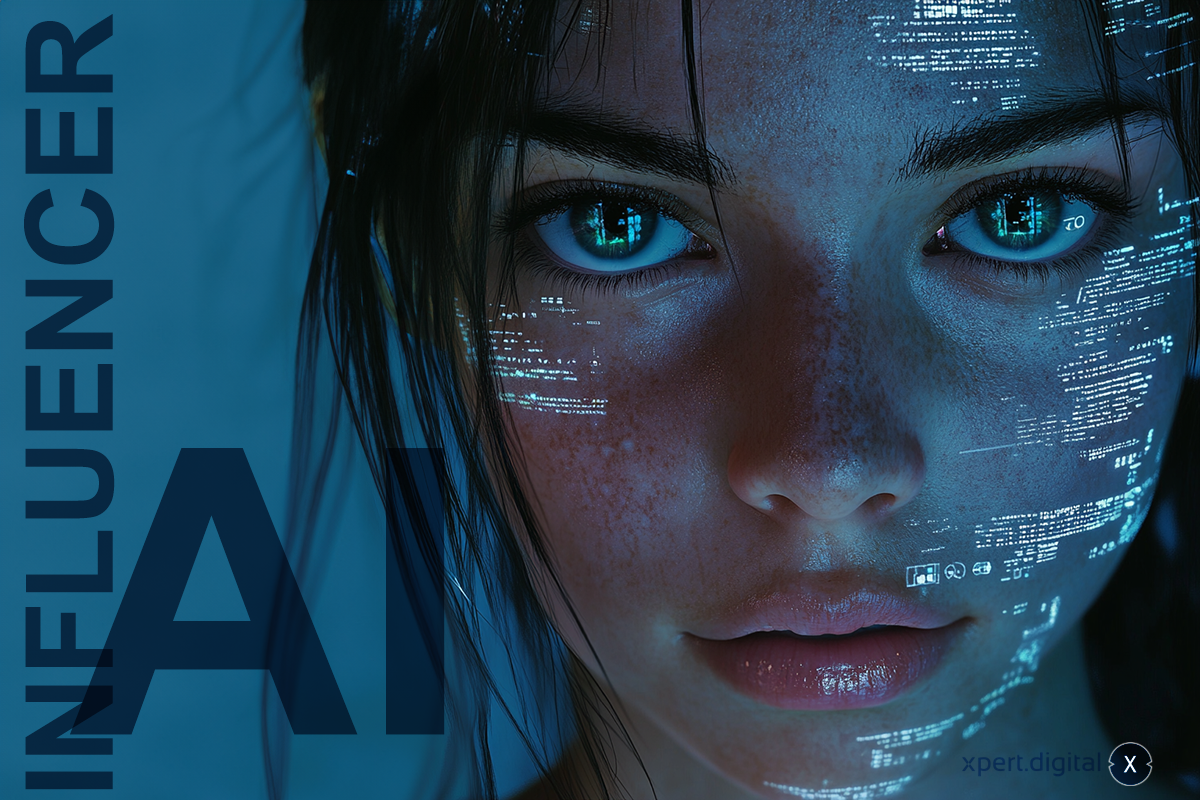
The rise of AI influencers – Virtual stars conquer the digital stage – Image: Xpert.Digital
🎭 The rise of AI influencers: Will virtual personalities dominate the future of advertising?
🌐✍️ Did you know that 58% of US consumers follow virtual influencers? Virtual personalities like Lil Miquela are taking over social media, offering brands consistent and perfectly tailored interactions that align with brand values and minimize risk. But what does this mean for the future of influencer marketing, and can the human touch truly be replaced by artificial intelligence?
🌟 The Emergence of Virtual Influencers
In recent years, virtual influencers like Lil Miquela, Shudu, and Imma have built an impressive presence on social media. These digital avatars are the product of advanced computer graphics and AI technologies that make it possible to create hyper-realistic characters capable of interacting with their audience as if they were real people.
🏢 Advantages for brands
AI-generated influencers offer numerous advantages for brands. They are completely controllable, which minimizes the risk of scandals or unforeseen PR problems. "Virtual influencers are always available, make no mistakes, and can be precisely tailored to optimally engage the target audience," say marketing experts. Furthermore, they can work around the clock and adapt content for different languages and cultures.
👥 The fascination of consumers
Despite their artificial origins, virtual influencers have built a loyal following. Many consumers are fascinated by the technology and follow these avatars out of curiosity and interest in innovation. Interacting with virtual personalities offers a new experience that differs from traditional influencer interaction.
⚖️ Ethics and Authenticity
However, there are also critical voices. A key argument against virtual influencers is the question of authenticity. "Can an artificial personality truly build authentic connections with its audience?" skeptics ask. Furthermore, there are ethical concerns regarding transparency and deception, especially when consumers are unaware that they are interacting with an AI.
Related to this:
🤝 The human factor
Despite the impressive capabilities of AI influencers, the human touch remains a crucial factor. Real influencers bring personal experiences, emotions, and a unique personality that are difficult to replicate. "The ability to convey genuine human emotions remains a human domain," experts emphasize. People crave real connections and authenticity, which may not be entirely replaced by virtual avatars.
🔮 The future of influencer marketing
It is likely that both human and virtual influencers will coexist in the future. Brands could employ hybrid strategies, leveraging both the authenticity of human influencers and the control and precision of virtual personas. Technology will continue to evolve, and the boundaries between reality and virtuality could become even more blurred.
🔍 A look at current examples
Lil Miquela
Lil Miquela, whose full name is Miquela Sousa, is one of the most famous virtual influencers and was created in 2016 by the Los Angeles-based company Brud. She is a digital avatar with an Instagram profile that had approximately 2.7 million followers as of December 2023. Lil Miquela is known for her realistic appearance and avant-garde style and has gained recognition through collaborations with renowned fashion brands such as Prada, Calvin Klein, and Chanel.
In addition to her modeling career, Lil Miquela has also launched a music career. Her debut single, "Not Mine," was released in 2017, followed by other songs such as "You Should Be Alone" and "Hate Me." Her musical style blends house and pop. Miquela also uses her platform to address social issues such as inclusivity and LGBTQ+ rights.
A notable moment in her career was her participation in a Calvin Klein campaign in 2019, in which she appeared alongside human influencer Bella Hadid. This campaign generated significant buzz on social media. Despite her digital background, Lil Miquela has cultivated strong brand loyalty and regularly collaborates with major brands.
Shudu
Shudu is a virtual influencer and is considered the world's first digital supermodel. She was created in April 2017 by British fashion photographer Cameron-James Wilson. Shudu is known for her realistic appearance and stunning beauty, inspired by the "Princess of South Africa" Barbie doll.
Shudu has quickly gained significant attention in the fashion world. She has collaborated with luxury brands such as Balmain, Oscar de la Renta, and Fenty Beauty. Her appearance in a Fenty Beauty campaign caused a stir, as many people didn't immediately realize she was a computer-generated model.
The creation of Shudu has also sparked controversy, particularly because she was created as a Black woman by a white man. Critics argue that this could negatively impact real-world opportunities for Black models. However, Cameron-James Wilson emphasizes that Shudu is not intended to replace real models, but rather to stimulate discussion about technology in the fashion industry.
Shudu's success demonstrates the potential of virtual influencers in the fashion and beauty industry. They offer innovative ways to showcase products and tell stories, which is particularly important in an increasingly digital world.
Blawko
Blawko, also known as Blawko22, is a virtual influencer and digital model created in 2016 by the company Brud. This company is also behind other well-known virtual influencers such as Lil Miquela and Bermuda. Blawko is characterized by his distinctive streetwear style, tattoos, and a mask that covers the lower half of his face, contributing to his mysterious persona.
He describes himself as a "digital model and sex symbol" and has gained popularity on social media platforms such as Instagram and YouTube. On Instagram, he shares photos showcasing his streetwear outfits from brands like Balenciaga, Supreme, and Vetements, often accompanied by other virtual influencers. His YouTube channel offers content about his life as a virtual character and provides advice on relationships and fitness.
Blawko's creation was part of a broader trend in virtual influencers, where digital personas are designed to mimic human influencers in terms of engagement and brand partnerships. These virtual models are crafted with specific personalities and styles to attract followers and secure marketing deals with major brands. Despite his digital nature, Blawko has collaborated with renowned fashion brands such as Off-White and Balenciaga and appeared in campaigns for companies like Glossier Skincare.
His enigmatic presence is further emphasized by his refusal to show his full face, which piques the curiosity of his audience. This element of mystery is part of what makes him so appealing as a digital influencer.
Bermuda
Bermuda is a virtual influencer and digital model who redefines influencing in the world of social media and technology. Based in Los Angeles, California, she is known for her charismatic and intelligent presence on platforms such as Instagram, TikTok, and YouTube. Bermuda presents herself as a multifaceted personality with interests ranging from fashion and music to fitness. She is known for her striking outfits and controversial behavior, which often attracts attention.
Bermuda is particularly known for her controversial views, including support for Trump and climate change denial, which has garnered her international attention. She has a close connection to other virtual influencers such as Lil Miquela and Blawko22, with whom she was briefly a couple. However, their relationship ended due to personal differences.
A notable scandal in Bermuda's career was the revelation of Lil Miquela's identity as a virtual persona before Miquela herself made it public. This incident caused considerable publicity and contributed to the fame of both influencers. Bermuda also uses her platform to showcase her musical talents, comparing herself to stars like Britney Spears.
Bermuda has managed to build a large following through her provocative content and unique style, and remains an influential figure in the digital world.
🚀 Technological innovations are driving the trend
With advances in artificial intelligence and computer graphics, virtual influencers are becoming increasingly realistic and interactive. The development of deepfake technologies and machine learning makes it possible to create avatars that can convincingly mimic human facial expressions and gestures.
"The technology behind virtual influencers is constantly improving, which increases their acceptance and effectiveness," explain industry insiders. This is leading to greater investment by companies in this area, as they recognize the potential to revolutionize their marketing strategies.
⚠️ Challenges and Concerns
Despite the advantages, there are challenges that cannot be ignored. The question of authenticity and trust is paramount. Consumers could feel deceived if they discover that an influencer is not real. Furthermore, there are legal and ethical questions regarding the use of AI in advertising and the need to clearly inform consumers.
Related to this:
📝 The role of regulation
There is a need to develop clear guidelines and regulations to ensure transparency and prevent abuse. Regulatory bodies could intervene to ensure that virtual influencers adhere to the same advertising standards as their human counterparts.
🔗 Technology and human interaction are increasingly merging
The integration of AI into influencer marketing is more than a passing trend. It reflects a larger movement in which technology and human interaction are increasingly merging. While virtual influencers offer exciting opportunities, it remains crucial to recognize and preserve the value of human connections.
The human touch cannot simply be replaced by technology. Emotions, empathy, and personal experiences are aspects that make people unique. In an increasingly digital world, this very humanity could be the decisive factor that fosters genuine relationships and trust.
⚖️ Balance between virtual and human influencers
The coming years will show how the balance between virtual and human influencers develops. It is up to brands, consumers, and society as a whole to decide how we use these technologies and which values we want to prioritize.
📣 Similar topics
- 🤖 The future of AI influencers: Virtual personalities in marketing
- 📈 Advantages of virtual influencers for brand strategies
- 🤔 Ethics in the digital age: Authenticity of AI avatars
- 👥 Human vs. Machine: The indispensable human factor
- 🌐 Hybrid Strategies: The Coexistence of AI and Human Influencers
- 🔍 Current examples: Success stories of virtual influencers
- 🚀 Technological advances and their impact on avatars
- ⚠️ Challenges and concerns in AI marketing
- 📜 The need for clear guidelines for virtual influencers
- 💡 The fusion of technology and human interaction
#️⃣ Hashtags: #VirtualInfluencers #ArtificialIntelligence #DigitalMarketing #Authenticity #TechnologicalInnovation
🎯🎯🎯 Benefit from Xpert.Digital's extensive, five-fold expertise in one comprehensive service package | BD, R&D, XR, PR & Digital Visibility Optimization

Benefit from Xpert.Digital's extensive, five-fold expertise in a comprehensive service package | R&D, XR, PR & Digital Visibility Optimization - Image: Xpert.Digital
Xpert.Digital possesses in-depth knowledge across various industries. This allows us to develop tailored strategies precisely aligned with the requirements and challenges of your specific market segment. By continuously analyzing market trends and monitoring industry developments, we can act proactively and offer innovative solutions. The combination of experience and expertise generates added value and provides our clients with a decisive competitive advantage.
More information here:
We are here for you - Consulting - Planning - Implementation - Project Management
☑️ Industry expert, here with his own Xpert.Digital industry hub featuring over 2,500 specialist articles

Konrad Wolfenstein
I would be happy to serve as your personal advisor.
You can contact me by filling out the contact form below or simply call me on +49 7348 4088 965 .
I'm looking forward to our joint project.
Write to me


Xpert.Digital - Konrad Wolfenstein
Xpert.Digital is a hub for industry focusing on digitalization, mechanical engineering, logistics/intralogistics and photovoltaics.
With our 360° Business Development solution, we support renowned companies from new business to after-sales.
Market intelligence, smarketing, marketing automation, content development, PR, mail campaigns, personalized social media and lead nurturing are part of our digital tools.
You can find more information at: www.xpert.digital - www.xpert.solar - www.xpert.plus
Keep in touch