
$140 million for the hall expansion in Fort Worth, Texas: How Hillwood and AllianceTexas benefit from AI and industry
Xpert Pre-Release

Available in 27 languages 📢
Prefer Xpert.Digital on GoogleⓘPublished on: November 3, 2026 / Updated on: November 3, 2026 – Author: Konrad Wolfenstein
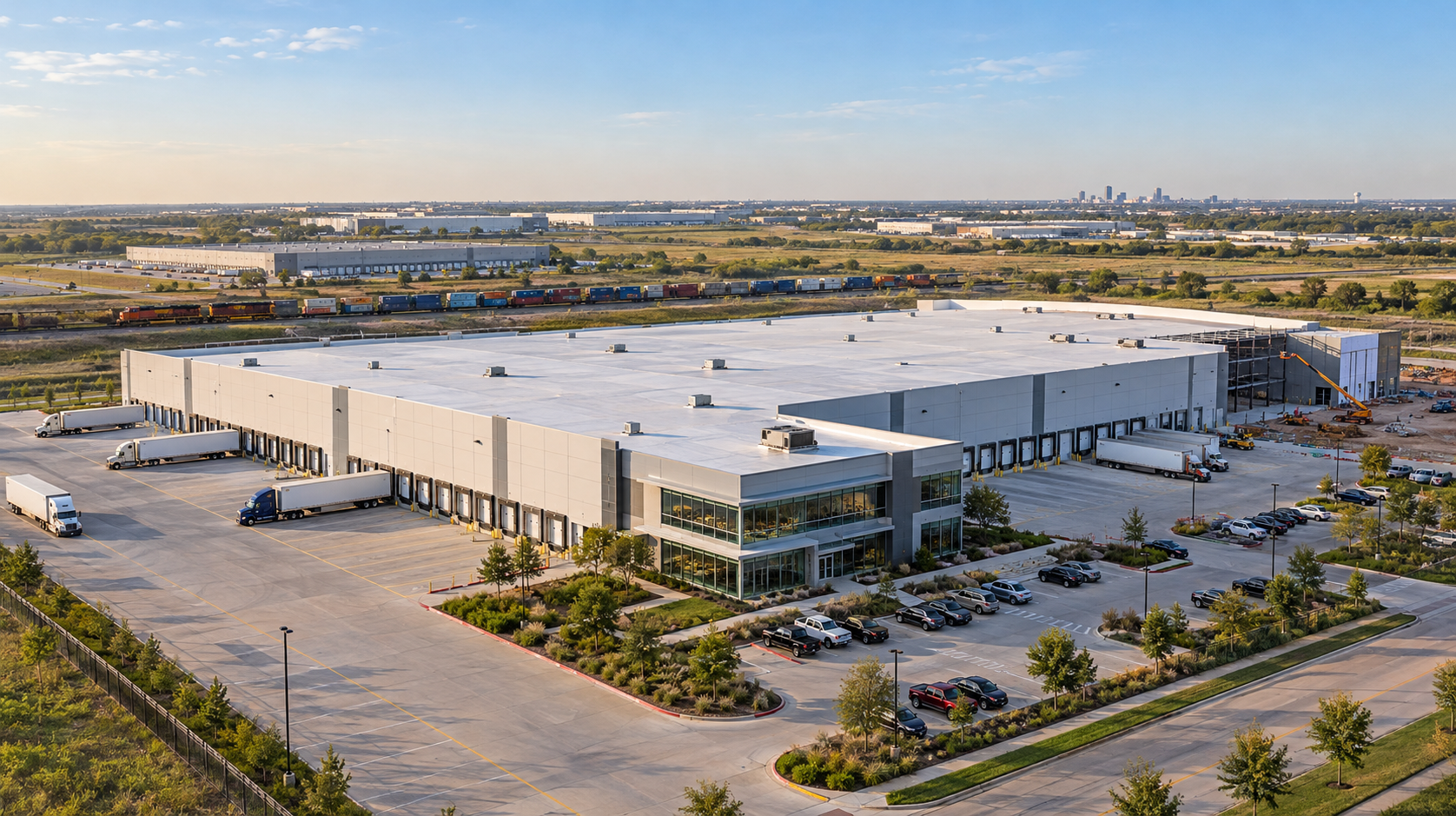
$140 million for the arena expansion in Fort Worth, Texas: How Hillwood and AllianceTexas benefit from AI and industry – Creative image on the topic, with AI: Xpert.Digital
AI needs logistics: Why Fort Worth is becoming an important industrial location
Industrial boom in Texas: How much growth is really behind the expansion?
Logistics, manufacturing, AI: This is what makes AllianceTexas attractive for companies
An investment of approximately $140 million in Fort Worth raises a bigger question than simply the need for additional warehouse space: How will the American industrial landscape change as logistics properties evolve into interconnected hubs for goods transport, manufacturing, and digital control? Hillwood's Alliance Center North 4 project is located in AllianceTexas, one of the region's most significant industrial and logistics centers. Here, road, rail, and air freight converge with a growing network of businesses and service providers. At the same time, the site is gaining industrial importance through the production of components for AI systems.
However, the announced investment cannot simply be interpreted as a massive new building or as evidence of a specific high-tech use. The project area, existing buildings, and actual expansion must be distinguished from one another. The size of the investment alone does not indicate whether the project is economically viable. Crucial factors are the specific use, the technical equipment, long-term demand, and whether the location can permanently secure its advantages in terms of transportation and workforce. Alliance Center North 4 thus demonstrates how closely logistics, industry, and AI are now intertwined – and why an industrial boom does not automatically guarantee the success of every project.
AllianceTexas: The price of the industrial boom: No AI miracle without logistics
Hillwood's planned investment of approximately $140 million in Alliance Center North 4 in Fort Worth represents a fundamental shift in the American industrial landscape. Logistics properties are no longer merely storage areas for goods. They are evolving into tightly networked business centers where distribution, production preparation, technical services, administration, and digital control converge. AllianceTexas demonstrates particularly clearly how a high-performance transportation infrastructure can give rise to a regional economic system that now also benefits from manufacturing for artificial intelligence.
The economic significance of the project therefore lies less in a spectacular construction sum than in the question of what operational performance this capital investment will enable. More space alone does not automatically create higher productivity. Crucial factors are suitable uses, reliable transport links, available labor, and an infrastructure that keeps pace with increasing industrial complexity. Ultimately, a successful location must be measured by whether its growth is sustainable in the long term or merely generates the next wave of rising land prices and specialized real estate.
This specific case requires an important clarification: The large-scale expansion of Alliance Center North 4 cannot simply be equated with a correspondingly large extension. A clear distinction between investment volume, project area, and existing building size reveals a more economically attractive undertaking than a typical warehouse expansion. The focus is on upgrading an existing property within an already highly developed industrial and logistics cluster.
Expansion is not the same as addition
The Alliance Center North 4 project at North Beach Street is estimated to have a volume of US$140 million. The total area under development is approximately 371,160 square feet, equivalent to about 34,482 square meters. Within this project scope, 55,000 square feet, or approximately 5,110 square meters, are designated for offices, break areas, and conference rooms across two floors. The architectural firm GSR Andrade Architects is responsible for the design. The project timeline is from March 10 to November 30, 2026.
The building, constructed in 2023, has a floor area of approximately 614,640 to 615,694 square feet, or roughly 57,100 to 57,200 square meters, depending on various area calculations. The project area thus theoretically corresponds to about 60 percent of the existing building's floor area. However, this comparison initially only describes the order of magnitude of the area being worked on. It does not prove that the building's outer envelope will increase by this amount.
As early as 2024, an available area of 371,327 square feet within the existing building is documented. This is remarkably close to the current project size. At the same time, the project description refers to the work as a user-specific expansion on the western side of the existing building envelope. Therefore, simply adding the existing and project areas together would not be reliable. A more appropriate classification is as a substantial expansion with functional enhancements; a spatial increase to the full extent mentioned remains unconfirmed. Likewise, the planned completion date should not be confused with the fact that the project has already been completed.
A construction cost that requires explanation
The investment amount warrants a sober assessment. Dividing 140 million US dollars by the stated project area yields approximately 377 US dollars per square foot or roughly 4,060 US dollars per square meter. These figures are initially only budget ratios. They are neither verified costs for a typical warehouse shell construction nor sufficient evidence of specific technical specifications.
Such a breakdown can highlight the unique aspects of a project, but it cannot explain its cost structure. For that, it would be necessary to know exactly which items are included: structural modifications, building services, fire protection, utilities, interior finishing, landscaping, planning services, or reserves. Without this breakdown, it would be irresponsible to infer from the total construction cost whether the project is a highly automated factory, a data center, or has a specific industrial use.
Economically, a clear assessment can nevertheless be derived. The greater the capital investment within an existing property, the more important the duration of its use and the reusability of the fixtures become. A company can justify an extensive expansion if it results in more stable production processes, faster goods movements, or reduced downtime risks. However, the same value for the owner arises only to the extent that these advantages translate into reliable income or sustainably improved marketability. Business benefits and property value are linked, but not identical.
Location as a factor of production
AllianceTexas encompasses approximately 27,000 acres, or roughly 109 square kilometers. Developed over decades, this area in the northern part of the Fort Worth metropolitan area combines industry, logistics, offices, retail, and residential spaces. Its economic strength stems not solely from its size, but from the combination of diverse functions within a cohesive spatial context.
The site connects Perot Field Fort Worth Alliance Airport, which focuses on industrial and freight traffic, with the BNSF intermodal terminal and key road links. It also offers access to the air and ground networks of major parcel delivery services, as well as connections to two major railroads, BNSF and Union Pacific. This infrastructure provides businesses with numerous options for organizing the flow of goods based on cost, time, and urgency.
This results in a locational advantage that goes beyond simply being close to the nearest highway. A property can be more cost-effective from a business perspective, even if its rent is higher, if it reduces turnaround times, requires less intermediate storage, or facilitates short-term transport changes. The entire process chain is crucial. Therefore, the lowest rent per square meter is not a reliable indicator of the most economically advantageous business location. At its core, AllianceTexas sells not just buildings, but access to an already established logistics and industrial network.
Multimodality does not eliminate friction losses
The integration of air, rail, and road transport is a significant advantage, but no guarantee of seamless operations. Every change of transport mode creates interfaces. Containers must be transferred, transport schedules coordinated, documents processed, and time slots adhered to. Therefore, an economically viable multimodal infrastructure is characterized not by the sheer number of transport options, but by the reliable functioning of its transitions.
In 2024, the BNSF terminal recorded more than 1.1 million handling operations involving the loading and unloading of cargo units. This scale illustrates why even small improvements at the interfaces can be significant. Shortening routes or reducing waiting times affects not only individual journeys but also recurring processes for numerous companies. However, concrete savings can only be derived once travel times, volumes, capacity utilization, and additional operating costs are known.
This is where the Alliance Logistics District comes in. A planned private heavy-load bridge, with an investment volume of US$20 million, is intended to connect approximately 15 million square feet of industrial space more directly to the intermodal terminal. The economic rationale is to improve operational connections within the cluster and relieve congestion on public roads. However, the anticipated benefits remain theoretical until reliable operational data is available. Furthermore, for Alliance Center North 4, a distinction must be made between a general locational advantage and the concrete, proven utilization of this connection.
A stronger market remains selective
The development of Alliance Center North 4 falls within an industrial real estate market where demand picked up noticeably in 2026. For Dallas-Fort Worth, total vacancy rates in the third quarter were reported to be between approximately 7 and just over 8 percent, depending on the market definition. At the same time, different surveys yield significantly divergent figures for available space and net absorption. These discrepancies preclude combining arbitrary key figures into a seemingly uniform data set.
A consistently analyzed dataset for the third quarter of 2026 shows approximately 22.7 million square feet of leasing activity and 13.9 million square feet of positive net absorption. Net absorption refers to the change in the total occupied space. It is not the same as total leasing revenue because lease renewals or relocations between existing buildings do not automatically generate additional space demand.
This distinction is crucial for evaluating an investment project. High completion rates can indicate a vibrant market, while some activity simply reflects the redistribution of existing space. Conversely, positive net absorption demonstrates that, overall, more space is being utilized. Nevertheless, the success of an individual property is not determined by the regional average. Location, building quality, power supply, divisibility, and user requirements remain decisive factors. A strong market can facilitate a sound investment, but it does not automatically make an unsuitable property profitable.
Large buildings, different risks
The breakdown by building size is particularly revealing. In the market segment under consideration, vacant and simultaneously available rental space in buildings of 500,000 square feet and above recently amounted to only 1.9 percent of the corresponding stock. For the size category between 150,000 and 499,999 square feet, however, a vacancy rate of 10.1 percent was reported. These are not entirely identical metrics, which is why a direct comparison must be made with caution.
Nevertheless, a fundamental connection becomes apparent: Large, contiguous industrial sites can be scarce, even though considerable space reserves exist elsewhere. For a user who needs to organize large quantities of goods, complex material flows, or multiple operational functions under one roof, smaller available units are not a complete substitute.
Alliance Center North 4 as a whole exceeds the 500,000 square foot threshold, while the developed portion of the building falls below it. This example alone demonstrates how easily a blanket classification can be misleading. The decisive factor is whether a user requires the entire building or only a specific area, and what operational dependencies arise from this. A large warehouse structure can facilitate flexible partial leasing. Conversely, a highly specialized fit-out can limit this flexibility. Therefore, size alone is neither a quality indicator nor a guarantee against vacancies.
Offices are changing the hall economy
The planned office, meeting, and social areas comprise approximately 14.8 percent of the stated project area. This percentage should not be applied to the entire building without further scrutiny. However, it demonstrates that the project goes beyond simply providing storage space and spatially integrates different work functions.
In modern industrial and logistics operations, it's not just goods that require space. Planning, quality assurance, technical support, training, customer communication, and operations management also need to be integrated into the processes. By arranging these functions effectively, communication channels can be shortened. Problems on the operational floor can be resolved more quickly when the responsible teams are not geographically and organizationally separated.
At the same time, integration incurs additional costs. Office spaces have different requirements for climate control, acoustics, daylight, accessibility, and overall quality of stay than warehouse areas. They require capital and space that are not immediately available for handling goods or production. Their economic value must therefore stem from improved processes, greater reliability, or a more attractive work environment. A multifunctional property is not automatically more efficient. It only becomes so when its spatial organization aligns with the actual operational structure.
AI creates physical value chains
AllianceTexas's technological focus is particularly evident in its partnership with Wistron. The Taiwanese electronics company announced a $761 million investment package for two sites in 2025. Together, the properties comprise nearly 1.1 million square feet. More than $580 million was earmarked for the main site on Heritage Parkway, and more than $181 million for the site on Mobility Way. The initial employment target was more than 800 full-time positions.
These figures do not describe a typical warehouse development. They represent the establishment of manufacturing and testing capacities within the supply chain for AI systems. At the same time, it would be incorrect to treat all investments as purely construction expenditures. The budgets encompass various components, including property acquisition, structural improvements, and, in some cases, operational equipment. Furthermore, no connection to Alliance Center North 4 can be inferred from these figures.
The broader economic context, however, is clear: Artificial intelligence requires not only software developers and data centers, but also component manufacturing, system assembly, testing processes, packaging, spare parts supply, and transportation. A logistics cluster can therefore benefit from the expansion of AI without itself being primarily a data center. This intermediate industrial level is frequently underestimated in public debate. It connects digital demand with concrete investments in buildings, technical equipment, and skilled labor.
Your intralogistics experts

Consulting, planning and implementation of complete solutions for high-bay warehouses and automated storage systems - Image: Xpert.Digital
More information here:
Strategies for strengthening regional supply chains
Between announcement and ongoing production
In July 2026, Wistron announced the opening of its approximately 324,000-square-foot D1 factory in Fort Worth. At that time, more than 500 jobs had been created; the goal was to expand to 1,000 positions by the end of the year. The factory produces assemblies for Nvidia systems and prepares for future product generations. With this, the industrial development is no longer just a location announcement, but has reached an operational stage.
The original target figures from 2025 and later figures cannot simply be added together. Investment frameworks, employment targets, reporting dates, and site definitions may differ. The fact that a later report specifies a different financial framework for the plant does not, without further analysis, permit either the conclusion of a reduction or the assumption of an additional investment. The crucial factor is the comparability of the reference figures.
Equally important is the technological distinction. The assembly and testing of AI hardware is neither the same as manufacturing semiconductors on silicon wafers nor as the continuous operation of a data center. Accordingly, energy requirements, spatial structure, personnel profiles, and transportation needs differ. An industrial cluster gains in quality when it meaningfully combines these diverse activities, rather than categorizing every technology-related business under the same umbrella term.
Digitalization must solve operational problems
Wistron's manufacturing approach also demonstrates how closely digital and physical investments are intertwined. The plant's planning utilizes digital twins, i.e., virtual models of the facility and its processes. These models allow for the testing of layouts, assembly sequences, and work instructions before implementation in real-world operations. The economic benefit lies not in the vivid simulation itself, but in the ability to identify errors earlier and with less effort.
This results in a changed planning challenge for industrial properties. Buildings, material flow, and technical equipment should not be optimized sequentially if their interactions are significant. Later adjustments to pathways, utility connections, or testing areas can be more expensive than early, collaborative planning. Digital methods can support this coordination, but they do not replace reliable input data or practical experience.
Furthermore, no general guarantee of return on investment should be derived from individual technology examples. A faster simulation method does not automatically improve the entire operation proportionally. The crucial factor is whether an actual bottleneck is eliminated and whether the results are reliable in everyday practice. For a site like AllianceTexas, the greatest benefit arises where software, building technology, and operational processes work together to enable faster throughput times, less waste, or more reliable delivery.
Proximity to a location does not mean complete self-sufficiency
The establishment of AI manufacturing in Texas aligns with a stronger regional anchoring of industrial value creation. Companies are striving to make supply chains more resilient and to bring key manufacturing stages closer to sales markets and customers. A location with international transport connections and existing industrial infrastructure offers better conditions for this than an isolated area where the entire surrounding environment would have to be built from scratch.
However, this does not guarantee complete economic independence. Electronics manufacturing remains dependent on numerous specialized intermediate products, machinery, and international supply chains. Final assembly in the USA can reduce certain dependencies while maintaining others. Therefore, from an economic perspective, it is essential to examine which stage is actually being relocated and what contribution it makes to security of supply.
The cost perspective also remains a double-edged sword. Shorter or more easily controlled supply chains can justify higher direct production costs if disruptions would be particularly expensive. Conversely, regional concentration can create new shared risks, for example, regarding power supply, weather events, or skills shortages. The economically viable strategy lies not in maximum concentration or maximum globalization, but in a deliberately designed combination of efficiency, contingency plans, and manageable dependencies.
Why clusters attract further capital
AllianceTexas benefits from a self-reinforcing relationship. Existing businesses create demand for transportation, maintenance, staffing, and technical support. This demand makes it easier for specialized service providers to establish themselves locally. Their presence, in turn, makes the location more attractive to other businesses. In economics, this mechanism is known as the agglomeration advantage: geographical proximity can increase the productivity of multiple stakeholders simultaneously.
This isn't just about suppliers. A larger labor market can also generate advantages, because employees can move between employers and companies can more easily find suitable qualifications. Knowledge spreads through personnel transfers, shared service providers, and professional networks. This reduces some of the initial uncertainty for new investors.
However, this same mechanism can reverse itself. If many companies simultaneously require the same skilled workers, construction services, or network connections, costs and waiting times increase. Therefore, prime locations must continuously invest in their own infrastructure. Yesterday's success is insufficient if transport routes are congested, housing becomes unaffordable, or qualified workers are lacking. The key development challenge lies in preserving the advantages of spatial concentration without ignoring its growing burdens.
Three decades of economic intensification
Long-term location figures illustrate the scale of the impact. By the end of 2024, AllianceTexas had generated approximately $130 billion in cumulative economic impact. At that time, private investment amounted to roughly $15.2 billion, and direct jobs totaled 66,269. This means that the earlier figures of more than $14 billion in private capital and over 66,000 jobs are now historically accurate and insufficient for a current assessment.
For the period up to the end of 2025, the projected cumulative economic impact was US$142.9 billion, with US$16.71 billion in private investment and 73,134 direct jobs. A total of 602 companies were located there. The developed office, retail, and industrial space reached 64.7 million square feet. Compared to the previous year, the reported direct employment thus increased by 6,865 jobs, or approximately 10.4 percent.
This development underscores the importance of the entire site, not the isolated impact of the expansion of Alliance Center North 4. The total area also encompasses diverse uses and should not be interpreted as mere warehouse space. Rather, the economic outcome is the densification of a mixed-use economic area: logistics forms a crucial foundation, but is complemented by manufacturing, services, and other industries. This mix can broaden demand and reduce dependence on individual business models.
How to correctly interpret major effects
The modeled annual economic impact of AllianceTexas in 2025 was approximately $12.9 billion. This figure is distinct from the cumulative effect of $142.9 billion over decades. Nor should it be equated with corporate profits, municipal revenues, or directly observable property values.
Regional impact assessments capture economic relationships that can extend beyond the immediate activity of a single location. These include inputs from other companies and additional demand resulting from labor income. Such models are helpful in visualizing the magnitude of these effects. However, they do not replace an examination of what portion of the activity would have occurred elsewhere in the same region without the project. Gross impact and actual additional benefit are not the same.
A separate model calculation for 2024 puts AllianceTexas' contribution to Texas' gross domestic product at $16.3 billion and the direct and indirect jobs at 136,780. This does not automatically contradict the regional location figures, because the spatial boundaries, model, and reference value differ. However, the values should neither be added together nor used to mutually confirm a single, precise effect. An analysis is only convincing from a professional standpoint if it highlights such differences instead of simply juxtaposing the largest possible figures.
Public infrastructure is not a free lever
Private investments of US$16.71 billion are offset by approximately US$1.60 billion in public investments by the end of 2025. These include roads, schools, and other infrastructure. The ratio of roughly ten to one illustrates that private capital represents by far the larger share of the reported investment stock. However, it does not prove that every public dollar generated ten private dollars.
For public authorities, the crucial question is whether additional tax revenue and societal benefits justify the overall costs. This includes not only one-time construction costs, but also maintenance, traffic management, security, and providing for a growing population. Potential tax breaks are also a factor. These are just as economically relevant as direct expenditures because they represent a foregoing of revenue.
For 2025, approximately $366.5 million in property taxes are projected to be paid; cumulatively, since 1990, this figure is about $4.55 billion. This magnitude underscores the fiscal importance of the location. However, a municipal return on investment cannot be derived from this alone. Different time periods, recipients of payments, and types of expenditures must be considered before a net assessment can be made. Furthermore, because AllianceTexas affects multiple municipalities, counties, and school districts, the distribution of revenue and associated costs must be taken into account: revenues and associated costs are not necessarily incurred in the same location.
Employment needs more than just warehouses
The 73,134 direct jobs projected for the end of 2025 represent a significant portion of AllianceTexas' economic importance. However, this number alone reveals little about qualifications, wages, working hours, and long-term stability. A more nuanced assessment requires considering these factors. A job in automated electronics manufacturing demands different skills than one in manual order picking or technical maintenance.
Automation is changing the relationship between land growth and employment. Larger or more efficient facilities can move more goods without requiring a proportional increase in staff. At the same time, new tasks arise in control systems, maintenance, software integration, and quality assurance. Therefore, it would be incorrect to apply a general job allocation key to the project area of Alliance Center North 4. No reliable employment figures are available for this specific project.
The long-term success of a location depends primarily on whether workers can be recruited and qualified for the changing tasks. This includes professional development, technical training opportunities, and accessible workplaces. A modern factory loses value if personnel are only available at high additional costs or if long commutes make staffing difficult. Securing skilled workers is therefore not merely a social policy measure, but an integral part of industrial cost and productivity calculations.
Housing is included in the industrial calculation
The interplay between commerce and urban development is evident in projects like North City. Initially, the project, developed by Steve McKeever, was envisioned with a budget of approximately one billion US dollars and a development area of 148 acres. Later reports described a broader scope of roughly 300 acres and 1.1 billion US dollars. These figures are not directly comparable due to the differing spatial and temporal boundaries. By the beginning of 2026, construction had already begun on two of the three planned residential complexes.
The economic connection lies in the expansion of housing, restaurants, leisure activities, and services within a growing employment area. Such offerings can enhance the attractiveness of the surrounding area and absorb some of the additional demand. However, it would be too simplistic to interpret North City solely as a consequence of a single logistics project or as a residential location only for its employees. Population growth, regional purchasing power, and independent real estate strategies also play a role.
Ultimately, what matters to companies is whether the housing options match the incomes and life circumstances of their employees. High-quality leisure facilities don't solve the shortage of affordable housing. Likewise, geographical proximity doesn't automatically guarantee good accessibility across all social classes. A viable industrial cluster must therefore consider housing and mobility together. Otherwise, the location's success will backfire, resulting in cost problems: longer commutes, higher wage demands, and more difficult recruitment.
Growth does not proceed at the same rate everywhere
The economic dynamism of AllianceTexas should not be confused with a uniform expansion across all sectors. Air freight provides a counterexample. The recorded cargo weight at the airport fell from approximately 824.3 million pounds in 2022 to 628.7 million pounds in 2024. This represents a decline of roughly 23.7 percent. While this development does not negate the long-term strength of the location, it does limit sweeping statements about continuously increasing activity across all modes of transport.
A mixed economic area can grow overall, even if individual segments weaken temporarily. Companies change transport routes, inventories, and production structures. Therefore, the utilization of an airport, a rail terminal, and a warehouse does not necessarily have to be parallel. For investors, this differentiation is more important than simply repeating a general growth story.
Construction activity also demands attention. New spaces improve the supply, but can later compete with existing properties for tenants. Specialized expansions, in particular, must therefore be protected against the risk of technological obsolescence and changing demand. A location that is attractive in the long term cannot prevent short-term problems with individual buildings. Conversely, a well-tailored expansion within an existing cluster can be economically viable even if the overall market still has significant vacancies.
Energy and adaptability are key
With more demanding industrial uses, the critical location factors change. Proximity to the highway remains important, but is insufficient if power connections, cooling, data connectivity, or security requirements are unsuitable for the intended use. For technically complex operations, the reliable availability of these services can become more important than the last savings on rent.
For Alliance Center North 4, a specific, high-performance use has not been demonstrated. Nevertheless, the general consequence for site development is clear: energy and utility supply must be considered early on. Retrofitting can be expensive or delay the start of production. Similarly, buildings must be economically adaptable to changes in use. Additional technical equipment creates value when needed; it can become a burden if it incurs high operating costs or restricts future users.
Ecological improvements should also be measured against the overall system. Shorter transport routes within a cluster or a sensible shift to rail can offer advantages. However, these must be weighed against energy consumption, land use, and additional commuting. The crucial question, therefore, is not whether a single component appears modern, but whether the combination of building, operation, and transport actually requires fewer resources while delivering the same performance. Measurable operational data is more convincing than general sustainability promises in this regard.
The economic test will come later
The objective perspective on Hillwood's $140 million project is therefore neither euphoria nor fundamental skepticism. The expansion is located in an established economic region with efficient transportation networks, growing industrial diversity, and a now operational link to the manufacturing of AI systems. These conditions can justify a significant capital investment if the specific use builds upon them in the long term.
However, the fact that rental terms, financing costs, and equipment details are not publicly available precludes a reliable return on investment calculation for Alliance Center North 4. Furthermore, future economic success should not be measured solely by on-time completion. Crucial factors would be sustainable occupancy rates, stable revenues, manageable operating costs, and the ability to adapt to changing user needs. Regional impact indicators alone cannot be used to derive a project return.
AllianceTexas thus represents a more sophisticated form of industrial real estate. It's not the largest possible building that wins, but rather the facility that most convincingly combines transportation, technology, labor, and organization. Capital requirements are increasing because universally usable shells are being transformed into high-performance components of industrial value chains. Whether this leads to lasting prosperity is not determined by the investment label. It depends on whether productivity increases faster than the costs of consolidation and whether the location can secure its economic success with a functioning regional environment.
Your global marketing and business development partner
☑️ Our business language is English or German
☑️ NEW: Correspondence in your native language!

Konrad Wolfenstein
I and my team are happy to be available to you as your personal advisor.
You can contact me by filling out the contact form here [email protected]:or simply call me at +49 7348 4088 965. My email address is
I'm looking forward to our joint project.