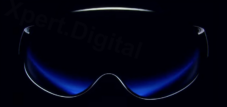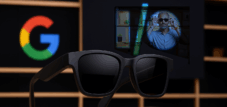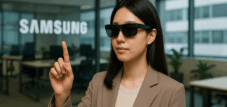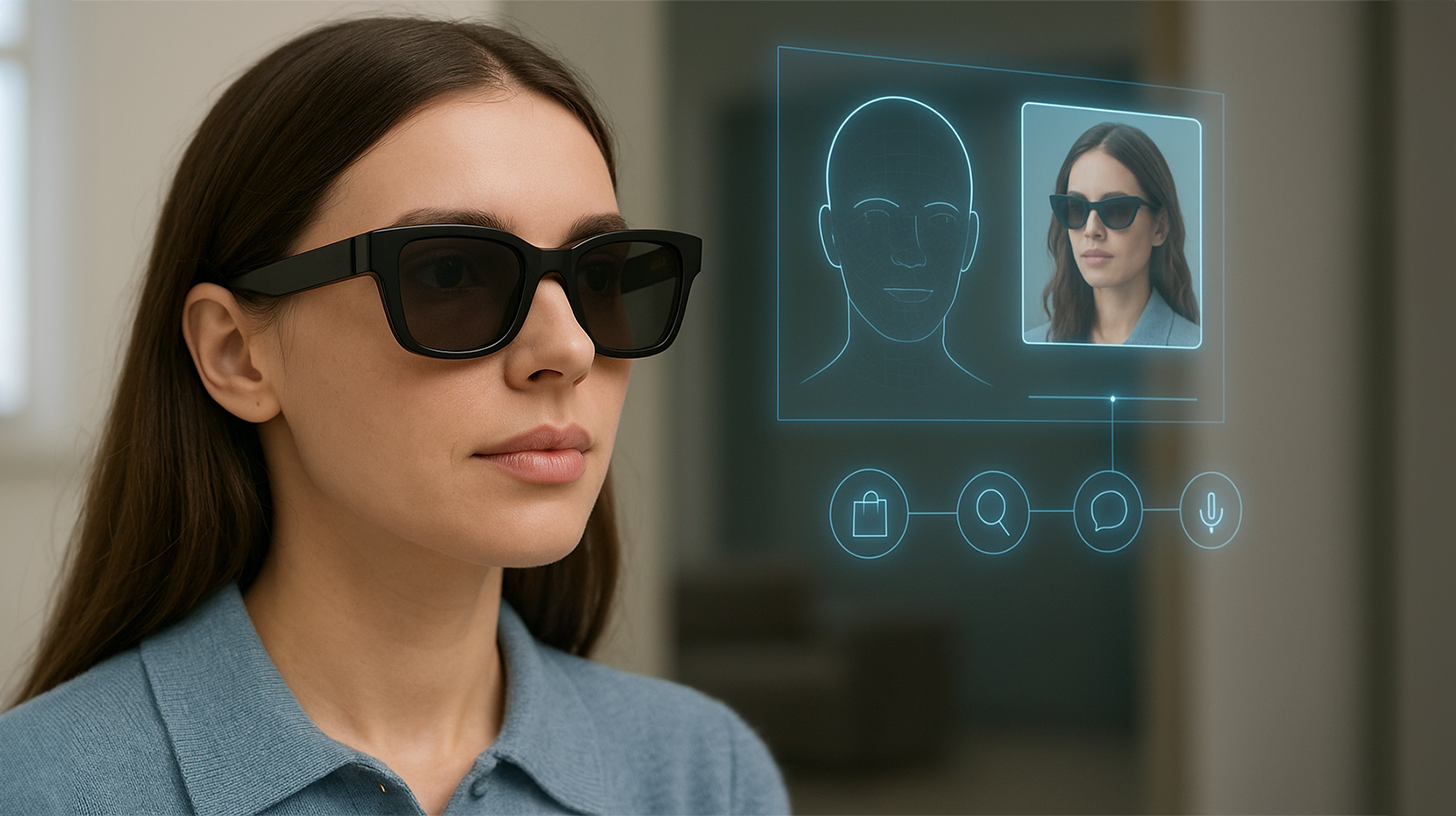
Augmented Reality: Kering Eyewear and Google are jointly developing AI-powered smart glasses – Creative image: Xpert.Digital
A new era of wearables: AI smart glasses from Google and Kerin
Google and Kering Eyewear: The future of smart glasses
The technology industry is experiencing a significant turning point in the development of smart glasses, as two industry leaders join forces for a groundbreaking project. Kering Eyewear, the eyewear division of the French luxury group Meta, announced a far-reaching partnership with Google in May 2025 to jointly develop AI-powered smart glasses. This collaboration not only marks Google's re-entry into the smart glasses market after the failed Google Glass project, but also represents a direct challenge to Meta's successful Ray-Ban collaboration. The planned glasses will combine Google's revolutionary Android XR platform with Kering Eyewear's renowned design expertise in the luxury segment, creating a new generation of wearable computers through advanced artificial intelligence.
Related to this:


The strategic partnership between Kering Eyewear and Google
The collaboration between Kering Eyewear and Google represents a strategically sound alliance that combines the complementary strengths of both companies. Founded in 2014 by Roberto Vedovotto, Kering Eyewear has established itself as a leading player in the luxury eyewear market, developing glasses for high-profile brands such as Gucci, Cartier, Saint Laurent, and Balenciaga. This expertise in high-quality design and luxury aesthetics perfectly complements Google's technological innovations in the field of augmented reality.
Roberto Vedovotto, founder, president, and CEO of Kering Eyewear, emphasized the strategic importance of this partnership: “We are honored to share Google’s values of innovation and forward thinking, and we are proud to collaborate with Google to explore new horizons for the future development of our company.” The collaboration aims to create a product “that people want to wear: masterfully designed, high-quality, and stylish eyewear that unlocks the potential of artificial intelligence while redefining how we interact with the real and virtual worlds.”.
Google's commitment to this partnership is underscored by Shahram Izadi, General Manager and VP of XR at Google: “We have always believed in combining cutting-edge technology with great user experiences. Integrating our immersive XR platform with Kering Eyewear's glasses will give consumers the fashion and functionality to get the most out of Android XR.” This statement highlights Google's strategy of combining technological excellence with marketable design to drive the mass adoption of smart glasses.
Android XR: Google's augmented reality platform
The core of the planned smart glasses is Google's Android XR operating system, officially unveiled in December 2024 and considered the spiritual successor to the discontinued Project Iris. Android XR is a fully-fledged extended reality operating system built on the Android Open Source Project (AOSP) and designed for both VR headsets and smart glasses. The platform supports established Google technologies such as ARCore, Android Studio, Jetpack Compose, Unity, and OpenXR, providing developers with a familiar working environment.
A key advantage of Android XR lies in the seamless integration of the extensive Android ecosystem, meaning a wide range of apps and applications will be available at launch. The platform has been specifically optimized for the altered display and input methods of XR devices, offering new interfaces designed for use on adapted screen shapes as well as innovative input methods.
Samsung is the first hardware partner for Android XR with Project Moohan, a mixed reality headset slated for release in 2025. This device, whose name means "infinity" in Korean, combines advanced displays, passthrough capabilities, and natural multimodal input methods and is described as a Vision Pro running on Android. In addition to Samsung, Google is collaborating with hardware partners such as Lynx, Sony, and Xreal, which utilize Qualcomm's hardware platform, as well as with Magic Leap through a partnership established in May 2024.
Related to this:
Technical features and AI integration with Gemini
The planned smart glasses from Kering and Google will offer revolutionary functionalities through the deep integration of Google's Gemini 2.0 AI model. The glasses will be equipped with intuitive, personalized, AI-powered features that will allow users to "engage with their environment in new and meaningful ways." This contextual intelligence represents a fundamental advancement over previous smart glasses, which often functioned more as Bluetooth accessories than as true assistive systems.
The glasses' technical features include a camera, multiple microphones, open speakers above the ear, and an optional in-glass display. By combining these sensors, the Gemini AI can analyze visual and auditory impressions in real time, recognize environments, translate conversations, and perform complex tasks solely through voice commands and contextual understanding. At the I/O conference, Google demonstrated various application scenarios, including turn-by-turn navigation directly in the field of vision, contextual responses to questions about objects and locations, real-time speech translation, and taking photos and sending messages via voice command.
A particularly innovative feature is Gemini's ability for context-aware memory and object recognition. The AI can remember where items like keys have been placed and assist in finding them. Furthermore, Gemini can help repair objects or provide live translations with subtitles during conversations with people who speak a different language. These functionalities are enabled by connecting the glasses to a smartphone, allowing apps to be opened without having to take the phone out of a pocket.
Market positioning and competition
The Kering-Google partnership strategically positions the company in an increasingly competitive smart glasses market dominated by Meta's successful Ray-Ban collaboration. Meta has achieved remarkable success with its Ray-Ban Meta smart glasses: sales tripled in 2024, with over one million units sold this year and a total of two million since the October 2023 launch. Monthly active users have quadrupled year-over-year, while voice command usage is growing even faster.
The collaboration between Kering and Google is explicitly described as a "clear affront to Meta's collaboration with Ray-Ban" and represents a direct attempt to challenge Meta's market leadership. While Meta has already announced plans to launch new smart glasses products in 2025, including Oakley glasses and a higher-priced product with a heads-up display, Google is focusing on combining luxury design with advanced AI integration.
Google is addressing a key weakness of previous smart glasses projects: everyday acceptance. By collaborating with renowned design brands like Kering Eyewear, as well as Warby Parker and Gentle Monster, the company aims to combine "technical functionality with wearable aesthetics." This strategy seeks to overcome the hurdle that caused many predecessors to fail, including the original Google Glass project.
Industry context and further partnerships
Google is pursuing a comprehensive partnership strategy that extends beyond the Kering collaboration and includes a broad network of manufacturers and design companies. In parallel to the Kering partnership, Google has entered into a significant agreement with the optical chain Warby Parker, under which Google will provide up to $75 million for product development and marketing costs and invest an additional $75 million in the company. This partnership aims to combine multimodal AI, which simultaneously captures text, audio, video, and images, with prescription and non-prescription lenses.
Dave Gilboa, Co-CEO of Warby Parker, emphasized the strategic importance: “Looking to the future, we believe that multimodal AI is perfectly suited for eyewear. It enables real-time context and intelligence to augment the wearer’s environment as they move through the world.” The Warby Parker line is slated for launch after 2025 and is designed for all-day wear.
In addition to these main partnerships, Google is collaborating with Gentle Monster, an innovative eyewear design company that already has experience with smart glasses through a previous collaboration with Huawei. The Huawei x Gentle Monster Eyewear II, released in 2022, demonstrated the feasibility of stylish smart glasses with audio functionalities, albeit with limitations regarding sound quality and privacy. This prior experience could prove valuable for the Google partnership.
The investment of approximately $150 million in its partner network underscores Google's determination to successfully enter the smart glasses market this time. This funding enables partners to professionally manage both the technological development and the market launch.
XR race of the tech giants: Who sets the standards?
The Kering-Google smart glasses are planned for release in the coming years, although specific dates have not yet been announced. Developers can already test a preview version of Android XR, indicating that the platform is technically advanced. The first series of Warby Parker glasses is expected to launch after 2025, suggesting a similar timeframe for the Kering products.
The smart glasses market is at a crucial turning point, as several tech giants are simultaneously developing innovative products. Besides Google and Meta, Apple is also working on smart glasses technology, which is expected to be called "Vision Pro Light." Microsoft and other companies are also investing heavily in XR technologies, increasing the pressure to innovate across the entire industry.
Experts see enormous potential in the combination of artificial intelligence and wearable technology, extending far beyond current applications. The new smart glasses could find revolutionary applications not only in the private sector, but also in industry and healthcare. The integration of context-aware AI assistance, seamlessly incorporated into everyday life, could mark the beginning of a new phase in human-computer interaction.
AI-powered smart glasses: The next big step from Google and Kering
The partnership between Kering Eyewear and Google to develop AI-powered smart glasses represents a strategically significant step in the evolution of wearable technologies. By combining Kering Eyewear's luxury design expertise with Google's advanced Android XR platform and Gemini AI, a product is being created that promises both technological innovation and everyday wearability. This approach addresses the fundamental weaknesses of previous smart glasses generations and could mark a breakthrough for the mass adoption of smart eyewear. With a robust partner network, substantial investment, and a clear vision for context-aware AI integration, Google is positioning itself for another, and potentially successful, attempt in the smart glasses market.
Related to this:
Your global marketing and business development partner
☑️ Our business language is English or German
☑️ NEW: Correspondence in your native language!

Konrad Wolfenstein
I and my team are happy to be available to you as your personal advisor.
You can contact me by filling out the contact form here wolfenstein@xpert.digital:or simply call me at +49 7348 4088 965. My email address is
I'm looking forward to our joint project.