[In collaboration with Kardex Remstar – ADVERTISING]
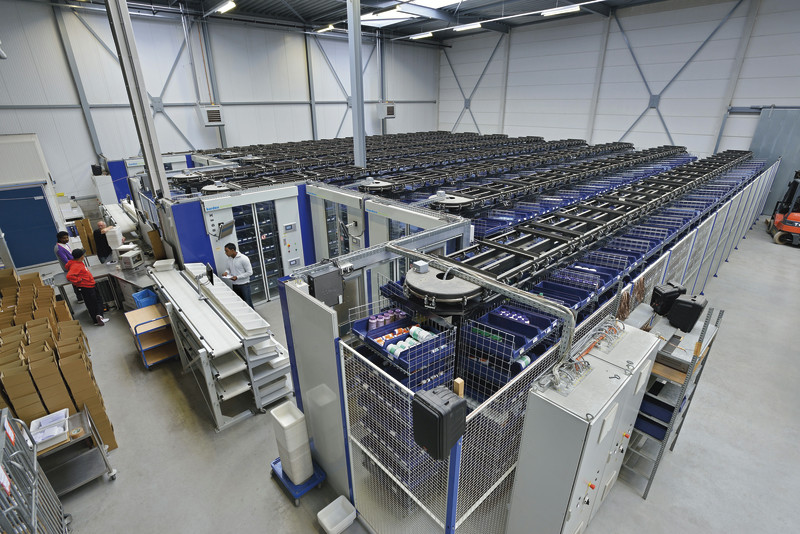
Increase efficiency and save costs
In times of ever-increasing competition and the resulting pressure to rationalize, processes in intralogistics are constantly being scrutinized. However expensive new acquisitions may be, and even though conventional racking systems could easily function for several more years, investing in automated storage systems enables the desired increase in productivity. For example, acquiring software-controlled carousel storage systems or vertical lifts leads to savings in some of the core areas of the warehouse, thus reducing the cost pressure on this segment.
- Labor costs
- Building costs
- Picking costs
- illness-related costs
- Costs incurred through mistakes
In addition, there are the synergy effects that can be achieved through the use of the new machines in the warehouse.
1. Reduction of labor costs
- In addition, integrated optical signals or displays (pick-by-light systems) in the devices assist staff with regard to the location and number of items to be picked.
- Individual orders are also processed together (batch picking), which further increases the speed.
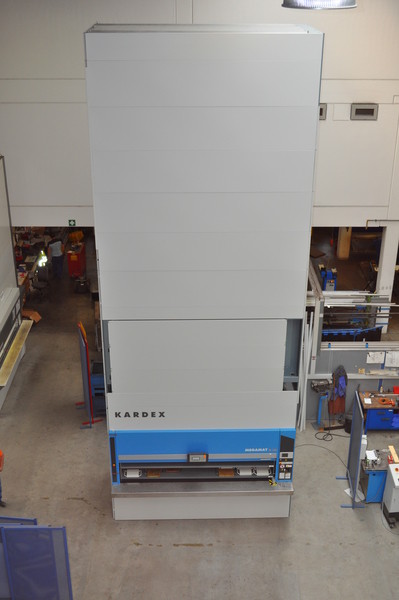
Combined, these three methods significantly optimize the use of human labor, leading to productivity increases of 200 to 600 percent. Furthermore, the new technology allows fewer employees more orders, freeing up the remaining workforce to take on other tasks in the warehouse or elsewhere in the company.
2. Reduction of space costs
Due to their modular design, vertical lift systems can be precisely adapted to the given ceiling heights in the warehouse. Compared to conventional shelving systems, they are taller and also save the space that would otherwise be reserved for personnel or transport vehicles in the aisles. This principle allows for a reduction in the required storage space of up to 85 percent. Furthermore, the shelves of the storage systems can be configured with special compartments or trays to accommodate the maximum number of items, further reducing the storage space required per item. Instead of using the entire space for conventional storage, the additional space can be used for expanding capacity or other purposes, such as setting up a workshop or increasing production capacity. This also eliminates the need to relocate to larger premises due to increased storage requirements.
3. Reduction of access costs
Software-controlled reordering of incoming orders releases them for processing. Individual items from various orders are combined. For example, if a specific item is requested in multiple orders, the individual items are added together, and the item is retrieved from the warehouse only once. This item is then added to each individual order from a buffer stock located at the workstation. This batch picking process (already mentioned in point 1) significantly increases the number of orders processed, as it eliminates all the unnecessary travel and setup times for searching for, picking, and retrieving items.
- A automatically and
- B only need to be done once
Production or customer orders can be fulfilled much faster, which not only helps to reduce costs through time savings, but also increases satisfaction in downstream areas due to the accelerated processing.
4. Reduction of costs due to illness
Dynamic retrieval systems place great emphasis on workplace ergonomics. Their goods-to-person principle not only saves staff from lengthy and sometimes arduous walking – with conventional storage solutions, employees often cover distances of fifteen kilometers or more in a single shift. Furthermore, the items are delivered directly to the workstation at an ergonomically favorable height of hip level via the dispensing openings in the devices.
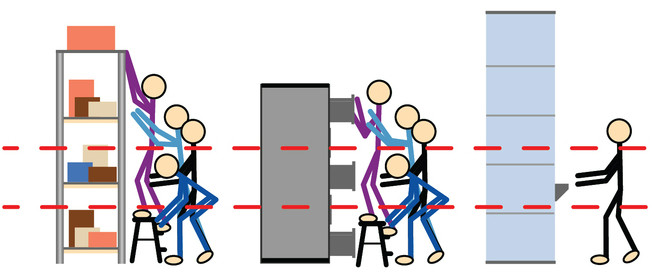
This eliminates injury-prone bending or stretching movements – especially when handling heavy parts – and thus one of the main causes of work incapacity: injuries or wear and tear on the human musculoskeletal system. Consequently, sickness-related costs due to absenteeism are reduced, and insurance premiums for occupational safety services are also lowered by these measures.
5. Reducing the costs of erroneous accesses
Incorrect picks are doubly costly: Firstly, there are the costs incurred for the mispick and the subsequent forwarding, or picking and shipping of the correct item. Secondly, there are the expenses for reintegrating the correct item and picking it again, and for online retailers, this includes the return shipping, potential inspection and cleaning, and subsequent resending of the goods. All in all, these costs add up to significant sums that, given the comparatively high error rate of conventional warehouse solutions, have a severely detrimental impact on productivity.
In contrast, software-controlled storage and retrieval systems achieve picking accuracy of nearly 100 percent. Sophisticated warehouse management software makes this possible while simultaneously eliminating the natural rate of manual errors by staff. The result is a cost saving for the company with every avoided mispick.
6. Synergy effects
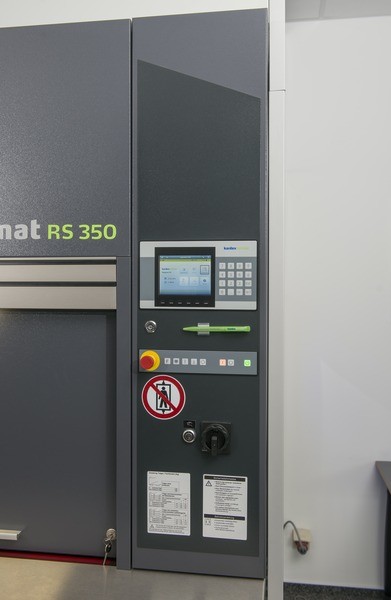
The warehouse management software controlling the new equipment can be easily combined with existing racking systems, thereby increasing their efficiency. Seamless integration of old and new equipment is, of course, possible. This advantageous solution relieves the investing company of the pressure to replace its entire warehouse technology all at once. Instead, the process can be stretched out as needed, and further investments can be decided upon after a test phase, for example.
Given the numerous cost and efficiency advantages described, it can be assumed that a further conversion from old to new equipment will later be seen as a logical step. In addition, the return on investment is typically achieved across all industries within one to two years.
Keep in touch