

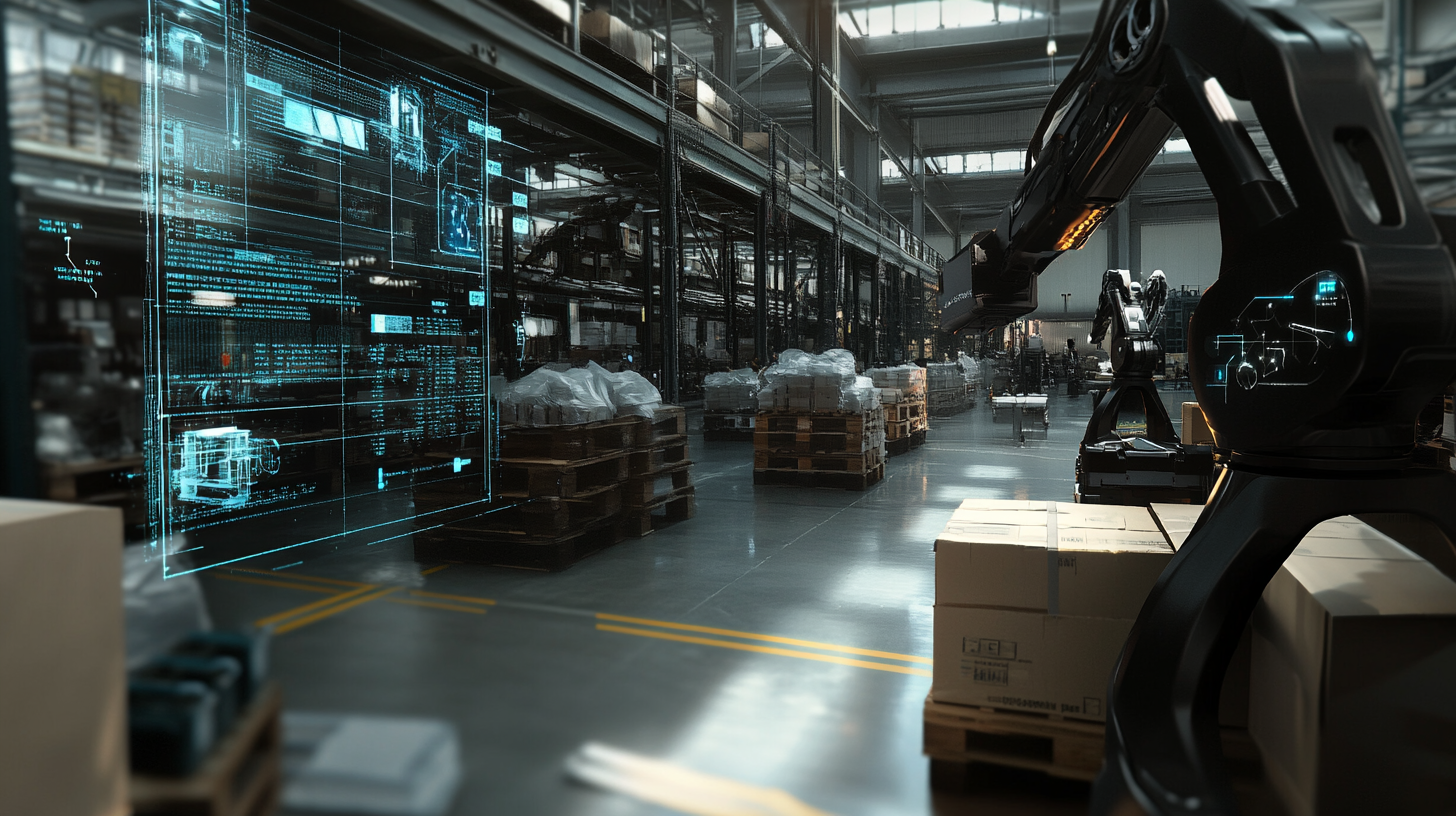
Innovative warehouse strategies – Focus on efficient product placement: Reduce costs, increase performance – Image: Xpert.Digital
The art of warehouse placement: Increase efficiency, reduce costs
Efficient placement of goods in the warehouse: Optimization through digital twins and artificial intelligence
The efficient placement of goods in the warehouse is a crucial factor for a company's performance and cost control. A well-organized warehouse significantly contributes to reducing lead times, minimizing error rates, and improving overall efficiency. The challenge, however, lies in placing goods in a way that optimally supports the processes for receiving, retrieving, and order picking. This requires not only experience and intuition, but above all a data-driven approach that can flexibly adapt to changing order and demand patterns.
In the age of digitalization, new technologies such as artificial intelligence (AI) and digital twins have the potential to drastically increase the efficiency and accuracy of warehouse management. The intelligent application of such technologies enables warehouse managers to dynamically optimize the placement of goods based on real-time data. The following sections will explain which factors must be considered when placing goods, the role of warehouse management software, and how digital twins and AI can support this process.
Criteria for optimal product placement
The placement of goods in the warehouse is based on a variety of criteria, primarily focused on demand and product characteristics. Key factors include:
1. Rotation of goods (ABC analysis)
Many warehouses use ABC analysis to classify products according to their demand frequency. Frequently needed items (A items) are placed in easily accessible areas, while items with lower demand (C items) are stored in more distant or difficult-to-access areas. This arrangement reduces walking distances and speeds up order picking.
2. Product type and handling characteristics
Heavier or bulkier goods require special storage areas and often mechanical assistance for transport. Hazardous substances must be stored in accordance with legal requirements, which necessitates a specific layout within the warehouse. Temperature-sensitive goods such as food or pharmaceuticals also require dedicated storage areas.
3. Seasonal fluctuations and current demand
Demand for certain products can be subject to seasonal fluctuations. For example, demand for certain goods increases during the Christmas months. A flexible inventory strategy that anticipates such fluctuations is essential for product placement.
4. Cross-docking potential
Products that need to be forwarded as quickly as possible, without remaining in storage for an extended period, are positioned in the so-called cross-docking area. These products pass through the warehouse without extensive storage and are prepared directly for shipment.
Warehouse management software as the basis for an optimized warehouse structure
To efficiently manage the aforementioned criteria, the use of warehouse management software is essential. This software analyzes inventory levels, records the movement of goods within the warehouse, and identifies potential bottlenecks or overcapacities. Modern systems offer real-time monitoring of storage locations and often integrate with a higher-level ERP (Enterprise Resource Planning) system. Automatic data capture significantly reduces the risk of errors, and the warehouse manager receives reliable information about the current inventory situation.
Warehouse management software also supports slotting, the management of storage locations within the warehouse. Slotting involves allocating storage locations based on business considerations to maximize the efficiency of warehouse processes. This includes assigning storage locations based on expected demand, product volume, and packaging effort. Such data-driven slotting shortens travel distances, accelerates order picking, and ultimately reduces costs.
Digitalization and automation: The role of AI and digital twins
With the introduction of artificial intelligence and digital twins, warehouse management goes far beyond the functionalities of traditional warehouse management software. These technologies create the possibility of simulating future scenarios, analyzing inventory in real time, and making dynamic decisions regarding the placement of goods.
Digital twins as a reflection of reality
A digital twin is a virtual representation of the real warehouse that is constantly synchronized with current data. This digital copy allows the warehouse to be analyzed and tested in a secure, virtual environment. This enables the simulation of goods movement, the identification of bottlenecks in the warehouse, and the optimization of product placement. This occurs in real time, allowing for immediate responses to changes in demand or special events (e.g., supply shortages or conveyor system failures).
A digital twin offers the significant advantage that warehouse managers and planners can simulate various scenarios before making changes to the physical warehouse environment. "What-if" scenarios allow for the analysis of how the placement of goods affects picking efficiency and whether alternative routes could lead to better capacity utilization. This can be particularly helpful when the warehouse is subject to rapid changes or when demand for certain items suddenly increases.
Artificial intelligence as a decision-making tool
Artificial intelligence is used particularly for analyzing large amounts of data generated in warehouses. Algorithms process goods movements, inventory data, and historical sales data to generate forecasts and automate decisions. For example, an intelligent warehouse management system could recognize that a particular product will be in high demand in the coming days and adjust storage locations so that these items are placed in close proximity to the shipping station.
AI-based systems can also learn from past data and make precise predictions for the future. These predictions are based on patterns that are often imperceptible to the human observer. This allows AI not only to optimize existing warehouse structures but also to anticipate seasonal fluctuations and special promotions. For example, the system can recognize that products frequently ordered together should be stored close to each other to reduce picking effort.
Advantages and challenges of digital transformation in warehousing
Integrating AI and digital twins into warehouse management offers a multitude of advantages:
Increased efficiency
Precise analysis of goods movements and dynamic adjustment of storage locations can shorten distances and increase employee productivity.
Error reduction
By automating decision-making processes and monitoring in real time, errors that could occur during manual placement of goods are minimized.
flexibility
Digital twins and AI enable flexible adaptation of the warehouse structure to changing market requirements and seasonal demand fluctuations.
Cost savings
Accelerated order picking and optimized space utilization reduce operating costs and lead to more efficient use of resources.
Nevertheless, the introduction of these technologies also presents challenges. One of the biggest hurdles is the implementation and use of the new systems, which require expertise and necessitate adjustments to work processes. Furthermore, for some companies, investing in AI and simulation technologies represents a financial burden that only pays off over a longer period.
Efficient warehouse management through innovative technologies
The efficient placement of goods in the warehouse is a dynamic process that can be significantly improved through the use of modern technologies. Digital twins and artificial intelligence offer the opportunity to establish a flexible, data-driven, and above all, efficient warehouse structure that adapts to current requirements and market developments.
With the continued development of AI and the increasing possibilities of digitalization, the potential of these technologies in warehouse logistics will continue to grow. Companies that invest in these technologies will benefit in the long term from faster and more error-free warehouse management.
Related to this: