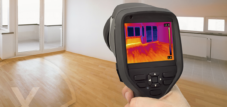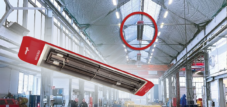
Combined heating – infrared heating and heat pump – Image: Xpert.Digital / Gorodenkoff|Shutterstock.com
Combination of infrared heating and heat pump
Combining infrared heating and a heat pump is possible and can be advantageous in some cases. Here is some important information about it:
How infrared heating works
Infrared heaters work by emitting infrared radiation, which directly heats objects and people. Unlike conventional heaters that heat the air, an infrared heater warms the surfaces in the room, which then radiate heat into the surrounding air.
How the heat pump works
A heat pump uses energy from the environment (such as air, water, or ground) and converts it into heat to heat a building. It works on the principle of heat exchange and can also be used for cooling.
Advantages of the combination
Combining an infrared heater with a heat pump can offer several advantages. Since infrared heaters emit direct heat, they can quickly provide comfortable warmth. The heat pump, on the other hand, operates efficiently and uses renewable energy sources to generate heat. Together, they can provide an energy-efficient and comfortable heating solution.
Using the heat pump as the primary heating source
In most cases, the heat pump is used as the primary heating source due to its energy efficiency. Infrared heating can then be used as a supplementary heating source to provide additional heat more quickly and precisely, especially in rooms that are used less frequently.
Control and regulation
Careful control and regulation are essential for effectively combining the two systems. Intelligent control systems exist that can manage both the heat pump and the infrared heating system to achieve optimal room temperature and save energy.
However, it's important to note that the combination of infrared heating and a heat pump depends on various factors, such as building insulation, room size, and individual heating needs. Professional advice from experts is recommended to find the best solution for your specific situation.
Infrared heating accelerates the switch to heat pumps
The study “Potential Assessment of Infrared Heating Systems for Peak Load Coverage” by the Technical University of Dresden confirms infrared heating as a solution for reducing fossil fuel consumption in existing residential buildings in the short term and simultaneously making the building heat pump-ready. The results will be presented at the conference “Infrared Heating in Residential Construction”
Homeowners who cannot quickly switch to a heat pump in an existing house—whether due to supply difficulties, high investment costs, or the installer's lack of time—can initially use infrared heating to save on fossil fuels in the short term. Later, the homeowner can then replace the old water-based heating system with a smaller-capacity heat pump and operate it in conjunction with the infrared heating system. According to a study by the Technical University of Dresden, this approach is technically feasible. The homeowner first reduces the system temperature (flow temperature) of the existing gas heating system, thus covering only the base load of the house. Higher heating demands—the so-called peak loads—can be met with fast-acting infrared heaters. This reduces the consumption of fossil fuels while maintaining a consistently comfortable temperature in the house, without the need for expensive and complex renovations such as new radiators, windows, or exterior wall insulation.
This approach and the resulting energy demand were investigated in the study "Potential Assessment of Infrared Heating Systems for Peak Load Coverage" at the Technical University of Dresden, using a representative single-family home as an example. The results were first presented by Prof. Dr.-Ing. habil. Joachim Seifert, Head of the Building Energy Technology Department at the Institute of Energy Technology at TU Dresden, at the conference "Infrared Heating in Residential Construction" on May 11, 2023, in Würzburg. "Heat pump systems in combination with electric infrared heaters represent a technological option for existing buildings. This system combination can ensure both heating requirements and thermal comfort," concluded the scientist.
Combination of infrared heating and heat pump
In the study commissioned by the industry association IG Infrarot, scientists from TU Dresden investigated whether an existing water-based heating system with high flow temperatures can be made suitable for operation with a low-temperature heat pump by combining it with an infrared heater.
To represent the building stock in Germany in a representative way, the team chose a single-family house with 160 square meters of heated usable area and a thermal insulation standard according to the Thermal Insulation Ordinance 95.
The standard heating load is 9.2 kilowatts, and the specific heating load is 57.20 watts per square meter. The simulation was performed using the coupled building and plant simulation software TRNSYS-TUD.
In the simulation, the existing building has a low-temperature gas boiler. Heat is transferred via radiators. Based on this, the researchers reduced the flow temperature to demonstrate the potential of infrared heating for maintaining a base temperature using the existing gas boiler or radiators.
Combination of unregulated basic heating and regulated infrared heating
The analysis was conducted in a sequence that reflects practical procedures for homeowners. First, the building was brought up to a basic temperature using the gas heating system. Starting with a heating system operating at a flow temperature of 70°C and a return temperature of 55°C (ϑV/ϑR = 70°C/55°C), the maximum temperature of the heating curve was reduced to a flow temperature (ϑV) of 40°C, and a heating curve of ϑV/ϑR = 40/30 was set. In seven out of ten rooms, the now unregulated radiators are subsequently supplemented by infrared heaters.
In the next step, the low-temperature boiler was replaced by an air-to-water heat pump. The researchers made no changes to the dimensions of the heat transfer system, i.e., the radiators, or to the insulation standard. Based on this, the two options were then compared and the required final energy demand was determined. A prerequisite at all times was that criteria for thermal comfort during operating hours were met. With the selected parameters, the infrared heating system covers between 26 and 38 percent of the energy required.
Performance deficits can be compensated for by infrared heating
"The results show that the resulting performance deficit can be compensated for by infrared heating," write the scientists from TU Dresden in the conclusion of the study, adding: "Overall, the study shows that by supplementing a water-based heating system with infrared heating, an existing heating system designed for higher temperatures can be used with low system temperatures without replacing the heating surfaces, and is therefore well suited for combination with a heat pump. The analyses have shown that, compared to the basic variant, the final energy consumption can be reduced by up to 62% through this combined use." While peak loads at a lowered base temperature can be covered by various systems, "infrared heating is particularly well suited for this purpose due to its short response times."
Use the savings for the photovoltaic system
“Since infrared heaters are inexpensive, readily available and can be installed in just a few hours, this approach can be implemented by homeowners at short notice and with low investment costs,” says Lars-Henric Voß, Chairman of IG Infrared Germany.
The study shows that a comprehensive renovation of the building envelope and modification of the water-based heat transfer system can be avoided. This leads to significantly lower investment costs and thus a reduced financial burden for homeowners, as well as a benefit to the national economy, since no subsidies are required. "The money saved in this way can be used effectively for a larger photovoltaic system to generate even more climate-friendly solar power – not only for space heating, but also for electricity for the users, hot water, and e-mobility," adds Dirk Bornhorst, Chairman of the IG Infrared.
Source: Press release ‘Infrared heating accelerates the switch to heat pumps’
Combination of unregulated basic heating and regulated infrared heating
A combination of an unregulated basic heating system and a regulated infrared heating system is generally possible. Here is some information on this:
Unregulated basic heating
An unregulated basic heating system typically refers to a traditional central heating system where heat is distributed via radiators or underfloor heating. This type of heating is often controlled by a thermostat that measures the room temperature and switches the heating on or off accordingly.
Controlled infrared heating
Unlike unregulated basic heating, infrared heating can usually be controlled individually and precisely. Modern infrared heaters have integrated thermostats and programmable controls that allow the room temperature and heating times to be set exactly.
Combination of heating systems
Combining an unregulated main heating system with a regulated infrared heater can be advantageous in certain situations. For example, the main heating system could serve as the primary heat source, bringing the room up to a specific minimum temperature. The infrared heater could then be used as a supplementary heat source to provide additional comfort and targeted warmth in specific areas of the room.
Advantages of the combination
By combining a standard heating system with infrared heating, you can benefit from the advantages of both. The standard heating system provides even and general warmth to the room, while the infrared heating offers a fast response time and targeted warmth. This can be particularly advantageous in rooms that are only used occasionally or where individual heating preferences exist.
Control and regulation
It is important to have suitable controls to effectively combine the two heating systems. Ideally, the infrared heater should have a separate control unit that can be set independently of the main heating system. This allows you to adjust the heat output of the infrared heater to your individual needs and save energy.
Please note that professional advice from specialists regarding the specific requirements of your building and heating system is recommended. They can help you find the best combination and control options for your individual situation.
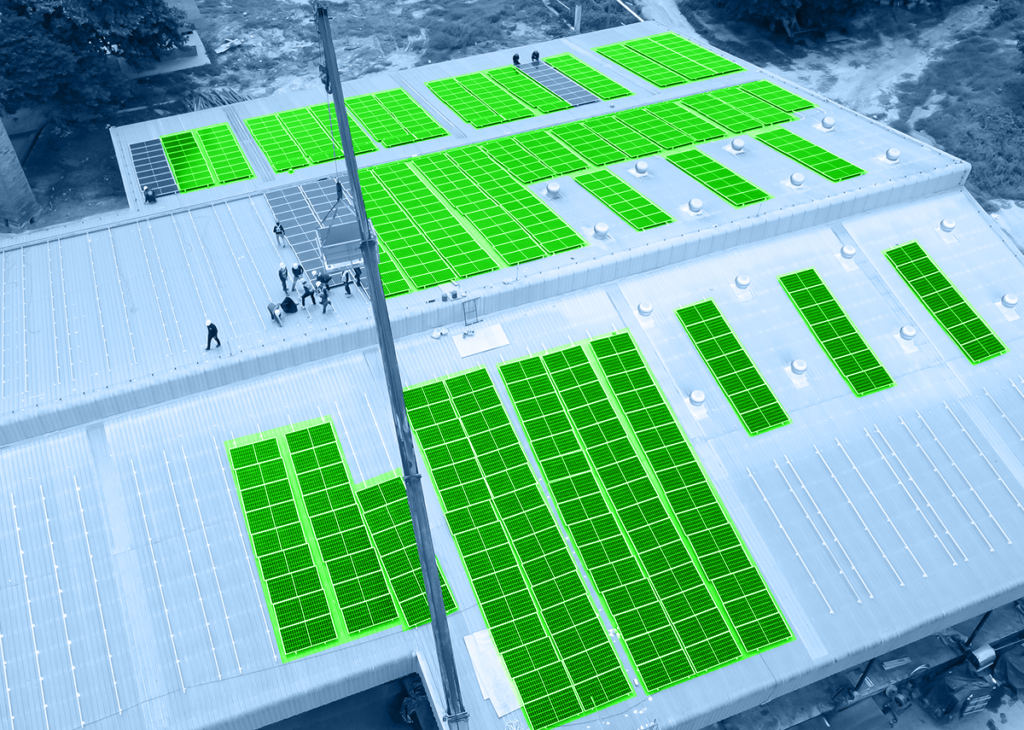


- Planning photovoltaics on warehouses, commercial buildings and industrial buildings
- Industrial plant: Planning a photovoltaic open-field system or open-area system
- Planning solar power systems with photovoltaic solutions for freight forwarding companies and contract logistics
- B2B Solar Systems and Photovoltaic Solutions & Consulting
Expert advice for heating systems from Xpert

Konrad Wolfenstein
I would be happy to serve as your personal advisor.
You can contact me by filling out the contact form below or simply call me on +49 7348 4088 965 .
I'm looking forward to our joint project.
Write to me



Xpert.Digital – Konrad Wolfenstein
Xpert.Digital is a hub for industry focusing on digitalization, mechanical engineering, logistics/intralogistics and photovoltaics.
With our 360° Business Development solution, we support renowned companies from new business to after-sales.
Market intelligence, smarketing, marketing automation, content development, PR, mail campaigns, personalized social media and lead nurturing are part of our digital tools.
You can find more information at: www.xpert.digital – www.xpert.solar – www.xpert.plus
Keep in touch