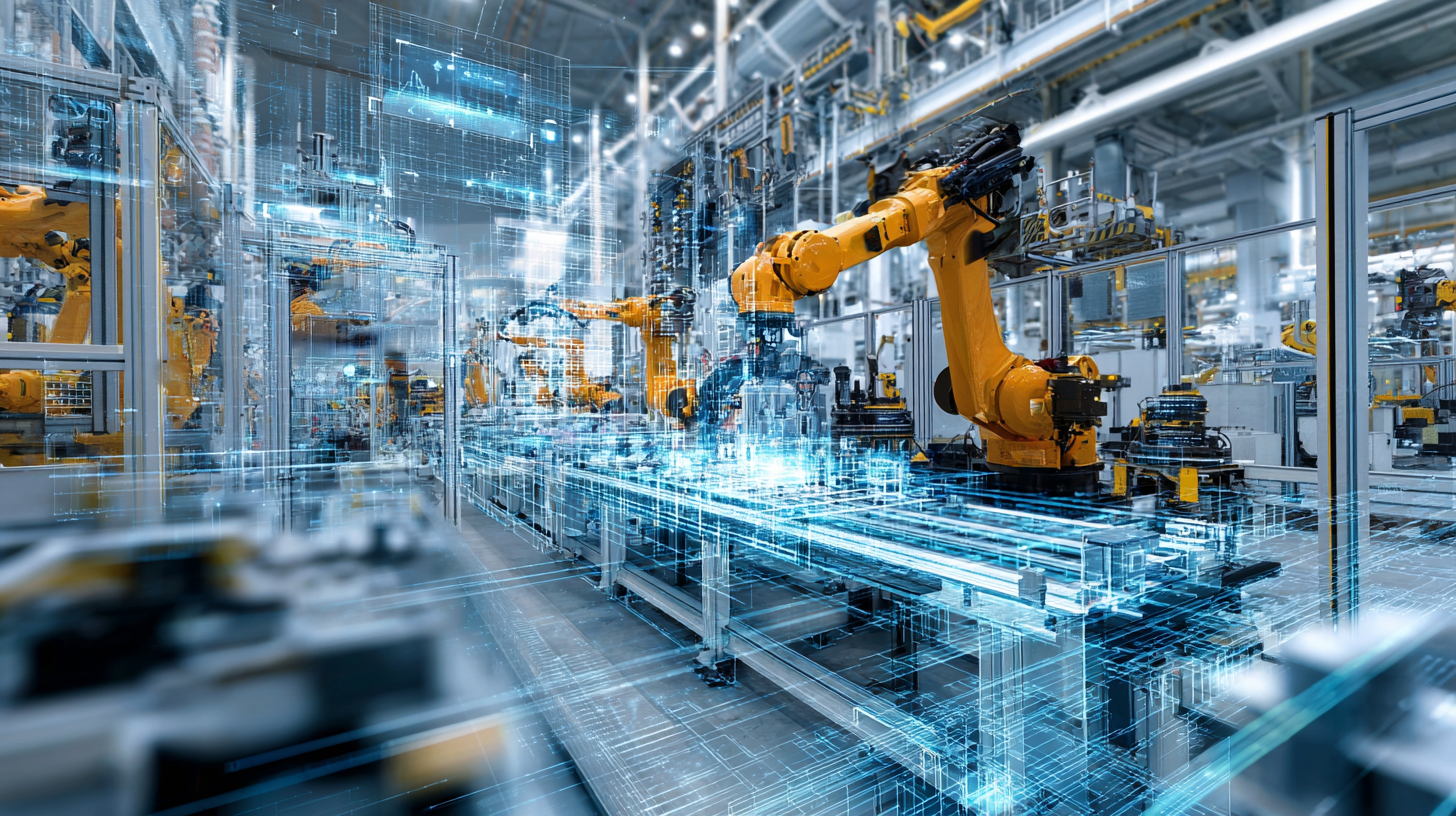
The multi-billion dollar industrial AI market: Artificial intelligence as an industrial tool – When production halls become intelligent – Image: Xpert.Digital
From digital twin to reality: The end of the "dumb" factory
Build or buy? The fatal flaw in AI strategy
The global manufacturing industry is on the cusp of a transformation whose scope dwarfs the introduction of the assembly line or the first industrial robots. We are moving away from the mere automation of physical labor toward the automation of cognitive processes. But the path to the "smart factory" is far less straightforward than glossy brochures would have you believe. While market forecasts predict explosive growth in industrial AI to over $150 billion by 2030, a look inside factory floors reveals a harsh reality: up to 85 percent of all AI initiatives fail before they deliver measurable added value.
This paradox – enormous potential coupled with a high error rate – is the central theme of the current industry debate. The reasons for failure are rarely the algorithms themselves, but rather lie in the historical complexity of established structures: fragmented data silos, outdated machine protocols, and an underestimation of cultural change stifle innovation. Companies face the challenge of integrating their legacy systems with state-of-the-art artificial intelligence without jeopardizing ongoing operations.
The following article delves into how this balancing act can be achieved. It analyzes why **Managed AI** is gaining importance as a strategic alternative to expensive in-house development and uses concrete use cases such as **Predictive Maintenance**, **Computer-Aided Quality Control**, and **Supply Chain Optimization** to demonstrate where the technology's ROI is already being realized. We also take a critical look at the massive shortage of AI specialists, the need for robust governance structures in light of new EU regulations, and the risk of vendor lock-in. Learn how the industry is evolving from mere data collection to autonomous, decision-making-assured systems and why, despite all the technology, the human factor remains the key to success.
From digital promise to operational reality – and why most projects fail
Industrial manufacturing is facing a paradigm shift that goes far beyond previous waves of automation. While earlier technological revolutions replaced physical labor and repetitive tasks, artificial intelligence now promises to take over cognitive processes, recognize patterns in data streams, and make decisions in real time. However, a gap exists between vision and reality, increasingly unsettling business leaders. The global market for industrial AI reached a volume of approximately US$43.6 billion in 2024 and is projected to grow to US$153.9 billion by 2030, representing an average annual growth rate of 23 percent. In parallel, the market for artificial intelligence in the manufacturing industry is growing from US$5.32 billion in 2024 to a projected US$47.88 billion by 2030.
These impressive figures, however, mask an inconvenient truth: Up to 85 percent of all AI projects in companies fail before they generate any productive benefits. The reasons for this are multifaceted and range from insufficient data quality and a lack of expertise to organizational resistance. Traditional implementation approaches, in which companies attempt to build their own AI infrastructures, prove to be time-consuming, costly, and risky. A custom-built AI system can require between 18 and 24 months of development time and cost between $500,000 and $2 million – with no guarantee of success.
Fragmentation as a core problem of industrial data
Manufacturing facilities are historically evolved ecosystems comprised of different system generations. Enterprise Resource Planning (ERP) systems speak a different language than Manufacturing Execution Systems (MES), Product Lifecycle Management (PLM) platforms operate in isolation from Customer Relationship Management (CRM) solutions, and industrial controls are often based on proprietary protocols that are decades old. This technological fragmentation is the biggest obstacle to successful AI implementations. Data exists everywhere, but nowhere in a form that could be used directly.
Nearly 47 percent of executives in the process industry identify fragmented and low-quality datasets as the primary obstacle to digital initiatives. Sensor data is missing, naming conventions vary between departments, and security requirements often prevent access to critical information. Furthermore, historical data needed to train machine learning models is frequently inconsistent, incomplete, or simply nonexistent. The result: AI models trained on inadequate foundations deliver unreliable predictions and reinforce distrust of the technology.
Integrating these heterogeneous data sources requires systematic data governance approaches. Successful organizations begin with a comprehensive inventory of all sensors, historical databases, and systems. They implement integration platforms or ETL pipelines that standardize data formats before they are processed by AI models. Formal data quality frameworks with automated validation and cleansing catch errors before they corrupt these models. Organizations that establish these foundations halve the development time for AI models and avoid costly rewrites.
Managed AI as a strategic alternative
Managed AI platforms offer a fundamentally different approach. Instead of building and operating the entire technical infrastructure themselves, companies outsource implementation, operation, and optimization to specialized partners. These platforms connect structured data from ERP, PLM, MES, and CRM systems with unstructured content such as emails, reports, and compliance documentation. An intelligent contextual layer learns from internal processes, classifies information, routes tasks, and tracks their progress with high precision. The key feature: Automation occurs without requiring teams to change their familiar tools or processes.
Industrial customers have realized productivity gains in the tens of millions through such approaches. Beyond direct cost savings, executives report improved compliance with service level agreements, increased transparency in operational processes, and the release of skilled personnel for engineering tasks, service delivery, and innovation. The modular approach enables a transition from pilot project to production environment within days instead of months. Seamless integration with existing systems such as SAP, Oracle, or ServiceNow requires no fundamental system overhauls. Deployment is designed to minimize disruption while delivering rapid, measurable value.
Security and compliance as a fundamental principle
Security and compliance are not add-ons in managed AI platforms, but integral components of the architecture. The systems are implemented within the customer's secure cloud environment or on-premises, ensuring that data never leaves the company's control. Role-based access control, full audit trails, and encryption protect sensitive information at every level. This security architecture is particularly relevant for industries with stringent regulatory requirements, from pharmaceuticals and aerospace to automotive.
The European General Data Protection Regulation (GDPR) places specific demands on the use of artificial intelligence. AI systems must adhere to principles such as purpose limitation and data minimization, provide transparent information about their operation, and guarantee data subject rights such as access, erasure, and objection. For automated decisions with significant impacts on individuals, additional safeguards are required, including the right to human review. The new EU Machinery Regulation 2023/1230 and the AI Regulation 2024/1689 extend these requirements to include specific security provisions for autonomous systems and self-learning machines in industrial environments.
Manufacturers must implement safety circuits that limit self-learning systems to defined risk parameters during their learning phases. Mobile autonomous machines, such as driverless transport systems in warehouses, are subject to special health and safety requirements. Robust cybersecurity measures must include safety circuits that prevent dangerous machine behavior resulting from network attacks and system compromises. For collaborative robots working alongside humans, new safety solutions must address both physical risks from moving parts and psychological stressors in collaborative environments.
The battle for AI talent and the skills gap
The lack of AI expertise represents one of the most significant barriers to technology adoption. A survey by Nash Squared shows that the AI skills gap now even surpasses that of Big Data and cybersecurity, leaving technology leaders desperately searching for talent. Around 51 percent of CEOs report insufficient knowledge of AI models and tools at the management and board levels. This knowledge gap is causing considerable reluctance to make investment decisions.
In the finance and manufacturing sectors, around 40 percent of employers report significant skills gaps as an obstacle to AI adoption. This problem is exacerbated by the rapid development of the technology. AI roles have seen an annual growth rate of 71 percent in Europe over the past five years, indicating intense competition for relevant expertise. Professionals with AI skills command an average salary premium of 56 percent compared to colleagues without these skills – more than double the previous year's figure.
Successful organizations are addressing this challenge not primarily through external recruitment, but through the systematic upskilling of their existing workforce. Leading companies are launching AI academies and on-demand training platforms, often spearheaded by human resources, to build internal AI expertise at scale. Some offer formal AI certifications or badges for employees who complete training, making upskilling a continuous, incentive-based process.
It's crucial that training isn't just for technical staff or data scientists. Frontline employees, managers, and even executives need education on AI fundamentals and applications relevant to their specific roles. The nature of training is also evolving. Many organizations are combining traditional classroom instruction with hands-on learning, such as interactive workshops where teams practice using AI tools on real-world business problems. This addresses a key need: employees learn best by experimenting in safe environments.
Predictive maintenance as a showcase case
Predictive maintenance is considered one of the most mature AI applications in industry and dominated the manufacturing AI market in 2024. This development is driven by the increasing focus on reducing equipment failures, minimizing downtime, and optimizing plant utilization. Manufacturers across various sectors have increasingly implemented AI-powered predictive systems that analyze sensor data, identify anomalies, and predict equipment failures before they occur. This proactive approach enables timely interventions, prevents costly disruptions, and increases overall production efficiency.
Key industries such as automotive, heavy machinery, energy, and semiconductor manufacturing prioritize predictive maintenance, especially in capital-intensive, high-volume operations where unexpected failures can lead to significant losses. AI algorithms integrated with IoT and cloud platforms enable real-time condition monitoring and intelligent diagnostics, offering a distinct advantage over traditional reactive or time-based maintenance approaches. The widespread use of AI-powered insights to anticipate failures, optimize maintenance schedules, and minimize spare parts losses has significantly contributed to this segment's leading position.
The return on investment from predictive maintenance, through improved equipment availability, extended asset lifespan, and reduced labor costs, makes it a strategic focus for manufacturers. Companies implementing strategic predictive maintenance programs discover economic benefits that extend far beyond direct cost savings, including improvements in asset utilization of 35 to 45 percent, reductions in inventory costs of 50 to 60 percent, and increases in production capacity of 20 to 25 percent.
A global manufacturer implemented predictive maintenance for CNC machines and robotic systems, reducing equipment failures by 40 percent within a year, resulting in significant cost savings and a more streamlined production process. A power utility used predictive maintenance to monitor turbines and generators, identifying maintenance needs early and saving $500,000 annually while significantly reducing operational disruptions. Frito-Lay uses a suite of sensors in its equipment to predict mechanical failures before they occur, enabling a more proactive approach to equipment maintenance. In the first year of using AI-powered predictive maintenance, Frito-Lay's equipment experienced zero unexpected equipment failures.
Quality control through machine vision
Artificial intelligence is revolutionizing quality control through computer vision, which automates visual inspections and enables real-time defect detection. Traditional manual inspection methods are time-consuming, inconsistent, and error-prone, even when performed by experienced quality control inspectors. The integration of AI with high-resolution imaging and intelligent software now allows manufacturers to detect defects in real time, reduce waste, and optimize production lines with unprecedented precision.
Unlike rule-based systems, which require predefined criteria and consistent defect types, AI-based image processing systems learn patterns from extensive image datasets. They can identify anomalies and deviations, even those that have not occurred before, making them particularly effective in dynamic manufacturing environments where product designs or materials frequently change. Through deep learning algorithms, these systems more accurately distinguish between acceptable product variations and actual defects, significantly reducing both false positives and false negatives.
For industries like semiconductor manufacturing or medical device production, where micrometer precision is essential, AI-powered machine vision delivers the consistency and speed required for large-scale production. These systems can handle frequent product changes and quickly adapt to new product types, designs, or SKUs without time-consuming reprogramming or manual recalibration. They recognize and inspect a wide range of textures, colors, surfaces, and packaging types, maintaining inspection accuracy across different product lines.
A medium-sized automotive supplier in Stuttgart implemented an AI-powered quality control system based on computer vision. The solution inspects more than 10,000 parts per day, reduces inspection time by 60 percent, and identifies defects that manual inspections often miss. Advanced systems now achieve defect detection rates of over 90 percent while simultaneously reducing labor costs by more than 90 percent and providing 90 percent real-time visibility and alerts.
A new dimension of digital transformation with 'Managed AI' (Artificial Intelligence) - Platform & B2B solution | Xpert Consulting

A new dimension of digital transformation with 'Managed AI' (Artificial Intelligence) – Platform & B2B solution | Xpert Consulting - Image: Xpert.Digital
Here you will learn how your company can implement customized AI solutions quickly, securely and without high entry barriers.
A managed AI platform is your all-inclusive, worry-free solution for artificial intelligence. Instead of dealing with complex technology, expensive infrastructure, and lengthy development processes, you receive a ready-made solution tailored to your needs from a specialized partner – often within just a few days.
The key advantages at a glance:
⚡ Rapid implementation: From idea to ready-to-use application in days, not months. We deliver practical solutions that create immediate added value.
🔒 Maximum data security: Your sensitive data stays with you. We guarantee secure and compliant processing without sharing data with third parties.
💸 No financial risk: You only pay for results. High upfront investments in hardware, software, or personnel are completely eliminated.
🎯 Focus on your core business: Concentrate on what you do best. We take care of the entire technical implementation, operation, and maintenance of your AI solution.
📈 Future-proof & scalable: Your AI grows with you. We ensure continuous optimization and scalability, and flexibly adapt the models to new requirements.
More information here:
Avoid vendor lock-in: How LLM-agnostic platforms future-proof your AI strategy
Supply chain optimization through intelligent algorithms
AI is transforming supply chain management through more accurate demand forecasting, optimized inventory management, and intelligent route planning. Amazon uses AI-powered demand forecasting to ensure inventory levels are optimized to meet future peaks or dips in product popularity, achieving this for more than 400 million products with minimal human intervention. The company also uses AI to automatically reorder products that are in short supply or experiencing high demand.
Walmart has developed a proprietary AI and machine learning logistics solution called Route Optimization that optimizes driving routes in real time, maximizes packing space, and minimizes mileage. By using this technology, Walmart has eliminated 30 million driver miles from its routes, saving 94 million pounds of CO2. GXO, a logistics provider, was one of the first companies to implement AI-powered inventory counting. The system can scan up to 10,000 pallets per hour and generate real-time inventory counts and insights.
JD Logistics has opened several self-operated warehouses that utilize AI-powered supply chain technology to determine the optimal placement of goods. This application of AI in supply chain management helped JD Logistics increase the number of available storage units from 10,000 to 35,000 and improve operational efficiency by 300 percent. Lineage Logistics uses an AI algorithm to ensure that food arrives at its destination at the correct temperature. The algorithm predicts when specific orders will arrive at or leave a warehouse, allowing warehouse staff to prepare through effective pallet positioning. This use of AI in the supply chain enabled Lineage Logistics to increase operational efficiency by 20 percent.
The productivity paradox of AI introduction
AI Productivity Paradox: Why the slump comes first – and then growth explodes
Recent research reveals a more complex reality than the simple promise of instant productivity gains. Studies on AI adoption in US manufacturing companies show that the introduction of artificial intelligence often leads to a measurable but temporary decline in performance, followed by stronger growth in output, revenue, and employment. This phenomenon follows a J-curve trajectory and helps explain why the economic impact of AI has been disappointing at times, despite its transformative potential.
Short-term losses were greater for older, more established companies. Data from young firms showed that losses could be mitigated by certain business strategies. Despite early losses, early AI adopters showed stronger growth over time. The study shows that AI adoption tends to hinder productivity in the short term, with companies experiencing a measurable decline in productivity after they begin using AI technologies. Even after controlling for size, age, capital stock, IT infrastructure, and other factors, the researchers found that organizations that implemented AI for business functions experienced a productivity decline of 1.33 percentage points.
This decline is not simply a matter of teething problems, but points to a deeper mismatch between new digital tools and legacy operational processes. AI systems used for predictive maintenance, quality control, or demand forecasting often also require investment in data infrastructure, employee training, and workflow redesign. Without these complementary elements, even the most advanced technologies can underperform or create new bottlenecks.
Despite early losses experienced by some companies, the study found a clear pattern of recovery and eventual improvement. Over a longer period, manufacturing companies that adopted AI tended to outperform their non-adopting competitors in both productivity and market share. This recovery followed an initial adjustment period during which companies fine-tuned processes, scaled digital tools, and capitalized on the data generated by AI systems. The firms with the strongest gains tended to be those that were already digitally mature before adopting AI.
Machine learning as a foundation
The machine learning segment held the largest share of the manufacturing AI market in 2024, highlighting its critical role in driving data-driven decision-making, process optimization, and adaptive automation across the industry. Manufacturers are increasingly relying on machine learning algorithms to analyze significant volumes of operational data generated by sensors, machinery, and enterprise systems, uncovering patterns and correlations that conventional methods might miss.
This capability enables companies to increase production efficiency, improve quality control, and adapt quickly to changing market conditions. Industries such as automotive, electronics, and metal and heavy machinery manufacturing have leveraged machine learning for various applications, including demand forecasting, predictive maintenance, anomaly detection, and process optimization. The technology's ability to learn and refine itself from real-time data makes it particularly valuable in dynamic environments characterized by complex processes and variability.
The integration of machine learning with industrial IoT platforms, cloud computing, and edge devices has significantly expanded its application in both discrete and process manufacturing. Its ability to automate decision-making, reduce human error, and identify hidden inefficiencies has solidified machine learning's status as a fundamental AI technology. As manufacturers strive for improved agility, scalability, and competitiveness, machine learning has emerged as the most widely adopted and impactful technology within the manufacturing AI sector.
Digital twins and simulation-driven design
Digital twins represent one of the most promising developments in industrial AI. These virtual replicas of physical assets, processes, or systems enable companies to conduct extensive simulations and performance optimizations. This phase involves executing thousands of simulated operational sequences to identify system bottlenecks, capacity constraints, and efficiency opportunities. Advanced optimization techniques, including genetic algorithms, Bayesian optimization, and deep reinforcement learning, allow digital twins to maximize operational efficiency.
The integration of AI and machine learning significantly expands the capabilities of digital twins beyond traditional simulation performance. These technologies amplify the inherent dynamics of digital twins, elevating them to intelligent, self-improving systems. AI-powered digital twins can predict equipment failures and recommend corrective actions before problems occur, transforming manufacturing operations through predictive analytics and autonomous decision-making capabilities.
BMW uses AI tools for predictive maintenance, increasing productivity by 30 percent and reducing energy costs through optimized production plans. Mercedes-Benz became the first manufacturer to receive Level 3 autonomous driving certification, based on AI systems trained with data from more than 10,000 test vehicles. The global market for digital twins reached $16 billion in 2023 and is growing at an average annual rate of 38 percent.
Manufacturing organizations are using digital twins for several critical functions: virtual prototyping during design phases, thereby reducing physical iterations before production; production process optimization to identify inefficiencies and conduct root cause analyses; quality management through real-time variance detection and material analysis; and supply chain and logistics optimization, especially for just-in-time production.
Change management and organizational transformation
Successful AI integration requires far more than technological implementation. Change management becomes a critical success factor when organizations introduce AI systems. Cultural resistance, concerns about job security, and a lack of understanding of AI capabilities can significantly hinder acceptance. Leading companies treat AI adoption as a comprehensive organizational transformation that requires structured approaches to preparation and engagement of all stakeholders.
The core of change management lies in fostering employee acceptance and commitment to upcoming changes. This includes analyzing necessary changes, developing a clear roadmap for implementation, clear and transparent communication with all stakeholders, and training and further education for affected employees. Employees who are firmly convinced that all their skills will remain relevant over the next three years are almost twice as motivated as those who believe their skills will be irrelevant.
Workers who feel supported in their professional development are 73 percent more motivated than those who report the least support, making access to learning one of the strongest predictors of motivation. However, research shows that employers' professional development efforts are uneven. Only 51 percent of non-managers feel they have the resources they need for learning and development, compared to 72 percent of senior managers. While 75 percent of daily users of generative AI at work feel they have the resources they need for learning and development, only 59 percent of infrequent users feel the same.
Successful organizations are launching AI academies and on-demand training platforms, often spearheaded by HR departments, to build internal AI capabilities at scale. Some have begun offering formal AI certifications or badges to employees who complete training, transforming professional development from a one-off event into an ongoing, incentive-based process. Importantly, training isn't just for technical staff or data scientists. Frontline knowledge workers, managers, and even executives all need education on AI fundamentals and applications relevant to their roles.
Germany in the global AI competition
Germany is at a critical turning point in its AI transformation. The German AI market reached a volume of €9.04 billion in 2025, and the country is home to 1,250 AI companies. Among large German companies with 250 or more employees, AI adoption reached 15.2 percent. More than 70 percent of companies in Germany plan to invest in AI in 2025 for faster data analysis, process automation, new products and business models, and increased revenue.
The manufacturing sector is a pioneer in AI adoption in Germany, with 42 percent of industrial companies using AI in production. Production is the most frequently used application. Large companies use AI much more often (66 percent) than small companies (36 percent). In terms of sectors, business-related service providers are the most frequent users of AI (55 percent), followed by mechanical engineering, the electrical industry, and automotive manufacturing (just under 40 percent).
Baden-Württemberg is positioning itself with Cyber Valley, Europe's largest AI research network. Universities like Tübingen and the Max Planck Institute are working closely with Bosch, Amazon, and others. The results are tangible: Bosch reports €500 million in efficiency gains across 15 plants through AI-supported quality control and predictive maintenance. The automotive sector is also setting benchmarks. Mercedes-Benz became the first manufacturer to receive approval for Level 3 autonomous driving, based on AI systems trained with data from more than 10,000 test vehicles.
Bavaria emphasizes transparency and has made German companies a benchmark for practical, trustworthy AI adoption in Europe. Between 2022 and 2024, Munich attracted €1.2 billion in venture capital, which supported more than 450 AI companies. Investments in quantum computing and AI literacy programs are making Bavaria an innovation hub with global visibility.
Small and medium-sized enterprises face particular challenges
AI adoption presents particular challenges for small and medium-sized enterprises (SMEs). Around 43 percent of SMEs have no plans to implement AI, with customer-facing companies showing particular reluctance. The primary barrier to AI implementation stems from limited organizational understanding and expertise. Nearly half of all SMEs expressed significant concerns about AI accuracy and called for robust oversight mechanisms. Businesses need consistent, reliable performance from technological solutions. AI systems that exhibit unpredictable spending or lack transparency can undermine organizational trust.
Successful AI integration requires more than just technological investment. It demands comprehensive strategic planning, employee training, and cultural adaptation. SMEs must develop clear roadmaps that align AI capabilities with specific business objectives, manage potential workforce disruptions, and create supporting technological infrastructures. A phased implementation strategy that minimizes risks and builds organizational trust is recommended.
The implementation framework typically comprises three critical phases: initial exploration through the use of cost-effective AI tools to build technical expertise; incremental integration through the development of targeted AI solutions for specific operational tasks; and advanced customization through the creation of proprietary AI models aligned with unique business requirements. Organizations should focus on building comprehensive support infrastructures that include access to expert technological guidance, integration of AI tools with existing productivity platforms, the establishment of clear governance and ethical frameworks, and the creation of mechanisms for continuous learning and adaptation.
Vendor lock-in and strategic independence
Dependence on single AI vendors poses a significant strategic risk. Vendor lock-in occurs when a system is so tightly bound to one vendor that switching to another becomes impractical or costly. In AI and machine learning, this often means writing code directly against a vendor's SDK or API. While using a single vendor may seem simple at first, it creates dangerous dependencies. If the integration uses a vendor's proprietary API calls, switching becomes difficult if the service becomes unavailable, changes its terms, or adopts a new model.
AI gateways prevent vendor lock-in by abstracting away vendor details. Because the application communicates only with the gateway's unified API, vendor-specific endpoints are never hard-coded. By using open standards like the OpenAI-compatible API, companies can switch between different vendors without rewriting code. This decoupling is critical for long-term flexibility and prevents dependence on individual technology providers.
Modern managed AI platforms implement LLM-agnostic architectures, ensuring independence from individual vendors like OpenAI or Google. Companies can switch between different language models, move workloads between clouds, or even self-host models without rewriting application code. Data formats and protocols are based on open standards, allowing data to be exported and analyzed with any tool, thus preventing any data vendor lock-in.
The future of autonomous industrial systems
Experts predict that by 2030, industrial AI will evolve from assistance systems to fully autonomous operations. In manufacturing, AI systems will independently monitor, analyze, and control complex processes in real time, making split-second decisions to optimize workflows without human intervention. This transformation requires building trust in the performance and reliability of AI, as manufacturers need to be confident in delegating control to autonomous systems capable of handling highly flexible, customized, and rapid processes.
Edge AI and machine learning for predictive control represent a key trend. AI has migrated from the cloud to the edge, enabling embedded devices to process sensor data locally and react in real time. This reduces latency for time-critical decisions, enables predictive maintenance based on behavioral models, and increases resilience through reduced reliance on cloud infrastructure. Anomaly detection in rotating equipment using vibration and machine learning models, predictive quality control on production lines with computer vision, and adaptive process optimization in chemical and food manufacturing have become reality.
Collaborative robotics and autonomous systems are transforming human-machine interaction. While traditional industrial robots are confined to cages, collaborative and autonomous mobile robots share spaces with human workers. Safe path planning with 3D sensors and AI, flexible reprogramming for changing tasks, and seamless integration with MES and WMS systems enable new application scenarios. These include bin picking and assembly on hybrid lines, autonomous material transport in smart warehouses, and inspection and maintenance tasks in hazardous areas.
The next five years will redefine industrial automation, merging real-time control with AI, connectivity with cybersecurity, and physical systems with digital twins. OEMs, system designers, and technology providers who embrace these trends early will build more adaptable, scalable, and future-proof platforms. The transformation from automation to autonomy is imminent, and companies that invest now will shape the industrial landscape of the coming decade.
Your global marketing and business development partner
☑️ Our business language is English or German
☑️ NEW: Correspondence in your native language!

Konrad Wolfenstein
I and my team are happy to be available to you as your personal advisor.
You can contact me by filling out the contact form here wolfenstein@xpert.digital:or simply call me at +49 7348 4088 965. My email address is
I'm looking forward to our joint project.
☑️ SME support in strategy, consulting, planning and implementation
☑️ Creation or realignment of the digital strategy and digitization
☑️ Expansion and optimization of international sales processes
☑️ Global & Digital B2B trading platforms
☑️ Pioneer Business Development / Marketing / PR / Trade Fairs
🎯🎯🎯 Benefit from Xpert.Digital's extensive, five-fold expertise in one comprehensive service package | BD, R&D, XR, PR & Digital Visibility Optimization

Benefit from Xpert.Digital's extensive, five-fold expertise in a comprehensive service package | R&D, XR, PR & Digital Visibility Optimization - Image: Xpert.Digital
Xpert.Digital possesses in-depth knowledge across various industries. This allows us to develop tailored strategies precisely aligned with the requirements and challenges of your specific market segment. By continuously analyzing market trends and monitoring industry developments, we can act proactively and offer innovative solutions. The combination of experience and expertise generates added value and provides our clients with a decisive competitive advantage.
More information here: