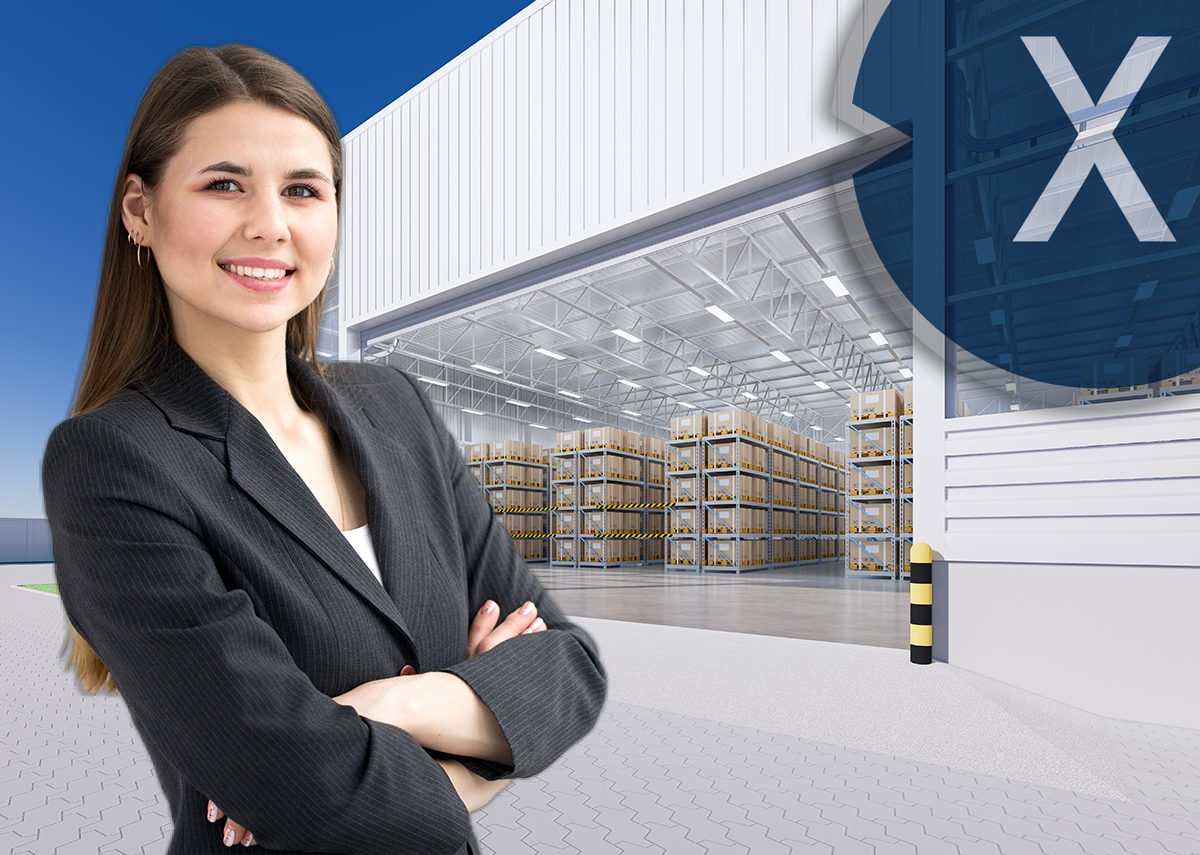
Energy-efficient new construction or energy-efficient renovation of industrial properties – Image: Xpert.Digital
Logistics 2.0: The symbiosis of construction professionals and solar companies for energy-efficient warehouse and office structures in the industrial real estate sector
➡️ Attention! We have special solutions for roofs lacking stability for photovoltaic systems! ⬅️
The ever-increasing importance of environmental awareness and sustainability has also reached the construction industry. Particularly in the area of logistics properties, such as warehouses and office buildings, the question arises whether it makes more sense to focus on energy-efficient renovation or on energy-efficient new construction. Both construction companies, with their expertise in building erection, and solar companies, with their expertise in the use of renewable energy sources, play a crucial role in this. Below, we take a closer look at this fascinating topic.
The importance of energy efficiency in the logistics industry
The logistics sector is a key factor in the global economy. However, the increasing demand for efficient goods transport and management leads to increased energy consumption, which is often accompanied by significant environmental impacts. This is where the concept of energy efficiency comes in, aiming to reduce the ecological footprint of logistics properties.
Recently, several large logistics companies have announced plans to retrofit their existing warehouses for energy efficiency. This demonstrates the trend towards more sustainable practices in the industry.
Energy-efficient new construction vs. energy-efficient renovation
Energy-efficient new building
Constructing buildings designed from the ground up with energy-efficient materials and technologies is a promising option. Construction companies can contribute their expertise in sustainable building practices in this area.
Governments worldwide are increasingly offering incentives for the construction of energy-efficient buildings. Subsidies and tax breaks are intended to encourage companies to invest in this area.
Energy-efficient renovation
Converting existing logistics properties to make them more energy-efficient is an economically and ecologically attractive option. This can involve the use of modern insulation materials, low-emissivity windows, and efficient heating and cooling systems.
Research institutions are developing innovative technologies that make it possible to bring older buildings up to the latest energy efficiency standards with minimal intervention. This opens up new opportunities for the renovation of logistics properties.
Construction companies for logistics properties: Expertise in sustainable construction
Construction companies specializing in logistics properties bear a significant responsibility for creating sustainable and energy-efficient structures. Their expertise ranges from planning to implementation and the integration of state-of-the-art technologies.
In the competition for energy-efficient building projects, some construction companies are relying on innovative approaches such as modular construction and the use of recycled materials to further improve the environmental footprint of their projects.
Solar companies: Integrated renewable energy sources
Integrating renewable energy sources like solar power is key to reducing the energy consumption of logistics properties. Solar companies play a vital role here by planning, installing, and maintaining solar power systems.
Advances in solar technology have led to more efficient and cost-effective solar power systems. This makes the integration of solar energy into logistics properties even more attractive.
Synergies and future outlook
Collaboration between construction companies and solar energy companies opens up interesting synergies. The seamless integration of sustainable building materials and renewable energy sources can lead to buildings that are not only energy-efficient but also aesthetically pleasing and functional.
The choice between energy-efficient new construction and energy-efficient renovation of logistics properties depends on many factors, including costs, location, and the company's long-term vision. However, close collaboration between construction and solar energy companies undoubtedly plays a crucial role in creating sustainable solutions for the logistics sector. The continuous development of technologies and the promotion of environmentally friendly practices offer hope for a promising future for energy-efficient logistics properties.
📣 Energy-efficient renovation and new construction, consulting, planning and implementation for industry, retail and municipalities
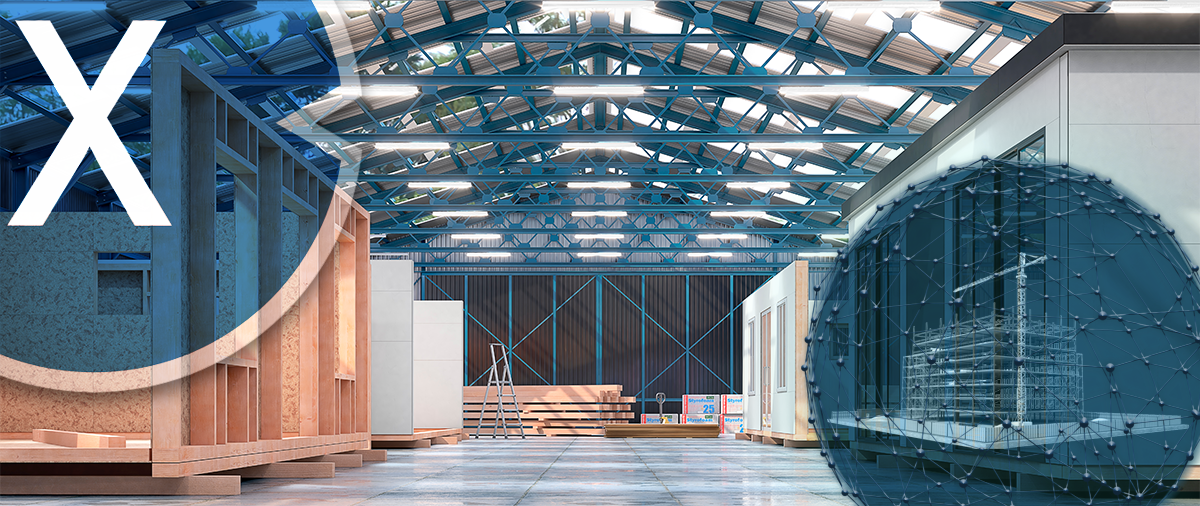
Our experienced team supports you in optimizing your buildings to reduce energy consumption and promote sustainable energy use with photovoltaics. We analyze your individual needs and develop customized concepts that are both economically and ecologically sound. Whether it's the energy-efficient renovation of existing buildings or the construction of new, energy-efficient structures, we are here to help. Industrial plants, retail buildings, and municipal facilities can reduce their energy costs, minimize their environmental impact, and simultaneously improve the comfort and efficiency of their buildings with our tailored solutions.
👨🏻 👩🏻 👴🏻 👵🏻 Energy-efficient renovation and new construction, consulting, planning and implementation for private households
We offer comprehensive support for private households in the energy-efficient renovation and new construction of buildings with photovoltaics. Our experienced team is at your side to assist you with consulting, planning, and implementing your sustainable energy solutions. We analyze your energy consumption, identify potential savings, and develop customized concepts to improve your energy efficiency. From improving building insulation and installing energy-efficient windows and doors to installing photovoltaic and solar thermal systems – we guide you step by step to make your home more energy-efficient and environmentally friendly. Trust in our expertise and benefit from the numerous advantages that energy-efficient renovation and the use of renewable energies offer. Together, we'll create a sustainable future for your home.
Plan your solar system for the most common applications conveniently online with our solar system planner!
With our user-friendly solar system planner, you can design your individual solar system online. Whether you need a solar system for your home, your business, or for agricultural purposes, our planner allows you to consider your specific requirements and develop a customized solution.
The planning process is simple and intuitive. You simply enter the relevant information. Our planner takes this information into account and creates a customized solar system that meets your needs. You can try out different options and configurations to find the optimal solar system for your application.
Furthermore, you can save your plan to review it later or share it with others. Our customer service team is also available to answer any questions and provide support to ensure your solar system is optimally planned.
Use our solar system planner to design your individual solar system for the most common applications and accelerate the transition to clean energy. Get started now and take an important step towards sustainability and energy independence!

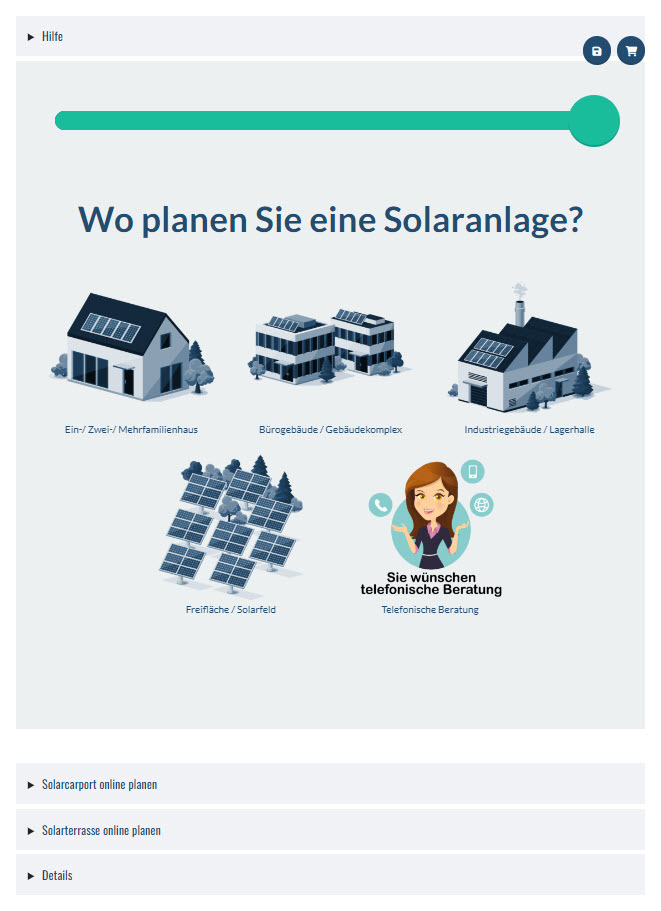
The solar system planner for the most common applications: Plan your solar system online here - Image: Xpert.Digital
More information here:
Efficient heating for commerce and logistics: Emission-free heating systems in focus
Emission-free heating systems of the future for industrial properties in the commercial sector, for logistics halls and buildings
The rapid development of emission reduction and sustainability technologies has led to increased demand for emission-free heating systems. Particularly in industrial properties, commercial buildings, logistics centers, and other commercial buildings, there is a significant need to ensure both energy efficiency and environmental compatibility. In this context, various innovative heating solutions are gaining importance, including the Carbon Heat System, infrared heating, heat pumps, and air conditioning systems. These technologies not only offer an emission-free heat source but also promise cost savings and improved building performance.
Carbon Heat System – Heating with carbon fiber
One of the most promising developments in the field of emission-free heating systems is the Carbon Heat System. This innovative technology uses carbon fiber as a heat source. Carbon fiber has an exceptional ability to distribute heat evenly and store it for extended periods. This enables efficient and continuous heating of spaces without the need for environmentally harmful fuels. The heat is emitted via infrared radiation, providing pleasant and targeted warmth to objects and people in the room.
Infrared heaters – efficiency through targeted radiant heat
Infrared heaters are already known for their ability to generate targeted radiant heat. In the context of emission-free heating systems, they offer an attractive option for commercial buildings and industrial halls. These heaters don't heat the air in the room, but rather the surfaces they are directed at. This results in direct heat transfer to people and objects, similar to the warmth of the sun. This leads to more efficient heat transfer and less energy loss. Furthermore, infrared heaters require little maintenance and have no moving parts, which increases their lifespan.
Heat pumps – effectively using ambient heat
Heat pumps are a proven technology for converting ambient heat into heating energy. They extract heat from the environment—be it the ground, water, or air—and use it to heat buildings. Heat pumps operate efficiently and typically generate more heating output than they consume in electricity. This makes them an environmentally friendly alternative in industrial applications. New developments aim to further increase the efficiency of heat pumps and improve their adaptability to different environments.
Air conditioning systems – From cooling to heat recovery
Modern air conditioning systems have evolved from purely cooling systems to multifunctional units that can also be used for heating. Air conditioning systems with a heat pump function can utilize the heat from the outside air in winter to heat interior spaces. This ensures optimal use of available resources and contributes to energy savings. In addition, some systems employ innovative technologies such as heat recovery from process exhaust air to further increase efficiency.
A promising future for emission-free heating systems
The development of emission-free heating systems has the potential to revolutionize the energy efficiency and sustainability of industrial properties, commercial buildings, logistics centers, and other structures. Technologies such as the Carbon Heat System, infrared heating, heat pumps, and air conditioning systems enable companies not only to reduce their CO2 emissions but also to lower their operating costs. The combination of environmental friendliness and efficiency makes these solutions a promising choice for the heating systems of the future.
Smart solutions for industrial properties: technology, sustainability and flexible room concepts
Industrial real estate and the exploration of flexible space concepts: A revolution in the industry
The real estate world is constantly evolving, and the industrial real estate sector is no exception. In recent years, a remarkable trend has emerged – the increasing importance of flexibility in industrial properties. This trend has led to intensive research into flexible space concepts that integrate traditional models such as multi-tenant buildings and co-working spaces into the industrial real estate landscape.
The need for flexibility in industrial real estate
Progressive globalization, technological innovations, and changing working methods have drastically altered the business landscape. Companies are increasingly seeking flexible solutions to adapt to evolving demands. In this context, industrial companies have also recognized that the adaptability of their real estate is crucial for responding agilely to market dynamics. Traditional, rigid real estate models that offer little room for change are increasingly becoming obsolete.
The Emerging Era of Multi-Tenant Buildings in Industry
Multi-tenant buildings, once primarily found in the office real estate market, are now gaining importance in the industrial real estate sector. These buildings offer multiple rental spaces that can be used by different companies. This allows businesses to adapt and scale their spaces according to their current needs. The advantages of such buildings lie not only in their flexibility but also in the ability to share resources such as infrastructure and services, which can lead to cost savings.
Revolutionary co-working spaces in industry
The success of co-working spaces in the office sector has paved the way for similar concepts in the industrial real estate industry. These innovative spaces allow multiple companies to work together in one building. The exchange of ideas, resources, and technologies in such shared areas can create synergies that have the potential to boost the innovative capacity of the participating companies. Co-working spaces also offer young startups and innovative companies the opportunity to develop in a supportive environment.
Technological integration and sustainability
The integration of technology into flexible industrial properties plays a crucial role. Smart building systems, Internet of Things (IoT) technologies, and data-driven analytics enable users to utilize spaces more efficiently and optimize operating costs. At the same time, sustainability has become a key concern. Flexible space concepts offer the opportunity to use resources more efficiently and integrate green technologies, thereby reducing the environmental footprint of industrial properties.
The future of industrial real estate: flexible, innovative and adaptable
The trend toward flexible space concepts in the industrial real estate sector is a clear indication that the industry is seeking to adapt to new demands. Research into multi-tenant buildings and co-working spaces in this context demonstrates how property owners and developers are striving to find innovative solutions to provide businesses with the necessary flexibility. With advancing technology and a stronger focus on sustainability, these developments are likely to fundamentally change the way industrial real estate is used—moving toward an agile, collaborative, and future-oriented environment.
From warehouse to customer: The challenges of the last mile in e-commerce
Industrial and logistics real estate in the e-commerce age: The changing demand
In recent years, e-commerce has revolutionized the way people shop and consume products. This boom in online retail has not only impacted consumer behavior but also the entire logistics and supply chain. As a result of these changes, the demand for industrial and logistics real estate has shifted dramatically. This section examines how the e-commerce boom has influenced the demand for warehouse and logistics properties and identifies key trends and developments in this sector.
Increasing demand for warehouse and logistics space
E-commerce has led to an exponential increase in orders, which in turn has resulted in a greater need for warehouse and logistics space. Online retailers need warehouses to keep their products in stock and respond quickly to orders. The demand for large, modern warehouses in convenient geographic locations has risen sharply.
Changes in location and infrastructure
The strategic location of industrial and logistics properties has changed significantly due to e-commerce. Warehouses and distribution centers now need to be located closer to metropolitan areas and urban centers to ensure fast delivery times. This has led to an increased focus on finding land in urban areas, which in turn affects land prices and the availability of space.
Modernization and automation of warehouses
To meet the increasing demands of e-commerce, companies have begun to modernize and automate their warehouses. Robotics, artificial intelligence, and automated warehouse management systems are increasingly being used to boost efficiency in order picking, packing, and shipping.
Sustainability aspects and green logistics
With growing awareness of environmental issues, sustainability is also gaining importance in the logistics and warehousing sector. Companies are increasingly relying on environmentally friendly technologies and practices to reduce the ecological footprint of their operations. Solar panels on warehouse roofs, electric vehicles for deliveries, and optimized route planning are just a few examples of this trend.
Changes in real estate investments
The e-commerce boom has also drawn investor interest to the industrial and logistics real estate market. Large institutional investors, private equity firms, and real estate investment trusts (REITs) recognize the potential of this property class, which is now seen as an attractive investment option. This has led to increased competition for prime industrial and logistics space.
Impact on labor demand
The automation and modernization of warehouses and logistics centers also impact labor demand. While jobs in traditional warehouse occupations may decline, new jobs are being created in the areas of technology, maintenance, and control of automated systems.
Last mile and same-day delivery
Consumer demand for fast delivery times has intensified the focus on the "last mile" of the supply chain. Same-day delivery and express deliveries have become crucial competitive factors. This has led companies to invest more in inner-city warehouse space to shorten delivery times.
Modernization, sustainability and changes
The e-commerce boom has significantly transformed the industrial and logistics real estate landscape. The increasing demand for warehouse and logistics space, the modernization of warehouses, the focus on sustainability, and changes in the real estate investment landscape are just some of the impacts. As the industry responds to these changes, it remains dynamic and adaptable to meet the demands of the modern e-commerce era.
From building plans to operation: How digitalization is reshaping industrial real estate
Industrial real estate in the age of digitalization: impacts and developments
In recent decades, advancing digitalization has influenced and transformed virtually every aspect of our lives. One sector also affected by this change is industrial real estate. This includes production facilities, warehouses, logistics centers, and other commercial properties used for the production and trade of goods. The impact of digitalization on industrial real estate is multifaceted, ranging from the planning and use to the management of these properties.
Digital technologies and their role in the planning of industrial real estate
The planning of industrial properties has fundamentally changed through the use of digital technologies. Virtual planning tools enable architects and engineers to create immersive 3D models of industrial plants. This allows potential weaknesses and bottlenecks to be identified and addressed as early as the design phase. Through the use of Building Information Modeling (BIM), all data relating to a building is digitally captured and managed, which improves communication and coordination among all parties involved in the construction.
Smart use of industrial real estate through IoT
The Internet of Things (IoT) has transformed the way industrial properties are used. Sensors and connected devices enable comprehensive monitoring and control of facilities. Production processes can be monitored and optimized in real time. For example, warehouses can use IoT technologies to automatically track inventory and utilize storage space more efficiently. In factories, machines and production lines are networked to optimize operations and minimize downtime.
Efficient management of industrial properties through digitalization
The management of industrial properties is also heavily influenced by digitalization. Property management software enables the centralized collection of information on leases, maintenance work, operating costs, and more. This facilitates efficient organization and optimization of resource utilization. Automated systems can, for example, schedule maintenance work in a timely manner, thus minimizing downtime.
New demands on the workforce
The introduction of digital technologies in industrial real estate is changing the demands placed on the workforce. New professional fields are emerging, such as IoT specialists, data analysts, and BIM experts. Employees in industrial real estate increasingly need digital skills to use these technologies effectively. At the same time, these changes are also opening up new opportunities for further training and career development.
Challenges and opportunities
Digitalization presents both challenges and opportunities for the industrial real estate sector. Data protection and data security are of paramount importance in networked industrial facilities. Furthermore, investments in digital technologies must be carefully considered to achieve genuine added value. At the same time, digital solutions offer the potential to increase the efficiency and sustainability of industrial properties, which can contribute to cost savings and environmental protection.
From planning to use to management
Digitalization has fundamentally transformed the industrial real estate sector. From planning and operation to management, digital technologies have a significant impact on the efficiency, flexibility, and productivity of industrial properties. Those who seize these opportunities and address the challenges will be able to effectively guide their properties into the digital future.
Expert advice on energy-efficient renovation and new construction with solar solutions and heat pumps/air conditioning systems

Konrad Wolfenstein
I would be happy to serve as your personal advisor.
You can contact me by filling out the contact form below or simply call me on +49 7348 4088 965 .
I'm looking forward to our joint project.
Write to me


Xpert.Digital – Konrad Wolfenstein
Xpert.Digital is a hub for industry focusing on digitalization, mechanical engineering, logistics/intralogistics and photovoltaics.
With our 360° Business Development solution, we support renowned companies from new business to after-sales.
Market intelligence, smarketing, marketing automation, content development, PR, mail campaigns, personalized social media and lead nurturing are part of our digital tools.
You can find more information at: www.xpert.digital – www.xpert.solar – www.xpert.plus
Keep in touch