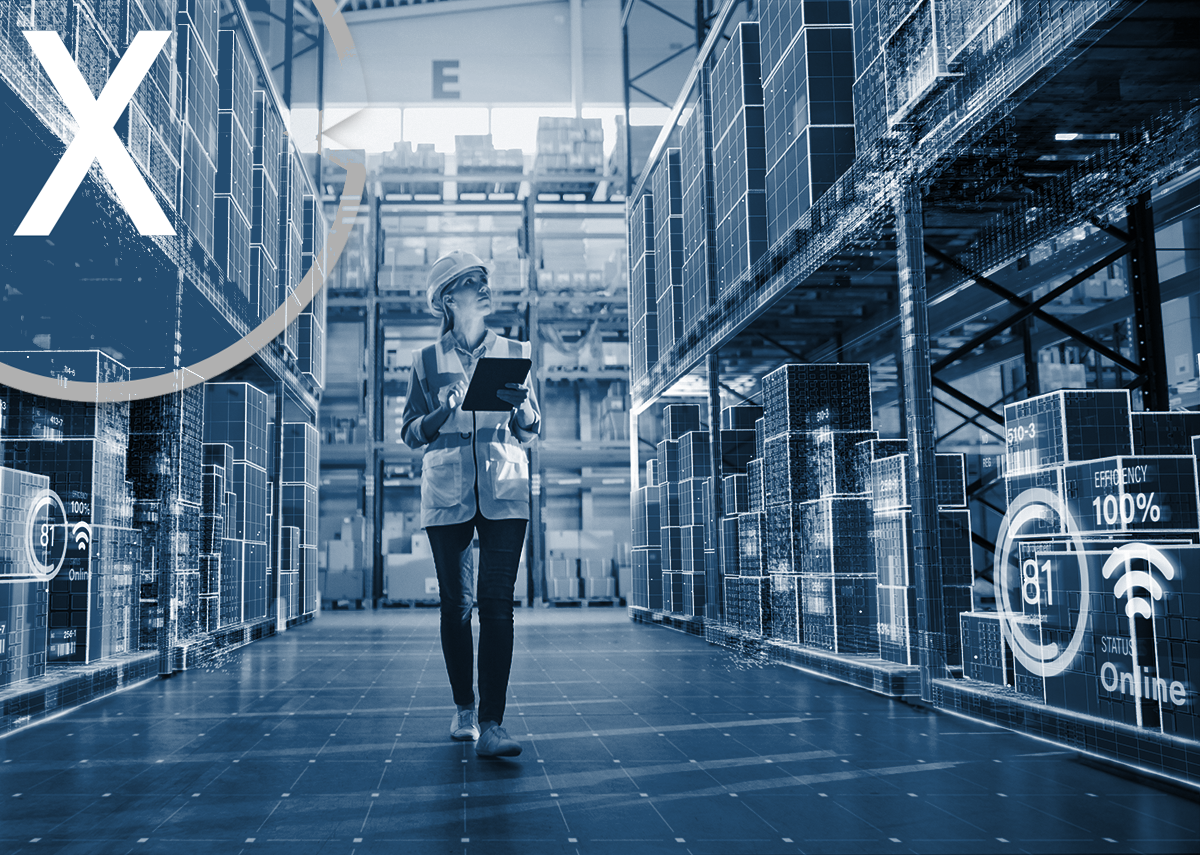
Industrial Metaverse: strong interest in logistics, global logistics, intralogistics & freight forwarding – Image: Xpert.Digital
🌐 Industrial Metaverse: strong interest in logistics
The Industrial Metaverse, an innovative virtual work environment, is gaining increasing importance, particularly in the logistics, transportation, and utilities sectors. A joint study by Nokia and EY, published in June 2023, with the participation of 860 executives from six countries, including Germany, the UK, the US, Brazil, Japan, and South Korea, highlights the promising prospects of this emerging field.
🏭 The Metaverse at Work: An In-Depth Study of the Transport, Supply and Logistics Industry
The Industrial Metaverse opens up new horizons for the world of work. It is no longer just a science fiction concept, but is already being actively researched and implemented in various industries. Logistics, transportation, and supply chain management, in particular, are showing a strong interest in and openness to the Industrial Metaverse.
📊 Three application scenarios in focus
The study identifies three main application scenarios that are of great importance in the Industrial Metaverse for the field of logistics and supply chain management:
1. 🌟 XR-enhanced UX research
Extended Reality (XR) offers the possibility of merging real and virtual worlds. In the logistics industry, this enables realistic user experience (UX) research. Companies can use XR technologies to create prototypes of warehouses, loading docks, and transport routes, and analyze usability and efficiency even before making physical investments. This saves time and resources and allows for the optimal design of logistics processes.
2. 🤖 Autonomous delivery robots
The Industrial Metaverse offers the ideal environment for developing and training autonomous delivery robots. In a virtual world, companies can simulate scenarios in which autonomous robots transport packages from one location to another. This allows them to prepare the robots for a wide variety of situations and optimize their performance before deploying them in the real world. The logistics industry hopes this will lead to increased efficiency and speed in package delivery.
3. 📦 Supply chain optimization
Integrating the Industrial Metaverse into supply chain optimization is a key aspect for the logistics industry. By creating digital twins of warehouses, distribution centers, and transportation routes, companies can monitor and optimize their supply chains in real time. Bottlenecks can be identified and resolved early, resulting in more punctual and cost-efficient deliveries. This leads to overall improved logistics performance.
🚀 Expectations for the Industrial Metaverse
The study results show that logistics, transportation, and supply chain management are particularly receptive to the Industrial Metaverse. Executives expect the relevant applications to accelerate the onboarding of external partners and fundamentally change how fleets are optimized, bottlenecks are identified, and warehousing and distribution processes are configured.
A key expectation is the complete integration of data across different locations. This enables seamless collaboration and communication between various stakeholders within the supply chain. Virtual environments in the Industrial Metaverse provide the platform for this integrated collaboration, where assets can be managed within a shared virtual environment.
🌟 Changes and Establishment
The Industrial Metaverse promises to fundamentally transform the world of work in logistics, transportation, and supply chain management. The results of the Nokia and EY study show that this sector is particularly receptive to the new possibilities offered by the Metaverse. The identified application scenarios, including XR-enhanced UX research, autonomous delivery robots, and supply chain optimization, offer promising avenues for increasing efficiency and performance in the logistics industry.
Integrating the Industrial Metaverse into work processes enables better collaboration, real-time supply chain monitoring, and the optimization of logistics operations. Companies that adopt this technology early could gain a decisive competitive advantage and significantly influence the future of logistics. It will be exciting to see how the Industrial Metaverse develops and establishes itself in the workplace in the coming years.
📣 Similar topics
- 🌐 The Industrial Metaverse: The Future of Logistics
- 🤖 Autonomous delivery robots in the metaverse
- 📈 Logistics in Transition: Industrial Metaverse
- 🏭 Metaverse Revolution: Focus on logistics
- 📊 Potential of the Industrial Metaverse in Logistics
- 🌟 Industrial Metaverse: Opportunities for Logistics Companies
- 🔄 The transformation of the logistics industry in the metaverse
- 📦 Virtual Warehouses: Metaverse in Logistics
- 🚚 Logistics 2.0: The Industrial Metaverse
- 💼 The changing world of work: Metaverse in logistics
#️⃣ Hashtags: #IndustrialMetaverse #Logistics #MetaverseRevolution #SupplyChainOptimization #AutonomousRobots
🗒️ Xpert.Digital: A pioneer in the field of Extended and Augmented Reality

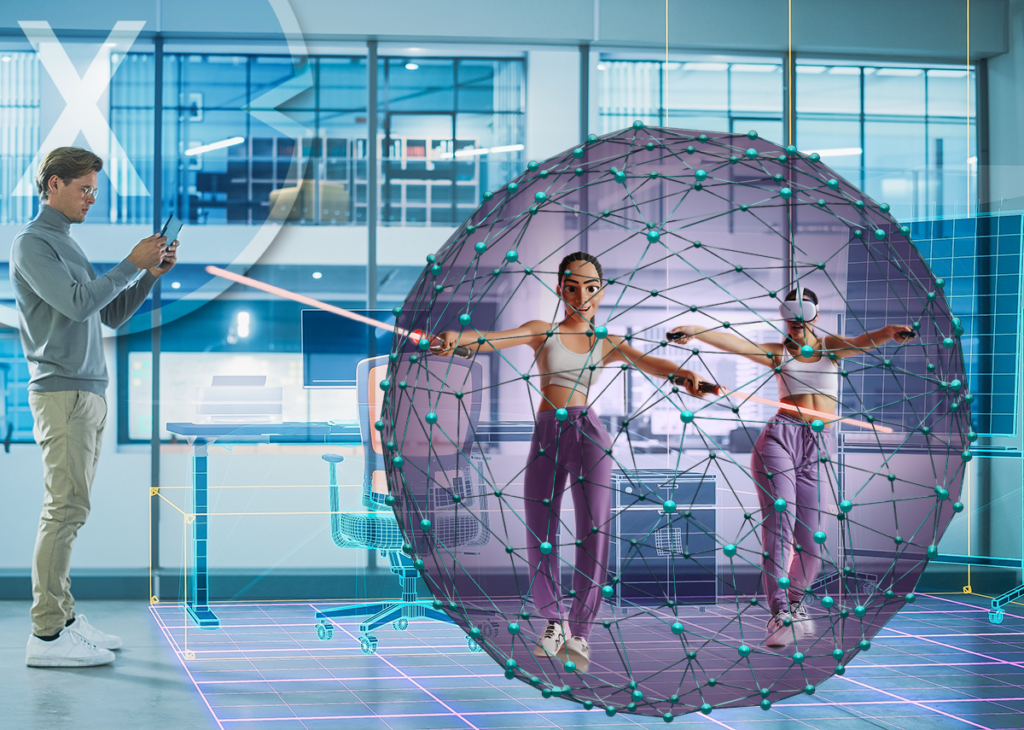
Finding the right Metaverse agency, planning office, or consulting firm - Image: Xpert.Digital
🗒️ Finding the right Metaverse agency, planning office, or consulting firm – Search and search: Top Ten Tips for Consulting & Planning
In the age of digitalization, where technologies such as Extended Reality (XR) and the metaverse are constantly gaining in relevance, Xpert.Digital is positioning itself as a thought leader and pioneer. With over 1,500 specialist articles, Xpert.Digital is establishing itself as a central point of contact for the industry.
🌌 Extended Reality (XR): The best of both worlds
Extended Reality is an umbrella term encompassing Virtual Reality (VR), Mixed Reality (MR), and Augmented Reality (AR). Xpert.Digital is dedicated to creating impressive XR experiences that are both informative and entertaining.
- Interactive experiences: XR allows users to immerse themselves in virtual worlds and interact with their environment in ways that were previously unimaginable.
- Education and training: XR can be used for educational purposes to convey complex topics and concepts in an understandable and tangible way.
- Entertainment: Whether games, films or art – XR opens up new horizons in digital entertainment.
🔮 Augmented Reality (AR): Seeing the world with digital eyes
Augmented Reality, a particular focus of Xpert.Digital, makes it possible to integrate digital information or graphics into the real world. The possibilities are virtually limitless.
- Marketing and advertising: AR can be used to create interactive advertising campaigns that engage customers in a completely new way.
- Everyday assistance: From navigation apps that project the route directly onto the street, to furniture apps that show what a new sofa would look like in the living room – AR makes it possible.
🌐 The Metaverse: The Next Big Thing
The metaverse is a virtual world where people can interact through avatars and create shared experiences. Xpert.Digital recognizes the enormous potential of the metaverse and is working to translate this potential into usable products and services.
- Social interaction: The Metaverse offers the opportunity to connect with people from all over the world and share common experiences.
- Economy and trade: In the Metaverse, virtual goods and services can be traded, opening up completely new business models and sources of income.
- Creative freedom: From building your own worlds to designing individual avatars – the metaverse is a place of endless creative possibilities.
🚀 Xpert.Digital at the forefront of innovation
Xpert.Digital demonstrates how a company can be at the forefront of the technological revolution. With their focus on XR, AR, and the metaverse, they are well-positioned to shape and define the future of digital interaction.
More information here:
🌐 Metaverse and Transport: An exciting development
We are currently witnessing an exciting development in the field of transportation, supply chain management, and logistics, which is surpassing other industries in the adoption of industrial and business metaverses. According to a recent study, 61 percent of the surveyed companies have already gained practical experience with these metaverses, whether through pilot projects or the implementation of use cases. Interestingly, 98 percent of those who have not yet gained any experience plan to use the technology within the next two years. In this section, we will examine in more detail the trends and developments in the field of metaverses and their impact on transportation, supply chain management, and logistics.
🌍 Metaverse usage worldwide
According to the study, the USA and the UK are already leading the way in Metaverse usage. Over 70 percent of respondents in both regions have already tested or implemented a use case. In comparison, Japan, South Korea, and Germany lag behind in Metaverse usage in the areas of transportation, supply chain management, and logistics. However, there are encouraging signs here as well, since 100 percent of respondents in these countries indicate plans to use Metaverse within the next two years.
🚀 The Metaverse and its meaning
But what exactly is the Metaverse, and how can it revolutionize the transport and logistics sector? The Metaverse is a virtual universe that links digital and physical realities. It's a space where users can interact with each other using immersive technologies like Virtual Reality (VR) and Augmented Reality (AR). The Metaverse offers unlimited possibilities for collaboration, training, planning, and task execution within a virtual environment.
📚 Training in the Metaverse
One area where the metaverse is already having a positive impact is the training and development of employees in the transport and logistics sector. Companies are using virtual training environments to train employees in safe and realistic scenarios. This can be particularly beneficial in areas such as the transport of hazardous materials or the operation of complex machinery. Employees can familiarize themselves with the challenges they will face in the real world in a safe virtual environment, without exposing themselves to actual risks.
🌐 Process optimization in the metaverse
Another interesting aspect of the Metaverse in transportation is the ability to visualize and optimize complex logistics processes. Companies can create 3D models of their supply chains to identify bottlenecks and inefficient areas. This allows them to plan more effective routes, optimize inventory levels, and reduce delivery times. The visual representation of logistics processes in the Metaverse offers a new approach to process optimization.
🤝 Collaboration in the Metaverse
The integration of metaverse technologies into the transportation and logistics sector also impacts communication and collaboration within companies and between different stakeholders in the supply chain. Virtual meeting rooms and conferences in the metaverse enable employees to collaborate regardless of their physical location. This can increase efficiency and reduce the need for physical meetings and travel, leading to cost savings.
🚗 Metaverse in transportation
Another interesting application of the metaverse in transportation is the use of augmented reality (AR) in the maintenance of vehicles and equipment. Technicians can use AR glasses or devices to access important information and instructions while performing repairs or maintenance. This can reduce maintenance time and minimize errors, as technicians have direct visual access to the necessary information.
🚚 Metaverse in the supply chain
Regarding the supply chain, the Metaverse also offers the opportunity to make the entire process more transparent and traceable. Through the integration of blockchain technology, companies can view real-time information about the status and location of goods within the supply chain. This builds trust and enables companies to react more quickly to irregularities and minimize supply bottlenecks.
🔒 Security considerations in the metaverse
However, implementing metaverse technologies requires not only technical expertise but also security considerations. Since many of these applications rely on sensitive data and information, it is crucial to implement robust security measures to prevent data leaks and cyberattacks.
👩🏫 Employee training
One of the challenges companies face when adopting the metaverse is employee training. Because these technologies are often new and complex, it's important to provide training programs to ensure employees can use them effectively.
❓ Open questions and challenges
It's also worth noting that the development of the Metaverse is still in its infancy, and there are many open questions and challenges that need to be addressed. These include legal and ethical issues, such as protecting user privacy and regulating virtual currencies within the Metaverse.
🌐 The future of the metaverse in the transport and logistics sector
The metaverse will undoubtedly revolutionize the transportation, supply chain management, and logistics sectors. It offers opportunities for training and further education, process optimization, improved communication and collaboration, enhanced vehicle and equipment maintenance, and more transparent supply chain tracking. Companies that invest in these technologies early could gain a competitive advantage and be better prepared for the future.
The future of the metaverse in the transport and logistics sector looks promising, and it will be exciting to see how this technology evolves and how companies use it to improve and streamline their operations. It remains to be seen what innovative applications and solutions will emerge in the coming years, but one thing is certain: the metaverse has the potential to fundamentally change the way we understand transport and logistics.
📣 Similar topics
- 🌐 Metaverse on the rise: How it's influencing transport and logistics
- 🚚 Metaverse: The Future of the Supply Chain
- 📈 Metaverse technologies in the transport sector: Current trends
- 🌟 Metaverse in Logistics: Opportunities and Challenges
- 👥 Metaverse and teamwork: The new dimension in logistics
- 🛠️ Metaverse in maintenance: Increasing efficiency in transport
- 🔗 Metaverse and Blockchain: Transparency in the Supply Chain
- 🔒 Security in the Metaverse: Protecting sensitive data
- 📚 Training for the Metaverse: Getting employees ready
- 🌄 The future of the metaverse in transportation
#️⃣ Hashtags: #Metaverse #Transportation #Logistics #SupplyChain #Technology
📋 Challenges and difficulties in the industrial and corporate metaverses
🌐 The introduction of metaverse technologies across various industries undoubtedly holds great potential for transforming how businesses operate and providing innovative solutions. However, companies, particularly in the transportation, supply, and logistics sectors, also face a multitude of challenges and difficulties in leveraging the metaverse.
🤝 One of the first and most important points that companies in these industries need to consider is identifying internal experts who can clearly demonstrate the benefits of the metaverse. This is a common challenge across many industries. Employees need to be trained and educated to fully understand and utilize the potential of this technology. This requires time and resources for training and professional development.
📊 Companies in the transport, supply, and logistics sectors that already have experience using the Metaverse report slightly lower levels of difficulty in terms of project duration, budget, and readiness for implementation compared to other industries. This could be due to the fact that they have already gone through a learning curve and are better prepared for the challenges.
📈 An interesting aspect is that 24 percent of the surveyed companies with experience in the metaverse report a reluctance to adopt the technology, compared to an average of 30 percent in other industries studied. This could indicate that companies in the transportation, utilities, and logistics sectors recognized the benefits of metaverse use cases early on and are therefore less hesitant.
🧠 However, the biggest concerns in these industries revolve around a lack of expertise and technical difficulties. These are the two most frequently cited challenges faced by experienced companies. The lack of expertise could stem from the fact that metaverse technology is relatively new and there aren't enough experts who fully understand it. The technical difficulties could relate to the complexity of the data, which is often stored in silos across different locations and with suppliers.
📡 Managing and centralizing this data is crucial for delivering metaverse use cases. Some organizations need to significantly improve their data infrastructure to meet metaverse requirements. This could mean modernizing outdated systems or integrating data from disparate sources. A transportation director at a global automaker reported that his organization had already invested considerable time and resources in digitization, including a large-scale internal technology migration from legacy to cloud solutions. This has limited the budget and resources available for the metaverse, particularly when it comes to scaling.
🌐 Another issue, particularly relevant in some countries, concerns infrastructure. A reliable network is crucial for running metaverse and Industry 4.0 solutions. However, some countries lack the technical capacity and bandwidth to efficiently support the metaverse. This can significantly hinder the adoption and use of this technology and may require infrastructure investment.
🚀 It is important to emphasize that despite these challenges, the potential of the metaverse for companies in the transportation, supply, and logistics sectors is significant. The technology offers opportunities to optimize logistics processes, train employees in virtual environments, and improve customer communication. However, companies must be prepared to address these challenges and take the necessary steps to unlock the full potential of the metaverse.
🌐 The adoption of the metaverse in industrial and enterprise applications is an exciting yet complex process. Companies must focus on training their employees, improving their data infrastructure, and overcoming technical challenges to successfully enter this new era of digital transformation. Despite the difficulties that may arise, the metaverse offers promising opportunities for companies willing to address the challenges and reap the benefits.
📣 Similar topics with emojis:
- 🌐 Metaverse in Industry: Challenges and Opportunities
- 💼 Metaverse technologies in businesses: Overcoming difficulties
- 🚚 Transport and logistics in the metaverse: A new era
- 📚 Training in the Metaverse: Knowledge as the key to success
- 🌐 Metaverse infrastructure: Expansion for enterprise-related applications
- 💡 Metaverse Potential: Challenges and Solutions
- 🌐 Metaverse technology in the utilities industry
- 🔧 Technical hurdles in the metaverse: Strategies for overcoming them
- 🌐 Metaverse Use Cases in Industry: Experiences and Insights
- 📈 Metaverse Transformation: Success Factors for Companies
#️⃣ Hashtags: #Metaverse #Industry40 #Challenges #Companies #Digitalization
Our Industrial Metaverse Configurator
Simply try out our universally applicable (B2B/Business/Industrial) Metaverse Configurator for all CAD / 3D demo options:
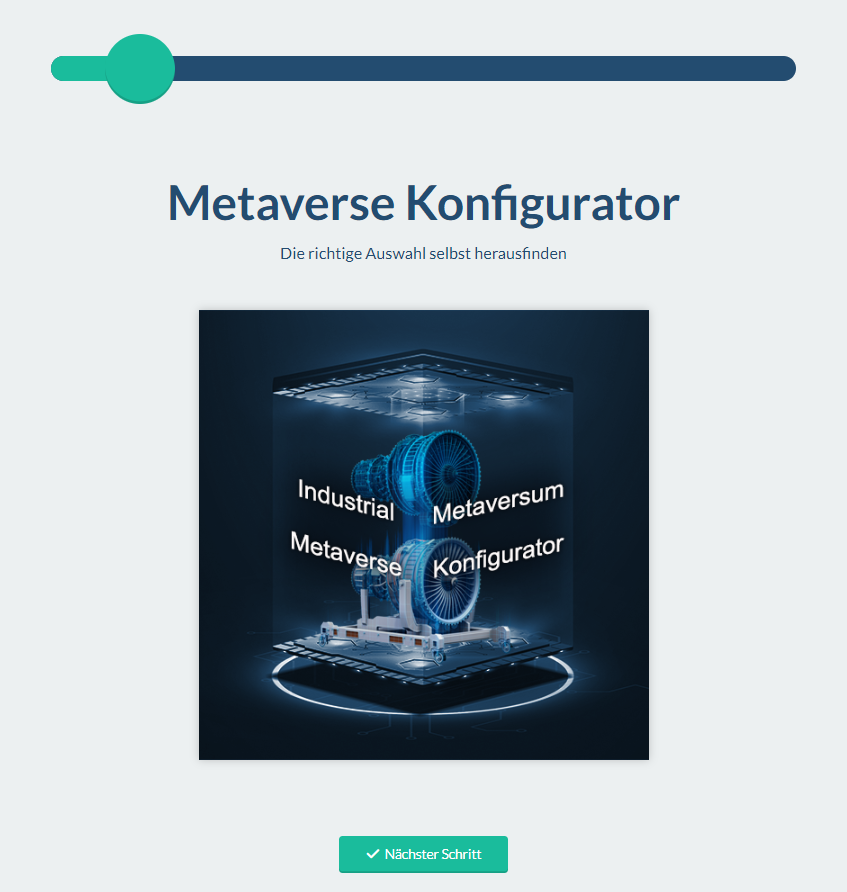

Xpert (B2B/Business/Industrial) Metaverse Configurator for all CAD / 3D data, usable on all end devices, one platform!
Related to this:
🌐 The Metaverse in the Corporate World
The metaverse has gained considerable importance in recent years and is increasingly becoming an integral part of the business world. A study published by Nokia and EY, titled "The Metaverse at Work," shows that companies that have already implemented industrial metaverse use cases are recognizing significant benefits. This section will delve deeper into the key findings of this study and demonstrate how the industrial metaverse is transforming the business world.
1. 💰 Reduction of capital expenditures (15%)
The study shows that companies that have integrated the Metaverse into their business operations have seen significant savings in capital expenditures. This could be due to various factors, including the ability to hold virtual meetings and training sessions, which reduces travel and office space costs. Furthermore, the Metaverse enables more efficient resource utilization, resulting in cost savings.
2. 🌿 Sustainability (10%)
Another significant advantage that companies see in the industrial metaverse is improved sustainability. This is particularly important at a time when environmental awareness and sustainability play a central role in corporate strategy. The metaverse enables companies to reduce their CO2 emissions by utilizing virtual spaces and consuming fewer physical resources.
3. 🔒 Improved safety (9%)
Security is a crucial aspect for businesses, and the metaverse offers opportunities for improvement. Virtual training and simulations can help reduce accidents and security issues. Furthermore, security scenarios can be tested and practiced in virtual environments without incurring physical risks.
🔮 The future of the metaverse in business
The study results also show that most companies firmly believe that the metaverse is not a passing fad, but a long-term technology trend. Only 2% of respondents consider the metaverse a buzzword or temporary hype. This demonstrates that metaverse technologies are here to stay.
The fact that 58% of companies with future metaverse plans have already implemented or tested at least one metaverse-related use case underscores their willingness to invest in this new technology. These use cases range from virtual conferences and training to product development and marketing in virtual environments.
One striking finding from the study is that almost all (94%) of those who have not yet begun their metaverse journey plan to do so within the next two years. This highlights the growing pressure on businesses to prepare for the metaverse and leverage the benefits of this technology.
The industrial metaverse has the potential to fundamentally change the way businesses operate. It enables virtual collaboration, training, and simulations in ways previously impossible. Companies that invest in the metaverse early on can reap the benefits in terms of cost reduction, sustainability, and security, while simultaneously gaining a competitive edge.
The study "The Metaverse at Work" by Nokia and EY shows that the metaverse is not just an exciting concept, but also offers real added value for businesses. It's a technology that will shape the future of the business world, and companies should prepare for it to remain competitive and seize the opportunities the metaverse presents. 🚀🏢
📣 Similar topics
- Metaverse and the corporate world: A revolution 🌐
- Reduce capital expenditures with the Metaverse 💰
- Sustainability in the industrial metaverse ♻️
- Security in the Metaverse: Virtual Solutions 🔒
- Metaverse Trends for Businesses 📈
- Metaverse technologies: More than just hype 🚀
- Virtual collaboration in the metaverse 🤝
- Metaverse strategies for businesses 💼
- The future of work: The industrial metaverse ⚙️
- Benefits of the Metaverse for businesses at a glance 📊
#️⃣ Hashtags: #Metaverse #CorporateWorld #CapitalExpenditure #Sustainability #Security
🗒️ If you don't understand something or need advice, we also offer training courses and workshops
Metaverse & Extended Reality training, lecture or workshop for Augmented, Mixed and Virtual Reality – Xpert.Digital
In today's digital age, technology is evolving at a rapid pace. New terms and technologies are constantly emerging, requiring understanding and mastery. If you're struggling to keep up with topics like the metaverse, XR technologies, or immersive 3D, you're not alone.
More information here:
🌐 The Industrial Metaverse
It is claimed that the industrial metaverse creates significant business value and offers numerous opportunities for innovation and growth.
1. What is the industrial metaverse?
The industrial metaverse is an augmented digital world that merges physical and virtual realities. It goes beyond simple VR or AR applications, enabling companies to map their physical activities in a virtual environment. This can range from product development and manufacturing to distribution logistics.
2. The business value of the industrial metaverse
Companies that have already implemented metaverse use cases are convinced of their potential. In a survey, 80% of respondents stated that these use cases will have a significant or transformative impact on their business. This demonstrates that the industrial metaverse is not just hype, but actually offers measurable benefits.
3. Innovative capabilities through the combination of physical and virtual use cases
One of the most fascinating features of the industrial metaverse is the ability to connect physical and virtual use cases. This unlocks additional innovative capabilities that enable companies to accelerate the implementation, adoption, and monetization of Industry 4.0.
4. Use cases in the industrial metaverse
Companies can use the industrial metaverse in various areas to increase their business value:
Product development
Virtual prototypes and simulations make it possible to develop products faster and more cost-effectively.
production
Virtual factories can optimize processes and increase efficiency.
Sales and Marketing
Virtual showrooms and experience-oriented presentations help with customer acquisition.
Training and further education
Virtual training and simulations improve employee competence.
Customer service
Virtual agents and environments offer improved support and guidance.
5. Examples of companies in the metaverse
Large corporations like Microsoft and Facebook have already made massive investments in the metaverse. But smaller companies are also finding their place in this burgeoning digital world. Gaming companies like Epic Games have recognized the metaverse's potential and are developing platforms and content for it. Even retailers like Walmart and Kaufland are exploring the opportunities the metaverse offers for e-commerce and customer engagement.
6. Challenges and Risks
While the industrial metaverse holds great promise, it also presents challenges and risks that companies must consider. These include data privacy concerns, the security of virtual environments, and the need to train employees to use this technology.
7. Future Outlook
The industrial metaverse will continue to evolve and offer new opportunities. Technology is expected to constantly improve, and more companies are expected to take advantage of the metaverse. This could lead to a revolutionary change in how businesses operate and how people interact.
🚀 The industrial metaverse represents an exciting development in the business world. It promises significant business value by connecting physical and virtual use cases and offers innovative capabilities that can accelerate the implementation of Industry 4.0. Companies should prepare for this emerging technology and strategically plan their use cases to capitalize on the opportunities of the industrial metaverse.
🗒️ New territory for newcomers: What you should know now about blockchain, tokens, NFTs, wallets, cryptocurrency and the metaverse
(Consumer) Metaverse: New territory for newcomers – What you should know now – Image: Xpert.Digital
In today's digital world, terms like blockchain, NFTs, wallets, cryptocurrencies, and the metaverse have become increasingly prevalent. For newcomers, these terms can initially seem confusing and complex. Here, we attempt to explain these concepts clearly and provide you with important and interesting details.
More information here:

We are here for you - Consulting - Planning - Implementation - Project Management
Xpert.Digital - Pioneer Business Development
Smart Glasses & AI - XR/AR/VR/MR industry expert
Consumer Metaverse or Metaverse in general
If you have any questions, require further information or advice, please feel free to contact me at any time.

Konrad Wolfenstein
I would be happy to serve as your personal advisor.
You can contact me by filling out the contact form below or simply call me on +49 7348 4088 965 .
I'm looking forward to our joint project.
Write to me


Xpert.Digital - Konrad Wolfenstein
Xpert.Digital is a hub for industry focusing on digitalization, mechanical engineering, logistics/intralogistics and photovoltaics.
With our 360° Business Development solution, we support renowned companies from new business to after-sales.
Market intelligence, smarketing, marketing automation, content development, PR, mail campaigns, personalized social media and lead nurturing are part of our digital tools.
You can find more information at: www.xpert.digital - www.xpert.solar - www.xpert.plus
Keep in touch