
Published on: October 30, 2024 / Updated on: October 30, 2024 – Author: Konrad Wolfenstein
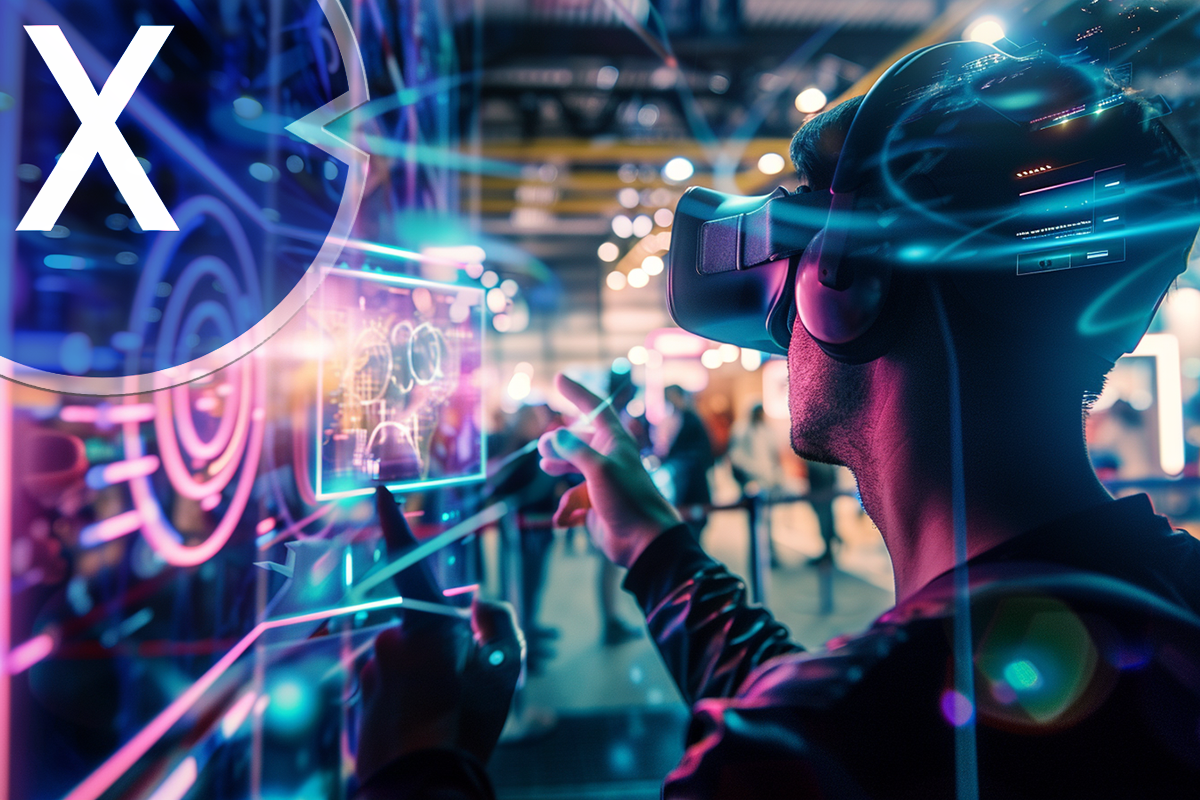
Improving customer satisfaction and interaction through AR training and tutorials – Image: Xpert.Digital
Augmented Reality: Further developing customer interaction and satisfaction through innovative training
Improving customer satisfaction and interaction through AR training and tutorials
Augmented Reality (AR) has undergone a remarkable transformation in recent years, evolving from an innovative technology into an effective tool that changes how businesses interact with their customers and improve customer satisfaction. Particularly in the area of training and guidance, AR unlocks enormous potential for making the customer experience interactive and personalized. In an era where customers increasingly seek intuitive, fast, and digital solutions, the use of AR is seen not only as improving customer service but also as a crucial factor in long-term customer loyalty.
1. A new approach to interactive training
Traditional training and instruction often rely on written manuals, online videos, or presentations. However, these methods have the disadvantage of often being difficult to understand and time-consuming, which can negatively impact the customer experience. AR addresses this by integrating information in real time and directly into the user's physical environment. For example, a customer needing assistance installing a product can receive detailed instructions via an AR application, which guides them step-by-step through the process with visual support. This not only reduces the error rate but also increases efficiency and customer satisfaction, as they feel less helpless and better informed.
AR enables companies to easily explain even complex processes to customers and drastically reduce training time. Furthermore, the interactive nature of the technology offers the opportunity to present information in a way that promotes learning and understanding. Users can explore the content at their own pace and follow along directly, without having to struggle through lengthy instructions.
2. Personalization of the customer experience
Personalizing the customer experience has emerged as key to increasing customer satisfaction. AR offers valuable support in this regard, enabling companies to tailor training experiences to the individual needs and preferences of each customer. For example, a user could launch a specific AR tutorial that covers only the steps relevant to them, or they could receive personalized recommendations based on their past behavior and preferences. This not only creates a customized experience but also gives the customer the feeling that the company takes their needs seriously.
Furthermore, AR can achieve an even deeper level of personalization through the integration of artificial intelligence (AI). AI-powered analysis of user behavior makes it possible to dynamically adapt learning content and respond to the customer's specific situation. For example, if it is detected that the customer is having difficulty with a particular step, the AR application could automatically display additional assistance to support them. This adaptive and context-sensitive approach to training increases customer satisfaction and the likelihood that the customer will follow the instructions correctly and have a positive experience.
3. Improving customer service and support processes through AR
In customer service, fast and precise problem resolution is crucial. AR has the potential to fundamentally change support by enabling customers to resolve technical issues independently or be guided by customer support without requiring a service representative to be physically present. For example, AR overlays can show customers where to install a specific component or activate a function, thereby reducing errors and shortening support times.
Additionally, support staff can use AR to directly analyze the customer's current situation through live views and overlays, and provide targeted instructions. This allows problems to be resolved faster and with greater precision, as the customer receives immediate visual feedback. The combination of visual learning and the ability to provide interactive support not only enhances customers' problem-solving skills but also significantly reduces the workload for customer service.
4. Promoting customer loyalty and brand loyalty
Seamless, supportive, and innovative customer service significantly strengthens customer loyalty. By utilizing AR technology, customers gain a high degree of autonomy and control over the product or service, which can increase their satisfaction and brand loyalty. Furthermore, the introduction of an innovative solution like AR signals to customers that the company is forward-thinking and utilizing new technologies to meet their needs. This positive brand perception can be crucial for long-term customer retention.
Another aspect is the emotional connection that can be strengthened through AR applications. Customers who have a particularly positive experience with AR content are more likely to remember the company and feel a stronger connection to the brand. An innovative and well-thought-out use of AR can thus make the difference between a one-time buyer and a loyal customer.
5. Increased efficiency and cost reduction
The use of AR in customer support and training offers advantages not only for customers but also for the company itself. AR training and tutorials can provide personalized customer service without requiring additional resources such as support staff or expensive field service visits. Since customers can resolve many issues independently without external assistance, the workload of support teams is reduced, and the associated costs decrease.
Integrating AR into customer support can help reduce returns and product complaints, as clear instructions help customers make fewer mistakes. Similarly, increased efficiency allows for better utilization of employee capacity, freeing up more time for complex tasks and thus optimizing service and company resources.
6. Application examples and industry potential
AR training and tutorials are now used in various industries, demonstrating the versatility and effectiveness of this technology. Particularly in the automotive and electronics sectors, AR is used to help customers better understand products and simplify installations. For example, when purchasing a new device, a customer can use an AR app that shows them how to configure the product correctly and activate specific functions.
AR is also increasingly being used in e-commerce and retail to improve the customer experience. Customers can use AR to virtually test products, learn about their applications, or better understand how a product works directly before buying it. This type of interactive, immersive experience leads to a higher willingness to buy and simultaneously reduces return rates.
7. Stable infrastructure required
Although AR offers many advantages, there are also challenges to consider. A significant obstacle is the technical complexity and the need for a stable infrastructure required to use AR applications. Not all customers have the necessary hardware or access to the fast internet connections that are often essential for AR applications. Therefore, companies must also provide alternative solutions for customers who lack access to these technologies.
Another important point is the usability of the applications. It is crucial that AR applications are designed to be intuitive and user-friendly, as a complicated or poorly functioning application could negatively impact customer satisfaction. Companies should therefore always focus on improving and adapting the user experience to ensure that AR applications are accessible and appealing to all customer groups.
However, the future prospects for AR in the area of customer satisfaction and interaction are extremely positive. With the rapid development of technologies such as 5G, advanced computer vision, and artificial intelligence, AR applications are expected to become even more precise, faster, and more powerful. This will enable companies to offer even more immersive and personalized experiences that closely meet customer needs.
Strategically deploy innovative technology
The use of augmented reality for training and instruction has the potential to sustainably improve customer satisfaction and interaction. Companies that strategically employ this innovative technology can offer their customers a unique and personalized experience that increases both efficiency and customer loyalty. AR makes it possible to convey complex information in an easily understandable way and empowers customers to independently solve problems or understand products.
In summary, AR is a powerful tool for taking customer interaction to the next level while simultaneously reducing service costs. The technology offers companies the opportunity to differentiate themselves from the competition through outstanding customer service and a positive customer experience. In an increasingly digital world, the use of AR is no longer just an optional addition, but is increasingly becoming an essential component of a future-oriented customer strategy.
Related to this: