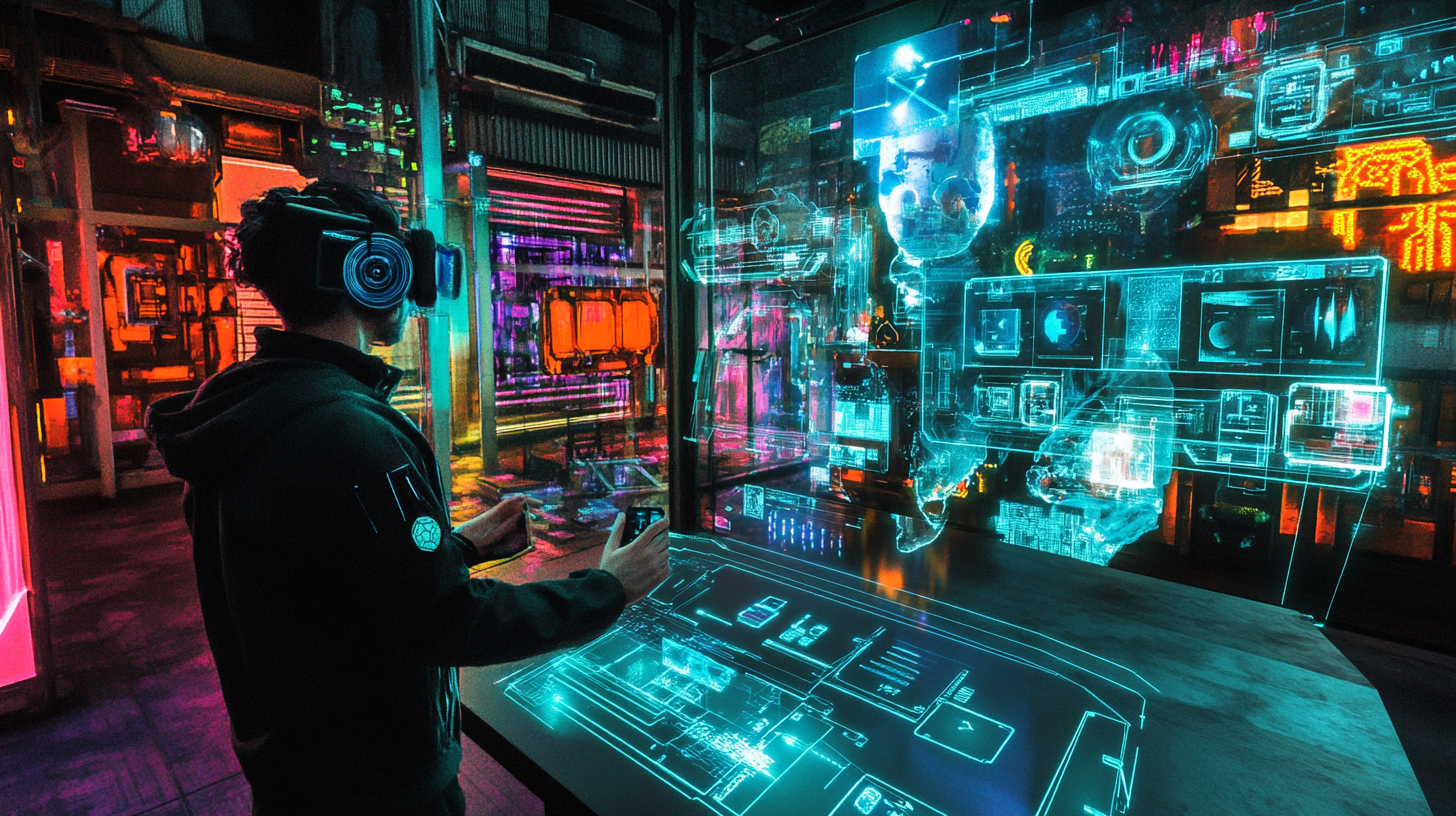
Is immersive engineering overtaking the metaverse? Siemens and Sony are leading the way – Image: Xpert.Digital
Forget the metaverse hype! Immersive engineering delivers now – Siemens and Sony are leading the way in industry
Is this the metaverse breakthrough? Immersive engineering with Siemens and Sony – the industry demonstrates what really works
The development of the metaverse and immersive engineering reveals an interesting dynamic, with the industrial metaverse in particular gaining increasing importance. While the general metaverse concept is still searching for viable business models, the industrial metaverse is already experiencing strong integration into various industries. Here is a detailed analysis of current trends and developments.
Immersive Engineering as a pioneer of the industrial metaverse
Immersive engineering, the integration of advanced virtual reality (VR), augmented reality (AR), and mixed reality (MR) technologies into industrial processes, is experiencing rapid growth. This is particularly evident through strategic partnerships, technological advancements, and increasing market forecasts.
Strategic partnerships and technological breakthroughs
Siemens and Sony Cooperation: A groundbreaking partnership between Siemens and Sony was unveiled at CES 2025. This partnership combines Siemens' NX software for product development with Sony's cutting-edge head-mounted display (HMD) technology. The goal is to realize the industrial metaverse through immersive technologies and take digital product development to a new level.
Applications in various industries
Immersive engineering is already used in numerous industries today:
- Automotive engineering: Virtual prototypes simplify design processes and reduce physical testing phases.
- Aerospace: Complex construction processes can be simulated and optimized in digital twins.
- Energy supply: AR-supported maintenance systems minimize plant downtime.
- Healthcare: VR-supported training for surgeons enables realistic practice scenarios.
Market growth and future prospects
Market forecasts for the industrial metaverse indicate enormous growth potential. Experts expect the market to increase from USD 32.71 billion in 2025 to an impressive USD 395.15 billion by 2034, with a compound annual growth rate (CAGR) of 32.05%.
Related to this:
- Metaverse / Multiverse: Siemens expands the Industrial Metaverse – From simulation to finished production site | Billion-dollar investment
- What is the Industrial Metaverse? How does it differ from 3D platforms?
The general metaverse between hype and reality
While the industrial metaverse is flourishing, the general metaverse faces major challenges. The question of whether it will experience sustainable development or end up as a failed concept is the subject of much discussion.
2025 as a crucial year
Andrew Bosworth, CTO of Meta, described 2025 as a "pivotal year" for the Metaverse. The pressure to deliver tangible results is mounting, especially as many investors are skeptical about the long-term viability of the concept.
Financial challenges
Despite Meta investing billions in the development of the Metaverse, its Reality Labs division remains unprofitable. A loss of $4.97 billion was recorded in the last quarter, leading to a strategic realignment.
Strategy change: Focus on mixed reality
Meta plans to launch "half a dozen" new AI-powered wearables and is increasingly focusing on mixed-reality applications. This change in strategy is intended to make the Metaverse more attractive and practical for both businesses and consumers.
Evolution instead of revolution: The role of immersive engineering
Immersive engineering does not necessarily represent a departure from the metaverse, but rather an evolutionary development with concrete economic benefits.
Practical applications as a success factor
While the general metaverse is often perceived as a vague vision, immersive engineering already offers concrete added value today:
- B2B orientation: Companies benefit directly from the technologies, be it in product development, maintenance or training.
- Technological convergence: Many of the technologies developed for the metaverse are being used in a targeted and efficient way in the industrial sector.
- Market readiness: While the general metaverse remains experimental, the industrial metaverse has already proven viable.
Key features of Immersive Engineering
- Realistic visualization: Detailed 3D models and simulations enable early analysis of products and processes.
- Interactive collaboration: Teams work remotely in shared virtual environments.
- Seamless integration: By connecting to existing CAD and PLM systems, immersive engineering can be easily integrated into existing development processes.
AI as a driver of immersive engineering
Artificial intelligence plays a central role in the further development of immersive technologies. Here are some of the most important AI applications:
1. Optimization of design processes
- Generative AI enables the automatic creation and optimization of designs.
- Automated design suggestions accelerate the creative process.
2. Improved visualization
- AI-powered renderings enable realistic visualizations in real time.
- Voice control and intuitive user interfaces improve interaction.
3. Data analysis and predictive maintenance
- Sensor-based AI systems detect potential sources of error early and optimize maintenance processes.
4. Personalization and adaptive systems:
- AI can individualize immersive learning platforms and personalize user experiences.
The future of the metaverse lies in immersive engineering
Current developments show that the general metaverse continues to face challenges, while the industrial metaverse and immersive engineering are establishing themselves as viable solutions. This is primarily due to their clear applicability and direct economic benefits.
In the future, immersive engineering and AI-based technologies are expected to be even more deeply integrated into industrial processes. Companies that adopt these technologies early on could gain significant competitive advantages and revolutionize how products are developed, tested, and maintained.
The development of the metaverse thus appears less as a radical revolution, but rather as a gradual adaptation to real needs and economic necessities.
Related to this:
Our recommendation: 🌍 Limitless reach 🔗 Connected 🌐 Multilingual 💪 Sales power: 💡 Authentic with strategy 🚀 Innovation meets 🧠 Intuition


From local to global: SMEs conquer the world market with a clever strategy - Image: Xpert.Digital
In an era where a company's digital presence determines its success, the challenge lies in creating an authentic, personalized, and far-reaching presence. Xpert.Digital offers an innovative solution that positions itself as the intersection of an industry hub, a blog, and a brand ambassador. It combines the advantages of communication and sales channels in a single platform and enables publication in 18 different languages. Cooperation with partner portals and the ability to publish articles on Google News and a press distribution list with approximately 8,000 journalists and readers maximize the reach and visibility of the content. This represents a crucial factor in external sales and marketing (SMarketing).
More information here:
Metaverse outdated? The true metaverse? Forget the metaverse hype! Immersive engineering is replacing the hype – background analysis
Immersive Engineering: The Development of the Metaverse in Industry
The landscape of digital technologies is undergoing a fascinating transformation, centered on the concepts of the metaverse and immersive engineering. While the original metaverse promise of a comprehensive, persistent virtual world for consumers is still awaiting widespread acceptance, a powerful and increasingly significant application is emerging in industry: the industrial metaverse, driven by immersive engineering. This development does not indicate a replacement of the metaverse concept, but rather a pragmatic and promising evolution focused on concrete, value-creating applications.
Related to this:
- The Industrial Metaverse and Digital Transformation: The Digital Lighthouse Project – Siemens Device Plant Erlangen (GWE)
- Metaverse: Differences between Industrial, Consumer, Customer, and E-Commerce Metaverses | Wanted & Wanted Top Ten Tips Series
Immersive Engineering in Detail: More Than Just Hype
Immersive engineering has evolved in recent years from a promising idea into a real and transformative force across various industries. It describes the use of advanced technologies such as virtual reality (VR), augmented reality (AR), and mixed reality (MR), combined with high-performance computing and artificial intelligence (AI), to create a profound and interactive experience in product development, manufacturing, and throughout the entire lifecycle of products and equipment.
Core principles and features of Immersive Engineering
Realistic visualization and immersion
Immersive engineering goes far beyond traditional 3D visualizations. It enables the representation of products, systems, and processes in a hyperrealistic, three-dimensional environment that fully immerses the user in the digital world. This is achieved through the use of head-mounted displays (HMDs), specialized projection systems, and advanced rendering techniques that create a convincing sense of depth, detailed textures, and realistic lighting. Engineers and designers can experience virtual prototypes in their actual size and environment, allowing for intuitive understanding and more precise evaluation.
Interactive and intuitive operation
Immersive environments are not only visually impressive but also interactive. Users can interact naturally with virtual objects and environments, for example, through gesture control, voice commands, or haptic feedback systems. This intuitive interaction enables direct manipulation of 3D models, the execution of virtual assembly and disassembly processes, or the exploration of complex plant structures as if they were physically present. This makes operation not only more efficient but also more ergonomic and user-friendly.
Collaborative work environments
A key advantage of immersive engineering lies in the possibility of location-independent collaboration. Teams from different disciplines and geographical locations can meet in shared virtual spaces to work together on projects. They can review virtual prototypes in real time, discuss design changes, simulate assembly processes, or run through maintenance scenarios – all as if they were in the same room. These collaborative capabilities accelerate decision-making processes, reduce communication barriers, and foster interdisciplinary collaboration.
Integration into existing workflows
Immersive engineering is not an isolated technology, but rather integrates seamlessly into existing engineering workflows and systems. It builds upon established CAD, CAE, and PLM systems, extending their functionality through immersive visualization and interaction. Data from these systems can be directly transferred to immersive environments, and changes made in the virtual world can be reflected back into the central data systems. This integration ensures a consistent data flow and avoids media breaks in the development process.
Data-driven insights and analyses: Modern immersive engineering systems are closely linked to data analytics and AI technologies. They can capture and analyze vast amounts of data from simulations, sensors, and production processes to gain valuable insights. For example, performance data from virtual prototypes can be analyzed to identify design optimizations, or sensor data from real-world equipment can be visualized in immersive environments to support maintenance teams in troubleshooting and repair. This data-driven decision-making increases the efficiency and quality of engineering processes.
Technological Foundations of Immersive Engineering
Head-mounted displays (HMDs) and wearable computing
Head-mounted displays (HMDs) are key hardware components for immersive experiences. Modern HMDs offer high-resolution displays, wide fields of view, precise motion tracking, and comfortable ergonomics. They allow users to fully immerse themselves in and interact with virtual or augmented environments. In addition to HMDs, other wearable technologies such as data gloves, whole-body tracking systems, and haptic vests also play a role in further enhancing immersion and interaction. The partnership between Siemens and Sony, unveiled at CES 2025, impressively demonstrates the potential of cutting-edge HMD technology combined with industrial software like Siemens NX. Sony's XR HMD (SRH-S1) is an example of a device specifically designed for demanding industrial applications, offering high image quality, robustness, and ergonomics.
3D projection systems and CAVEs
For group visualizations and collaborative applications, large-scale 3D projection systems or CAVEs (Cave Automatic Virtual Environments) are often used. CAVEs are immersive spaces in which images are projected onto multiple walls, the floor, and the ceiling to create a comprehensive virtual environment. These systems allow several people to simultaneously immerse themselves in the virtual world and interact together, which is particularly beneficial for design reviews, virtual training, or complex planning tasks.
High-performance computing infrastructure
Immersive engineering applications require significant computing power to render complex 3D models in real time, perform physical simulations, and ensure smooth interaction within the virtual environment. High-performance workstations, graphics processing units (GPUs), and cloud computing infrastructures are therefore essential to guarantee the necessary performance and scalability. Advances in chip technology and cloud computing in recent years have significantly contributed to making immersive engineering more accessible.
Specialized software platforms
A wide range of software platforms and tools support immersive engineering applications. These include CAD software with VR/AR functionalities, simulation software, game engines (such as Unity or Unreal Engine), and dedicated immersive engineering platforms like Siemens' NX Immersive Designer. These software solutions offer features for creating and editing 3D models, developing interactive scenarios, connecting to data sources, and collaborating in virtual environments. The continuous development of these software tools is crucial for the widespread adoption and success of immersive engineering.
Application areas of Immersive Engineering: Cross-industry transformation
Immersive engineering is being applied in a growing number of industries and is revolutionizing traditional processes in areas such as:
Product development and design
Herein lies one of the greatest advantages of immersive engineering. Virtual prototypes allow engineers and designers to visualize, test, and optimize products at an early stage of development—even before physical prototypes are built. This significantly reduces development time and costs, as design flaws can be identified and corrected early on. Immersive design reviews allow teams to examine products in their original size and under realistic conditions, leading to more informed design decisions and higher product quality. Generative design, combined with immersive visualization, makes it possible to explore design spaces more efficiently and find innovative product solutions.
Production planning and optimization
Planning and optimizing production lines and workplaces is a complex process that greatly benefits from immersive engineering. Factories and production environments can be virtually recreated and optimized before they are physically built. This makes it possible to test layouts, simulate material flows, evaluate ergonomics, and identify potential bottlenecks. Virtual commissioning of production facilities allows control systems and processes to be tested and validated before actual commissioning, saving time and costs and reducing the risk of errors.
Education and training
Complex assembly processes, maintenance procedures, or the handling of hazardous equipment can be practiced in safe, virtual environments. Immersive training offers a realistic and interactive learning experience that is more effective than traditional training methods. Employees can safely make mistakes in virtual scenarios and learn from them without incurring real-world risks. AI-powered adaptive learning systems can adjust the difficulty level of the training to individual learning progress, thus maximizing learning success.
Maintenance and servicing
Immersive engineering supports maintenance teams in troubleshooting, repairing, and performing preventative maintenance on equipment. By visualizing sensor data in immersive environments, anomalies and potential failures can be detected early. Augmented reality applications guide maintenance technicians step-by-step through complex repair processes and deliver relevant information directly within the technician's field of vision. Digital twins of equipment, displayed in immersive environments, make it possible to simulate maintenance scenarios and develop optimal maintenance strategies.
Sales and Marketing
Immersive experiences can also be used in sales and marketing to present products and solutions in innovative ways. Potential customers can visit virtual showrooms, configure products in 3D, and experience immersive product demonstrations. This creates a more emotional and memorable brand experience and can positively influence purchasing decisions. For complex products such as machinery or equipment, immersive presentations can convey the benefits and functions more vividly and convincingly than traditional marketing materials.
Related to this:
Advantages and potential of immersive engineering: A competitive advantage for companies
The introduction of immersive engineering in companies offers a multitude of advantages and potentials that can lead to a significant competitive advantage:
Reduction of development time and costs
By using virtual prototypes and detecting errors early, companies can shorten development cycles and reduce costs for physical prototypes, material waste, and rework. Increased efficiency in design reviews and planning processes also contributes to cost savings.
Product quality improvement and innovation
Comprehensive virtual testing and simulations enable more thorough product testing and optimization, leading to higher product quality and reliability. Immersive visualization and interaction foster creativity and innovation, as engineers and designers gain new perspectives and can explore design spaces more effectively.
Promoting interdisciplinary collaboration and communication
The collaborative possibilities of immersive engineering improve communication and cooperation between different departments, locations, and external partners. Shared virtual work environments reduce communication barriers and foster a common understanding of complex projects.
Optimization of manufacturing processes and efficiency improvement
Virtual factory planning and commissioning enable the optimization of production processes, the elimination of bottlenecks, and increased manufacturing efficiency. Immersive training improves employee qualifications and reduces production errors.
Improving safety and sustainability
Virtual training and simulations allow employees to be prepared for hazardous situations in safe environments and prevent accidents. Reducing physical prototypes and material waste contributes to more sustainable product development and manufacturing.
Market forecasts and growth trends: A billion-dollar market in the making
The immersive engineering and industrial metaverse market is experiencing rapid growth. Market analysts predict exponential growth in the coming years. Forecasts indicate that the global industrial metaverse market will expand from an estimated USD 32.71 billion in 2025 to an impressive USD 395.15 billion in 2034. This equates to a compound annual growth rate (CAGR) of approximately 32.05%. This growth is driven by various factors, including:
Advances in VR/AR/MR technology
The continuous development of HMDs, software platforms and computing power makes immersive engineering solutions more powerful, affordable and user-friendly.
Increasing acceptance in industry
More and more companies are recognizing the advantages and potential of immersive engineering and are investing in corresponding technologies and applications. Early success stories and competitive pressure are contributing to its spread.
Digitalization and Industry 4.0
Immersive engineering is an integral part of the digital transformation in industry and supports the implementation of Industry 4.0 concepts such as digital twins, networked production and data-driven decision-making.
Global challenges and efficiency improvement
In an increasingly complex and globalized world, companies are looking for ways to increase efficiency, reduce costs, and accelerate innovation. Immersive engineering offers promising solutions for this.
The Metaverse in Context: From Hype to Industrial Reality
While the general concept of the metaverse as a comprehensive, virtual social platform for consumers still faces challenges and skepticism, the industrial metaverse – driven by immersive engineering – is experiencing a significant upswing. The difference lies in the focus and the specific use cases. While the consumer metaverse is often perceived as a still diffuse and elusive concept, the industrial metaverse offers measurable benefits and a clear return on investment for companies.
Challenges and realities of the consumer metaverse
The initial euphoria surrounding the consumer metaverse has waned somewhat in recent years. Despite significant investments and ambitious visions, companies like Meta, which are heavily invested in this field, face considerable challenges. Meta's Reality Labs division continues to post substantial losses, even though the company is achieving record revenues. Industry insiders like Andrew Bosworth, Meta's CTO, see 2025 as a pivotal year in determining whether the consumer metaverse concept will truly take off or fail. Some of the main reasons for the skepticism and challenges in the consumer metaverse include:
Lack of killer apps
There is still a lack of compelling applications and content that would captivate a broad audience and turn them into regular Metaverse users. Many existing applications are more niche products or demonstrations of technological potential than essential components of everyday life.
Technical hurdles and user-friendliness
The technology is not yet fully mature enough to guarantee a seamless and comfortable metaverse experience for all users. HMDs are often still bulky, expensive, and not optimized for long-term use. Operating and navigating virtual worlds can still be cumbersome and unintuitive for many users.
Issues of identity, privacy and security
The metaverse raises complex questions regarding digital identity, data protection, data security, and virtual social interaction. Clear ethical guidelines and technical solutions are needed to prevent abuse, harassment, and other negative aspects.
High investment costs and long amortization periods
Building a comprehensive metaverse infrastructure requires enormous investments in hardware, software, content, and infrastructure. The return on these investments is uncertain and depends on the success of the metaverse applications and their acceptance by users.
The rise of the industrial metaverse: Pragmatism and value creation in focus
Unlike the consumer metaverse, the industrial metaverse focuses on specific, business-critical applications in industry. It utilizes the same core technologies as VR, AR, and MR, but tailors them specifically to the needs and requirements of businesses. The industrial metaverse is not geared towards entertainment or social interaction, but rather towards increasing efficiency, reducing costs, improving quality, and fostering innovation in industrial processes. This pragmatic approach and clear value creation make the industrial metaverse a more promising and faster-growing field than the general metaverse concept.
Evolution instead of revolution: Immersive engineering as a pragmatic implementation
Immersive engineering thus represents an evolution of the metaverse concept, focusing on practical applications and measurable results. It is not a revolution that supersedes the metaverse, but rather an intelligent and targeted development that leverages the strengths of metaverse technologies and translates them into concrete industrial solutions. The focus is clearly on:
Practical applications and added value
Immersive engineering focuses on applications that create direct and measurable added value for companies, such as cost reduction, increased efficiency, improved quality, and fostered innovation. The benefits are clearly recognizable and justify the investment in the technology.
B2B orientation and industrial needs
The focus is on business-to-business solutions specifically tailored to the needs and requirements of industrial companies. The applications are optimized for industrial processes and workflows and integrate seamlessly into existing IT infrastructures.
Technological convergence and synergy effects
Immersive engineering utilizes many of the technologies developed for the general metaverse, such as VR/AR/MR, 3D modeling, real-time rendering, and collaboration tools. However, it intelligently combines these technologies with other industrial technologies like AI, data analytics, simulation, and IoT to achieve synergistic effects and create comprehensive solutions.
Market readiness and establishment through industry partners
While the broad metaverse concept is still searching for its identity and acceptance, the industrial metaverse is already market-ready and is being actively promoted by established industrial companies like Siemens. The partnership between Siemens and Sony is a clear indication of the maturity and potential of this technology.
Artificial Intelligence (AI) as a catalyst for immersive engineering
The integration of artificial intelligence (AI) plays a crucial role in the further development and success of immersive engineering. AI technologies not only improve the functionality and user-friendliness of immersive systems, but also open up new application areas and potential.
AI-supported optimization of design processes:
Generative design and design optimization
AI algorithms, especially generative AI, can support and optimize complex design tasks. They can automatically generate design proposals, optimize design parameters, and find the best balance between various requirements such as performance, cost, and manufacturability. Immersive environments allow designers to visualize the generated design proposals in 3D and evaluate them interactively, accelerating the design process and leading to more innovative solutions.
Automated design suggestions and assistance systems
AI-based assistance systems can relieve engineers and designers of routine tasks and provide them with valuable design suggestions. They analyze existing design data, specifications, and best practices to automatically generate design elements, verify design rules, or detect errors. Immersive user interfaces enable intuitive interaction with these assistance systems and facilitate the integration of AI functions into the design process.
Improved visualization and interaction through AI:
Photorealistic renderings and real-time visualization
Generative AI significantly accelerates the creation of detailed, photorealistic renderings. Tasks that previously took days or weeks can now be completed in hours or even minutes. AI-powered rendering algorithms optimize the rendering process, improve image quality, and enable real-time visualization of even complex 3D models in immersive environments.
Intuitive user interfaces and natural interaction
AI-powered systems like voice assistants (e.g., Siemens' NX Voice Command Assistant) enable more natural and intuitive interaction in immersive environments. Users can use voice commands to interact with virtual objects, navigate menus, or perform complex tasks. AI algorithms for gesture and gaze recognition further enhance interaction, making immersive systems more user-friendly and efficient.
Data analysis and decision support with AI:
Predictive maintenance and fault diagnosis
AI algorithms can analyze large amounts of sensor data from systems and production processes to detect potential failures early and optimize maintenance. Immersive environments allow maintenance teams to visualize the analyzed data in 3D, identify root causes of errors, and plan and execute repair processes more efficiently. Augmented reality applications can support maintenance technicians on-site with AI-powered guidance and information.
Optimization of operational processes and process control
AI systems can analyze complex operational processes and identify optimization potential. For example, airlines use AI to optimize flight routes, taking into account weather conditions, air traffic, and fuel consumption. Immersive environments can be used to visualize complex production processes, run simulations, and support AI-driven decision-making. Real-time data analytics in immersive dashboards enables managers to maintain an overview of complex processes and react quickly to changes.
Personalization and adaptation of immersive experiences through AI:
Adaptive learning environments and personalized training
In the field of immersive learning, AI systems can analyze individual learning preferences and optimize learning concepts. Adaptive learning environments adjust the difficulty level, content, and pace of training to each user's individual learning progress. AI-supported tutors can provide personalized feedback and recommend individual learning paths.
Context-sensitive information and assistance systems
AI can provide relevant information in real time based on user behavior, context, and current tasks. Immersive assistance systems can guide users through complex processes, display relevant documentation, issue warnings, or provide decision recommendations – all in a context-sensitive manner and within an intuitive, immersive environment.
Integration of AI into development tools for immersive engineering:
AI-powered software platforms and development environments
Software platforms for immersive engineering are increasingly integrating AI technologies to simplify and accelerate development processes. Examples include Siemens' NX Immersive Designer, which leverages AI capabilities for intuitive interaction, design optimization, and data analysis. AI-powered development environments automate repetitive tasks, support error detection and correction, and enable more efficient development of high-quality immersive applications.
Immersive Engineering and the Industrial Metaverse – The Future of Industry
Immersive engineering and the industrial metaverse currently represent the more tangible and promising aspects of the metaverse concept. They do not supersede the metaverse itself, but rather represent its practical and economically viable implementation within the current technological landscape. By combining VR/AR/MR technologies, high-performance computing, and artificial intelligence, they open up new opportunities for companies to increase efficiency, reduce costs, improve quality, and foster innovation in virtually all areas of industry. While the general metaverse promise for consumers is still awaiting widespread acceptance, the industrial metaverse is already a reality and is expected to play a transformative role in industry in the coming years. The partnership between Siemens and Sony and the impressive market forecasts underscore the immense potential of these technologies and point to a future in which immersive experiences and virtual worlds will be an integral part of industrial processes and ways of working.
We are here for you - Consulting - Planning - Implementation - Project Management
Xpert.Digital - Pioneer Business Development
Smart Glasses & AI - XR/AR/VR/MR industry expert
Consumer Metaverse or Metaverse in general
If you have any questions, require further information or advice, please feel free to contact me at any time.

Konrad Wolfenstein
I would be happy to serve as your personal advisor.
You can contact me by filling out the contact form below or simply call me on +49 7348 4088 965 .
I'm looking forward to our joint project.
Write to me


Xpert.Digital - Konrad Wolfenstein
Xpert.Digital is a hub for industry focusing on digitalization, mechanical engineering, logistics/intralogistics and photovoltaics.
With our 360° Business Development solution, we support renowned companies from new business to after-sales.
Market intelligence, smarketing, marketing automation, content development, PR, mail campaigns, personalized social media and lead nurturing are part of our digital tools.
You can find more information at: www.xpert.digital - www.xpert.solar - www.xpert.plus
Keep in touch