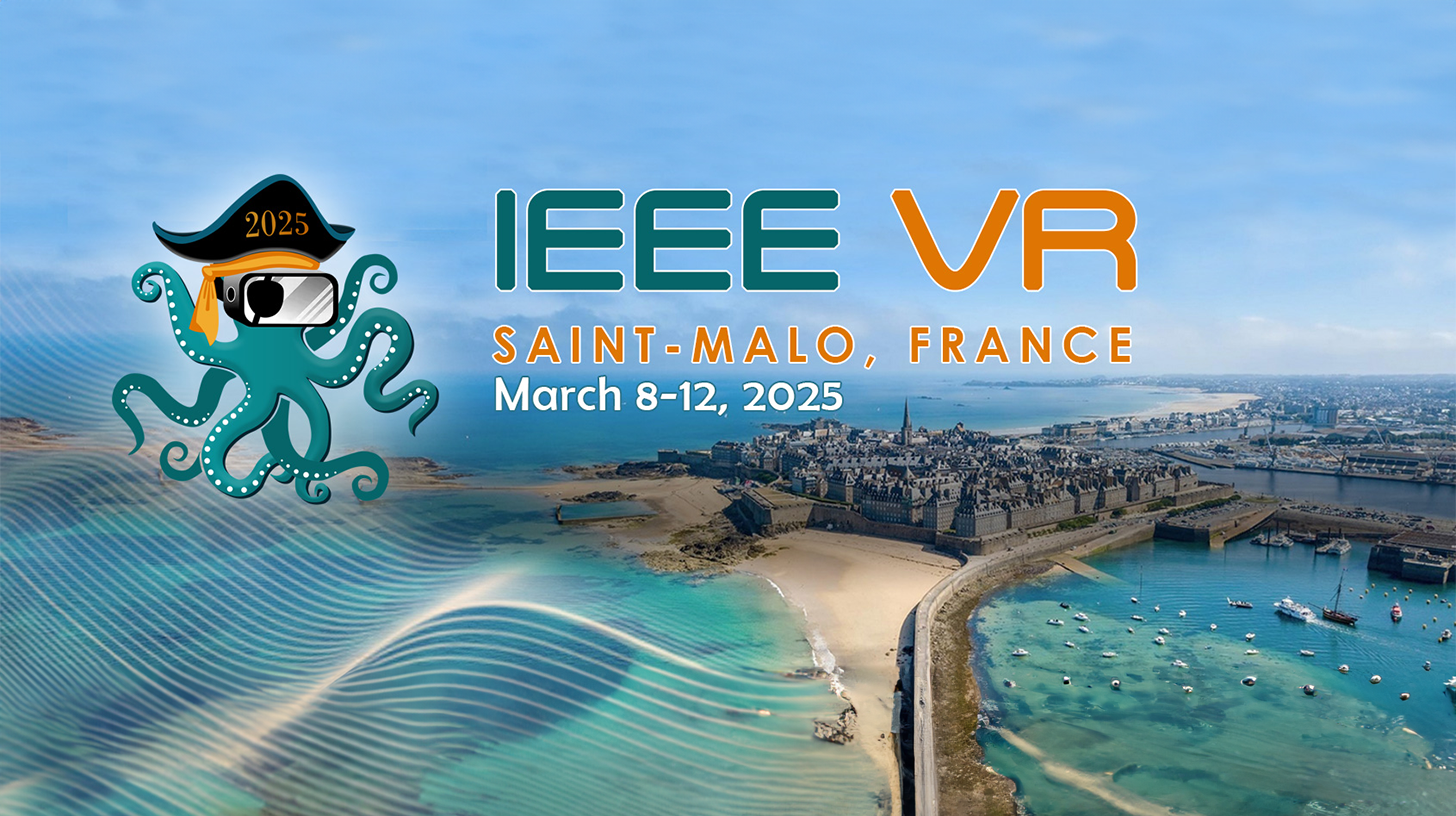
IEEE VR 2025: XR/AR/VR/MR Topics and Focus Areas of the 32nd IEEE Conference on Virtual Reality and 3D User Interfaces – Image: IEEE VR Conference
Experiencing virtual realities anew: The conference of the year in France
Augmented and Mixed Reality: The key topics of IEEE VR 2025
IEEE VR 2025, taking place from March 8-12, 2025, in Saint-Malo, France, is positioned as the leading international event in the field of virtual reality and 3D user interfaces. Ten years after the last French edition in Arles in 2015, the conference returns to the historic city of Saint-Malo in Brittany, where it will be hosted at the Palais du Grand Large, a convention center right on the seafront. The conference covers a wide range of topics, from fundamental VR research and augmented reality to mixed reality applications, with a particular focus this edition on sustainability and artistic innovation.
Related to this:


Thematic focus and scientific priorities
IEEE VR 2025 is aimed at researchers, developers, and practitioners across the entire augmented reality (XR) spectrum. The scientific contributions are divided into various categories that reflect the diversity of the research field. Methodological papers address advancements in theories and methods of AR/VR/MR and 3D user interfaces, including ethical considerations, theories of presence, and human factors. Technical papers describe advancements in algorithms or devices crucial for the development of AR/VR/MR and 3DUI, such as input devices, displays, user interaction, and tracking. Application papers provide important insights into specific use cases and their implementation.
The paper submission process follows a standardized evaluation procedure with several possible outcomes: acceptance as an IEEE TVCG paper with presentation at IEEE VR 2025, acceptance as an IEEE VR 2025 conference paper with presentation, acceptance as an IEEE VR 2025 poster, or rejection. This process underscores the conference's high scientific standards and the importance of high-quality research contributions.
Of particular note is the new focus on sustainability. The conference recognizes the importance of addressing pressing global challenges and aims to propose various initiatives and measures to tackle environmental problems and promote a more sustainable future. This focus is also reflected in the 3DUI competition, which is themed "United for Planet Earth: Promoting Environmental Sustainability in Collaborative Virtual Environments".
Artistic innovation and creative forms of expression
An innovative aspect of IEEE VR 2025 is the introduction of a new track dedicated to artistic creation. This track provides artists and students with a unique platform to showcase work that pushes the boundaries of traditional art forms and demonstrates how immersive technologies can transform and reinterpret artistic expression. This expansion of the conference program underscores the growing importance of the intersection of technology and art in the field of virtual reality.
The IEEE VR creative community is valued for its innovative spirit, and the new artistic track adds an important cultural dimension to the conference's technical and scientific aspects. This opens up new perspectives for interdisciplinary collaboration and broadens our understanding of how immersive technologies can enrich our cultural and artistic lives.
Workshops and special events
IEEE VR 2025 offers a variety of workshops addressing specific aspects of virtual reality and related technologies. These workshops will take place on March 8 and 9, the first two days of the conference, and provide an opportunity for in-depth exploration of specialized topics.
One of the workshops is the KELVAR workshop (K-12+ Embodied Learning through Virtual and Augmented Reality), which focuses on the use of XR technologies in education. Given the technological revolution in education (K-12+ - primary, secondary, and higher education), this workshop provides a platform for educators, developers, and researchers interested in developing and using XR technologies for future educational contexts. The workshop allows participants to discuss different approaches to designing and integrating XR technologies, with a focus on the challenges and potential of embodied learning in the classroom.
Another notable workshop is VHCIE (Virtual Humans and Crowds in Immersive Environments), which focuses on exploring advancements in creating believable virtual humans and crowds in immersive virtual environments. The workshop addresses challenges such as the multimodal representation of interactions, the responsiveness of virtual humans to verbal and nonverbal communication, and understanding the individual and situational factors that influence social interactions in populated environments.
Other workshops include ANIVAE (Animation in Virtual and Augmented Environments), XR Health (XR Technologies for Healthcare, Wellbeing, and Medicine), GenAI-XR (Generative Artificial Intelligence meets Extended Reality), PerGraVAR (Perception-driven Graphics and Displays for VR and AR), LocXR (Locomotion and Wayfinding in XR), VR-HSA (Virtual Reality for Human and Spatial Augmentation), XRMemory (Spatial Memory in XR), WSR (Seamless Reality), and SIC-XR (Social Interaction and Collaboration in Extended Reality). This wide range of workshops highlights the diversity of research interests within the XR community and provides specialized forums for exchanging ideas on specific topics.
Tutorials and practical learning opportunities
In addition to workshops, IEEE VR 2025 also offers a variety of tutorials, providing excellent educational opportunities on topics in this field for both beginners and experienced researchers. The 90-minute or half-day tutorials can be introductory or advanced and cover topics of interest to the augmented reality community (virtual, mixed, or augmented) as well as the 3D user interface community.
Tutorial proposals will be evaluated based on their relevance to the conference topics and the instructors' qualifications. Proposed topics include 3D interaction, input devices, haptics, audio and other non-visual interfaces, systems and toolkits for VR/AR/MR, advanced display technology, immersive projection technology, multi-user and distributed VR/AR/MR, serious games, tracking and sensing, modeling and simulation, user studies and evaluation, as well as immersion, presence, perception, and cognition.
3DUI contest and innovative competitions
A highlight of IEEE VR 2025 is the 16th annual 3DUI Contest, open to anyone interested in 3D user interfaces (3DUIs) and virtual reality, from researchers and students to enthusiasts and professionals. The purpose of the competition is to stimulate innovative and creative solutions to challenging 3DUI problems.
The theme of this year's competition is "United for Planet Earth: Promoting Environmental Sustainability in Collaborative Virtual Environments." Given the increasing importance of an environmentally friendly lifestyle, collaborative virtual environments offer a promising platform for encounters without the need for physical travel. Furthermore, meeting in an immersive 3D space provides a wealth of novel opportunities for self-education, mutual teaching, and exploring the complex relationships that collectively influence today's and tomorrow's climate.
Participants are asked to propose a 3DUI project in which at least two collaborators can work together on an environmental problem. Submissions will be evaluated based on various criteria, including the efficiency and usability of user operations, the complexity of the collaborative interaction, the novelty of the 3DUI design, and the fun and engagement factor.
Main program and scientific exchange
The main program of IEEE VR 2025 runs from March 10 to 12 and includes a variety of events, including the opening and awards ceremony, keynote talks, paper sessions, poster presentations, research demos, an XR gallery, 3DUI contest demos and exhibitions, as well as social events such as a welcome reception and a gala dinner.
The program begins on Monday, March 10, with the opening ceremony and awards presentation, followed by a keynote address, paper sessions, and a poster and demo session, culminating in a welcome reception. Tuesday, March 11, features lightning keynotes, further paper sessions, poster and demo sessions, and a gala dinner in the evening. The final day of the conference, Wednesday, March 12, includes another keynote address, paper sessions, a concluding poster and demo session, and the closing event.
This comprehensive program offers numerous opportunities for scientific exchange and networking within the community. Participants can learn from leading experts, explore groundbreaking innovations, and be part of a vibrant community dedicated to shaping the future of immersive technologies.
Virtual Reality in Transition: The Key Topics of IEEE VR 2025
IEEE VR 2025 in Saint-Malo promises to be a major event in the field of virtual reality and 3D user interfaces. With its broad thematic scope, ranging from technical and methodological aspects to applications and artistic expressions, the conference appeals to a diverse audience. Its particular focus on sustainability and artistic innovation underscores the relevance of virtual reality to current societal challenges and cultural developments.
The choice of Saint-Malo as the venue is symbolically significant, as the city is known for its rich maritime history and its openness to the world, perfectly embodying the spirit of the IEEE VR conference. It is a place that resonates deeply with the community as it continues to explore new scientific and technological challenges with an open approach.
IEEE VR 2025 offers a unique opportunity for researchers, developers, and practitioners to learn about the latest developments in virtual reality, network, and contribute to the field's advancement. With its comprehensive program of workshops, tutorials, competitions, paper sessions, and social events, the conference creates a space for diverse exchange and collaboration that has the potential to significantly influence the future of immersive technologies.
Related to this:

🗒️ Xpert.Digital: A pioneer in the field of Extended and Augmented Reality

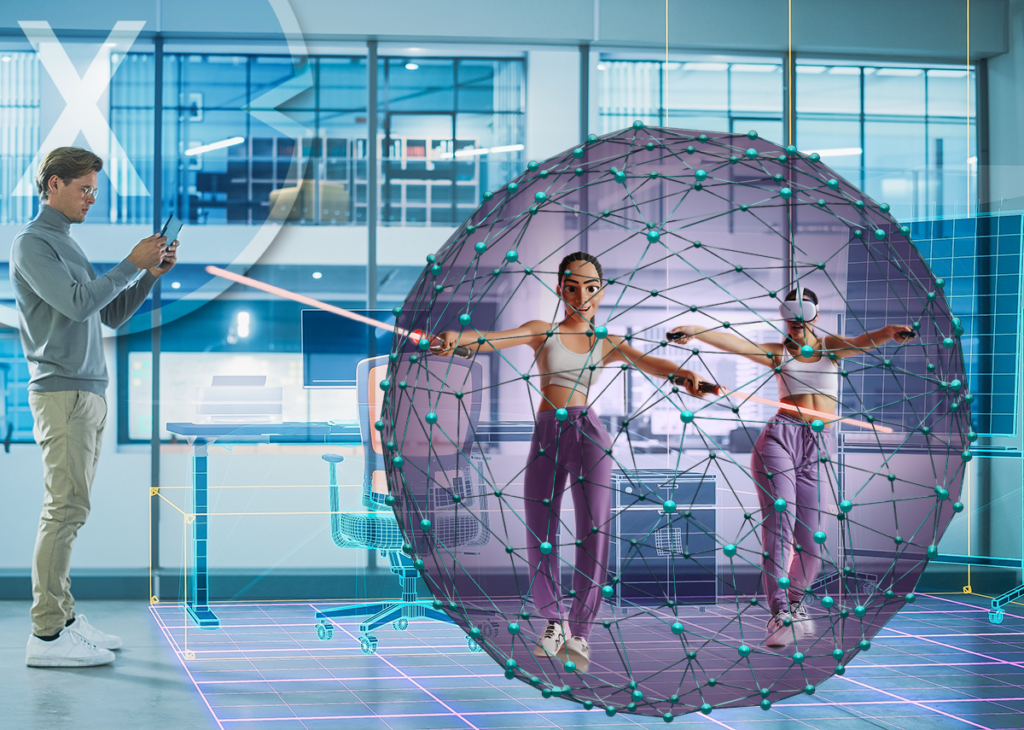
Finding the right Metaverse agency, planning office, or consulting firm - Image: Xpert.Digital
🗒️ Finding the right Metaverse agency, planning office, or consulting firm – Search and search: Top Ten Tips for Consulting & Planning
More information here:
New technologies at IEEE VR 2025: Innovations in virtual reality and 3D user interfaces
Generative AI and Extended Reality
One of the most outstanding developments to be showcased at IEEE VR 2025 is the integration of Generative Artificial Intelligence (GenAI) into extended reality environments. This fusion of two cutting-edge technological fields opens up entirely new possibilities for personalized and adaptive immersive experiences. The workshop “Generative Artificial Intelligence meets Extended Reality” (GenAI-XR) is specifically dedicated to this topic and explores the combined potential to revolutionize various sectors such as entertainment, art, education, manufacturing, healthcare, and architecture.
A concrete example of this trend is MineVRA, an innovative human-in-the-loop XR framework that integrates GenAI for the adaptive generation of 3D assets. This technology addresses a key challenge in immersive environments: the creation of personalized 3D assets, which has traditionally been a manual and time-consuming process. A user study compared GenAI-generated objects with assets from Sketchfab in immersive contexts, highlighting GenAI's potential to complement traditional libraries. This approach provides essential design insights for human-centered XR environments and drives the efficient, personalized creation of 3D content.
Related to this:
Advances in avatar technology
Another important focus of the conference is the next generation of avatars. Recent advances in deep learning, implicit representations, and physics-based character simulation have led to a breakthrough in avatar design, simulation, control, and rendering. The "Next Generation of Avatars" (NGA) workshop addresses these developments and their impact on the virtual reality user experience.
Computer vision now enables detailed and accurate capture of pose and form with affordable systems (e.g., a single RGB camera) in real time, allowing the creation of controllable representations of specific users instead of anonymous virtual humans. Advances in image-based rendering, such as NERF or Gaussian splatting, offer new possibilities for controlling high-quality avatars and raise new questions about avatar control and its impact on the human experience in VR.
A particularly innovative application of this technology will be demonstrated during a mixed-reality panel at the conference. At this event, participants will wear VR headsets and be represented by virtual bodies that closely resemble their own appearance. Additionally, a virtual agent of a well-known historical researcher, based on a Large Language Model (LLM) and also represented by an avatar, will participate. This special guest will observe the panel discussion and occasionally comment using GPT-based speech generation.
Innovative visualization and rendering techniques
Several innovative techniques are presented in the field of visualization and rendering. One notable development is the use of Instant Neural Graphics Primitives (iNGP) for the real-time rendering of dynamic 3D scenes. In this approach, a radiance field is trained for each individual frame. To achieve playback rates suitable for interactive VR experiences, efficient data storage and loading methods have been developed. This technology enables the playback of real-time, free-view video on a conventional desktop PC and demonstrates the progress made in dynamic radiance fields.
Two innovative approaches are presented for architectural visualization, extending Mixed Reality (MR) with additional perspectives from physically inaccessible viewpoints: the World-in-Miniature (WIM) solution and the Cross Reality (CR) solution. The WIM solution offers a scaled-down 3D replica of the virtual environment, while the CR solution allows users to switch to virtual reality and teleport to physically inaccessible viewpoints.
Educational technologies and training systems
Several innovative technologies are being presented in the education sector that could revolutionize learning and teaching. One outstanding example is XRXL, an extended reality system designed to increase student engagement in large lectures. This system allows students to wear XR headsets to view 3D visualizations controlled by the lecturer. The lecturer can virtually retract the classroom's roof and walls to enable large-scale visualizations that extend beyond the physical boundaries of the classroom or transform the classroom into a 360-degree theater. Furthermore, the lecturer can divide the classroom into small groups of students and provide individual support to specific groups as needed. XRXL was successfully tested in a user study with 82 students in the context of a trial lecture on neural networks.
Another notable example is VirtuEleDent, a compact XR tooth cutting system for dental education. This system combines a 3D-printed tooth model with a tracked handpiece displayed in a virtual environment.
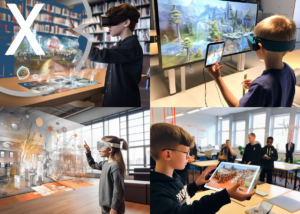
The integration of XR technologies into education is also addressed in the KELVAR workshop (K-12+ Embodied Learning through Virtual and Augmented Reality), which focuses on the use of XR technologies in education. This workshop provides a platform for educators, developers, and researchers interested in the development and application of XR technologies for future educational contexts.
Related to this:
Multisensory technologies and haptic feedback
The expansion of virtual reality to include additional sensory dimensions is another key topic at IEEE VR 2025. One innovative example is a thermal feedback system integrated into a VR headset that generates temperature sensations on the user's face while they view expansive scenes of snow-covered mountains and desert canyons. The results show that thermal feedback significantly enhanced measures of presence and influenced specific components of awe experiences, particularly those related to bodily sensations.
This development underscores the trend towards multisensory VR experiences that go beyond the purely visual and enable a more comprehensive immersion in virtual worlds. Such technologies have the potential to significantly enhance the emotional impact and realism of virtual experiences.
AI-powered applications for mental health
Another significant innovation is the use of AI-supported virtual humans in mental health. This technology addresses the shortage of human professionals in mental health care and enables the automated learning and practice of resilience skills through the support of a distressed virtual human, using the established Resilience Plan Intervention (RPI).
In a study, one hundred participants completed a short training session in the RPI (Resilience Prevention Institute) and then applied their newly acquired resilience strategies in simulated interactions with a distressed person, conducted either via VR or traditional role-playing. The results showed significant improvements in reported resilience for both groups, accompanied by significant increases in reported levels of cognitive flexibility, emotion regulation, and help-seeking behavior.
More realistic and interactive: Virtual worlds in transition
IEEE VR 2025 in Saint-Malo showcases an impressive array of emerging technologies with the potential to fundamentally transform virtual reality and 3D user interfaces. From the integration of generative AI into extended reality and advanced avatar technologies to innovative educational systems and multisensory feedback mechanisms, the innovations on display demonstrate the field's continuous evolution and its growing importance across various application areas.
Particularly noteworthy is the trend toward combining AI and XR, which opens up entirely new possibilities for personalized and adaptive immersive experiences. Advances in avatar technology and image-based rendering also promise more realistic and interactive virtual worlds. These developments underscore the ongoing commitment of the research community to making immersive technologies more accessible, realistic, and useful for a wide range of applications.
As the leading international event in this field, IEEE VR 2025 offers valuable insights into the future of virtual reality and related technologies that will shape the way we interact with digital content and with each other in the coming years.
We are here for you - Consulting - Planning - Implementation - Project Management
Xpert.Digital - Pioneer Business Development
Smart Glasses & AI - XR/AR/VR/MR industry expert
Consumer Metaverse or Metaverse in general
If you have any questions, require further information or advice, please feel free to contact me at any time.

Konrad Wolfenstein
I would be happy to serve as your personal advisor.
You can contact me by filling out the contact form below or simply call me on +49 7348 4088 965 .
I'm looking forward to our joint project.
Write to me



Xpert.Digital - Konrad Wolfenstein
Xpert.Digital is a hub for industry focusing on digitalization, mechanical engineering, logistics/intralogistics and photovoltaics.
With our 360° Business Development solution, we support renowned companies from new business to after-sales.
Market intelligence, smarketing, marketing automation, content development, PR, mail campaigns, personalized social media and lead nurturing are part of our digital tools.
You can find more information at: www.xpert.digital - www.xpert.solar - www.xpert.plus
Keep in touch