Hybrid Marketing Metaverse – The Top 10 Questions, Answers and Solutions – Image: Xpert.Digital / popcorner|Shutterstock.com
What is hybrid marketing?
Hybrid marketing is a marketing strategy that combines various online and offline channels to create a seamless and consistent brand message and maximize customer engagement. It aims to leverage the advantages of both digital and traditional marketing to achieve greater reach and more effective communication with the target audience.
Hybrid marketing involves combining various channels such as social media, websites, email marketing, search engine marketing, print media, broadcast advertising, events, and personal selling. By combining these channels, a coherent marketing strategy can be developed that leverages the strengths of each channel and creates synergies between them.
An example of hybrid marketing is using social media to generate awareness for an event and using printed flyers or posters to promote the event locally. Another possibility is encouraging customers to participate in a contest on a website and then notifying the winners via email or telephone.
The advantage of hybrid marketing lies in its ability to allow companies to reach diverse target groups and disseminate their message in a variety of ways. It also offers flexibility, as companies can adapt their marketing strategy to respond to changing customer needs and preferences. By integrating online and offline channels, companies can create a more comprehensive customer experience and achieve their marketing goals more effectively.
Hybrid marketing in, with and around the metaverse
Hybrid marketing has evolved and is now closely linked to the emerging concept of the metaverse and XR technologies. The metaverse refers to a virtual world that exists parallel to the real world, allowing people to immerse themselves in and interact with it. XR stands for "Extended Reality" and encompasses Virtual Reality (VR), Augmented Reality (AR), and Mixed Reality (MR).
The combination of hybrid marketing with the Metaverse and XR technologies opens up exciting opportunities for companies to take their marketing strategies to the next level. One such opportunity is the creation of immersive and interactive brand experiences. Imagine a company hosting a virtual trade show in the Metaverse, where visitors use their avatar identities to wander through exhibition halls and interact with virtual products and services. Through XR technologies, visitors can even immerse themselves in virtual worlds and experience products in 3D as if they were physically present. This creates a unique and impressive experience that captures the attention of the target audience.
Another application of hybrid marketing with the metaverse and XR technologies is personalized advertising and customer interaction. Using data analytics and AI, companies can create individual profiles and send personalized advertising messages to customers' avatars in the metaverse. For example, a virtual clothing store can provide its customers with avatars that reflect their individual body shapes and styles. Customers can then virtually try on clothes and receive recommendations based on their preferences. This personalized and immersive experience creates a strong bond between customers and the brand.
Furthermore, hybrid marketing in the metaverse and with XR technologies enables improved data analysis and performance measurement. Companies can collect data on the behavior of their customers' avatars in the metaverse to gain insights into their preferences, interests, and purchasing habits. This data can be used to further optimize marketing strategies and develop personalized offers.
It's important to note that the metaverse and XR technologies are still emerging and evolving. Nevertheless, companies have already begun exploring hybrid marketing with these technologies and developing innovative approaches to connect with their target audience.
However, there are also challenges and aspects that need to be considered. Integrating hybrid marketing with the metaverse requires careful planning and the selection of the right platforms and technologies to ensure a seamless and engaging brand experience. Furthermore, it is crucial to protect user privacy and security and to ensure that data analysis is conducted ethically and responsibly.
Hybrid marketing with the metaverse and XR technologies offers exciting opportunities for businesses to amplify their brand messages, engage customers, and achieve their marketing goals. It's an area that will continue to grow in importance as the metaverse and XR technologies evolve and become mainstream. Companies that get on board early and develop innovative approaches have the chance to strengthen their competitive position and differentiate themselves in the digital future.
Our Industrial Metaverse Configurator
Simply try out our universally applicable (B2B/Business/Industrial) Metaverse Configurator for all CAD / 3D demo options:
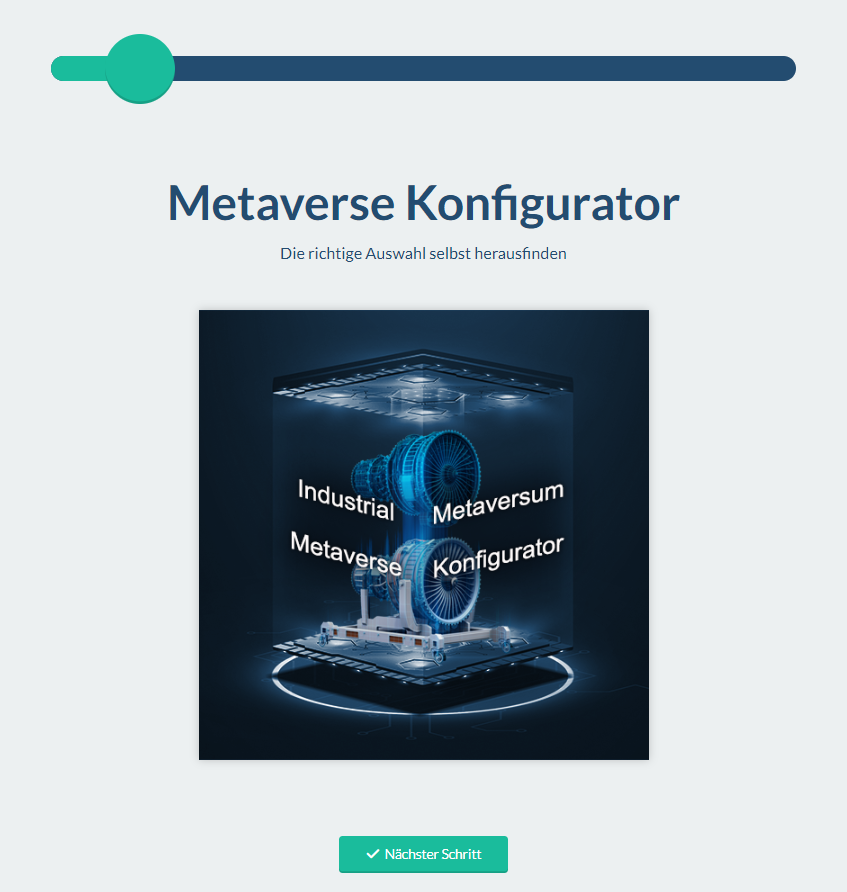

Xpert (B2B/Business/Industrial) Metaverse Configurator for all CAD / 3D data, usable on all end devices, one platform!
Related to this:
Hybrid marketing in, with and around the virtual showroom
Hybrid marketing has reached a new dimension in recent years with the development of XR technologies. One exciting application is the use of a virtual showroom as a special form of hybrid marketing. A virtual showroom combines the advantages of online and offline marketing by offering customers an immersive and interactive shopping experience.
A virtual showroom allows customers to explore products and services in a virtual environment, as if they were physically in a store or exhibition. Using XR technologies such as virtual reality (VR) or augmented reality (AR), customers can view products in three dimensions, zoom in on details, and even test features. This creates an impressive sense of realism and allows customers to examine the product more closely before purchasing it and make an informed decision.
The advantages of a virtual showroom are obvious. Customers can shop conveniently from home and enjoy an immersive shopping experience. They can view products from different angles without having to physically visit a store. This is particularly attractive for customers who don't have access to a physical store, whether due to distance, pandemic restrictions, or other circumstances.
Furthermore, a virtual showroom enables personalized and tailored customer interaction. Customers can specify their preferences and receive recommendations for products that match their individual needs and tastes. This is made possible by intelligent algorithms and machine learning that analyze customer behavior and generate personalized offers.
Another interesting aspect of a virtual showroom is the possibility of using it as a venue for events, presentations, or even fashion shows. Companies can invite customers to exclusive virtual events and offer them a unique experience. Customers can bring their avatars into the virtual showroom and interact with other participants. This creates a dynamic and vibrant atmosphere that is memorable for customers and enhances the brand experience.
However, implementing a virtual showroom requires careful planning and execution. Companies must choose the right XR technology that meets their needs and objectives. VR, for example, offers a fully immersive experience, while AR overlays virtual elements onto the real world. The choice depends on the products, the target audience, and the available resources.
Furthermore, companies must ensure that the virtual environment is user-friendly and allows for smooth navigation. An intuitive user interface and clear instructions are crucial to ensuring that customers can easily use the virtual shopping experience.
A virtual showroom can also be combined with other hybrid marketing strategies to create a more comprehensive customer experience. For example, companies can use social media channels to promote the virtual showroom and invite customers. Customers can also leave feedback and reviews about the products to encourage social interaction and engagement.
➡️ A virtual showroom, as a special form of hybrid marketing, offers exciting opportunities for companies to showcase their products and services and engage customers. It enables seamless integration of online and offline experiences, creating a unique brand experience. With the advancement of XR technologies, the virtual showroom will undoubtedly play a vital role in the marketing mix, helping companies reach their target audience and build long-term customer relationships.
10 application examples for hybrid marketing in the B2B sector
Virtual trade fairs and exhibitions
Instead of participating in physical trade fairs, companies can set up virtual booths and present their products and services to a global audience. This can be supplemented by live presentations, virtual demos, and interactive chats with potential customers.
Webinars and online training courses
Companies can offer web-based training and informative webinars to share their expertise and keep customers up-to-date on their products or industry trends. Interactive elements such as live Q&A sessions can foster customer loyalty.
Personalized email marketing campaigns
Through targeted email marketing, companies can send personalized emails with relevant content to potential customers. This can be achieved by segmenting the target audience and adapting messages to the specific needs and interests of the recipients.
Social media strategies
Companies can leverage their social media presence to interact with B2B customers, share relevant content, and position themselves as industry experts. This can be achieved through discussions in LinkedIn groups, Twitter chats, or by sharing case studies and technical articles.
Influencer marketing
Companies can engage influencers from their industry to present their products or services to a wider audience. Recommendations from well-known personalities or industry experts can increase a company's credibility and attract new customers.
Account-Based Marketing (ABM)
ABM focuses on the targeted approach of individual companies or customers. By combining personalized messages, tailored content, and targeted advertising, companies can specifically address decision-makers in potential customer companies and increase the conversion rate.
Website optimization
Companies can optimize their websites to offer a smooth and engaging user experience. This includes clearly presenting products and services, providing compelling content, and ensuring easy contact options for potential customers.
Content marketing
By creating high-quality content such as blog articles, white papers, or case studies, companies can demonstrate their expertise and provide valuable information to potential customers. This fosters credibility and strengthens customer relationships.
Online events and webcasts
Companies can hold virtual conferences, webcasts, or expert panels to inform customers about industry trends, product innovations, or best practices. These events offer opportunities for interaction and the generation of qualified leads.
Hybrid Marketing in the Metaverse
a) Virtual product presentations
Companies can showcase their products in the virtual space of the metaverse and give customers the opportunity to experience them in an immersive environment. This can be made possible through XR technologies such as AR or VR.
b) Virtual training courses and workshops
Companies can offer virtual training and workshops in the Metaverse, where participants use their avatars to learn and interact together.
c) Virtual B2B networks
Companies can create virtual spaces within the Metaverse where B2B networks can be built. This allows professionals to meet in a virtual environment, exchange ideas, and find potential business partners.
These examples demonstrate the wide range of applications of hybrid marketing in the B2B sector and how companies can use the various channels and technologies to optimize their marketing strategies and reach their target audience.
10 application examples for hybrid marketing in the B2C sector
Augmented Reality (AR) product samples
Companies can use AR technologies to give customers the opportunity to virtually try on products. For example, customers can use an AR app to project makeup products onto their own face to see how they would look without having to physically try them on.
Geolocation and personalized offers
By using location data, companies can send targeted advertising offers or discounts to nearby customers. This can be done via mobile apps or notifications to alert customers in the vicinity to special offers.
Influencer collaborations
Companies can collaborate with influencers to introduce their products or services to a broad audience. Through influencer endorsements, companies can increase their reach and generate interest among potential customers.
Social media live streams and Q&A sessions
Companies can conduct live streams on platforms like Facebook, Instagram, or YouTube to give customers the opportunity to interact directly with them. This allows them to ask and answer questions, conduct product demonstrations, or offer special promotions. Q&A sessions, also known as question-and-answer sessions, are a form of interaction between companies and their target audience in a marketing context.
Gamification and competitions
Companies can incorporate gamification elements into their marketing strategies to engage customers and strengthen their brand loyalty. This can take the form of contests, virtual rewards, or challenges.
Personalized email marketing campaigns
By segmenting the target audience and personalizing email marketing campaigns, companies can send individual offers and recommendations to customers based on their interests and purchasing habits.
Virtual events and concerts
Companies can organize virtual events and concerts that customers can attend via the internet. This allows customers to enjoy a special experience without being physically present.
Chatbots and AI-based customer interaction
Companies can integrate chatbots into their online platforms to assist customers with questions, provide product information, and even process transactions. Artificial intelligence enables efficient and personalized customer interaction.
User-Generated Content (UGC)
Companies can encourage their customers to share content such as reviews, photos, or videos of their products on social media platforms. This fosters closer customer relationships and ensures authenticity and credibility.
Hybrid Marketing in the Metaverse
a) Virtual pop-up shops
Companies can set up temporary virtual stores in the Metaverse where customers can discover, try out, and buy products.
b) Virtual brand events
Companies can host unique virtual brand events in the Metaverse, where customers can experience exclusive content, offers, and interaction opportunities.
c) Virtual Reality (VR) product presentations
Companies can use VR technologies to immerse customers in virtual worlds and offer them an impressive experience as they explore and test products.
These examples demonstrate the diverse applications of hybrid marketing in the B2C sector and how companies can achieve effective customer loyalty and brand interaction by combining online and offline elements.
What is a hybrid metaverse?
A hybrid metaverse refers to a combination of the metaverse and the real world. The metaverse is a virtual, immersive universe inhabited by computer-generated environments and avatars. It is a concept inspired by science fiction literature and films, representing a networked, virtual reality where users can interact, create, and trade.
A hybrid metaverse, however, integrates the virtual world of the metaverse with the real world by incorporating real physical elements and events into the virtual environment. This can be achieved, for example, through the use of augmented reality (AR) or mixed reality (MR), where digital content is projected into the real world.
A hybrid metaverse allows users to interact in a seamless environment where real people and objects merge with virtual elements and avatars. For example, a user could use AR glasses to receive information about buildings while walking through a city, or place virtual objects in the real world and interact with them.
This combination of the virtual and real worlds opens up a multitude of application possibilities and enhances the user experience and interactions. For example, companies can use hybrid metaverse applications to virtually showcase products, conduct sales promotions, offer immersive training, or even host virtual events where real and virtual participants interact.
The term "hybrid metaverse" also refers to the idea that different metaverse platforms and virtual worlds are interconnected, creating a shared, interoperable environment where users from different platforms can interact. This results in an expanded and more comprehensive metaverse experience that transcends individual platforms.
➡️ A hybrid metaverse is a connection between the virtual and real worlds, opening up new possibilities for interaction, communication, and business. It represents a fusion of technology, virtual worlds, and the physical world, offering an enhanced and immersive experience for users and businesses.
For whom is a hybrid marketing metaverse worthwhile, or does it make sense?
A hybrid marketing metaverse can be useful for various players and industries.
Companies with physical products
Companies that manufacture or sell physical products can leverage a hybrid marketing metaverse to create virtual showrooms or pop-up shops where customers can discover and experience their products. This allows businesses to expand their reach and engage potential customers globally, regardless of their location.
Retailers and e-commerce companies
Hybrid marketing in the metaverse can help retailers and e-commerce companies strengthen their online presence and offer an immersive shopping experience. By integrating AR or VR technologies, customers can virtually try out products before buying them, which can lead to increased purchase intent and customer satisfaction.
Companies providing services
Businesses offering services, such as travel agencies, hotels, or event planners, can leverage the hybrid marketing metaverse to offer virtual previews, immersive virtual tours, or virtual events. This allows potential customers to gain a realistic impression of the services offered and make a better purchasing decision.
Creatives and artists
Creative industries such as art, design, fashion, and entertainment can leverage the hybrid marketing metaverse to showcase their work or products and create new forms of interaction and engagement with their audience. Virtual exhibitions, fashion shows, or immersive artist experiences can increase reach and engage audiences in innovative ways.
Event and conference organizers
Hybrid marketing in the Metaverse can help event and conference organizers create a hybrid event experience where both in-person and virtual attendees can interact via the Metaverse. This opens up new possibilities for global participation, expanded networking opportunities, and virtual exhibition spaces.
Educational institutions
Educational institutions can leverage the hybrid marketing metaverse to offer immersive learning environments and virtual training. By integrating XR technologies, pupils and students can interact in virtual spaces, experience complex concepts, and learn in innovative ways.
➡️ Not all companies or industries will benefit equally from the hybrid marketing metaverse. Implementing such an approach requires a careful analysis of the target audience, the industry, and the company's specific goals. It is also important to consider the technological requirements, costs, and the target audience's willingness to participate in virtual experiences.
What other options are there besides hybrid marketing?
Besides hybrid marketing, there are a variety of other marketing strategies and approaches that companies can use to reach their target audience and achieve their marketing goals.
Influencer Marketing
Companies can collaborate with influencers to introduce their products or services to a broad audience. Influencers often have a dedicated following and can increase a brand's trust and credibility.
Content Marketing
This strategy focuses on creating high-quality, relevant, and engaging content to capture the attention and interest of the target audience. This can take the form of blog articles, videos, infographics, or social media posts.
Social Media Marketing
By using social media, companies can establish a direct connection with their target audience, share content, encourage interaction, and build customer relationships. This includes using platforms such as Facebook, Instagram, Twitter, LinkedIn, and more.
Search engine marketing (SEM)
This strategy focuses on increasing a website's visibility in search engine results like Google. This can be achieved through paid advertising (search engine advertising) or by optimizing the website for organic search results (search engine optimization).
Email marketing
Companies can use emails to inform their customers about new products, offers, or events. Personalized and targeted communication can increase the effectiveness of this marketing strategy.
Event marketing: By organizing or participating in events, companies can showcase their brand, build relationships, and interact directly with potential customers. This can take the form of trade fairs, conferences, webinars, or special events.
Guerrilla marketing
This creative and unconventional marketing strategy aims to attract attention and create a strong brand presence. Guerrilla marketing often involves unusual and surprising advertising campaigns or stunts.
Mobile Marketing
As more and more people use mobile devices, companies can target their marketing messages and campaigns to mobile platforms such as apps, mobile websites, or location-based services.
Community marketing
The focus here is on building an engaged community around the brand. Companies can use forums, social media groups, or customer clubs to interact with customers, gather feedback, and build brand loyalty.
Viral Marketing
This strategy aims to spread a marketing message through word of mouth and social media sharing. Creative and eye-catching content is developed to capture the target audience's attention and encourage them to share the message.
➡️ These are just a few examples of marketing strategies besides hybrid marketing. Depending on the target audience, industry, and company goals, a combination of several approaches may be necessary to achieve the desired results.
In the age of the internet, turbo-e-commerce, and the rise of the metaverse, do I even have a chance of staying in business without marketing or similar measures?
In the age of the internet, turbo e-commerce and the emerging metaverse era, the question arises whether it is even possible to stay in business without marketing or similar measures.
The short answer is: It's becoming increasingly difficult. Today's business environment is highly competitive and characterized by constant change. Companies must actively strive to remain visible and relevant in order to survive in the market.
Marketing plays a crucial role in promoting a brand, products, and services, reaching target audiences, acquiring customers, and building long-term relationships. It enables companies to communicate their messages, capture customer attention, and build trust.
Turbo-charged e-commerce has revolutionized online retail, enabling companies to offer their products and services globally. However, this has also led to a crowded market where standing out from the crowd is difficult. Without marketing efforts, increasing visibility and attracting potential customers can be challenging.
The advent of the metaverse age presents new opportunities and challenges. The metaverse promises an immersive virtual reality where people can interact, conduct business, and have diverse experiences. Companies that want to be present in the metaverse must actively engage with it and develop appropriate marketing strategies to raise awareness of their brand and offerings in this virtual world.
Effective marketing in the digital age can take many forms. This includes online marketing strategies such as search engine marketing (SEM), social media marketing, content marketing, influencer marketing, and much more. Through targeted advertising, search engine optimization, and the use of social media, companies can expand their reach and attract potential customers.
It's important to emphasize that marketing isn't just for large corporations. Smaller businesses and startups can also benefit from a targeted marketing strategy to establish themselves in their market segment and attract customers. Effective marketing can help companies gain visibility, highlight their unique selling points, and build trust.
However, marketing is not the only factor in staying in business. The quality of products and services, as well as good customer service, are also crucial. Companies must ensure they offer added value that meets their customers' needs and satisfies them. Satisfied customers can become loyal customers and provide positive recommendations, which in turn promotes the company's growth and success.
➡️ Marketing is essential in today's business environment. It enables companies to compete, increase brand awareness, attract customers, and build long-term relationships. By employing effective marketing strategies, companies can maximize their opportunities and realize their growth potential in the age of the internet, turbo-charged e-commerce, and the metaverse.
Which marketing strategy is better?
The question of whether it's better in marketing to achieve a specific goal with given resources or to achieve as many goals as possible with a fixed budget depends on various factors, and there is no clear "better" or "worse." It depends on the specific needs, goals, and resources of the company.
When a company has a clearly defined goal, it can be beneficial to concentrate all available resources on achieving that goal. By focusing on a specific objective, marketing activities can be aligned accordingly, increasing the likelihood of achieving that goal effectively and efficiently.
On the other hand, in some situations it can be advantageous to achieve as many goals as possible with a fixed budget. This is particularly relevant when a company has several marketing objectives that need to be pursued simultaneously. In this case, the budget is divided among various marketing activities to achieve broader reach and address multiple objectives.
It is important to note that the effectiveness and efficiency of a marketing approach does not depend solely on the amount of resources available. Strategic planning, precise target group analysis, the selection of the right marketing channels, and the continuous measurement and adjustment of results are crucial to ensuring the success of a marketing campaign, regardless of whether it is aimed at a specific goal or a broader objective.
Ultimately, the decision to focus on a specific goal or pursue multiple goals with a fixed budget should be based on a comprehensive assessment of the company's objectives, target audience, competitive landscape, and available resources. A well-thought-out and strategically aligned marketing strategy is crucial to maximizing the return on existing resources and achieving the desired results.

Xpert.Digital – Pioneer Business Development

Konrad Wolfenstein
I would be happy to serve as your personal advisor.
You can contact me by filling out the contact form below or simply call me on +49 7348 4088 965 .
I'm looking forward to our joint project.
Write to me


Xpert.Digital – Konrad Wolfenstein
Xpert.Digital is a hub for industry focusing on digitalization, mechanical engineering, logistics/intralogistics and photovoltaics.
With our 360° Business Development solution, we support renowned companies from new business to after-sales.
Market intelligence, smarketing, marketing automation, content development, PR, mail campaigns, personalized social media and lead nurturing are part of our digital tools.
You can find more information at: www.xpert.digital – www.xpert.solar – www.xpert.plus
Keep in touch