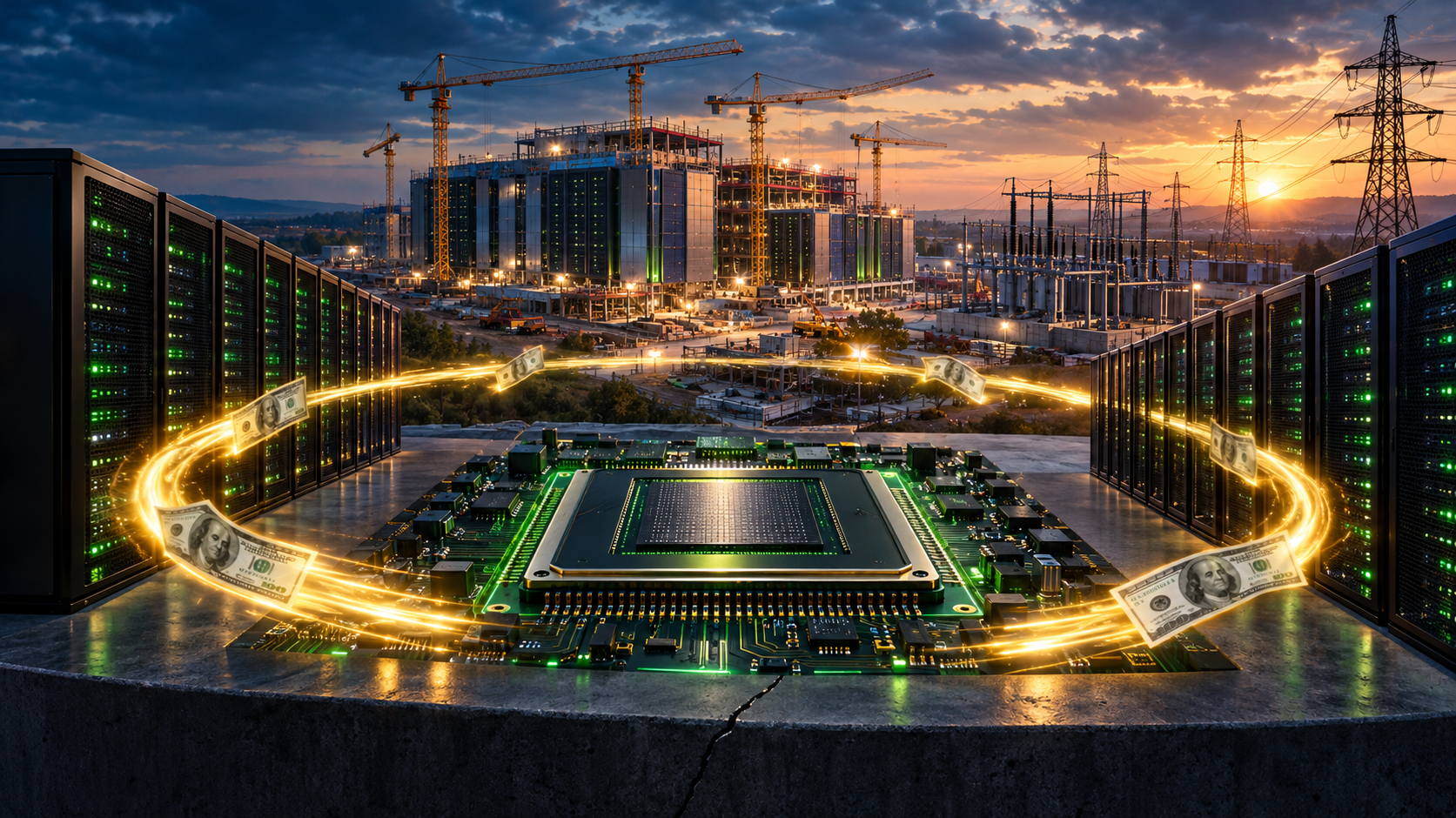
AI circular trading: Nvidia is financing the AI boom – How risky is this multi-billion dollar cycle? – Creative image on the topic, featuring AI: Xpert.Digital
When the chip vendor finances its customers: This is what's behind Nvidia's AI bet
AI data centers, billions in loans, guarantees: Who bears the risk of the boom? What happens if demand is insufficient?
Nvidia, OpenAI and Oracle: Why the AI boom is based on a funding network
The AI boom is creating powerful products, new economic opportunities, and an infrastructure that provides ever-increasing amounts of computing power. But behind the investments in chips and data centers lies a tightly interwoven financing network: Nvidia not only sells essential hardware but also invests in companies within the AI ecosystem and supports infrastructure expansion with commitments and guarantees. This makes suppliers, customers, investors, and operators increasingly interdependent.
These connections are not automatically evidence of a speculative bubble. They can help accelerate the development of a capital-intensive industry before its long-term profitability becomes fully apparent. The risk lies in the fact that investments and liabilities could grow faster than the revenues that must sustain them. If AI applications fail to translate into sufficiently profitable, recurring demand, weaker chip orders, declining equity values, strained data center operators, and maturing warranties could all simultaneously become problematic.
Therefore, the decisive factor is not solely the amount of capital circulating within the industry. What matters is whether enough independent customers ultimately pay for the services offered – and whether these revenues cover the costs of hardware, energy, financing, and operation. The expansion of AI has a real economic foundation. However, whether it develops into a viable business model depends on how quickly the industry can demonstrate its demand beyond its own financing network.
Related to this:


Nvidia's multi-billion dollar cycle: Who finances the AI boom and who pays for its risks
When the seller finances their customers, growth becomes a bet on the entire industry
The AI boom is creating real infrastructure, high-performance products, and new economic opportunities. But at the same time, a financing system is emerging between Nvidia, OpenAI, Oracle, and specialized data center operators, in which suppliers, customers, investors, and guarantors are becoming increasingly intertwined. Nvidia is no longer just selling the technological foundation of this growth, but is increasingly helping to provide the necessary purchasing power and creditworthiness.
This is neither automatically proof of a speculative bubble nor an ordinary business relationship without particular risks. Economically, it represents an attempt to accelerate the development of a capital-intensive industry before its long-term profitability is fully apparent. The crucial question, therefore, is not whether money is circulating within the AI industry. The crucial question is whether, at the end of this cycle, enough independent customers are paying for services whose benefits outweigh the total costs.
As long as this demand grows sufficiently quickly, equity investments, loans, and guarantees can facilitate the transition to a viable infrastructure. However, if monetization falls short of expectations, several risks converge simultaneously: weaker chip orders, declining equity values, strained data center operators, and potentially maturing guarantees. It is precisely this simultaneity that makes the development economically significant.
A supply chain becomes a financing network
OpenAI requires vast amounts of computing power, but obtains a significant portion of this from external infrastructure partners, while providers like Oracle and CoreWeave build the necessary data centers and server systems. Nvidia supplies essential hardware and also holds financial stakes in companies within the AI ecosystem.
This changes the traditional division of roles. In a simple supply chain, a company produces a good, a customer pays for it and then bears the economic risk of its use. In the AI business, the supplier can additionally provide capital, secure capacities, or assume liabilities that facilitate financing for the customer or their infrastructure partners.
This connection is initially understandable. A chip manufacturer benefits when its customers can grow faster. A data center operator needs reliable customers before investing billions. A model developer, in turn, needs computing power to improve products and attract additional users. Each party is trying to eliminate a bottleneck that limits the growth of the others.
This structure becomes problematic when the parties involved increasingly derive their economic security from mutual promises. In such cases, a contract can serve as the basis for a loan whose repayment depends on a customer who, in turn, relies on new rounds of financing. The individual contracts may be legally sound and economically plausible. Nevertheless, at the systemic level, a greater dependence on a few assumptions about the future emerges.
The money cycle needs an external inflow
The fact that invested capital partially flows back to the investor through hardware purchases does not automatically mean that artificial revenues are generated. An equity investment and an actual sale are distinct economic transactions. The crucial factor remains whether the purchased infrastructure is used productively and whether the resulting revenues can cover the expenses in the long term.
The difference can be explained without complicated financial models. If a manufacturer invests in a customer who then uses the funds to purchase machinery and subsequently sells competitive products, the financing can facilitate a productive investment process. Conversely, if the customer continuously buys new machinery without acquiring enough paying customers, additional capital may only prolong the time until the economic situation corrects itself.
Applied to AI, this means that computing power alone is not a sustainable business model. It must be translated into applications that companies or consumers are willing to pay for out of their own economic conviction. These payments don't have to go exclusively to OpenAI. They can originate from various platforms, software providers, and service providers. However, they must be large enough overall to support the infrastructure.
The real stability criterion is therefore external demand. The larger the share of revenue that comes from recurring customer budgets outside the financing AI companies, the more resilient the system becomes. Conversely, the more growth relies on new equity capital and additional debt, the more vulnerable it remains to a loss of confidence.
Why computing power reaches industrial dimensions
AI data centers are not ordinary office buildings with a large number of computers. Their economic value arises from the interplay of powerful accelerators, fast networks, suitable cooling, reliable power supplies, and a software environment that actually makes these components usable. Nvidia explicitly links its funding strategy to the expansion of such integrated AI infrastructures.
The commonly used unit of measurement, gigawatts, describes an electrical power output, not directly the revenue or usable computing power of a location. In the case of the secured campus in Ohio, the aforementioned 4.25 gigawatts refer to the IT load; therefore, for a complete energy balance, cooling and other technical equipment must also be taken into account.
As a rough guideline for the industry, investment costs of 50 to 60 billion US dollars are cited for one gigawatt of AI infrastructure. However, such figures should not be treated as binding price lists. Hardware generation, location, scope of construction, energy infrastructure, and the distinction between the building itself and the complete technical equipment significantly influence the actual costs.
Comparing this to the output of a large power plant unit illustrates the scale, but it doesn't replace a cost-benefit analysis. The crucial factor is how much productive, marketable computing power is generated from the invested capital and available energy. Therefore, two locations with the same connected load can achieve very different economic results.
The industry is not only building digital capacities. It is constructing a new form of industrial infrastructure whose profitability depends simultaneously on technology, financing, and energy supply.
Nvidia uses capital as a competitive tool
Nvidia's financial role has increased considerably: The value of its holdings rose from around seven billion US dollars in July 2025 to around 99 billion US dollars in July 2026; in addition, there were commitments of around 25 billion US dollars at the end of July 2026.
This development should not be equated with an equally large cash outflow within a year. A portfolio of investments is a balance sheet item whose changes can be influenced by acquisitions, valuation changes, and other factors. Therefore, the increase alone does not reveal how much new money Nvidia actually transferred to customers.
Strategically, the direction is clear. Nvidia is using its financial resources to expand its own ecosystem and enable the development of infrastructure that is, in turn, geared towards its products. The use of Nvidia infrastructure is explicitly included in the agreement for securing the Ohio campus, subject to limited exceptions.
This creates a financial competitive advantage in addition to the technological one. A competitor not only has to offer a high-performance chip, but may also have to compete against a complete package of hardware, software, financing options, and long-term support.
For customers, this can be attractive in the short term because projects become more easily financed. In the long term, however, the question arises as to how much technological and economic freedom of movement will remain. Financing lowers the barrier to entry, but can also increase dependence on a particular supplier.
Investments create opportunities and pool risks
In February 2026, Nvidia invested 30 billion US dollars in OpenAI, thereby strengthening its direct economic relationship with a major buyer of AI computing power.
Such an investment can pursue several goals simultaneously. It allows participation in the potential increase in value of the model developer, supports its expansion, and strengthens the collaboration between the hardware and software levels. From the perspective of a company with high cash flow, this can appear more attractive than distributing all surplus funds.
However, this changes the risk profile. A typical supplier is primarily affected by whether a customer orders and pays. A supplier involved in the transaction also bears the risk that the company's value decreases. If guarantees or capacity commitments are involved, further burdens can arise.
These risks are not independent of each other. Should the economic performance of a major model developer deteriorate significantly, its valuation, investment needs, and ability to pay infrastructure partners could all come under pressure. At that point, demand for additional hardware might also weaken.
A growing number of holdings does not automatically equate to better diversification. If many of these companies depend on the same end customers, capital markets, or technological assumptions, the portfolio remains economically concentrated. The number of individual companies may increase, while the dependence on a common growth trajectory also grows.
Purchase commitments transform uncertainty into financeable demand
In addition to equity investments, Nvidia supports certain AI cloud providers through contractual capacity commitments, which amounted to approximately 36 billion US dollars as of July 26, 2026, and typically run for six years.
The structure is economically remarkable: Cloud providers procure Nvidia infrastructure, while Nvidia commits to purchasing certain cloud services; if the operators sell this capacity to third parties or if Nvidia uses it itself, the remaining obligations decrease accordingly.
For an operator, this reduces uncertainty about future occupancy rates. A bank or other investor can assess a location differently if not all revenue has to be generated on the open market. The financially stronger partner thus assumes a portion of the start-up risk.
From Nvidia's perspective, this support can enable additional hardware sales and broaden the range of computing power offered. If the system is successfully resold to independent customers, the commitment can decrease while the infrastructure is in productive use.
In the worst-case scenario, however, more capacity remains with the guarantor or purchaser than originally expected. This reveals whether the commitments were primarily a temporary measure or whether they will have to permanently compensate for unmet demand.
Therefore, such commitments should neither be equated entirely with immediately due debt nor dismissed as meaningless. Their economic value and risk depend on the amount of actual third-party market demand generated during their term.
Ohio demonstrates the new scale
Nvidia's expanded role is particularly evident at SB Energy's data center campus in Pike County, Ohio: The support initially covers around 4.25 gigawatts of IT capacity and is limited to a total of 105 billion US dollars.
The relevant lease agreements with an OpenAI subsidiary are for 20 years each, while the guarantees will gradually become effective upon completion of the individual construction phases; the first phase is expected for Nvidia's fiscal year 2029.
The distinction between fiscal year and calendar year is important. Equally important is that the guarantee is not immediately payable in full. Its actual scope develops with the project's progress and the contractual terms.
The insurance covers defined portions of rent and electricity obligations as well as an agreed residual value component, but not all costs of the location or all obligations of the tenant.
Economically, Nvidia is thus assuming risks that would otherwise lie more heavily with the project developer, landlord, or their investors. This can enable the financing of a large-scale project that would otherwise be difficult to realize.
At the same time, this creates a long-term commitment to the economic performance of a key customer. The hardware is delivered today or in the coming years, while parts of the hedging strategy can extend far beyond individual product generations. This results in short technology cycles coinciding with long-term financing and real estate contracts.
A guarantee is not a loss
In addition to the up to 105 billion US dollars for SB Energy, there were further guarantees of up to 3.5 billion US dollars for land, electricity supply and buildings of other partners; these were offset by 712 million US dollars in an escrow account.
The resulting maximum gross exposure of US$108.5 billion exceeds Nvidia's revenue of approximately US$96.2 billion for the quarter ending July 26, 2026.
This comparison illustrates the scale, but it is not a direct stress test. Quarterly revenue is neither a cash reserve nor a loss buffer. Furthermore, a maximum contingent liability is not the same as an invoice due today.
Several questions are crucial for a proper assessment. When can payments be triggered? What amounts are actually secured at that time? What proceeds can be generated through re-letting or other uses? What recourse rights exist? And what is the probability of multiple liabilities occurring simultaneously?
The guarantees may end, among other things, if OpenAI achieves a satisfactory credit rating; in addition, OpenAI has assumed reimbursement and indemnification obligations for certain losses, the full or timely fulfillment of which Nvidia does not guarantee.
This is a crucial point: A claim for repayment is only as secure as the debtor's ability to pay. If the debtor encounters the very difficulties that trigger a guarantee, the same claim can lose economic value.
Nvidia's strength is real, but not unlimited
Nvidia has substantial financial resources: As of July 26, 2026, its cash and marketable debt assets totaled approximately US$56.6 billion, while its equity on the balance sheet stood at nearly US$229 billion.
In addition, the first half of the fiscal year saw an operating cash inflow of approximately US$74.4 billion, underlining the group's strong internal financing capacity.
These figures clearly distinguish Nvidia from companies that already have to finance their ongoing operations primarily through new loans. The company can take on risks because it generates substantial operating profits.
However, economic resilience cannot be derived solely from current earnings. A highly profitable supplier, in particular, can benefit significantly from an investment cycle and be correspondingly sensitive to its downturn.
Furthermore, not every asset on the balance sheet is equally well-suited to meeting short-term obligations. Investments can lose value at an inopportune moment or may be difficult to sell. High company value is no substitute for readily available liquidity.
Nvidia's increasing involvement is therefore not primarily a question of immediate solvency. It is a question of capital allocation: How much of today's profits will be used to enable future demand, and what return will remain after accounting for the risks involved?
🎯🎯🎯 Data-driven B2B industry hub as a quasi-in-house solution


The quasi-in-house solution: How Xpert.Digital closes operational gaps in B2B marketing and sales – Smart Content-Driven Business - Image: Xpert.Digital
Xpert.Digital is a data-driven B2B industry hub led by Konrad Wolfenstein . The company acts as an external, quasi-in-house solution for industrial partners, closing operational gaps in marketing, content, and sales – without requiring additional resources on the client side.
More information here:
Debt and its impact on AI infrastructure
Oracle is building on long-term utilization
Oracle plays a different role in this structure than Nvidia. As an infrastructure partner, the company provides data center capacity, thereby combining technical investments with long-term customer relationships.
The fundamental economic problem of such a business lies in the time lag between expenses and revenues. Land, buildings, electricity connections, servers and network technology must be paid for or financed before the location can generate revenue over the course of several years.
Long-term contracts can bridge this gap. They facilitate planning and can provide investors with a basis for assessing expected cash flows. Nevertheless, a contractually agreed revenue is not equivalent to money already received.
For Oracle, therefore, not only the size of individual customer contracts is important. Equally crucial are the payment terms, the technical deployment, the start date, and the financial strength of the respective counterparty.
Another question concerns the reusability of the infrastructure. The easier it is to lease capacity to other customers as needed, the less dependent the infrastructure is on a single customer. Conversely, the more specifically a location or its technical equipment is tailored to a particular customer, the more difficult it can be to find an economically equivalent alternative use.
The central assessment is therefore not simply: large orders are good and high investments are bad. What matters is whether contract quality, financing, and technical usability are compatible.
CoreWeave shows the cost of growth
CoreWeave clearly illustrates the tension between rapid expansion and financial strain: In the second quarter of 2026, revenue rose to US$2.575 billion, an increase of approximately 112 percent compared to the same period of the previous year.
At the same time, the net loss amounted to 626 million US dollars, while net interest expense reached 640 million US dollars, thus accounting for almost a quarter of the quarterly revenue.
Although the adjusted earnings before interest, taxes and depreciation amounted to US$1.51 billion, or a margin of 59 percent, the picture was considerably weaker after taking significant costs into account.
This distinction is crucial, especially for capital-intensive infrastructure companies. A high operating margin before depreciation and financing costs can indicate that existing capacities are generating attractive revenues. However, it doesn't answer the question of whether the total capital employed is generating a sufficient return.
Interest payments are not a minor factor in a heavily debt-financed business model. Similarly, depreciation is not merely a bothersome accounting entry. It should reflect the consumption of value of assets over their useful life.
CoreWeave can therefore grow rapidly, appear efficient at an operational level, and yet still post losses. This combination is not necessarily a sign of failure during an expansion phase. However, it increases the pressure to carefully align capacity utilization, financing costs, and future investments.
Order backlog does not replace free cash flow
At the end of June 2026, CoreWeave reported a revenue order backlog of approximately US$104 billion, the realization of which depends, among other things, on the provision and availability of the agreed services.
Such a figure is economically relevant, but should not be interpreted like a bank balance. It describes expected future revenues from contractual relationships, not the profit already generated after all costs.
In the second quarter of 2026, CoreWeave had operating cash inflows of US$679 million compared to cash-effective investments in property, plant and equipment and related software of US$6.422 billion.
The difference of approximately 5.74 billion US dollars illustrates how large the gap was between ongoing fund generation and these investment payments in this quarter alone.
A distinction must be made between growth investments and replacement investments that will be necessary later. A company that significantly expands its capacity may temporarily experience substantial negative free cash flow without its existing assets becoming unprofitable.
The crucial question, however, is whether this situation will ever change. If even a larger and more mature infrastructure requires more capital on a permanent basis than it generates after covering operating costs and necessary upgrades, the business model will remain dependent on external investors.
The order backlog thus answers the question of potential employment. The cash flow statement answers the other, equally important question: How much money actually remains?
Debt increases vulnerability
As of June 30, 2026, CoreWeave reported interest-bearing balance sheet liabilities of approximately US$35.1 billion excluding leases and operating lease liabilities of approximately US$16.3 billion; this was offset by approximately US$5 billion in equity.
These items should not be indiscriminately grouped together into a single, supposedly identical debt item. Loan liabilities, lease agreements, and other obligations differ in terms of maturity, collateral, and economic function.
Nevertheless, they show that a significant portion of the infrastructure is financed by firm claims from other investors or contractual partners. This increases the importance of stable revenues and reliable access to follow-up financing.
Debt financing works in both directions. If capacity utilization and prices develop favorably, the use of loans can increase the return on equity. If revenues lag behind, the fixed payment obligations still have to be met.
A situation where weaker demand coincides with rising financing costs would be particularly critical. Lower operating profits could then meet with higher refinancing requirements. Even a company with technically attractive facilities could come under financial pressure under such conditions.
Therefore, the development of the credit market for AI infrastructure is no less important than the share price. Shares reflect expectations. Loan terms often determine more directly how much additional expansion remains financially feasible.
New chips don't automatically make old ones worthless
The economic lifespan of GPUs is one of the most significant uncertainties in the entire financing chain. An accelerated generational shift can increase the attractiveness of new systems without immediately rendering older hardware obsolete.
That older accelerators can still be marketable is demonstrated by a contract announced by CoreWeave for A100 capacities until 2029; the corresponding product family was already introduced in 2020.
However, this does not mean that every single device will be used for nine years, nor that all older GPUs will retain their original earning power. Actual usability depends on labor costs, energy prices, rental terms, and the technical environment.
For less demanding applications, older hardware can still be economical. For other tasks, a new generation can operate so much more efficiently that the higher purchase price is justified by lower operating costs or better performance.
For lenders, therefore, technical functionality alone is not the deciding factor. What matters is the actual revenue a device or an entire cluster could generate if sold.
This is precisely where a potential concentration problem lies. If many operators simultaneously need to replace old systems or sell assets, the market value can fall more sharply than in a situation with few sellers. The realizability of a security therefore also depends on how many other companies want to realize the same security at the same time.
Long-term leases meet short technology cycles
A data center consists of assets with very different economic lifespans. Land, buildings, and power connections can be used for significantly longer than a single generation of servers.
These differences are crucial for financing. A long-term lease for a building shell says little about how often the hardware installed within it will need to be replaced during the lease term.
When assessing the economic viability of an overall project, these levels must be considered separately. Otherwise, the impression may arise that a building's use secured for decades simultaneously guarantees a correspondingly long return on the original technical equipment.
In fact, a location can remain valuable even if individual server generations need to be replaced. Conversely, technically specialized building infrastructure may require adaptation investments as soon as new systems place different demands on power density, cooling, or networks.
Therefore, the residual value is not a uniform amount. A developed property with a reliable network connection may have a different market than used accelerators or a custom-equipped server room.
For risk assessment, this means that it's not just the size of the investment that counts, but its composition. The more transparently buildings, energy infrastructure, hardware, and software are considered separately from an economic perspective, the more realistically one can assess which part of the invested capital is protected in the long term.
Electricity determines the return on investment
The International Energy Agency estimated that global electricity demand from data centers was around 485 terawatt hours in 2025; its central projection anticipates an increase to approximately 950 terawatt hours by 2030.
This forecast is not a guaranteed development. However, it illustrates that AI infrastructure cannot be considered independently of electricity generation, grid expansion, and regional connection options.
For some projects, the availability of electrical power can be more important than a favorable land price. A financed and largely completed data center won't generate revenue if the necessary power supply isn't available on time.
This creates its own time risk. Construction progress, server deliveries, customer contracts, and network connection must be precisely coordinated. If one element is delayed, other investments may already be tying up capital without being used productively.
At the same time, energy prices determine competitiveness. An older, less efficient cluster can be profitable at a favorable location but lose its profit margin at an expensive one.
Long-term electricity contracts can provide planning security, but they do not replace an examination of other costs. Security of supply, connection fees, cooling, and technical losses also affect the outcome.
The AI boom is therefore not just a competition for the best models. It is also a competition for locations where capital, energy, and operational reliability converge.
The revenue debate reveals a transparency problem
How sensitive the interconnected companies are to new information became apparent on October 8, 2026: OpenAI had told investors that it projected annual revenue of approximately 50 billion US dollars for the end of September, whereas previously a figure of 68 billion US dollars had been circulated.
According to the explanations that have become available, the higher figure also included gross sales from partner relationships, which is why the difference should not be interpreted as a corresponding drop in actual sales.
Furthermore, a projected annual turnover describes the current business pace over twelve months and is not synonymous with the turnover already recorded in the completed year.
These distinctions are significant for the valuation of capital-intensive commitments. If long-term investment decisions are linked to revenue figures, their definitions must be comparable.
Gross revenue, net revenue, revenue generated through partner sales, and actual revenue remaining with the company can convey different economic information. For the ability to pay data center bills, the most relevant factor is the amount of funds available after all associated costs have been covered.
The debate therefore reveals less evidence of a sudden drop in demand than a problem of information quality. In a financing system with high expectations, imprecise key figures can trigger large valuation fluctuations. The more the industry relies on long-term commitments, the more important precise and consistent information about its current economic base becomes.
Joint price declines are a warning signal
During the course of October 8, 2026, Nvidia shares lost approximately three percent, Oracle almost six percent, and CoreWeave about eight percent, although these figures describe the market reaction at the time and should not be read as uniform closing price changes.
Such a movement proves neither an impending payment crisis nor a clear cause. Stock prices react simultaneously to company news, financing expectations, and the general market environment.
Nevertheless, the common trend is revealing. It shows that investors do not view the companies solely as independent business models. Expectations about the economic performance of a large model developer apparently also influence the valuation of its infrastructure partners and suppliers.
The differing share price reactions can be interpreted as an indication of differently assessed sensitivities. A company with high fixed financing costs may react more strongly to doubts about future capacity utilization than a broadly diversified, highly profitable supplier.
A distinction should be made between stock market risk and operational risk. A falling share price does not directly affect the performance of a data center. However, it can worsen the conditions for obtaining new equity capital and thus make future investments more difficult.
In this way, a reassessment that initially focuses solely on financial aspects can later have real-world consequences. If capital becomes more expensive or scarcer, expansion plans may need to be stretched out over a longer period or selected according to stricter economic criteria.
Those who actually lose in a downturn
The risks are distributed among several groups, but not evenly. Equity investors generally bear the risk of declining company values, while lenders and other contractual partners have varying claims depending on the collateral and contractual arrangements.
In a single project, the distribution of losses therefore depends on the specific agreements. A guarantee can protect a landlord without covering all lenders or all of the tenant's obligations. Secured financing can cover certain assets, but their actual market value remains uncertain in a crisis.
For Nvidia, the particular risk lies in the overlapping of its various roles. As a supplier, the company can suffer from weaker orders, as an investor it can experience valuation losses, and as a guarantor it can be obligated to make payments.
For data center operators, utilization, customer creditworthiness, and debt service are paramount. Their facilities incur ongoing costs, even if demand is weaker than anticipated.
For OpenAI and other model developers, the challenge lies in translating technical capabilities into sufficiently profitable and sustainably paid use. High demand for a product is not enough if its provision remains economically too expensive.
This does not automatically imply that all losses should be borne by the public sector. However, public risks can arise where infrastructure funding, network planning, or regional economic expectations are based on an expansion that ultimately turns out to be smaller than anticipated.
Three ways out of the financing bet
A favorable scenario would be conceivable if paid AI usage grows faster than ongoing costs and further capital requirements. In that case, the financing bridges currently necessary could gradually be replaced by operating surpluses.
In this scenario, additional data centers would not only be built but also continuously put into productive use. Investments could increase in value, guarantees could expire unused, and operators could reduce their dependence on financing. The current cycle would then have helped to overcome a time bottleneck.
A moderate scenario would be less spectacular, but equally plausible. Demand continues to grow, but more slowly than the previously planned capacity. Individual projects are postponed, prices come under pressure, and operators have to work more efficiently. The technology prevails, while some investments fail to achieve their originally expected returns.
An unfavorable scenario would combine several burdens. Additional capacity would meet weaker willingness to pay, financing would become more expensive, and collateral would lose value. Guarantees could then become particularly relevant during a period when other sources of revenue are also under pressure.
These scenarios are not forecasts with fixed probabilities. They illustrate the assumptions underlying today's expansion. For a reliable assessment, what matters less is which buzzword prevails, but rather how resilient companies and projects are to deviations from the optimistic trajectory.
The industry needs to prove its demand
For further development, other key performance indicators are therefore more important than constant announcements about computing power and investment volume. The crucial factor is whether the provided capacities generate recurring, economically viable cash flows.
Model developers should focus on clearly defined revenues, the development of deployment costs, and remaining financing needs. Infrastructure operators should consider utilization rates, actual customer payments, debt service, and the gap between operating cash flow and necessary investments.
In Nvidia's case, the development of equity stakes and contingent liabilities is also a factor. It would be particularly revealing whether financial support can decrease with growing independent customer demand or whether it needs to be permanently expanded.
From a macroeconomic perspective, the distribution of profits is also important. A technology can be very valuable to its users, yet generate only small profits for individual providers. Strong competition or falling prices can pass on benefits to customers without justifying all the previous investments.
Therefore, it would be just as wrong to conclude that artificial intelligence has failed from every financial setback as it would be to automatically derive attractive returns from its technical significance.
The rationale lies between these extremes: AI expansion has a real economic basis, but its financing is prematurely impacting the anticipated future. Whether this will become a viable business model depends not on the number of billions pledged by each other, but on the revenue generated outside of this cycle.
📈🚀 From visibility to trust 👀🤝 Your scalable path with Xpert.Digital

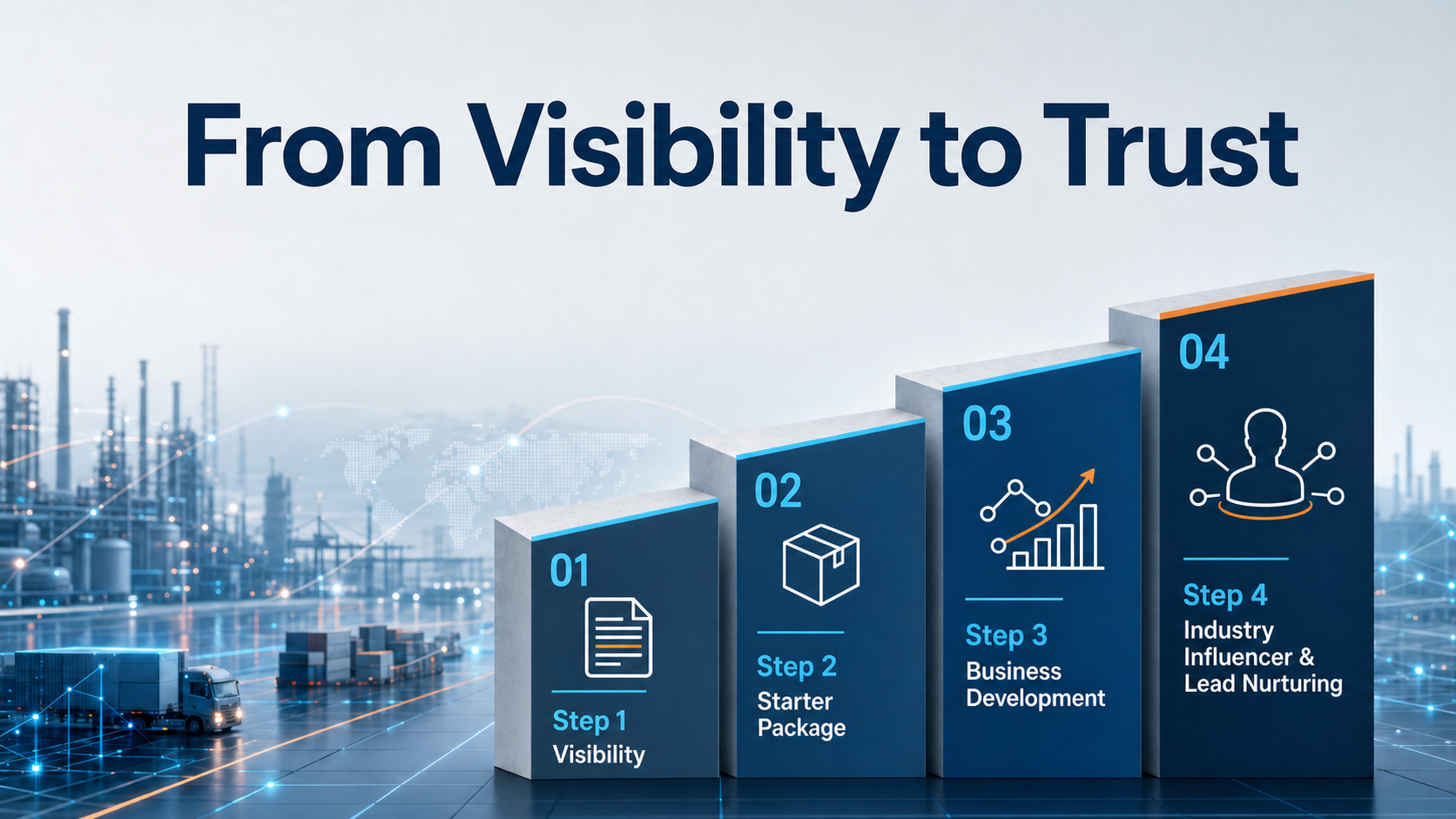
From visibility to trust: Your scalable path with Xpert.Digital - Image: Xpert.Digital
In industrial B2B, sustainable business relationships rarely emerge overnight. They develop step by step – through visibility, professional relevance, recurring touchpoints, and growing trust. Xpert.Digital's 4-stage model addresses precisely this: It offers a structured path that begins with a manageable entry point and can evolve into deeper collaboration in business development if needed.
Instead of relying on loud marketing promises, this model puts the relationship at the forefront. Companies start with clearly defined, easily calculable measures and then decide, based on their own experience, how far they want to expand the collaboration. A key factor for this undisturbed trust-building process: The platform completely avoids annoying advertising ads, so the editorial focus remains solely on the companies' expertise.
More information here:
Your global marketing and business development partner
☑️ Our business language is English or German
☑️ NEW: Correspondence in your native language!

Konrad Wolfenstein
I and my team are happy to be available to you as your personal advisor.
You can contact me by filling out the contact form here wolfenstein@xpert.digital:or simply call me at +49 7348 4088 965. My email address is
I'm looking forward to our joint project.