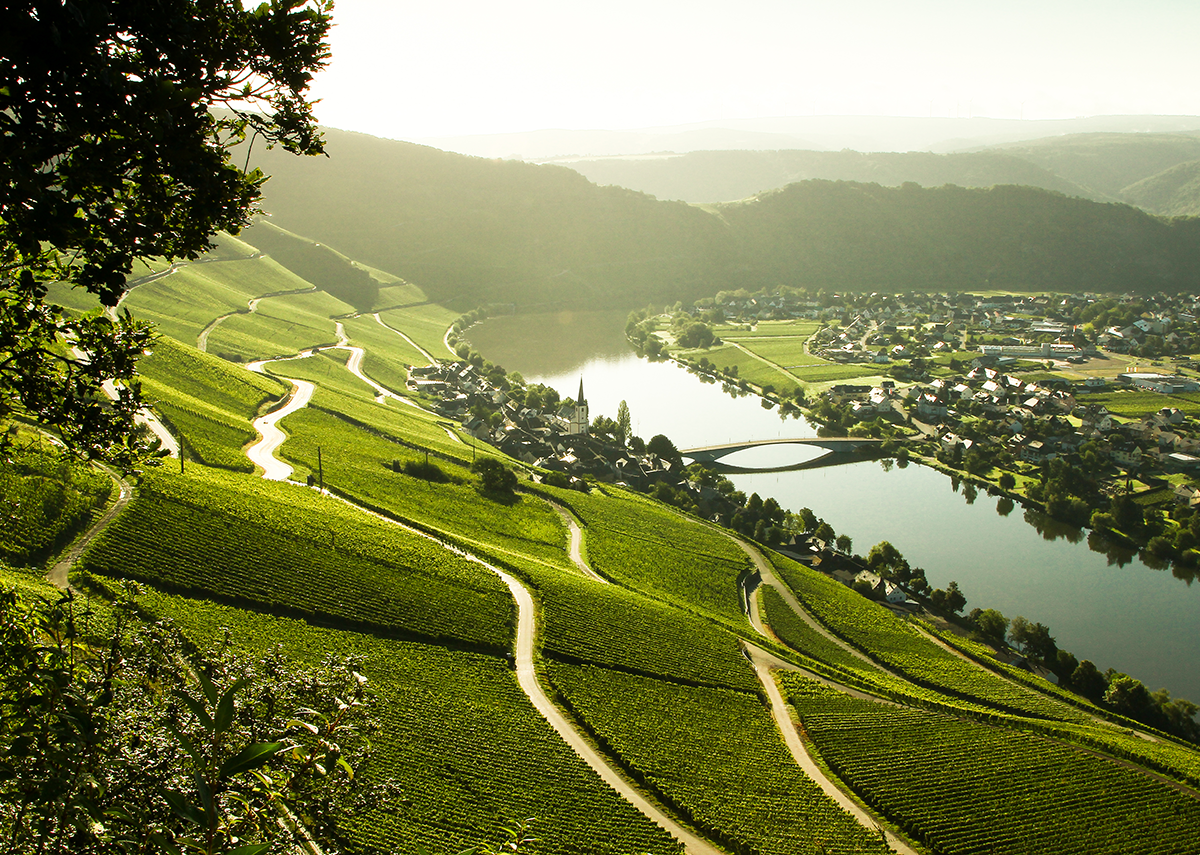
The Moselle Valley in the morning light, seen from the Moselsteig, a hiking trail in Germany. Germany, August 2017. – Image MaTiFo|Shutterstock.com
More and more electricity in Germany comes from wind, hydropower, and solar power. As the Fraunhofer Institute for Solar Energy Systems (ISE) announced this week, the share of renewable energies in Germany's total electricity mix exceeded 40 percent for the first time in 2018. By comparison, the share of green electricity was 38.2 percent the previous year.
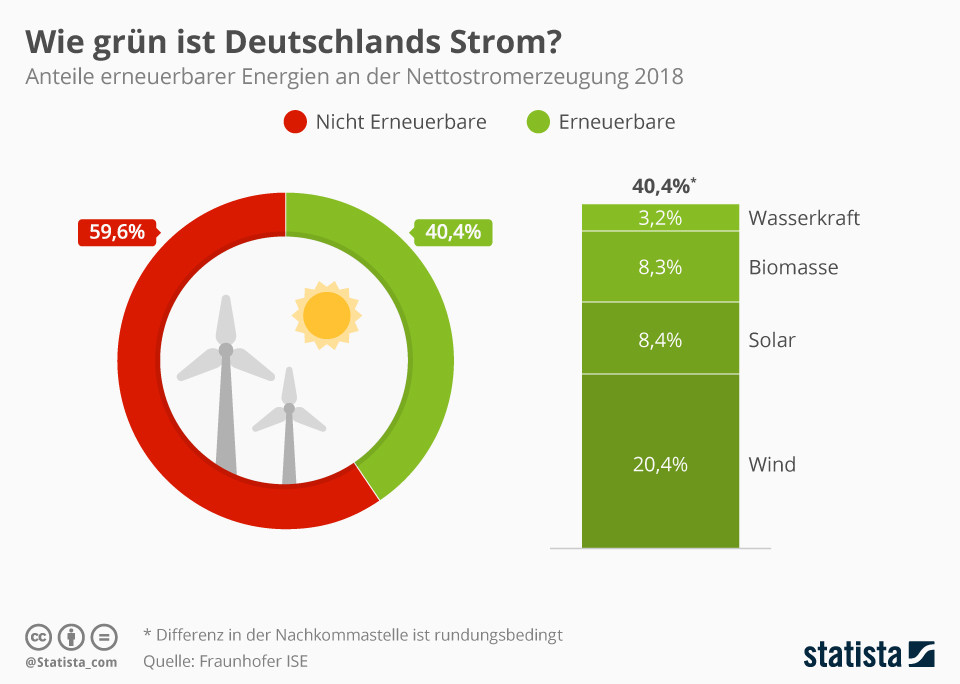
As the graphic shows, the largest share of green electricity last year came from wind power (20.4 percent). Solar energy came in second, with a share of 8.4 percent of net electricity generation in Germany.
The Fraunhofer ISE also noted that the hot, dry weather last year contributed to the increase in solar energy. The German government aims to increase the share of renewable energies to 65 percent by 2030.
To achieve this goal, some federal states are relying on mandatory solar power with photovoltaic systems on roofs and mandatory solar power for open parking areas that can be equipped with solar roofs, the so-called solar carports.
More and more electricity in Germany comes from wind, hydropower and the sun. As the Fraunhofer Institute for Solar Energy Systems (ISE) announced this week, the share of renewable energies in the total electricity mix in Germany rose above 40 percent for the first time in 2018. For comparison: in the previous year, the share of green electricity was 38.2 percent.
As the chart shows, wind power accounted for the largest share of eco-electricity last year (20.4 percent). In second place was solar energy, which accounted for 8.4 percent of net electricity generation in Germany.
According to Fraunhofer ISE, hot, dry weather also contributed to the increase in solar energy last year. The German government's goal is to increase the share of renewable energies to 65 percent by 2030.

Keep in touch