Thirty years after his research laid the foundation for the development of the World Wide Web, Tim Berners-Lee is dissatisfied with the current state of the internet. At a Washington Post event marking the 30th anniversary of its founding, he complained that the internet had been "hijacked" by crooks, citing hate speech, privacy issues, and the malicious spread of misinformation.
Berners-Lee's observations align with a Freedom Housethat found the level of internet freedom has deteriorated in recent years. "Disinformation and online propaganda have poisoned the public sphere. The unbridled collection of personal data has eroded traditional notions of privacy. And a group of countries are moving toward digital authoritarianism by adopting the Chinese model of widespread censorship and automated surveillance systems. As a result of these trends, global internet freedom declined for the eighth consecutive year in 2018."
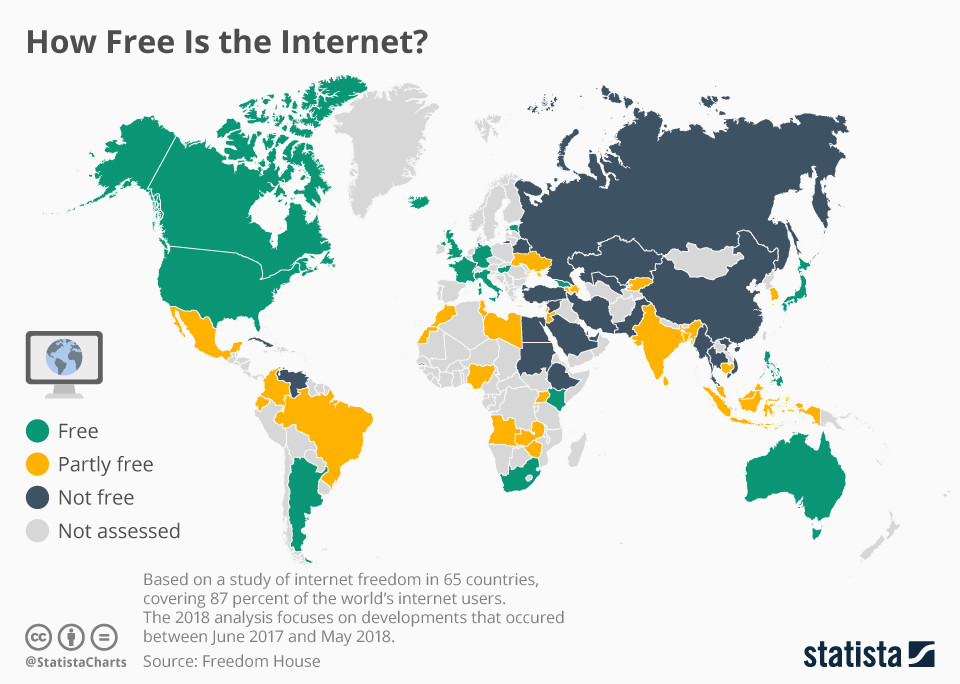
The following graphic, based on findings from Freedom House, shows a world map of internet freedom, categorizing countries in terms of barriers to internet access, restrictions on online content, and violations of user rights. According to the report, China was the worst abuser of internet freedom in 2018, promoting “digital authoritarianism as a way for governments to control their citizens through technology by inverting the concept of the internet as an engine of human liberation.”.
30 years after his research laid the groundwork for the development of the world wide web, Tim Berners-Lee is not happy with the current state of the internet. Speaking at a Washington Post event marking the 30th anniversary of his creation, he complained that the internet has been “hijacked by crooks”, referring to hate speech, privacy issues and the malicious spreading of false information.
Berners-Lee's observations are in line with research conducted by Freedom House, which found that the level of freedom on the internet has been deteriorating in recent years. "Disinformation and propaganda disseminated online have poisoned the public sphere. The unbridled collection of personal data has broken down traditional notions of privacy. And a cohort of countries is moving towards digital authoritarianism by embracing the Chinese model of extensive censorship and automated surveillance systems. As a result of these trends, global internet freedom declined for the eighth consecutive year in 2018".
The following chart, based on Freedom House's findings, shows a world map of internet freedom, categorizing countries with respect to obstacles to internet access, limits on online content and violations of user rights. According to the report, China was the worst abuser of internet freedom in 2018, promoting “digital authoritarianism as a way for governments to control their citizens through technology, inverting the concept of the internet as an engine of human liberation”.


Keep in touch