Beware of imposters! Port gridlock looms! How high-bay container warehouses are revolutionizing the port chain – Image: Xpert.Digital
The port problem as an obstacle to growth: Why only container stackers can solve the container dilemma
Logistics without limits: Vertically into the future – The new towers of logistics
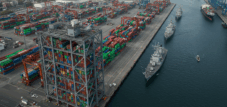
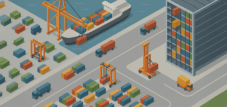
Container ports today stand as colossal bottlenecks in the global flow of goods. Their importance can hardly be overstated: around 90 percent of all goods are transported by sea container. The continuous increase in the loading capacities of container ships – the largest units now hold over 24,000 TEU (Twenty-Foot Equivalent Unit) – ruthlessly exposes the structural weaknesses of port systems. At the same time, this development raises the expectation that logistical processes at the port must keep pace seamlessly, an expectation that is becoming increasingly difficult to meet with existing space and methods. Limitations on the expansion of port areas, conflicts over the use of limited space, and the need to implement innovations in transshipment mean that efficiently used space is becoming a competitive advantage. High-rise construction offers heavy-lift logistics a logical and urgently needed answer to the capacity pressure.
Related to this:

From quay wall to bottleneck: Chronicle of a crisis
The development of port logistics follows a history of continuous growth and pressure to adapt. Originally, transshipment points between ship and land were characterized by limited automation. The container transport revolution began in the 1950s when Malcolm McLean introduced the standardized shipping container concept, transforming industrial maritime freight. The rapid increase in ship sizes and the growth of global import and export volumes fundamentally changed the requirements for port facilities. Ever larger areas were needed, but growth quickly reached its limits – development, geography, environmental protection, and urban competition prevented expansion. While digital processes were introduced for container documentation and tracking, transshipment and handling on the pier remained largely analog. Strong growth, pandemic-related supply chain disruptions, and a lack of further development in intralogistics have led to seaports in Europe and the USA now being considered "under-digitized." Unions and high wages are hindering change, while supply chains are under increasing pressure.
Vertical instead of horizontal: Function and technology of high-bay warehouses
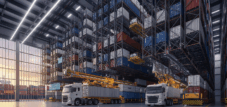
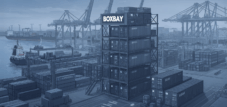
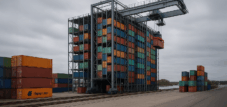
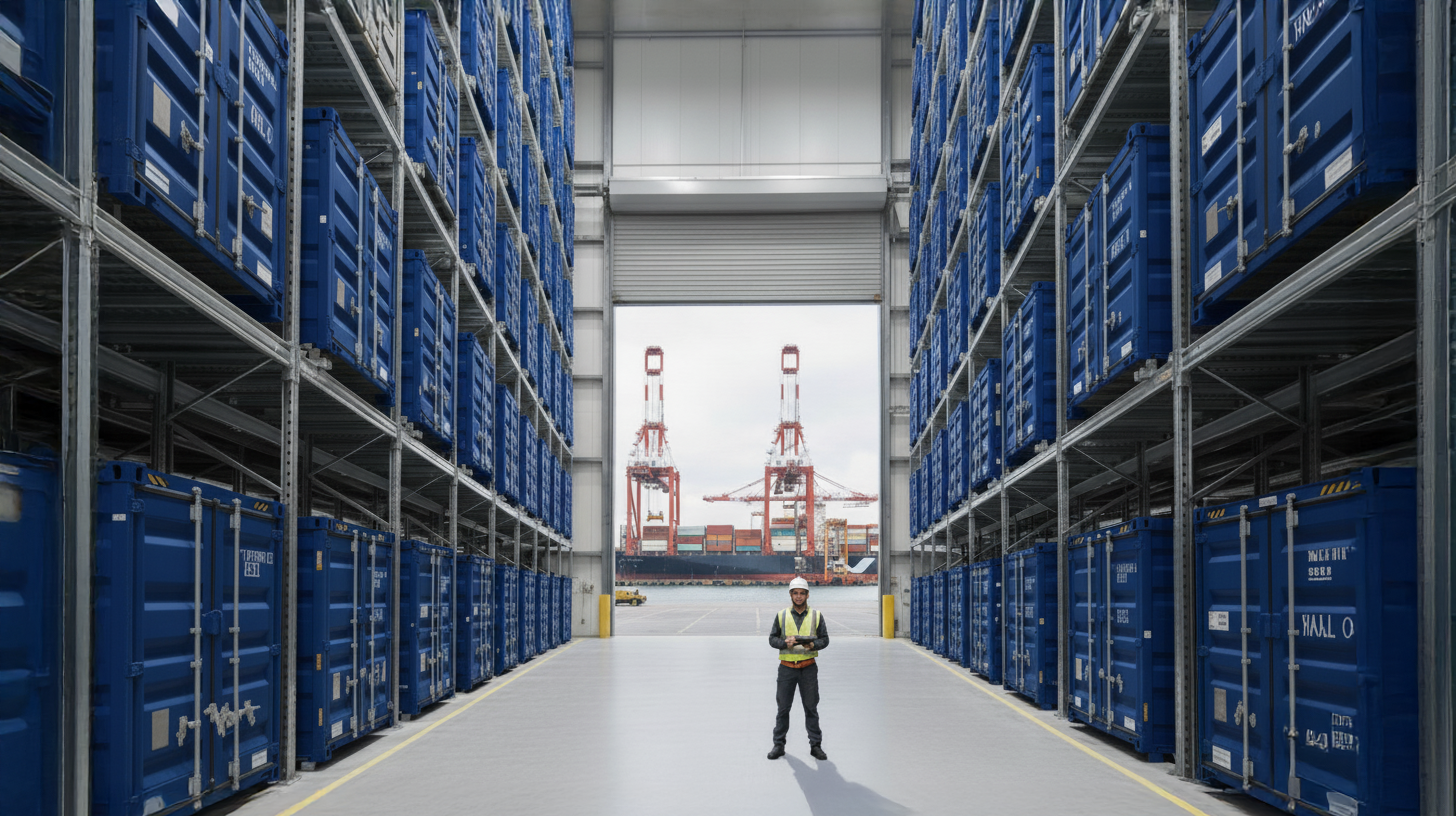
The key innovation of container high-bay warehouses lies in maximizing the use of available space by stacking steel containers up to 60 meters high. While conventional warehouse structures typically only allow for six containers stacked on top of each other, high-bay warehouses enable three to four times the stacking height, thus drastically increasing handling capacity within the same footprint. At its core, the system consists of the following mechanism: An automated crane, controlled by intelligent software, picks up containers and places them according to predefined criteria. Placement is weight-controlled – heavier containers move to the bottom, lighter ones to the top. This allows for targeted access to each individual steel container at any time, without time-consuming relocation or manual searching.
Upon arrival, the containers are transported directly to the high-bay warehouse via autonomous vehicles. Conveyor systems then distribute the containers to their designated locations. Mathematical optimization based on weight, destination, and turnaround time ensures that goods flows are always efficient and move quickly. Solutions also exist for energy needs: solar panels on the roofs provide electricity to power the cranes and other processes.
Peak times and performance maximization: The present between stagnation and new beginnings
In today's container handling industry, conventional warehousing is reaching its limits. Peak loads from high-volume handling – for example, when thousands of containers need to be unloaded from a single ship within just a few hours – overwhelm manual labor, conventional cranes, and open-plan storage areas. According to suppliers, high-bay warehouses triple the throughput rate. Significant productivity gains result because containers no longer need to be laboriously retrieved from the base of the stack. The direct access provided by automated systems reduces handling time and facilitates the handling of different types of cargo.
At the same time, however, port operators are encountering resistance to automation. The high earnings of crane operators and drivers, such as annual incomes of €100,000 in Hamburg or up to $200,000 in US ports, make the jobs attractive, and unions fear a loss of influence and job security for employees. Digital controls and software-based regulation are displacing traditional management methods and fundamentally changing the reality of work in the port. Specific projects, for example in Germany, are being discussed, but implementation is lagging behind.
LTW Intralogistics Solutions
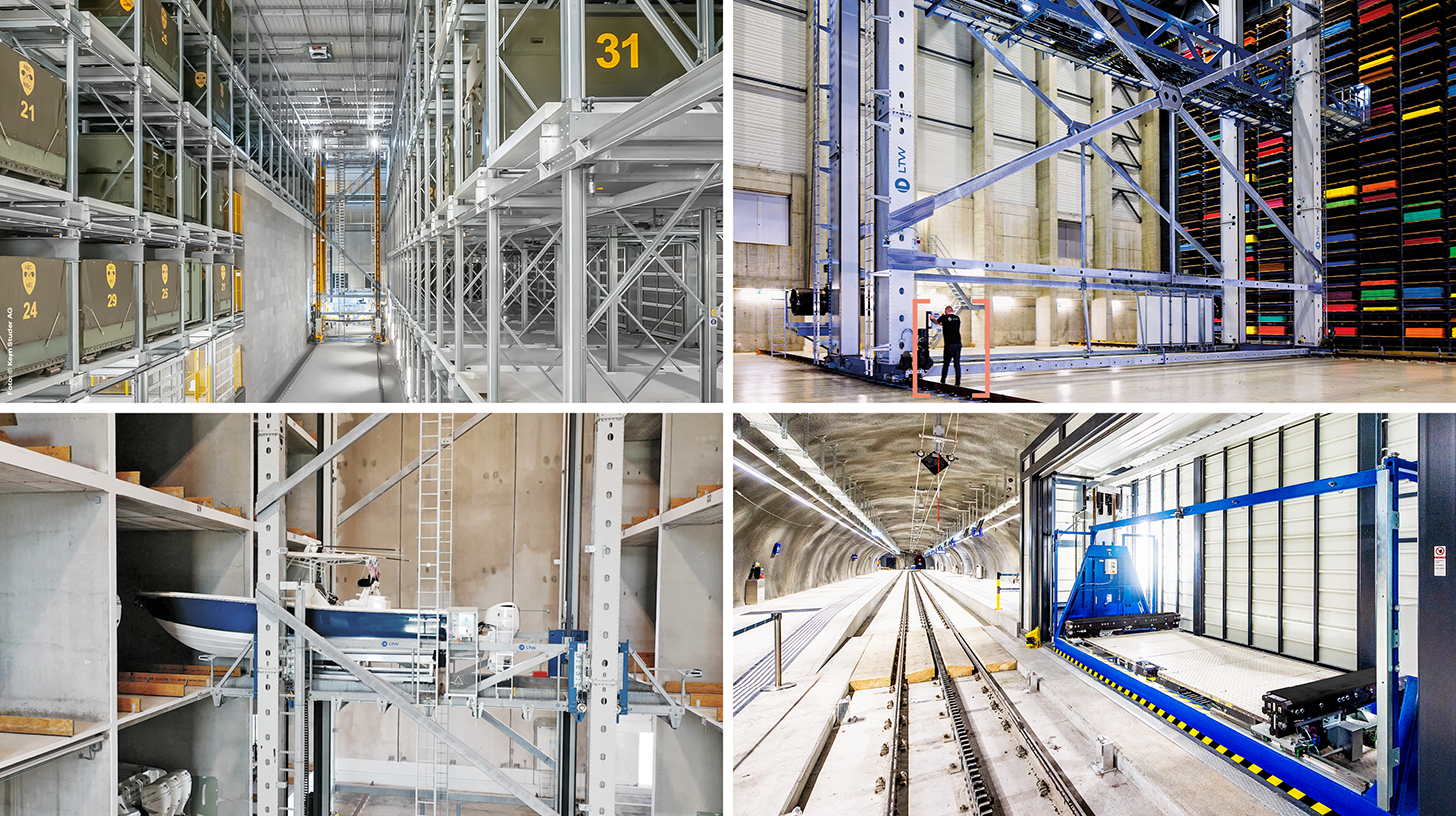
LTW Intralogistics – Engineers of Flow - Image: LTW Intralogistics GmbH
LTW offers its customers not individual components, but integrated complete solutions. Consulting, planning, mechanical and electrotechnical components, control and automation technology, as well as software and service – everything is networked and precisely coordinated.
In-house production of key components is particularly advantageous. This allows for optimal control of quality, supply chains, and interfaces.
LTW stands for reliability, transparency, and collaborative partnership. Loyalty and honesty are firmly anchored in the company's philosophy – a handshake still means something here.
Related to this:
Space constraints solved: This is how modular container high-bay racking works – How ports become space-saving and efficient
Imposters in action: Practical examples from logistics innovation
Initial concepts and pilot plants for high-bay container warehouses are already in operation or in advanced planning stages. The Port of Hamburg provides an example, where, due to its geographical limitations and competition for space, innovative solutions such as vertical storage structures are being discussed. Similar plans are known from the Port of Genoa in Italy. There, several transshipment terminals are clustered together, and expansion into the hinterland is practically impossible, as the city and transport networks cannot offer any new space. Vertical expansion is becoming the only viable solution to maintain competitiveness and productivity.
Another example illustrates the technological capabilities: On one hectare of port area, a high-bay warehouse can now accommodate around 3,000 containers, three times as many as conventional facilities. Pilot projects for transforming horizontal warehouses into vertical container storage systems are being observed in Shanghai, Rotterdam, and Long Beach. The systems used are modular, the transport of the steel containers is autonomous, and the system is controlled by software. In some cases, specially developed conveyor vehicles and sorting conveyor systems are also used to ensure optimal distribution and rapid return of the containers.
In addition to large-scale projects, smaller facilities are also being built by specialized industrial companies that organize container flows in the hinterland. This makes automated storage structures usable for regions and industrial companies that have to cope with particularly high throughput rates or seasonal fluctuations.
Related to this:

Innovation and change: The path of container logistics into the future
The logistics industry is facing a structural transformation, driven primarily by digitalization and automation, in addition to increasing ship sizes. High-bay container warehouses are being touted worldwide as a solution for multi-stage bottlenecks at ports. Forecasts indicate that several hundred port terminals are suitable for implementation, particularly in regions with intense competition for space and high cargo volumes. Further development of these systems envisions modular, expandable concepts with increasing integration of artificial intelligence to optimize loading and handling processes.
Innovation opportunities are emerging primarily in the areas of autonomous vehicles for container transport, intelligent software control, and sustainable energy integration. New technical standards and interfaces are promoting global rollout, while research into adaptive mechanisms and resilient logistics systems continues to gain importance. Linking these technologies with intralogistics is creating hybrid systems that combine sea, rail, and road logistics and fully digitize transport chains.
Politically debated funding programs and international initiatives facilitate financing and make the transition from conventional to automated systems more attractive. With a view to environmental and sustainability goals, high-bay warehouses are also becoming increasingly relevant from an ecological perspective: land use decreases, energy efficiency increases, and the ecological footprint can be optimized through targeted measures.
Value and limitations of "imposter" logistics
Container high-bay warehouses are on the verge of transitioning from innovation to industrial application. Their potential to overcome the previously unresolved capacity problems at seaports and increase the flexibility of global supply chains is compelling in many areas of heavy-lift logistics. The targeted utilization of vertical space, the use of autonomous technology, and intelligent, software-supported control are setting new standards in container handling – worldwide.
Nevertheless, the downsides should not be overlooked: the high investments, technological risks, and potential for social conflict necessitate a balanced approach to innovation. The acceptance of the ideas by the workforce, unions, and local politicians will be a key factor in determining whether the transformation of port logistics can succeed.
The future of global goods supply lies in improving handling at logistics interfaces. Container high-bay warehouses are a crucial building block on the path to high-performance, flexible, and sustainable supply chains. No other innovation addresses the combination of space scarcity, automation potential, and efficiency gains as consistently as these logistics "high-risers." Whether they become the new norm or remain the privilege of pioneering ports will be decided at the intersection of technology, politics, and society. The challenge is immense; the opportunities are unique.
Related to this:
Consulting - Planning - Implementation

Markus Becker
I would be happy to serve as your personal advisor.
Head of Business Development
Consulting - Planning - Implementation
Konrad Wolfenstein
I would be happy to serve as your personal advisor.
You can contact me at wolfenstein∂xpert.digital or
Just call me on +49 7348 4088 965 .
Our global industry and economic expertise in business development, sales and marketing
Our global industry and economic expertise in business development, sales and marketing - Image: Xpert.Digital
Industry focus areas: B2B, digitalization (from AI to XR), mechanical engineering, logistics, renewable energies and industry
More information here:
A thematic hub offering insights and expertise:
- Knowledge platform covering global and regional economies, innovation and industry-specific trends
- A collection of analyses, insights, and background information from our key areas of focus
- A place for expertise and information on current developments in business and technology
- A hub for companies seeking information on markets, digitalization, and industry innovations