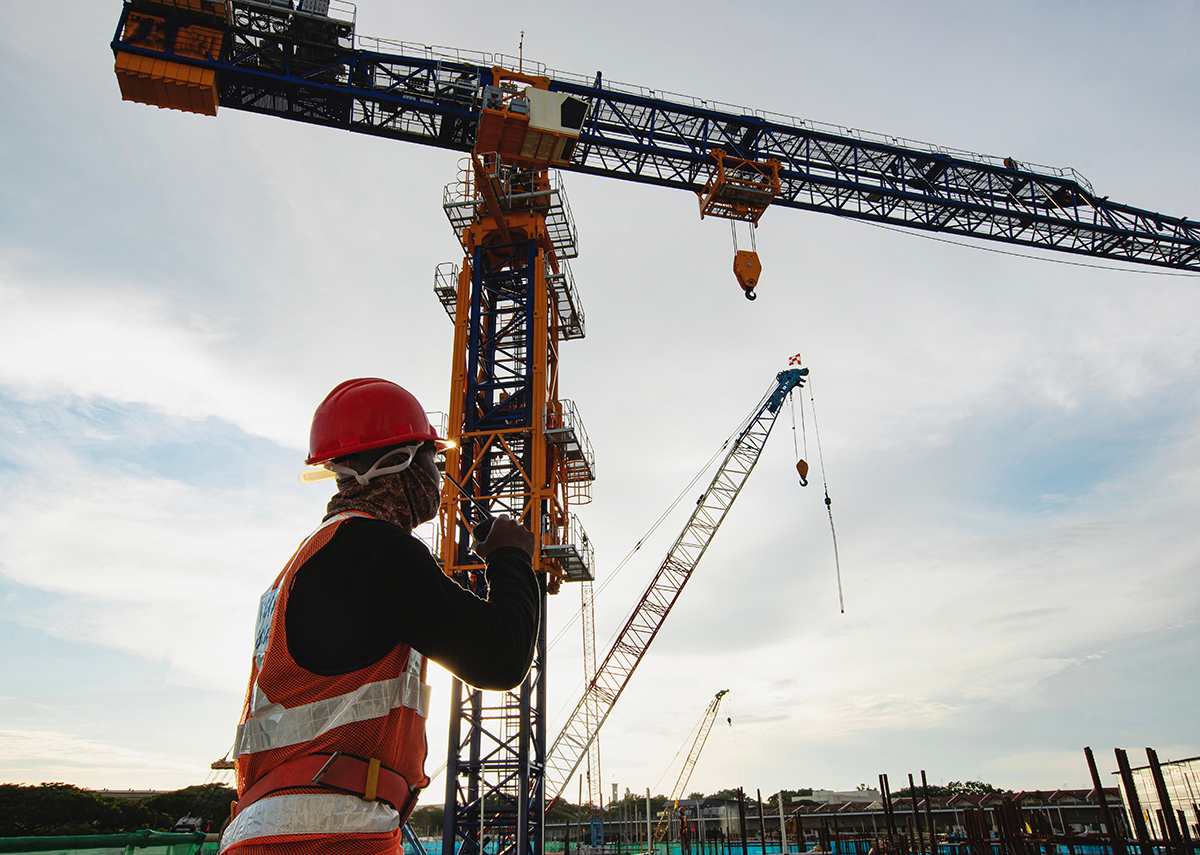
Strategies for optimizing housing construction in Germany – Image: shutterstock.com/Sakrai Sarabun
🏗️ The traffic light coalition sets out a 14-point plan to end the construction crisis
🏠 The ongoing housing shortage in Germany
In Germany, the housing construction sector has been experiencing a continuous crisis for years. The shortage of affordable housing is becoming increasingly acute. Projects are being halted due to high costs and bureaucratic hurdles. The result: families are giving up on their dream of homeownership, while construction companies are sliding into bankruptcy. Tenants, homeowners, and the construction industry itself see the federal government as responsible and are sharply criticizing its handling of the situation so far.
🤝 Joint summit at the Chancellery on September 25, 2023
To finally find a constructive solution, an important meeting took place at the Federal Chancellery on September 25, 2023. The aim of this summit was to develop an effective plan for building more housing quickly and cost-effectively. The Federal Government presented its 14-point plan as a concrete measure.
🎙️ Statements by Chancellor Scholz during the press conference
Chancellor Olaf Scholz pointed out that there is already a significant backlog of approved but not yet realized construction projects in Germany. As a solution, the federal government is proposing the introduction of accelerated depreciation. This is intended to provide financial relief to property owners and speed up residential construction.
💰 Financial incentives and tax benefits from October 1, 2023
From October 1, 2023, to September 2029, new buildings will be eligible for a degressive depreciation allowance of six percent. This regulation will apply not only to private landlords but also to large real estate companies.
📈 Further measures for sustainable improvement
In addition to tax incentives, other forms of support are also planned:
👨👩👧 Affordable loans for families
To make it easier for private households to access property ownership, favorable financing options are provided.
🏗️ Relaxation of insulation regulations
The current strict requirements for the insulation of new buildings are to be relaxed in order to reduce construction costs.
💵 Improved depreciation options for landlords
To further boost housing construction, depreciation options for landlords will be improved.
With these and other proposals from the comprehensive package of measures, the Federal Government hopes to finally revive housing construction in Germany and create a win-win situation for all involved.
📊 Declining balance depreciation (AfA) of 6%: What does that mean?
Declining balance depreciation means that a fixed asset, in this case a new building, is not depreciated evenly over its useful life. Instead, a fixed percentage is applied to the remaining book value of the asset. With a declining balance depreciation rate of 6%, 6% of the respective book value of the building is recorded as depreciation costs each year.
🎯 Advantages of declining balance depreciation
1. Liquidity advantage
The higher depreciation in the first few years leads to a tax reduction, as the depreciated costs reduce taxable income. This improves the liquidity of the building owners.
2. Incentive for investment
The possibility of faster depreciation makes residential construction more attractive, which in turn could improve the housing situation.
3. Flexibility: Declining-balance depreciation allows for greater financial freedom, especially in the early years of a project, as it reduces taxable income.
📝 Example of declining balance depreciation of 6%
Suppose a developer invests in a residential project that costs a total of 1 million euros.
- In the first year: 6% of €1,000,000 is €60,000. This €60,000 can be written off and thus deducted from taxes. The remaining book value of the building is then €940,000.
- In the second year: 6% of €940,000 is €56,400. This is also written off. The remaining book value is now €883,600.
- In the third year:** 6% of 883,600 euros is 53,016 euros. This is written off, and the remaining book value decreases to 830,584 euros.
And so on. It is clearly visible that the depreciation amount decreases each year, but especially in the first few years the depreciation amounts are relatively high, which brings tax advantages and increases liquidity.
📚 Depreciation: Depreciation for Wear and Tear – An Overview
AfA stands for "Absetzung für Abnutzung" (depreciation for wear and tear) and refers to a tax depreciation method that takes into account the loss in value of assets, particularly fixed assets. Through AfA, the purchase price of a fixed asset is claimed as a business expense over its estimated useful life. This results in a reduction of taxable income and thus the tax burden.
🌐 Application areas of depreciation
Depreciation (AfA) is primarily used in a business context and is applied to:
- property
- machines
- vehicles
- furniture
- Computer hardware
- and many other fixed assets
📈 Different types of depreciation
There are different methods of depreciation, each with its own advantages and regulations:
1. Linear depreciation
In this method, the asset is depreciated evenly over its useful life. The annual depreciation amount remains constant.
2. Declining balance depreciation
This method applies a fixed percentage to the remaining book value of the asset. The annual depreciation amount therefore decreases over time, but is higher in the first few years than with straight-line depreciation.
3. Performance-related depreciation
With this method, depreciation is calculated based on the actual use of the asset, e.g. per kilometer driven for a vehicle.
💡 Benefits of depreciation
Depreciation allows companies and individuals to reduce their tax burden by claiming the loss in value of their assets as a tax deduction. Furthermore, depreciation helps to increase liquidity, as less tax needs to be paid.
🚀🚀🚀 Advantages of depreciation without construction cost limits
The absence of a construction cost ceiling when applying depreciation (AfA) can bring a number of advantages:
1️⃣ Unlimited investment incentives
Without a cap on construction costs, an incentive is created for extensive, high-quality construction or modernization projects. This can significantly improve the quality of the existing building stock.
2️⃣ Tax flexibility
The ability to deduct unlimited expenses for tax purposes can significantly reduce the tax burden. This can be particularly attractive for companies and wealthy individuals who can afford and want to undertake larger projects.
3️⃣ Maintaining liquidity
Reducing the tax burden through depreciation increases liquidity and can be used to finance further projects or to pay off debts.
4️⃣ Economic incentives
The absence of a construction cost ceiling can also boost the construction industry. More construction contracts mean more jobs and increased economic activity.
5️⃣ Diversification of projects
The possibility of claiming tax deductions for more expensive projects promotes a wider range of construction projects. This can contribute to the diversification of the real estate market, from luxury apartments to specialized commercial buildings.
6️⃣ Focus on long-term sustainability
Since there is no upper limit on construction costs, investors can plan for the long term and invest in sustainable, future-proof buildings without having to worry about the tax implications.
7️⃣ Simplifying complex projects
Some construction projects, particularly in the commercial sector, can be very complex and expensive. The ability to fully depreciate even high construction costs can facilitate the execution of such projects.
Overall, the absence of a construction cost ceiling for depreciation can significantly increase the willingness to invest in construction and modernization projects, thereby achieving a positive economic effect.
📣 Energy-efficient renovation and new construction, consulting, planning and implementation for industry, retail and municipalities
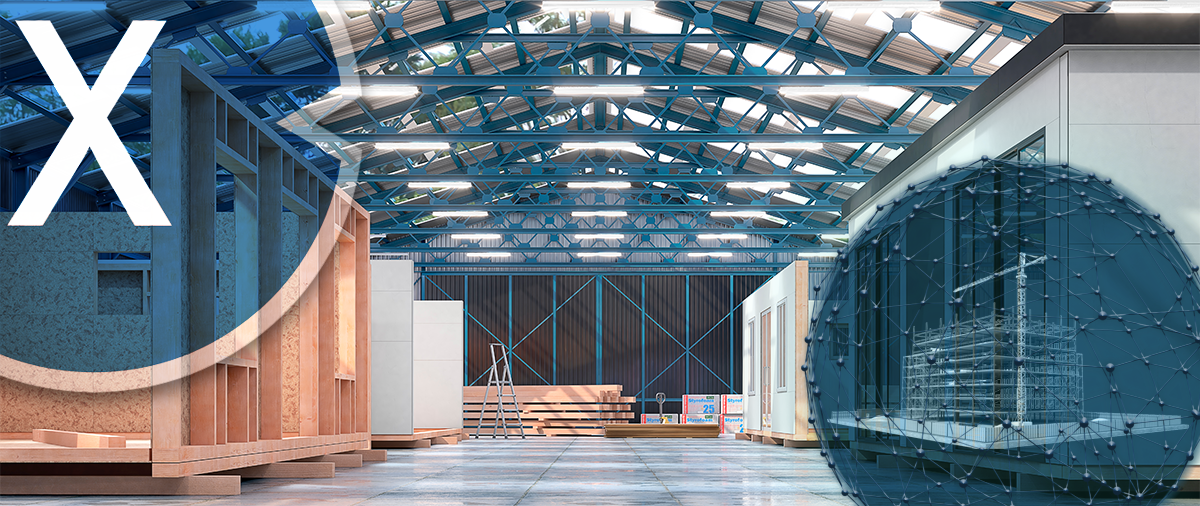
Our experienced team supports you in optimizing your buildings to reduce energy consumption and promote sustainable energy use with photovoltaics. We analyze your individual needs and develop customized concepts that are both economically and ecologically sound. Whether it's the energy-efficient renovation of existing buildings or the construction of new, energy-efficient structures, we are here to help. Industrial plants, retail buildings, and municipal facilities can reduce their energy costs, minimize their environmental impact, and simultaneously improve the comfort and efficiency of their buildings with our tailored solutions.
👨🏻 👩🏻 👴🏻 👵🏻 Energy-efficient renovation and new construction, consulting, planning and implementation for private households
We offer comprehensive support for private households in the energy-efficient renovation and new construction of buildings with photovoltaics. Our experienced team is at your side to assist you with consulting, planning, and implementing your sustainable energy solutions. We analyze your energy consumption, identify potential savings, and develop customized concepts to improve your energy efficiency. From improving building insulation and installing energy-efficient windows and doors to installing photovoltaic and solar thermal systems – we guide you step by step to make your home more energy-efficient and environmentally friendly. Trust in our expertise and benefit from the numerous advantages that energy-efficient renovation and the use of renewable energies offer. Together, we'll create a sustainable future for your home.
🏡 Declining balance depreciation for residential buildings: What you need to know
🎯 Applicability and Scope
Declining balance depreciation is specifically designed for newly constructed or recently purchased residential buildings and apartments. It is not applicable to renovations of older buildings or commercial properties.
🗓️ Time limit
To qualify for declining-balance depreciation, construction of the residential building must begin between October 1, 2023, and September 30, 2029. If purchasing real estate, the contract must be legally concluded within this timeframe. Furthermore, the property must be acquired by the end of the year of its completion to benefit from this regulation.
📊 Depreciation rates and conditions
In the first year, the declining-balance depreciation is 6 percent of the total investment costs. In subsequent years, the depreciation rate of 6 percent is applied to the respective remaining book value of the building.
🔀 Switch to linear depreciation
A switch from declining balance to straight-line depreciation is possible if this seems more sensible for your financial planning.
🧮 Example: This is how the calculation works
Let's assume the investment costs for the building amount to €400,000. In the first year, you could depreciate €24,000 (6 percent of €400,000). In the second year, the residual value of the building would be €376,000 (€400,000 minus the €24,000 depreciated in the first year). You then apply the 6 percent rate again to this residual value, resulting in a depreciation of €22,560 for the second year.
📝 Faster depreciation and tax advantages
Declining-balance depreciation is a tax relief specifically tailored to newly constructed or recently acquired residential buildings. It allows for faster depreciation in the first few years and can therefore offer tax advantages. However, the specific time and circumstances should be carefully considered to maximize the benefits of this depreciation method.
Plan your solar system for the most common applications conveniently online with our solar system planner!
With our user-friendly solar system planner, you can design your individual solar system online. Whether you need a solar system for your home, your business, or for agricultural purposes, our planner allows you to consider your specific requirements and develop a customized solution.
The planning process is simple and intuitive. You simply enter the relevant information. Our planner takes this information into account and creates a customized solar system that meets your needs. You can try out different options and configurations to find the optimal solar system for your application.
Furthermore, you can save your plan to review it later or share it with others. Our customer service team is also available to answer any questions and provide support to ensure your solar system is optimally planned.
Use our solar system planner to design your individual solar system for the most common applications and accelerate the transition to clean energy. Get started now and take an important step towards sustainability and energy independence!

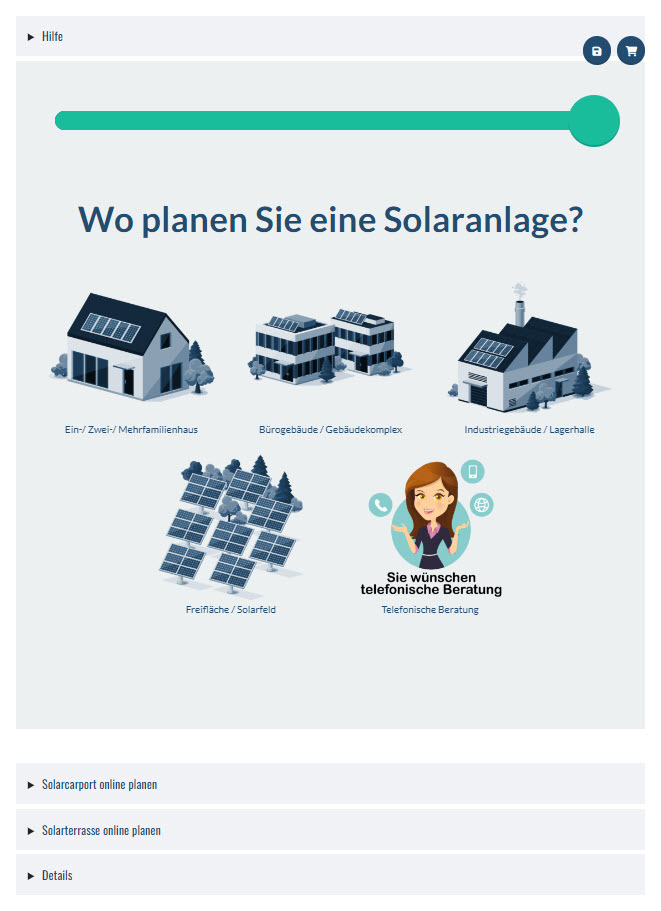
The solar system planner for the most common applications: Plan your solar system online here - Image: Xpert.Digital
More information here:
🌍 The housing crisis and its solutions 🏭
The lack of affordable housing is one of the most serious challenges of our time. The goal is to build 400,000 new apartments annually, 100,000 of which are to be government-subsidized. However, as the year is already well advanced, the question remains: How can the construction and real estate sector be stabilized while simultaneously increasing the availability of affordable, climate-friendly, and accessible housing?
The role of depreciation in modern housing construction
Declining-balance depreciation (AfA) of 6% for newly constructed residential buildings can be a key instrument for stabilizing the construction industry. The elimination of construction cost ceilings is particularly relevant in this context. To increase the attractiveness of investments, we should not only consider the building permit application as a criterion for granting declining-balance depreciation, but also the actual start of construction.
Energy efficiency: EH 55 as the new standard
Energy efficiency is a key issue for climate-friendly construction. The introduction of the EH 55 standard on January 1, 2023, marked an important step towards climate-neutral new buildings. In the context of the reform of the European Energy Performance of Buildings Directive, it is essential to consider emission reductions across the entire life cycle of a building and to promote the use of sustainable building materials.
Acceleration and simplification of construction processes
To promote affordable housing in tight housing markets, we need to reduce bureaucracy. A temporary special regulation mechanism, based on Section 246 Paragraph 14 of the German Building Code (BauGB), could significantly accelerate the process until December 31, 2026.
The need for robust financing
With a total budget of €18.15 billion for social housing until 2027, the federal and state governments are demonstrating shared responsibility. If the current complementary financing model continues, approximately €45 billion will be available nationwide for social housing construction.
Innovation promotion through KfW new construction programs
The KfW new construction programs "Climate-Friendly New Construction" and "Home Ownership for Families" are intended to offer additional incentives. By raising the maximum loan amounts and income limits, the programs will be made accessible to more families.
A comprehensive approach for the construction and housing industry
In a time when the construction and real estate sector faces numerous challenges, a multidimensional approach to solving the housing crisis is essential. From tax incentives and energy efficiency to promoting innovation – the path to more affordable and climate-friendly housing is complex, but achievable.
🏡 No obligation to renovate individual buildings in the EU?
🌍 EU Directives & National Laws
Within the European Union, there are ongoing debates about building renovation, particularly regarding reducing energy consumption. The EU itself has various directives for buildings that must be transposed into national law. However, member states have some leeway to grant exceptions and implement special funding programs.
🏢 Individual buildings vs. Total building stock
There is an important difference between the renovation of individual buildings and a general quota for the entire building stock. While the EU attempts to set general minimum standards, the decision regarding the renovation of individual buildings often rests with the member states or even the owners themselves.
🎯 Renovation rates
Renovation quotas could be an effective method for improving the overall quality of buildings in a country or region. In Germany, for example, there are funding programs that provide financial support to owners when they renovate their buildings.
💼 Political situation
Currently, 16 of the 27 EU governments, including Germany, are against mandatory individual renovations. This suggests that an EU-wide obligation is unlikely in the foreseeable future.
📊 Future developments
It's always possible that the political situation will change and the EU will impose stricter regulations. Therefore, it's advisable to keep an eye on developments in Brussels.
📣 Similar topics
- 🏡 How can property owners benefit from subsidies?
- 🌿 Sustainable buildings in the EU
- 🗳️ Political influences on restructuring policy
- 💡 Energy-efficient renovation: What do you need to know?
- 📈 Renovation and the real estate market
- 🛠️ Tips for successful building renovation
- 🌐 EU directives vs. national laws
- 📋 What are the current renovation rates?
- 🔄 Renovation or new construction: Which is better?
- 🌍 How the EU wants to make the building sector greener
#️⃣ Hashtags: #EURenovationPolicy #RenovationRate #BuildingRenovation #EnergyEfficiency #NationalLaws
🏡 Homeownership promotion: Segen or a curse for families?
🎯 Goal and benefits of homeownership promotion
The German government is serious about promoting homeownership for families. With a subsidized loan from the KfW bank at an interest rate of just 0.01 percent, they aim to make building a house more attractive to families. Compared to the market average of 3.5 to 4 percent, this is, of course, a huge advantage.
💶 Financial hurdles: Is this really for low-income earners?
While the interest rates sound tempting, the question is how many families can actually afford a loan of up to €270,000. With monthly repayments of around €3,000 and a required down payment of ten percent (that's €30,000 for a €300,000 house), the program is certainly not affordable for everyone.
🔄 “Young people buy old”: A new approach
The planned "Young People Buy Old" funding program represents an interesting approach. It focuses on existing buildings in need of renovation. This is a smart move, especially since the funds come from the Climate and Transformation Fund, thus killing two birds with one stone.
🏢 Conversion of office buildings and retail stores
The government is not only focusing on building new houses, but also on converting vacant office buildings and shops into residential space. According to the Ministry of Housing, this could create up to 235,000 new homes.
📣 Similar topics
- 🤑 How can I finance building a house as a low-income earner?
- 🔄 “Young people buy old”: The new trend in the real estate market
- 🏗️ Renovation instead of new construction: Why this makes sense
- 📈 KfW loans: How it works
- 🏦 Financing alternatives to KfW Bank
- 🌿 Sustainable building with the Climate Fund
- 🏡 Tips for successful real estate financing
- 📝 What to look out for regarding KfW loan conditions
- 🎯 Target groups of the new construction funding programs
- 💰 Hidden costs when building a house
#️⃣ Hashtags: #HomeownershipPromotion #KfWLoan #YoungBuysOld #LowIncomeIncome #RealEstateMarket
Homeownership promotion programs offer great opportunities, but they are not equally accessible to all segments of the population. The federal government is on the right track to improve the housing market while simultaneously pursuing environmental goals. However, the question remains how inclusive these programs truly are and whether they really help the people who need it most.
🗒️ More construction subsidies: What you should know 🌿⚡
The coalition government has ambitious plans for low-income families. However, several questions remain: Why have only 104 applications been submitted so far? And what will raising the income threshold achieve?
👪 Target group is being expanded: From 60,000 to 100,000 euros
The core problem was clearly the income limit of €60,000. Many families felt excluded by this. The new limit of €100,000 will certainly reach more families.
📈 The math behind it: This is what it looks like
With the new annual salary of €100,000, you and your partner can each earn up to €3,750 gross per month. And the best part: the income limit increases by €10,000 for each additional child.
🤷♀️ Why so few applications?
The low number of applications suggests a lack of information. Better communication is needed to raise awareness of the program.
🛠️ Successfully submit your application: Here's how
- Find out about the exact criteria.
- Gather all necessary documents.
- Submit your application on time.
📣 Similar topics
- 💡 How to successfully apply for construction subsidies
- 🏡 Finding building land: Tips and tricks
- 📊 Construction subsidies in Germany: The figures
- 💰 Other ways to finance your house construction
- 📝 What you should be aware of legally
- 🧾 Efficiently utilize tax advantages
- 🚀 How to successfully start building your house
- 👶 Family-friendly building design
- 🏗️ These are the costs you will incur
- 🤑 Saving money when building a house: Is that possible?
#️⃣ Hashtags: #ConstructionFunding #Families #IncomeLimit #TrafficLightCoalition #HouseConstruction
With the increase in the income limit to €100,000, housing subsidies will become accessible to more families. If you are considering building a house, you should take advantage of this opportunity. However, the government also needs to do more to better promote the program and inform potential applicants. Overall, though, the chances are better than ever that the dream of homeownership will become a reality for more people in Germany.
🗒️ More funding for heating system replacement: What owners and associations need to know
The building energy legislation passed by Germany's governing coalition aims to promote the transition to climate-friendly heating solutions. The problem: Many people are uncertain due to unclear funding opportunities and high installation costs for heat pumps.
🌍 Climate goals and heating: Why it matters
Achieving climate goals requires a comprehensive approach, including the transition to climate-friendly heating methods. Old fossil fuel heating systems are one of the main sources of CO2 emissions in buildings.
💰 The funding landscape: What's changing
The German government now wants to offer incentives for the rapid replacement of old fossil fuel heating systems with modern, efficient heat pumps. This is a financial bonus for homeowners, intended to make the switch more affordable.
🛠️ Installation costs: Yes, it's expensive, but…
The initial costs of installing a heat pump can be daunting. However, government subsidies and long-term energy cost savings make the investment worthwhile.
🤝 What do the associations say?
Industry associations have mixed opinions. Some welcome the increased funding, while others call for more clarity in the funding landscape.
📝 Here's how: A guide
- Check out the current funding opportunities.
- Calculate the long-term costs and savings.
- Obtain quotes from different providers.
- Consult experts for a customized solution.
📣 Similar topics
- 🌿 Climate-neutral heating: How to take the first step
- 💡 Innovative heating technologies: What comes after the heat pump?
- 🏡 Home renovation: Energy-efficient refurbishment from A to Z
- 📊 The changing heating market: Trends and forecasts
- 🛒 Using funding correctly: A buyer's guide
- 🤑 Savings potential: How to reduce your energy costs
- 🔧 DIY heating system conversion: Is it possible?
- 🤷♀️ Heat pump vs. solar: Which is better?
- 📜 Legal basis of building energy
- 🔄 Old for new: How to replace your heating system
#️⃣ Hashtags: #HeatingSystemReplacement #ClimateGoals #BuildingEnergy #Funding #HeatPumps
The German government is placing great hopes on the rapid replacement of old, fossil fuel heating systems with more environmentally friendly alternatives such as heat pumps. The new law aims to lower financial barriers and accelerate the transition to a greener future. However, homeowners should also weigh the long-term cost savings against the initial investment. Either way, switching to an environmentally friendly heating system is an important step towards a sustainable future.
🛠️ Less climate protection in construction: A step backwards or a realistic adaptation?
🌿 EH-40 vs. EH-55: What's the difference?
The EH-40 standard would be a tightening of the current EH-55 standard for energy efficiency in buildings. EH-55 means that a building may only consume 55% of the energy of a comparable new building. The transition to EH-40 would have meant even stricter requirements for insulation and energy efficiency.
🏗️ Criticism from the construction industry
The construction industry has long voiced its discontent with the strict regulations. Its main argument: these regulations would significantly increase construction costs. From an economic perspective, this stance is understandable, especially considering the tight situation on the real estate market and the high construction costs.
🌍 Climate protection vs. construction reality
The building sector is a huge energy consumer and therefore a key area for climate protection measures. The decision not to introduce the stricter EH-40 regulations sends a strong signal. It shows that a middle ground between climate protection and economic feasibility is being sought.
🤔 Conclusion and outlook
It's a balancing act. On the one hand, we want to counteract climate change, but on the other hand, costs mustn't skyrocket, otherwise housing will become even scarcer. The decision to suspend the EH-40 standard is therefore not clearly a step backward or forward. Rather, it reflects the current economic and environmental situation.
📣 Similar topics
- 🌿 EH-55: A realistic standard?
- 🏗️ Why the construction industry is against climate protection regulations
- 🌍 Climate protection and the construction industry: A contradiction?
- 📊 The cost of building under different standards
- 🤝 Compromises in climate protection
- 💡 Alternative energy solutions in the building sector
- 🛠️ How much climate protection can the housing market tolerate?
- 🏠 Energy-efficient renovation: Is it worth it?
- ⚖️ Laws and regulations: What's next?
- 🔄 Sustainability vs. cost-effectiveness in construction
#️⃣ Hashtags: #ClimateProtection #ConstructionIndustry #EnergyEfficiency #EH55 #EH40
We are here for you - Consulting - Planning - Implementation - Project Management
☑️ Expert advice on energy-efficient renovation and new construction
☑️ with solar solutions and heat pumps/air conditioners

Konrad Wolfenstein
I would be happy to serve as your personal advisor.
You can contact me by filling out the contact form below or simply call me on +49 157 30 44 9 555 .
I'm looking forward to our joint project.
Write to me


Xpert.Digital - Konrad Wolfenstein
Xpert.Digital is a hub for industry focusing on digitalization, mechanical engineering, logistics/intralogistics and photovoltaics.
With our 360° Business Development solution, we support renowned companies from new business to after-sales.
Market intelligence, smarketing, marketing automation, content development, PR, mail campaigns, personalized social media and lead nurturing are part of our digital tools.
You can find more information at: www.xpert.digital - www.xpert.solar - www.xpert.plus
Keep in touch