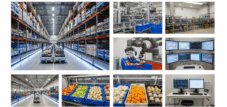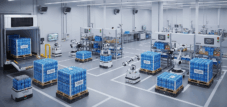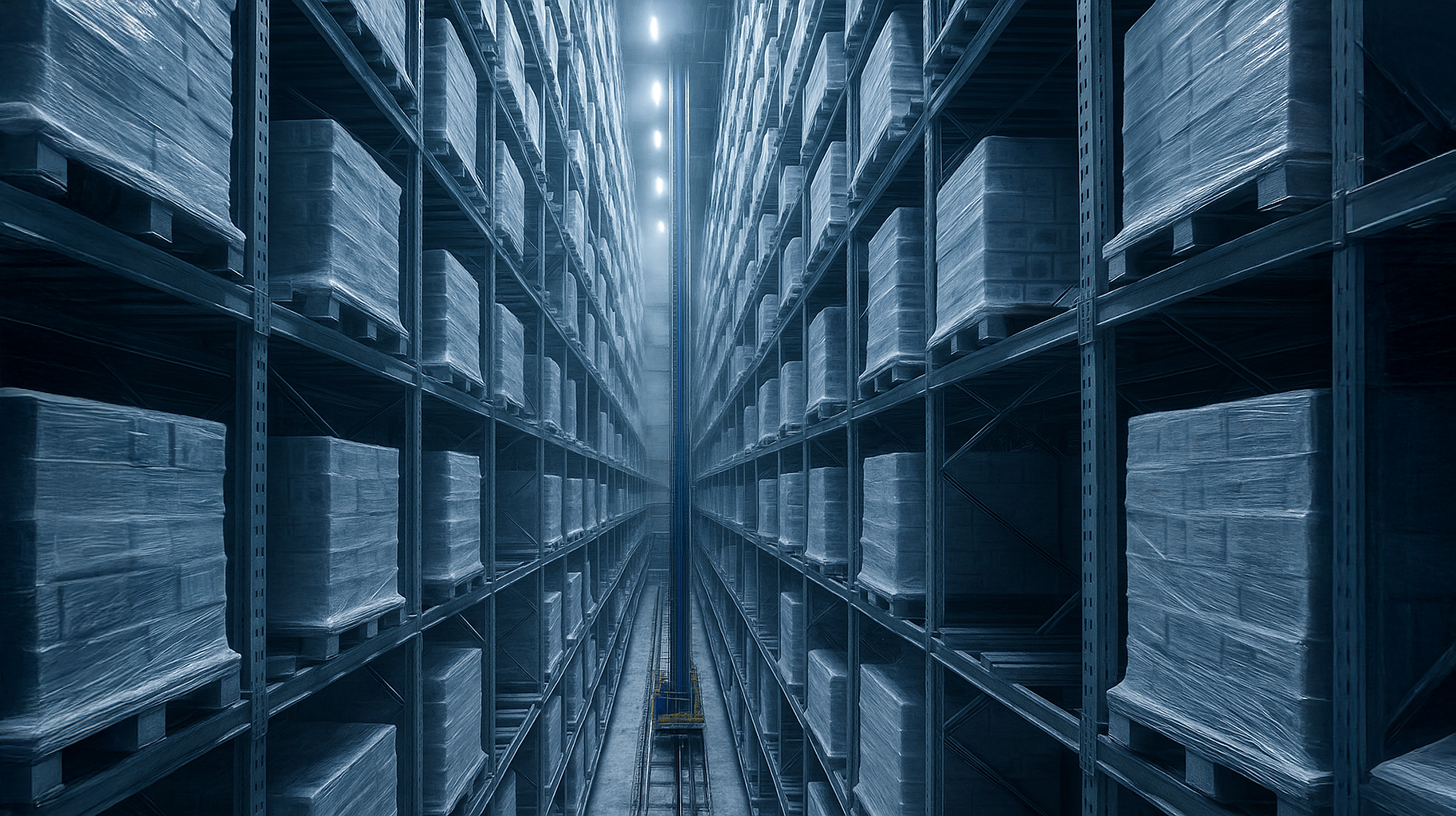
Higher, denser, colder: Why these storage systems are changing food logistics forever – Image: Xpert.Digital
Never again frost damage? How automated precision is revolutionizing the quality of frozen food
AS/RS and STVs: The revolution in cold storage – efficiency and precision for perishable goods
Modern warehousing technology is at a turning point. With the rapidly growing demand for chilled and frozen foods and the increasing complexity of supply chains, conventional storage methods have reached their limits. The solution lies in intelligent automation through Automated Storage and Retrieval Systems (AS/RS) and Shuttle Transfer Vehicles (STVs), which are specifically designed for the demanding environment of cold storage facilities.
These cutting-edge technologies are not only transforming the way we store perishable goods, but are revolutionizing the entire cold chain logistics. They offer unparalleled precision, efficiency, and reliability while drastically reducing energy costs and minimizing human intervention in extremely cold environments.
Automated storage and retrieval systems: The cornerstones of modern cold storage
Functionality and technical basics
Automated storage and retrieval systems represent the pinnacle of storage technology for temperature-controlled environments. These highly complex systems consist of a multitude of computer-controlled components that work seamlessly together to automatically place and retrieve goods in defined storage locations.
The heart of an AS/RS system is the storage and retrieval machine, a precision vehicle that moves both horizontally and vertically through the aisles. These machines are equipped with various load handling devices that can automatically adjust to different load sizes. From telescopic forks and side conveyors to clamping devices – each system is specifically tailored to the goods being handled.
The system is controlled by sophisticated warehouse management systems that communicate with the warehouse control unit in real time. These systems not only manage inventory information but also optimize travel routes, minimize empty runs, and coordinate multiple stacker cranes simultaneously.
Optimal space utilization in cold storage
Space utilization in cold storage facilities differs fundamentally from conventional warehouses. Every additional cubic meter translates into significant extra costs for cooling, insulation, and maintenance. AS/RS systems maximize space utilization by supporting racking systems up to 40 meters high, making the most of every available centimeter.
Compared to traditional cold storage facilities operated by forklifts, AS/RS systems enable up to 60 percent higher storage density. This is achieved through narrower aisles, higher racking, and the elimination of safety clearances for manual operation. The compact design not only reduces the footprint but also the surface area through which heat can penetrate.
Intelligent space optimization is dynamic and based on product characteristics, turnover rate, and temperature requirements. Fast-moving items are placed in advantageous positions, while slow-moving items are stored in higher or lower shelf areas. This strategy minimizes access times and optimizes energy consumption.
Precise temperature control and energy efficiency
Temperature control in automated cold storage facilities reaches a completely new level of precision. AS/RS systems operate in a fully closed system, referred to as a "dark storage" because no human intervention is required. This eliminates the biggest source of temperature fluctuations: the opening of doors and the movement of people and vehicles.
The energy savings are considerable. Automated cold storage facilities require 35 to 50 percent less energy than conventional systems. This is achieved through several factors: the compact design reduces the surface area to be cooled, the elimination of forklifts prevents heat input from combustion engines, and precise control prevents unnecessary temperature deviations.
Modern AS/RS systems are specifically designed for extreme cold. Standard systems operate reliably down to minus 30 degrees Celsius, while specially developed versions can even handle temperatures as low as minus 40 degrees Celsius. The materials and components used are specially hardened and optimized for low temperatures to ensure reliable operation even under the most extreme conditions.
Inventory management with the highest accuracy
Inventory management in automated cold storage facilities achieves an accuracy of 99.9 percent. This exceptional precision is achieved through the seamless digital tracking of every single pallet or container. From arrival to delivery, every movement is recorded, logged, and processed in real time.
The system automatically implements FIFO and FEFO principles, which are crucial for perishable goods. FIFO ensures that goods are dispatched in the order they are received, while FEFO goes a step further and prioritizes products based on their expiration date.
Automated batch tracking enables complete traceability from the manufacturer to the end customer. In the event of quality issues or recalls, affected batches can be located and isolated within minutes. This capability is not only essential for food safety but also a regulatory requirement.
Throughput optimization for maximum efficiency
The throughput in automated cold storage facilities significantly surpasses conventional systems. Modern AS/RS systems can move several hundred pallets per hour, with the speed dynamically adjusting to demand. This flexibility makes it possible to handle peak times without overloading the system.
Parallelizing processes is a crucial advantage. While one storage and retrieval machine is storing goods, others can simultaneously process picking orders. This parallel processing multiplies system performance and reduces waiting times to a minimum.
Intelligent order bundling further optimizes efficiency. The system analyzes incoming orders and combines them into optimal trips that handle both storage and retrieval in a single operation. This strategy reduces empty runs and maximizes the productivity of each individual movement.
Shuttle Transfer Vehicles: Next-generation dynamic pallet sorting
Innovative functionality and system architecture
Shuttle transfer vehicles are revolutionizing pallet sorting and transport in modern cold storage facilities with their unique rail-guided system. These highly advanced vehicles move at speeds of up to 200 meters per minute on specially installed rails, achieving a transport speed of 30 meters per minute when loaded.
The vehicles are equipped with intelligent sensors and navigation systems that ensure precise positioning and collision avoidance. The system automatically adjusts the speed to the specific situation, whether loaded or unloaded, and continuously optimizes energy consumption.
Rail technology offers decisive advantages over conventional conveyor systems. The vehicles can easily handle inclines, negotiate curves, and navigate complex switch structures. This flexibility makes it possible to install efficient transport systems even in existing buildings without having to undertake costly structural modifications.
Dynamic access and intelligent sorting
The dynamic access of STV systems enables unprecedented flexibility in pallet sorting. Unlike rigid conveyor belts that process pallets sequentially, STVs can selectively access specific pallets and sort them according to priority, destination, or urgency.
The intelligent sorting logic takes multiple factors into account simultaneously: delivery dates, customer priorities, temperature requirements, and transport routes. The system creates optimal sorting sequences in real time, maximizing efficiency while ensuring the quality of the stored goods.
This dynamic is particularly valuable in cold chain logistics. Pallets with short shelf lives can be prioritized immediately, while goods with longer shelf lives can be temporarily held back. This intelligent prioritization reduces spoilage and optimizes product availability.
Collaborative operation and redundancy
STV systems are designed for collaborative operation, where multiple vehicles work together in a coordinated manner. The central control unit assigns specific tasks to each vehicle and monitors their execution in real time. This coordinated approach prevents collisions and optimizes the overall performance of the system.
Redundancy is a crucial advantage for critical cold storage applications. If one vehicle fails, the remaining vehicles automatically take over its tasks. This fail-safe operation is particularly important in cold storage facilities, where interruptions can lead to costly product losses.
Maintenance is carried out without interrupting operations. Vehicles can be moved to the end of the track for maintenance work, while operations continue with the remaining vehicles. This flexibility minimizes downtime and ensures continuous operational readiness.
Scalability and adaptability
The scalability of STV systems makes them ideal for growing businesses. New vehicles can be easily added to existing systems without interrupting operations. Tracks can be extended, new switches installed, and additional stations connected.
The configuration options are numerous: from simple shuttle systems with one vehicle to dual-shuttle systems and complex loop systems with multiple vehicles. Each configuration can be individually adapted to the specific requirements of the cold storage facility.
This adaptability extends to different pallet types and sizes. The vehicles can use various load handling devices and automatically adjust to different load carriers. This versatility makes it possible to handle different product categories with a single system.
Specialization in cold storage applications
STV systems for cold storage facilities are specifically designed for the extreme conditions of temperature-controlled environments. They operate reliably at temperatures as low as minus 30 degrees Celsius and are equipped with special materials and components that remain functional even in extreme cold.
The vehicles' sealing and insulation prevent condensation and corrosion, which are particularly problematic in cold environments. Special lubricants and seals ensure the smooth operation of all moving parts, even at low temperatures.
Integration into the cold chain monitoring system enables continuous temperature control during transport. Sensors on the vehicles monitor the ambient temperature and immediately alert the management system to any deviations.
Specific application examples in the food industry
Optimization of dairy product storage
The dairy industry places particularly high demands on cold chain logistics. Dairy products are extremely temperature-sensitive and require uninterrupted refrigeration from processing to the consumer. Automated storage systems are revolutionizing these critical processes through precise temperature control and minimal handling times.
In modern dairies, AS/RS systems are directly integrated with the production lines. Freshly packaged dairy products are automatically stored, ensuring the cold chain remains uninterrupted by human intervention. These systems can handle various product types simultaneously: from liquid milk and yogurt to cheese products, each with its own specific temperature requirements.
Automated batch management is crucial for dairy products. The system tracks each batch from receipt to dispatch and automatically implements FEFO principles. This ensures that products with the shortest shelf life are shipped first, minimizing spoilage and maximizing freshness.
Traceability enables dairies to react immediately to quality problems. Affected batches can be located, isolated, and removed from circulation within minutes. This capability is not only essential for food safety but also a regulatory requirement.
Revolution in frozen food storage
The frozen food industry benefits enormously from automation, as the extreme temperatures of minus 18 to minus 30 degrees Celsius are particularly taxing on human workers. Automated systems eliminate the need for workers to operate in these harsh conditions, while simultaneously improving efficiency and product quality.
AS/RS systems for frozen goods are specially hardened and use cold-resistant materials and lubricants. These systems can serve up to 14 shelf levels, achieving a storage density that would be impossible with manual systems. Their compact design significantly reduces the surface area requiring cooling and lowers energy costs by up to 50 percent.
Automated quality control is achieved through integrated sensors that continuously monitor temperature and humidity. Any deviations trigger immediate alarms and corrective actions. This constant monitoring ensures adherence to the cold chain and prevents quality loss.
STV systems in deep-freeze warehouses enable flexible sorting according to customer needs and delivery dates. For example, the system can prioritize pallets for express deliveries or group shipments according to transport routes to optimize the efficiency of downstream processes.
Fresh produce logistics redefined
Fresh produce such as fruits, vegetables, and salads pose the most complex challenges to warehouse logistics. Each product category has specific temperature and humidity requirements, and even small deviations can lead to significant quality losses.
Automated systems enable the simultaneous management of different climate zones within a warehouse. Leafy vegetables are stored at 0 to 2 degrees Celsius and high humidity, while citrus fruits find optimal conditions at 3 to 9 degrees Celsius and lower humidity.
Intelligent inventory rotation takes into account not only the date of receipt but also the specific shelf life of each product category. Highly perishable products such as berries are automatically prioritized, while more robust goods such as apples can be stored for longer periods.
Controlled atmosphere technology is integrated into advanced systems to extend storage life. By precisely controlling oxygen and carbon dioxide levels, apples, for example, can be kept fresh for up to a year. AS/RS systems enable the automatic monitoring and adjustment of this atmosphere for each storage zone.
Temperature zone management and cross-docking
Modern cold storage facilities often handle products with varying temperature requirements simultaneously. Automated systems enable the efficient management of multiple temperature zones within a single facility. The system coordinates transport between zones, minimizing exposure to unsuitable temperatures.
Cross-docking operations, where goods are transported directly from inbound to outbound without extended storage, are being revolutionized by STV systems. The vehicles can immediately direct incoming pallets to the appropriate outbound ramps without the need for intermediate storage.
Automatic shipment consolidation optimizes transport efficiency. The system can combine pallets from different manufacturers into mixed loads for individual customers, taking temperature compatibility and delivery dates into account.
Expert partner in warehouse planning and construction

Efficient cold chains through Daifuku's innovative AS/RS and STV systems
Daifuku as a technology leader in cold storage automation
Decades of expertise and innovation
Daifuku has established itself as the undisputed global leader in cold storage automation, with an impressive track record dating back to 1966. As early as 1973, the company installed the first freezer-compatible AS/RS system, operating at extreme temperatures of minus 40 degrees Celsius, thus laying the foundation for modern cold storage automation.
With over 34,000 AS/RS cranes installed worldwide, Daifuku has unparalleled experience in the design and implementation of automated storage systems. Many of these systems have been in operation for over 50 years, demonstrating the exceptional durability and reliability of Daifuku technology.
The continuous development of the technology is evident in today's product range, which includes standard systems for temperatures down to minus 30 degrees Celsius, with customized solutions for even more extreme conditions down to minus 40 degrees Celsius. This technological leadership is based on decades of research and development in the specific requirements of temperature-controlled environments.
Comprehensive system integration and expertise
Daifuku's approach to cold storage automation is characterized by the seamless integration of various technologies into comprehensive solutions. The combination of AS/RS systems with STV technology creates highly efficient storage ecosystems that far exceed the sum of their individual components.
Daifuku's Unit Load AS/RS systems are specifically designed for handling pallets, wire mesh pallets, and other heavy loads. These systems can reach heights of up to 40 meters while maintaining exceptional speed and precision. Advanced control systems continuously optimize operations and minimize cycle times.
The Mini Load AS/RS systems complement the portfolio for smaller load carriers such as containers, cartons, and trays. These systems are particularly quiet in operation and therefore ideally suited for environments where noise emissions are critical. These systems are also optimized for cold storage applications and ensure reliable operation at low temperatures.
Shuttle technology and mobile solutions
Daifuku's Shuttle Rack M system represents the latest development in vehicle-based AS/RS technology. This multi-shuttle system is specifically designed for temporary storage, sorting, and sequencing, offering 60 percent lower energy consumption per cycle compared to conventional crane systems.
Daifuku's STV technology revolutionizes pallet sorting through its unique combination of speed, flexibility, and reliability. With speeds of up to 200 meters per minute and the ability to operate in various configurations, these systems offer unparalleled adaptability to diverse warehouse requirements.
Daifuku's mobile racking system reduces space requirements by 50 percent compared to conventional racking systems. This technology is particularly valuable in cold storage facilities, where every square meter saved translates into significant savings in cooling and operating costs.
Intelligent control systems and software integration
Daifuku's control technology forms the core of every automation solution. The local intelligent network control system offers a comprehensive solution, from front-end control to complete inventory management computer systems. This software monitors the system in real time and assists with fault diagnosis.
Integration with warehouse management systems enables seamless coordination of all warehouse processes. The system can orchestrate complex logistics workflows, from goods receipt and storage to order picking and shipping. Continuous optimization algorithms are applied to maximize efficiency.
The energy efficiency of the systems is achieved through intelligent energy recovery and distribution. Energy is recovered during braking and load reduction and made available to other system components. This technology can reduce energy consumption by up to 20 percent.
Industry-specific solutions and reference projects
Daifuku specializes in the specific requirements of various industries and has developed customized solutions. In the food industry, these solutions include not only hardware but also specialized software for managing expiration dates, batch tracking, and regulatory compliance.
The pharmaceutical industry benefits from Daifuku's expertise in the safe handling of temperature-sensitive drugs and vaccines. The systems offer the necessary precision and traceability to meet the stringent regulatory requirements of this sector.
Daifuku's success stories include installations at leading companies worldwide, from large dairies and frozen food distributors to pharmaceutical manufacturers. These reference projects demonstrate the versatility and reliability of Daifuku technology in real-world application scenarios.
Future-oriented development and service
Daifuku's research and development focuses on integrating new technologies such as artificial intelligence, the Internet of Things, and blockchain into automation solutions. These technologies will shape the next generation of cold storage automation and enable even smarter, more efficient systems.
Daifuku's service and support covers the entire lifecycle of the systems, from planning and installation to maintenance, upgrades, and modernizations. The company offers preventative maintenance programs, remote monitoring, and rapid response times in case of malfunctions.
Sustainability is at the heart of Daifuku's philosophy. The systems are not only energy-efficient in operation, but also durable and recyclable. This sustainability strategy helps customers achieve their environmental goals while simultaneously reducing operating costs.
Integration of warehouse management systems in the cold chain
Modern WMS functionalities for temperature-controlled environments
Warehouse management systems for cold storage facilities differ significantly from conventional warehouse management systems due to their specialized functions for temperature-controlled environments. These systems integrate temperature monitoring, humidity control, and automatic alarm notification in case of deviations from setpoints as core functions.
Real-time temperature monitoring is achieved through a network of IoT sensors that continuously collect data and transmit it to the central WMS. These sensors not only measure the ambient temperature but also the core temperature of the stored products to ensure complete monitoring of the cold chain.
The automatic documentation of all temperature values creates complete logs for regulatory compliance and quality assurance. In case of deviations, not only are alarms triggered, but corrective actions are also automatically initiated, such as redistributing goods or adjusting the refrigeration system settings.
Integration with building management systems enables optimal coordination between warehouse operations and building technology. For example, the WMS can adjust the cooling in specific areas when they are temporarily emptied to save energy.
Enhanced inventory management and quality management
Inventory management in temperature-controlled environments requires advanced functionalities that go far beyond standard storage. Modern WMS systems manage not only quantities and locations, but also quality information, temperature history, and shelf-life forecasts for each individual product.
The automatic implementation of FEFO principles takes into account both the expiration date and the remaining transport time to the destination. The system dynamically calculates which products must be delivered with priority to prevent spoilage and maximize product freshness for the end customer.
Batch management is carried out at a granular level with complete traceability from the manufacturer to the end consumer. In the event of a recall, affected batches can be identified and located within minutes, which is critical for food safety and regulatory compliance.
Quarantine functions automatically isolate products that have quality problems or whose cold chain has been interrupted. These products are physically separated and can only be released or disposed of after a quality check.
Predictive analytics and quality forecasts
Advanced WMS systems utilize machine learning and predictive analytics to forecast quality trends and act proactively. Algorithms analyze historical data on temperature profiles, storage times, and quality parameters to accurately predict remaining shelf life.
Dynamic pricing based on remaining shelf life makes it possible to market products with a short remaining shelf life before they spoil. The system can automatically suggest discounts or initiate special sales promotions to accelerate inventory turnover.
Optimizing transport routes takes into account not only distances and costs, but also temperature requirements and the remaining shelf life of the products. Shipments with short shelf lives are prioritized in route planning and assigned more direct routes.
Energy Analytics continuously monitors the energy consumption of the cold storage facility and identifies potential areas for optimization. The system can provide recommendations for operational adjustments that improve energy efficiency while maintaining product quality.
Compliance management and audit support
Regulatory requirements in the food and pharmaceutical industries are complex and frequently changing. Modern WMS systems for cold storage facilities automatically integrate these requirements and ensure continuous compliance without manual intervention.
The automatic generation of compliance reports occurs in real time and includes all relevant parameters such as temperature logs, storage times, batch tracking, and quality documentation. These reports can be made immediately available for audits and significantly reduce administrative effort.
Blockchain integration provides tamper-proof documentation of all warehousing and transport processes. Every movement, every temperature measurement, and every quality check is recorded in an immutable ledger, ensuring maximum transparency and trustworthiness.
Vendor management systems automatically evaluate supplier performance based on temperature logs, delivery times, and quality parameters. Suppliers who repeatedly cause quality problems are automatically flagged and can be prioritized for future monitoring.
Economic benefits and return on investment
Direct cost savings through automation
Implementing AS/RS and STV systems in cold storage facilities generates significant direct cost savings that are recouped within the first few years of operation. Energy savings through compact design and optimized cooling processes typically amount to 35 to 50 percent of the original energy costs, which can translate into six-figure annual savings for large cold storage facilities.
Reducing the workforce in harsh refrigerated environments not only eliminates labor costs but also the high additional costs for protective equipment, healthcare, and downtime due to cold-related illnesses. Automated systems operate 24 hours a day without breaks, shift changes, or sick leave.
The drastic reduction of product losses through optimized temperature control and precise inventory management can translate into savings of 15 to 20 percent of the value of perishable goods. For a typical cold storage facility with an annual inventory value of several million euros, this equates to significant cost savings.
Minimizing building damage caused by forklifts and manual handling eliminates repair and maintenance costs. Automated systems prevent collisions with shelves, doors, and other infrastructure elements, significantly extending the lifespan of building technology.
Productivity increase and throughput optimization
Productivity gains through automation often significantly exceed initial expectations. AS/RS systems can increase throughput two to three times compared to manual systems, while simultaneously reducing the error rate to almost zero.
The 24/7 availability of automated systems eliminates downtime and enables continuous operation even outside regular working hours. This is particularly valuable for just-in-time deliveries and handling peak demand.
Parallelizing processes with multiple AS/RS cranes and STV vehicles multiplies system performance without a proportional increase in costs. A system with four cranes can often deliver more than four times the performance of a single-crane system, as synergy effects and optimized coordination generate additional efficiency gains.
Reducing picking errors through automated processes eliminates the costs associated with complaints, returns, and goodwill gestures. With temperature-sensitive products, such errors can be particularly costly, as they are often only discovered by the end customer.
Scalability and future-proofing
Automated systems offer a scalability that is unattainable with manual systems. Additional AS/RS cranes or STV vehicles can be added as requirements increase without interrupting the existing system or requiring extensive modifications.
The modularity of the systems allows for phased investments in line with the company's growth. Companies can start with a basic system and expand it gradually, thereby reducing initial capital investments and minimizing risk.
The longevity of automated systems, as documented in Daifuku installations for over 50 years, ensures a long-term return on investment. While these robust systems require regular maintenance, they retain their functionality and efficiency for decades.
Technology updates and software upgrades make it possible to expand existing systems with new functionalities without having to completely replace the hardware. This protects investments against technological obsolescence and enables continuous improvements.
Risk minimization and insurance benefits
The implementation of automated systems significantly reduces various operational risks. Precise temperature control minimizes the risk of product loss due to disruptions in the cold chain, which could lead to substantial financial losses in the case of high-value pharmaceuticals or food products.
Complete traceability and documentation of all processes facilitates the handling of product liability claims and recalls. Insurance companies often reward this improved risk profile with reduced premiums for product and business liability insurance.
Reducing workplace accidents by eliminating hazardous manual tasks in refrigerated environments not only lowers direct accident costs but also reduces occupational accident insurance premiums. Automated systems eliminate risks such as frostbite, falls on icy surfaces, and injuries from heavy loads.
The cybersecurity features of modern automated systems protect against digital threats and data theft. Integrated security systems continuously monitor system integrity and raise alerts in the event of suspicious activity or attempted attacks.
The future of cold storage automation
Artificial Intelligence and Machine Learning
The integration of artificial intelligence into cold storage automation systems will usher in the next evolutionary stage of warehouse technology. AI algorithms will be able to recognize complex patterns in temperature profiles, storage movements, and quality data that are undetectable to human analysts.
Predictive maintenance is being revolutionized by machine learning algorithms that can predict failures of cooling systems and automation components days or weeks in advance. This predictive capability enables preventive maintenance measures that avert costly breakdowns and product losses.
Autonomous optimization of warehouse operations is achieved through self-learning systems that continuously adapt and improve their algorithms. These systems will automatically determine optimal storage locations, optimize picking routes, and minimize energy consumption without requiring human intervention.
Quality prediction is being taken to a new level through AI-supported sensor data analysis. Sensors will not only measure temperature and humidity, but also capture spectroscopic data to assess the molecular composition and ripeness of products.
Internet of Things and networked systems
The Internet of Things will transform cold storage facilities into fully networked ecosystems where every pallet, container, and sensor communicates with each other. This connectivity enables granular monitoring and control at the product level, which is unimaginable today.
Blockchain technology will revolutionize traceability and transparency in the cold chain. Every step, from producer to end consumer, will be documented in an immutable, distributed database, building trust and preventing fraud.
Digital twins of cold storage facilities will enable real-time simulations that can run through various scenarios and develop optimal strategies. These digital twins will be continuously updated with real-world data and can be used for staff training and process optimization.
Edge computing will dramatically reduce response times by performing critical calculations directly on-site. This is particularly important for time-critical decisions in the event of temperature deviations or emergencies.
Sustainability and circular economy
The future of cold storage automation will be significantly shaped by sustainability goals. New refrigerants with lower global warming potential are being developed, and heat pump technologies will further improve energy efficiency.
Renewable energies are increasingly being integrated into cold storage systems, with photovoltaic systems and wind power ensuring the energy supply. Intelligent energy management systems will optimally coordinate production, storage, and consumption.
Circular economy principles are integrated into the system design, with materials and components designed for maximum recyclability. Modular designs enable the reuse of components during system upgrades or modifications.
Carbon footprint monitoring is becoming a standard feature, with every activity in the cold storage facility being assessed for its CO2 impact. Companies will be able to measure their overall carbon footprint and reduce it in a targeted manner.
Advanced automation technologies
Robotics will play an even more prominent role, with mobile robots and drones being used for maintenance, inventory, and quality control. These systems will be able to operate autonomously even in extreme cold conditions.
Augmented reality will revolutionize the maintenance and operation of automation systems. Technicians will be able to perform complex repairs using AR glasses that display step-by-step instructions directly in their field of vision.
Adaptive systems will be able to automatically adjust to changing requirements. In the event of seasonal fluctuations or changes in product ranges, the systems will reconfigure and optimize themselves independently.
Integrating automation across the entire supply chain will enable seamless end-to-end processes. From producer to end customer, all steps will be automatically coordinated and optimized to ensure maximum efficiency and quality.
The revolution in cold storage through AS/RS and STV technologies is only just beginning. The continuous development and integration of new technologies will further improve the efficiency, sustainability, and quality of cold chain logistics and open up new opportunities for innovative business models. Companies that invest in these technologies today are optimally positioning themselves for the challenges and opportunities of the future.

Xpert.Plus Warehouse Optimization - High-bay warehouses and pallet warehouses: Consulting and planning
We are here for you - Consulting - Planning - Implementation - Project Management
☑️ SME support in strategy, consulting, planning and implementation
☑️ Creation or realignment of the digital strategy and digitization
☑️ Expansion and optimization of international sales processes
☑️ Global & Digital B2B trading platforms
☑️ Pioneer Business Development

Konrad Wolfenstein
I would be happy to serve as your personal advisor.
You can contact me by filling out the contact form below or simply call me on +49 7348 4088 965 .
I'm looking forward to our joint project.
Write to me


Xpert.Digital - Konrad Wolfenstein
Xpert.Digital is a hub for industry focusing on digitalization, mechanical engineering, logistics/intralogistics and photovoltaics.
With our 360° Business Development solution, we support renowned companies from new business to after-sales.
Market intelligence, smarketing, marketing automation, content development, PR, mail campaigns, personalized social media and lead nurturing are part of our digital tools.
You can find more information at: www.xpert.digital - www.xpert.solar - www.xpert.plus
Keep in touch