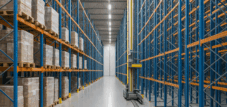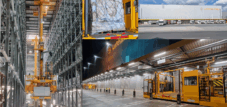
Market analysis and technology leaders: A comprehensive Q&A guide to the top manufacturers of high-bay warehouses – Image: Xpert.Digital
From craftsmanship to high-tech: Modern warehouse automation (Reading time: 53 min / No advertising / No paywall)
Fundamentals and market overview of automated high-bay warehouses
What exactly is meant by a "high-bay warehouse" and what are the fundamental differences?
The term "high-bay warehouse" is not clearly defined in the logistics industry and, depending on the context, can describe three fundamentally different types of loading units and their associated storage systems. A precise distinction is crucial for understanding the market and the technologies of leading manufacturers.
Definition 1: Intralogistics containers (small parts containers, bins, cartons)
In the context of modern warehouse automation, a high-bay warehouse or small parts warehouse most often refers to standardized small parts containers. These containers, often made of plastic, serve to store and transport smaller items (so-called "small parts"). The storage systems designed for this purpose are highly dynamic, automated small parts warehouses (AS/RS). Technologically, these are often miniload systems, in which a storage and retrieval machine (SRM) handles individual containers, or shuttle systems, in which autonomously moving shuttles on each storage level ensure extremely high storage and retrieval speeds. The focus of these systems is on maximum throughput, fast cycle times, and the efficient provision of goods for order picking according to the goods-to-person (GTP) principle.
Definition 2: Pallets and wire mesh boxes (large load carriers)
This is the classic definition of a high-bay warehouse (HBW). It involves the storage of standardized large load carriers such as Euro pallets, industrial pallets, or wire mesh containers. These systems, also known as Unit-Load AS/RS (Automated Storage and Retrieval System), are designed for maximum storage density and reach heights of over 40 meters. Storage and retrieval are carried out by large, rail-guided storage and retrieval machines (SRMs or stacker cranes) capable of moving heavy loads of up to several tons. These HBWs primarily serve to store raw materials, production materials, or pallets ready for shipment in large quantities. A special design is the silo construction, in which the racking structure itself forms the load-bearing element for the roof and walls of the building, saving construction costs and space.
Definition 3: ISO shipping container (container high-bay warehouse)
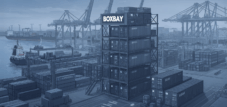
This represents a highly specialized and revolutionary niche. It involves the automated storage of 20- or 40-foot ISO containers, as used in intermodal freight transport. This technology is not aimed at traditional distribution logistics, but rather at optimizing port and transshipment terminals. The leading example is the BOXBAY system, which stacks containers up to eleven levels high in a massive steel racking structure. The key advantage is direct access to each individual container, eliminating the extremely time-consuming and costly restacking ("reshuffling") required in conventional container yards.
Logistics Transformation: Pioneering Manufacturers in Focus
The following analysis of the "Top Ten Manufacturers" focuses on providers of solutions for the first two definitions – intralogistics containers and pallets – as these constitute the core of the global warehouse automation market. Niche technology for ISO containers is covered in a separate section.
Who are the global market leaders in warehouse automation measured by revenue, and how has the ranking developed in recent years?
Top 20 warehouse automation providers by revenue (2022 vs. 2021)
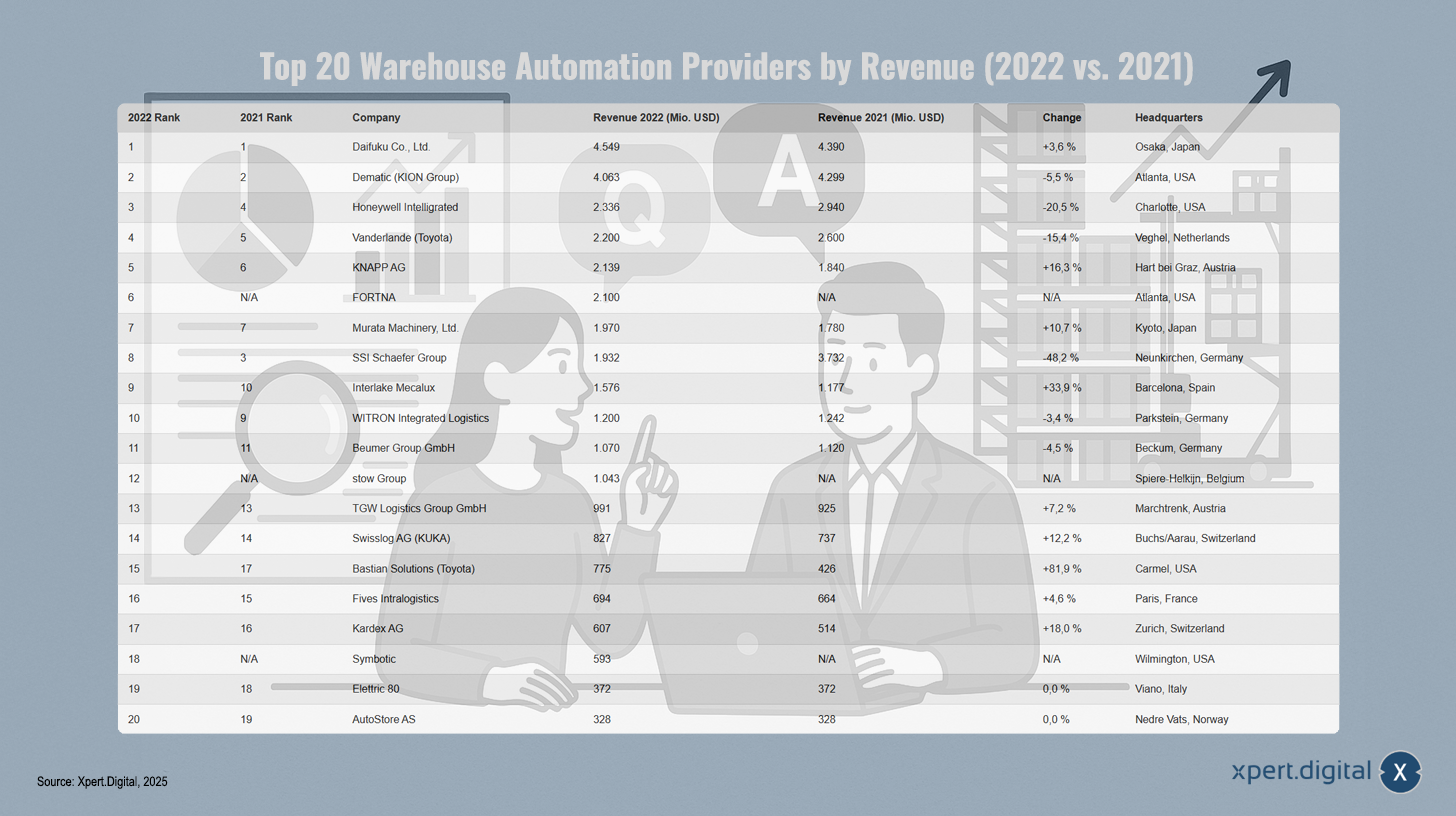
Top 20 warehouse automation providers by revenue (2022 vs. 2021) – Image: Xpert.Digital
The global warehouse automation market is dominated by a group of established, multinational corporations. The revenue figures for 2021 and 2022 reveal a dynamic competitive landscape with interesting shifts.
Daifuku Co., Ltd. from Osaka, Japan, remains at the top with a revenue of USD 4,549 million, representing slight growth of 3.6 percent. Dematic from Atlanta follows in second place, but experienced a decline of 5.5 percent. Several companies saw notable developments: KNAPP AG from Austria increased its revenue by 16.3 percent, while SSI Schaefer recorded a dramatic decline of 48.2 percent.
Bastian Solutions stands out in particular with a revenue jump of 81.9 percent, while companies like Interlake Mecalux (up 33.9 percent) and Murata Machinery (up 10.7 percent) also showed considerable growth. New players such as FORTNA, stow Group, and Symbotic have risen into the top 20, underscoring the dynamism of the warehouse automation market.
The ranking illustrates that innovative strength, adaptability and technological development are crucial factors for success in this industry.
Market development analysis
At the top: The Japanese corporation Daifuku further consolidated its leading position with a revenue growth of 3.6% to over USD 4.5 billion. The company benefited from a large order backlog, strong demand from the semiconductor industry, and the growing e-commerce sector.
Dematic, part of the German KION Group, maintained its second-place ranking but recorded a 5.5% decline in revenue. Company representatives attributed this to a normalization of the market following the historically high investments during the COVID-19 pandemic, as well as to geopolitical and macroeconomic pressures.
Honeywell Intelligrated advanced to third place despite a significant revenue decline of over 20%, highlighting the high volatility in the market.
Dynamics among the chasing pack: Particularly striking is the sharp decline in revenue at the SSI Schaefer Group, which slipped from 3rd place in 2021 to 8th place in 2022. This indicates significant company-specific or market segment-related challenges. In contrast, companies such as the Austrian KNAPP AG (+16.3%), the Spanish Interlake Mecalux (+33.9%), and especially the American Bastian Solutions (+81.9%) showed impressive growth and were able to expand their market share.
Market Structure: The data reveals a high degree of market concentration. The top five companies account for a significant portion of total revenue. Many of these leading providers are not independent companies, but rather business units of large industrial conglomerates. For example, Dematic belongs to the KION Group, which also includes forklift truck brands such as Linde and STILL. Vanderlande and Bastian Solutions are part of the Toyota Advanced Logistics Group (TALG). Swisslog belongs to the KUKA Group, a robotics specialist. This structure creates a market environment dominated by a few financially strong players, primarily based in Japan (Daifuku, Murata, Toyota) and Europe, particularly Germany (KION, SSI Schaefer, WITRON, Beumer). These corporations can offer their customers integrated, one-stop-shop solutions ranging from racking systems and stacker cranes to software and industrial trucks. This creates high barriers to entry for smaller competitors and increasingly shifts competition from pure hardware to intelligent software and service ecosystems.
What decisive advantages do automated high-bay warehouses offer compared to traditional storage methods in terms of efficiency, space utilization and costs?
Choosing an automated high-bay warehouse (HBW) is a strategic investment based on fundamental advantages over conventional, manual warehousing. These advantages can be summarized in the categories of space utilization, efficiency, cost, and safety.
Maximum space utilization and storage density:
The most obvious advantage is the optimal use of available space. While conventional warehouses often only reach heights of 3 to 7 meters, automated high-bay warehouses can be built up to 50 meters high. This multiplies the storage capacity on the same footprint. Multi-deep storage systems, where several pallets or containers are placed one behind the other in a single racking bay, further increase density. Silo-style construction, where the racking forms the load-bearing structure of the building, maximizes space utilization even further and reduces construction costs.
Increased efficiency, speed and accuracy:
Automated systems operate around the clock (24/7) with consistently high speed and precision. Storage and retrieval machines and shuttles perform storage and retrieval operations faster and more accurately than human workers. This drastically reduces order processing times – often it takes only a few minutes for a requested item to arrive at the picking station. Computer-controlled management virtually eliminates human error in storage and order picking, resulting in an inventory accuracy of over 99% and a reduced return rate.
Optimized costs (total costs):
Although the initial investment (CAPEX) for an automated system is high, it leads to lower operating costs (OPEX) in the long run. The reduction in personnel requirements is the most significant factor. Additional savings come from lower error costs, less product damage due to gentler handling, and optimized energy use from modern drives. Furthermore, the high storage density reduces land costs per storage location. Studies indicate that the investment (ROI) can often be recouped within 12 to 18 months.
Increased safety and ergonomics:
Automating heavy lifting and transport operations significantly reduces the risk of workplace accidents. At interfaces with humans, such as order picking stations, great emphasis is placed on ergonomics. The goods-to-person principle presents items to employees at an optimal reach height, minimizing physical strain and increasing productivity.
The following table systematically compares the key differences:
Conventional vs. Automated Warehousing: A System Comparison
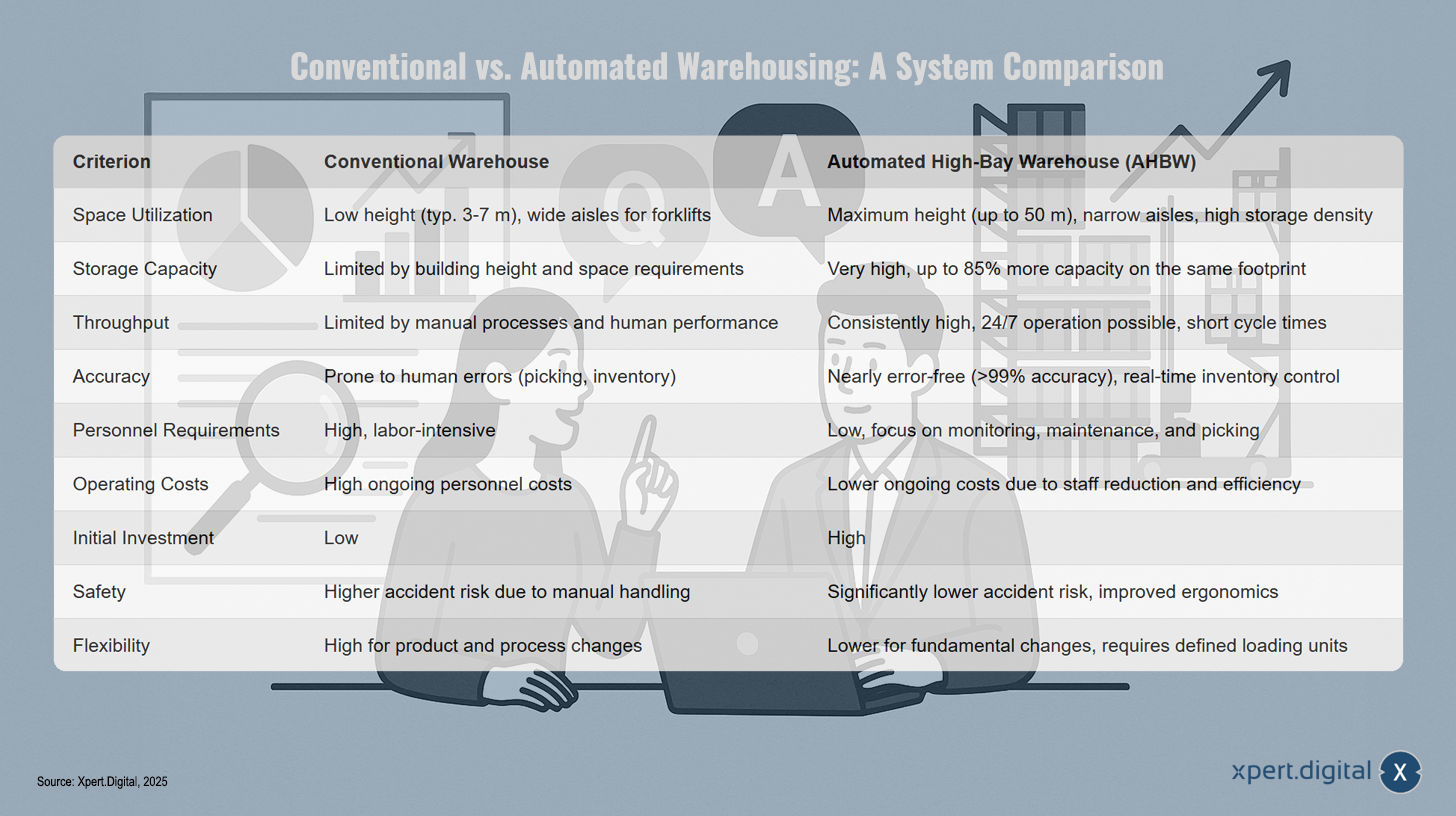
Conventional vs. Automated Warehousing: A System Comparison – Image: Xpert.Digital
There are two fundamental approaches to warehousing: the conventional warehouse and the automated high-bay warehouse (HBW), which differ in several crucial aspects. Conventional warehouse systems are characterized by lower heights, typically 3-7 meters, and wide aisles for forklifts, while automated high-bay warehouses reach heights of up to 50 meters and, thanks to narrow aisles, enable significantly higher storage density.
Storage capacity varies considerably: Conventional warehouses are limited by building height and floor space requirements, whereas automated systems can offer up to 85 percent more capacity on the same footprint. Throughput also differs significantly – manual processes limit the performance of traditional warehouses, while automated systems ensure constant, 24/7 operation with short cycle times.
The differences are particularly evident in terms of accuracy and personnel requirements: Conventional warehouses are prone to human error and labor-intensive, while automated systems achieve virtually error-free processes with over 99 percent accuracy and require minimal personnel. Operating costs vary accordingly: High ongoing personnel costs are offset by lower costs resulting from efficiency and staff reductions.
The initial investment for automated systems is significantly higher, but they offer long-term advantages such as a reduced risk of accidents and improved ergonomics. Flexibility also differs: conventional warehouses are easier to adapt to product and process changes, while automated systems require defined loading units and more complex adjustments.
Your intralogistics experts
Consulting, planning and implementation of complete solutions for high-bay warehouses and automated storage systems - Image: Xpert.Digital
More information here:
Automated warehouse environments: Innovations from leading system integrators
Detailed profiles of the top 10 manufacturers
This section provides detailed profiles of the ten highest-revenue providers of warehouse automation systems. The selection is based on the market data presented in the previous section. To ensure direct comparability, a standardized question-and-answer format is used for each manufacturer. The preceding overview table summarizes the companies' key strategic characteristics.
Overview of the top 10 high-bay warehouse manufacturers
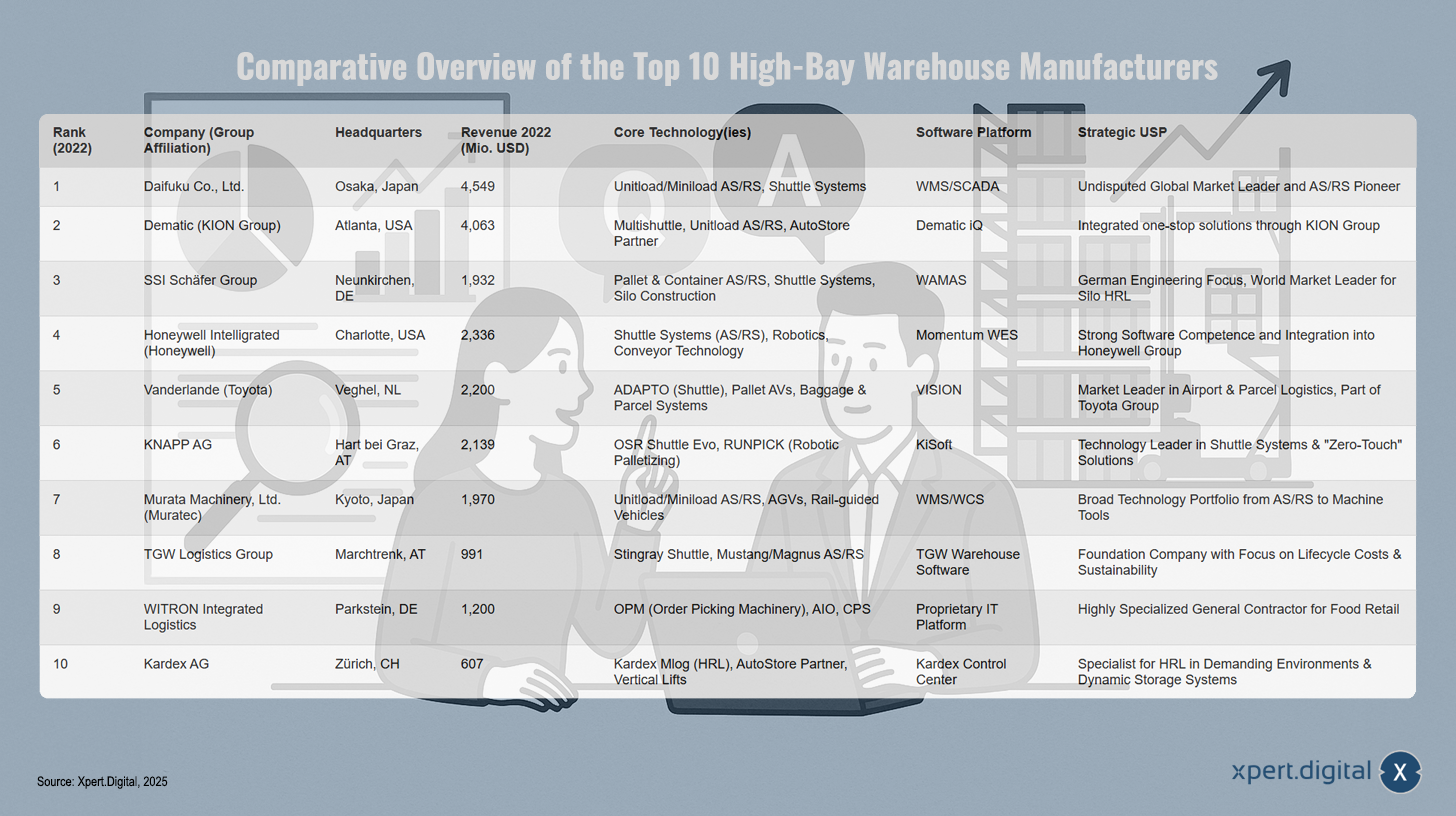
Overview of the top 10 high-bay warehouse manufacturers – Image: Xpert.Digital
The high-bay warehouse industry is dominated by leading technology companies that develop and implement innovative storage solutions worldwide. At the forefront is Daifuku Co., Ltd. of Japan, the undisputed global market leader with annual sales of USD 4.549 billion. The company is known for its unitload and miniload automated storage systems and shuttle systems.
Daifuku is closely followed by Dematic, part of the KION Group, with a revenue of USD 4.063 billion. Dematic distinguishes itself through integrated solutions and offers multi-shuttle systems as well as partnerships such as with AutoStore.
German companies play a significant role in this market. The SSI Schäfer Group from Neunkirchen ranks third with a revenue of USD 1,932 million and is a global leader in silo high-bay warehouses. WITRON Integrated Logistics specializes in solutions for the food retail sector, while KNAPP AG is considered a technology leader in shuttle systems.
International corporations such as Honeywell, Vanderlande (part of Toyota), and Murata Machinery complement the range with advanced warehouse technologies. Each company brings its own strengths to the table: robotics, conveyor technology, specialized software platforms, and customized logistics solutions.
The diversity of approaches is interesting: from highly automated shuttle systems and AutoStore concepts to vertical storage solutions, the industry demonstrates an impressive technological range. Companies are competing not only in hardware, but also in software, efficiency, and holistic logistics concepts.
Daifuku Co., Ltd.
What global market position and corporate structure characterize Daifuku?
Daifuku is the undisputed global market leader in material handling and warehouse automation. For many years, the company has topped global revenue rankings and solidified its position in 2022 with sales of USD 4.549 billion. As a Japanese corporation headquartered in Osaka, Daifuku boasts a deep-rooted history of innovation and a global presence with production facilities and sales offices in Asia, North America, and Europe. The company's historical significance is immense: Daifuku developed the first automated high-bay warehouse (AS/RS) in Japan in 1966 and commissioned the first computer-controlled system in 1969. This pioneering role forms the foundation for today's technological maturity and high level of market trust.
What are Daifuku's core technological competencies in the field of automated high-bay warehouses (AS/RS) for pallets and containers?
Under the guiding principle of "Total Solution Experience," Daifuku offers a comprehensive portfolio covering the entire lifecycle of a logistics system, from consulting and planning to maintenance and modernization. Its core competencies encompass a broad spectrum of AS/RS technologies:
- Unitload AS/RS (pallet storage): These systems are designed for the high-density storage of pallets and other heavy loads from 500 kg to over 3,000 kg (1,100 to 6,600 lbs). The storage and retrieval machines can operate at storage heights of up to 40 meters (131 ft) and are adaptable for special environments such as deep-freeze storage (-30°C), cleanrooms, or hazardous materials storage.
- Miniload AS/RS (container storage): Designed as a small parts version of the Unitload system, these high-speed buffer storage systems offer an efficient solution for storing containers, cartons and boxes weighing up to 300 kg (662 lbs) at storage heights of up to 20 meters (66 ft).
- Shuttle AS/RS (Shuttle System): A highly dynamic, vehicle-based miniload system in which a dedicated shuttle vehicle operates on each rack level. This enables extremely high throughput rates and makes the system ideal for sequencing goods for order picking or shipping.
- Sorting Transfer Vehicle (STV): A rail-guided, automated pallet sorting vehicle that serves as a fast and flexible transport system. It connects multiple aisles of an AS/RS with the shipping areas and enables efficient, order-related sorting.
Which proprietary software platforms (WMS/WES/WCS) does Daifuku use to control and optimize its logistics processes?
Daifuku's own highly integrated IT platforms control these complex hardware systems. The company offers its own Warehouse Management System (WMS) as well as SCADA (Supervisory Control and Data Acquisition) systems that manage and visualize the entire material flow from storage to shipping. The software is known for its flexibility and seamless integration with the hardware, enabling precise real-time control of all warehouse processes and ensuring high inventory transparency.
What strategic unique selling points, innovations, or well-known customer projects set Daifuku apart from the competition?
Daifuku's unique selling point is the unparalleled combination of its historical role as the inventor of the AS/RS and its continued global market leadership. This decades-long experience fosters tremendous customer trust. Strategically, Daifuku has further differentiated itself from the competition through innovations in demanding sectors such as semiconductor manufacturing and the development of environmentally friendly and sustainable bearing technologies. Trust in the brand is underpinned by an impressive customer list that includes global giants like Amazon and Walmart, as well as leading automotive manufacturers such as Toyota and Nissan, for whom Daifuku has built some of the world's largest and most complex aftermarket centers.
Dematic (KION Group)
What global market position and corporate structure characterize Dematic?
Dematic, headquartered in Atlanta, USA, is a global heavyweight in intralogistics and consistently ranks second in worldwide revenue, with sales of USD 4.063 billion in 2022. The company boasts a history spanning over 200 years, dating back to 1819, and is now part of the KION Group, a leading global provider of forklift trucks, warehouse technology, and supply chain solutions, headquartered in Germany. This affiliation is a key strategic advantage, enabling Dematic, as part of the KION Supply Chain Solutions segment, to access a vast global network and a complementary product portfolio ranging from automated systems to industrial trucks. With approximately 11,000 employees and production and research centers worldwide, Dematic has a truly global presence.
What are Dematic's core technological competencies in the field of automated high-bay warehouses (AS/RS) for pallets and containers?
Dematic is known for its broad and modular solution portfolio, tailored to the specific challenges of its customers. Its core competencies encompass a wide range of AS/RS technologies:
- Unit-Load AS/RS (pallet storage): Classic high-bay warehouses, also known as pallet crane systems, that maximize vertical space to significantly increase storage capacity. These systems are used for high-density pallet storage in various environments, including refrigerated and deep-freeze warehouses.
- Dematic Multishuttle (container and carton storage): This is one of Dematic's best-known technologies. The Multishuttle system is a highly flexible and scalable shuttle-based AS/RS for containers, cartons, and trays. It offers extremely high throughput and serves as a buffer, sequencer, and engine for order picking.
- Miniload AS/RS: In addition to shuttle systems, Dematic also offers traditional miniload systems with stacker cranes for storing small parts.
- AutoStore integration: Dematic is also a leading integrator of the cube-based AutoStore system, an ultra-compact goods-to-person picking solution that maximizes storage density.
- Automated pallet storage (KION portfolio): Through its membership in the KION Group, Dematic can also draw on innovative pallet storage technologies such as four-way shuttles or multilevel shuttles with autonomous level changes, which complement the portfolio.
Which proprietary software platforms (WMS/WES/WCS) does Dematic use to control and optimize its logistics processes?
The brain of Dematic systems is the Dematic iQ software platform. This modular and scalable software acts as a Warehouse Execution System (WES) and optimizes the entire flow of materials and information within the warehouse. It offers functions for inventory management, order processing, and performance analysis, and ensures the intelligent control of all automated components. In projects like the one at Röthlein Logistik, Dematic has demonstrated that its software (in this case, SAP EWM with the Dematic Material Flow System) can be directly connected to the mechatronics without additional middleware, guaranteeing seamless and efficient control of all processes. Dematic was also recently recognized as a "Niche Player" in the Gartner® Magic Quadrant™ for Warehouse Management Systems (WMS).
What strategic unique selling points, innovations, or well-known customer projects set Dematic apart from the competition?
Dematic's key strategic feature is its position as an integrated solutions provider within the KION Group. Customers receive a comprehensive, single-source solution that combines automation (Dematic) and material handling equipment (e.g., Linde), reducing interface complexity. Dematic distinguishes itself through its modular design approach, which enables the configuration of solutions for companies of all sizes – from small conveyor systems to fully automated distribution centers. Another focus is on digital transformation, as demonstrated by the development of an AI-driven digital twin. Notable customer projects, such as the implementation of a fully automated logistics center for the agricultural and building materials trader BayWa (at the Röthlein Logistics site), which quadrupled goods throughput, underscore the performance of Dematic solutions.
SSI Schäfer Group
What global market position and corporate structure characterize SSI Schäfer?
The SSI Schäfer Group, headquartered in Neunkirchen, Germany, is one of the world's leading providers of modular storage and logistics systems and a prime example of German engineering. Founded in 1937, the company has evolved from a sheet metal manufacturer into a global general contractor for intralogistics. Although revenue declined significantly in 2022 and the company fell to eighth place in the global rankings, SSI Schäfer remains a key player with a strong market presence, particularly in Europe. The company structure is characterized by a high degree of vertical integration: SSI Schäfer produces a large proportion of its system components in-house, from steel structures and stacker cranes to software.
What are SSI Schäfer's core technological competencies in the field of automated high-bay warehouses (HBW) for pallets and containers?
SSI Schäfer offers a comprehensive portfolio for almost every requirement in warehouse automation, with a special focus on customized high-bay warehouse solutions.
- High-bay warehouses for pallets: SSI Schäfer specializes in the planning and construction of high-bay warehouses for pallets. Their particular expertise lies in silo construction. Here, the steel racking structure serves as the load-bearing framework for the building's roof and facade. This construction method is especially economical for storage heights exceeding 20 meters and enables SSI Schäfer to realize high-bay warehouses with heights well over 40 meters. The systems can be designed with single or multiple depths and are also suitable for demanding environments such as deep-freeze storage.
- Storage and retrieval machines (SRMs) and shuttles: The company develops and manufactures a wide range of SRMs for pallets (e.g., the energy-efficient SSI Exyz model) and small parts, as well as various shuttle systems. In-house production of all core components ensures perfectly matched interfaces and high system performance.
- Automated small parts warehouses (AS/RS): In addition to pallet high-bay warehouses, SSI Schäfer also offers fully automated storage systems for containers, cartons or trays.
- Logistics solutions for the automotive industry: SSI Schäfer has a strong presence in the automotive sector and supplies comprehensive logistics solutions to major manufacturers such as BMW, Daimler and Volkswagen.
Which proprietary software platforms (WMS/WES/WCS) does SSI Schäfer use to control and optimize its logistics processes?
SSI Schäfer's central software suite is WAMAS® (Warehouse Management Application System). This modular and scalable software platform covers all levels of logistics IT:
- WAMAS WMS (Warehouse Management System): For managing, controlling and optimizing the entire warehouse.
- WAMAS MFS (Material Flow System): For real-time control of automated hardware components.
- WAMAS Lighthouse: A visualization and control center tool that creates transparency regarding plant performance.
In addition to WAMAS, SSI Schäfer also offers in-depth expertise in the implementation of SAP Extended Warehouse Management (EWM) solutions through its majority stake in the SAP specialist SWAN, enabling seamless integration into existing SAP landscapes.
What strategic unique selling points, innovations, or well-known customer projects set SSI Schäfer apart from the competition?
SSI Schäfer's outstanding unique selling point is the combination of German engineering expertise, a high level of vertical integration, and its global leadership in silo construction for high-bay warehouses. As a general contractor, the company offers everything from a single source – from planning and structural analysis to steel construction and mechatronics, all the way to IT and service. This comprehensive expertise results in robust and durable systems. A prestigious reference project is the state-of-the-art logistics center for HARIBO in Germany. For the confectionery manufacturer, SSI Schäfer built a 40-meter-high silo high-bay warehouse with over 92,000 pallet spaces, 22 stacker cranes, and 2.6 km of conveyor technology, controlled by WAMAS software. The project was completed ahead of schedule and within budget, and forms the logistical backbone for the worldwide supply of Goldbears.
Honeywell Intelligrated (Honeywell)
What global market position and corporate structure characterize Honeywell Intelligrated?
Honeywell Intelligrated is the warehouse automation division of the US-based technology company Honeywell. With revenues of $2.336 billion in 2022, the company ranked third globally among automation providers. Its integration into the Fortune 500 company Honeywell, which operates in sectors such as aerospace, building technology, and security technologies, provides Honeywell Intelligrated with access to vast resources in research and development, particularly in software, sensors, and AI. Headquartered in Charlotte, North Carolina, with offices worldwide, the company's strategy is to position itself as a comprehensive provider of integrated distribution, fulfillment, and manufacturing solutions.
What are Honeywell Intelligrated's core technological competencies in the field of automated high-bay warehouses (AS/RS)?
Honeywell Intelligrated focuses heavily on flexible and scalable AS/RS shuttle solutions designed for high throughput and efficiency in e-commerce and omnichannel fulfillment. Unlike some competitors, the focus is less on traditional, heavy pallet stacker cranes and more on dynamic systems for containers, cartons, and trays.
- AS/RS Shuttle Systems: The portfolio includes various shuttle solutions tailored to different requirements. These systems utilize high-speed shuttles and vertical lifts to maximize storage space and efficiently manage a wide range of SKUs (Stock Keeping Units).
- One-Level Shuttle (OLS): A single shuttle serves one dedicated level for maximum throughput or can access multiple levels via a lift for increased flexibility. The system can store items single, double, triple, and even quadruple deep.
- High-Volume Buffer Shuttle (HVBS): A high-density, multi-aisle buffer system designed for fast-moving inventory and high throughput rates to smoothly supply downstream processes such as shipping.
- Integration expertise: A key strength is the ability to seamlessly integrate AS/RS systems into comprehensive end-to-end solutions. Honeywell Intelligrated offers a broad portfolio of in-house conveyor technology, sorting systems, order picking technologies (e.g., pick-to-light), and robotics.
- Palletizing and depalletizing solutions: The company is also a leading provider of Alvey brand palletizing solutions, ranging from simple to high-speed applications.
Which proprietary software platforms (WMS/WES/WCS) does Honeywell Intelligrated use to control and optimize its logistics processes?
Software is a central pillar of Honeywell Intelligrated's offering. The systems are controlled by the innovative Honeywell Momentum™ Warehouse Execution System (WES) platform. This WES goes beyond a traditional Warehouse Control System (WCS) by not only controlling the hardware but also making real-time decisions to optimize workflows, inventory, and orders. It features a component called "Decision Intelligence" that utilizes advanced algorithms to maximize efficiency. This is complemented by the MC4 machine control platform and digital services based on generative AI, such as "Maintenance Assist" for faster troubleshooting.
What strategic unique selling points, innovations, or notable customer projects set Honeywell Intelligrated apart from the competition?
Honeywell Intelligrated's strategic unique selling proposition lies in the deep integration of advanced automation hardware with a powerful, data-driven software platform (Momentum WES), all under the umbrella of a global technology corporation. This enables the company to offer not just machines, but intelligent, self-optimizing fulfillment solutions. The focus is clearly on addressing the complex challenges of modern e-commerce, such as rising customer expectations, labor shortages, and the need for fast, accurate deliveries. By positioning itself as a single-source provider for the entire solution, from hardware to software and service, Honeywell reduces project risk for the customer and ensures maximum system availability.
Vanderlande
What global market position and corporate structure characterize Vanderlande?
Vanderlande, headquartered in Veghel, the Netherlands, is a global leader in logistics process automation, ranking fourth worldwide in 2022 with a revenue of USD 2.2 billion. Founded in 1949, the company has been part of the Toyota Advanced Logistics Group (TALG) since 2017 and is a subsidiary of Toyota Industries Corporation (TICO). This affiliation provides Vanderlande with significant financial stability and access to a global network and complementary technologies, particularly in the area of material handling equipment. Vanderlande is especially dominant in two specific market segments: airport logistics (baggage handling systems) and parcel distribution (sorting systems). Its systems are installed at over 600 airports worldwide, including 17 of the 20 largest, and sort over 52 million parcels daily.
What are Vanderlande's core technological competencies in the field of automated warehouse solutions?
While Vanderlande has its roots in airport and parcel logistics, the company has successfully expanded its portfolio into the warehouse automation market. Its core competencies lie in highly flexible and scalable systems for e-commerce, retail, and omnichannel sectors.
- ADAPTO (Shuttle System for Containers): ADAPTO is Vanderlande's flagship product in the field of small parts storage. It is a 3D shuttle system in which the shuttles can navigate autonomously not only horizontally in the aisles, but also vertically between levels using integrated lifts. This enables high flexibility, redundancy, and direct access to every container, making it ideal for rapid order picking.
- Pallet AVs (Autonomous Vehicles for Pallets): For pallet transport, Vanderlande relies on a fleet of autonomous vehicles (AVs) instead of traditional, rail-bound storage and retrieval machines. The portfolio includes autonomous forklifts (AFs) and autonomous mobile robots (AMRs) such as the "Chain Pallet Runner." These vehicles can flexibly transport pallets between different warehouse areas, conveyor systems, and racks, and are easily scalable.
- STOREPICK (Automated Case Picking Solution): This is an end-to-end solution for the automated picking of retail units (cases). It combines warehouse technologies with robotic palletizing solutions to create store-ready pallets.
- Robot-assisted palletizing: Vanderlande offers both manual and robot-assisted palletizing solutions. The robots can stack up to 750 cartons per hour onto pallets or roll containers, with intelligent software ensuring optimal, stable stacking patterns.
Which proprietary software platforms (WMS/WES/WCS) does Vanderlande use to control and optimize its logistics processes?
The intelligent control of Vanderlande systems is achieved via the company's proprietary VISION software suite. This platform encompasses all levels of warehouse management, from overarching administration to real-time coordination of material flows. A key component is the Load Forming Logic (LFL) software, specifically designed for creating store-ready pallets. It calculates optimal stacking patterns that consider both pallet stability and the arrangement of product groups according to the store layout.
What strategic unique selling points, innovations, or high-profile customer projects set Vanderlande apart from the competition?
Vanderlande's strategic unique selling proposition is its market leadership in the highly demanding airport and parcel logistics segments, combined with its affiliation with the Toyota Group. Experience gained in these sectors, where maximum availability and throughput are crucial, informs the development of its warehousing solutions. The focus on flexible, shuttle- and AV-based systems, rather than rigid, rail-bound stacker cranes, reflects a modern approach that prioritizes scalability and adaptability to the dynamic demands of e-commerce. Well-known retail and e-commerce clients such as Albert Heijn, Kaufland, Zalando, and ASDA underscore the successful application of these technologies in warehousing environments.
KNAPP AG
What global market position and corporate structure characterize KNAPP AG?
KNAPP AG, headquartered in Hart bei Graz, Austria, is a leading global technology provider of intralogistics solutions and has established itself as one of the top players in the market. With impressive revenue growth of over 16% to USD 2.139 billion in 2022, the company climbed to fifth place in the global ranking. Founded in 1952, KNAPP has grown from a small operation into an international group with approximately 8,300 employees and 49 locations worldwide. The company is characterized by its strong innovative drive, reflected in annual investments of around 6% of revenue in research and development. KNAPP positions itself as a "Value Chain Tech Partner," offering integrated automation and digitalization solutions for the entire value chain.
What are KNAPP's core technological competencies in the field of automated storage and order picking systems?
KNAPP is known for its highly innovative and technologically leading systems, which often set new standards in the industry. Its core competencies include:
- OSR Shuttle™ Evo (Shuttle System): The OSR Shuttle is the core of many KNAPP solutions and is considered one of the most revolutionary shuttle systems on the market. It is a high-performance and flexible system for storing and picking containers and cartons and forms the basis for the "zero-touch" warehouse. It is also suitable for use in deep-freeze environments.
- RUNPICK (Robotic Universal Picker): A fully automated solution for store-ready palletizing, specifically developed for the grocery retail sector. A robot picks and stacks fresh and dry goods onto pallets or roll containers. A special feature is "Multiple Item Picking," where the robot picks several items simultaneously to achieve maximum throughput.
- Pallet high-bay warehouses: KNAPP also offers classic pallet high-bay warehouses with energy-efficient, low-maintenance storage and retrieval machines. These can store pallets weighing up to 1,500 kg at heights of up to 30 meters.
- Robotics and AI: The company is a leader in the use of AI-powered robotics. The "Pick-it-Easy Robot" is an intelligent order picking robot that, thanks to vision technology, can independently recognize and grasp a wide variety of items.
- Open Shuttle (AMRs): KNAPP has developed its own fleet of autonomous mobile robots (AMRs) called Open Shuttles, which flexibly transport goods between warehouse areas.
Which proprietary software platforms (WMS/WES/WCS) does KNAPP use to control and optimize its logistics processes?
The software is an integral component of KNAPP system solutions. The proprietary KiSoft software suite controls and optimizes all warehouse processes, from goods receipt to goods issue. KiSoft is modular and encompasses all levels of the software hierarchy, from machine control (WCS) and warehouse management (WMS) to analysis tools. The software is crucial for the flexibility and scalability of KNAPP systems and enables the implementation of complex strategies such as the "zero-touch" warehouse.
What strategic unique selling points, innovations, or well-known customer projects set KNAPP apart from the competition?
KNAPP's strategic unique selling proposition is its technological leadership and innovative strength, particularly in the areas of shuttle systems and AI-powered robotics. The company is consistently pursuing the vision of the "zero-touch" warehouse, where manual, non-value-adding work steps are minimized. With solutions such as the OSR Shuttle, RUNPICK, and the Pick-it-Easy Robot, KNAPP offers building blocks to achieve this goal. Its strong specialization in core industries such as healthcare, fashion, food retail, and e-commerce enables the development of highly customized solutions. Renowned companies like adidas, Hugo Boss, L'Oréal, SPAR, Würth, and Kroger rely on KNAPP's intelligent automation solutions, underscoring its market leadership in numerous segments.
Murata Machinery, Ltd. (Muratec)
What global market position and corporate structure characterize Murata Machinery?
Murata Machinery, Ltd., operating under the Muratec brand, is a diversified Japanese technology group headquartered in Kyoto. In 2022, the company ranked seventh globally among warehouse automation providers, with revenues of USD 1.97 billion. Murata Machinery is more than just an intralogistics provider; it also operates in the fields of machine tools (CNC lathes), textile machinery, and cleanroom automation. This broad technological base enables synergies and in-depth expertise in manufacturing automation. The logistics division positions itself as a customer-focused systems integrator, designing customized logistics systems tailored to the specific needs of its clients.
What are Murata Machinery's core technological competencies in the field of automated storage and transport systems?
Muratec offers a holistic portfolio that seamlessly integrates storage, transport, and sorting. Its core competencies include a wide range of AS/RS and transport systems:
- Unit Load AS/RS (PC Crane): This is Muratec's solution for storing heavy loads on pallets, rolls, or large trays. The "PC Crane" storage and retrieval machines are designed for high-performance operation in distribution centers and production facilities and can handle loads from approximately 225 kg to 1,800 kg (500 to 4,000 lbs).
- Mini Load AS/RS (UX Crane): For storing small parts in containers or boxes, Muratec offers high-precision miniload systems optimized for speed and space efficiency.
- Shuttle & Sortation AS/RS (Uni-SHUTTLE, SHUTTLINER): Muratec offers advanced shuttle systems. The SHUTTLINER is a rail-guided container sorting system with high processing capacity, functioning as a goods-to-person solution and compatible with multiple AS/RS and order picking systems.
- Rail-guided vehicles (RGVs): Systems such as the RTN-X are designed for the fast and precise transport of pallets between goods receipt and dispatch and reach speeds of up to 250 m/min.
Which proprietary software platforms (WMS/WES/WCS) does Murata Machinery use to control and optimize its logistics processes?
Muratec offers its own software solutions that serve as the backbone of its automation systems. These include Warehouse Management Systems (WMS) and Warehouse Control Systems (WCS), which integrate all processes from inventory management and order processing to material flow control. The software enables the seamless integration of warehousing, transportation, and sorting functions, ensuring harmonized and efficient operational control.
What strategic unique selling points, innovations, or well-known customer projects set Murata Machinery apart from the competition?
Murata Machinery's strategic unique selling proposition lies in its broad technological diversification and the resulting ability to offer highly customized and integrated automation solutions that extend far beyond pure warehouse logistics. With over 50 years of experience in automation and more than 34,000 installations worldwide, the company possesses immense expertise. The slogan "Make It, Move It, Store It, and Integrate It" underscores the holistic approach that connects manufacturing and logistics processes. Murata Machinery is particularly strong in industries demanding high precision and reliability, such as the automotive, semiconductor, and aerospace sectors. Its ability to deliver complete systems from storage (AS/RS) and transport (AGVs/RGVs) to sorting, all from a single source, makes Murata Machinery a powerful partner for complex automation projects.
TGW Logistics Group
What global market position and corporate structure characterize the TGW Logistics Group?
TGW Logistics Group, headquartered in Marchtrenk, Austria, is a leading global systems integrator for highly automated intralogistics solutions. In 2022, the company ranked 13th globally with a revenue of USD 991 million. A distinctive feature of TGW is its corporate structure: it is a foundation-owned company. This structure, based on the philosophy of its founder, Ludwig Szinicz, "People at the center – learning and growing," means that the company is not focused on short-term profit maximization for investors, but rather on long-term, sustainable success and responsibility towards its employees and customers. Founded in 1969, TGW has grown from a small metalworking shop into a global company with over 4,500 employees in Europe, North America, and Asia.
What are TGW's core technological competencies in the field of automated high-bay warehouses and order picking systems?
TGW develops and manufactures all core components of its solutions – mechatronics, robotics, and software – in-house to ensure seamless integration and high performance. Its core technological competencies include:
- Shuttle systems (Stingray): The Stingray shuttle system is a core TGW technology for the highly dynamic storage and order picking of containers, trays, and cartons. It is designed for medium to very high throughput rates and is characterized by high storage density and energy efficiency. A special variant is optimized for use in deep-freeze warehouses down to -24°C.
- Storage and retrieval machines (Mustang, Stratus, Magnus): TGW offers a family of storage and retrieval machines for diverse requirements. The Mustang is a single-mast machine for small parts (up to 100 kg) and heights up to 25 m. The Stratus is a twin-mast machine for heavier loads (up to 300 kg). The Magnus is a high-performance pallet machine capable of moving loads up to approximately 1,250 kg (2,750 lbs) to heights up to 18 m and is characterized by high travel speeds.
- Robot-assisted order picking (Rovoflex): With Rovoflex, TGW offers a robot order picking solution that can be used autonomously or in conjunction with manual workstations to increase efficiency and flexibility in the picking process.
- Pocket sorter (OmniPick): For the e-commerce and omnichannel sector, TGW offers the flexible and scalable OmniPick pocket sorter system, which is ideal for buffering, sorting and sequencing individual items.
Which proprietary software platforms (WMS/WES/WCS) does TGW use to control and optimize its logistics processes?
TGW systems are controlled by TGW Warehouse Software. This comprehensive software suite covers all logistics processes and is used by over 25,000 users worldwide. The software is modular and includes a Warehouse Management System (WMS), a Material Flow Control System (MFS), and visualization tools. It is designed to optimize material flow, manage inventory in real time, and provide high transparency across all processes. TGW also offers expertise in integration with SAP EWM.
What strategic unique selling points, innovations, or well-known customer projects set TGW apart from the competition?
TGW's key unique selling point is the combination of its foundation structure and the associated focus on long-term partnerships and sustainability, along with its high level of technological expertise as a systems integrator providing everything from a single source. The company philosophy of "people at the heart of everything" shapes its collaboration with customers and employees. TGW is particularly strong in the food, fashion, and general retail sectors. Well-known customers such as the grocery retailer Picnic, the frozen food logistics provider Nordfrost, and major brands like Levi Strauss & Co., Urban Outfitters, and Gap rely on TGW's automation solutions. The project for Nordfrost demonstrates TGW's expertise in demanding frozen food environments, where it implemented a central distribution center with pallet high-bay warehouses and a shuttle warehouse at -24°C.
WITRON Integrated Logistics
What global market position and corporate structure characterize WITRON?
WITRON Logistik + Informatik GmbH is a highly specialized German general contractor for the planning and implementation of automated logistics and order picking systems. Headquartered in Parkstein, Germany, the company ranked tenth globally in 2022 with a revenue of USD 1.2 billion. WITRON distinguishes itself from many competitors through its business model: The company not only acts as a system supplier but also, as a general contractor, assumes complete responsibility for a project – from planning and implementation to the technical and operational support of ongoing operations by on-site teams. This model offers customers maximum security and availability.
What are WITRON's core technological competencies, particularly in the field of automated order picking?
WITRON's core competence lies in the development of integrated, fully automated logistics systems specifically tailored to the requirements of the food retail sector. The best-known and most successful technology is the patented OPM system.
- OPM (Order Picking Machinery): This is the core of WITRON solutions and is considered the world's most successful fully automated order picking system for retail units (cases). The system automatically picks items from a high-bay pallet warehouse and an automated small parts warehouse (AS/RS) and assembles them onto pallets or roll containers.
- How the OPM works: Delivered pallets are stored in a high-bay warehouse. When needed, they are transported to an automatic depalletizer, which removes the individual layers. The retail units are separated, transferred to trays, and temporarily stored in a dynamic automated small parts warehouse (AS/RS). When a customer order is received, intelligent software calculates the optimal, store-specific stacking plan (the "stack matrix"). The items are then retrieved from the AS/RS in precise sequence and fed to the case order machine (COM). This highly dynamic loading device gently pushes and carries the items—unlike gripper robots—onto the target pallet. A "pack corner" ensures stability. The result is a flawless, densely packed, and store-ready pallet, which is automatically wrapped and prepared for shipment.
- Other systems: In addition to OPM for dry goods, WITRON offers similar solutions for fresh (AIO – All-in-One Order Fulfillment) and frozen goods as well as for car picking (CPS – Car Picking System).
Which proprietary software platforms (WMS/WES/WCS) does WITRON use to control and optimize logistics processes?
WITRON develops all its IT and control technology in-house. The proprietary software platform is the brain of the systems and essential for fully automated operation. It encompasses all levels, from the overarching Warehouse Management System (WMS), which manages inventory and orders, to the Material Flow System (MFS), which controls the machines in real time. One of the software's core functions is the complex algorithm that calculates the optimal stacking matrix for each order, taking into account item weight, size, stability, and the customer's store layout.
What strategic unique selling points, innovations, or well-known customer projects set WITRON apart from the competition?
WITRON's outstanding unique selling proposition is its extreme specialization in the food retail sector and its business model as a general contractor with operational responsibility. Instead of simply selling individual technologies, WITRON delivers a turnkey, guaranteed logistics solution. The OPM technology is unique in its functionality – particularly the COM machine, which pushes items instead of gripping them – and enables the gentle handling of a very wide range of products. Numerous leading food retailers in Europe and North America, including many of the largest supermarket chains, rely on WITRON's OPM solution, often across multiple locations and in all temperature ranges (dry, fresh, frozen). This underscores the reliability and cost-effectiveness of WITRON systems in one of the most demanding logistics sectors.
Kardex AG
What global market position and corporate structure characterize Kardex AG?
Kardex AG, headquartered in Zurich, Switzerland, is a global provider of intralogistics solutions, focusing on two main business areas: Kardex Remstar, specializing in dynamic storage and retrieval systems (such as vertical lifts and carousels), and Kardex Mlog, specializing in integrated material flow systems and automated high-bay warehouses. In 2022, Kardex ranked 17th globally among automation providers with revenues of USD 607 million. The company positions itself as a specialist in customized solutions, particularly for demanding industrial environments.
What are Kardex Mlog's core technological competencies in the field of automated high-bay warehouses?
Kardex Mlog is the expert within the Kardex Group for large, automated storage systems. Its core competencies include the planning and implementation of turnkey systems.
- High-bay warehouses for pallets: Kardex Mlog designs and builds customized high-bay warehouses for pallets, wire mesh containers, and special load carriers with heights of up to 45 meters. The warehouses can be designed as single- or multi-deep systems to maximize storage density and space utilization.
- Stacker cranes: The company manufactures its own family of modular stacker cranes for pallets (up to 45 m high) and small parts (miniload, up to 24 m high). These stacker cranes are known for their performance, energy efficiency, and flexibility, and can be configured with various load handling devices for different load units.
- Specializing in demanding environments: A particular strength of Kardex Mlog is its expertise in challenging environments. The company implements projects under cryogenic conditions, in explosion-proof zones (ATEX), or in cleanroom conditions.
- Special solutions: Kardex Mlog also has experience in developing solutions for special goods that are stored without additional load carriers, such as tires, kitchen countertops or paper rolls.
Which proprietary software platforms (WMS/WES/WCS) does Kardex use to control and optimize its logistics processes?
Kardex Mlog's material flow systems and warehouses are controlled by the modular software solution Kardex Control Center. This platform encompasses all necessary IT functions, from material flow control (MFC/WCS) to warehouse management (WMS). The software is individually tailored to the customer's processes and requirements, ensuring the coordination and monitoring of all automated processes.
What strategic unique selling points, innovations, or high-profile customer projects set Kardex apart from the competition?
Kardex Mlog's strategic unique selling proposition is its positioning as a general contractor and specialist for demanding high-bay warehouse projects. While many large competitors cover a very broad portfolio, Mlog focuses on the realization of complex, customized high-bay warehouses, particularly where standard solutions reach their limits (e.g., frozen goods, hazardous materials). The long-standing partnership with clients such as Fresenius Kabi Logistik GmbH underscores this expertise. Peter Hubl, Head of Logistics at Fresenius Kabi, praises the combination of logistics know-how and precise knowledge of site-specific requirements from previous projects as a decisive reason for the repeated collaboration. Other notable projects include the expansion of a distribution center for Procter & Gamble by eight aisles while operations continued uninterrupted and the construction of twin warehouses for the automotive supplier Boysen.
Expert partner in warehouse planning and construction

Transformation in warehouse technology: How engineering is reinventing global logistics
How specialists design high-bay warehouses
The foundation of every modern warehouse is a precisely manufactured steel structure that is more than just a shelf – it is the heart of intralogistics.
Heavy-duty intralogistics and container high-bay warehouse expert LTW
LTW Intralogistics, headquartered in Wolfurt, Austria, is an established full-service provider of intralogistics solutions and has been operating in the market for over 40 years as part of the Doppelmayr Group. The company employs over 200 people and has locations in Austria, Germany, and the USA.
As a full-service provider, LTW develops and implements container high-bay warehouses, turnkey automated high-bay warehouses (ABW), automated small parts warehouses (AS/RS), and offers stacker cranes, conveyor technology, control systems, and warehouse management software from a single source. A particular strength lies in deep-freeze applications – since 1991, LTW has implemented over 100 projects worldwide and has extensive experience with temperatures down to -28°C.
The company distinguishes itself through its manufacturing quality, which meets cable car standards and guarantees the highest precision as well as robust and durable components. Reference projects such as the logistics center for Gebrüder Weiss with 68,000 pallet spaces and 13 stacker cranes, or the automated system for RWA Raiffeisen Ware Austria with 46,400 container spaces, demonstrate the company's expertise.
What is the BOXBAY system, and how could this technology revolutionize port logistics for shipping containers?
Technology and Functionality
BOXBAY is an intelligent high-bay warehouse (HBS) system specifically designed for storing standard ISO shipping containers. Instead of stacking containers on top of each other in wide, flat areas (container yards), they are stored in a massive steel racking structure up to 50 meters high, with up to eleven levels. Storage and retrieval are fully automated using rail-guided cranes that can access each individual storage location directly.
Revolutionary advantage
BOXBAY's key breakthrough lies in eliminating so-called "reshuffling." In a conventional terminal, several containers often have to be moved to reach a specific container stacked further down. These unproductive movements waste time, energy, and money. Because BOXBAY allows direct access to every container, this problem is completely eliminated.
Quantifiable benefits
- Drastically reduced space requirements: BOXBAY can store the same number of containers on just one-third of the area of a conventional terminal. This is a huge advantage for ports in densely populated urban areas with high land prices.
- Increased throughput: By eliminating restacking and automating, loading and unloading times for ships and trucks are significantly reduced.
- Improved efficiency and safety: The system is more energy-efficient and reduces the risk of accidents, as less manual intervention and heavy machine movements are required on the terminal premises.
The partners behind the innovation
BOXBAY is a joint venture between two industry leaders: DP World, one of the world's largest port operators, and the SMS Group, a German specialist in industrial plant and heavy machinery construction. This partnership combines in-depth knowledge of port logistics processes with world-class German engineering. A pilot project is currently being implemented at DP World's Jebel Ali Terminal 4 in Dubai.
If this technology prevails, it could redefine the economic viability and efficiency of ports worldwide, increase the resilience of global supply chains, and usher in a new era of automation for cargo handling. It is the transfer of proven intralogistics principles to the scale of global shipping.
What other significant manufacturers of high-bay warehouse systems and components exist, particularly German ones, such as DAMBACH or Beumer Group?
Besides the global top 10, numerous highly specialized companies shape the high-bay warehouse market, many of them from the German Mittelstand (SMEs). They often act as component suppliers or system integrators and are essential for the realization of complex systems.
DAMBACH Storage Systems
This German company is a prime example of a highly specialized component manufacturer with the "Made in Germany" quality seal. DAMBACH focuses on the development and production of two core components for automated warehouse technology:
- Storage and retrieval machines (SRMs): DAMBACH offers a wide range of SRMs for pallets and small parts. A special feature is the curve-traveling SRMs, which can serve multiple aisles with just one machine, increasing flexibility and reducing investment costs.
- Pallet shuttle systems: With systems like the MULTIFLEX (a mother-child shuttle system), DAMBACH offers highly dynamic solutions for multi-deep pallet storage.
DAMBACH typically does not act as a general contractor for end customers, but rather as a strategic partner and supplier for large system integrators. The reference project for Diehl Aircabin, a supplier to the aerospace industry, demonstrates their expertise in handling demanding, large, and sensitive cargo carriers (specialized aviation containers).
Beumer Group
The Beumer Group, based in Beckum, Germany, is a global corporation whose core competencies lie in conveying, sorting, palletizing, and packaging technology. The company itself does not manufacture traditional pallet AS/RS systems. Instead, it operates as a system integrator, incorporating AS/RS technologies from partners into comprehensive logistics solutions. The focus is on optimizing the entire material flow, from goods receipt to shipping, for industries such as e-commerce, fashion, and retail. A project for the fashion group Varner illustrates this business model: Beumer integrated an AutoStore® system and a pallet AS/RS system (supplied by Swisslog) via a complex sorting system to create a highly efficient overall solution. This highlights the difference between a component manufacturer (like DAMBACH), an AS/RS manufacturer (like Swisslog), and an integrator (like Beumer), which combines various technologies into a functioning whole.
Gebhardt Intralogistics Group
Headquartered in Sinsheim, the Gebhardt Intralogistics Group is a traditional German medium-sized company with over 70 years of experience. The family-run business generated sales of €179.3 million in 2023 with 955 employees and developed the first shuttle warehouse with inductive energy transfer as early as the late 1990s. Today, Gebhardt offers innovative storage solutions for containers and pallets with its StoreBiter® shuttle system.
Westfalia Technologies
Westfalia in Borgholzhausen is one of the world's leading manufacturers of automated storage systems. As a general contractor, the company has been implementing intralogistics projects since 1971 and produces stacker cranes, conveyor technology and warehouse management software according to the motto "Logistics. Made in Germany".
Hacobau GmbH
Hacoau, based in Hameln, specializes in TÜV-certified racking systems and multi-tier racking systems. The medium-sized company offers complete planning, production, and assembly of the physical racking structure and often forms the basis upon which the automation technology of general contractors is built.
PSI Technics GmbH
PSI from Urmitz develops innovative positioning solutions for storage and retrieval machines and automation systems with the ARATEC system, which are considered the most modern alternative to the discontinued Trimble systems.
This diversity of specialized German suppliers – from pure component manufacturers and steel construction specialists to innovative niche technology developers – demonstrates the depth and expertise of German SMEs in the field of high-bay warehouse technology. They complement the global market leaders with highly specialized solutions and form an important foundation for the realization of complex automated storage systems.
What role do pure steel construction specialists like Kocher Regalbau play in the construction of high-bay warehouses?
Role as a specialist in steel construction
While general contractors like SSI Schäfer or Dematic bear overall responsibility for an automation project and supply key technologies such as stacker cranes and software, every high-bay warehouse is based on a fundamental component: a massive steel structure. This is where highly specialized companies like Kocher Regalbau come into play, playing a crucial role in the value chain. Kocher Regalbau is an expert in the planning, manufacturing, and assembly of steel racking structures for high-bay warehouses, particularly in the demanding silo construction method. They supply the physical "skeleton" of the warehouse. In silo construction, this steel structure is not only the racking but also the load-bearing structure for the roof and walls of the entire building. The precision in the manufacturing and assembly of this steel structure is crucial for the subsequent performance of the automated components, as stacker cranes have tolerances of only millimeters.
Dimensions and complexity
Kocher Regalbau's reference projects illustrate the enormous scale of these structures. For clients such as Daimler in Germersheim, Kärcher in Obersontheim, and Febi in Gelsenkirchen, warehouses with heights of up to 40 meters, storage capacities for tens of thousands of pallets, and a steel consumption of several thousand tons per project were realized. A project for the pharmaceutical company PiSA in an earthquake zone in Mexico required specialized engineering expertise to ensure the stability of the 28-meter-high and 180-meter-long structure. For this project alone, 4,100 tons of steel were used and shipped to Mexico in 250 40-foot containers.
These examples demonstrate that constructing a high-bay warehouse requires a complex collaboration between various specialists. General contractors orchestrate the project, but the expertise of steel construction specialists like Kocher Regalbau is the indispensable foundation for the stability, safety, and longevity of the entire facility.
Your dual-use logistics experts
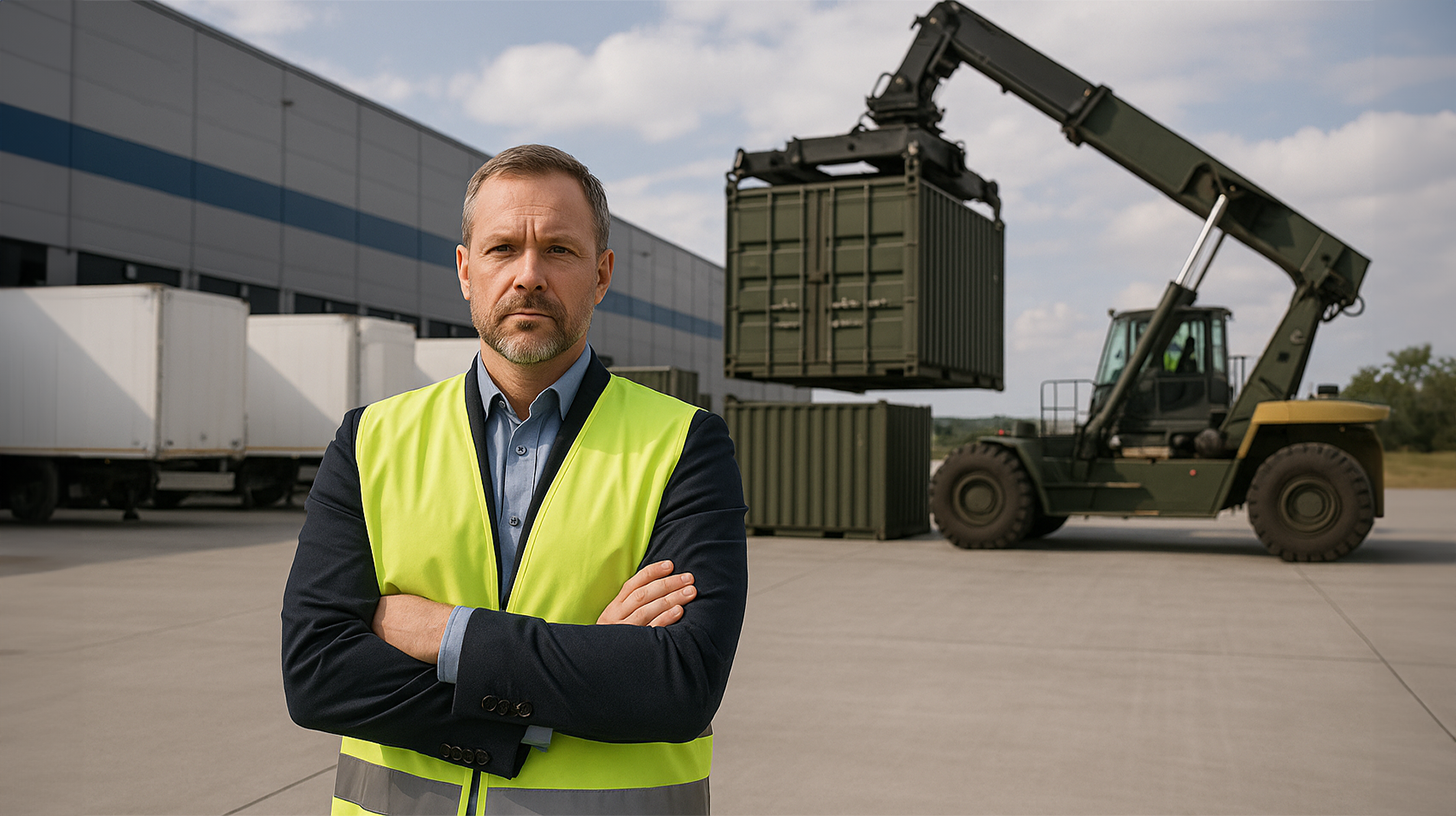
Dual-use logistics experts - Image: Xpert.Digital
The global economy is currently undergoing a fundamental transformation, a watershed moment that is shaking the foundations of global logistics. The era of hyper-globalization, characterized by the relentless pursuit of maximum efficiency and the "just-in-time" principle, is giving way to a new reality. This new reality is marked by profound structural breaks, geopolitical power shifts, and increasing fragmentation of economic policy. The once taken-for-granted predictability of international markets and supply chains is dissolving and being replaced by a period of growing uncertainty.
Related to this:
Automated warehouse logistics: More intelligence instead of steel
Strategic implementation and future trends
What are the essential technical and economic prerequisites for the successful implementation of an automated high-bay warehouse?
Implementing an automated high-bay warehouse (HBW) is a complex strategic decision that goes far beyond simply purchasing technology. Its success depends on carefully considering a range of technical and economic factors.
Economic conditions
- High capital expenditure (CAPEX): Implementing a high-volume warehouse (HRL) is a capital-intensive investment. The costs include not only the automation technology itself, but also structural modifications, IT integration, and project management.
- A thorough ROI and TCO analysis is essential: A detailed analysis of the return on investment (ROI) and total cost of ownership (TCO) is crucial. ROI is primarily achieved through reduced labor costs, increased productivity, minimized errors, and more efficient space utilization. The profitability of a high-performance warehouse (HRL) increases significantly with the number of operating shifts. 24/7 operation maximizes plant utilization and considerably accelerates amortization.
- Long-term strategic planning: An HRL is a long-term investment. Companies must incorporate their future growth plans, product portfolio development, and changing order profiles into the planning to ensure the system is scalable and future-proof.
Technical and operational requirements
- Standardization of loading units: This is one of the most critical prerequisites. Automated systems such as storage and retrieval machines, conveyor systems, and shuttles rely on precisely defined loading units (pallets, containers) with fixed dimensions, weights, and quality standards. Inconsistent, damaged, or substandard pallets are one of the most frequent causes of malfunctions and system failures. A comprehensive assessment and standardization of the pallet pool is therefore often a crucial first step.
- Structural and construction requirements: A high-bay warehouse places high demands on the structural integrity of the floor slab to withstand the enormous point loads of the racks. Furthermore, fire protection requirements are complex. In Germany, for example, an automatic fire extinguishing system is generally mandatory for storage heights exceeding 7.5 meters.
- Detailed process and data analysis: Successful automation doesn't begin with the technology, but with an in-depth analysis of your own processes and data. This includes material flows, master data (ABC analysis), throughput requirements (peak loads), and order structures. Only on the basis of this data can a system be designed to perfectly fit the needs of the business.
- Long implementation period: The complexity of such projects requires a long planning horizon. From the initial idea through detailed planning, manufacturing, installation and commissioning, companies should expect a period of at least 12 months, or often considerably longer.
Which megatrends – especially artificial intelligence, digital twins and sustainability – will shape intralogistics by 2025 and beyond?
The intralogistics industry is on the cusp of a new era, one defined less by steel and mechanics and more by data and intelligence. Three interconnected megatrends are the driving forces behind this transformation.
sustainability
Sustainability is evolving from a "nice-to-have" to a hard business requirement. Driven by legal regulations such as the German Supply Chain Act, but also by pressure from consumers and investors, environmental and social responsibility is becoming a key competitive factor. In intralogistics, this trend is manifesting itself in several areas:
- Energy efficiency: Modern storage and retrieval machines and shuttles are equipped with energy recovery systems that reduce electricity consumption.
- Resource conservation: Optimized packaging algorithms reduce material consumption, and the use of recyclable materials in logistics (e.g., plastic containers instead of cardboard boxes) supports the circular economy.
- Transparency: Product traceability throughout the entire supply chain is becoming the norm to ensure ethical sourcing practices. Manufacturers like Daifuku are already actively promoting environmentally friendly storage solutions.
Artificial Intelligence (AI) and Machine Learning
AI is the driving force behind the next level of automation and optimization. Instead of simply executing predefined rules, AI systems enable dynamic and self-learning control of logistics processes. Application areas include:
- Forecasting and planning: AI algorithms analyze historical data, market trends, and external factors to predict demand more accurately. This optimizes inventory planning and reduces overstocking or shortages.
- Intelligent storage location allocation: AI decides in real time which storage location is the most efficient for a newly arriving item in order to minimize future picking routes.
- AI-driven robotics: Picking robots equipped with advanced image recognition and AI can autonomously recognize and grasp an ever-increasing variety of items, advancing the vision of the "zero-touch" warehouse.
Digital Twins
A digital twin is an exact, virtual representation of a physical warehouse and its processes. This technology makes it possible to monitor, analyze, and simulate the entire system in real time.
- Simulation and optimization: Companies can run through "what-if" scenarios, such as the effects of a changed order structure or a machine breakdown, without disrupting real operations. This allows processes to be optimized and risks to be minimized.
- Predictive maintenance: By analyzing the data from the digital twin, potential malfunctions can be predicted before they occur.
Leading providers such as Dematic have already introduced AI-powered digital twins, highlighting the strategic importance of this technology.
These trends are leading to a fundamental shift in the market. Physical hardware such as racking and cranes is increasingly becoming a replaceable commodity. The decisive competitive advantage and the actual value creation are shifting to the intelligent software that controls the system. Customers are no longer just buying a racking system, but a data-driven ecosystem to optimize their entire supply chain. This is forcing traditional machine manufacturers to transform into software and data analytics companies, as already demonstrated by the emphasis on platforms like Honeywell Momentum WES with its "Decision Intelligence.".
What key recommendations can be derived for companies considering a strategic investment in an automated high-bay warehouse?
Based on the analysis of the market, technologies and future trends, four key recommendations can be derived for companies facing the strategic decision for an automated high-bay warehouse:
Choose a holistic partner, not just a supplier.
The success of an automation project depends crucially on the seamless integration of all components. Instead of purchasing individual technologies from different vendors, companies should seek a strategic partner who assumes overall responsibility as a general contractor or system integrator. Leading providers such as SSI Schäfer, WITRON, and Kardex Mlog offer this service and support customers throughout the entire lifecycle – from initial analysis and planning through implementation to service, maintenance, and future upgrades. This minimizes interface risks and ensures consistently high system availability over the long term.
Prioritize software, scalability, and future-proofing.
Hardware defines the physical boundaries of a warehouse, but software determines its intelligence, flexibility, and future-proofing. The choice should be a modular and scalable software platform (WMS/WES) that can grow with the company and adapt to changing business processes. Ensure the software offers open interfaces and is capable of integrating future technologies such as AI or advanced analytics. Software is the most sustainable component of the investment.
Start with the master data and processes, not the technology.
The most advanced automation technology is ineffective if the underlying processes and data are flawed. Successful implementation begins with internal groundwork: cleaning and standardizing master data, defining clear logistics processes, and, above all, consistently standardizing the loading units used. A project to implement a high-bay warehouse is always also a project to optimize the organization itself.
Think beyond the boundaries of the camp
The industry's leading providers are no longer positioning themselves solely as warehouse equipment suppliers, but rather as "value chain tech partners" (as KNAPP puts it). An automated warehouse should not be viewed as an isolated island, but as an integral, data-driven hub within the entire value chain. Efficiency gains are greatest when the real-time data generated within the warehouse is used to optimize upstream (procurement, production) and downstream (distribution, transportation) processes. The strategic decision to implement a high-volume warehouse (HRL) is therefore a decision for greater transparency and efficiency across the entire supply chain.

Xpert.Plus Warehouse Optimization - High-bay warehouses and pallet warehouses: Consulting and planning
We are here for you - Consulting - Planning - Implementation - Project Management
☑️ Our business language is English or German
☑️ NEW: Correspondence in your native language!

Konrad Wolfenstein
I and my team are happy to be available to you as your personal advisor.
You can contact me by filling out the contact form here wolfenstein@xpert.digital:or simply call me at +49 7348 4088 965. My email address is
I'm looking forward to our joint project.