
Hidden trillions in AI debt: How Google, Meta and others are concealing the true risk of the AI boom – Image: Xpert.Digital
The $1.65 trillion trick: Why the balance sheets of tech giants are an illusion
AI debt ticking time bomb: Is the tech industry facing the next Enron scandal?
A brilliant loophole: How Microsoft and Amazon make their gigantic AI costs invisible
The race for dominance in artificial intelligence is devouring unimaginable sums. Technology giants like Alphabet, Meta, Microsoft, and Amazon are investing massively in new data centers, energy infrastructure, and state-of-the-art chips. But a closer look at these companies' official balance sheets reveals only half the story. Using a perfectly legal, yet highly opaque accounting trick, these corporations are outsourcing trillions of dollars in financial obligations to so-called special purpose vehicles. While this keeps their official debt ratios spotless and their credit ratings shining, a gigantic, invisible mountain of debt is growing in the background. Financial regulators and analysts are already drawing alarming parallels to historical financial crises and warning of a systemic concentration risk that threatens not only investors but also the global real economy. A search for clues in the deeply hidden footnotes of the quarterly reports reveals that the AI boom rests on a financial foundation that is far more fragile than the technology companies are willing to admit.
AI infrastructure: When the balance sheet lies without lying
America's largest technology companies are investing trillions of dollars in building artificial intelligence, but a significant portion of these sums doesn't appear in their official balance sheets. An analysis by Nikkei Asia puts the off-balance-sheet, or hidden, liabilities of Alphabet, Microsoft, Amazon, Meta, and Oracle at a combined total of approximately $1.65 trillion—more than the $1.35 trillion that these same companies officially report as debt. This figure has increased roughly eightfold in just four years and is growing almost in lockstep with the explosive expansion of AI data centers. Therefore, anyone who looks at these companies' balance sheets in isolation sees only a fraction of the actual financial risk to which investors, lenders, and ultimately the real economy are exposed.
The principle of outsourced responsibility
The mechanism behind this obfuscation is technically legal and relies on so-called special purpose vehicles (SPVs). A technology company, together with a private lender or asset manager, establishes an independent legal entity that owns land, buildings, power supplies, and sometimes even the computer chips of a data center. This SPV takes out the loans, while the actual technology company simply signs a long-term lease that secures the data center's capacity for many years. Institutional investors such as PIMCO, BlackRock, Apollo, Blue Owl Capital, and banks like JPMorgan provide both debt and equity financing without the loan amount ever appearing on the parent company's balance sheet.
The Louisiana precedent
The Hyperion data center complex in Louisiana illustrates how such a structure works in practice. Meta, together with the lender Blue Owl Capital, established a special purpose vehicle called Beignet Investor, which raised approximately $27.3 billion in secured debt, supplemented by roughly $2.5 billion in equity. Blue Owl controls about 80 percent of this company, while Meta holds only 20 percent, effectively acting as the sole tenant and operator of the entire facility. The rating agency S&P assigned the bond an A+ rating, which is noteworthy given a yield of around 6.58 percent – a level more typical of speculative bonds. Because the debt is not formally held by Meta itself, the company was able to raise an additional $30 billion on the regular bond market shortly thereafter; a capacity that would hardly have been available to this extent without the off-balance-sheet structure.
Who is hiding how much under the radar
The figures vary significantly between the individual companies and reveal how unevenly risk is distributed within the industry. Meta, for example, has off-balance-sheet liabilities of approximately $420 billion, almost three times the $140 billion in debt reported on its own balance sheet. Oracle, in turn, has increased its hidden liabilities roughly thirtyfold within four years to approximately $273.3 billion, a rate closely linked to the Stargate project it is pursuing jointly with OpenAI. Alphabet and Microsoft also use similar structures, albeit with less public transparency regarding the precise individual amounts.
| Pursue | Off-balance-sheet AI debt (estimated) | Officially reported debt | Relationship |
|---|---|---|---|
| Meta | approximately 420 billion US dollars | approximately 140 billion US dollars | approximately 3 times |
| Oracle | approximately 273.3 billion US dollars | significantly lower, roughly a 30-fold increase since 2022 | sharply rising |
| Alphabet, Microsoft, Amazon | Part of the combined 1.65 trillion US dollars | Part of the joint 1.35 trillion US dollars | variable |
Why the accounting rules allow this gap
From a purely accounting perspective, this is not a violation of applicable regulations, but rather a deliberate exploitation of existing accounting standards. As long as a data center has not yet been commissioned or ordered chips have not yet been delivered, long-term lease and purchase obligations only need to be disclosed in the footnotes of the quarterly reports, but do not need to be recorded as a regular liability on the balance sheet. Only once the facility actually begins operations does the obligation suddenly and fully appear on the balance sheet, which can create an abrupt structural break in the key figures for analysts and rating agencies. The real appeal of this arrangement for corporations lies precisely in this time lag, as it allows them to maintain a pristine balance sheet and thus a top-notch credit rating during the particularly capital-intensive construction phase.
The fine line between legal and risky
Critics like technology journalist Ed Zitron describe this practice as a blatant corporate scandal and explicitly draw parallels to the collapse of the energy giant Enron some 25 years ago, which also used special purpose vehicles to conceal risks from investors. The crucial difference is that, unlike Enron, today's structures are fully disclosed and comply with the stricter accounting standards that have been in place since then, which is why experts consider the direct comparison exaggerated. Nevertheless, a structural problem remains, because hardly any investor routinely reads the deeply buried footnotes of a quarterly report where these obligations are hidden, so that a company's true risk profile remains virtually invisible to the average market participant.
The Enron comparison focuses on the financing method, not on fraud on the same scale – Enron also used Special Purpose Entities (SPEs) to keep debts off its balance sheet.
What happened in 2001: Enron, a Texas-based energy company, established more than 3,000 special purpose vehicles (SPVs) through CFO Andrew Fastow to conceal debts and losses. The structure worked essentially this way: Enron sold assets at inflated prices to an SPE, which financed the purchase with loans implicitly guaranteed by Enron. The resulting cash inflow was falsely recorded as a debt rather than a liability. This allowed Enron to hold approximately $13 billion in off-balance-sheet liabilities, while its actual total debt was around $38 billion.
Crucially, many of these SPEs were backed by Enron's own stock rather than genuine external capital, causing them to collapse as soon as Enron's stock price fell. Fastow and other executives simultaneously controlled these companies themselves and enriched themselves through hidden conflicts of interest in the transactions. When S&P downgraded Enron's credit rating below investment grade in November 2001, approximately $4 billion in off-balance-sheet debt became immediately due. The company was unable to pay and filed for bankruptcy on December 2, 2001, the largest bankruptcy in US history up to that point. Shareholders lost approximately $74 billion, tens of thousands of employees lost their savings, and the scandal led to the collapse of the auditing firm Arthur Andersen and the tightening of accounting standards through the Sarbanes-Oxley Act.
Why the comparison to today's AI debt is flawed, yet still apt: In Enron's case, there was genuine fraud because conflicts of interest and control over the SPEs were concealed, and the public couldn't see the true economic impact of these structures. In contrast, today's AI special purpose vehicles (SPEs) of Meta, Oracle & Co. are fully disclosed and adhere to the stricter accounting rules implemented since Enron, which is why experts reject the direct accusation of fraud. However, the structural parallel remains: In both cases, real, growing risk is hidden from the direct view of most investors through complex off-balance-sheet structures – only now it happens technically legally.
The logic behind outsourcing
This structure offers corporations several tangible business advantages that go far beyond cosmetic balance sheet manipulation. First, the debt-to-equity ratio remains low, which in turn allows for more favorable financing conditions on the traditional bond market. Second, by distributing the risk across multiple special purpose vehicles (SPVs) and investor groups, a significantly larger total volume of capital can be mobilized than a single balance sheet could support, which seems almost essential given the sheer scale of the current investment wave. Third, in the event of a default, the primary risk theoretically rests with the SPV's debt providers, as they only have a claim to the physical assets such as land, buildings, and equipment, and not to the rest of the corporation's assets. In practice, however, this apparent risk transfer is considerably mitigated because corporations often issue so-called residual value guarantees, committing to compensate investors should the asset's value fall below a certain threshold at the end of the lease term.
The scale of the underlying investment boom
To put the significance of these financing structures into perspective, it's worth looking at the sheer scale of the underlying investments. The five largest hyperscalers are expected to collectively spend between $700 billion and $900 billion on capital in 2026, an increase of roughly 36 percent compared to the previous year. Amazon alone plans to spend around $200 billion in 2026, more than double its 2025 figure, while Alphabet has nearly doubled its forecast to between $175 billion and $185 billion. According to calculations by Allianz Research, investment intensity now stands at 34 percent of revenue, more than double the peak of 15 percent during the dot-com boom of the late 1990s. Particularly alarming is the growing gap between the pace of investment and actual revenue growth, which, according to estimates by the investor Sequoia, now amounts to around $600 billion annually and already significantly exceeds the investment-revenue divergence of the dot-com bubble.
A new dimension of digital transformation with 'Managed AI' (Artificial Intelligence) - Platform & B2B solution | Xpert Consulting

A new dimension of digital transformation with 'Managed AI' (Artificial Intelligence) – Platform & B2B solution | Xpert Consulting - Image: Xpert.Digital
Here you will learn how your company can implement customized AI solutions quickly, securely and without high entry barriers.
A managed AI platform is your all-inclusive, worry-free solution for artificial intelligence. Instead of dealing with complex technology, expensive infrastructure, and lengthy development processes, you receive a ready-made solution tailored to your needs from a specialized partner – often within just a few days.
The key advantages at a glance:
⚡ Rapid implementation: From idea to ready-to-use application in days, not months. We deliver practical solutions that create immediate added value.
🔒 Maximum data security: Your sensitive data stays with you. We guarantee secure and compliant processing without sharing data with third parties.
💸 No financial risk: You only pay for results. High upfront investments in hardware, software, or personnel are completely eliminated.
🎯 Focus on your core business: Concentrate on what you do best. We take care of the entire technical implementation, operation, and maintenance of your AI solution.
📈 Future-proof & scalable: Your AI grows with you. We ensure continuous optimization and scalability, and flexibly adapt the models to new requirements.
More information here:
AI financing under pressure: Are hyperscalers facing a systemic credit risk?
Cash flow is under pressure
This wave of investment is leaving deep marks on the operational metrics of the affected companies, increasingly forcing them to resort to debt financing instead of funding expenditures from their core business. Analysts at Evercore ISI are already calling it a red warning signal, as the combined free cash flow of hyperscalers is falling to a level last seen during the 2022 economic cycle. According to this assessment, 2026 could even be Amazon's first year with negative free cash flow, a clear indication that investment activity has outpaced profitability. PIMCO calculates that capital expenditures will consume around 94 percent of hyperscalers' operating cash flows in the next two years, compared to just 40 percent in 2023, underscoring the structural shift in these companies' capital allocation.
Warnings from the global financial regulator
Not only individual analysts, but also international regulatory authorities are now sounding the alarm about the growing interconnectedness between AI infrastructure and private credit markets. The Bank for International Settlements, often referred to as the central bank of central banks, explicitly warns in a recent report of parallels to the railroad speculation of the nineteenth century and the dot-com bubble, but points out that today's sums far exceed those of the past. The organization specifically warns that all the major hyperscalers are simultaneously betting on the same thing, driven by the assumption that only a handful of providers will ultimately dominate the market, which could lead to collective overinvestment. Should this bet prove wrong, the authority believes that a sudden capital flight could abruptly reverse the entire investment wave into a recessionary spiral that could unfold much faster than previous banking crises because much of the financing is channeled through less heavily regulated hedge funds and private lending vehicles.
The Financial Stability Board sees growing concentration risks
In addition, the Financial Stability Board, a body that coordinates financial supervisory authorities from 24 countries, found in its own report that AI-related projects already accounted for more than a third of all private lending in 2025, a sharp increase from just 17 percent in the five years prior. The board identifies two interconnected risk channels that can reinforce each other. First, there is the risk of delays or cancellations of data center projects due to power supply bottlenecks, which, due to contractual clauses in loan agreements, can automatically trigger stricter conditions and thus potentially faster losses. Second, there is the risk of overcapacity should the expansion of data centers outpace the actual demand for AI computing power, which could lead to a sharp revaluation of the underlying assets and, consequently, to significant loan losses for private lenders.
Circular financing as an additional risk factor
A particularly sensitive element in this network is so-called circular financing, in which hyperscalers hold equity stakes in AI labs that, in return, commit to purchasing computing capacity or chips from the very hyperscalers that previously invested in them over several years. At the same time, many data centers are outsourced to external construction companies that lease these facilities back under long-term contracts with embedded exit clauses. The Bank for International Settlements explicitly criticizes the fact that the terms of such contracts are typically insufficiently disclosed and that the same assets can sometimes be pledged as collateral multiple times. Should the hyperscalers slow down or even halt their aggressive investment pace, the entire downstream supply chain—from infrastructure service providers to chip manufacturers and private lenders—would simultaneously face revenue losses, with construction and engineering service providers, in particular, considered especially vulnerable due to their comparatively weak balance sheets.
Classification by the rating agencies
Despite all these warning signs, the major rating agencies have so far painted a considerably more relaxed picture than the international regulatory authorities. In its own, methodologically somewhat more conservative analysis, Moody's puts the volume of off-balance-sheet agreements at around $1.2 trillion, of which more than $820 billion relates to data centers still under construction. At the same time, the agency explicitly emphasizes that, despite these commitments, the hyperscalers still possess some of the strongest balance sheets in the corporate world and that their investment-grade ratings are not currently at immediate risk. This assessment reveals a remarkable discrepancy between the perception of the rating agencies, which focus more on the fundamental profitability of the companies, and that of the macroprudential regulators, who consider the systemic risk of the entire financing architecture.
The market reaction ranges from nervousness to the compulsion to continue
A paradoxical dynamic has emerged in the capital markets in recent months, with investors reacting with increasing nervousness to any further increase in investment plans, while simultaneously perceiving a sudden reduction in these plans as even more threatening. When Alphabet raised its capital expenditure forecast for 2026 to as much as $205 billion, the company's shares initially fell noticeably, as investors feared higher debt servicing costs and lower dividends. However, prominent investor Steve Eisman, known for his bets against the 2008 housing bubble, simultaneously warned that a substantial reduction in investments by any of the major cloud providers would send the entire market into a downward spiral, because current market valuations effectively already price in an unabated continuation of this investment pace. A Bank of America survey of global fund managers also shows that 34 percent of respondents now consider hyperscalers' capital spending to be the most likely source of a future systemic credit event, twice as many as in the previous month.
What a setback for the German and European economy would mean
For an economic region like Germany, whose industrial and SME structure is increasingly dependent on the digital infrastructure offerings of American hyperscalers, an abrupt reassessment of this financing architecture would by no means be merely an abstract capital market phenomenon. Should the concern already explicitly raised by the European Central Bank prove true—that private credit has fueled the AI boom beyond its sustainable limits—a sudden tightening of financing options would directly impact the prices and availability of cloud capacity, which European companies rely on for their own digitalization efforts and the development of their own AI applications. At the same time, the close interrelationship between American pension funds, insurance companies, and the private lending vehicles that finance these data centers demonstrates that a downturn in the United States could quickly spill over into global capital markets and thus also affect European institutional investors who themselves hold investments in such funds.
Between calculated risk and structural blindness
The available data and assessments paint a nuanced, yet uncomfortable, picture of the current AI financing landscape. It is neither an outright fraud in the vein of the Enron scandal nor a harmless fringe phenomenon of corporate finance, but rather a legal, yet increasingly opaque, gray area in which growing risks are systematically shifted out of the immediate view of most market participants. The responsibility for adequate risk assessment is thus effectively shifting from investors, who traditionally rely on balance sheet ratios, to specialized credit analysts willing to wade through complex footnotes and contractual structures. As long as the underlying AI applications actually deliver the anticipated economic returns, this arrangement is likely to prove a clever, albeit aggressive, financing instrument. However, if the promised monetization successes fail to materialize or are significantly delayed beyond the currently very short depreciation periods of three to five years, a scenario threatens in which billions of currently invisible liabilities will simultaneously transform into openly visible balance sheet burdens within a few quarters, thus triggering precisely the chain reaction that both the Bank for International Settlements and the Financial Stability Board have now unequivocally warned against.
Your global marketing and business development partner
☑️ Our business language is English or German
☑️ NEW: Correspondence in your native language!

Konrad Wolfenstein
I and my team are happy to be available to you as your personal advisor.
You can contact me by filling out the contact form here wolfenstein@xpert.digital:or simply call me at +49 7348 4088 965. My email address is
I'm looking forward to our joint project.
☑️ SME support in strategy, consulting, planning and implementation
☑️ Creation or realignment of the digital strategy and digitization
☑️ Expansion and optimization of international sales processes
☑️ Global & Digital B2B trading platforms
☑️ Pioneer Business Development / Marketing / PR / Trade Fairs
📈🚀 From visibility to trust 👀🤝 Your scalable path with Xpert.Digital

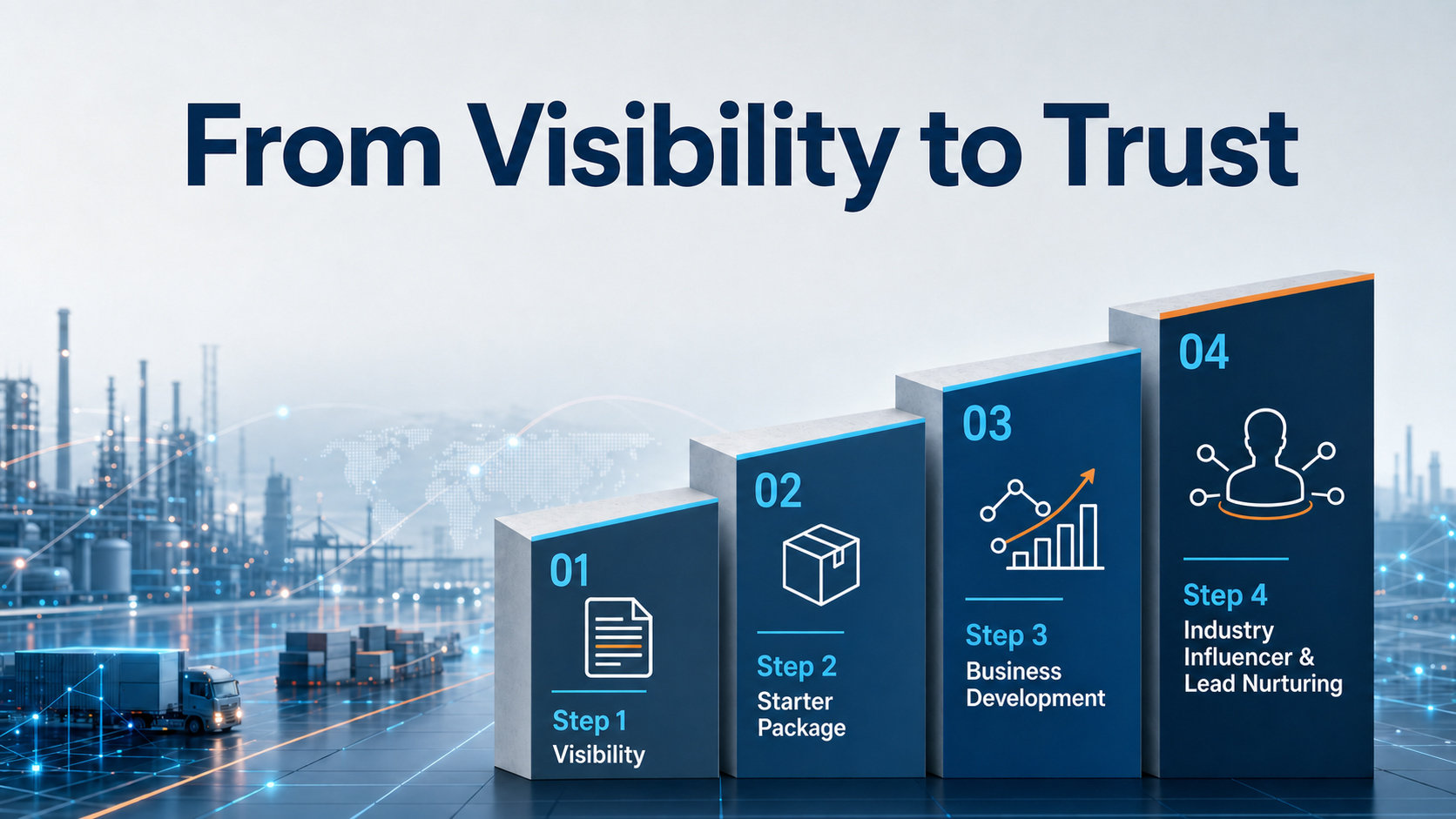
From visibility to trust: Your scalable path with Xpert.Digital - Image: Xpert.Digital
In industrial B2B, sustainable business relationships rarely emerge overnight. They develop step by step – through visibility, professional relevance, recurring touchpoints, and growing trust. Xpert.Digital's 4-stage model addresses precisely this: It offers a structured path that begins with a manageable entry point and can evolve into deeper collaboration in business development if needed.
Instead of relying on loud marketing promises, this model puts the relationship at the forefront. Companies start with clearly defined, easily calculable measures and then decide, based on their own experience, how far they want to expand the collaboration. A key factor for this undisturbed trust-building process: The platform completely avoids annoying advertising ads, so the editorial focus remains solely on the companies' expertise.
More information here: