Website icon Xpert.Digital

Container boom: The development of Lower Saxony's seaports in the first half of 2025 – A comprehensive overview

Container boom: The development of Lower Saxony's seaports in the first half of 2025 - A comprehensive overview

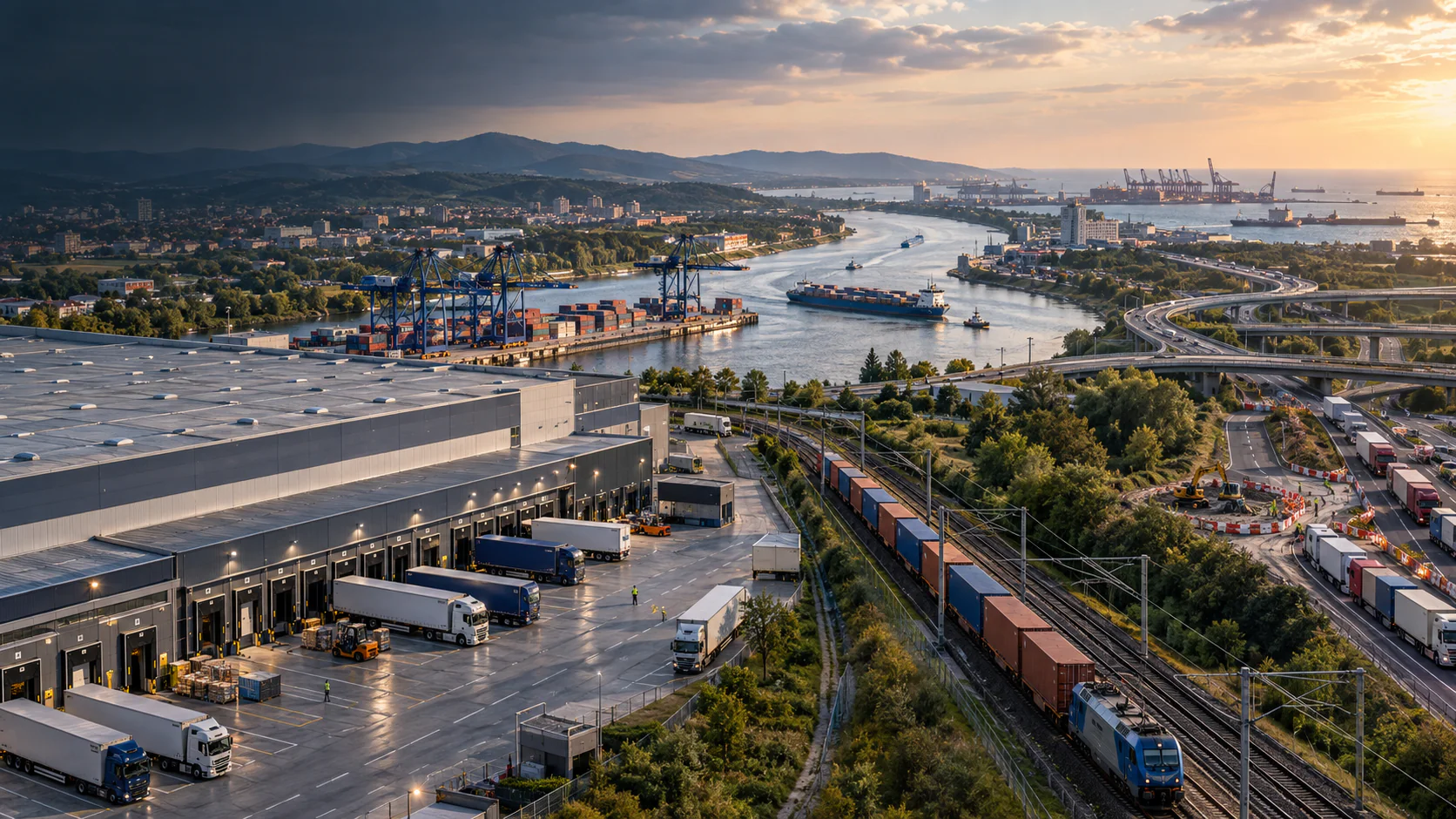
Container boom: The development of Lower Saxony's seaports in the first half of 2025 – A comprehensive overview – Creative image: Xpert.Digital

Job miracle through container logistics in the north: How the ports secure tens of thousands of jobs and billions in revenue

### Sensation on the coast: Why container traffic is exploding in Lower Saxony's ports ### Despite the crisis, on a record course: These figures from Lower Saxony's ports surprise everyone ### Germany's new energy hub: How the northern ports are driving the energy transition ### The sleeping giant has awakened: Why the port in Wilhelmshaven is now overtaking everyone ### Container boom and green energy: What's behind the success of the North Sea ports ###

General development of the port economy

What characterizes the cargo handling development in Lower Saxony's seaports in the first half of 2025?

The nine Lower Saxon seaports continued their positive development in the first half of 2025, recording significant growth despite a persistently challenging market environment. Total cargo throughput increased by 4 percent to 27.7 million tons, compared to 26.7 million tons in the first half of 2024. This development continues the positive trend already observed in the full year 2024, when throughput rose by 10 percent to 55.5 million tons compared to the previous year.

The growth is particularly remarkable considering that it is taking place against a backdrop of ongoing geopolitical tensions, economic uncertainties, and structural challenges facing the German economy. Inke Onnen-Lübben, Managing Director of the Seaports of Lower Saxony marketing company, emphasized that a "very positive result" had been achieved in a "still very challenging market environment."

Which ports belong to the Lower Saxony port group and where are their regional centers of excellence?

The port group comprises a total of nine seaports: Brake, Cuxhaven, Emden, Leer, Nordenham, Oldenburg, Papenburg, Stade, and Wilhelmshaven. These ports are strategically positioned along the Lower Saxon coast and the tributaries leading to the North Sea, covering a wide range of cargo handling activities. Wilhelmshaven serves as Germany's only deep-water port and occupies a special position, while Emden has a strong tradition in automobile handling and wind energy.

The geographical distribution allows the port group to serve various market segments, benefiting from both direct maritime traffic and connections to the hinterland via inland waterways. Cuxhaven is conveniently located at the crossroads of maritime traffic on the North and Baltic Seas and has established itself as a major RoRo port, while Stade plays an important role in energy supply due to its LNG infrastructure.

Container traffic as a growth driver

How has container handling developed in the ports of Lower Saxony?

Container traffic was the absolute growth driver in the first half of 2025. At 664,685 standard containers (TEU), the volume more than doubled compared to the first half of 2024, representing an increase of 122 percent. This spectacular development exceeds even the already positive expectations and demonstrates the growing importance of Lower Saxony's ports as container transshipment hubs.

This development is particularly noteworthy given that container throughput was significantly weaker in previous years. In 2023, for example, it was only 531,637 TEU, representing a decrease of 22 percent compared to the previous year. The current development thus demonstrates a clear turnaround and underscores the successful strategic measures taken by the port operators.

What factors have contributed to the strong growth in container throughput?

The exceptional growth in the container sector is largely attributable to strategic alliances within the shipping industry. The “Gemini Cooperation” between shipping companies Maersk and Hapag-Lloyd, announced in 2024, has already demonstrated significant positive effects. This new alliance, officially launched in February 2025, envisions Wilhelmshaven and other North German ports as key transshipment hubs within a new network.

The cooperation comprises 26 scheduled services across seven operating areas, each with its own hub. Wilhelmshaven will be integrated into services between Europe and Asia, as well as Northern Europe and North America, and will benefit from this merger as one of the future northern hubs. The mere announcement of this alliance in 2024 had already led to increased container traffic and is now driving the impressive growth figures in the first half of 2025.

How is the JadeWeserPort in Wilhelmshaven developing as a container terminal?

JadeWeserPort in Wilhelmshaven handled approximately 665,000 standard containers in the first half of 2025, a doubling compared to the same period of the previous year. This development is particularly noteworthy, as the port had been operating significantly below capacity in previous years. In 2024, a total of 843,000 TEU were handled, representing an increase of almost 60 percent compared to the previous year.

Germany's only deep-water port is designed for an annual throughput of 2.7 million standard containers, meaning there is still considerable growth potential. The infrastructure has been continuously modernized: EUROGATE, the terminal operator, has invested more than €100 million in the site over the past two years, including raising existing container cranes and commissioning two new ones.

With its 18-meter-deep fairway and tide-independent accessibility for large container ships with a draft of up to 16.5 meters, as well as a turning circle with a diameter of 700 meters, the port offers significant nautical advantages over other ports in the German Bight. This infrastructure makes it possible to handle even the world's largest container ships with a capacity of more than 24,000 TEU.

Developments in various product segments

How have the different general cargo categories developed?

Non-containerized general cargo handling also showed positive development, increasing by 11 percent to 3.7 million tons. Growth drivers were primarily project cargoes from the wind energy sector, as well as iron and steel products. This development reflects the growing importance of the energy transition and the associated infrastructure projects.

Particularly noteworthy is the handling of project cargo, which benefits from increased activity in the wind energy sector. Lower Saxony's ports have established themselves as important logistics hubs for the installation and maintenance of wind turbines, for both onshore and offshore projects. The handling of iron and steel products also demonstrates the continued importance of traditional industries and their interconnectedness with the port economy.

What role does vehicle handling play in port operations?

Vehicle handling also developed positively, increasing by 3 percent to around 845,000 units, albeit more moderately than other segments. This development is remarkable against the backdrop of the structural shift in the automotive industry towards electromobility and demonstrates that Lower Saxony's ports continue to play an important role as automotive hubs.

Emden remains the traditionally most important location for automotive transshipment, where the Volkswagen plant generates a significant portion of the handling activities. However, other ports such as Wilhelmshaven are also experiencing positive developments: Around 36,200 vehicles were handled there in 2023, compared to 9,000 in 2022. This trend demonstrates the potential for further diversification of vehicle handling across multiple locations.


Your container high-bay warehouse and container terminal experts

Container high-bay warehouses and container terminals: The logistical interplay – Expert advice and solutions - Creative image: Xpert.Digital

This innovative technology promises to fundamentally change container logistics. Instead of stacking containers horizontally as before, they are stored vertically in multi-tiered steel rack structures. This not only enables a drastic increase in storage capacity within the same space but also revolutionizes the entire processes in the container terminal.

More about it here:


Energy transition in the port: Winners, losers and the new logistics

Bulk cargo handling and energy transition

How did bulk goods perform in the first half of 2025?

Bulk commodities showed different trends depending on the category. Solid bulk commodities increased by 8 percent to 6.4 million tons, while liquid bulk commodities decreased by 21 percent to 11.7 million tons. This differentiated development reflects structural changes in the energy sector and the associated commodity flows.

The increase in solid bulk goods is partly due to higher handling volumes of building materials and other raw materials needed for infrastructure projects. Coal handling in Wilhelmshaven also increased by 32 percent, indicating changes in trade flows and energy supply strategies. At the same time, the decline in liquid bulk goods reflects the effects of the energy transition and the gradual shift away from fossil fuels.

What impact will the energy transition have on port development?

The energy transition has established itself as one of the most important drivers of port development. The ports of Lower Saxony play a central role as energy hubs and have expanded their infrastructure accordingly. In Wilhelmshaven and Stade, terminals for liquefied gases were built at record speed; these are initially used for LNG but are designed to be future-proof for green gases such as hydrogen.

Crude oil throughput in Wilhelmshaven declined by 28 percent in the first half of 2025, reflecting the structural shift towards alternative energy sources. At the same time, the importance of ports for handling wind turbines and other renewable energy components is growing. Emden has already established itself as a key port for wind energy components, handling more than 5,000 large wind turbine components annually.

Challenges and problem areas

What impact will the closure of the Hunte Bridge have on the port economy?

The closure of the Hunte Bridge near Elsfleth poses a significant challenge for several ports in Lower Saxony. Oldenburg has been cut off from maritime traffic since February 2024, and the ports of Brake and Nordenham are also affected. The problem arose from two shipping accidents within a few months, which first damaged the original bridge and later the temporary bridge.

The impact is significant: The ports of Brake, Oldenburg, and Nordenham face revenue losses in the millions, as they are cut off from rail traffic. This is particularly critical for Brake, where export goods are primarily delivered by rail. The closure has had negative consequences for all cargo sectors, as logistics chains have been severely disrupted.

According to Deutsche Bahn, the new bridge is scheduled for completion by early 2028 at the latest. This extended timeframe represents a sustained burden on the affected ports and highlights the vulnerability of the port industry to infrastructure failures. While all other Lower Saxon seaports saw increases in cargo handling, these three locations experienced declines.

How does the geopolitical environment influence port development?

The geopolitical environment remains a significant challenge for Lower Saxony's port industry. The ongoing effects of the war in Ukraine, geopolitical tensions, and uncertainty surrounding further trade conflicts are considerably impacting the flow of goods. The effects are particularly noticeable in the agricultural sector, where goods are increasingly being transported by rail instead of ship, thus altering traditional transshipment patterns.

Port officials believe that developments in the second half of 2025 remain uncertain and heavily dependent on the economic and geopolitical situation. The structural challenges facing the German economy affect seaports equally, even though they have so far defied the trend of declining economic growth.

At the same time, structural change also opens up new opportunities, particularly in the areas of energy security and the diversification of energy supply. The rapid development of LNG terminals has demonstrated that Lower Saxony's ports are capable of responding flexibly to changing geopolitical conditions and making important contributions to national energy security.

Site-specific developments

Which ports recorded the strongest growth in the first half of 2025?

The largest increases were recorded in Cuxhaven with a rise of 61 percent, Brake with 13 percent, and Emden with 12 percent. These varying growth rates reflect the respective specializations and market conditions of the individual ports. Cuxhaven benefited particularly strongly from developments in the offshore wind energy sector and RoRo traffic.

Despite the disruptions caused by the Hunte bridge closure, Brake still achieved significant growth of 13 percent, reaching almost 2.8 million tons. This growth was driven by higher handling volumes of agricultural products and strong performance in the general cargo sector, particularly in forestry products and the handling of iron and steel. This demonstrates the port's resilience and its ability to grow despite infrastructural challenges.

Emden continued its positive trend, benefiting from its strong position in wind energy logistics and automotive handling. The port has established itself as one of the most important service ports for offshore wind farms on the North Sea coast, transporting personnel and materials to the installations in the German Bight.

How is Cuxhaven developing as an offshore wind energy location?

Cuxhaven has developed into one of Germany's most important locations for offshore wind energy. With its offshore base, the port boasts a high-performance infrastructure specifically tailored to the needs of the offshore wind industry. In addition to the existing Offshore Terminal 1, Offshore Terminal 2 has been constructed, from where offshore wind turbines are regularly shipped to their deployment sites around the world.

Cuxhaven's importance for wind energy is being further strengthened by the ongoing expansion. With the first pile driving for berths 5-7, work began in February 2025 on the expansion of the German Offshore Industry Center. The new berths will create 1,257 meters of quayside and 38 hectares of terminal area, primarily intended for the handling of wind energy components.

These investments of €284 million for the years 2007 to 2024 represent the largest single item in NPorts' investments and underscore the strategic importance of wind energy for Lower Saxony's port industry. What is special about the current expansion is that, for the first time, the federal government, the state, and industry are jointly financing the port infrastructure, which highlights the project's supra-regional significance.

What role does Wilhelmshaven play as an energy port?

Wilhelmshaven has established itself as Germany's central energy port and is currently undergoing a profound structural transformation. As an energy hub, the port has been one of the most important locations for Germany's energy industry for over 60 years and is Germany's most important hub for coal, electricity, natural gas, and oil. Total cargo throughput remained stable at 16.7 million tons in the first half of 2025, although its composition changed considerably.

Crude oil throughput declined by 28 percent, while coal throughput increased by 32 percent. This shift reflects changing energy supply strategies and the impact of geopolitical developments. At the same time, the region's importance as an LNG import hub is growing: the first floating LNG terminal has been operational since 2022, and a second terminal is planned.

Wilhelmshaven is planning for the future transition from traditional to climate-friendly energy sources. In the so-called “ENERGY HUB Port of Wilhelmshaven,” companies have joined forces to drive this development forward, particularly to import hydrogen and hydrogen derivatives, ship CO2, and implement further energy- and climate-friendly industrial projects locally.


Your container high-bay warehouse and container terminal experts

Container terminal systems for road, rail, and sea in the dual-use logistics concept of heavy-duty logistics - Creative image: Xpert.Digital

In a world characterized by geopolitical upheavals, fragile supply chains, and a new awareness of the vulnerability of critical infrastructure, the concept of national security is undergoing a fundamental reassessment. A state's ability to ensure its economic prosperity, the supply of its population, and its military capability increasingly depends on the resilience of its logistics networks. In this context, the term "dual-use" is evolving from a niche category of export control to a overarching strategic doctrine. This shift is not merely a technical adaptation, but a necessary response to the "turning point" that requires the profound integration of civilian and military capabilities.

Suitable for:


Ports 2025: Opportunities for growth despite geopolitical uncertainty

Investments and infrastructure development

What investments are shaping the development of Lower Saxony's ports?

The ports in Lower Saxony are undergoing a phase of intensive infrastructure development. Niedersachsen Ports (NPorts) is expected to invest around €160 million this year and €150 million next year. These investment figures are significantly higher than in the port company's early years, when €2.9 million was invested in 2005, rising to €117.6 million by 2024.

Taken together, the 15 port locations have received over €1.5 billion in development investments in the past 20 years. This year, maintenance costs will amount to approximately €67 million. The port authority's revenues have increased from €37.7 million in 2005 to €104.4 million in 2024, underscoring the growing economic importance of the ports.

The largest single investment item is the expansion of wind energy infrastructure in Cuxhaven, amounting to €284 million for the years 2007 to 2024. The second major investment area is the construction of LNG terminals: Following the €50 million project in Wilhelmshaven, the €300 million terminal in Stade will be the largest project in NPorts' history to date.

How do investments in the energy transition affect port capacities?

Investments in energy transition infrastructure have fundamentally changed the capacities and profiles of Lower Saxony's ports. In Wilhelmshaven and Stade, terminals for liquefied gases were built at record speed; these are currently used for LNG but are designed to accommodate green gases such as hydrogen in the future. These terminals can feed at least five billion cubic meters of natural gas into the grid annually.

In Cuxhaven, the new offshore terminals create significant additional capacity for handling wind energy components. The new berths 5-7, with 1,257 meters of quayside and 38 hectares of terminal area, will further strengthen Cuxhaven's position as Germany's leading offshore wind energy port. This infrastructure enables the efficient handling of even the largest wind energy components.

The investments also demonstrate the strategic foresight of the port planning: The LNG terminals are designed to be “Green Gas Ready,” meaning they can be easily converted to hydrogen and other climate-neutral gases in the future. This ensures the long-term relevance of the investments even after the planned phase-out of fossil fuels.

Jobs and economic importance

What are the employment effects of the Lower Saxony seaports?

The seaports in Lower Saxony have become a significant employment factor. In 2023, a total of 74,437 people in Lower Saxony were directly or indirectly dependent on the seaports for their jobs, representing an increase of approximately 3,000 employees compared to 2020. In the coastal port regions alone, the ports secure 49,369 jobs, an increase of 1,995 jobs since 2020.

The regional distribution reveals the different priorities of the individual port locations: Emden employs the most port-related workers with 9,367 people, followed by Wilhelmshaven with 9,250. Papenburg follows with 6,254 employees and Stade with 4,563. The smaller ports of Cuxhaven (3,225), Brake (2,565), Oldenburg (2,404), Nordenham (1,872), and Leer (869) also contribute significantly to regional employment.

Particularly noteworthy is the development in Wilhelmshaven, which recorded the strongest growth of all port locations between 2020 and 2023: The number of port-related employees increased by around 1,600 people, representing more than 20 percent. These new jobs were created in container logistics, at service providers, and in connection with the LNG terminal.

What economic significance do the ports have for Lower Saxony?

The economic importance of Lower Saxony's ports is considerable and continuously growing. Port-related jobs generate a gross value added of €5.885 billion and contribute €783 million in tax revenue to the state of Lower Saxony. These figures underscore the role of ports as indispensable lifelines for supply security and as key pillars of economic resilience.

Lower Saxony's Minister of Economic Affairs, Olaf Lies, emphasizes: “Our seaports are far more than transshipment points – they are indispensable lifelines for the security of supply of our country. They secure jobs, create added value and strengthen our independence through the handling of goods and merchandise, as well as increasingly through their contribution to our energy supply.”

The added value generated by ports extends far beyond the immediate port regions. A multitude of industrial and service sectors, located in all regions and economic sectors of Lower Saxony, benefit from the ports. They function as important trading hubs and significant business locations, whose capacity is crucial for the growth of Germany's export-oriented economy.

Lower Saxony's ports in 2025: Between investment boom and geopolitical uncertainty

What development trends are emerging for the second half of 2025?

Port officials believe that developments in the second half of 2025 remain uncertain and heavily dependent on various external factors. Inke Onnen-Lübben, Managing Director of Seaports of Lower Saxony, emphasized that future developments will depend, among other things, on the economic and geopolitical situation. She added that the structural challenges facing the German economy and potential trade conflicts are difficult to predict and could impact positive developments.

Nevertheless, there are optimistic signs: Investments by the port industry indicate that the sector remains optimistic about the future. The new Gemini cooperation between Hapag-Lloyd and Maersk, launched in February 2025, promises further positive momentum for container handling, particularly in Wilhelmshaven and other North German ports.

Future growth potential lies particularly in the energy transition, project logistics, and the further expansion of container handling. The ports have strategically positioned themselves well to benefit from the megatrends of the energy transition, digitalization, and changing global supply chains. The investments already made in future-proof infrastructure create the conditions for further sustainable growth.

What are the long-term development prospects for the ports in Lower Saxony?

The long-term prospects of Lower Saxony's ports are closely linked to the transformation of the German economy towards climate neutrality. The Port of Lower Saxony is to develop into a central hub for renewable energies, with Wilhelmshaven and Stade becoming hubs for renewably produced gases and hydrogen. This transformation requires significant investments in new infrastructure and technologies.

The position paper “The Port of Lower Saxony 2025” focuses primarily on climate protection and digitalization as topics that will massively influence the future development of ports. Ports must address the question of how to guarantee a supply of alternative fuels and what infrastructure is required for this.

Wilhelmshaven, with its unique characteristics as a deep-water port, possesses exceptional development potential. Forecasts predict a total cargo throughput of approximately 83 million tons by 2030, up from the current figure of around 35 million tons. This increase would represent an annual growth rate of approximately 8 percent and would be driven by the utilization of the JadeWeserPort container terminal as well as new transshipment activities in the field of green energy carriers.

The challenge lies in successfully managing the transformation without losing existing strengths. Lower Saxony's ports must maintain their role as universal service providers and logistical hubs in international freight transport while simultaneously becoming pioneers in the energy transition. This requires investment not only in hardware, but also in expertise, training, and international cooperation.

The successful management of this transformation will determine whether the ports of Lower Saxony can continue to act as guarantors of added value, prosperity and jobs in the future and maintain their position as indispensable infrastructure for the German and European economy.


Advice - planning - implementation

Markus Becker

I would be happy to serve as your personal advisor.

Head of Business Development

LinkedIn


Advice - planning - implementation

Konrad Wolfenstein

I would be happy to serve as your personal advisor.

contact me under Wolfenstein Xpert.digital

call me under +49 89 674 804 (Munich)

LinkedIn


Exit the mobile version