

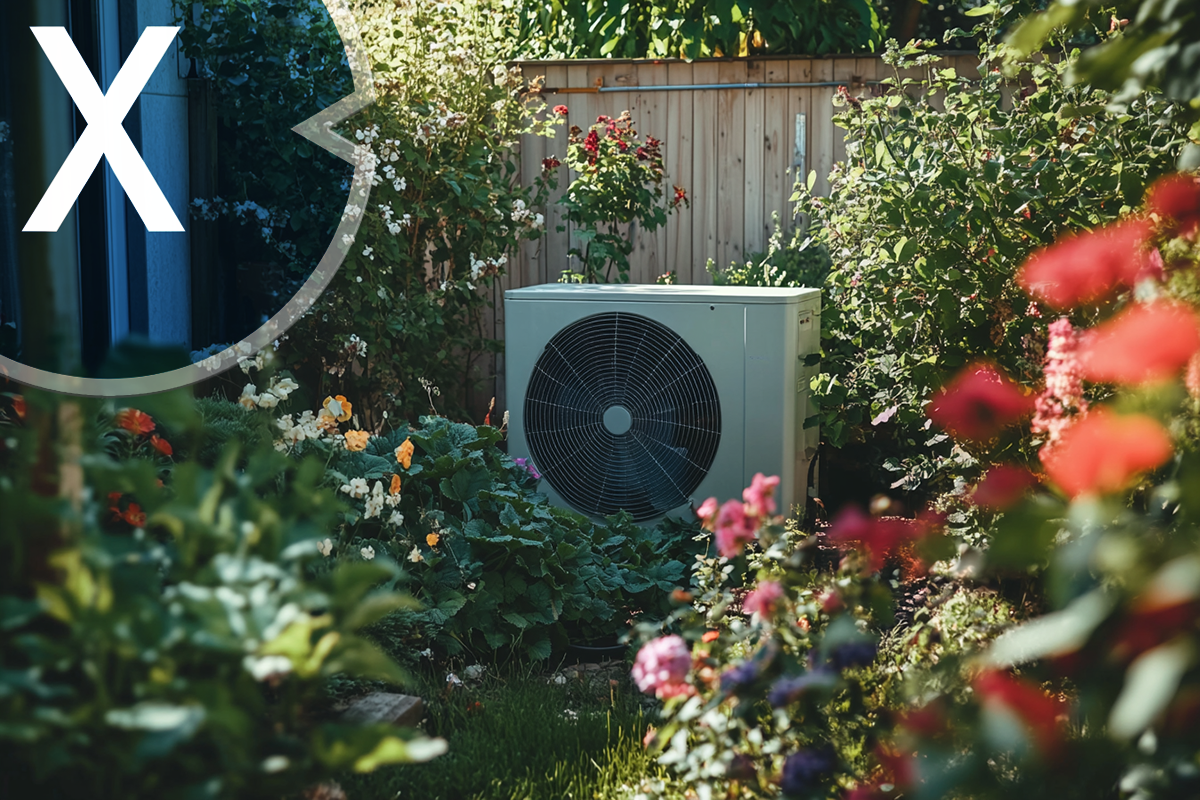
Concept and strategy for the collapse of the renewable energy market with heat pumps: causes, challenges and perspectives – Image: Xpert.Digital
Collapse in the renewable energy market with heat pumps: causes, challenges and perspectives
In 2024, the German heat pump market experienced a dramatic slump, raising far-reaching questions and uncertainties. Despite intensive political efforts to promote more climate-friendly heating systems, heat pump sales plummeted by a full 54 percent compared to the previous year. While 356,000 units were sold in the first half of 2023, this number fell to a mere 90,000 in the same period of 2024. This massive decline highlights the discrepancy between the German government's ambitious targets and the reality of the renewable energy market.
The German Heat Pump Association (BWP) had originally forecast sales of around 500,000 heat pumps for 2024, but this estimate proved to be far too optimistic. The reasons for this slump are manifold and range from legal uncertainties to economic and technical challenges. The question of how to revive the heat pump market is of central importance, not only for achieving Germany's climate targets, but also for the future of the entire renewable energy sector.
Political Goals and Reality
The German government has set ambitious goals within the framework of the Building Energy Act (GEG): The share of climate-friendly heating systems is to be significantly increased, with heat pumps playing a central role. These are considered a particularly environmentally friendly alternative to conventional gas and oil heating systems, as they utilize heat stored in the environment and thus operate largely emission-free. The federal government plans to install up to 950,000 heat pumps annually by 2030.
These ambitious goals, however, stand in stark contrast to current market developments. The drastic decline in sales figures in 2024 clearly demonstrates that setting political targets is insufficient – the framework conditions must also be right for consumers to gain confidence in new technologies and be willing to invest in them.
Uncertainty caused by the Building Energy Act (GEG)
One of the main reasons for the slump in heat pump sales is the uncertainty surrounding the new Building Energy Act (GEG), which came into force in 2024. The law stipulates stricter requirements for heating systems in order to reduce CO₂ emissions from buildings and achieve climate targets. While these regulations are fundamentally sensible and necessary to combat climate change, they have caused considerable uncertainty among many homeowners.
The often opaque and constantly changing legal situation, coupled with the discussion about possible technological openness, leads to a wait-and-see attitude.
Many potential buyers are hesitant because they don't know if their property is even suitable for a heat pump or if expensive retrofitting will be necessary. Older buildings, in particular, are often insufficiently insulated or have outdated heating systems, which makes installing a heat pump difficult or even impossible. In such cases, extensive renovations would be required, which deters many homeowners.
Furthermore, the debate surrounding municipal heating plans is causing uncertainty. These plans are to be finalized by 2028 at the latest and could include alternative energy sources such as district heating. Many consumers are therefore hesitant to decide on a heat pump, fearing that their investment could be rendered obsolete in just a few years.
Technical challenges in existing buildings
Another problem lies in the technical requirements for using heat pumps in existing buildings. While new buildings are often designed to be optimally operated with a heat pump – for example, through good insulation and underfloor heating – this is often not the case with older buildings. Many of these houses are poorly insulated or have radiators that rely on high flow temperatures. However, heat pumps operate most efficiently at low temperatures.
To operate a heat pump effectively in an older building, extensive modernization measures are often necessary. These include improving insulation and replacing old radiators with modern low-temperature heating systems such as underfloor heating or special radiators designed for use with heat pumps. These measures incur additional costs and deter many homeowners.
Economic factors and funding programs
Another significant factor in the market slump is the financial situation of many households. Purchasing a heat pump involves high investment costs – especially if additional renovations are required. While there are government subsidy programs to support the switch to climate-friendly heating systems, these are often insufficient to fully cover the high initial investment.
Furthermore, rising construction and material costs in recent years have forced many homeowners to postpone their building or renovation plans. Even though long-term savings in operating costs are possible – since a heat pump consumes less energy than conventional heating systems – many consumers are deterred by the high initial costs.
Perspectives and solutions
Despite the current challenges, there are opportunities to revitalize the heat pump market and ensure its long-term success. Targeted information campaigns and transparent, reliable policy frameworks play a key role in this.
1. Improvement of the information situation
Many homeowners are unsure whether their property is suitable for a heat pump or what measures would be necessary to use this technology effectively. Advisory services can help here: Independent energy consultants can identify individual solutions and thus strengthen confidence in the technology.
2. Adaptation of funding programs
To make switching to climate-friendly heating systems more attractive, government subsidy programs should be further expanded. In particular, lower-income households need additional financial support to be able to afford such an investment.
3. Technological advancements
The efficiency of heat pumps could be further increased through technological innovations – for example, through new systems that also operate efficiently at higher flow temperatures or through hybrid solutions that combine different energy sources.
4. Long-term planning security
To eliminate uncertainties regarding municipal heat plans, these should be drawn up as quickly as possible. The sooner homeowners know whether their region will be connected to a district heating network or not, the sooner they can make informed decisions.
5. Promotion of renovation measures
Since many existing buildings cannot be easily converted to heat pumps, energy-efficient renovations should be more strongly promoted. Improved insulation not only reduces a building's overall energy consumption but also enables the efficient operation of a heat pump.
High electricity prices as a hindrance
Another significant factor is the high electricity prices in Germany. Although heat pumps are considered particularly energy-efficient and emit significantly less CO₂ compared to gas or oil heating systems, they still require electricity to operate. These high electricity costs make operating a heat pump less attractive compared to conventional heating systems.
Industry representatives are therefore calling for a reduction in electricity prices for heat pump users or special tariffs to make their operation more economically viable. Such a measure could encourage more households to switch to this climate-friendly technology.
Better integration of heat planning and GEG
Another source of uncertainty is the integration of the Building Energy Act (GEG) with municipal heat planning. Many homeowners are holding back because they don't know whether their region will be connected to a district heating network in the future or whether other local solutions will be available. This uncertainty leads to the postponement of investments in new heating systems. Early development of municipal heat plans: Municipal heat planning should be accelerated to provide citizens with clarity about the future heat supply in their region as quickly as possible. The sooner homeowners know whether their region will be connected to a district heating network or not, the sooner they can make informed decisions.
Consistent regulations: It is important that the regulations on heat planning and the GEG (Building Energy Act) are designed without contradictions. Currently, there are still inconsistencies between the GEG and the Heat Planning Act (WPG) that urgently need to be clarified.5 Clear and coherent legislation would help to restore consumer confidence.
Extension of transitional periods
While the transitional periods in the GEG (German Building Energy Act) give homeowners time to adjust to the new regulations, many still feel pressured. Extending these periods could help relieve this pressure on consumers and give them more time to make an informed decision.
More flexible deadlines for existing buildings: Especially in older buildings, extensive renovations are often necessary before a heat pump or other climate-friendly heating system can be operated effectively. Longer transition periods or additional exemptions could be granted in these cases.
Strengthening trust through stable legislation
The frequent changes to the German Building Energy Act (GEG) have weakened many consumers' confidence in the energy transition. To regain this confidence, it is important that future legislative changes are well-prepared and clearly communicated.
Creating stability: The government should ensure that no short-term changes are made to the GEG (Building Energy Act) or at least announce them well in advance. This would help create planning certainty for investors and homeowners.
Better citizen involvement: Citizens should be more strongly involved in the decision-making process for shaping the energy transition.5 This could be achieved through public consultations or information events. Greater participation would not only strengthen trust but also help ensure that the measures are better tailored to the needs of the population.
Related to this: