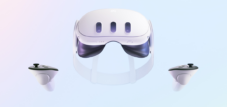
$1.7 trillion: The explosive growth of the XR (Augmented/Extended Reality) market and its undiscovered opportunities – Image: Xpert.Digital
The rise of immersive technologies – who will secure dominance in the multi-billion dollar market? (Reading time: 25 min / No advertising / No paywall)
The battle for supremacy in the realm of augmented reality: A detailed analysis of the strategies of leading technology companies
We are in the midst of a technological revolution that is fundamentally changing how we interact with the digital and physical world. At the heart of this transformation is Extended Reality, or XR for short. This umbrella term encompasses Virtual Reality (VR), Augmented Reality (AR), and Mixed Reality (MR) and marks the beginning of a new era of immersive experiences. The market for XR technologies has become a highly dynamic and fiercely competitive field, in which the world's largest technology companies—above all Meta, Apple, Google, Amazon, and Samsung—are engaged in a bitter struggle for future dominance.
XR is far more than just a gimmick for tech enthusiasts. It's a concept that unites cutting-edge technologies like never before, enabling access to immersive digital worlds via a growing number of electronic devices. Mobility plays a crucial role, as XR applications are increasingly designed to accompany us everywhere and enrich our interaction with the world.
Related to this:


The enormous interest in XR stems from its immense potential in virtually all areas of life. From revolutionary entertainment formats and new forms of social interaction to groundbreaking applications in education, industry, medicine, and commerce, XR promises to break down traditional boundaries and open up new possibilities. Its ability to seamlessly merge digital and physical worlds creates an entirely new dimension of interaction and experience. This makes the XR market a strategic core area for technology companies seeking new growth markets and innovative business models.
This report takes you on a detailed journey through the fascinating world of the XR market. We not only highlight current trends and growth forecasts, but also delve deep into the complex strategies of the key players. We analyze how Meta aims to create a comprehensive ecosystem with the Metaverse, how Apple is setting new standards with its premium approach and spatial computing, and how Google and Samsung intend to reach the mass market with an open, Android-based ecosystem. Furthermore, we examine Amazon's role and the strategies of other major companies shaping this exciting market.
Market size, growth trends and opportunities: A goldmine of the future
The global market for extended reality (XR) has become a true giant in recent years. In 2023, its value was estimated at an impressive $131.54 billion. But this is just the beginning. Experts predict explosive growth in the coming years. A market value of $183.96 billion is expected by 2024, and by 2032, the market is projected to reach a staggering $1,706.96 billion. This corresponds to a remarkable compound annual growth rate (CAGR) of 32.1% between 2024 and 2032. The market already reached a volume of $92.88 billion in 2022 and is expected to significantly exceed the trillion-dollar mark ($1,134.79 billion) by 2030. For the period from 2023 to 2030, an even higher annual growth rate of 36.0% is projected. These figures speak for themselves: The XR market is a growth market par excellence, offering enormous opportunities and high stakes in the battle for market leadership.
Drivers of growth: Pandemic, 5G and the call for innovation
The COVID-19 pandemic acted as a catalyst for the accelerated adoption and spread of AR and VR technologies. As companies worldwide were forced to shift to remote work, they desperately sought ways to connect their internal and geographically dispersed teams and maintain collaboration. XR technologies proved to be an ideal solution for creating virtual meetings, training sessions, and collaboration spaces that could bridge physical distances. Global spending on XR products and services surged to $18.8 billion in 2020, clearly reflecting the increased demand during the pandemic.
But the pandemic wasn't the only driver of growth. The implementation of XR technologies offers companies a platform to increase their efficiency while simultaneously reducing operating costs. By using XR in areas such as design, prototyping, training, maintenance, and customer service, companies can optimize processes, reduce errors, and utilize resources more effectively. It is estimated that the increased use of XR can boost a company's productivity by 10 to 20% by making optimal use of all available resources. Furthermore, the adoption of XR technology enables companies to offer customers worldwide an immersive and interactive brand experience. Virtual showrooms, interactive product presentations, and immersive marketing campaigns can strengthen customer loyalty, increase sales, and significantly raise brand awareness.
Another key factor driving market growth is the rapid advancement of 5G technology. The integration of 5G with XR technologies opens up a wide range of new application possibilities. 5G offers the high bandwidth and low latency essential for demanding XR experiences. The combination of 5G and XR enables real-time remote access, immersive live experiences, precise industrial control, and advanced applications in mobility automation. Imagine surgeons performing operations remotely using VR robots, engineers collaborating on complex projects in virtual design spaces, or technicians maintaining machines in factories using AR-based instructions – all of this becomes reality through the combination of 5G and XR.
Segment-specific opportunities: VR leads the field, medical simulation is booming
Within the XR market, the virtual reality (VR) segment is expected to continue playing a leading role. A key factor driving this growth is the steadily increasing demand for VR devices for gaming and entertainment applications. The gaming industry recognized VR's potential early on and is pushing the development of increasingly immersive and engaging VR games. From action-packed shooters and adventure games to relaxing simulation experiences, VR offers gamers entirely new worlds and ways to interact. Beyond gaming, VR is also opening up exciting perspectives in the entertainment sector. Virtual concerts, immersive films, and interactive storytelling formats are revolutionizing the way we experience entertainment.
But the AR/VR market offers far more than just entertainment. It also holds significant growth opportunities in other areas. One particularly promising sector is medical simulation. The global market for AR/VR-based medical simulations is projected to reach US$8.38 billion by 2029, representing a compound annual growth rate (CAGR) of 20.4%. These technologies are revolutionizing medical training, improving surgical outcomes, and optimizing patient care. VR and AR-based simulations provide a robust and effective platform for learning and developing surgical skills, for preoperative planning, and for emergency training. The increasing number of surgical procedures worldwide is another key growth driver in this market segment. For example, the Aesthetic Society in the US recorded a 2.9% increase in total surgical procedures from 2022 to 2023. Leading companies in this market segment are focusing on developing innovative solutions, such as medical VR training platforms, to gain a competitive edge. These platforms allow surgeons and medical staff to practice complex operations in a safe and risk-free virtual environment before working on real patients.
Regional insights: Germany as a VR/AR pioneer in Europe
Germany occupies a significant position within the European VR/AR ecosystem and is the second-largest market in Europe. This underscores the relevance of the German market for global players in the XR sector. In particular, Germany's strong industrial sector provides an ideal environment for the adoption of spatial computing technologies. German companies are increasingly recognizing the potential of VR and AR to optimize their processes, increase productivity, and develop innovative products and services. Whether in training, gaming, marketing, engineering, or even services and events, German companies see the visualization of digital 3D content as a cornerstone of their future competitiveness. An impressive 82% of German companies already use VR and AR applications, highlighting the high adoption rate and innovation potential of the German market.
Despite general economic pressures, Mintel's Germany VR and AR Market Report 2023 shows that a significant portion of consumers who have already used or are interested in VR headsets continue to express purchase intent. This suggests that the German VR/AR market is resilient even in challenging economic times and continues to offer growth potential. Advances in artificial intelligence (AI) and the increasing availability of 5G networks are expected to further accelerate the penetration of VR and AR in Germany and drive the development of mixed reality devices and virtual content. Companies like VR Expert play a vital role in the German market by acting as a leading provider of VR and AR hardware and forging partnerships to develop innovative solutions for German businesses and consumers.
Related to this:


The competitive landscape: Strategies of key players in detail
Meta: The Metaverse as the next big platform
Meta, formerly Facebook, is pursuing a comprehensive and ambitious strategy to consolidate and expand its dominance in the XR market. The company is focusing on two pillars: accessibility and the development of the Metaverse. Meta firmly believes that the Metaverse will be the next generation of the internet and is investing heavily in building a comprehensive ecosystem that enables social interaction, entertainment, work, and commerce in immersive virtual spaces.
A key component of Meta's XR strategy is its Quest line of VR/MR headsets. Meta aims to make VR technology accessible to a broad audience by focusing on affordable prices and user-friendly devices. Quest headsets, such as the Meta Quest 2, Meta Quest 3, and Meta Quest Pro, have become bestsellers and dominate the consumer VR market. A significant step in Meta's strategy was the introduction of the Meta Quest 3S, an even more affordable mixed-reality headset designed to make spatial computing accessible to an even wider audience and further stimulate the market for MR applications and games.
Meta is investing gigantic sums in the future of the XR market. The company has announced it will invest $100 billion in its XR product portfolio, which includes augmented reality smart glasses, virtual reality headsets, Quest series mixed reality devices, and the Metaverse platform Horizon Worlds. Meta's vision is to establish the Metaverse as the successor to the mobile internet, focusing on social interaction, entertainment, and work in immersive virtual spaces. The Metaverse is intended to be a place where people from all over the world can come together, play, learn, work, and trade, all within immersive 3D environments.
The driving force behind these efforts is Meta Reality Labs, a research and development division dedicated to creating tools that foster human connection through VR and AR. Meta Reality Labs is pushing the boundaries of innovation in artificial intelligence, haptics, whole-body tracking, and display technology to enable increasingly realistic and immersive XR experiences. Another key component of Meta's XR strategy is the Ray-Ban Meta Smartglasses. These smartglasses represent a first step into the realm of augmented reality and feature AI capabilities such as open-air audio, hands-free recording, and the integration of Meta AI. The Ray-Ban Meta Smartglasses could serve as a testbed for future AR features, providing Meta with valuable insights into user needs and desires in the field of augmented reality. Meta's key VR products include the Meta Quest 3, which features a high-resolution display, powerful performance and advanced mixed-reality capabilities, and the Meta Quest 3S, a more affordable option with high-definition resolution and lightweight comfort designed to appeal to a wider audience.
Apple: Focus on premium experiences and spatial computing
Apple is entering the XR market with a strategy that consistently focuses on high-quality experiences and spatial computing in the premium segment. In contrast to Meta's focus on accessibility and the mass market, Apple aims to set new standards in the XR field with innovative technology and an unparalleled user experience. The company has launched the Apple Vision Pro, a mixed reality headset positioned as a revolutionary device that puts the user experience at its core. A particular focus is placed on eye and hand tracking for intuitive navigation and control within the virtual environment.
The Apple Vision Pro is packed with cutting-edge technology. Standout features include ultra-high-resolution Micro-OLED displays (with more pixels per eye than a 4K TV), integrated spatial audio, and Optic ID for iris scanning to authenticate and personalize the user experience. Starting at $3,499, the Apple Vision Pro is priced at tech enthusiasts, professional users, and Apple fans willing to pay a premium for cutting-edge technology. Apple positions the Vision Pro as a "spatial computer," emphasizing its diverse applications in areas such as entertainment, productivity, collaboration, and creativity. The Vision Pro is intended to be more than just a VR headset; it's a new kind of computer that seamlessly integrates digital content into the real world, enabling a completely new way to interact with technology.
Despite its advanced technology, the Vision Pro also faces potential limitations and challenges. Critics point to the headset's weight, high price, potentially isolating user experience, and limited initial app ecosystem. These factors could hinder widespread adoption of the Vision Pro in the short term. However, Apple's commitment to augmented reality extends beyond the Vision Pro. The company has already established a broad foundation for AR applications with ARKit and related technologies for iPhones and iPads. ARKit enables developers to create realistic and engaging AR experiences for a large user base. There are reports that Apple may adjust the Vision Pro's production and consider future plans for more affordable models to expand its market reach to broader consumer segments, possibly by 2026. A more affordable Apple AR headset could significantly boost the augmented reality market and position Apple as a dominant player in the field.
Google & Samsung: An open ecosystem based on Android
Google and Samsung are pursuing a joint strategy to challenge established market leaders Meta and Apple. Their approach is based on creating an open and accessible ecosystem for headsets and glasses powered by Android XR. They are leveraging the immense capabilities of the Android operating system and Google's expertise in artificial intelligence. Their strategic partnership aims to jointly develop AR glasses and the Android XR operating system to ensure seamless integration and a unified platform for various devices from different manufacturers.
A first concrete result of this collaboration is "Project Moohan" (possibly launching under the names "Samsung Beyond" or "Galaxy Beyond"). This is a mixed-reality headset that supports Android XR and is positioned as a direct competitor to the MetaQuest Pro and Apple Vision Pro. A key advantage of Project Moohan could be its price. It is speculated that the headset could launch at a price below $1,000, making it a more affordable high-end option. A central goal of Google and Samsung is to create an open ecosystem for XR. This ecosystem is intended to leverage the large Android developer base and ensure compatibility with current Android apps, thereby democratizing the development and use of XR technologies. Google has pursued various XR initiatives in the past, including Google Cardboard, Google Daydream, and Project Iris. These initiatives are now being strategically consolidated into the comprehensive Android XR platform as its further development.
A key aspect of Google and Samsung's strategy is the deep integration of Gemini AI into Android XR. Gemini AI, Google's advanced AI model, is designed to enable a conversational user interface, contextual understanding of the world, and a host of intelligent features within Android XR. These include real-time advice, object recognition, immersive assistance, and personalized experiences. Gemini AI aims to become a helpful AI assistant within the XR environment, supporting users in all aspects of their lives. Android XR is expected to support a wide range of devices from various manufacturers, including those from Qualcomm partners such as Lynx, Sony, and XREAL. This could lead to a diverse and competitive hardware market where different manufacturers vie with each other through innovative designs and features.
Amazon: Smart glasses and cloud infrastructure as trump cards
Amazon is exploring its role and potential influence in the XR market. The company's current focus is on smart glasses with audio and voice assistant capabilities, as well as leveraging its powerful cloud infrastructure for XR applications. Amazon already has a presence in the smart glasses market with its Echo Frames. Offering open-ear audio, Alexa integration, and prescription lens options, the Echo Frames are aimed at users who want discreet audio and voice control in their everyday lives. The Echo Frames primarily focus on audio and Alexa functionality, rather than visual AR/VR experiences. This suggests a different primary use case compared to dedicated XR headsets. Amazon positions the Echo Frames as stylish and unobtrusive smart glasses that allow users to access Alexa and audio information without appearing intrusive or technical.
Amazon's cloud computing services (AWS) play a potentially crucial role in supporting XR applications. AWS provides the computing power, storage resources, and network infrastructure required for demanding XR applications. Amazon has already partnered with companies offering 3D collaborative design solutions such as NVIDIA CloudXR and Sphere. This indicates Amazon's focus on backend infrastructure for XR. Amazon could position itself as a major provider of cloud services for XR developers and companies in the future. Furthermore, a wide range of AR/VR/XR products from various manufacturers are available on Amazon's e-commerce platform. This makes Amazon not only a technology company in the XR market but also a key sales channel for XR products.
Other stakeholders: Diversity and innovation in the ecosystem
Besides the major tech giants, numerous other companies are active in the XR market and contribute to the competition. Qualcomm is a key chip manufacturer, powering many XR devices with its Snapdragon XR chips. Qualcomm plays a crucial role in developing high-performance and energy-efficient processors for VR and AR headsets. HTC, with its Vive line of VR and XR headsets, is also a significant player in the market. HTC Vive has made a name for itself, particularly in the high-end VR and enterprise applications sectors. Xreal focuses on developing lightweight and stylish AR glasses aimed at the mass market. Magic Leap was an early pioneer in mixed reality and has set standards with its innovative headsets and technologies. Sony is present in the gaming sector with PlayStation VR and has taken the VR experience for console gamers to a new level with PlayStation VR2. Sony could also play a significant role in the XR market as a provider of display technology. These companies contribute to the diversity and competitive intensity of the XR ecosystem through specialized hardware, software, components, or niche market strategies. They introduce innovative ideas and technologies and drive the competition for the best XR solutions.
Related to this:

Technological drivers of competition: 5G, AI and spatial computing as game changers
Competition in the XR market is largely driven by technological advancements. The continued development of 5G technology plays a crucial role, as it enables the high bandwidth and low-latency transmissions required for immersive XR experiences. 5G is the foundation for wireless VR headsets, cloud-based XR content, and mobile AR applications. Artificial intelligence (AI) is increasingly being integrated into XR devices and platforms to enable features such as precise hand and eye tracking for intuitive user interfaces, intelligent virtual assistants, and content generation. AI enhances the user experience and expands the functionality of XR applications in numerous ways. The concept of spatial computing is transforming human-computer interaction by seamlessly merging digital content with the real physical world. Spatial computing goes beyond traditional 2D screens, creating more intuitive and immersive experiences that fundamentally change how we interact with technology.
Advances in display technology, such as high-resolution micro-OLED displays that offer superior clarity and color accuracy, and compact pancake lenses that enable slimmer and more comfortable headset designs, are crucial for delivering visually stunning and immersive experiences. Display quality is a key factor in immersing oneself in virtual worlds. Finally, improvements in sensors and tracking technologies (including inside-out tracking, LiDAR, and depth sensors) contribute to more precise and responsive capture of user movements and a better understanding of the environment. These advancements lead to more realistic and interactive virtual and mixed reality experiences that further blur the lines between the digital and physical worlds.
Market segmentation and target group approaches: Tailor-made strategies for specific needs
Companies in the XR market pursue strategically different approaches to address specific market segments and maximize their impact. Each segment has its own needs and requirements that companies must consider.
Gaming and entertainment
Meta has a strong and established position in this segment with its Quest platform. Meta offers a wide range of immersive games and entertainment experiences at relatively affordable prices, appealing to a broad audience of gamers and entertainment enthusiasts. Apple is entering the immersive entertainment market with the high-resolution visual and audio capabilities of the Vision Pro. Apple is targeting users who are willing to pay a premium price for a cinematic experience in their own homes. Apple is positioning the Vision Pro as the ultimate entertainment device for discerning users.
Enterprise and professional use
Apple strategically positions the Vision Pro as a powerful tool for productivity and collaboration. Apple emphasizes the Vision Pro's potential for virtual displays, 3D object manipulation, immersive training, and virtual meetings. Google and Samsung could enter the enterprise market with Android XR-based headsets offering AI-powered assistance and integration with productivity apps. Android XR could provide an open and flexible platform for businesses looking to integrate XR solutions into their workflows.
healthcare
The market for AR/VR-based medical simulations is growing rapidly. Companies are focusing on developing specialized training platforms and tools for surgeons and medical professionals. XR technologies are increasingly being used in medical education, preoperative planning, telemedicine, and therapy. There is also potential for remote patient care, diagnostics, and therapeutic applications that leverage the immersive capabilities of XR.
Education and training
XR has the potential to revolutionize learning and skills development across various fields. XR offers interactive and immersive experiences that can make learning more effective and engaging. Meta has established partnerships in the education sector and is committed to integrating VR into classroom teaching. Other companies and educational institutions are also recognizing XR's potential for education and are developing innovative learning solutions.
Industry and manufacturing
The increasing adoption of mixed reality for applications such as design visualization, rapid prototyping, remote maintenance support, and improved inventory management is enhancing efficiency and reducing costs in industry and manufacturing. XR technologies are being used in industry to optimize processes, reduce errors, increase safety, and improve collaboration.
Regional insights: Focus on the German market
Germany occupies a strong position within the European VR/AR ecosystem and is the second-largest market in Europe. This underscores Germany's importance as a key market in Europe. In particular, Germany's strong industrial sector provides an ideal environment for the adoption of spatial computing technologies. German companies are increasingly recognizing the advantages of XR for their business areas. Whether in training, gaming, marketing, engineering, or even services and events, German companies see the visualization of digital 3D content as a crucial factor for their future success. An impressive 82% of German companies already use VR and AR applications, highlighting the high adoption rate and innovation potential of the German market.
Despite general economic pressures, Mintel's Germany VR and AR Market Report 2023 shows that a significant portion of consumers who have already used or are interested in VR headsets continue to express purchase intent. This suggests that the German VR/AR market is resilient even in challenging economic times and continues to offer growth potential. Advances in artificial intelligence (AI) and the increasing availability of 5G networks are expected to further accelerate the penetration of VR and AR in Germany and drive the development of mixed reality devices and virtual content. Companies like VR Expert play a vital role in the German market by acting as a leading provider of VR and AR hardware and forging partnerships to develop innovative solutions for German businesses and consumers.
Future forecasts and strategic implications: Uncertainty and change as constants
The future development of the XR market is characterized by uncertainty and dynamism. Unexpected technological breakthroughs and the entry of new, disruptive players could challenge the current dominance of established companies. The long-term strategies of key players are expected to evolve, influenced by technological advancements, competitive pressures, and shifts in consumer and business demand. Today's leaders could be overtaken tomorrow by new innovations and disruptive business models.
Factors such as pricing, ease of use, and the availability of compelling content will be crucial for market penetration. While high-end devices like the Apple Vision Pro push technological boundaries and reveal new possibilities, the mass market is expected to be dominated by more affordable and accessible devices such as the MetaQuest headsets or future Android XR-based solutions. Developing "killer apps" and compelling content that demonstrates the added value of XR in people's everyday lives will be essential to driving widespread adoption and use of XR technologies.
The increasing convergence of XR with other technologies such as artificial intelligence, 5G, and the metaverse holds the potential for new and transformative applications that we can scarcely imagine today. The integration of AI into XR devices and platforms will lead to smarter, more personalized, and more intuitive experiences. 5G will improve the wireless connectivity and mobility of XR devices, enabling new use cases. The metaverse, as a virtual, immersive, and connected world, could become the ultimate use case for XR technologies, enabling entirely new forms of social interaction, entertainment, and commerce.
Companies that respond agilely to these developments, understand user needs, and offer innovative solutions will be able to hold their own in the long run. Remaining flexible, adapting to changing market conditions, and continuously investing in research and development to stay at the forefront of technological innovation will be crucial. Companies that succeed in building a strong community of developers and users and creating an attractive ecosystem for XR applications and content will have the best chance of success in the XR market. The future of the XR market is open and full of opportunities, but also full of challenges and uncertainties. Only those companies willing to take risks, drive innovation, and continuously evolve will be able to survive in this exciting and dynamic competitive environment.
Related to this:

Navigating the competitive XR landscape
The AR/VR/XR market is in a crucial phase of intense competition, with established technology giants and emerging players vying for dominance. This report analyzes the strategic approaches of the key players – Meta, Apple, Google & Samsung, and Amazon – and highlights the different focuses and strengths of each company.
Meta continues to prioritize accessibility and the vision of the Metaverse to create a comprehensive ecosystem for social interaction and entertainment. Apple is pursuing a premium approach, focusing on spatial computing to deliver a revolutionary user experience in the high-end segment. The strategic collaboration between Google and Samsung aims for an open ecosystem based on Android XR, designed to appeal to a broad range of Android users and developers, and emphasizing strong AI integration. Amazon is exploring its role in the XR market through smart glasses and cloud infrastructure, focusing on audio and voice assistant capabilities, as well as supporting XR applications through AWS.
The future of the market will be determined by technological innovations, companies' ability to effectively target specific market segments, and the regional characteristics of individual markets. The German market, as the second largest in Europe and with a strong industrial sector, offers particularly promising opportunities for the adoption of XR technologies.
Competition in the XR market is expected to remain dynamic and intense. Companies' ability to adapt to changing market conditions, respond to technological breakthroughs, and meet user needs will be crucial for long-term success. Those companies that manage to create a compelling ecosystem of hardware, software, content, and services, and build a strong community of users and developers, will have the best chance of taking the lead in this exciting new era of augmented reality. The journey into the world of XR has only just begun, and it will be exciting to see how this competition evolves and what groundbreaking innovations and applications emerge in the coming years.
Comparison of important XR headsets
A comparison of key XR headsets reveals that the models cater to a wide range of target groups and applications. The Meta Quest 3, available from $499.99, is primarily aimed at mainstream users and gamers. It offers a display resolution of 2064 x 2208 pixels per eye, a maximum refresh rate of 120 Hz, and a field of view of 110° x 96°. Its main features include mixed reality, hand tracking, and 3D spatial audio, powered by the Meta Horizon OS.
The Apple Vision Pro, on the other hand, is aimed at professional and premium users with a price of $3499. Its resolution is approximately 3660 x 3200 pixels, it offers a 100 Hz refresh rate and a field of view of approximately 100° x 73°. Standout features include mixed reality, precise eye and hand tracking, spatial audio, and the Optic ID biometric security feature, all controlled by visionOS.
The Samsung Project Moohan, with an estimated price under $1000, appeals to professional users and tech enthusiasts. Boasting an impressive resolution of approximately 3800 PPI, an estimated refresh rate of 90 Hz, and an exceptionally wide field of view, it focuses on high-end features such as mixed reality passthrough, eye and hand tracking, and the integration of Gemini AI. This headset runs on the Android XR operating system.
The three headsets illustrate the different priorities of manufacturers, ranging from accessible entertainment to high-performance technology for professionals.
Global AR/VR/XR Market Size and Growth Forecasts
The global AR/VR/XR market has experienced strong growth over the years. In 2022, the market value was USD 92.88 billion, followed by USD 131.54 billion in 2023 and USD 183.96 billion in 2024. A compound annual growth rate (CAGR) of 32.1% is projected for the period 2024 to 2032. By 2030, the market is expected to reach USD 1,134.79 billion, with a CAGR of 36.0% for the period 2023 to 2030. The market size is projected to reach USD 1,706.96 billion in 2032, supported by a continued stable growth rate of 32.1% from 2024 to 2032.
Strategic positioning of key AR/VR/XR players
The strategic positioning of key players in the AR/VR/XR sector reveals different priorities and strengths. Meta focuses on accessibility and the metaverse. The company benefits from a large user base, affordable headsets, and a strong emphasis on social interaction and gaming. Its primary target markets include mainstream consumers and gamers, supported by products such as the Meta Quest 3, Meta Quest 3S, Ray-Ban Meta smartglasses, and Meta Horizon Worlds. Apple, on the other hand, focuses on a premium spatial computing experience and scores points with high-quality technology, innovative user interactions, and a strong ecosystem aimed at tech enthusiasts and professional users. Examples include the Apple Vision Pro headsets and ARKit for iOS/iPadOS.
Google and Samsung pursue a strategy based on an open ecosystem and the integration of AI. Thanks to the Android ecosystem, strong AI capabilities, and broad hardware expertise, these companies focus on developers and a broad consumer base. Key products include the Android XR platform, Project Moohan (potentially Samsung Beyond/Galaxy Beyond), and prototype AR glasses powered by Gemini AI. Amazon connects the smart glasses market with its powerful cloud infrastructure. With established voice assistants and cloud computing services (AWS), it addresses both private users and businesses, for example, with Amazon Echo Frames and AWS services for XR applications.
Beyond these major players, there are other market participants who focus on specialized hardware and software, offering innovative technologies in specific areas such as displays and tracking. These companies target diverse audiences, depending on their specialization. Examples include Qualcomm Snapdragon XR chips, HTC Vive headsets, Xreal AR Glasses, Magic Leap headsets, and the Sony PlayStation VR.
Related to this:
Your global marketing and business development partner
☑️ Our business language is English or German
☑️ NEW: Correspondence in your native language!

Konrad Wolfenstein
I and my team are happy to be available to you as your personal advisor.
You can contact me by filling out the contact form here wolfenstein@xpert.digital:or simply call me at +49 7348 4088 965. My email address is
I'm looking forward to our joint project.