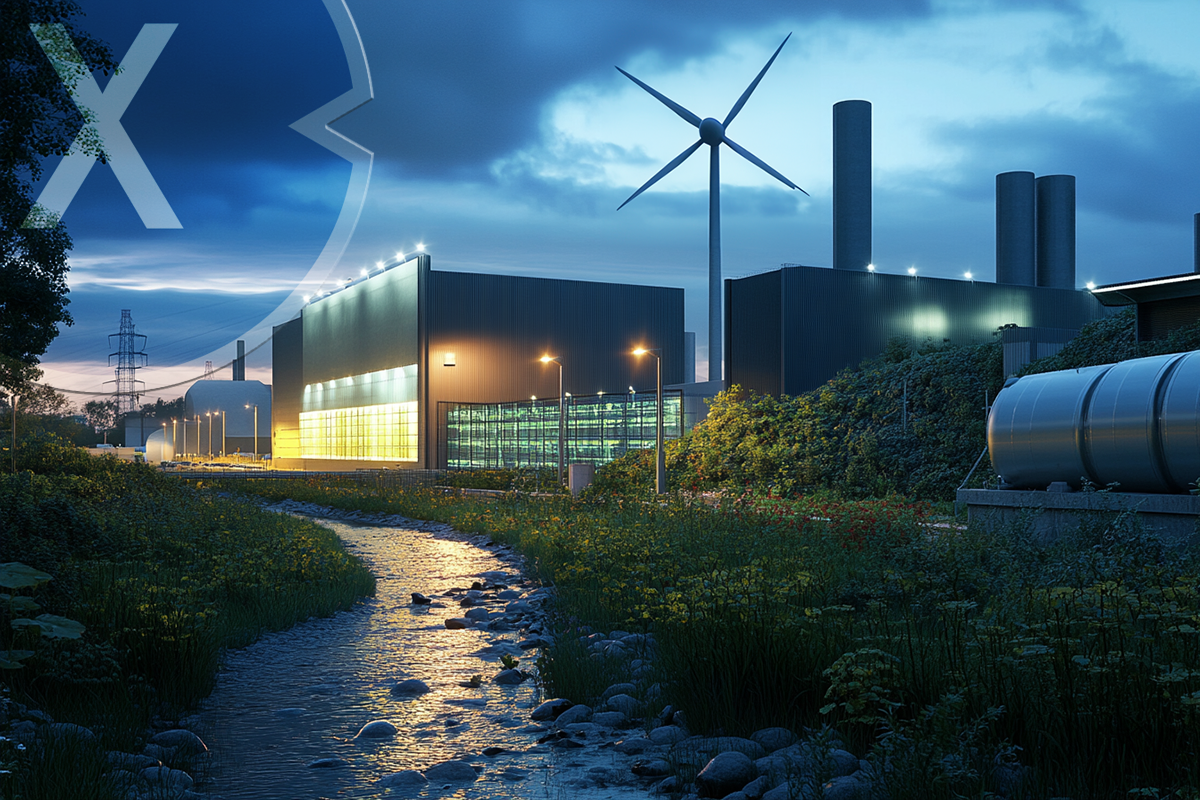
Green cold chain: Strategies for more environmentally friendly refrigerated and frozen food logistics in global logistics and industry – Image: Xpert.Digital
🟢❄️🚛 Green Cold Chain: Environmentally Friendly Strategies for Refrigerated and Frozen Storage in Global Industrial Logistics
🌐⛓️📦 The importance of the cold chain in logistics
The cold chain plays a crucial role in modern industrial logistics, enabling the transport and storage of temperature-sensitive products. This chain spans various industries, particularly the food and pharmaceutical sectors, where product freshness and efficacy must be guaranteed. However, with growing awareness of environmental and climate protection, the logistics industry faces new challenges. A "green" cold chain – meaning sustainable and environmentally friendly refrigerated and frozen food logistics – is gaining increasing importance. Companies worldwide are seeking innovative strategies to minimize CO₂ emissions and optimize energy consumption without compromising product integrity.
🌍❄️🍃 Environmental impact of the conventional cold chain
Traditional cold chain solutions use refrigerants such as chlorofluorocarbons (CFCs) and hydrofluorocarbons (HFCs), which are potent greenhouse gases and contribute to global warming. Refrigerants are necessary to keep refrigeration systems at low temperatures, but they often escape through leaks in the system or during maintenance. Some of these gases are up to 10,000 times more harmful to the climate than CO₂. The international industry has begun to rethink the use of such refrigerants and develop alternatives to reduce emissions.
Another problem is the high energy consumption of conventional refrigeration systems. Cooling requires immense amounts of electricity, especially when products are transported over long distances. According to studies, a considerable portion of global electricity consumption is attributable to cold storage facilities and refrigerated transport. The pressure to reduce this consumption is constantly increasing in light of climate change, which is why alternative and sustainable technologies are increasingly coming into focus.
🚀🧊🌱 Strategies for an environmentally friendly cold chain
An environmentally friendly cold chain is based on an integrated approach that considers various aspects – from the choice of refrigerants and energy sources to the optimization of cold chain logistics. The following describes some strategies that promote a "green" transformation of the cold chain.
1. Use of natural refrigerants
A crucial step towards an environmentally friendly cold chain is the use of natural refrigerants such as ammonia, CO₂, and propane. These substances have a low global warming potential and are significantly more environmentally friendly compared to synthetic refrigerants. Ammonia, for example, has a global warming potential of almost zero and is well-suited for large industrial refrigeration systems. However, switching to natural refrigerants requires adjustments to the technology and appropriate safety precautions, as some of these substances can be flammable or toxic.
2. Energy efficiency through modern cooling technology
Innovative cooling technologies such as high-performance insulation, heat recovery, and improved airflow control can significantly reduce energy consumption. Heat recovery systems, for example, utilize the heat generated during cooling to heat other areas of the logistics center or for other processes. This technology helps save energy and reduce CO₂ emissions. Modern, energy-efficient cooling systems can reduce electricity consumption by up to 40%, which has a positive impact on a company's environmental footprint.
3. Integration of renewable energies
A key aspect of a sustainable cold chain is the use of renewable energy sources such as solar and wind power. Solar panels on the roofs of cold storage facilities can supply the majority of the required electricity, especially in sunny regions. By using renewable energy, companies can reduce their CO₂ emissions and simultaneously lower operating costs in the long term. The combination of wind power and battery storage is also gaining importance to ensure a continuous electricity supply, even when natural energy production fluctuates.
4. Digitalization and intelligent control systems
Digitalization plays a crucial role in optimizing the cold chain. Sensors and IoT technologies enable precise monitoring and control of temperature throughout the entire supply chain. Real-time data and intelligent algorithms help to detect temperature deviations early and take timely countermeasures. Such a system makes it possible to use energy more efficiently by avoiding unnecessary cooling. Digitalization also allows for the optimization of maintenance cycles, enabling more efficient and longer-lasting operation of the equipment.
5. Optimization of transport logistics
The cold chain encompasses not only the storage but also the transport of goods. Optimizing transport routes and reducing empty runs are crucial measures for minimizing CO₂ emissions. The use of electric trucks and alternative drive technologies can significantly reduce environmental impact. Furthermore, optimized route planning lowers fuel consumption, which is both ecologically and economically beneficial.
6. Cascade cooling and innovative cooling concepts
Another concept for a sustainable cold chain is cascade cooling. This is a multi-stage cooling system that uses different refrigerants for different temperature ranges. This system enables higher energy efficiency and is particularly suitable for large warehouses that require different temperature zones. Such systems make it possible to save the energy needed for lower temperatures by efficiently transferring the cold from a higher temperature zone.
🏢💡🌿 Benefits of the green cold chain for businesses
Switching to a green cold chain offers not only ecological but also economic advantages. On the one hand, companies can reduce their operating costs through energy-efficient technologies and the use of renewable energies. On the other hand, a sustainable profile strengthens brand image and helps to gain consumer trust. Especially in times when consumers are increasingly paying attention to environmentally friendly companies, a green cold chain can represent a unique selling proposition.
Furthermore, it is possible to obtain subsidies and government grants by using environmentally friendly technologies and reducing CO₂ emissions. In many countries, companies receive financial support when they implement sustainable measures, which makes switching to a green cold chain even more attractive.
🔧🚀📈 New technical standards and staff training
Despite the numerous advantages, companies face several challenges when implementing a green cold chain. Switching to natural refrigerants and energy-efficient technologies often requires significant initial investment. Adapting to new technical standards and training staff are also crucial factors.
Nevertheless, it is foreseeable that the demand for environmentally friendly cold chain solutions will continue to rise in the coming years. Global climate policy and increasing regulatory requirements are putting pressure on companies to improve their carbon footprint. Technological development in this area is progressing rapidly and regularly yields new, more sustainable solutions. Companies that invest early in green cold chains can achieve both competitive and economic advantages in the long term.
📜🌱🌍 Forward-looking strategy
The green cold chain represents a forward-looking strategy for addressing the challenges of global logistics with regard to sustainability and climate protection. By using natural refrigerants, energy-efficient technology, and digital control systems, companies can significantly reduce their CO₂ emissions. The increased use of renewable energies and the optimization of transport logistics also make an important contribution to an environmentally friendly supply chain. The transition to a green cold chain
📣 Similar topics
- 🥶 Green cold chain: Sustainability meets refrigerated and frozen food logistics
- 🌍 The Importance of the Cold Chain: Global Standards for Food Safety
- ⚡ Energy efficiency: Modern technologies for reducing electricity consumption
- 📦 Optimized logistics: Sustainable transport in the cold chain
- 🌱 Environmentally friendly refrigerants: Natural options for less CO₂
- 💡 Renewable energies: Solar and wind power in cooling systems
- 🤖 Digitalization: Smart solutions for more efficient cold chains
- 🔍 Challenges: The path to implementing environmentally friendly systems
- 📈 Economic advantage: Reduce costs through green technologies
- 🌐 Future prospects: Visions for sustainable cold chain logistics
#️⃣ Hashtags: #GreenColdChain #EnergyEfficiency #SustainableLogistics #RenewableEnergy #DigitalSolutions
Expert partner in warehouse planning and construction

🌍❄️ Green cold chains in global logistics: Paths to sustainability
🍃📦 The cold chain is an indispensable part of global logistics. It ensures that temperature-sensitive goods such as food, pharmaceuticals, and chemical products are stored and transported under optimal conditions. Without a reliable cold chain, many products would lose their quality or become unusable. However, traditional refrigerated and frozen food logistics comes with significant environmental impacts. High energy consumption, the use of climate-damaging refrigerants, and inefficient processes contribute significantly to global greenhouse gas emissions. Given the growing awareness of climate change and the urgent need to reduce CO₂ emissions, the industry faces the challenge of making the cold chain more sustainable.
♻️🌡️ The environmental impact of the traditional cold chain
The energy consumption of refrigeration systems accounts for a significant portion of global energy consumption. It is estimated that approximately 17% of total industrial electricity consumption is attributable to refrigeration and deep-freeze systems. Particularly in the food industry, where products often have to be transported and stored over long distances, the energy required for cooling is immense. Furthermore, many refrigeration systems still use fluorinated refrigerants (F-gases), which have a high global warming potential. These substances can warm the climate thousands of times more than CO₂. If they are released into the atmosphere through leaks or improper disposal, they contribute significantly to global warming.
🌿🚛 Strategies for a greener cold chain
To make the cold chain more environmentally friendly, various approaches must be pursued:
1. Use of natural refrigerants
Natural refrigerants such as ammonia (NH₃), carbon dioxide (CO₂), and hydrocarbons (e.g., propane) have a significantly lower global warming potential than synthetic refrigerants. They are also often more efficient and can increase the energy efficiency of cooling systems. Ammonia, for example, has excellent thermodynamic properties and has been used in industrial cooling systems for over 100 years. "Switching to natural refrigerants is an important step toward reducing our environmental footprint," emphasizes an industry representative.
2. Increasing energy efficiency
Energy consumption can be significantly reduced through the use of modern technologies and the optimization of cooling systems. Highly efficient compressors, heat recovery systems, and improved insulation materials all contribute to lowering energy requirements. Regular maintenance and inspection of the systems ensure that they always operate optimally. Variable frequency drives can also be used to adapt the system's output to actual demand.
3. Use of renewable energies
Integrating renewable energy sources such as solar or wind power into the energy supply of refrigeration systems can significantly reduce the carbon footprint. Solar cooling offers particularly great potential in sunny regions. By installing photovoltaic systems on the roofs of warehouses, companies can cover a portion of their own energy needs. "Combining refrigeration and renewable energies is a forward-looking approach to sustainable logistics," explains a renewable energy expert.
4. Optimization of logistics and supply chain
Intelligent planning and optimization of transport routes can reduce cooling times and thus save energy. Digital tools and IoT technologies enable better monitoring and control of the cold chain. Real-time data on traffic, weather, and inventory levels can be used to optimize transport routes and minimize downtime. Furthermore, consolidating deliveries and collaborating with partners in the supply chain can contribute to achieving efficiency gains.
5. Implementation of energy management systems
Energy management systems (EnMS) help companies systematically record, analyze, and optimize their energy consumption. By identifying energy-saving potential, targeted measures can be implemented. Certification according to ISO 50001 can also underscore a company's commitment to energy efficiency and sustainability.
6. Awareness raising and training
Training staff in energy-efficient practices and the operation of cooling systems can also lead to savings. Employees should be made aware of the importance of energy efficiency and trained in the use of energy-saving features. "Our employees are a crucial factor in the success of our sustainability strategy," said a company spokesperson.
💡🆕 Innovative technologies and solutions
Progressive digitalization offers new opportunities to make the cold chain more efficient and environmentally friendly. Sensors and IoT devices enable real-time monitoring of temperature, humidity, and other relevant parameters. Big data and artificial intelligence allow for forecasting and system optimization. For example, machine learning can be used to predict the energy consumption of refrigeration systems and avoid peak loads.
Furthermore, increasingly intelligent packaging solutions are being developed that not only protect the products but also contribute to temperature regulation. Phase change materials (PCMs) can absorb or release heat, thus maintaining a constant temperature. This reduces the need for active cooling during transport.
📜🌐 Regulatory frameworks and international standards
Policymakers play a crucial role in promoting environmentally friendly technologies. Stricter regulations for refrigerants and energy efficiency standards encourage companies to implement more sustainable solutions. The Kigali Convention, supplementing the Montreal Protocol, mandates the gradual reduction of the production and use of fluorinated refrigerants. Within the European Union, the F-Gas Regulation governs the phase-out of climate-damaging refrigerants.
Furthermore, there are international standards and certifications that support companies in implementing sustainability strategies. ISO 14001 for environmental management systems and ISO 50001 for energy management systems are examples of this.
📊🥇 Case studies from practice
A leading food company has implemented a comprehensive energy management program in its warehouses. By using LED lighting, highly efficient cooling systems, and utilizing waste heat, the company has reduced its energy consumption by 30%. "Our investments in energy efficiency are paying off not only ecologically, but also economically," reports the sustainability officer.
Another example is a pharmaceutical company that relies on innovative cooling technologies for storing temperature-sensitive medications. By using refrigerators with natural refrigerants and integrating solar energy, the company was able to significantly reduce its CO₂ emissions.
🔍🌟 Challenges and Outlook
Despite the availability of technologies, companies face challenges in implementation. High investment costs, inadequate infrastructure, and a lack of expertise can present obstacles. Furthermore, there is often uncertainty regarding the reliability and security of new technologies. This is where collaboration and knowledge sharing within the industry are crucial.
In the long term, however, green cold chains offer not only ecological but also economic advantages. Energy savings and efficient processes lead to cost reductions and strengthen competitiveness. Consumers and business partners increasingly value sustainability, which can lead to a positive image and market advantages.
✅🌱Restructuring the cold chain towards greater sustainability
Transforming the cold chain towards greater sustainability is both an urgent necessity and an opportunity for industry. Significant progress can be achieved through the use of natural refrigerants, increased energy efficiency, and the integration of renewable energies. Innovations and technological developments offer a wide range of possibilities. Ultimately, not only the environment but also the companies themselves benefit from a green cold chain. It is up to all stakeholders – from manufacturers and logistics companies to policymakers – to work together to develop and implement solutions. A sustainable cold chain is a crucial building block for a more environmentally friendly future.
📣 Similar topics
- 🌍 The future of green cold chain technology
- ❄️ Energy-efficient innovation strategies for cold chains
- 🍃 Natural refrigerants as the key to sustainability
- 🌞 Renewable energies are revolutionizing the cold chain
- 🚛 Optimized logistics processes for reduced environmental impact
- 📊 Digitalization: The game changer in the cold chain
- 🌊 Liquid management: Environmentally friendly refrigerants
- 🏭 Industry 4.0: Intelligent solutions for the cold chain
- 📈 Energy management systems as pioneers for green cold chains
- 🤝 Collaboration for a more sustainable cold chain
#️⃣ Hashtags: #ColdChain #Sustainability #EnergyEfficiency #NaturalRefrigerants #RenewableEnergies

Xpert.Plus Warehouse Optimization - High-bay warehouses and pallet warehouses: Consulting and planning
We are here for you - Consulting - Planning - Implementation - Project Management
☑️ Smart City & Factory: Industry expert for energy-efficient 5G buildings and halls, as well as consulting and installation of solar systems
☑️ Xpert.Plus - Logistics consulting and logistics optimization
☑️ Industry expert, here with his own Xpert.Digital industry hub with over 2,500 specialist articles

Konrad Wolfenstein
I would be happy to serve as your personal advisor.
You can contact me by filling out the contact form below or simply call me on +49 7348 4088 965 .
I'm looking forward to our joint project.
Write to me


Xpert.Digital - Konrad Wolfenstein
Xpert.Digital is a hub for industry focusing on digitalization, mechanical engineering, logistics/intralogistics and photovoltaics.
With our 360° Business Development solution, we support renowned companies from new business to after-sales.
Market intelligence, smarketing, marketing automation, content development, PR, mail campaigns, personalized social media and lead nurturing are part of our digital tools.
You can find more information at: www.xpert.digital - www.xpert.solar - www.xpert.plus
Keep in touch