Google and political advertising: Transparency, manipulation and regulation in the digital age – Image: Xpert.Digital
Political advertising under scrutiny: Google's role in an ethical debate
Transparency versus tactics: The controversy surrounding Kamala Harris and Google ads
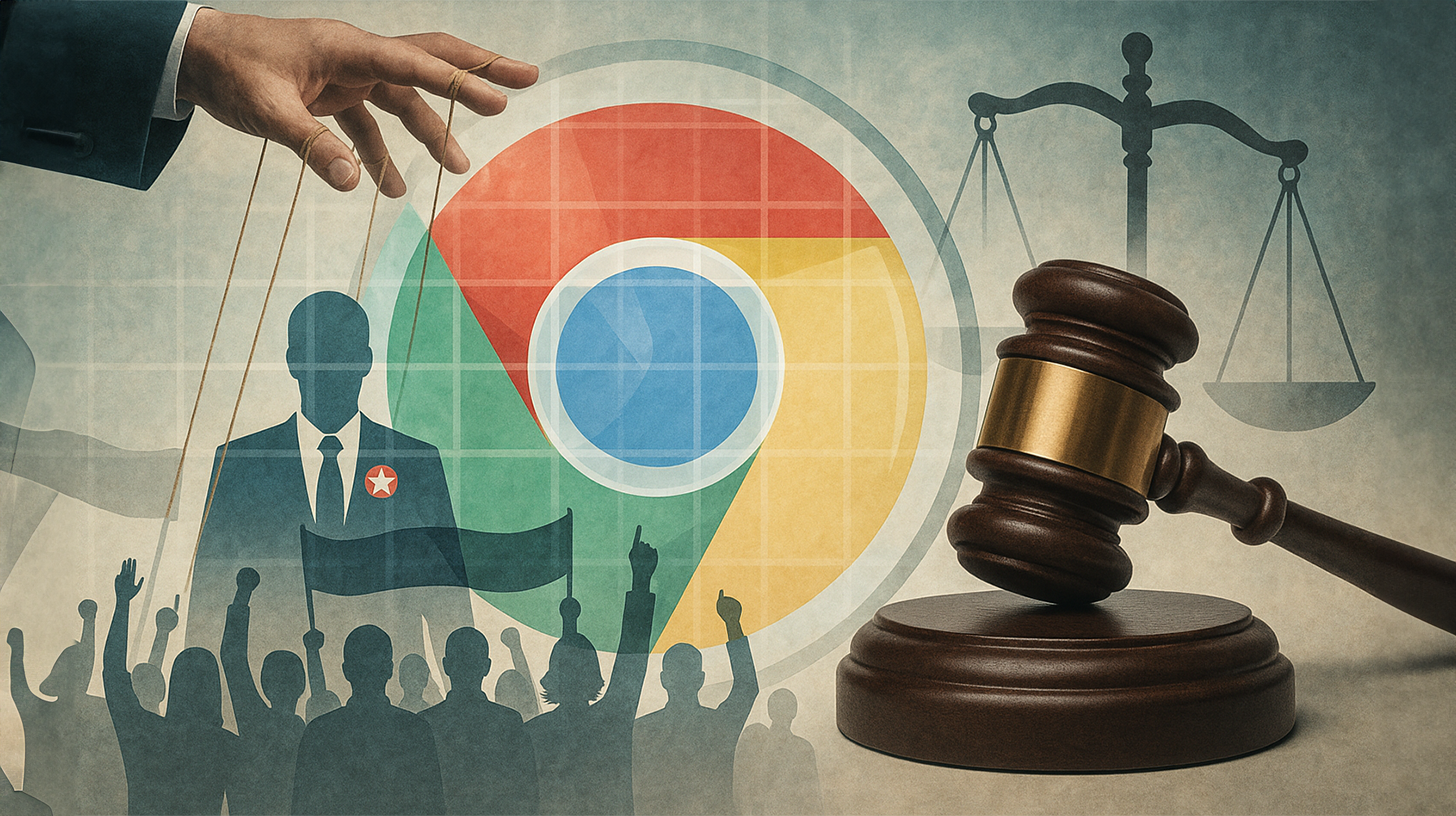
In the US, the use of digital platforms for political advertising is at the center of growing public debate, particularly after the revelation that Kamala Harris's campaign team manipulated headlines of news articles in Google ads. This controversy highlights the complex challenges of regulating political advertising in the digital space and underscores the importance of transparency and ethical standards. The following report examines the controversy in detail, analyzes Google's current and future policies on political advertising, and considers regulatory developments in the European Union.
The Harris campaign and the manipulated headlines
In August 2024, it was revealed that Kamala Harris's presidential campaign ran paid Google ads that altered the headlines and descriptions of news articles to portray the candidate in a more positive light. These ads linked to genuine articles from reputable news sources such as The Guardian, Reuters, CBS News, and the Associated Press, but presented manipulated headlines and descriptions.
A concrete example of this is an advertisement that linked to an NPR (National Public Radio) article with the altered headline “Harris Will Lower Health Costs” and the accompanying text “Kamala Harris will lower the cost of high-quality affordable health care”. Another advertisement, which led to a Guardian article, had the headline “VP Harris Fights Abortion Bans – Harris Defends Repro Freedom” and included the supporting text “VP Harris is a champion for reproductive freedom and will stop Trump’s abortion bans”.
Reactions from the affected media
Most of the affected news organizations were unaware of this practice and expressed concern about the unauthorized use of their trademarks. A spokesperson for The Guardian stated: “We need to ensure that our brand is used appropriately and with our permission. We will contact Google for more information about this practice.” A spokesperson for USA TODAY’s parent company, Gannett, echoed this sentiment: “As a news organization, we have a responsibility to ensure that our stories are shared appropriately and meet the highest standards of integrity and accuracy.”
The Associated Press clarified that it "neither knew of this practice nor would it have allowed it to run on its website." These reactions highlight media companies' concerns about their credibility and editorial integrity.
Ethical concerns and legal classification
Google's position on advertising practices
Google defends this practice as compliant with its rules, arguing that the ads are clearly labeled as "Sponsored" and include a "Paid by" notice. "These ads are explicitly marked as 'Sponsored' so they can be easily distinguished from search results," a Google spokesperson explained. The company considers it "fairly common for advertisers to link to or quote external websites, including news sites, in their ads.".
Critical voices from media experts
Despite the practice's legality, media experts have raised significant ethical concerns. Rich Hanley, emeritus associate professor of journalism at Quinnipiac University, described the practice as "disturbing" and "exploitative." He argues, "What they are actually doing is manipulating someone else's content by changing headlines. There should be a clear and definite line when it comes to news organizations."
Colin Campbell, associate professor of marketing at the University of San Diego, described the ads as a "significant ethical problem" and criticized the fact that "users can misunderstand the meaning of the articles." The practice raises fundamental questions about the integrity of political communication and the responsibility of digital platforms.
Google's transparency measures for political advertising
The Ads Transparency Center
Google has invested significantly in transparency measures for political advertising in recent years. The company operates an "Ads Transparency Center," a searchable directory of advertisers and their ads on Google platforms. Users can search for advertisers there to learn more about them and their ads, and filter the results by criteria such as date or geographic target area.
Requirements for political advertisers
Since 2019, all advertisers wishing to run election ads in the EU have had to meet increased transparency requirements, including identity verification and disclosures in the ads that clearly show who paid for each ad. Google has also introduced disclosure requirements for the use of synthetic or digitally altered content in election advertising.
The EU regulation and Google's withdrawal from political advertising
The new EU regulation on political advertising
On March 9, 2024, the EU Regulation on Transparency and Targeting of Political Advertising (TTPA) entered into force and will be fully applied from October 10, 2025. This regulation defines political advertising more broadly than before and includes not only direct election advertising but also advertisements "that are likely and intended to influence the outcome of an election or referendum, voting behavior or a legislative or regulatory process at European, national, regional or local level".
The main aspects of the regulation include:
- Mandatory labeling of political advertising with information on sponsors and paid remuneration
- Strict restrictions on targeting and profiling based on personal data
- Prohibition of targeted marketing to persons below voting age
- Unconditional prohibition of profiling and targeting with sensitive data
- Creation of a new EU archive for political online advertising
- Ban on political advertising from third countries three months before an election or referendum
Google's decision to withdraw
In response to this new regulation, Google announced in November 2024 that it would cease running political advertising in the EU before the TTPA came into effect in October 2025. The company justified this move with "significant new operational challenges and legal uncertainties.".
Google is particularly critical of the regulation's broad definition of political advertising, which "could encompass ads on an extremely wide range of topics that would be difficult to reliably identify at scale." The company also criticizes the "lack of reliable local election data that would allow for the consistent and accurate identification of all ads related to local, regional, or national elections in any of the 27 EU member states.".
Impact on digital political communication
Consequences for civil society organizations
Google's withdrawal from political advertising in the EU could be particularly problematic for smaller organizations and civil society groups, which often rely on cost-effective digital advertising to reach their audiences. Throughout the legislative process, civil society has raised concerns that too broad a definition of political advertising could also infringe on legitimate forms of communication.
Furthermore, Google's decision could "further exacerbate the challenges facing civil society or hinder the creation of new political parties, which often rely on Big Tech platforms to reach their audiences.".
Balance between regulation and freedom of expression
The controversy surrounding the Harris campaign and Google's reaction to the EU regulation illustrates the tension between the legitimate interest in transparency and protection against manipulation on the one hand, and ensuring open political discourse on the other. Critics of the EU regulation, including non-governmental organizations, fear "overregulation" and warn of a "threat to freedom of expression.".
The path to responsible political advertising
The controversy surrounding Kamala Harris's Google ads and Google's decision to withdraw from political advertising in the EU highlight the complexity of regulating political advertising in the digital age. Both cases underscore the need for a balanced approach that ensures transparency and protection against manipulation while also promoting freedom of expression and political discourse.
The manipulated ads in the Harris campaign highlight the limitations of platform self-regulation. While Google emphasizes that the ads are labeled as "sponsored," this may not be enough to prevent deception. At the same time, Google's withdrawal from political advertising in the EU raises the question of whether the new regulation, in its current form, is workable or whether it should be revised to strike a better balance between regulation and practical implementation.
Looking ahead, it seems crucial to develop clear and enforceable standards for political advertising that offer sufficient transparency without unduly restricting political communication. This requires ongoing dialogue between platforms, regulators, media outlets, and civil society to find solutions that are both technically feasible and ethically sound, ultimately helping to strengthen public trust in digital political communication.
Related to this:
Your global marketing and business development partner
☑️ Our business language is English or German
☑️ NEW: Correspondence in your native language!

Konrad Wolfenstein
I and my team are happy to be available to you as your personal advisor.
You can contact me by filling out the contact form here wolfenstein@xpert.digital:or simply call me at +49 7348 4088 965. My email address is
I'm looking forward to our joint project.