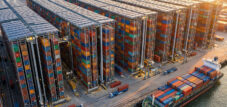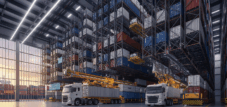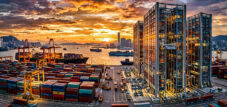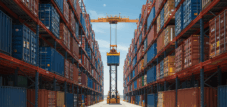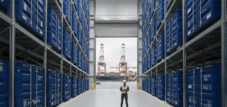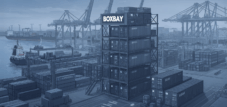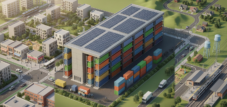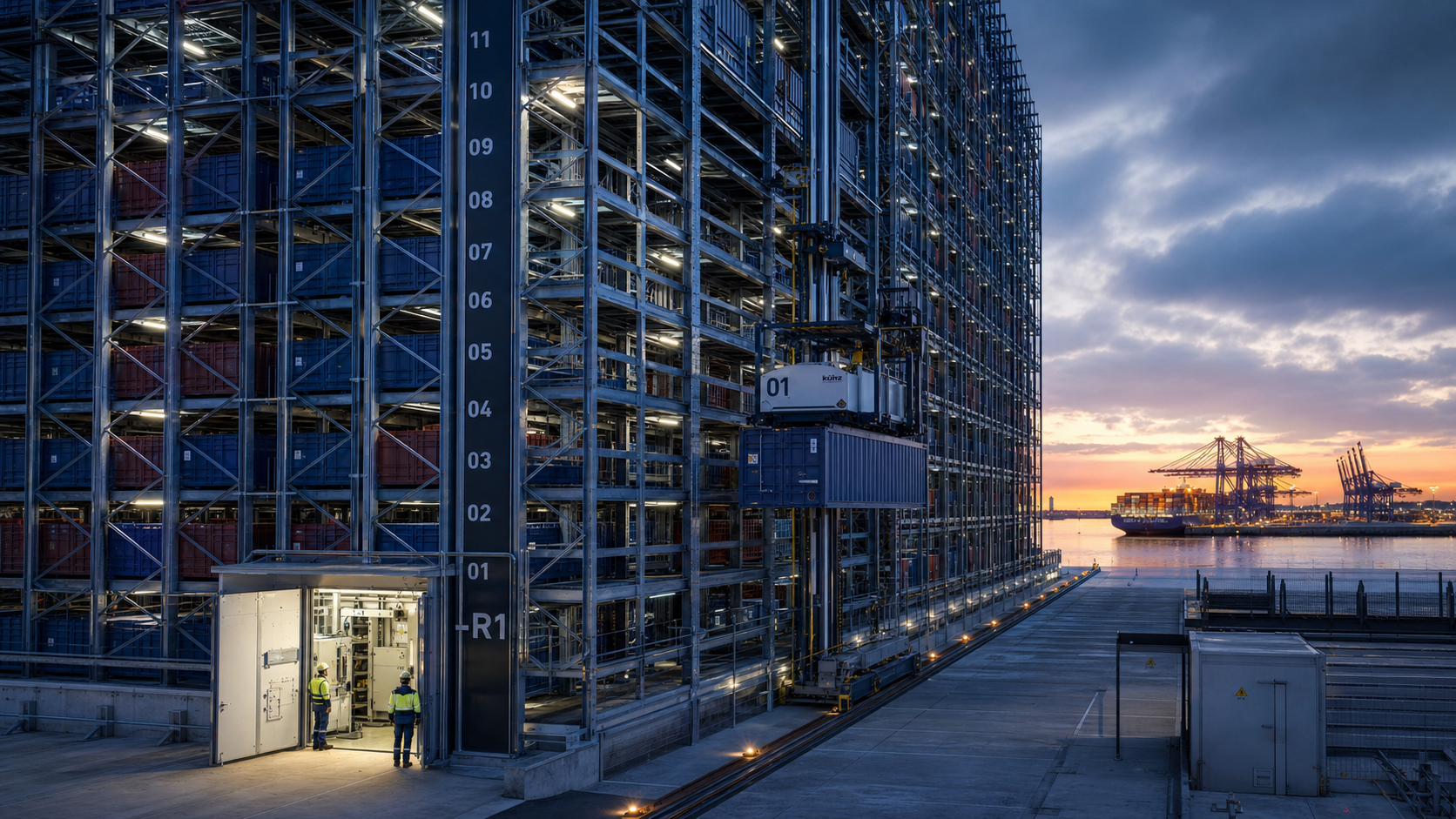
No more restacking: How gigantic container racks are shaping the port logistics of the future – creative image on the topic, with AI: Xpert.Digital
Why conventional port terminals are being replaced by high-bay racking systems
When steel becomes the pacesetter of the global economy
Global supply chains are under constant pressure. While cargo ships become ever larger and digital processes at terminals increasingly sophisticated, an analog relic is hindering progress: the physical storage of containers. Traditional block storage, where boxes often have to be laboriously restacked, wastes valuable time, requires enormous amounts of space, and incurs staggering fees. But an innovation now promises a solution: What happens when the principles of pallet logistics are applied to the scale of the maritime heavy industry? So-called high-bay container warehouses shift handling vertically, putting an end to the chaos of containers. With load capacities of up to 18 tons per storage space, clever redundancy concepts, and the ability to perform maintenance during operation, they are redefining the rules of logistics. This article explores why vertical port logistics represents a genuine paradigm shift from both an economic and ecological perspective – and what challenges this multi-billion-dollar industry still faces.
The new power of ports: Why high-bay container warehouses are replacing conventional terminals
The digitalization of ports has a blind spot: the physical storage of containers themselves. While terminal operators have been investing in software, sensors, and artificial intelligence for years, the basic principle of container stacking has remained unchanged for decades – boxes are simply stacked on top of each other, with all the disadvantages this entails for access times and handling speed. A new approach, originally from the steel industry, is fundamentally changing this picture. High-bay container warehouses, now being implemented as jointly developed system solutions by port operators and heavy industry specialists, shift the principle of classic pallet logistics into the realm of heavy-lift handling, thereby creating a new category of port infrastructure that can aptly be described as availability infrastructure. It's no longer just about space or capacity, but about the permanent, uninterrupted accessibility of every single loading unit at any given time.
This shift in perspective is economically significant. Ports are capital-intensive hubs in global supply chains, where every minute of downtime incurs immediate costs, whether through berthing fees for ships, contractual penalties, or lost cargo handling revenue. A system structurally designed so that the failure of individual components does not paralyze the entire operation fundamentally alters the risk assessment of terminal operators. This is precisely where the technical design of the high-bay racking systems comes into play, which are designed for load capacities of up to 18 tons per storage space and thus far exceed the requirements of conventional pallet storage.
Heavy-duty shelving: When 18 tons become the new normal
The technical basis of these systems is heavy-duty pallet racking, originally designed for bay loads of up to 18 tons, whose construction principles have been adapted to the much larger dimensions of shipping containers. A standard 40-foot container can weigh well over 30 tons when loaded, which is why racking structures for maritime applications must be even more robust than conventional industrial racking. Leading system providers use steel frames originally developed for storing steel coils weighing up to 50 tons in racking structures up to 50 meters high. This technological origin in heavy industry explains why the load-bearing capacity of the rack bays is not an experimental new development, but rather the result of decades of industrial testing.
The remarkable feature is the structural simplicity of the individual storage locations. Unlike conventional pallet racks, the container storage locations do not require continuous floors, but only lateral guide rails on which the containers rest with their corner fittings. This minimal use of materials not only reduces the steel requirement and thus construction costs, but also minimizes the surface area susceptible to corrosion and mechanical wear, which directly impacts the system's lifespan costs. The racking structure itself is designed and monitored according to established standards such as DIN EN 15512 for structural design and DIN EN 15635 for periodic inspections, resulting in a high degree of legal certainty and insurability for operators.
The question of load-bearing capacity has a second, often underestimated dimension: the ground load of the entire structure. A multi-story building with thousands of fully loaded containers generates point loads that pose significant engineering challenges during foundation design, especially in port areas with frequently weak, filled-in subsoil. Therefore, anyone assessing the economic viability of such projects must consider not only the pure acquisition costs for steel and crane technology, but also the geotechnical work required, which can vary considerably depending on the location.
Doors-open maintenance: Maintenance without interruption of operations
The real economic advantage of modern high-bay container warehouses lies less in their sheer load-bearing capacity than in the way maintenance and troubleshooting are organized. Traditional automated warehouses, such as those used for pallet storage, face the problem that servicing individual storage and retrieval machines often brings the entire operation of an aisle or even the whole system to a standstill because safety regulations strictly control access to moving parts. In a port terminal where several hundred containers need to be handled per hour, such a shutdown would be economically unsustainable.
The system manufacturers' response lies in a concept that can be described as controlled accessibility during operation. Technicians gain access to individual maintenance zones of the system via secure access gates and airlock systems, while adjacent aisles and storage and retrieval machines continue to operate uninterrupted. This is made possible by the consistent segmentation of the system into independently controllable and physically separated safety zones, secured by light curtains, laser scanners, and software-controlled zone monitoring according to relevant safety standards such as EN 1525. If a component fails or requires scheduled maintenance, only the affected area is shut down, while the rest of the operation – often more than 90 percent of the total capacity – continues unchanged.
This ability to perform door-open maintenance has immediate financial consequences. Practical reports from pilot plants show significantly reduced maintenance efforts and noticeably lower operating costs compared to conventional handling systems. A key reason for this is that the storage and retrieval machines operate according to a fixed, predictable movement pattern, which greatly simplifies wear forecasting and enables proactive, planned maintenance instead of reactive fault correction. For terminal operators, this means a shift from incalculable failure risks to budgetable, recurring maintenance costs, which is a decisive argument, especially for financing such large-scale projects by banks and institutional investors.
Redundancy concepts: Why a single crane failure won't paralyze a port
The true strategic core of the plant design, however, is the redundancy concept at the system level. Classical fault tolerance theory distinguishes between high availability, where downtime is minimized but not completely avoided, and true fault tolerance, where a system continues to operate without interruption even in the event of partial failures. Container high-bay warehouses are consistently designed according to the second principle because port operators simply cannot afford planned or unplanned complete shutdowns when a container ship with thousands of boxes is docked at the quay, incurring substantial demurrage charges per hour.
The practical implementation of this redundancy takes place on several levels simultaneously. At the level of individual storage aisles, two independent stacker cranes are used for longer aisles, so that if one crane fails, the second can take over supplying the aisle, albeit with reduced throughput. At the level of the overall system, the modular design, typically with four to thirty parallel aisles, ensures that the failure of a single aisle theoretically affects only a fraction of the total capacity, while all other aisles continue to operate without interruption. This horizontal redundancy differs fundamentally from conventional gantry crane systems in the quayside area, where the failure of a single large piece of equipment often results in immediately noticeable capacity losses for the entire terminal.
Another key element of the system's reliability lies in the consistent electrification of the entire system. Since all movements are electrically powered and controlled via a central energy management system, peak loads and failures of individual circuits can be mitigated by software through the dynamic redistribution of movement profiles to remaining capacities. The integrated recuperation technology, which feeds back braking energy recovered when lowering containers, further contributes to a more stable energy balance and reduces dependence on external power surges that could otherwise pose a risk of failure.
The control architecture also follows a redundant design. End-to-end automation from the lowest field level to the higher-level control system is achieved via multi-stage control hierarchies, where the failure of a higher-level control unit does not automatically lead to a standstill of the lower levels. This architecture is based on proven principles of industrial automation technology, as long used in the process industry or rail transport, and is the first to consistently apply these principles to maritime logistics.
LTW Intralogistics Solutions

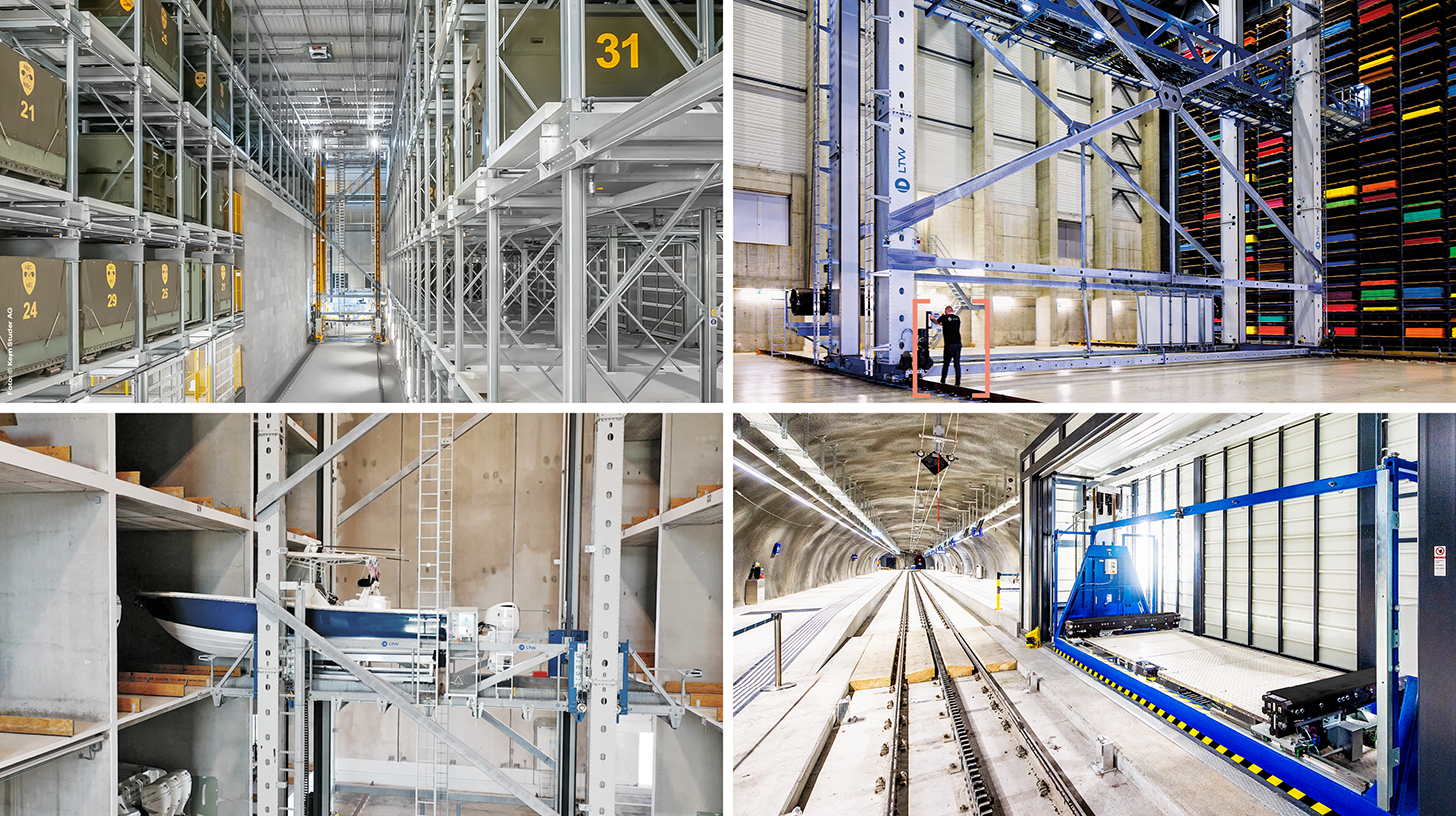
LTW Intralogistics – Engineers of Flow - Image: LTW Intralogistics GmbH
LTW offers its customers not individual components, but integrated complete solutions. Consulting, planning, mechanical and electrotechnical components, control and automation technology, as well as software and service – everything is networked and precisely coordinated.
In-house production of key components is particularly advantageous. This allows for optimal control of quality, supply chains, and interfaces.
LTW stands for reliability, transparency, and collaborative partnership. Loyalty and honesty are firmly anchored in the company's philosophy – a handshake still means something here.
Related to this:
Economic efficiency and sustainability: The future of vertical container storage
Economic evaluation: Capital intensity versus operational reliability
From a business perspective, the question naturally arises whether the considerable investment required for such a system is worthwhile compared to conventional solutions. The answer depends crucially on the utilization rate and local land costs. In port locations with extremely scarce and expensive building land, as found in many Asian and European metropolitan areas, the calculation changes fundamentally because the triple storage density per unit area drastically reduces the space requirement. Where conventional block storage uses six stacked containers, high-bay racking systems with up to sixteen levels enable significantly more intensive space utilization while simultaneously offering considerably greater access flexibility.
In addition, there is an effect that is often underestimated in traditional economic analyses: the elimination of unproductive relocation movements. In conventional block storage, restacking containers to access lower-level boxes accounts for a significant proportion of all crane movements – in unfavorable cases, up to 60 percent. Since each container is individually accessible without relocation in the high-bay racking system, this effort is completely eliminated. This not only means enormous energy and time savings, but also significantly improved predictability of handling processes, which in turn has a positive impact on ship turnaround times and thus on the entire chain of port efficiency.
On the cost side, however, the substantial initial investments should not be underestimated. Constructing a steel rack structure over 50 meters high with integrated crane technology, power supply, and digital control infrastructure requires a more complex planning and approval process than conventional terminal equipment. This applies particularly to structural stability analyses, fire protection concepts for the high-density storage of flammable goods, and coordination with local building authorities, who often have limited experience with such tall industrial structures. Anyone wishing to implement such a project must therefore factor in significantly longer lead times during the planning phase than for conventional terminal equipment, which can be a significant disadvantage, especially for operators with short-term capacity requirements.
Sustainability as an added economic benefit
One aspect that is increasingly influencing investment decisions, going beyond mere operating costs, is the environmental impact of the facilities. Since all movements are electrically powered, no local emissions are generated during operation, which is a growing regulatory argument, particularly for ports in densely populated coastal regions with strict air quality regulations. Furthermore, the possibility of equipping the vast roof surfaces of the racking structure with photovoltaic systems offers the realistic prospect of a carbon-positive facility in sunny regions, generating more energy than it consumes.
This sustainability dimension is not merely a matter of image; it has tangible financial implications for the financing of such projects. Institutional investors and development banks are increasingly linking their lending to ESG criteria, and a terminal that demonstrably reduces or even positively impacts its carbon footprint improves its access to favorable financing options. Another advantage: since computer-controlled systems do not require light for orientation, the nighttime floodlighting that is still mandatory for safety reasons in conventional container terminals is eliminated. This reduces both energy costs and light pollution in adjacent residential and nature reserves, significantly improving the likelihood of obtaining permits for such projects in sensitive coastal areas.
Increased safety through decoupling of humans and machines
In addition to pure economic efficiency, occupational safety also deserves special attention, as traditional container handling is among the most accident-prone activities in the logistics industry. Collisions between vehicles, falling loads, and the interaction between human drivers and heavy machinery represent chronic risk factors. The consistent automation of high-bay container warehouses largely decouples the actual handling process from direct human intervention, as employees only interact with the system at clearly defined and secured transfer points. The access points necessary for maintenance are secured by multi-stage safety gates, emergency stop systems, and automatic shutdown mechanisms in case of unauthorized entry, thus significantly reducing the risk of injury compared to conventional terminal environments.
This increase in safety, in turn, has an economic downside that is rarely explicitly addressed: lower insurance premiums and reduced costs due to work-related accidents. In an industry where staff absences due to injuries can directly restrict operational availability, automation therefore has a positive impact not only on the technical but also on the personnel availability of the overall infrastructure.
Limits and open questions of the new technology
For all its technical elegance, a sober economic analysis should also clearly identify the limitations of this approach. First, despite successful pilot projects, the technology is still relatively new in the maritime context, and long-term experience spanning several decades, as is available for conventional gantry cranes, is naturally lacking. Second, the massive steel structure ties up considerable capital over a long period, which restricts a terminal operator's flexibility to react quickly to fundamentally changing market conditions – such as changes in ship sizes or new handling technologies. Third, full economic viability requires a high and consistent throughput, which is why the system is primarily suitable for large, well-utilized terminals, while smaller ports or those with significant seasonal fluctuations may be better served by more traditional, flexible solutions.
Finally, the question of standardization remains open. Unlike established gantry crane systems, for which a broad, highly competitive market of suppliers exists, the market for high-bay container storage systems is currently dominated by only a few suppliers, which means that terminal operators are somewhat dependent on individual technology partners. This concentration could change with increasing market maturity and the entry of further competitors, which should lead to lower acquisition costs and improved contract terms for operators in the medium term.
The vertical future of port logistics
The development of high-bay container warehouses marks a paradigm shift in port management that goes beyond mere capacity increase. At its core, it involves transferring industrial principles of availability assurance, long established in the process industry and mechanical engineering, to a sector traditionally characterized by simple but failure-prone mechanical processes. The combination of massive heavy-duty design, uninterrupted maintenance, and multi-stage redundancy concepts creates a new class of infrastructure whose economic value is measured less in pure throughput figures than in the reliability and predictability of the entire system.
For investors, port operators, and policymakers considering the future viability of maritime infrastructure, the key insight is that availability itself has become an independent, quantifiable economic asset. Those investing in port capacity today are no longer simply buying storage space or handling capacity, but increasingly the guarantee that this capacity will remain available under all conceivable operating conditions. This shift in the logic of value creation is likely to significantly shape investment decisions in the global port landscape in the coming years.
Consulting - Planning - Implementation

Konrad Wolfenstein
I would be happy to serve as your personal advisor.
You can contact me at wolfenstein∂xpert.digital or
Just call me on +49 7348 4088 965 .
Your container high-bay warehouse and container terminal experts
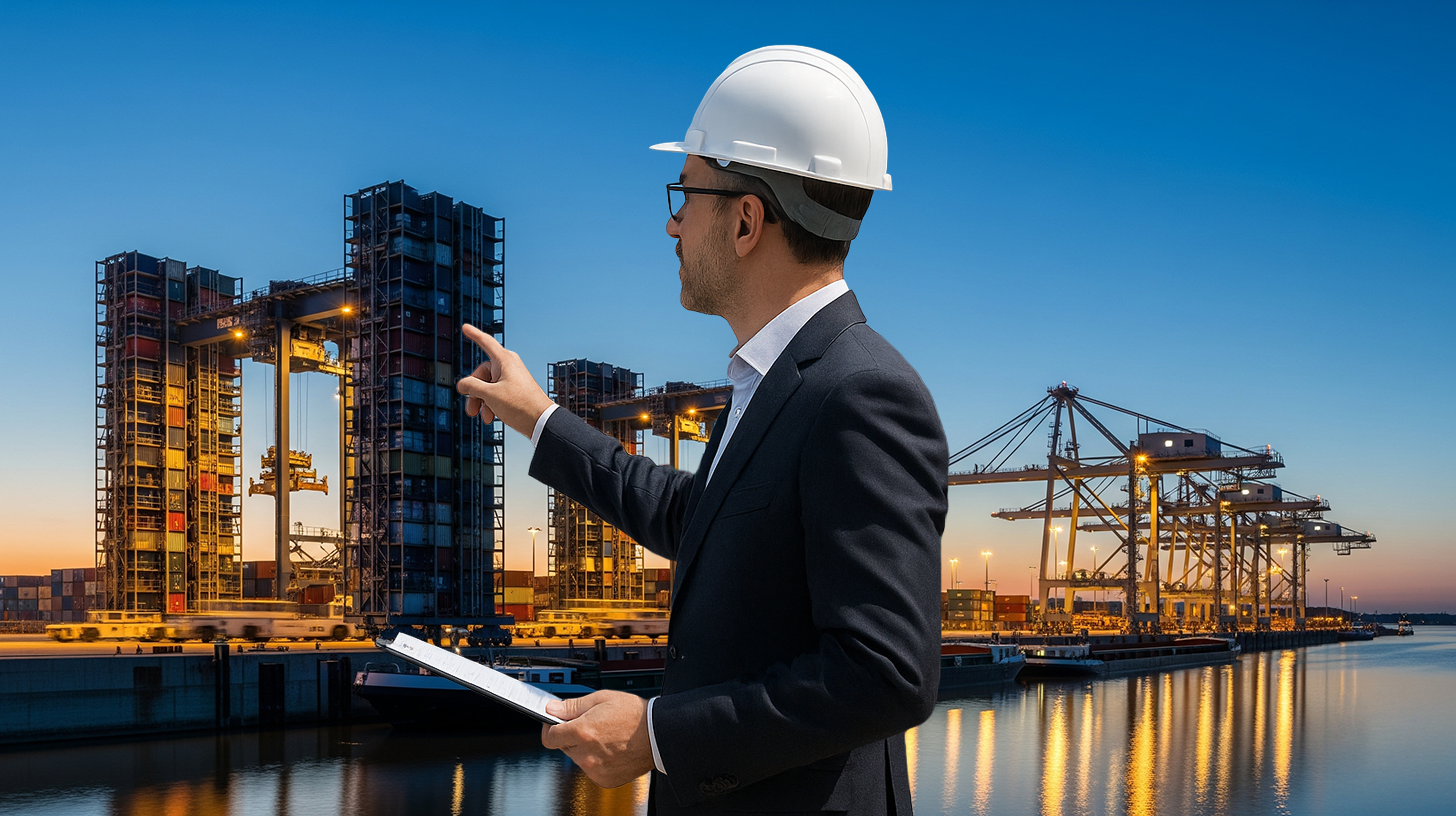
Container terminal systems for road, rail and sea transport in the dual-use logistics concept of heavy-lift logistics - Creative image: Xpert.Digital
In a world marked by geopolitical upheavals, fragile supply chains, and a new awareness of the vulnerability of critical infrastructure, the concept of national security is undergoing a fundamental reassessment. A state's ability to guarantee its economic prosperity, the provision of essential goods and services to its population, and its military capability increasingly depends on the resilience of its logistical networks. In this context, the concept of "dual-use" is evolving from a niche category of export control to a broader strategic doctrine. This shift is not merely a technical adjustment but a necessary response to the "paradigm shift" that demands a profound integration of civilian and military capabilities.
Related to this: